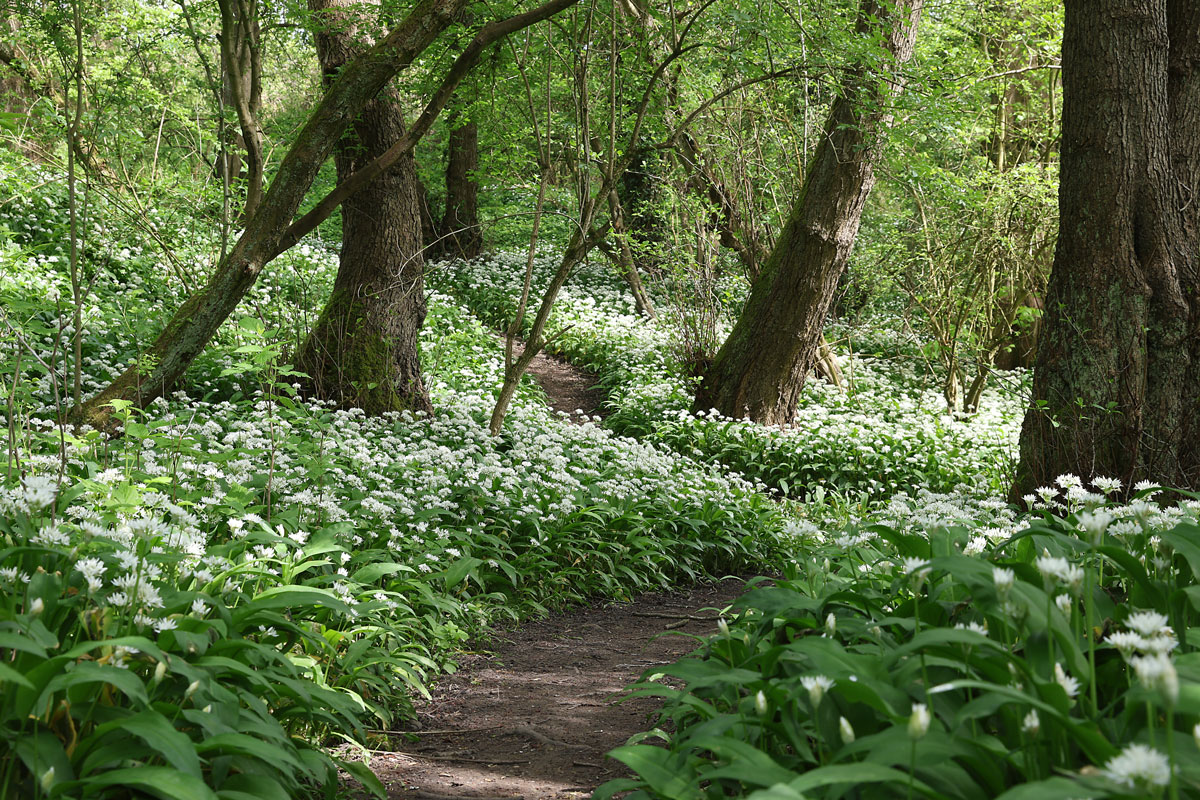
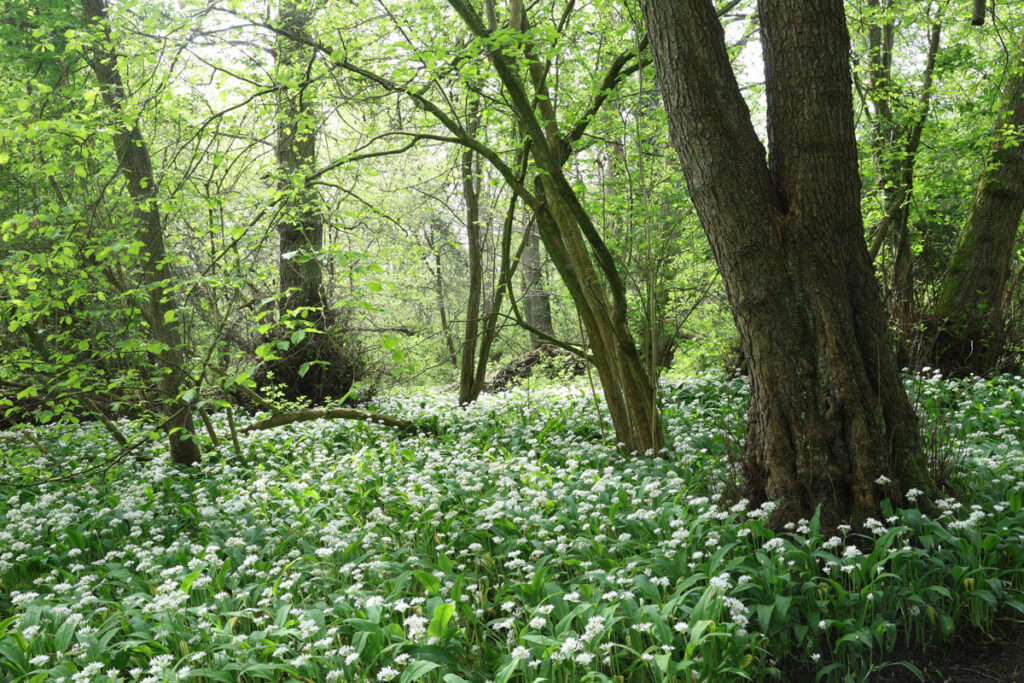
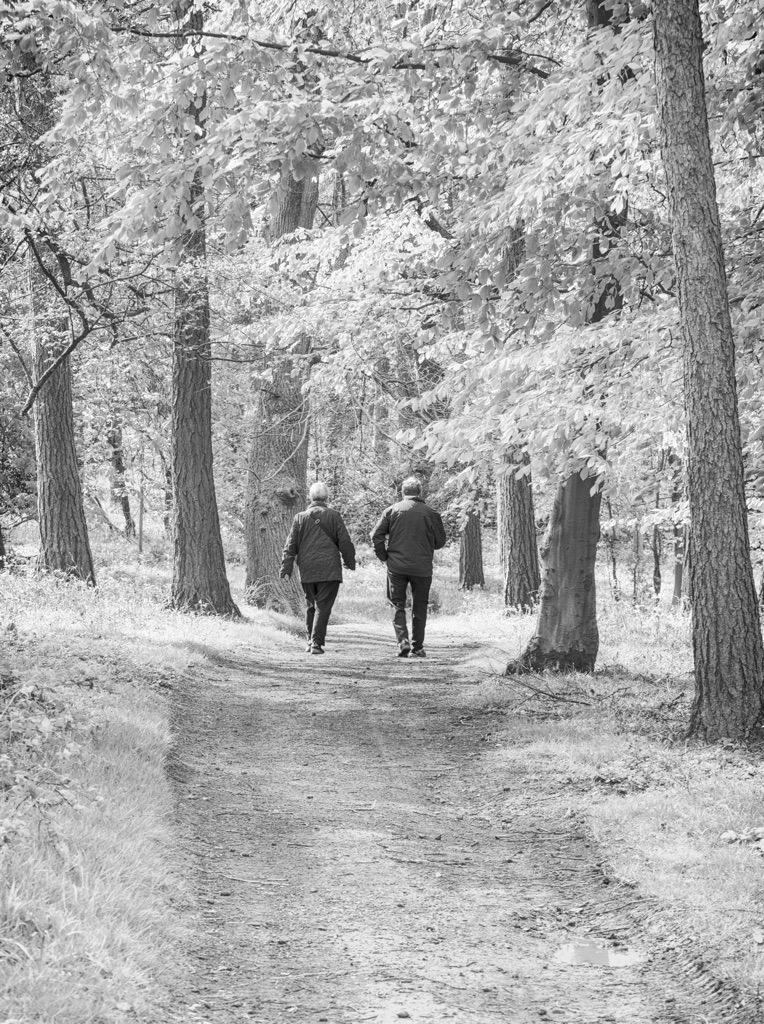
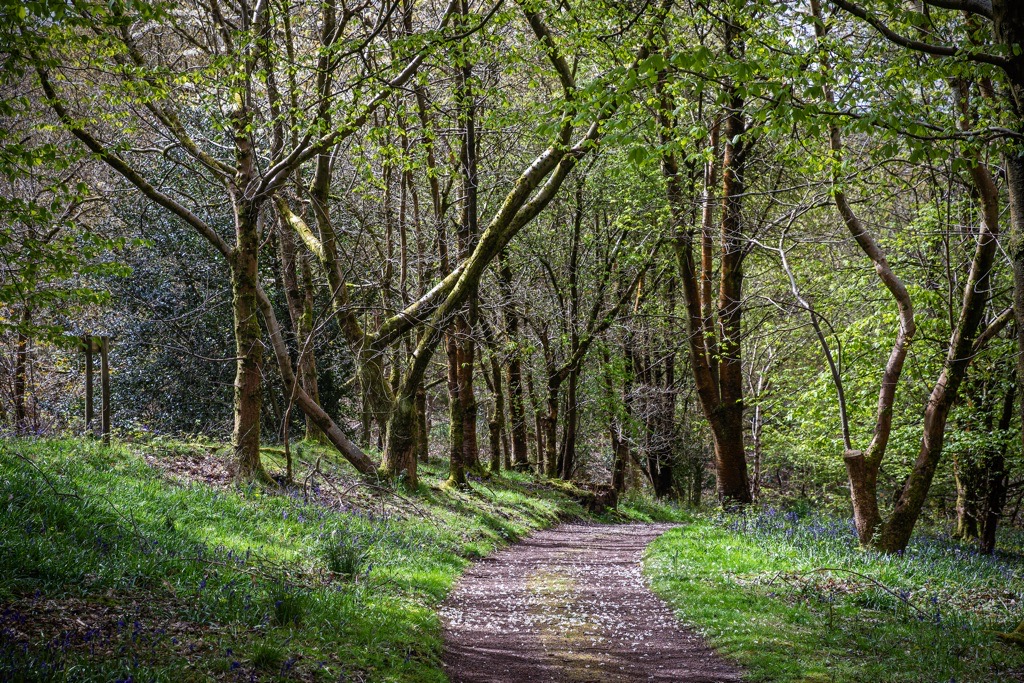
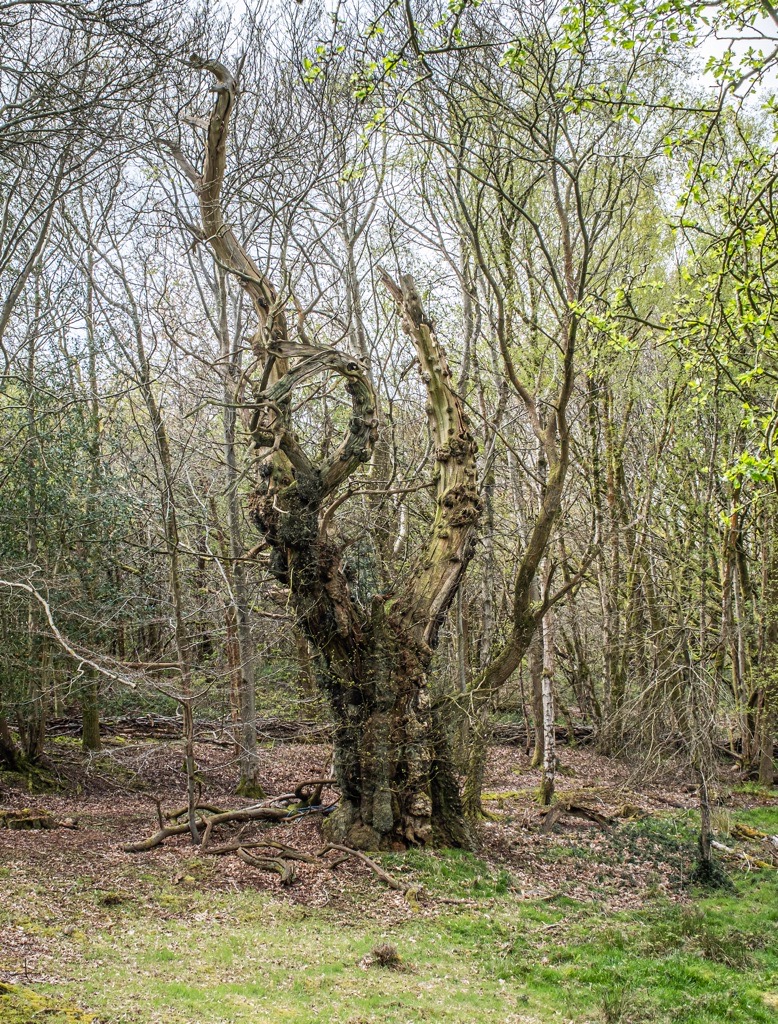
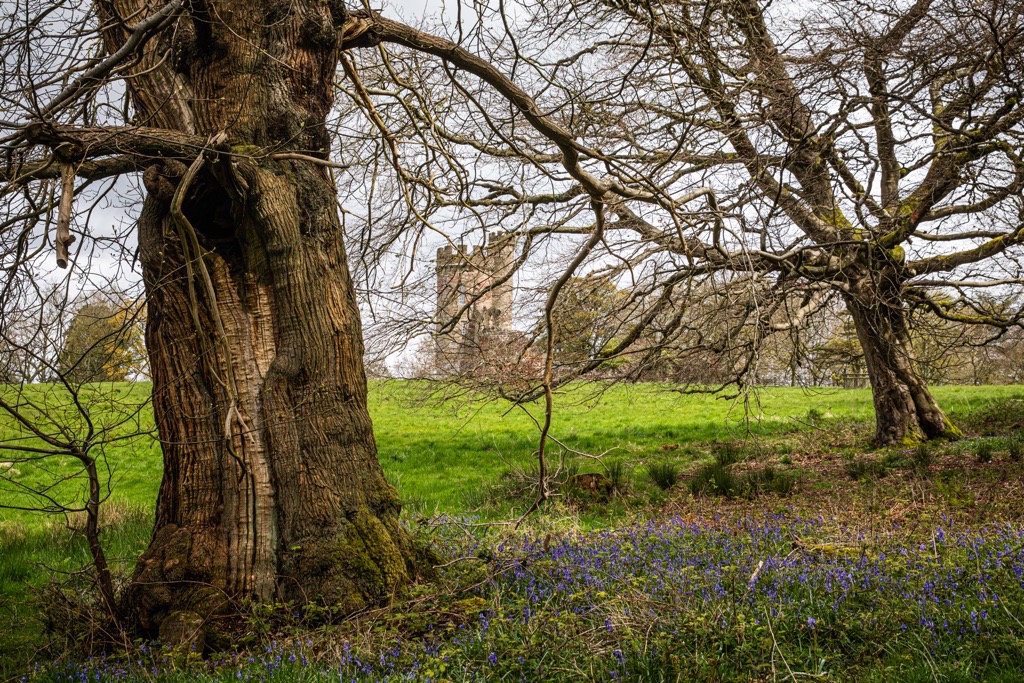
Once you have smelt the aroma from a display of wild garlic wildflowers, you will not forget it for some time. Near where I live, Wychwood Wood is a small ancient woodland beside Purnell’s Brook. The wood is hidden behind houses and is not straightforward to visit. Only locals tend to know the public footpath that leads to its entrance.
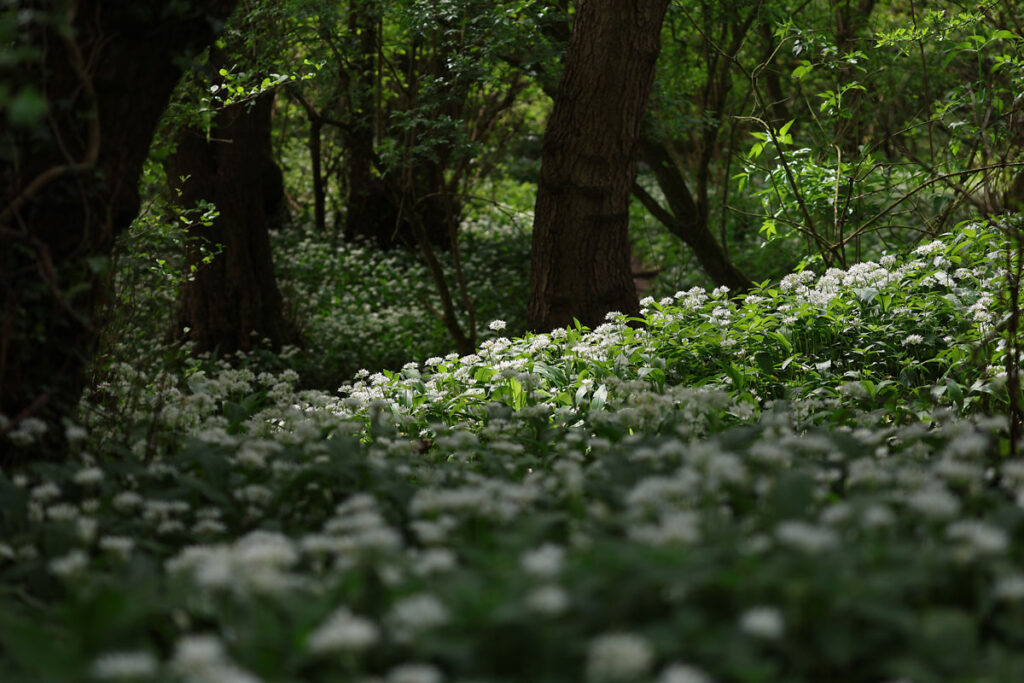
The sun highlights a patch of the flowers on the crest of the hill.
The woodland consists of wet alder trees that thrive in damp conditions. The shade and the natural contours of the land allow the prolific growth of wild garlic towards the end of April. The flowers create a striking white carpet along the banks of the brook. Dark paths through the wood become beautifully outlined against the white and green foliage.
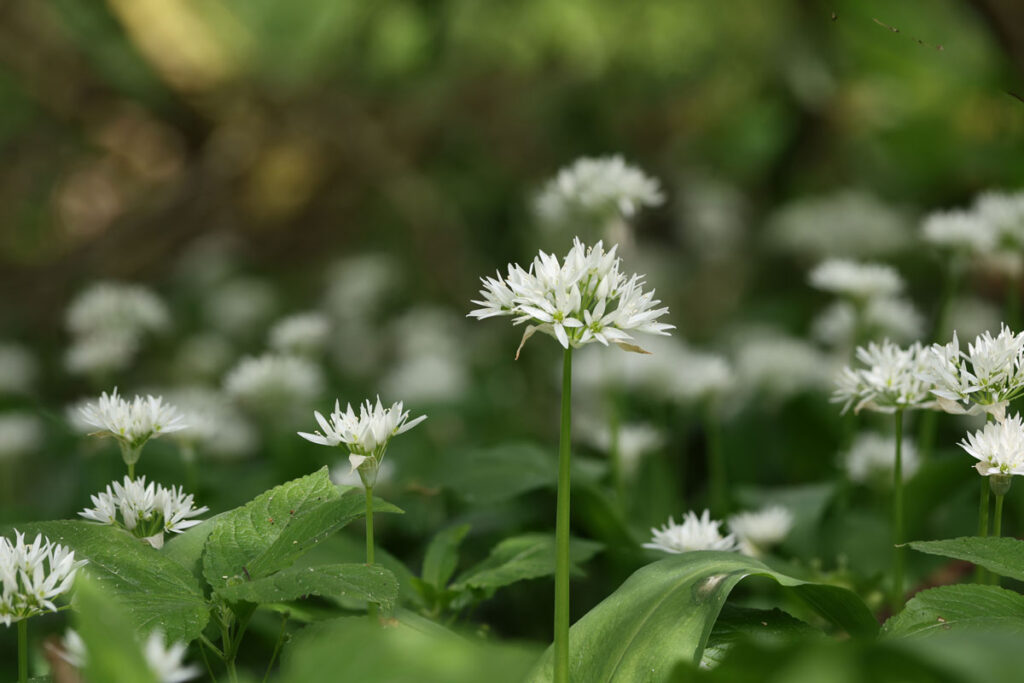
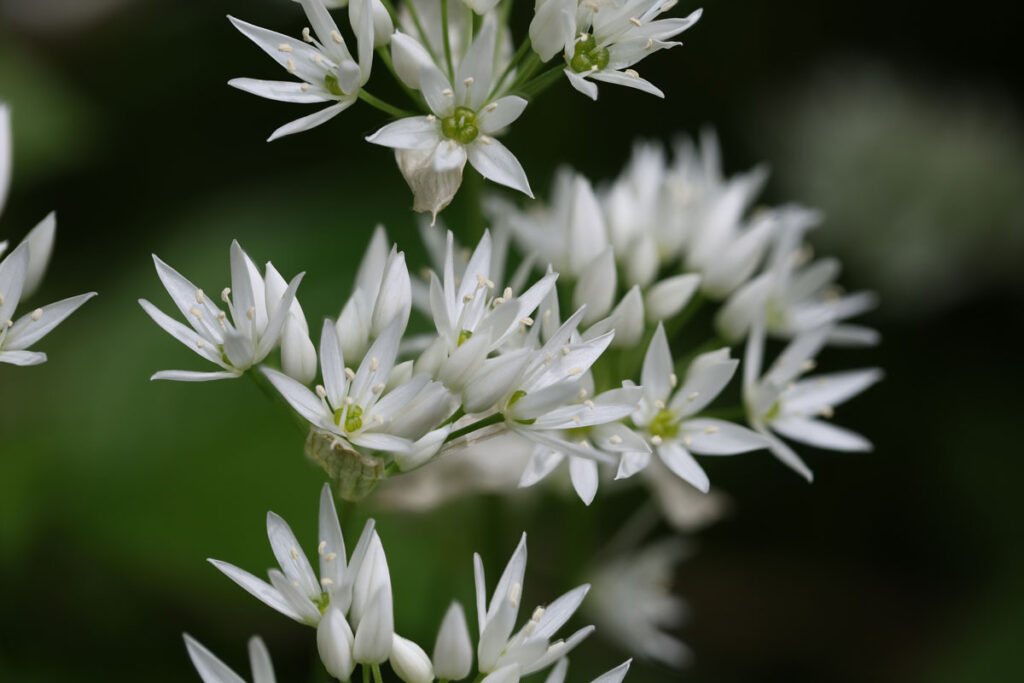
A single flower rises above the rest.A close up of the wild garlic. It is not possible to recreate the wonderful smell from the flowers.
My photographs capture the overall scene that greets you on arrival, followed by an example of how light breaks through the trees to highlight sections of the wildflower display. Finally, there are close-up images of the flowers themselves. I spent a good hour among the wild garlic, using macro, standard, and telephoto lenses on my Canon R6 Mark II camera body.
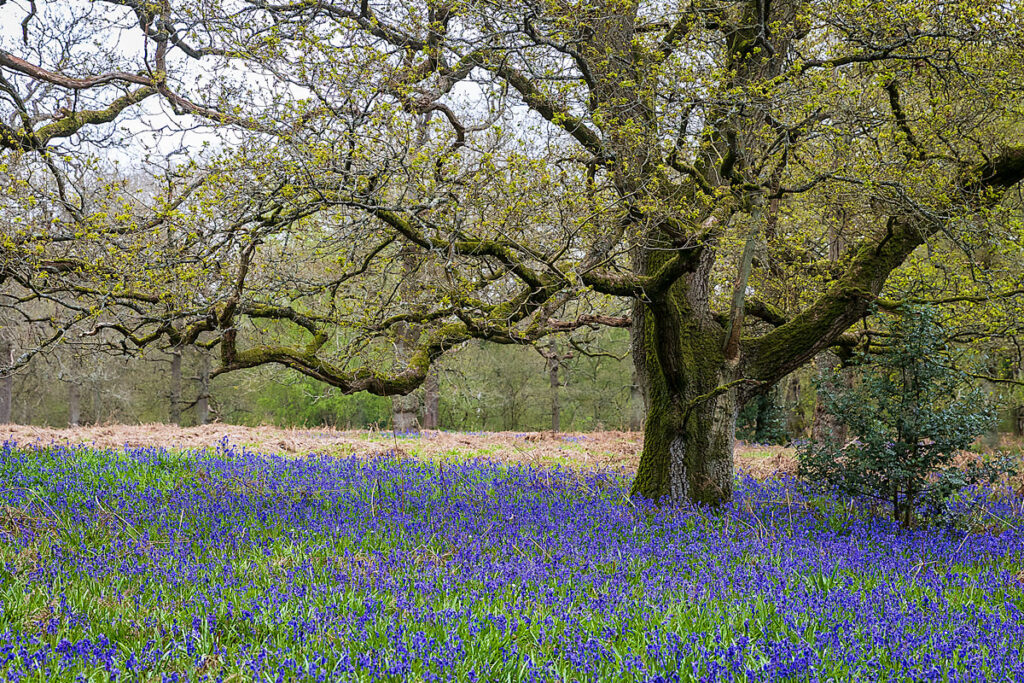
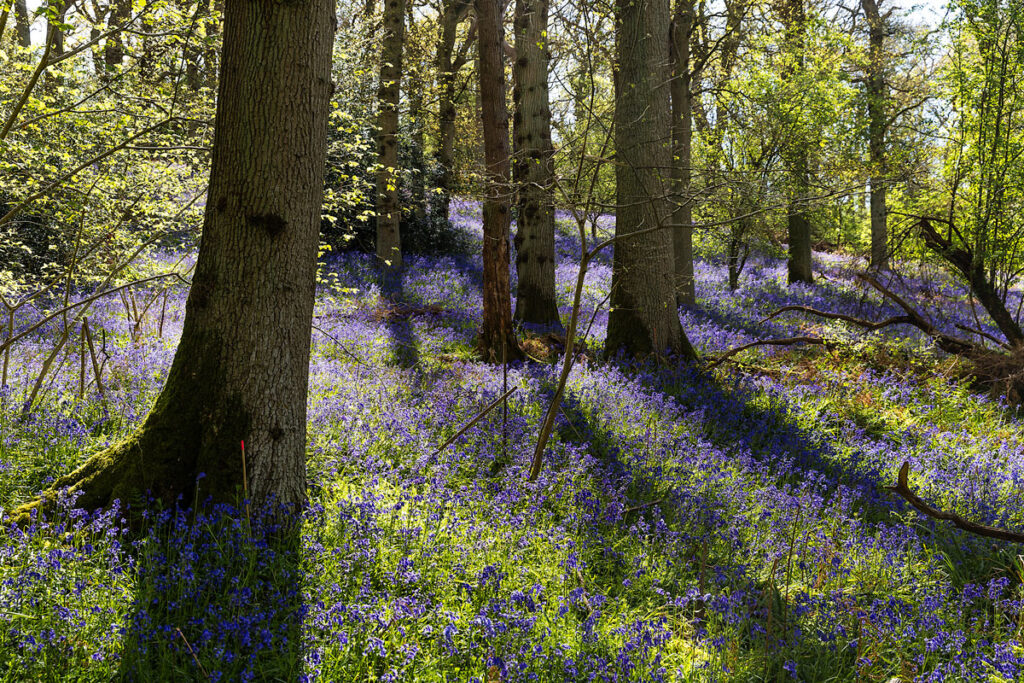
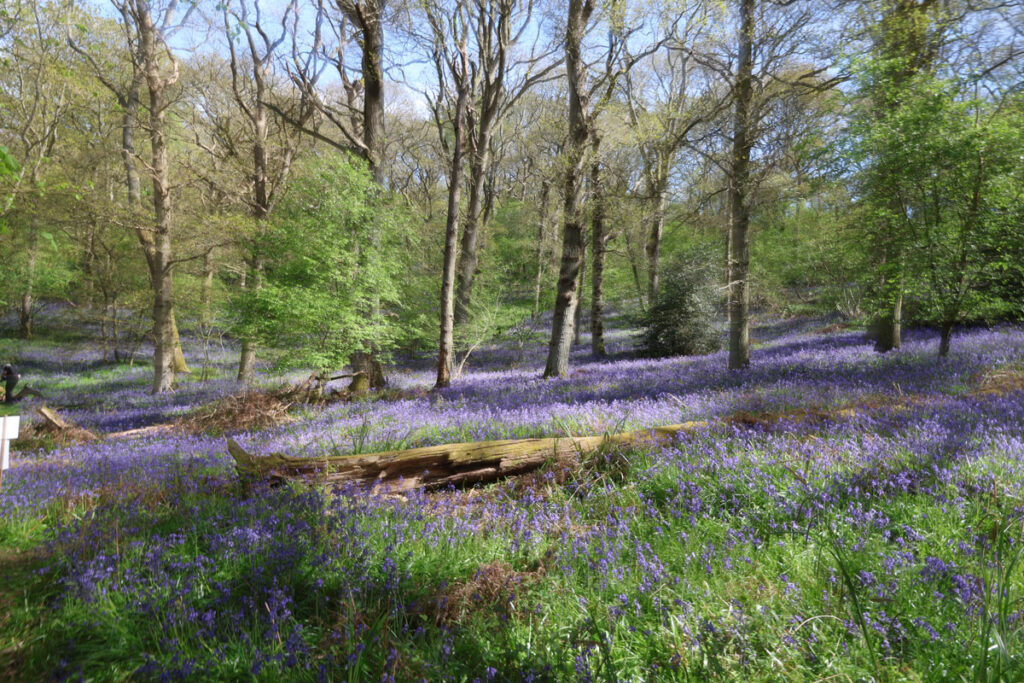
The bluebell season is always exciting, and this year I took the opportunity to visit three different locations. Each offered something unique, with each wood landscape shaping a different perspective of the blue-covered woodland floor.
Bluebells in Cawston Woods
Cawston Woods is located southwest of Rugby and is a small but charming area of woodland. There is a small lay-by for parking, and accessing the wildflowers is straightforward, as they are around 400 metres into the wood.
Cawston Wood near Rugby.
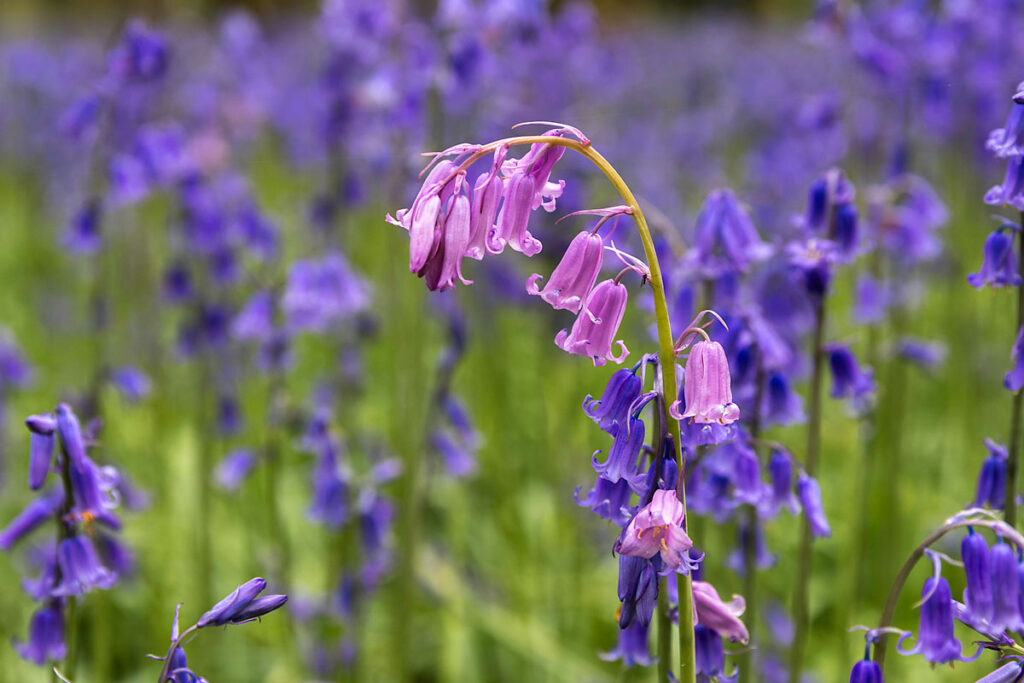
The tree canopy allows sunlight to break through onto the flowers, creating a pleasing display and offering excellent photographic opportunities. Several clumps of pink bluebells can also be found, adding variety to the scene.
Focussing on a section of the woodland covering.Pink flowers contrasting against the blue-purple background.
Bluebells at Ryton Pools
Ryton Pools Country Park lies to the southeast of Coventry and is managed by the Warwickshire County Council. There is a visitor centre, which I made a mental note to return to at the end of the walk.
The trees guard over the woodland floor.
Once I had oriented myself, I headed into the woods. I stepped away from the main path to capture some of the displays scattered throughout the woodland. In a clearing at the centre, there was a strong display clustered around several trees, extending deeper into the forest.
The bluebells gathered around a small tree.A visitor to the flowers enjoys what is on offer
The area felt peaceful, with only occasional walkers passing by. It’s easy to lose yourself in the quiet atmosphere, accompanied by the gentle movement of flowers in the breeze. Compared to Cawston Woods, this is a larger woodland, offering more expansive and varied displays. Also the cafe at the visitor centre is very good.
In the clearing the bluebells gather under a tree.
Bluebells at Heart of England Forest
Heart of England Forest is a privately managed woodland that only opens to the public for two days each year. Although I had booked in advance for the end of April, I was concerned that the main display might be over, as the wildflower season started earlier than usual this year.
The shadows of the trees lying over the bluebells.
Fortunately, the flowers were still in full bloom. The walk takes you through gently rolling hills, initially passing small clusters of blue. As you continue, the displays become increasingly impressive.
Bluebells in the Heart of England Forrest
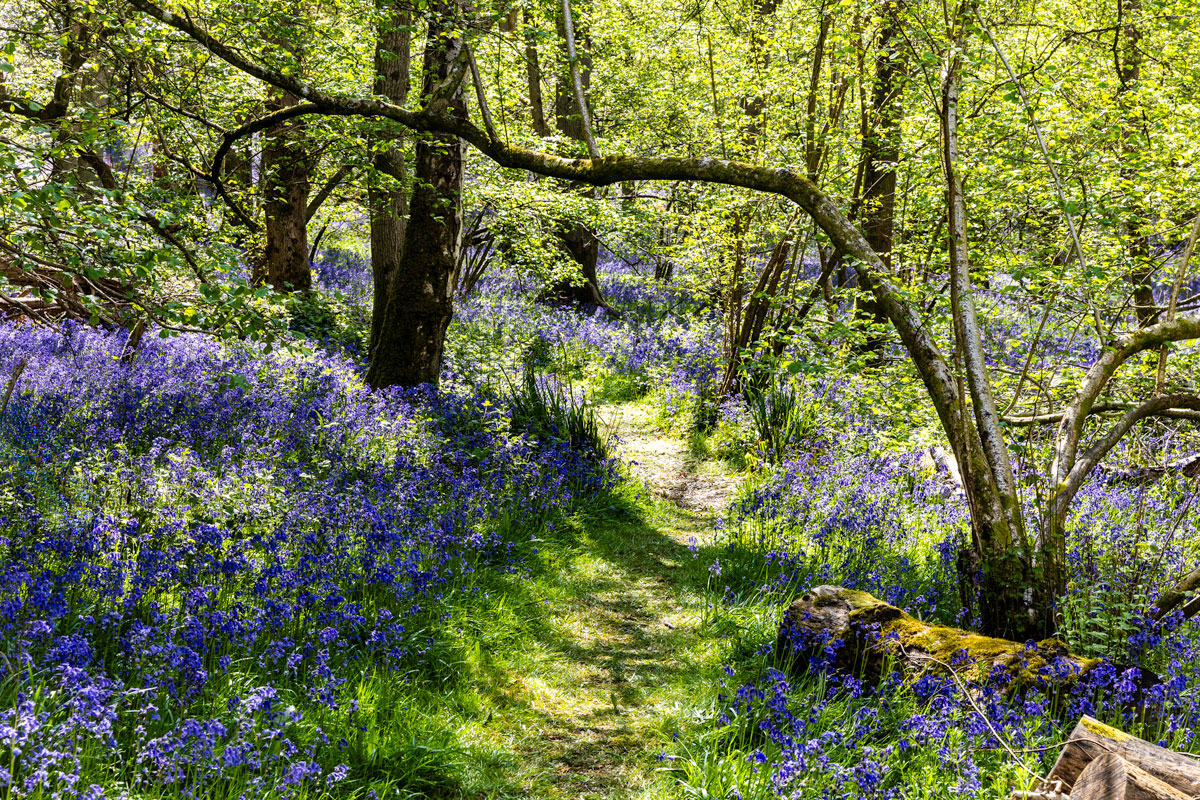
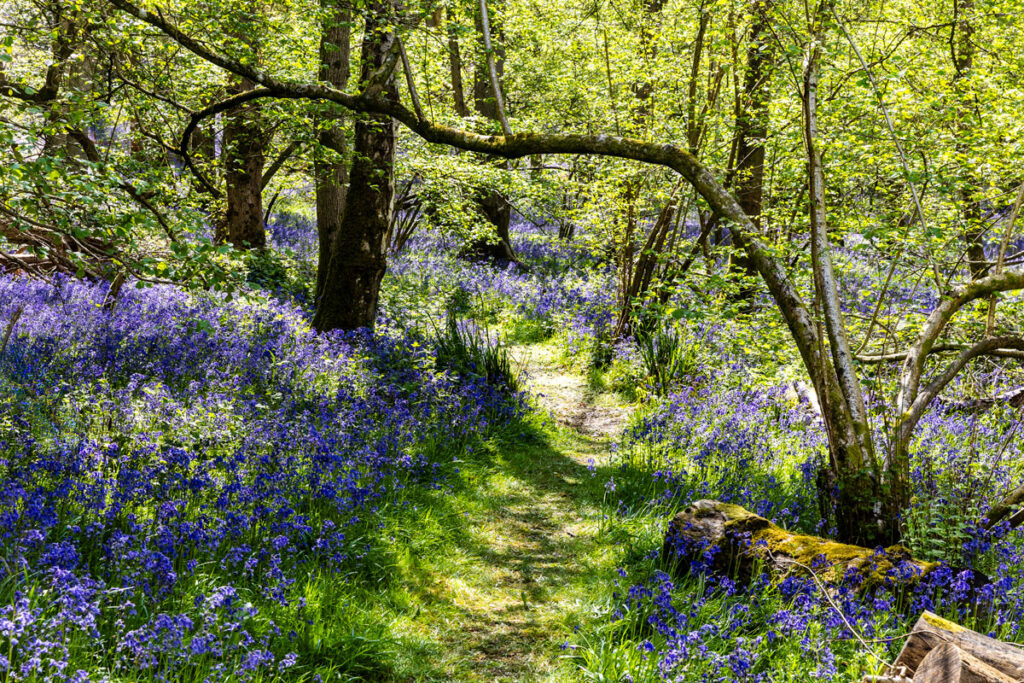
The final stretch reveals a breathtaking scene with a vast carpet of bluebells sweeping up the hillside into the distance. It is truly spectacular. From my previous visit, I recognised many familiar views, though my favourite this year features an arching branch over the path, with sunlight filtering through the ancient woodland. Finally the wood opens up to a hill which is a natural burial ground. The views are beautiful and a lovely end to the bluebell walk.
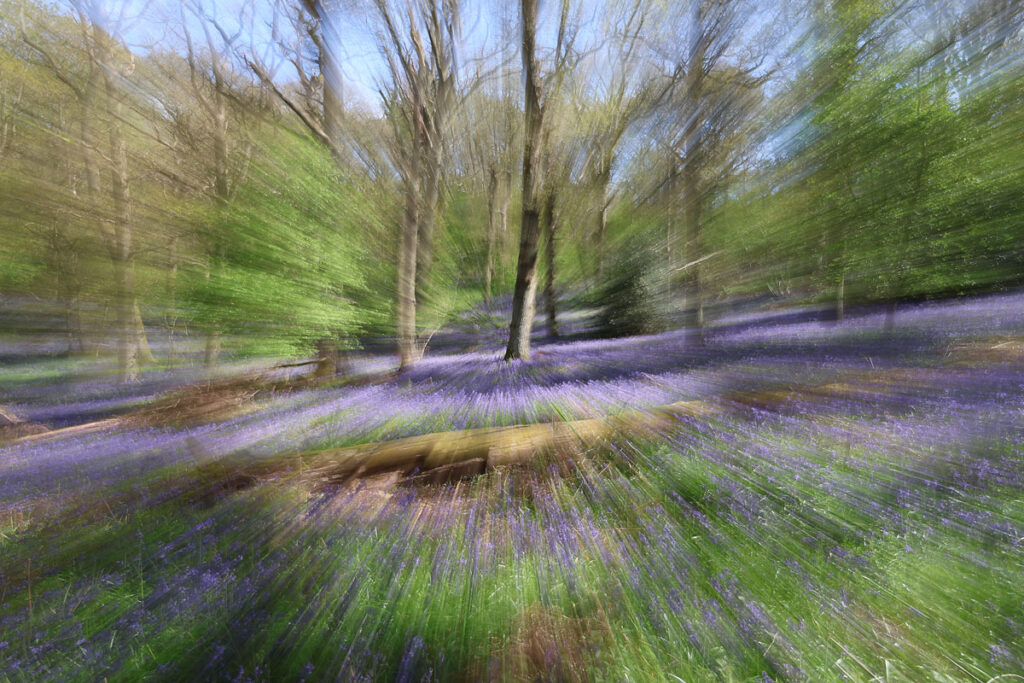
The carpet of blue stretches along and beyond the hill.Having fun with zooming out of the scene of bluebells.
I enjoyed the pop up cafe at the end of the walk and we sat out in the sunshine with our coffee and cake reviewing our photographs that we had taken.
Final Thoughts
This year’s season has already felt like a feast of wildflower displays. Each woodland offered a different experience, from intimate clearings to expansive carpets of colour, making it a memorable exploration of spring in the countryside.
Everywhere I look, there are signs. There are warning signs, diversion signs, public right of way signs. They puncture the landscape, each one a reminder that HS2 is reshaping the countryside in ways both visible and invisible.
HS2 make sure you stay on the official footpath.
Since my last visit, the HS2 works have progressed. The path where the trains will run is now clearly defined, bridges have risen across the fields, and yet the disruption continues. Earthmovers, fences, and machinery still dominate what was once quiet farmland and woodland.
One of the major bridges on this part of the HS2 track. A sign indicates where to go.Concrete pipes ready to be laid.Metal fences protect the HS2 works.
As I walked along the public path, I met Tony and Louise, out for a weekend stroll. We chatted about the project. Tony focussed on the endless metal fencing, the slow pace of construction, and the sense that someone, somewhere, must be profiting handsomely from all this upheaval. Then Bill passed by, shaking his head. He said that HS2 was “Disastrous for the countryside.” He told me how he’d recently brought his daughter to see the area near Sixteen Acre Wood, and how shocked she had been by the scale of the destruction.
Tony and Louise pictured by the steel HS2 fences.Bill looking out on HS2 path that has destroyed the farmers field.
What strikes me most, though, is the sheer number of signs. They seem to compete with the landscape itself for attention. The public path winds past a tired-looking environmental pond. Then further down there is the original pond still clinging to its place amid the diggers and debris. The woodland here is sparse. Trees have been toppled, stripped back and scarred, but still they hang on waiting for the construction to finish.
Pedestrian lights control the construction traffic.Beware heavy plants.A new pond is out of bounds.
Walking across the path of the future train tracks. I took in the scene. The HS2 line is still dirt for now, awaiting concrete and steel. Machinery parts, pipes, fencing, and plastic weights litter the area. It is difficult to imagine what this place will look like when everything is complete. Will nature ever fully reclaim it?
The high speed train track is just dirt and compacted soil. The tracks await.
Tony asked me what I thought of it all. His question caught me off guard. The truth is, I am somewhere in the middle rather like the metal fence that separates one side from the other. I am dismayed at how easily nature is cast aside, yet I cannot deny the appeal of improved transport and connectivity. Still, the pace and the cost weigh heavily on any sense of progress.
An autumnal path leads to the HS2 works.A bleaker path takes you over the HS2 track.
Taken in 2011, it shows a dark, dense woodland. The scene is peaceful and the field is ploughed ready for planting. This is an image from another age.
Progress, it seems, may be efficient but it is rarely kind.
This is the latest in a long line of Blogs about the HS2 construction taking place around 16 Acre Wood near Berkswell. If you found this interesting then please read my last blog which will then lead you along to all the others on this subject.
The dull and gloomy weather over Christmas has led to several fog-drenched mornings, which have lingered throughout the day. For photographers, such conditions are ideal for adding atmosphere to compositions. I set off towards Baddesley Clinton, where the presence of the canal network generally guarantees fog. I drove to Hay Wood but stopped by the entrance to Baddesley Clinton on the way to take a picture of the tree-lined entrance. Another good spot is the public footpath on Netherwood Lane. Here, the line-up of trees with a hedge is the perfect location for a sunset picture in the summer. In the winter, the branches add different shapes to the landscape. The fog provided an eerie landscape.
Windows in the fog. (Footpath off Netherwood Lane, near to Baddesley Clinton.)Entrance to Baddesley Clinton with dog walker.
Hay Wood has featured in my blog over the years. There are several places in the woods that I like to visit. In spring, there is one area with a carpet of bluebells, and I wondered how it would look in the fog. I brought my tripod with me, and most of the pictures were taken using a long exposure setting, especially in the woods where the light was poor. There was some colour from the remaining leaves. The last few pictures show the oranges and greens of the wood.
Dancing Branches in the foggy landscape.Trees standing in the fog.Colours of winter in Hay WoodOrange and green colours in the woodland.
I am pleased that the pictures worked out because I got a flat tyre on the way back and had to wait two hours for the recovery man to arrive. However, I was soon back home editing the pictures. You will see that I varied my black-and-white treatments, either adding a high-key effect or using lots of contrast.
The Escape route, Hay Wood.
These are my settings for each of the pictures, tripod used where stated:-
The Escape Route f/11, 0.4s, ISO 100 – Canon EOS 5D Mark IV, EF 70-200mm – Tripod Windows in the fog. f/11, 0.3s, ISO 100 Canon EOS 5D Mark IV, EF 70-200mm – Tripod Entrance to Baddesley Clinton F/5.6, 1/125, ISO 320 – Fujifilm x100vi Dancing branches. f/11, 1s, ISO 100 Canon EOS 5D Mark IV, EF 24-70mm – Tripod Trees standing in the fog F/5.6, 1/125, ISO 320 – Fujifilm x100vi Colours of winter F/5.6, 1/100, ISO 2000 – Fujifilm x100vi Orange and green F/11, 0.5s, ISO 125 – Fujifilm x100vi – Tripod
As I mentioned Hay Wood has featured before in my blog and the landscape is transformed in Spring
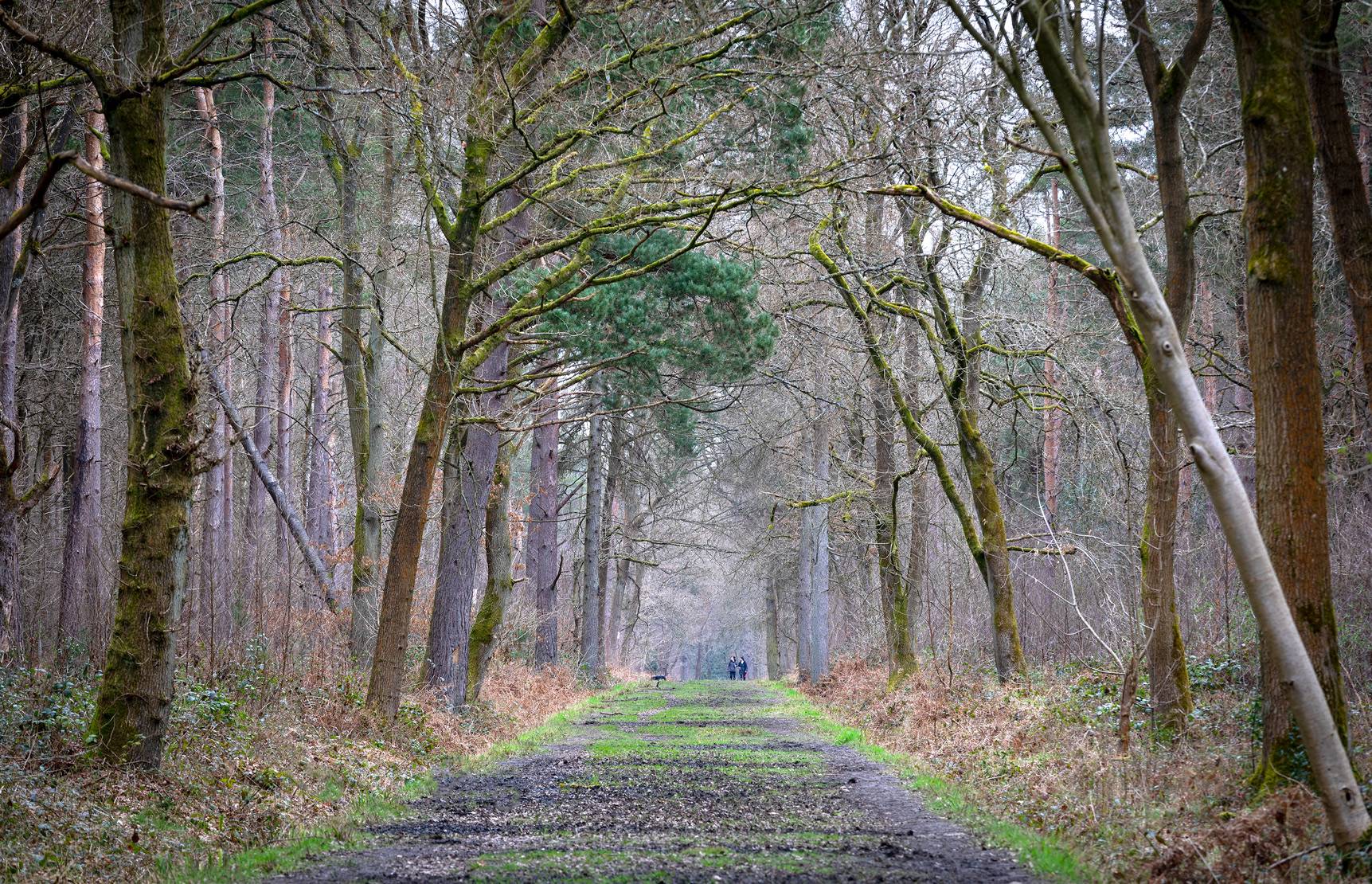
Woodland photography is one of my interests as there are several woods near to me that I love wandering around taking photographs with my camera. The skills that are involved with taking such pictures, I have learnt by trial and error. However, my technique is rather low key and much of what I do is point the camera and take pictures that look appealing. The opportunity to learn woodland photography skills arose after a chance meeting at the Photography Show with Miffyohara. Miffy is a classically trained photographer who has a great love of woodland photography. We talked about a photography walk and the place Miffy chose to start my woodland photography journey was Hagley Park next to the Clent Hills.
The outlines of these branches make a pleasing geometric shape.A window created by the tree branches.Two walkers passing through the woods.I included the path which is partially covered with blossom so as to lead to the light.
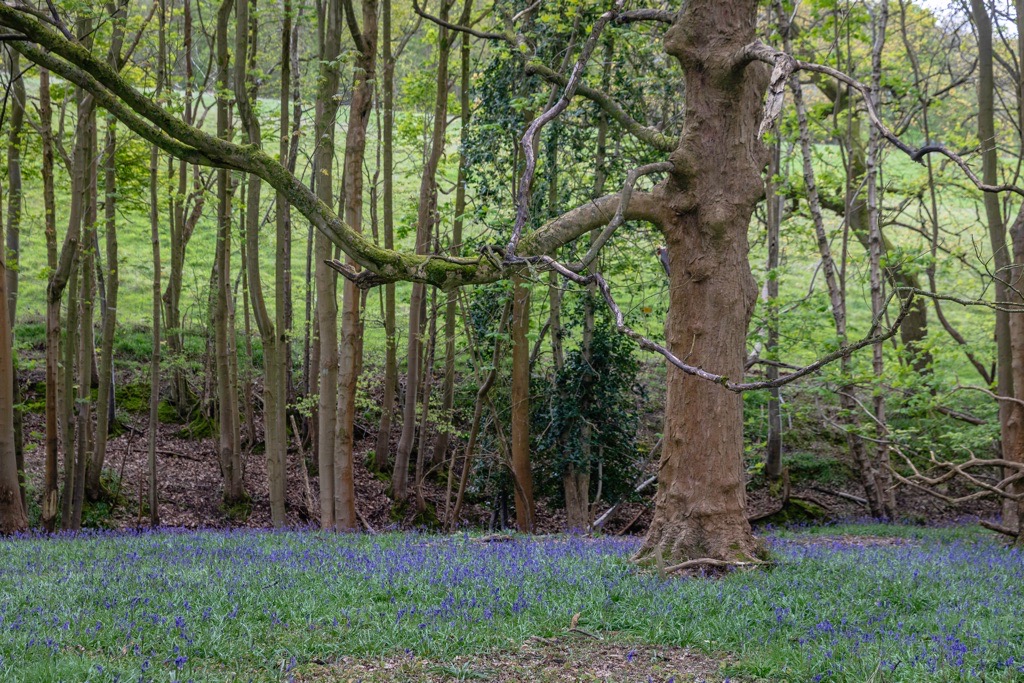
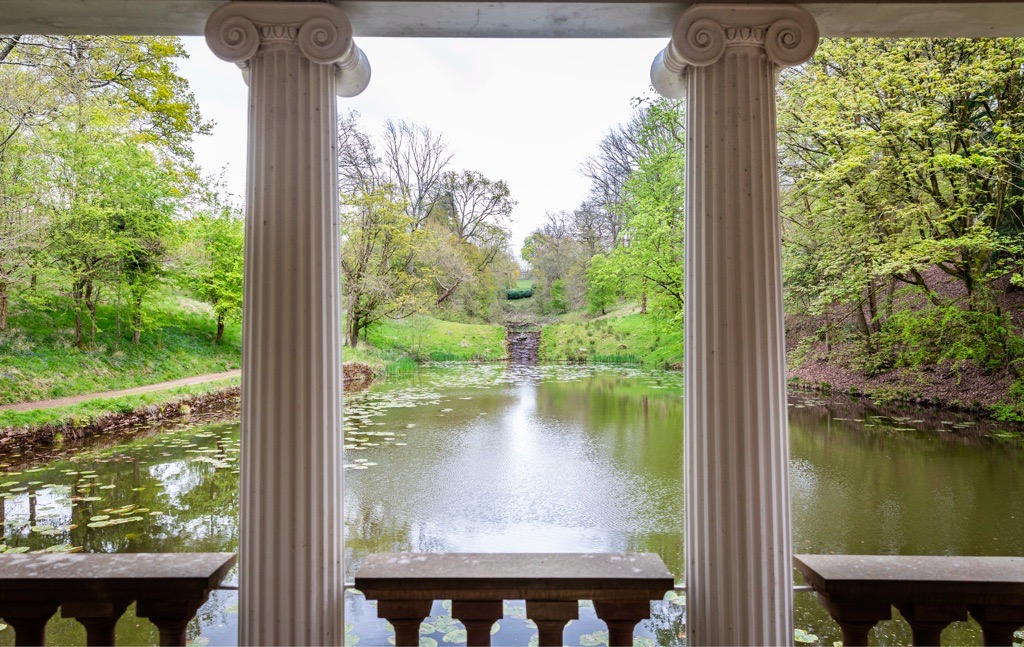
The park has 350 acres of Worcestershire countryside to explore with an abundance of woodland. When I arrived, I realised that a tripod was essential. Never go anywhere without your tripod. This was my first lesson of the day. Fortunately the light was good and the sun was breaking through the clouds. During our visit, the sun was diffused by cloud cover although occasionally there were long periods of sunshine. Therefore we waited for these patches of light to illuminate the woodland. Similar to wildlife photography, a calm, non-hurried approach is required. This is so difficult for me as I do tend to rush around. For the first 30 minutes, we observed and photographed one tree. We slowly walked around the tree, looking at how the sun fell on the branches and leaves. I learnt about “windows” created by tree branches that open your photographs in a similar way to framing. This aspect of woodland photography is appealing to me as I enjoy taking a picture within a picture. I found the opportunity to place people into the scene although I acknowledge this is not what woodland photography is about! The bluebells were in full bloom and offered splashes of blue throughout the day. Another learning point was the avoidance of man-made structures in the photograph and therefore paths which allow a leading line were not considered but I did occasionally break the rules. Therefore I used the branches and arrangement of the trees to lead the eye.
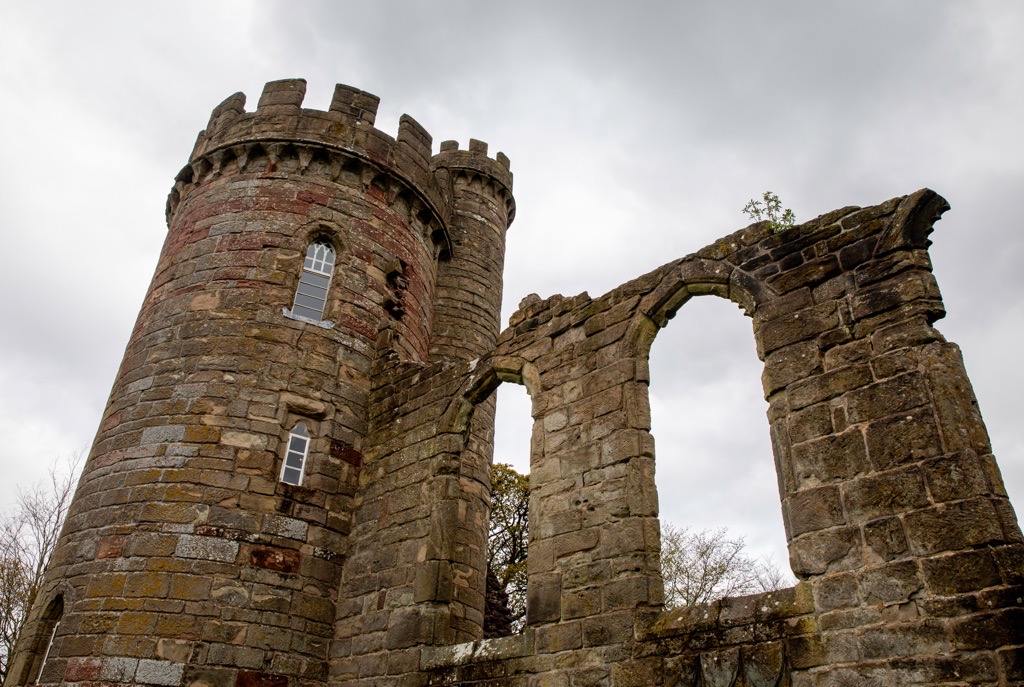
A tree of interest that tells a story.A view of Hagley castle framed by a tree.The imposing Hagley castle.
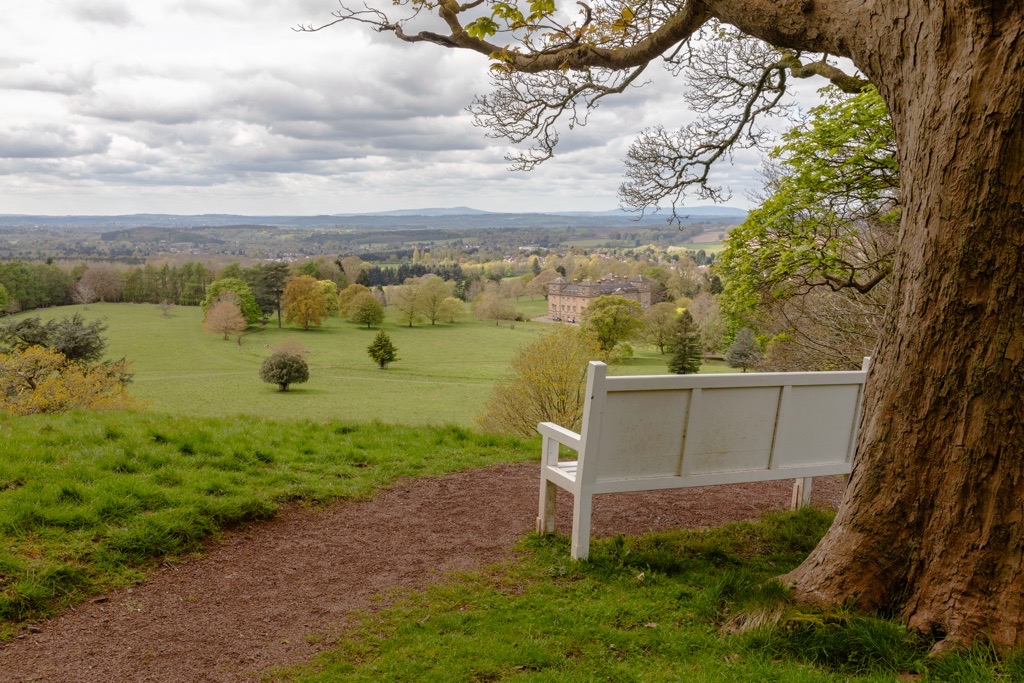
Hagley Park has a circular route that takes in several follies that were placed by previous owners to add a pleasing spectacle to the eye. The structures follow classical architectural designs as may be seen in my photographs. The current ideas of the park keepers are to reduce the prominence of these follies and allow the woodland views to take centre stage. The first folly we came across was Hagley castle which is designed to resemble a small ruined medieval castle. The castle is an imposing structure over this part of the park and whilst it was fenced off, it was still possible to view the architecture. Leaving the castle, the path dipped steeply down towards the stream that passed through the south of the park. On our way there were several interesting trees worthy of photographing. We climbed back up and then came upon Milton’s seat which gave beautiful views of Hagley Hall and the surrounding Worcestershire countryside. This was a place where one could linger and let time pass you by. The light was good and it was possible to view the hills in the distance.
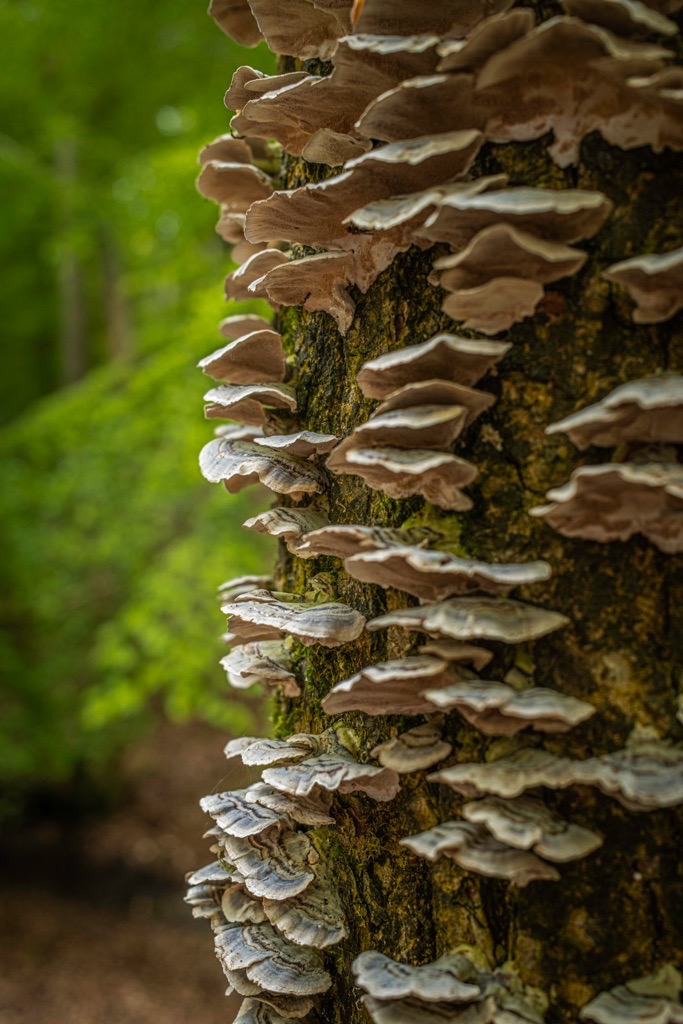
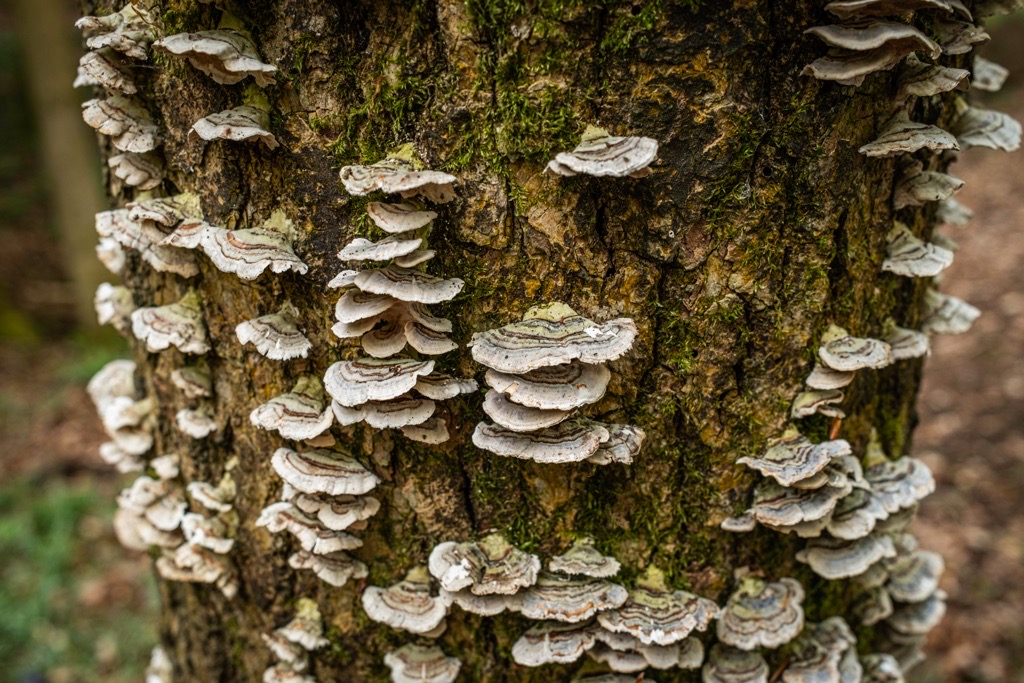
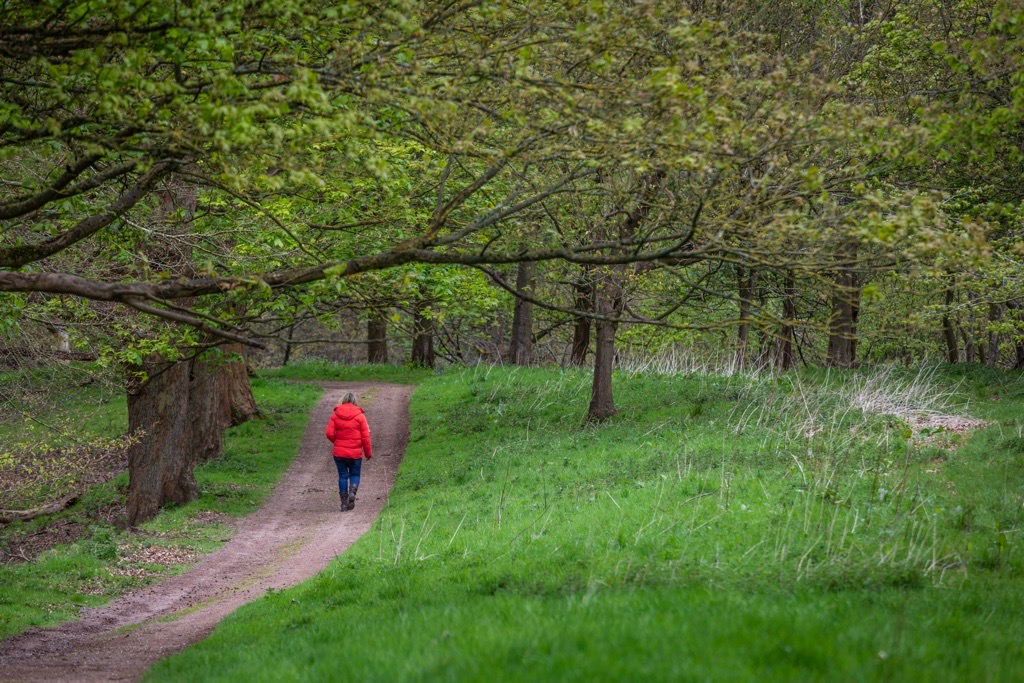
A tree with personality.Fungi patterns on a dead tree.More patterns created by the fungi.Milton’s seat with a view that takes in Hagley Hall and the mountains in the distance.The woman in the red jacket had to be photographed.
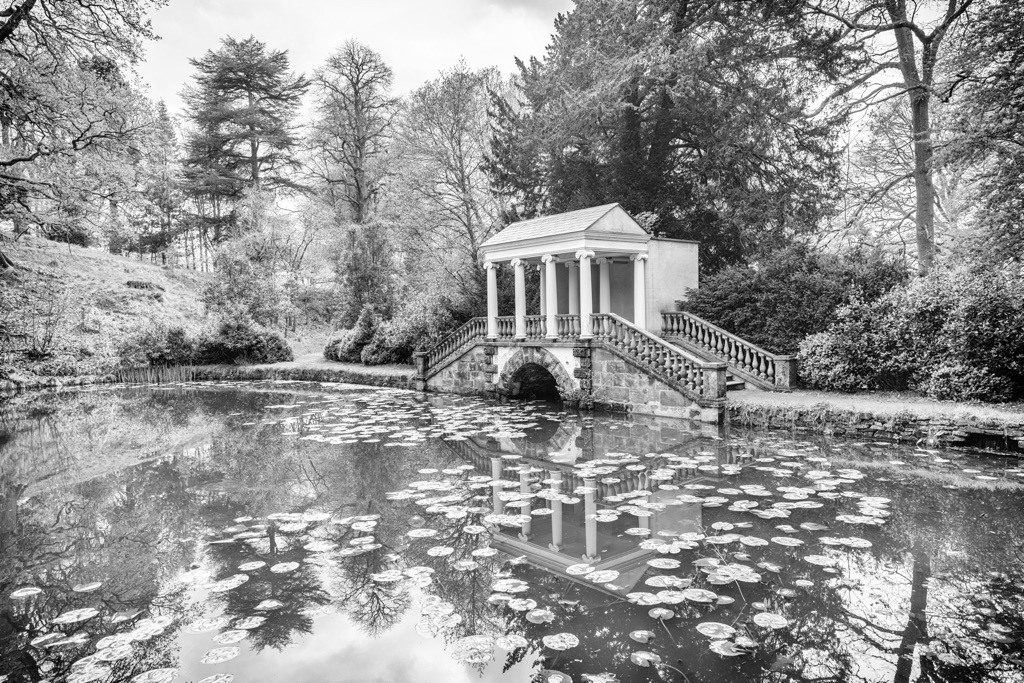
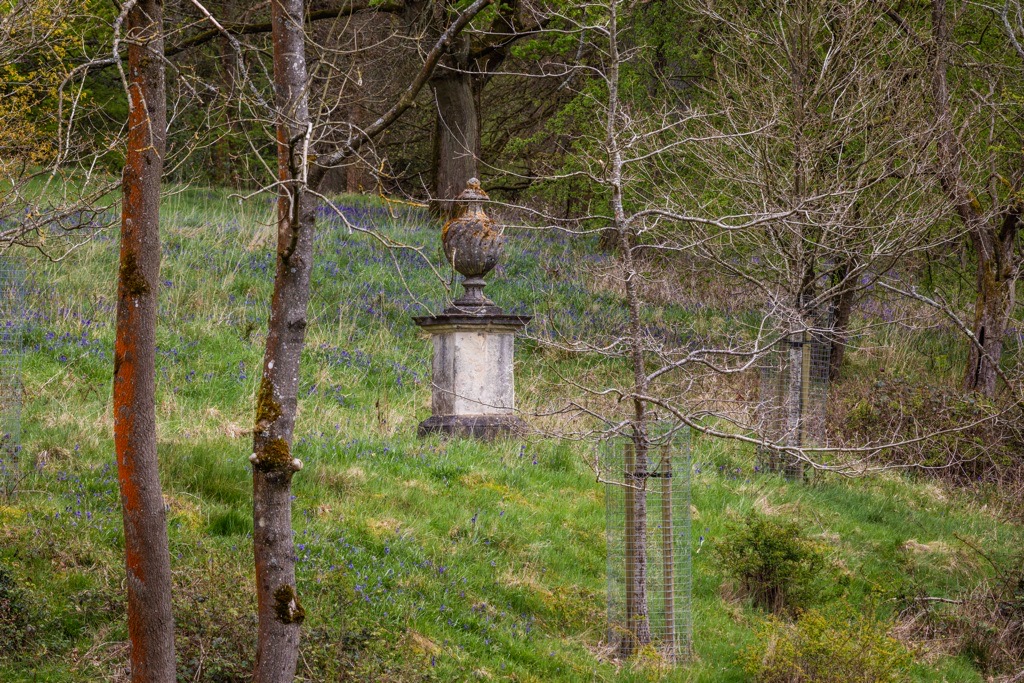
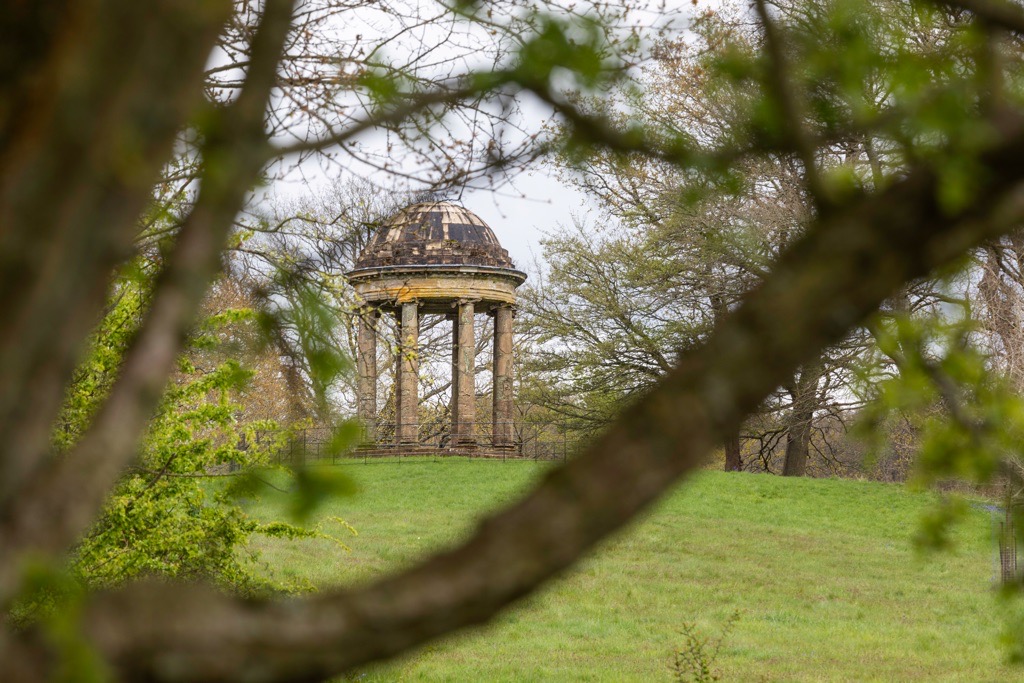
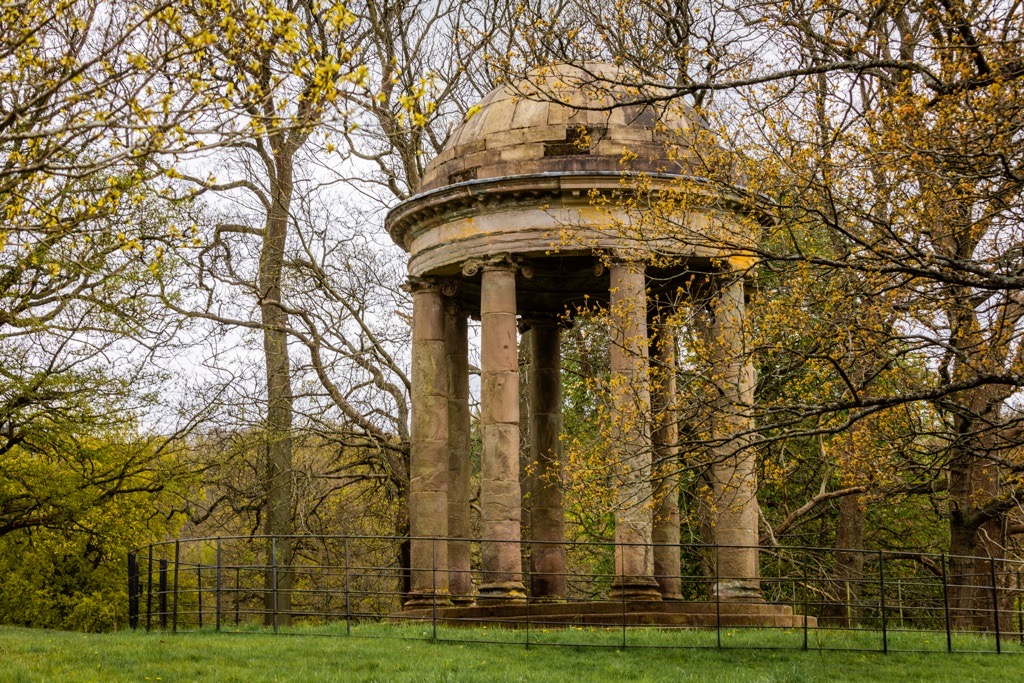
Our next point of interest was the Palladian bridge which is very photogenic. You are spoilt with the different compositions that arise from the bridge and the surrounding woodland. The bridge is at the head of the lake and set in a valley of trees. There are reflections in the lake and the lay of the land offers both high and lower-level interpretations of the scene. I settled for an eye level view taking in the reflection and the setting of the bridge along the lake. Processing the picture in black and white provides balance and allows blending between the man-made structure and the woods. The bridge is at the start of three lakes which lead upwards to the classically styled Rotunda. On the way past the lakes, there is a memorial to the English poet William Shenstone in the form of an urn. Again I was drawn into photographing the urn and the Rotunda amidst the woodland trees. There were also other interesting trees to take in and photograph.
The Palladian Bridge in Black and WhiteThe view over the lake.Shenstone’s UrnA window onto the Rotunda.The Rotunda blending into the surroundings.
On returning to the café, we discussed our photographs and then discussed how to process the pictures. Whilst proficient at Lightroom, I do need to revisit Photoshop and use the layers function to bring out features in my photographs. Once again this is all part of the learning process.
Details from a fallen tree.
Woodland photography is a genre to visit. I learnt how to look at woodland scenes, and carefully pick out areas of interest. The need to slow down and take in your surroundings allows you to seek out new photographic scenes that you would miss if you just walked through the park. By slowing down, you are also able to look at how the light falls on the woodland. Looking for windows and diagonals in the branches of the trees helps your woodland photography stand out. This walk was during the day and the woodland would naturally light up during the golden hours. I will look for future opportunities to pursue this genre of photography especially at the start and end of the day.
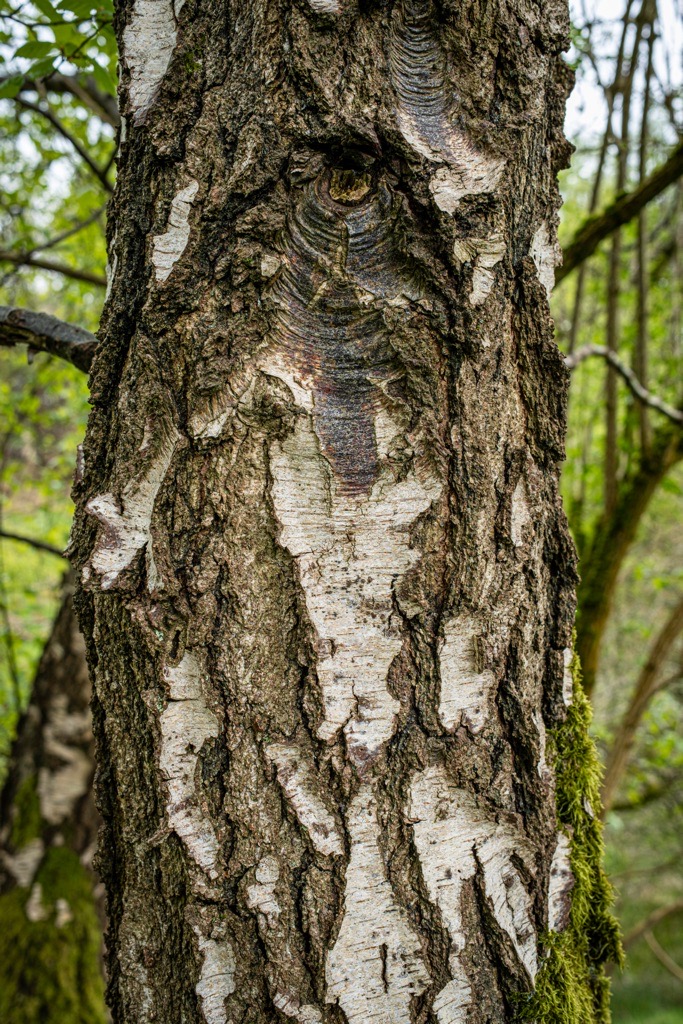
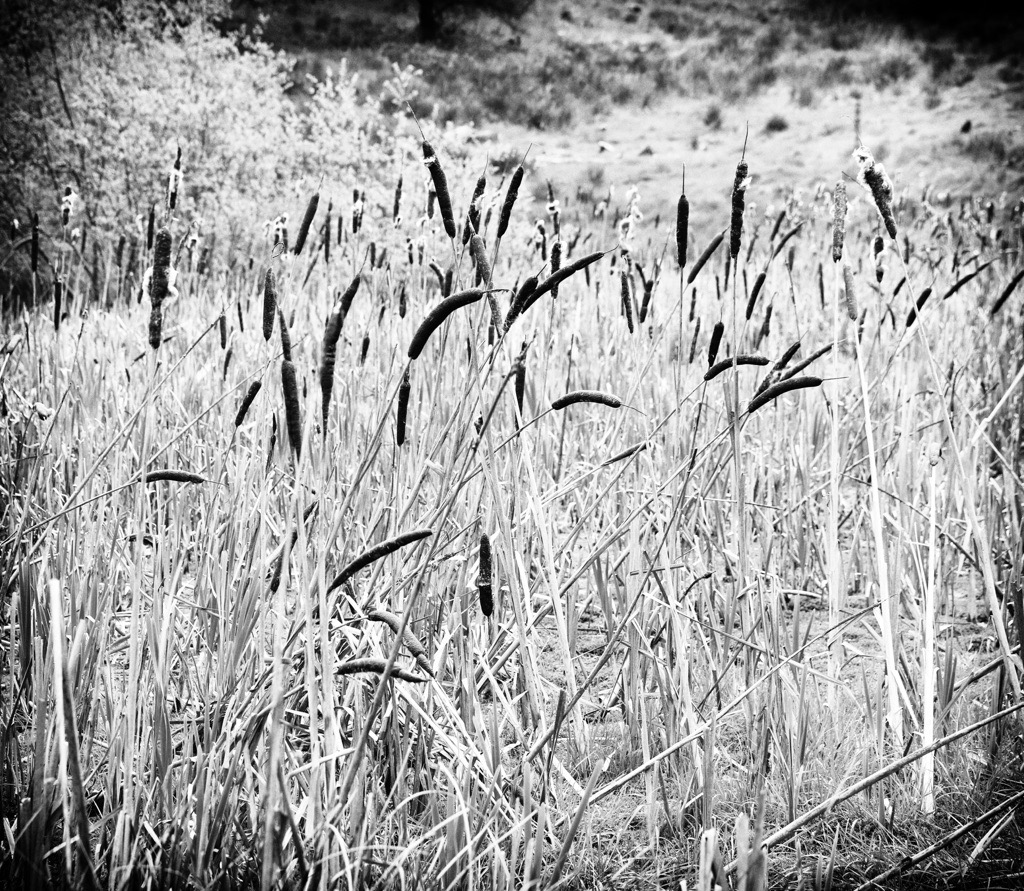
Tree texturesRushes
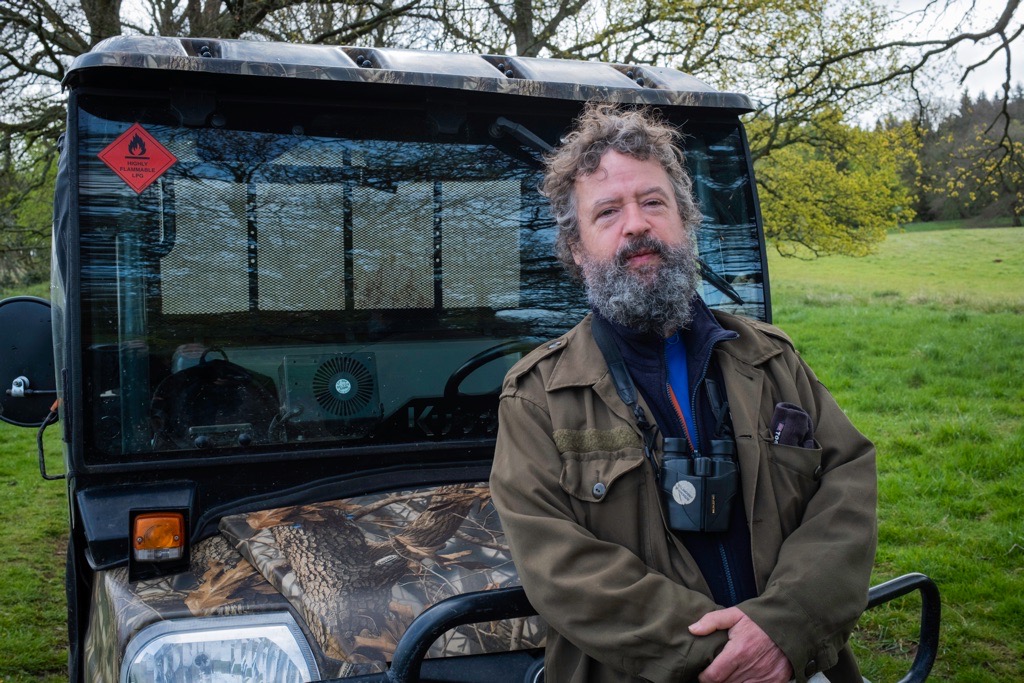
At the start, we talked to Alex one of the Park Rangers who gave us insight into the care of the park. Alex also agreed to be part of my 100 strangers project that is nearing completion. Here is a picture of Alex leaning against one of the Park Ranger trucks.
Alex a park ranger at Hagley Park.
A final thank you to Miffyohara who was an excellent teacher and guided me through the skills required for woodland photography. In our discussions, subjects ranged from composition of woodland scene to a debate on giving titles to our pictures. The sharpening of my observational skills was one outcome of the day. The final word goes to Hagley Park which is a must visit location and will appeal to everyone not just photographers.
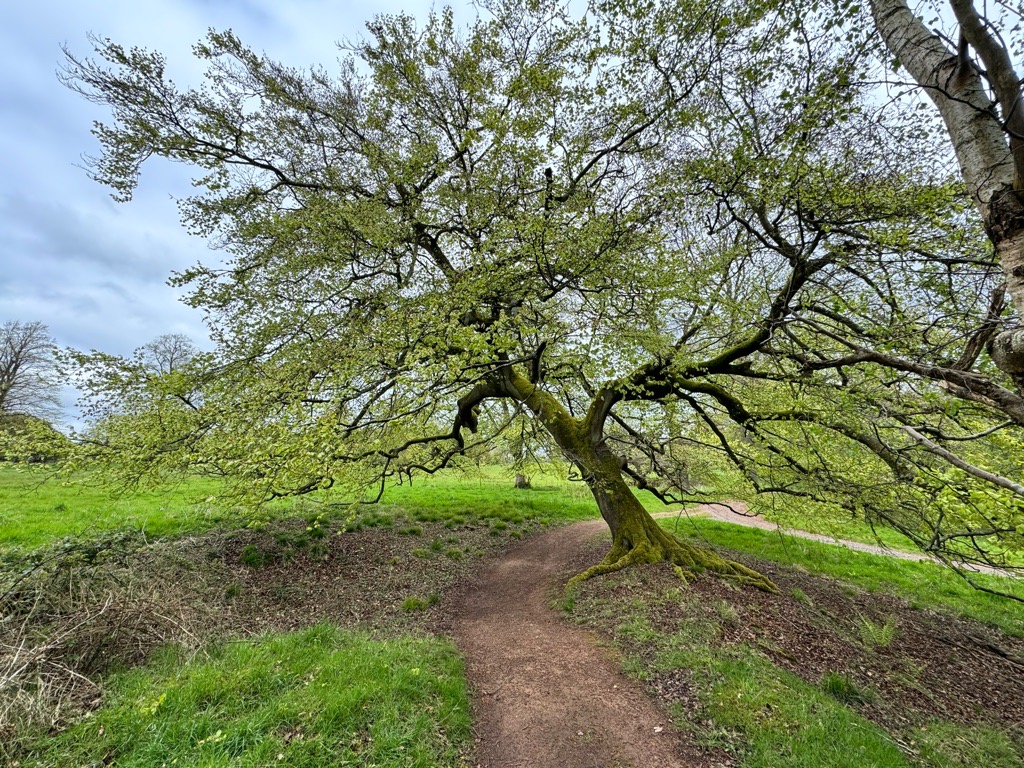
An iPhone picture of an interesting tree and thank you to Miffyohara for showing me the beauty of trees.
If you wish to see more of my previous woodland photography then I have added a link below. I will revisit Hay Wood with a different eye to my compositions.
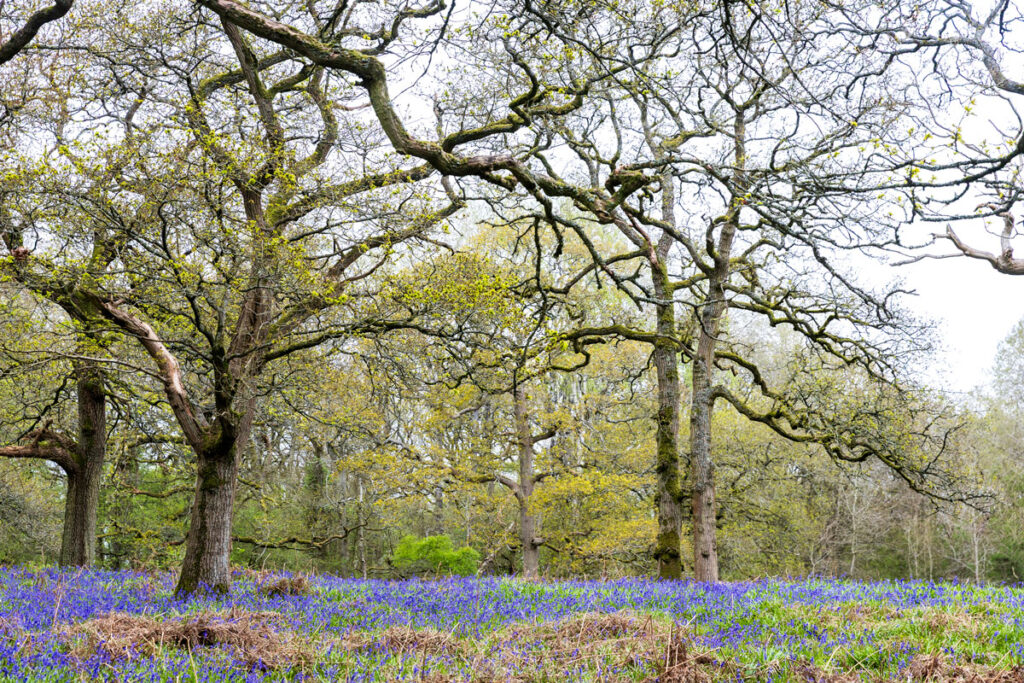
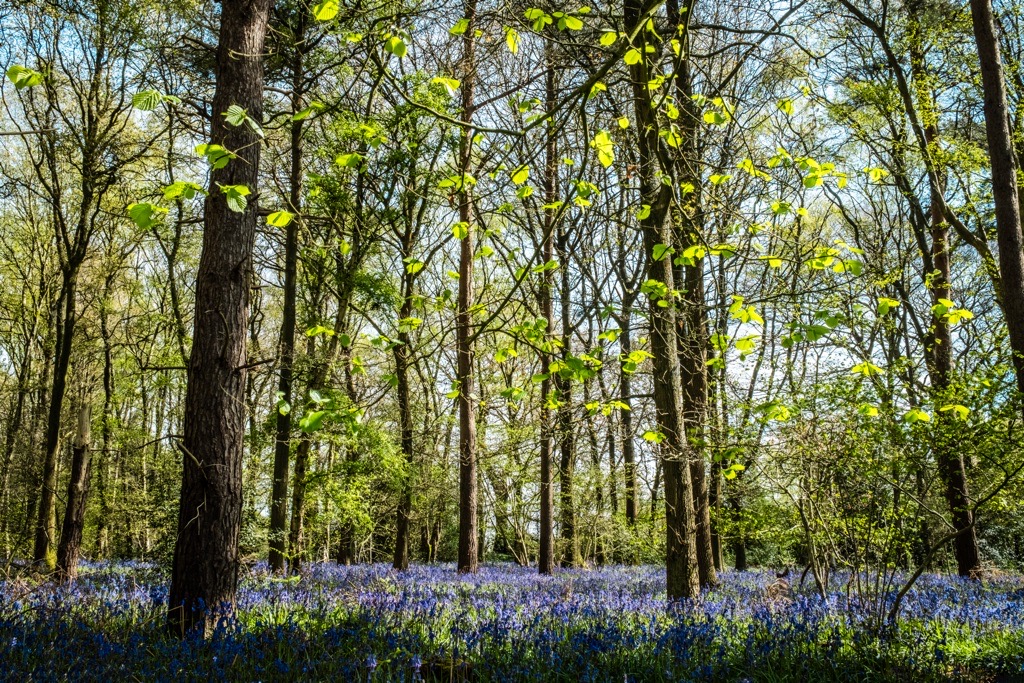
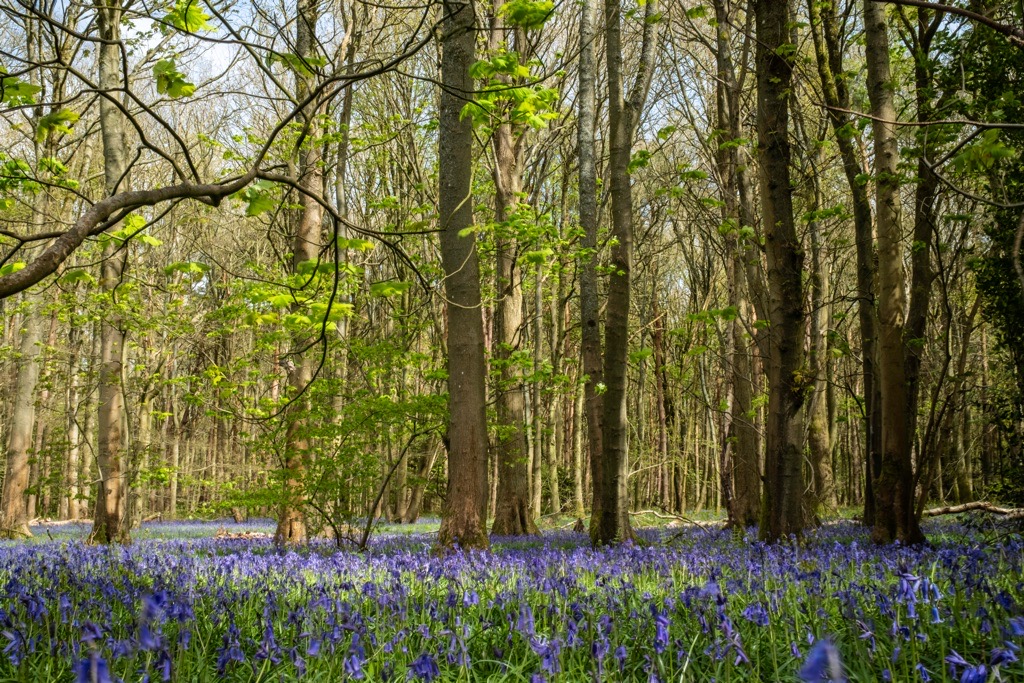
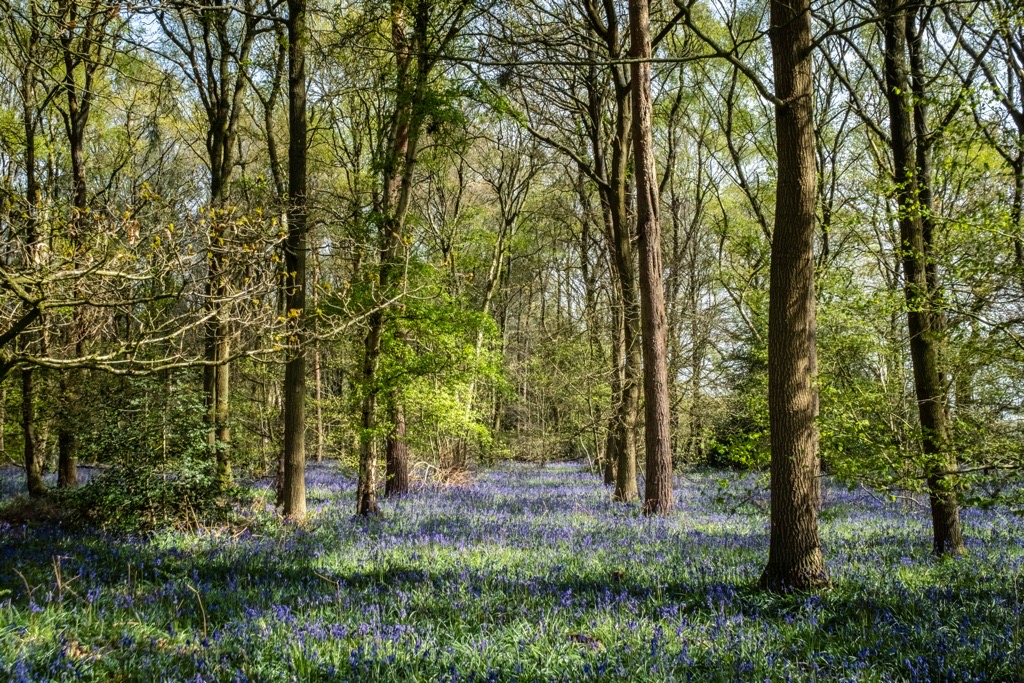
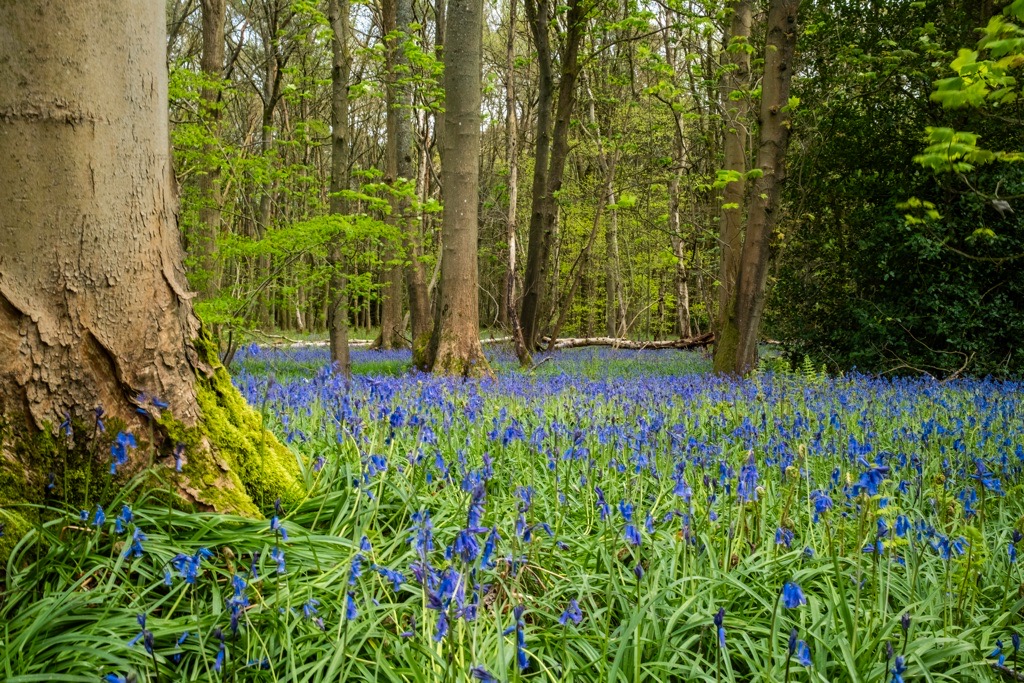
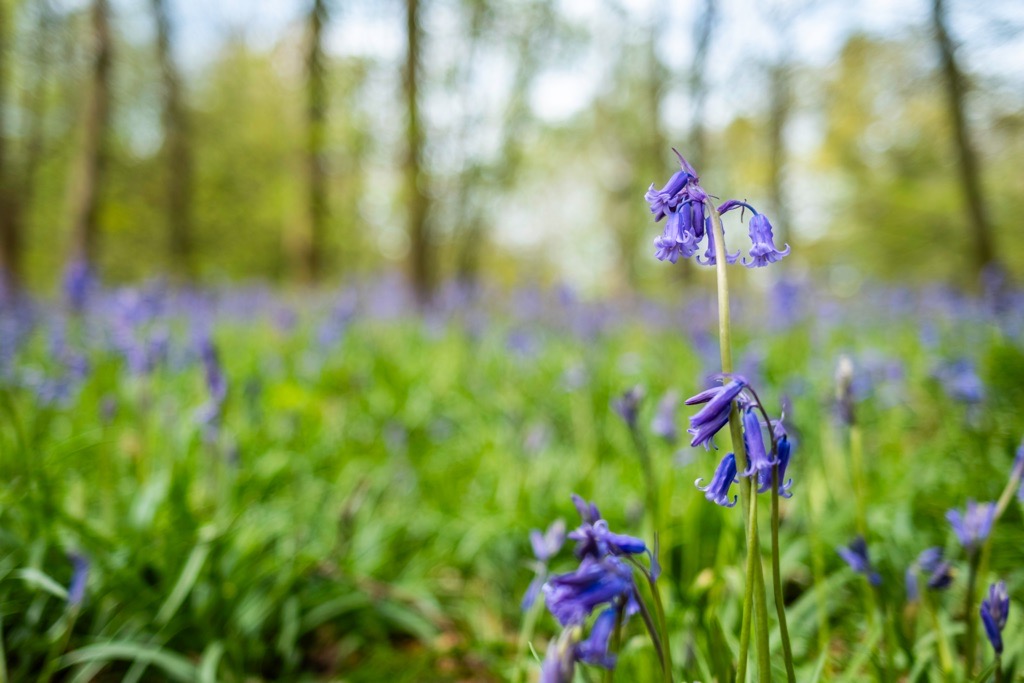
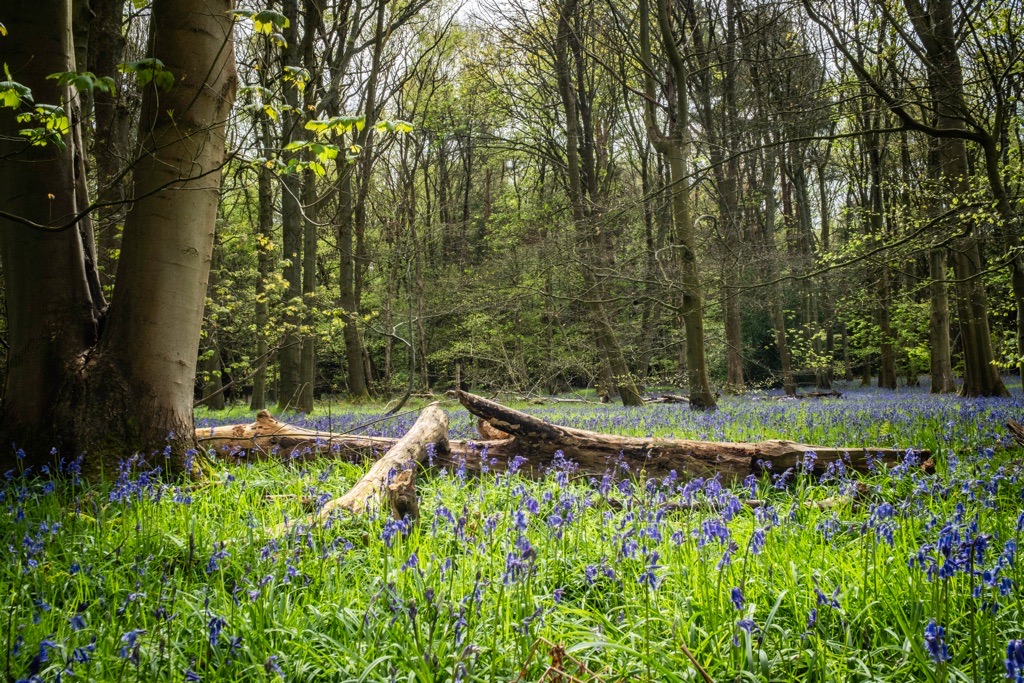
The bluebell season is here and is earlier than normal. Usually the flowers are in full bloom around the May Bank holiday weekend. This year their arrival appears to be 1 to 2 weeks early. A blue carpet of bluebells is always stunning especially when set against the backdrop of the woodland. This year I went to Hay Wood as a fellow photographer had taken a picture of the blue carpets of flowers and the scene looked stunning.
The blue carpet of bluebells.
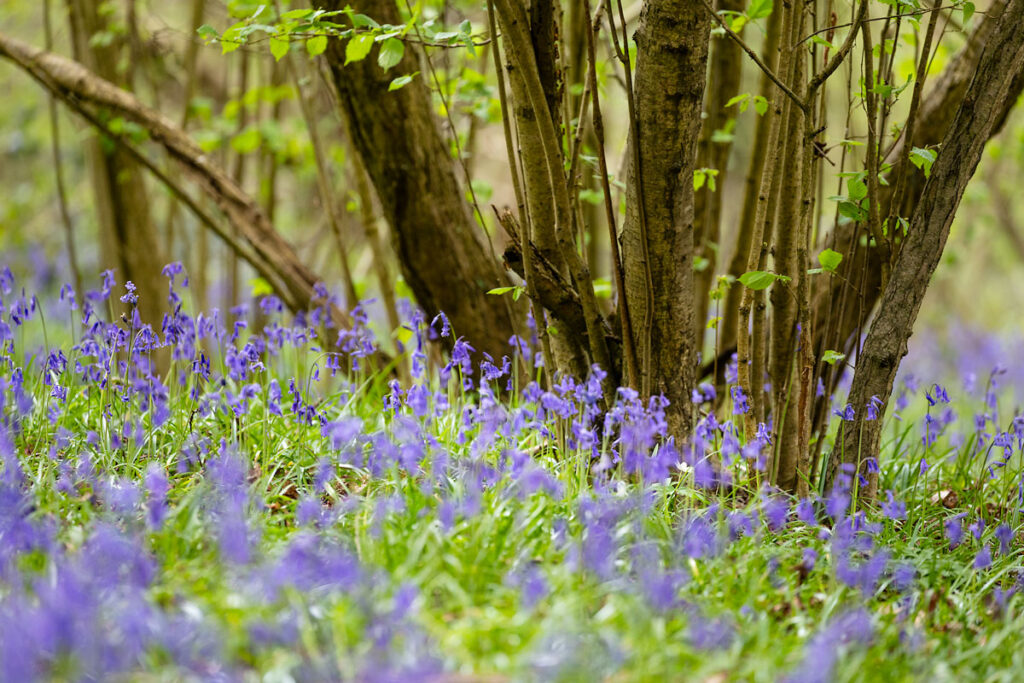
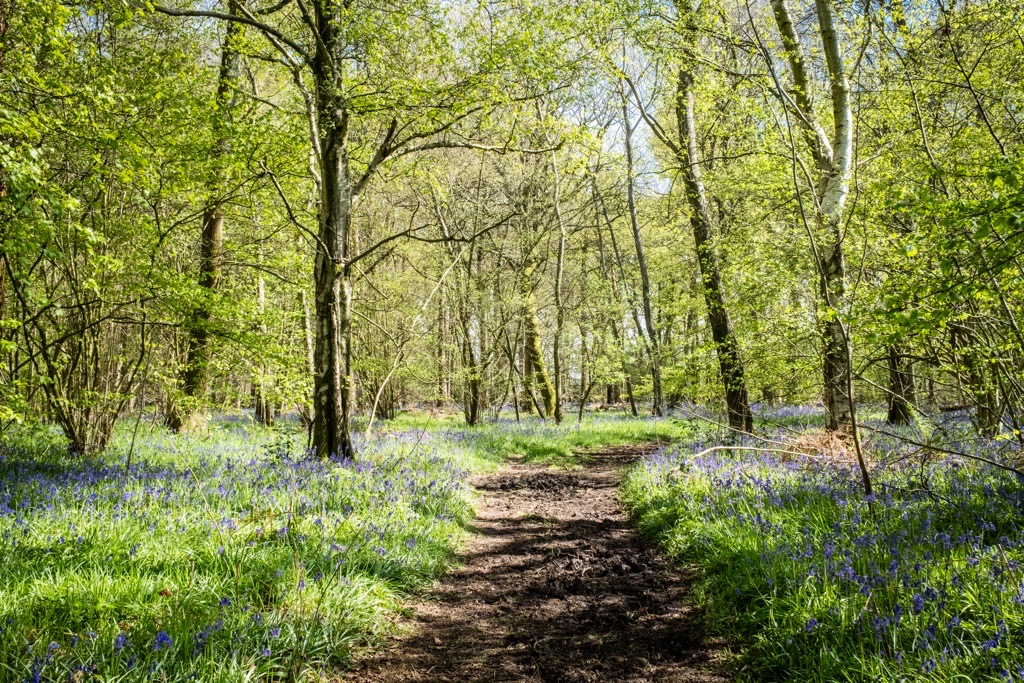
Hay Wood is part of Forestry England and is a small wood which is near to Baddesley Clinton. The latter is an outstanding National Trust property which is always lovely to visit. We are fortunate to have Hay Wood nearby. The bluebells appear on specific patches to the east and west parts of the woodland. The easterly display was at its peak and even though I was there around midday, the light was wonderful. The new shoots of green leaves glistened in the sun and the bluebells contrasted against the trees rising upwards.
Light and shadows highlighting the scene.Bluebells around the trees.
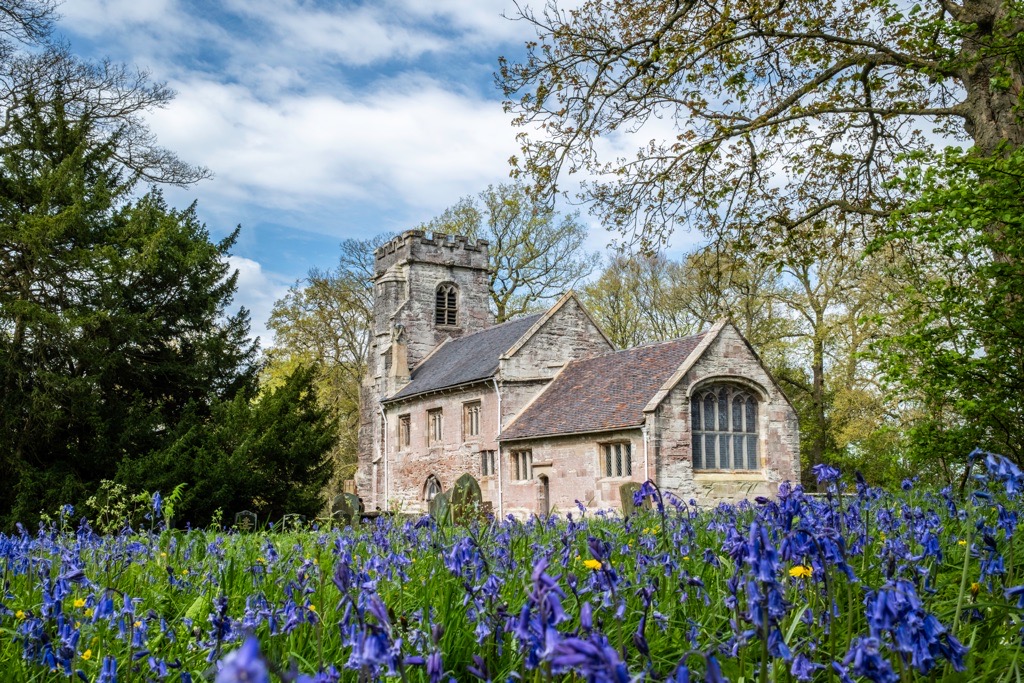
The bluebells to the west of the wood looked beautiful and they were still flowering. More photographs of the blue carpet were taken. The western part of the wood has a public footpath that links with St Michael’s church that is adjacent to the Baddesley Clinton estate. I visited the church as there is the opportunity to take a picture of the bluebells in the foreground and the church providing the background interest.
A solitary bluebell plant with a backdrop of green and blue.Old tree trunks add interest to the scene.Muddy paths led to the bluebells.St Michael’s Church, Baddesley Clinton with bluebells.
All these pictures were taken with my Fujifilm x100vi and I bracketed the exposure of the pictures. The 3 photographs were merged with the HDR function in Lightroom. Some adjustments of the shadows and highlights plus dodging and burning were made.
If you enjoyed these pictures of the bluebells then please follow the links below to see previous entries in my blog.
Who doesn’t love the sight of bluebells gently swaying in the breeze. Many of our ancient woodlands are at risk by the creeping threat of development and that is why I support the annual Bluebell Wood Fundraising Open Day in the Heart of England Forest. Conserving our woodlands for future generations is very much a priority. Great Alne Woodland is just off Spurnal Lane, and is a part of a Natural Burial Ground. The ancient wood has a stunning display of bluebells at the end of April and is open to visitors for two days.
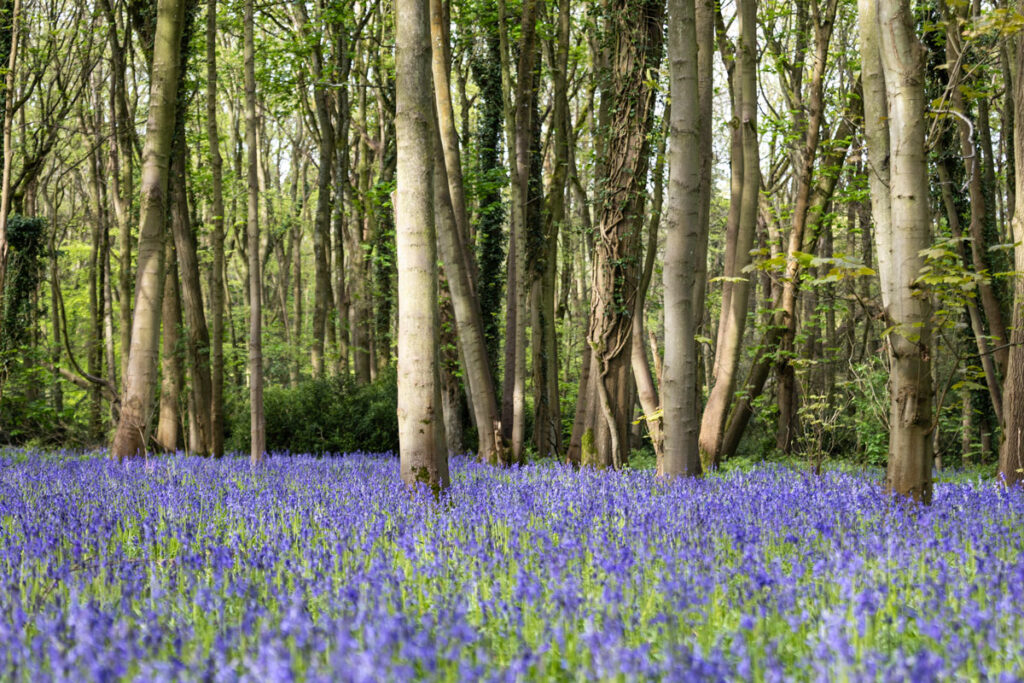
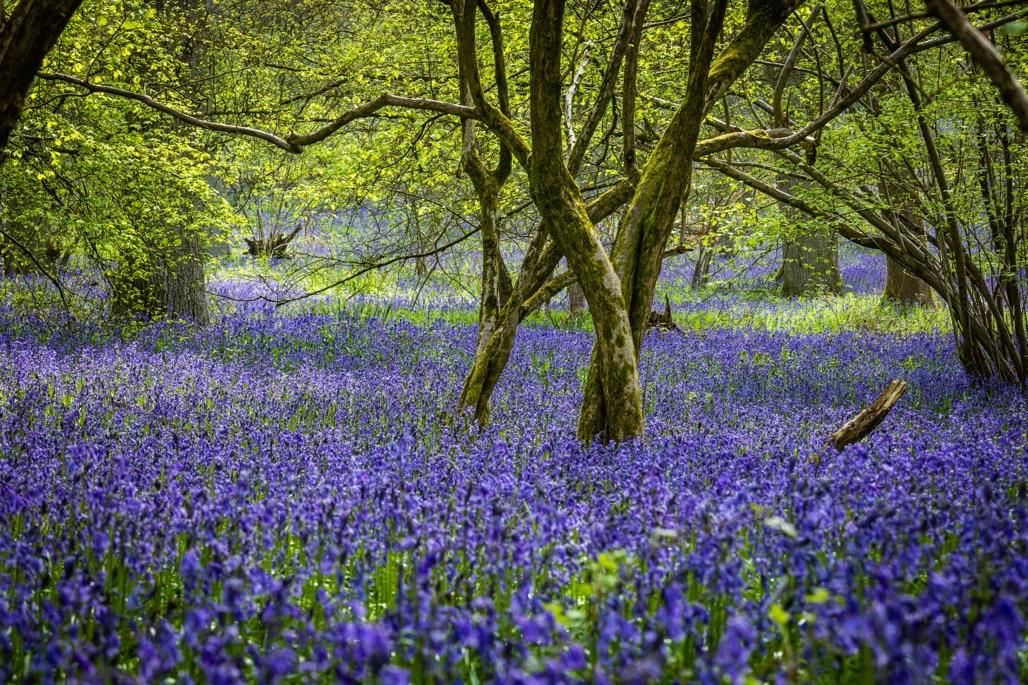
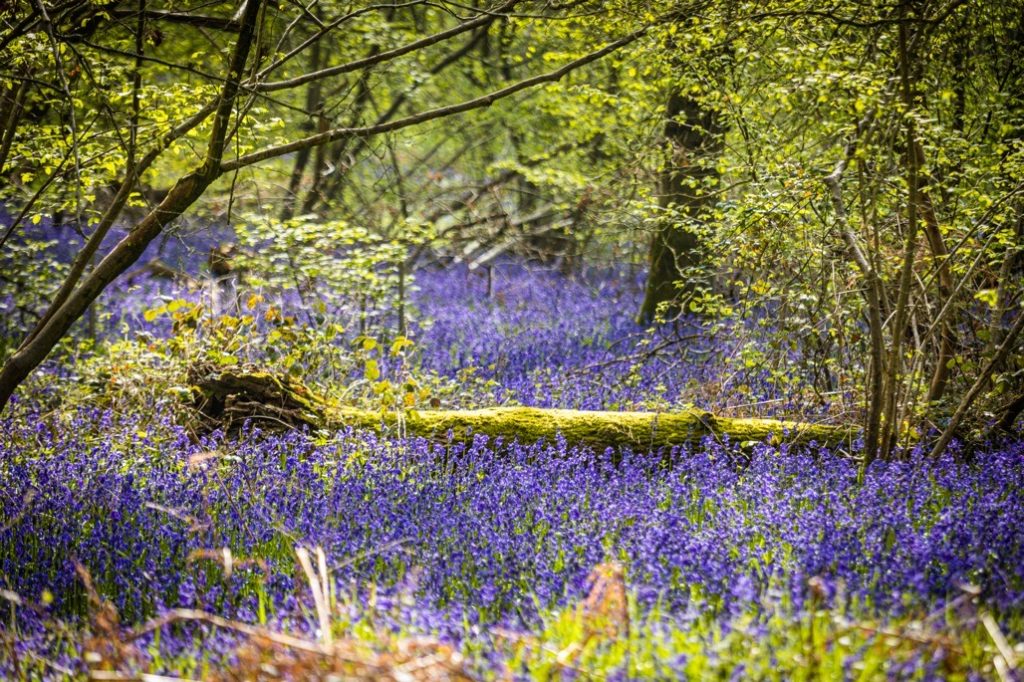
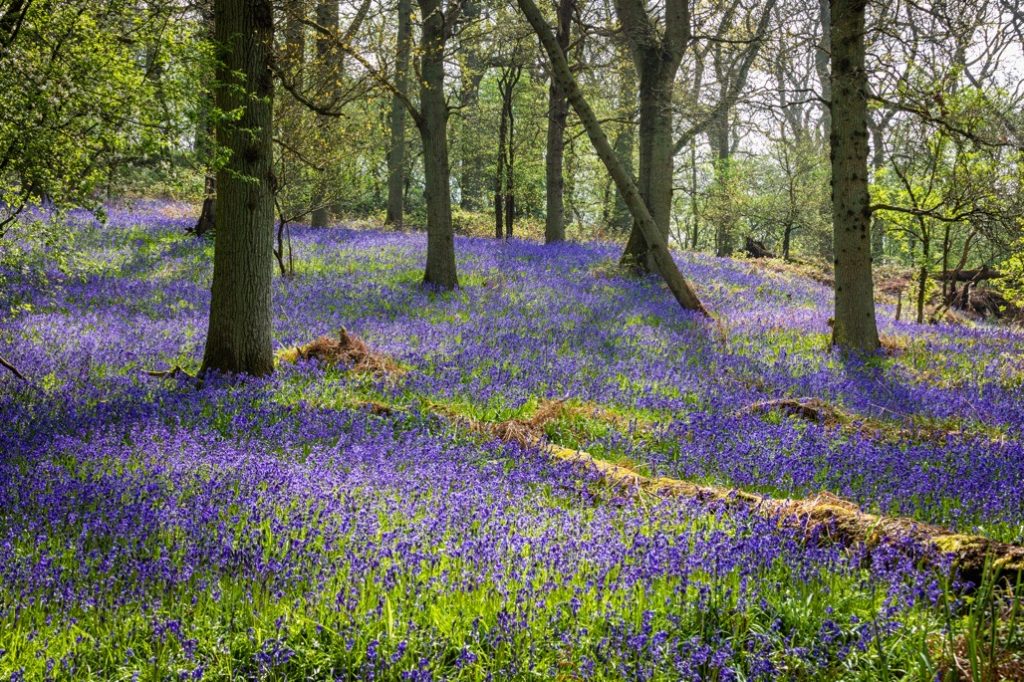
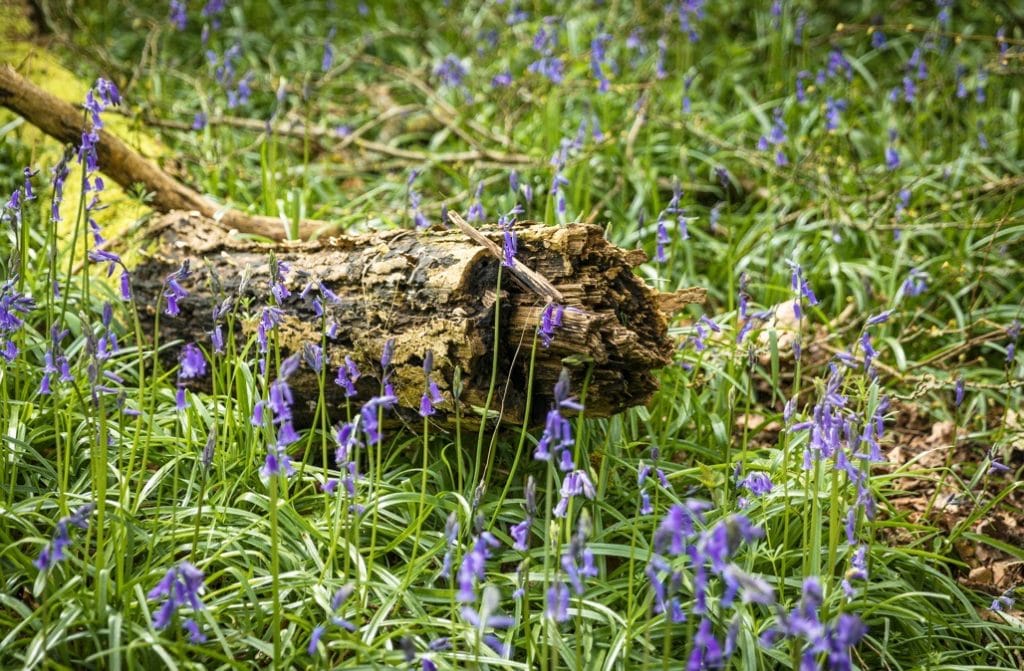
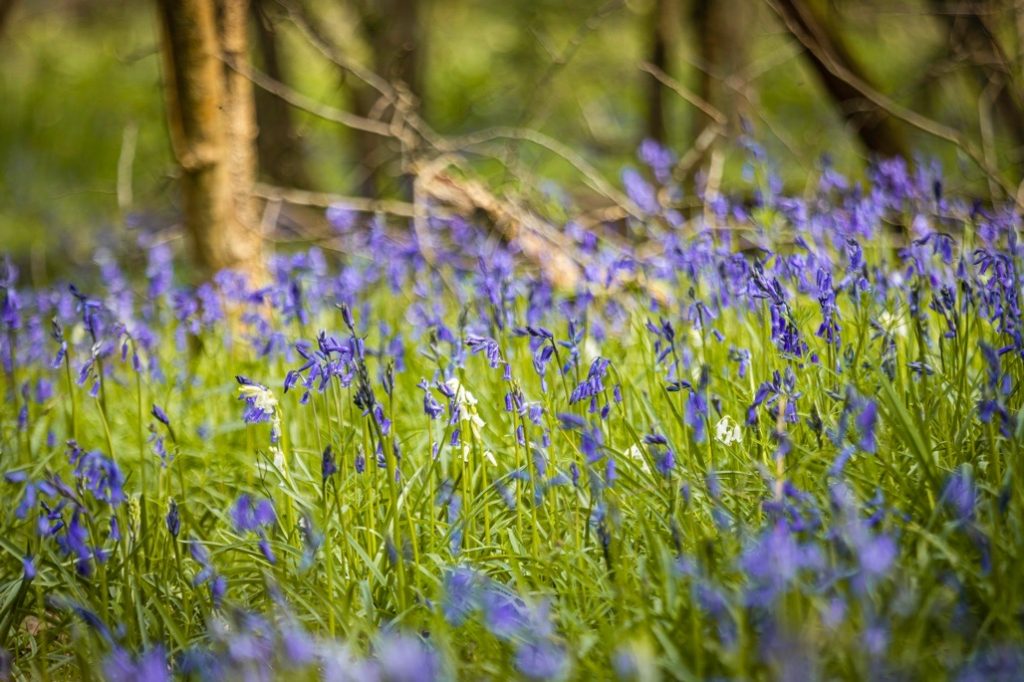
A typical woodland scene with bluebells.Bluebell carpet running up the hill.Bluebells gather around a fallen tree.Bluebells with a scattering of white bluebell flowers.
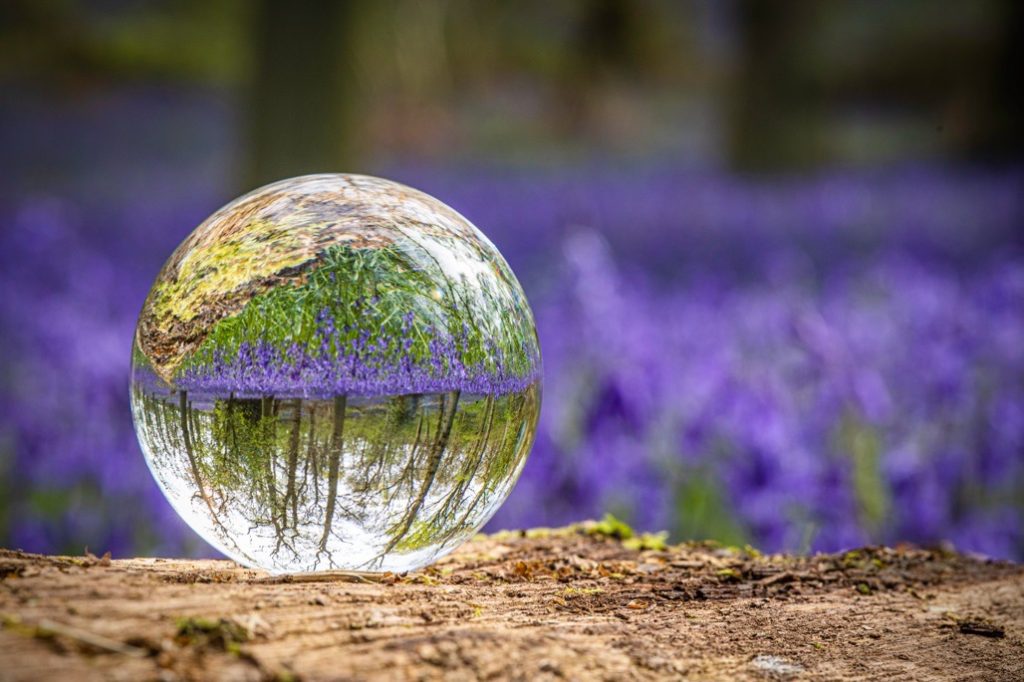
My daughter loves visiting this quiet and picturesque woodland and there are so many good photographic opportunities. I brought along my camera equipment and found that the early morning light was perfect. The contrast of blue and green is a joy to see and photograph. My lensball was also put to good use for a few pictures. A useful photographic tip for maximising the benefit of your lensball is to use your macro lens for the pictures. This technique works a treat.
Using my lensball in the bluebell forest.
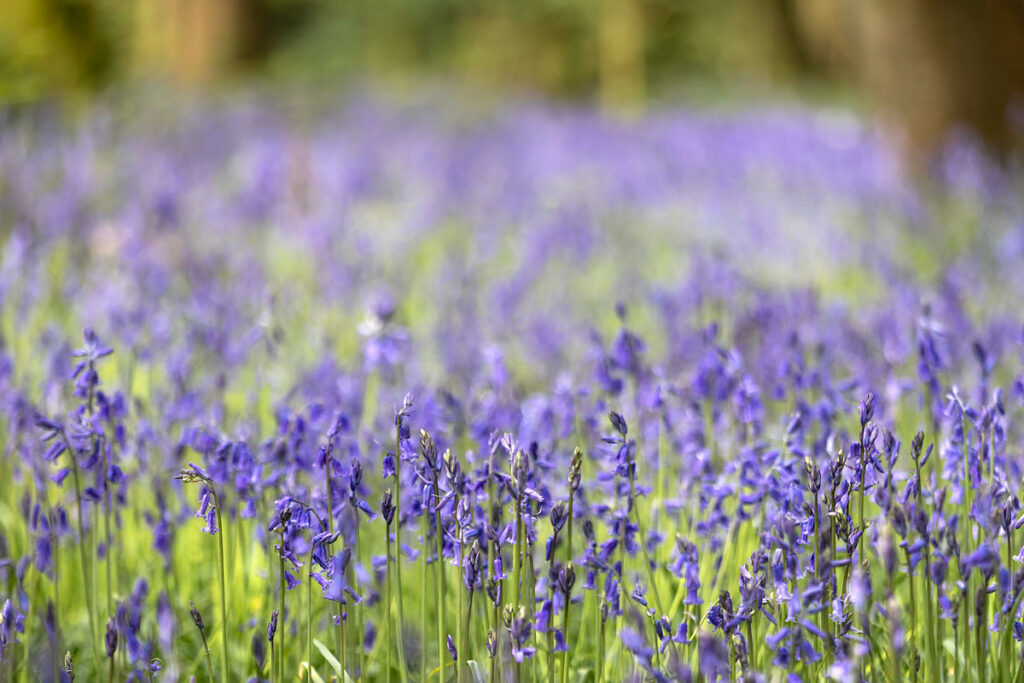
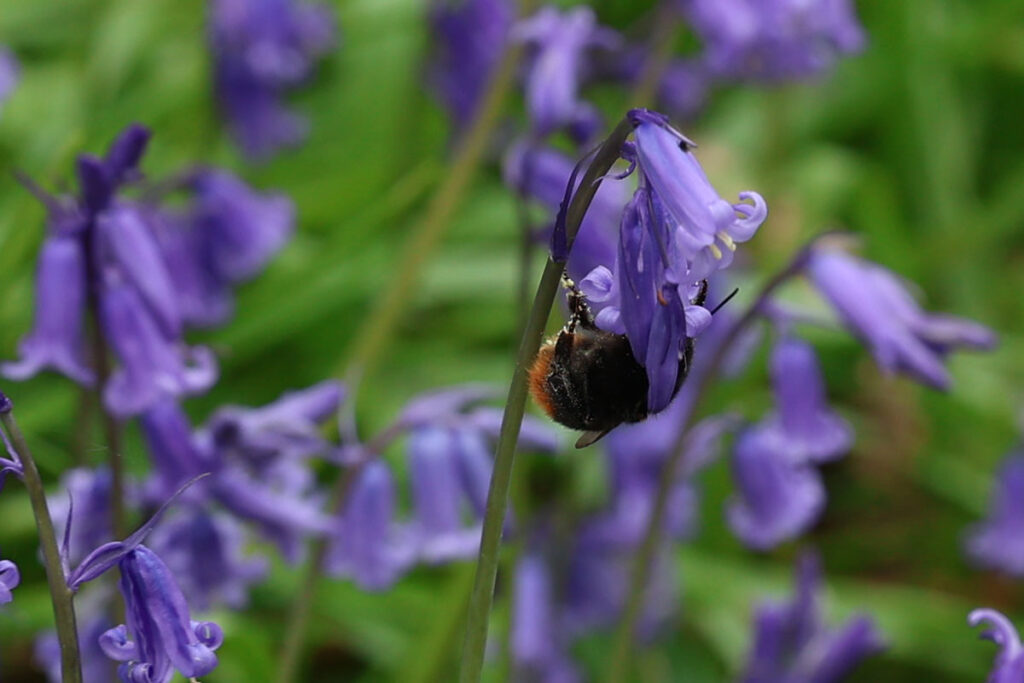
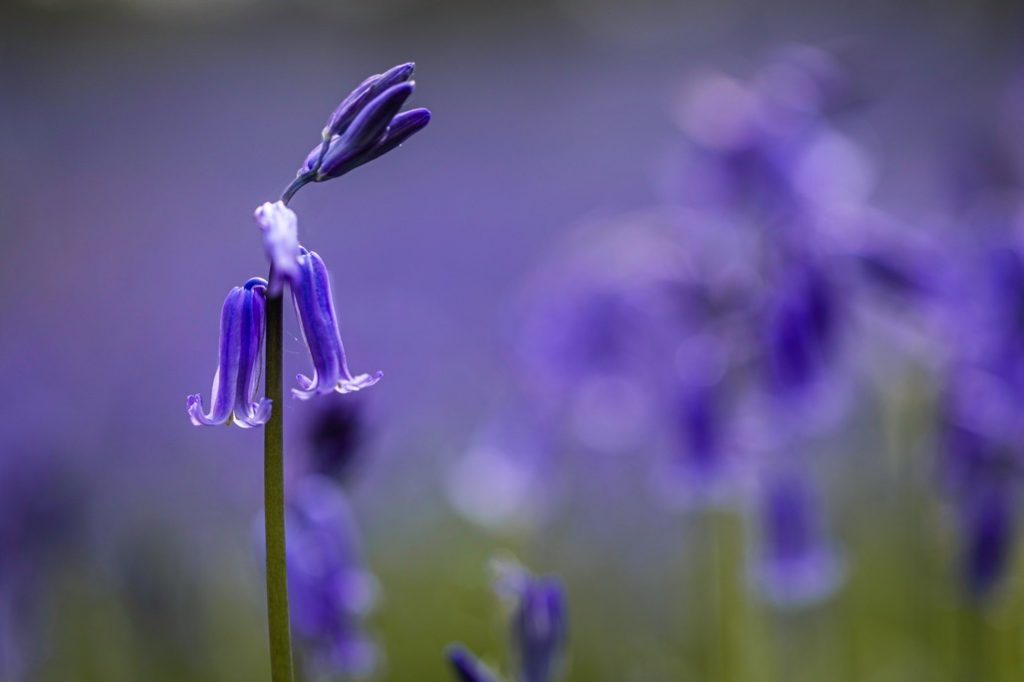
My 52 week project challenge was bokeh and the bluebells provided several opportunities to focus on the flowers with a wide open lens (f/2.8). This throws the background out of focus producing lovely Bokeh.
A bluebell with a blue background.
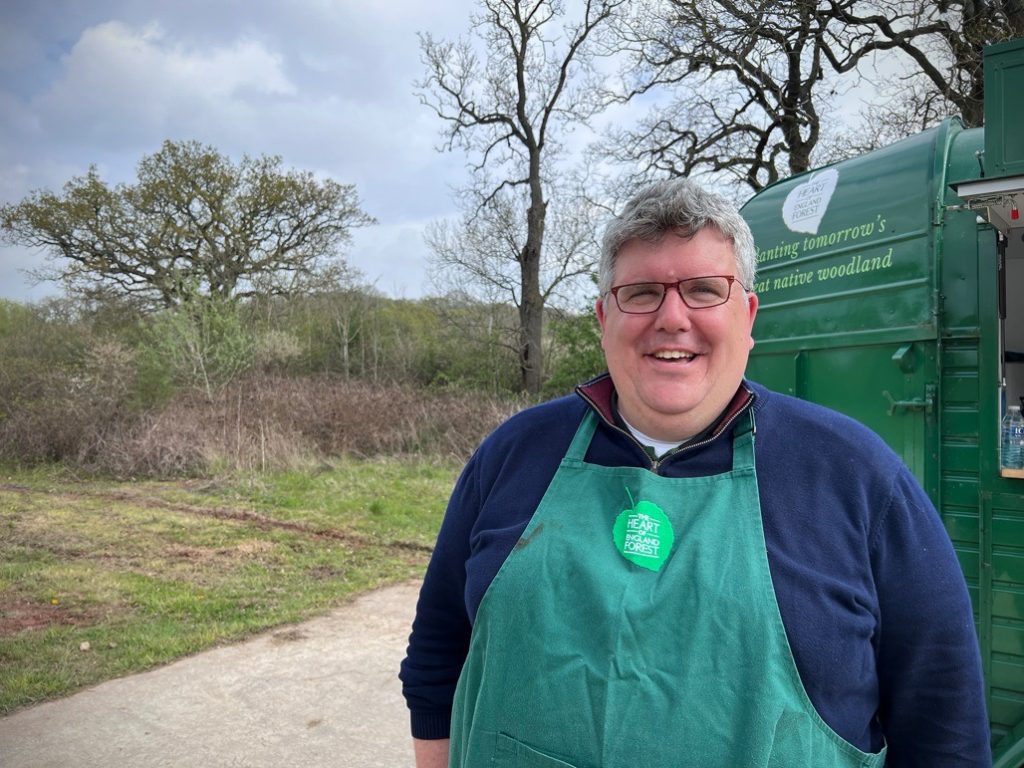
During my visit to the woodland, I met Toby, who is the organiser of this charity event. He kindly agreed to have his picture taken and be part of my 100 strangers project which is slowly moving forward on my Flickr pages.
This is Toby who organises the Bluebell charity walk.
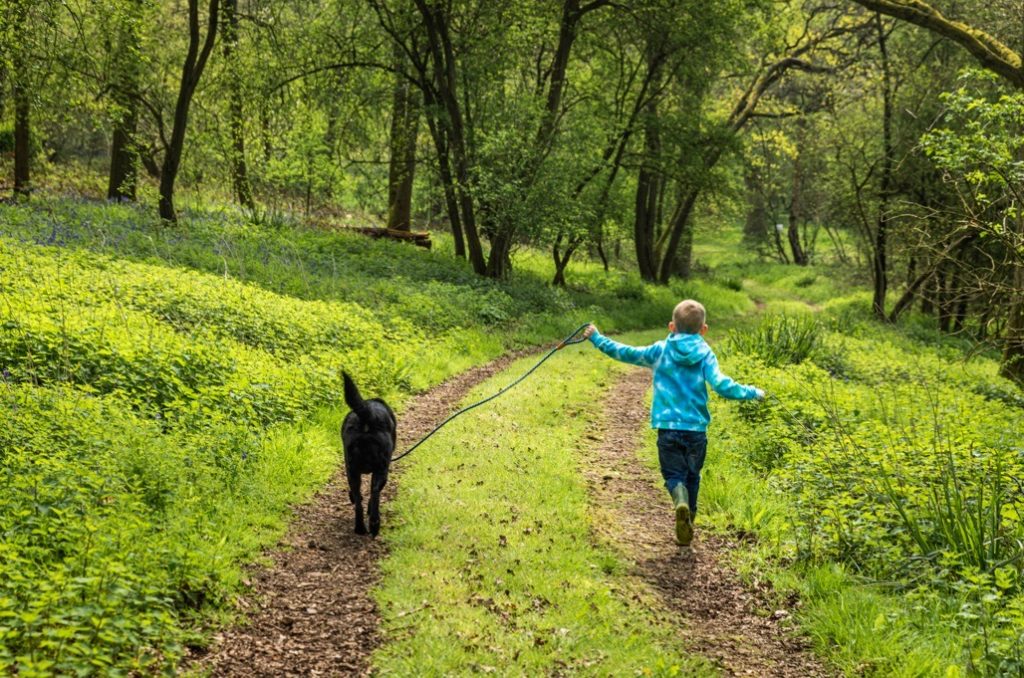
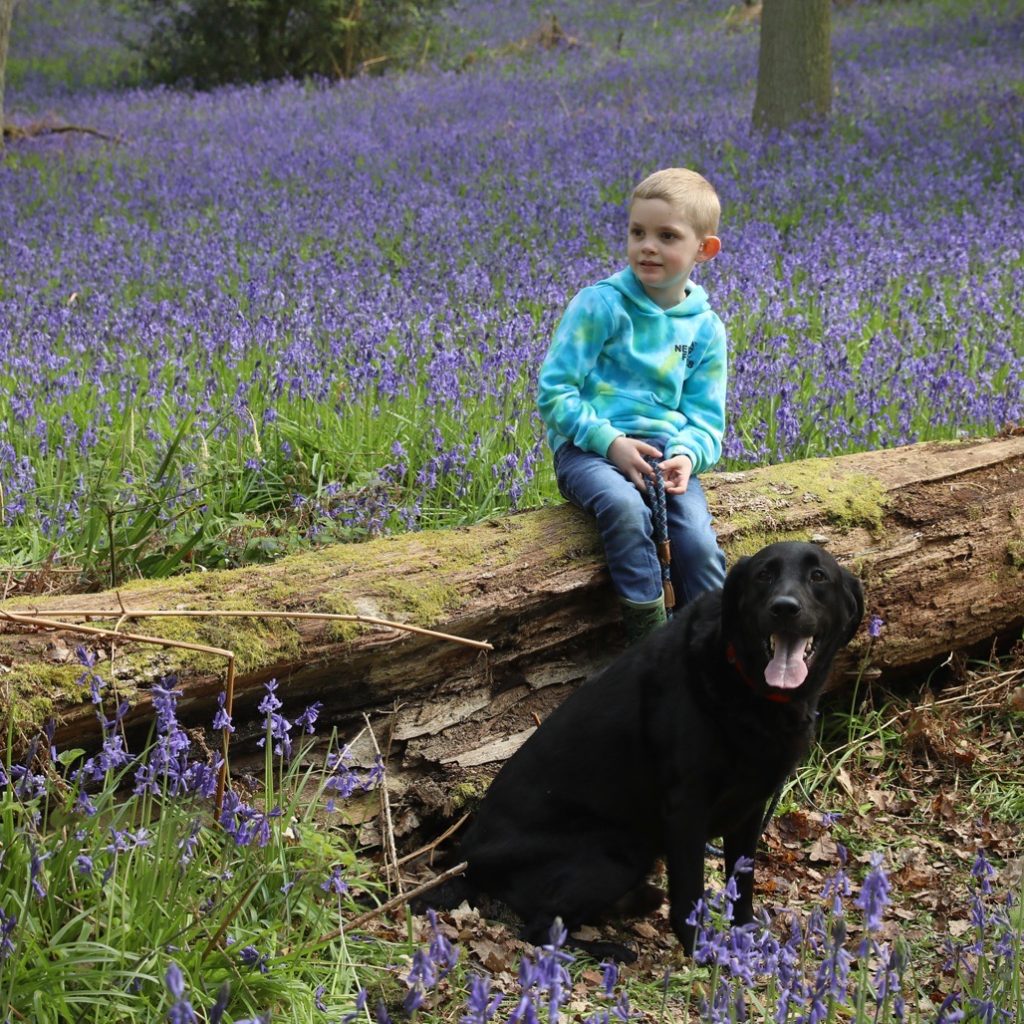
The organisation of the day is excellent. The walk starts in the car park and takes you through the woodland with some well positioned spots for those important selfies. I noticed that the event is becoming more popular but via the use of ticketing, our family took part in the walk and did not meet many other people. For a short time, the woodland was ours to enjoy and we were able to take in the sights of those beautiful bluebells. My grandson loves the place as you can see from the following pictures.
A boy and his dog.A portrait in the bluebell forest.
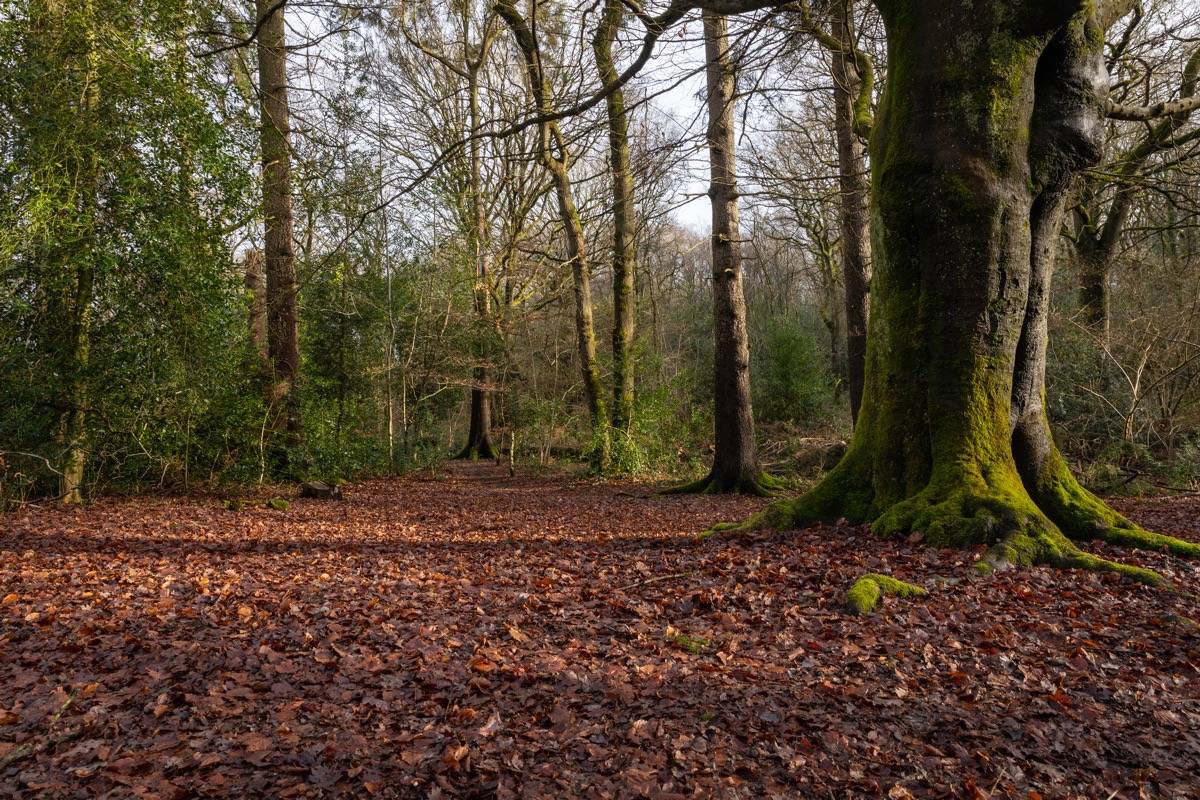
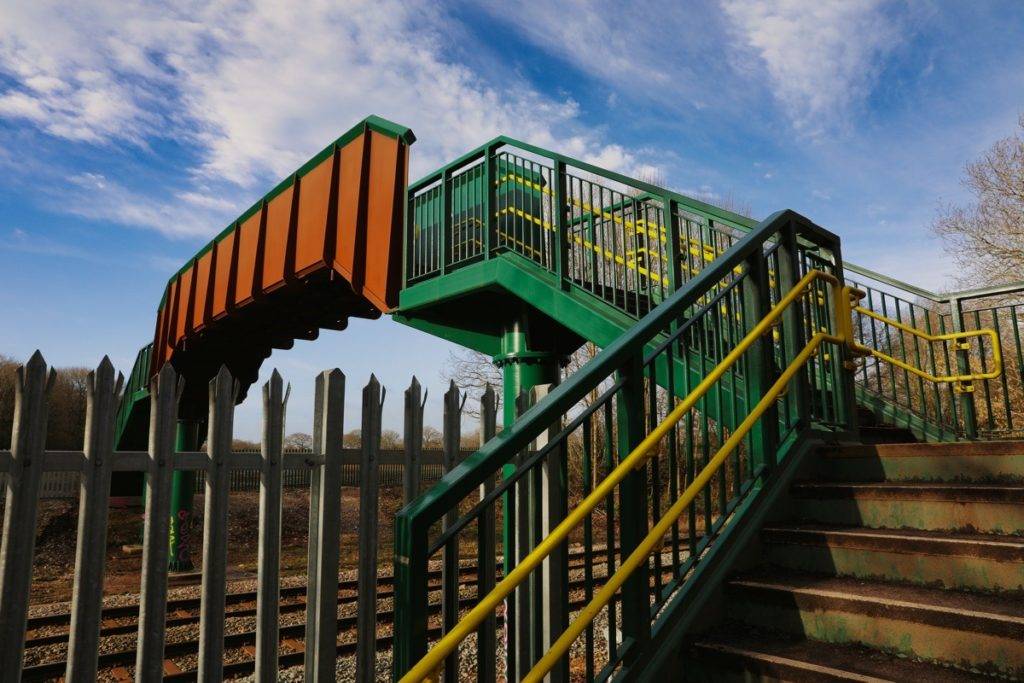
Woodlands are wonderful for getting back to nature and clearing the mind. Clowes wood in Earlswood has a mix of birch and coniferous trees in a rolling woodland. There is the Stratford upon Avon railway line cutting through the wood and following work by Network Rail, the railway bridge has been reopened.
The new Railway bridge over the Stratford-upon-Avon line in Clowes Wood
On the day of the visit, it was bright weather, but Storm Dudley was waiting in the wings. I felt the wind as I walked over the railway bridge waiting to photograph the trains as they approached Earlswood train station. The sun was strong, and the tall trees broke the light, softening it before it hit the woodland floor.
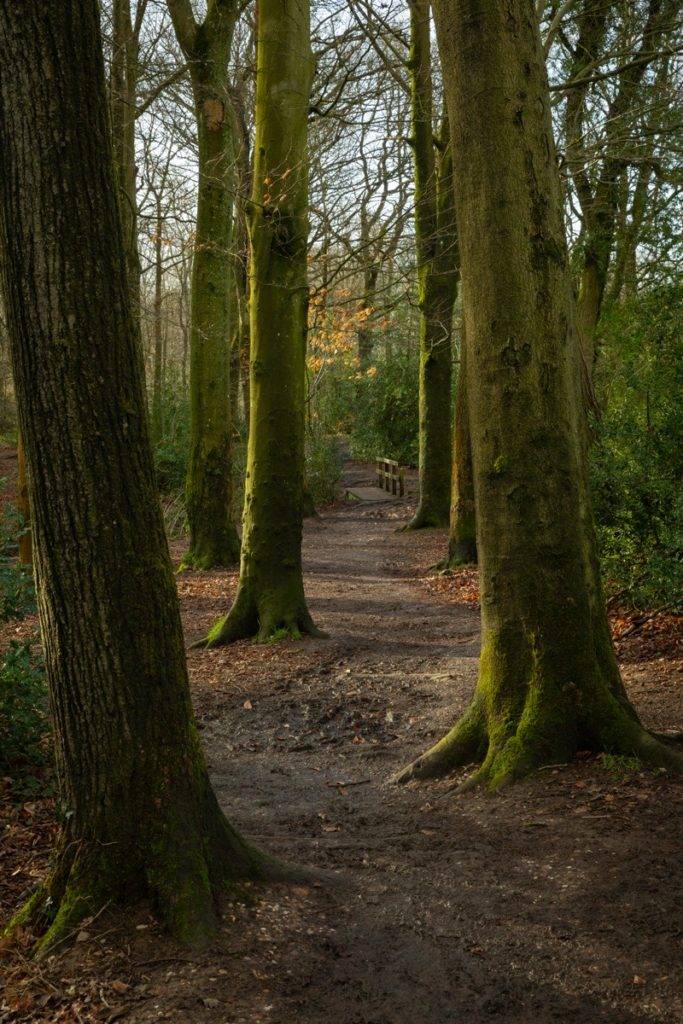
Path through Clowes Wood
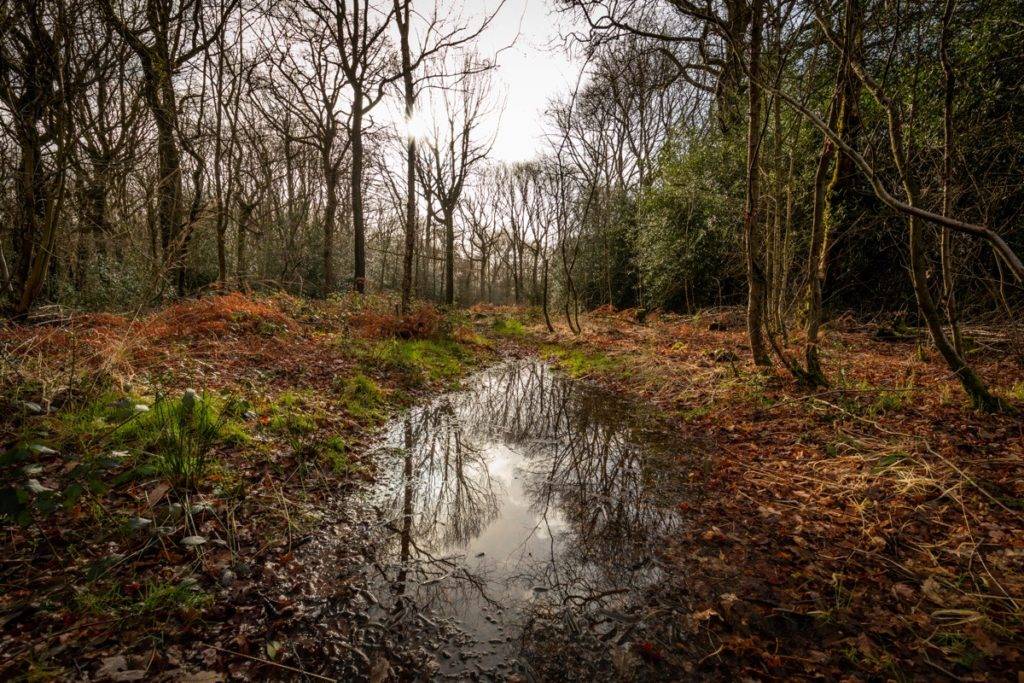
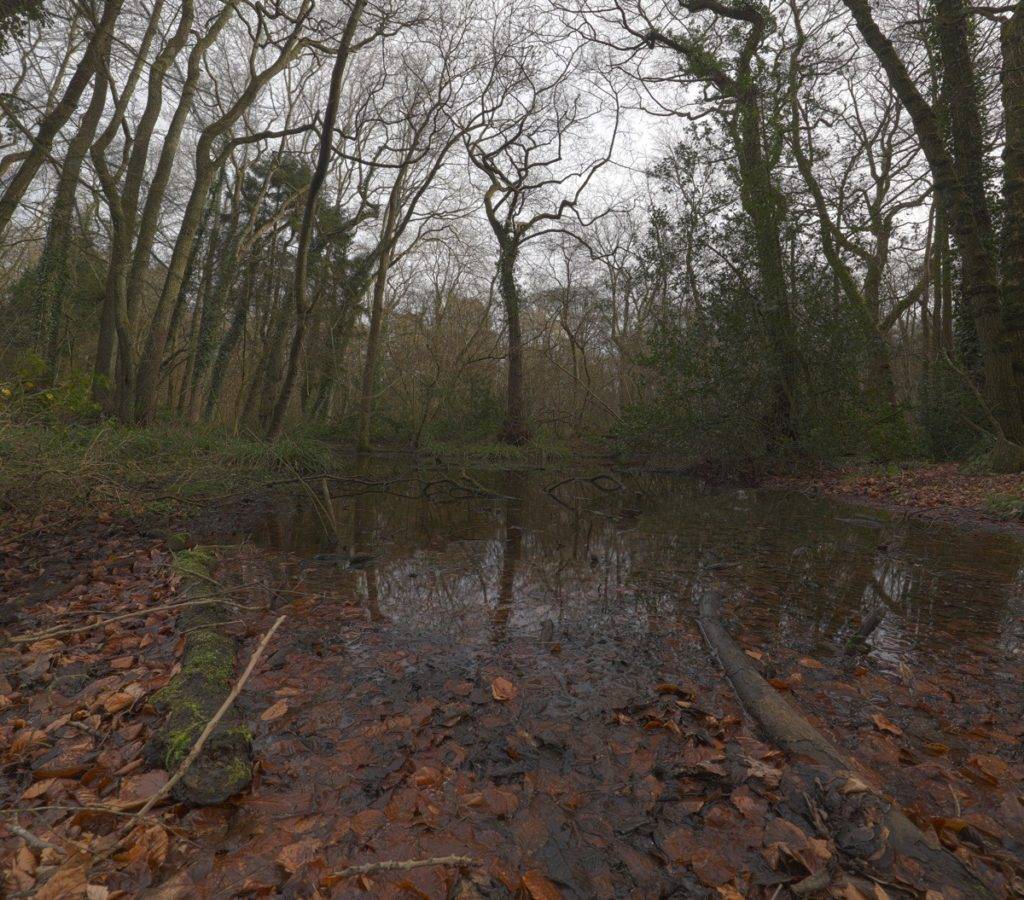
There was a great deal of surface water in the woods and all the rainfall had created temporary ponds. I had brought along my Canon D5 mark VI and several lenses. My tripod was used to good effect although it came apart when I started using the central column. Following on from this, I have become an expert of delving into Manfrotto spares website and reassembling my tripod. I did a couple of bracketed shots and then single pictures where the light was fleeting. Practice makes perfect and I am starting to get slick on the bracketing of pictures and using a 2 second timing delay on my Canon camera. I used both by EF24-70mm (f/2.8L II USM) and EF16-35mm (f/4L IS USM) with a polariser filter. I am looking forward to spring and seeing the leaves back on the trees until then I hope you enjoy the photographs.
Reflections in the woodland pools.Clowes WoodWinter in woodland.
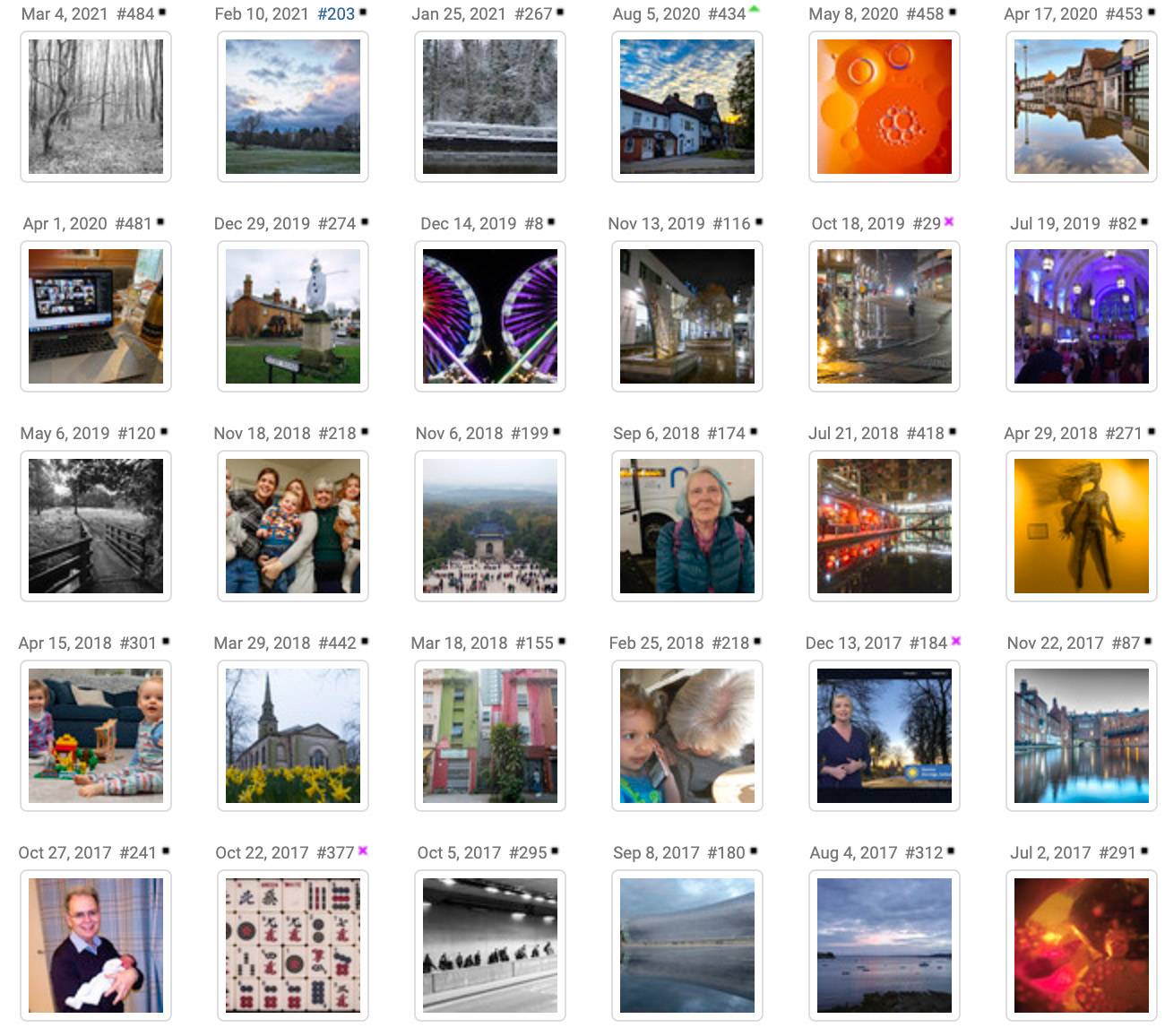
The Instagram algorithm is often blamed for not giving your photographs sufficient exposure. In reality it is how you engage with Instagram that brings success. I find the Flickr algorithm just as fascinating. This year I have had three pictures “In Explore” compared to the same number for all of 2020. All algorithms require you to constantly interact with your social media feeds. Flickr Explore is no different. In Instagram, the algorithm relies on several easily identifiable factors. Searching the web will immediately provide tips on how to improve your Instagram likes. They are not rocket science and are generally in relation to timing of posts and the interest in your photograph. Of course this is social media and the secret is keeping your audience happy with liking and commenting on their pictures as well. That is not a secret I hear you say! The Flickr Algorithm is just the same and it is about interacting with the people who are posting the photographs. They term the algorithm interestingness and on many occasions it is not necessarily a great photograph that gets into explore. However taking good photographs does help to get your photograph noticed in the first place. Amassing a large number of likes is so intoxicating and being on Explore is a popularity contest. I find that with the Flickr app my phone starts flashing first thing in the morning and then continues during the day with all the likes tumbling in. It is not uncommon to receive in excess of 40k likes for a highly placed picture in the Flickr top 500 of the day.
20210124-Snow on the canal
The three photographs featured here received around 4k in likes plus invites into different groups. Someone told me that Flickr is dead in the water. I tend to disagree as when a picture gets into explore it feels like the site is truly alive and kicking. The three pictures featured offer nothing different to my other photographs on my Flickr feed but each has its own story. The first one featured this year is a canal boat in the snow and is a particular favourite of mine. I deliberately took the picture side on and wanted to layer it so that the lower third featured the boat and then the eyes move upwards to see the snow covered trees. It provides that snowed in feeling and it also looks very cold. The question is whether there are people living in the boat and are they feeling the cold as well? There is a sense of isolation. This picture was taken during Lockdown #3 so isolation is very much on the viewer’s mind.
20210208_Knowle Park in the winter
The second picture was in Knowle park. The back story was that there have been many dull days during this third lockdown and on this particular evening I was desperate to get a great sunset. Early in the afternoon, it looked promising when I set out and then when I reached the park the clouds closed over. I was so annoyed and started to make my way back home. Suddenly and to my joy, the clouds parted once again for around a minute. I saw a walker and aimed to catch him in the image but by the time I had lined him up he was far to the right of the picture. When I got home I was still not impressed with the photograph so I went to work with the sliders. I was a bit slap dash in my approach although it did look pleasing to me. The Flickr algorithm picked it up and the likes and comments followed.
20210303 – Clowes wood
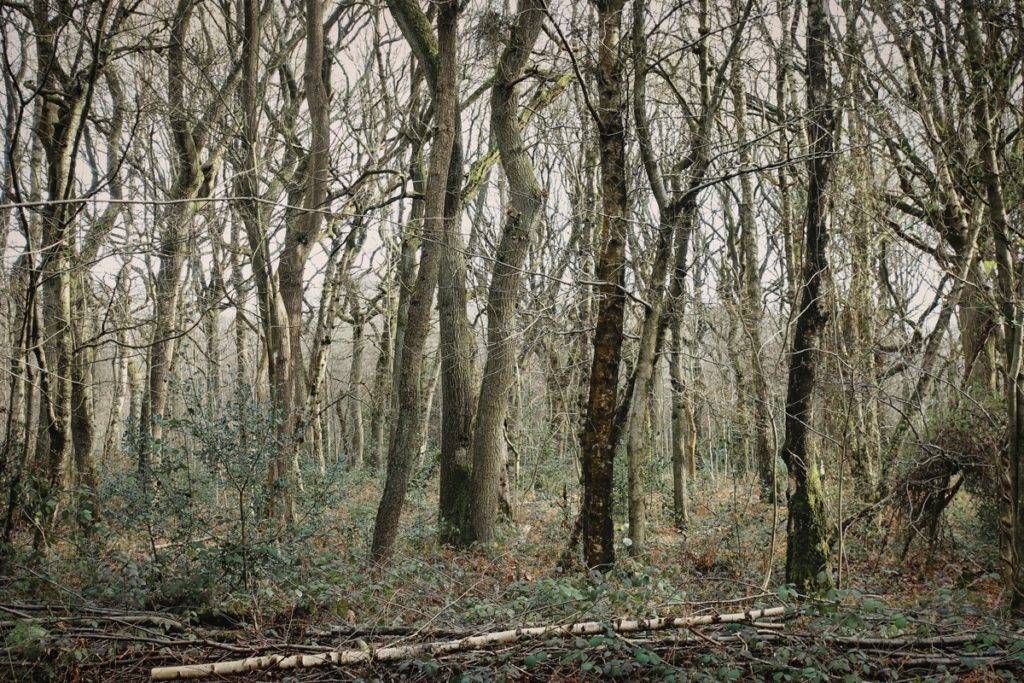
Once you have been on Explore you cannot get back on for around 9 days. If you are in favour with the algorithm then after this time you can anticipate when the next selection is about to occur. I had a large spike in likes for one picture but no explore and then two days later this woodland scene went into explore. I took the picture in Clowes Wood near Earlswood reservoir. All the trees in this part of the wood were straight and in the foreground there was this one crooked tree. It had eventually found out how to be straight when placed against its siblings in the background. Again I played around with the photograph in post production and whilst it was misty, the fog was not that evident. I went for a Silver Efex Pro 2 filter and used the Hi Key feature. It looked good so I posted it on Flickr – once again there was a great response to the picture.
I have done a colour version and for this one I used the Skylum AI filters which also gave a nice effect. You can judge for yourself which you feel makes the better picture.
Many people now look down on Flickr and have drifted off to Instagram but the SmugMug team have updated the Flickr algorithm and made it more relevant to present photography users. Therefore I would advise, people to give Flickr another chance.
I will leave a discussion on the Instagram algorithm for another blog as it is slightly different approach but again the key as with Flickr is interacting with your audience.
We use cookies on our website to give you the most relevant experience by remembering your preferences and repeat visits. By clicking “Accept”, you consent to the use of ALL the cookies.
This website uses cookies to improve your experience while you navigate through the website. Out of these, the cookies that are categorized as necessary are stored on your browser as they are essential for the working of basic functionalities of the website. We also use third-party cookies that help us analyze and understand how you use this website. These cookies will be stored in your browser only with your consent. You also have the option to opt-out of these cookies. But opting out of some of these cookies may affect your browsing experience.
Necessary cookies are absolutely essential for the website to function properly. These cookies ensure basic functionalities and security features of the website, anonymously.
Cookie
Duration
Description
cookielawinfo-checkbox-analytics
11 months
This cookie is set by GDPR Cookie Consent plugin. The cookie is used to store the user consent for the cookies in the category "Analytics".
cookielawinfo-checkbox-functional
11 months
The cookie is set by GDPR cookie consent to record the user consent for the cookies in the category "Functional".
cookielawinfo-checkbox-necessary
11 months
This cookie is set by GDPR Cookie Consent plugin. The cookies is used to store the user consent for the cookies in the category "Necessary".
cookielawinfo-checkbox-others
11 months
This cookie is set by GDPR Cookie Consent plugin. The cookie is used to store the user consent for the cookies in the category "Other.
cookielawinfo-checkbox-performance
11 months
This cookie is set by GDPR Cookie Consent plugin. The cookie is used to store the user consent for the cookies in the category "Performance".
viewed_cookie_policy
11 months
The cookie is set by the GDPR Cookie Consent plugin and is used to store whether or not user has consented to the use of cookies. It does not store any personal data.
Functional cookies help to perform certain functionalities like sharing the content of the website on social media platforms, collect feedbacks, and other third-party features.
Performance cookies are used to understand and analyze the key performance indexes of the website which helps in delivering a better user experience for the visitors.
Analytical cookies are used to understand how visitors interact with the website. These cookies help provide information on metrics the number of visitors, bounce rate, traffic source, etc.
Advertisement cookies are used to provide visitors with relevant ads and marketing campaigns. These cookies track visitors across websites and collect information to provide customized ads.