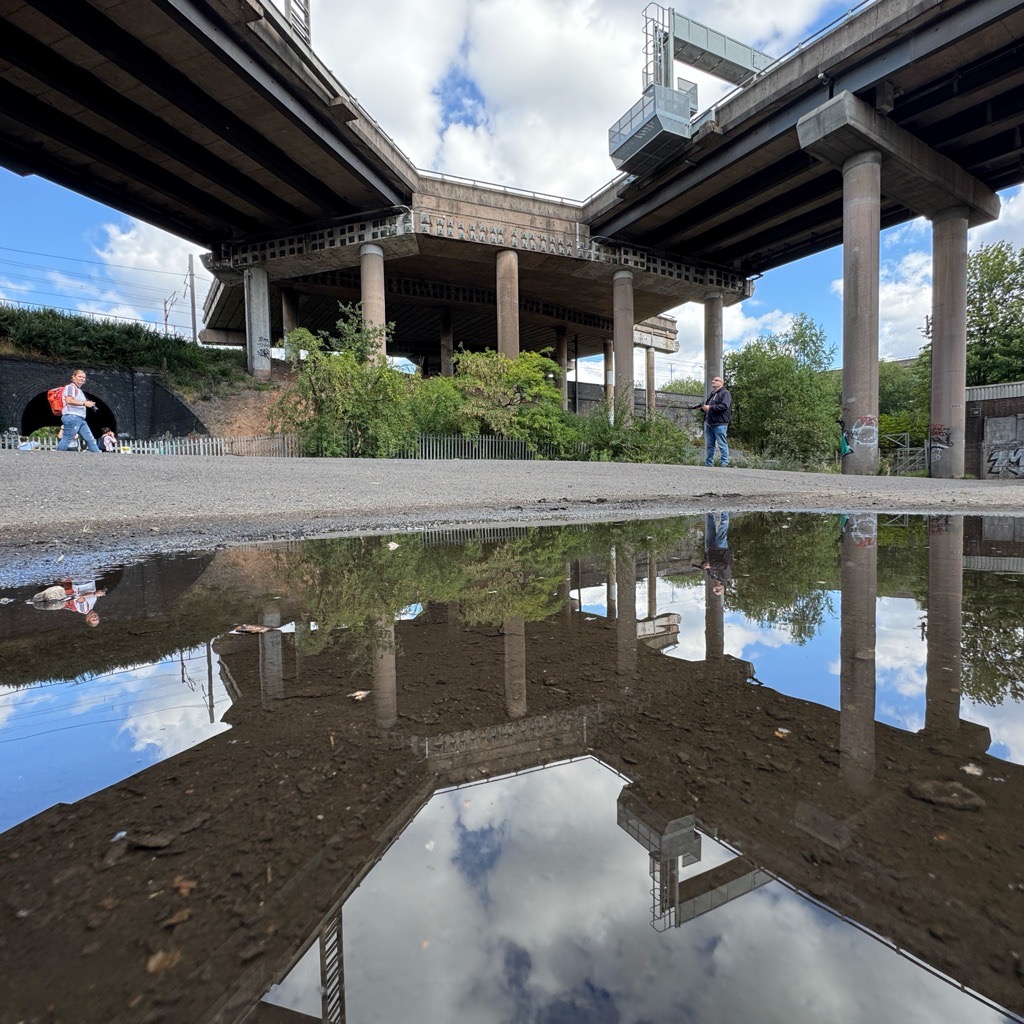
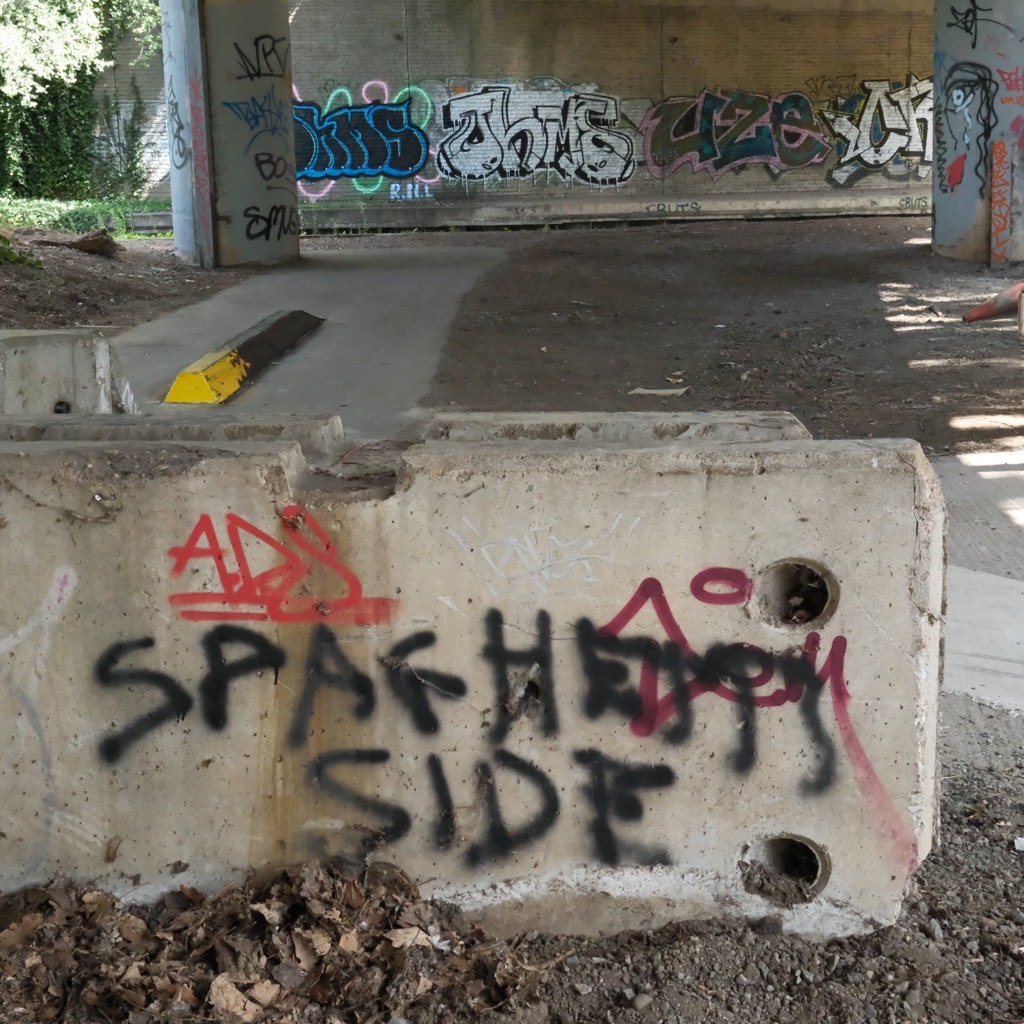
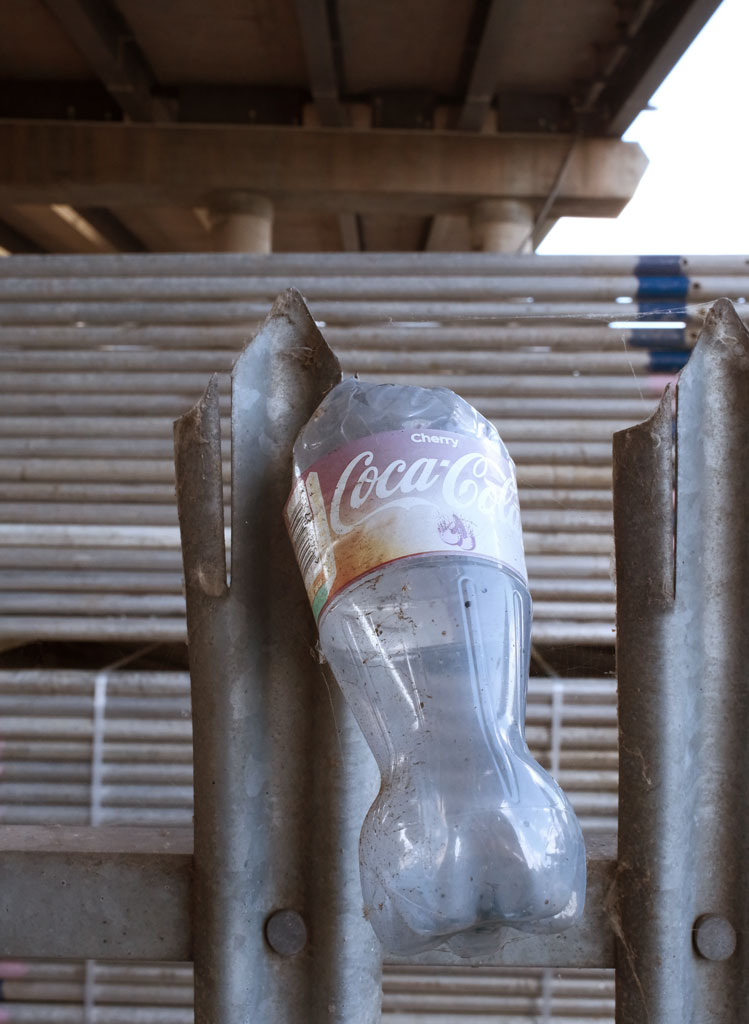
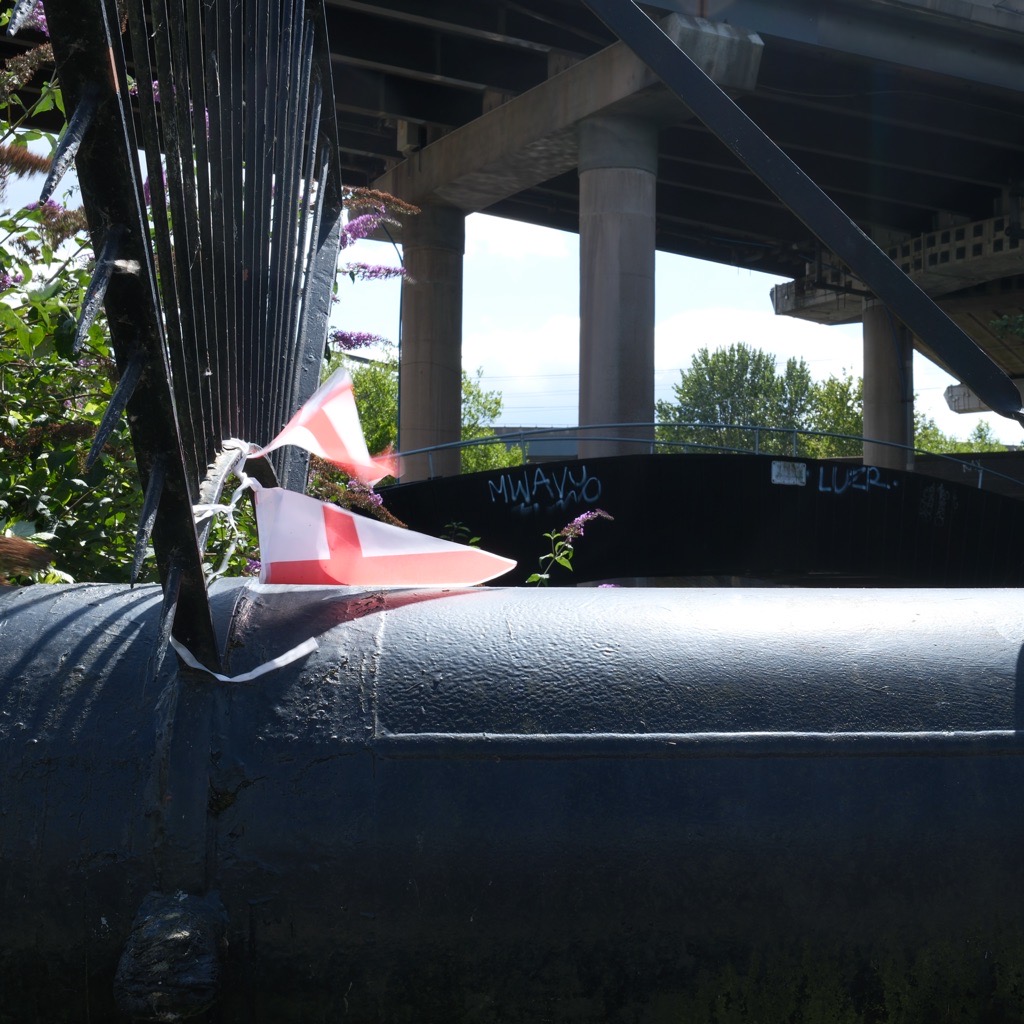
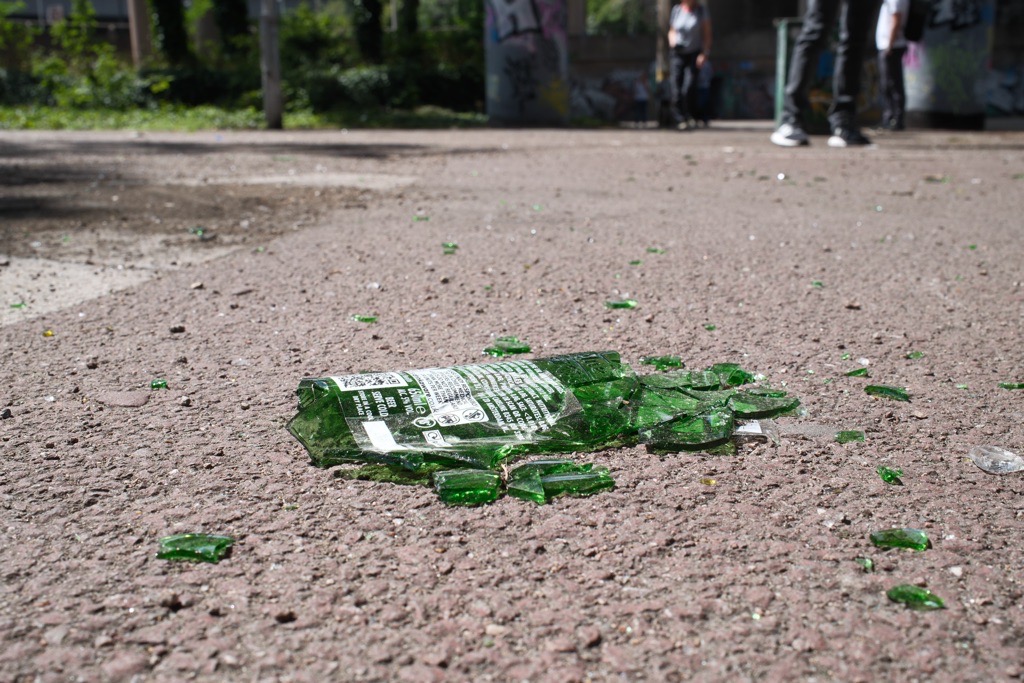
IgersbirminghamUK organised a walk around Spaghetti Junction on a warm Saturday afternoon at the beginning of August. For this blog entry, I have 24 frames which is the number of a roll of film. These pictures were taken with either my iPhone or Fujifilm x100vi. The stories and sights under the motorway are always changing and always surprising. Enjoy this photo essay.
Figures
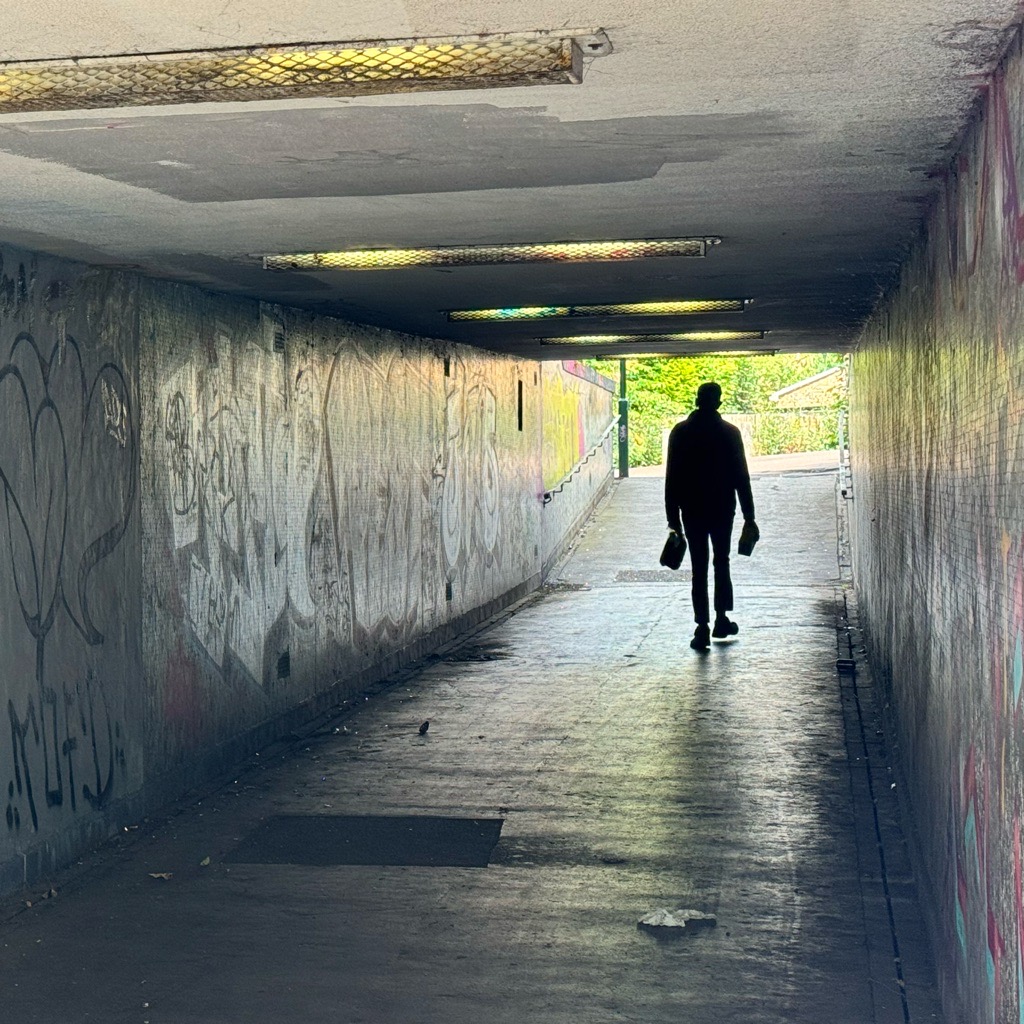
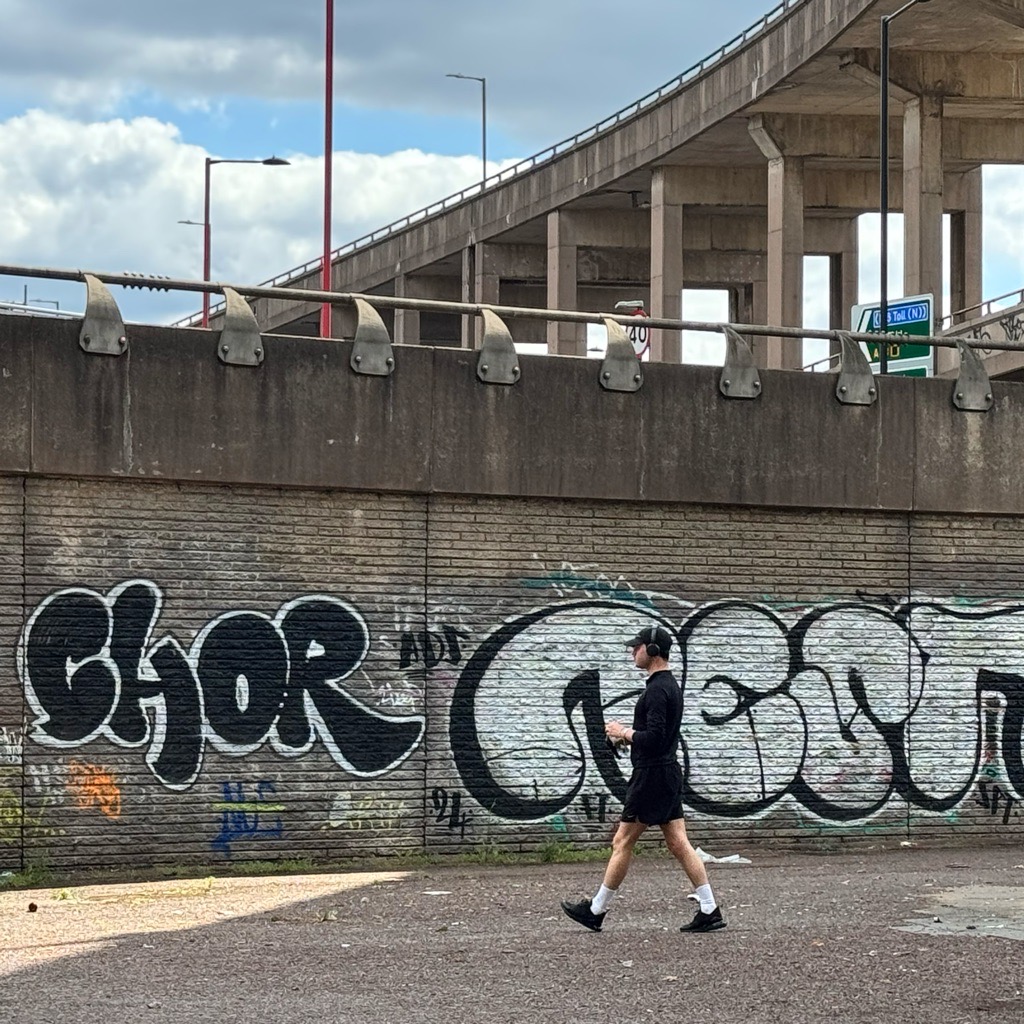
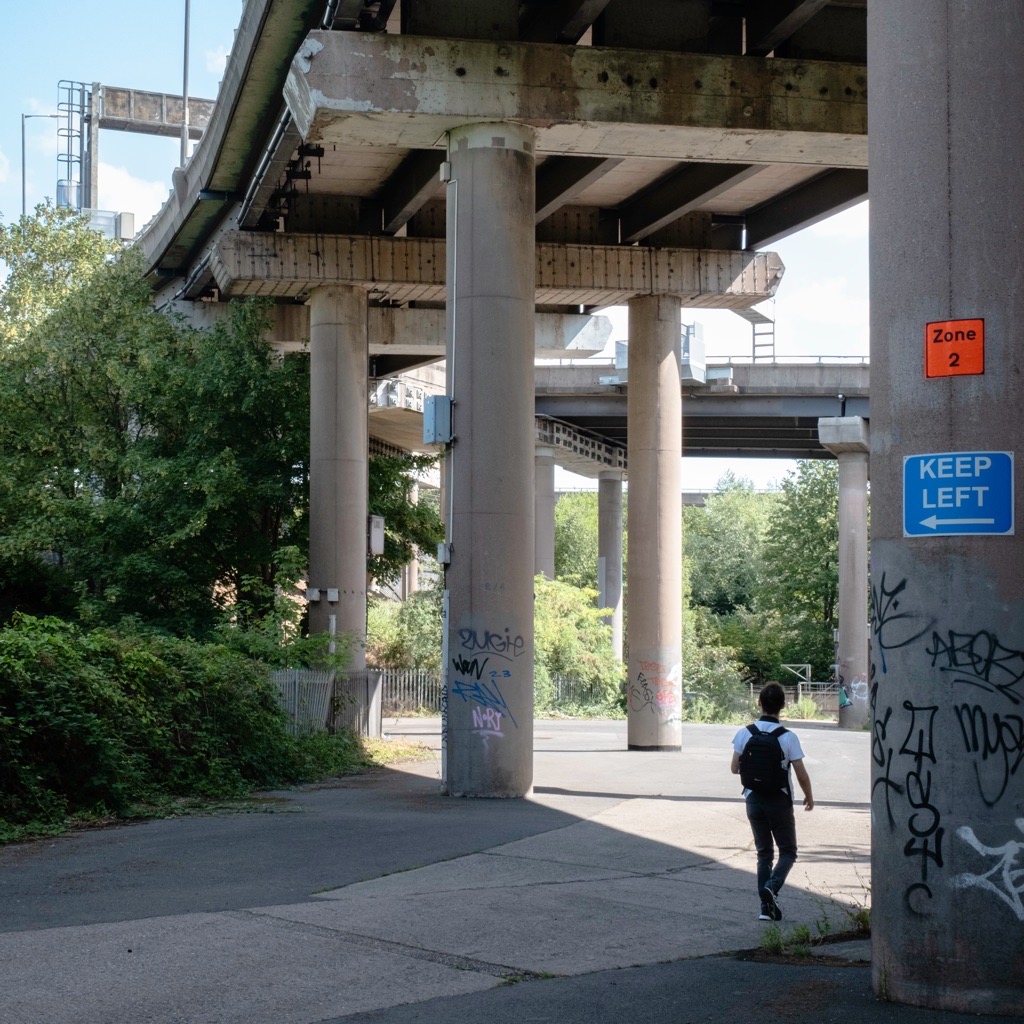
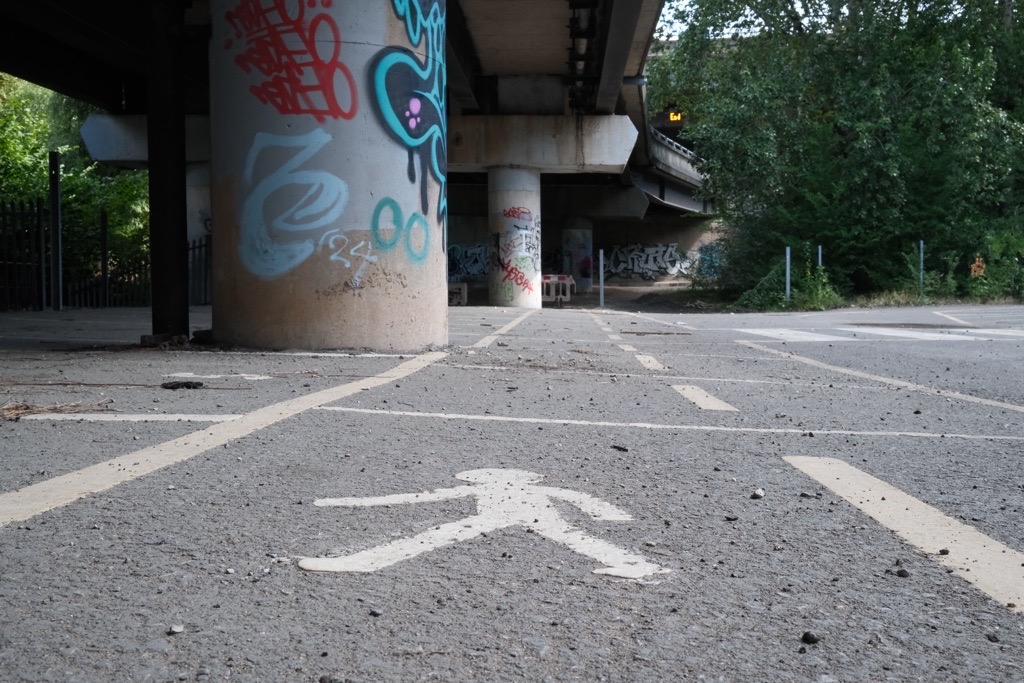
People move around the complex concrete structures. They look apologetic for their presence as the concrete really does enjoy its own company.
Figure in the subwayA walk home with the noise of cars above.
Cyclists
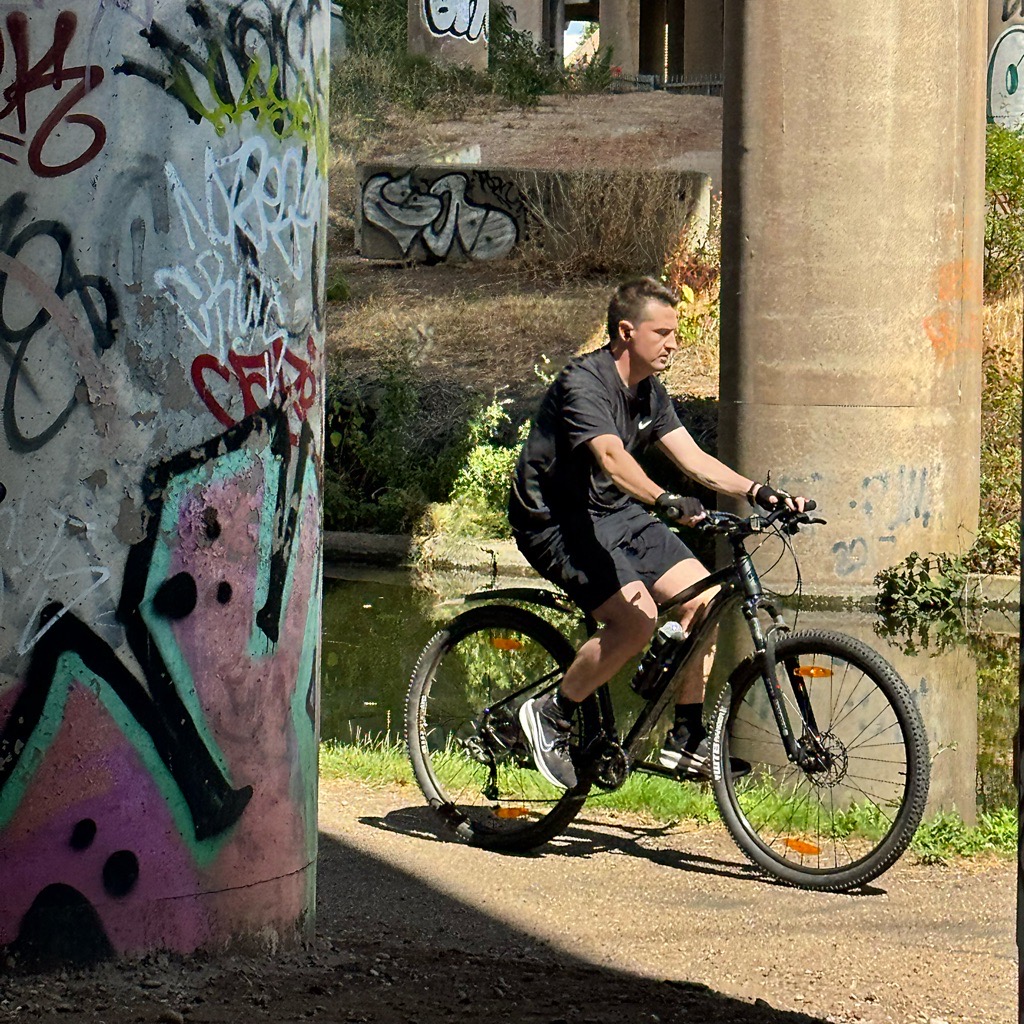
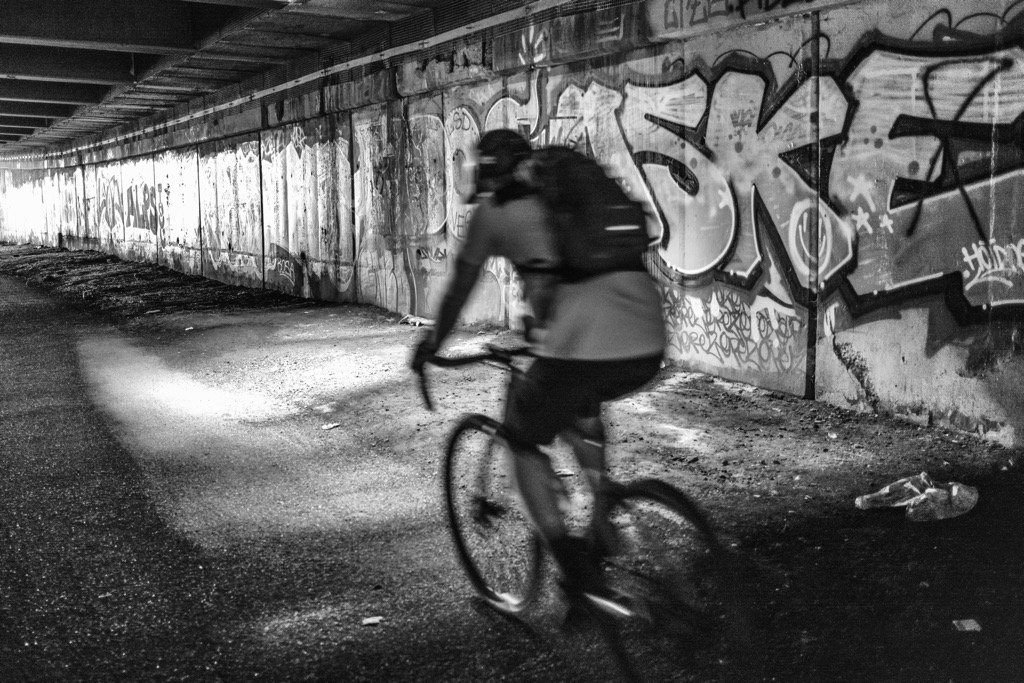
People move quickly on the towpath nobody wants to stay too long as they may get lost in the concrete.
Cyclist between the pillars.There is light in the dark that guides the cyclist.
Pillars
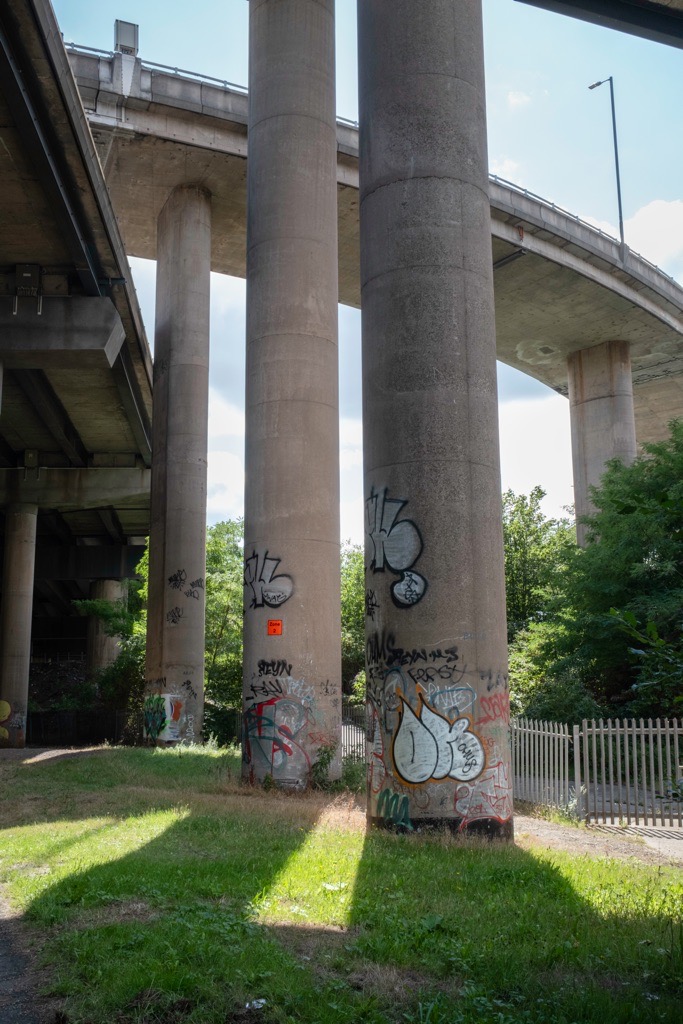
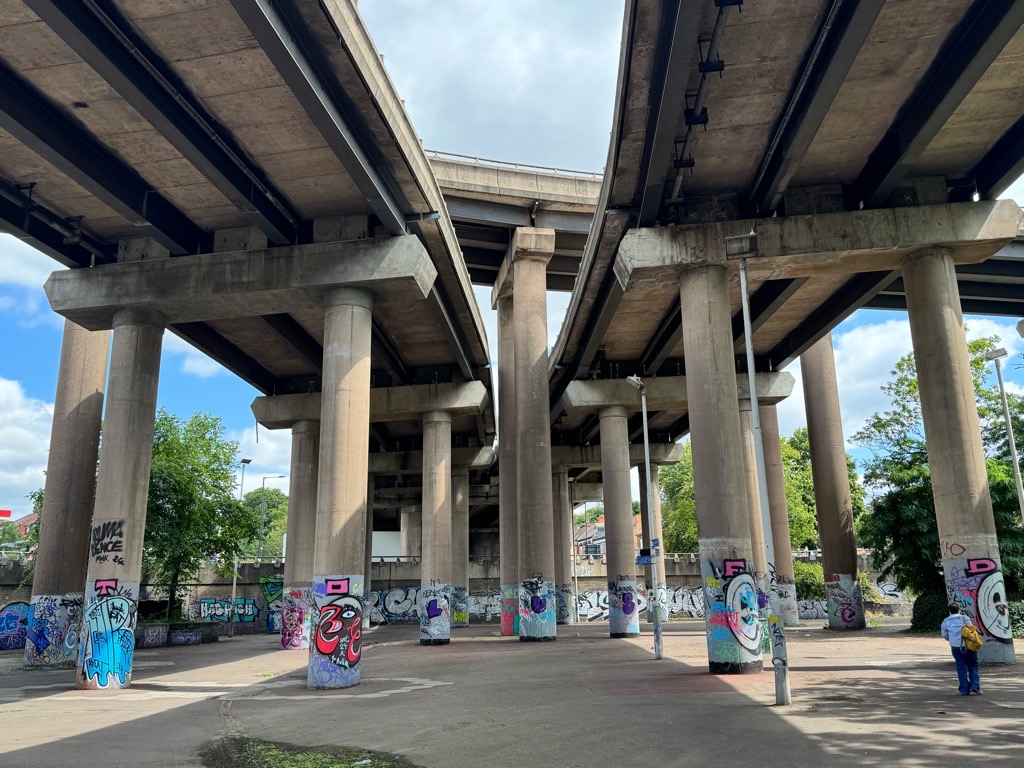
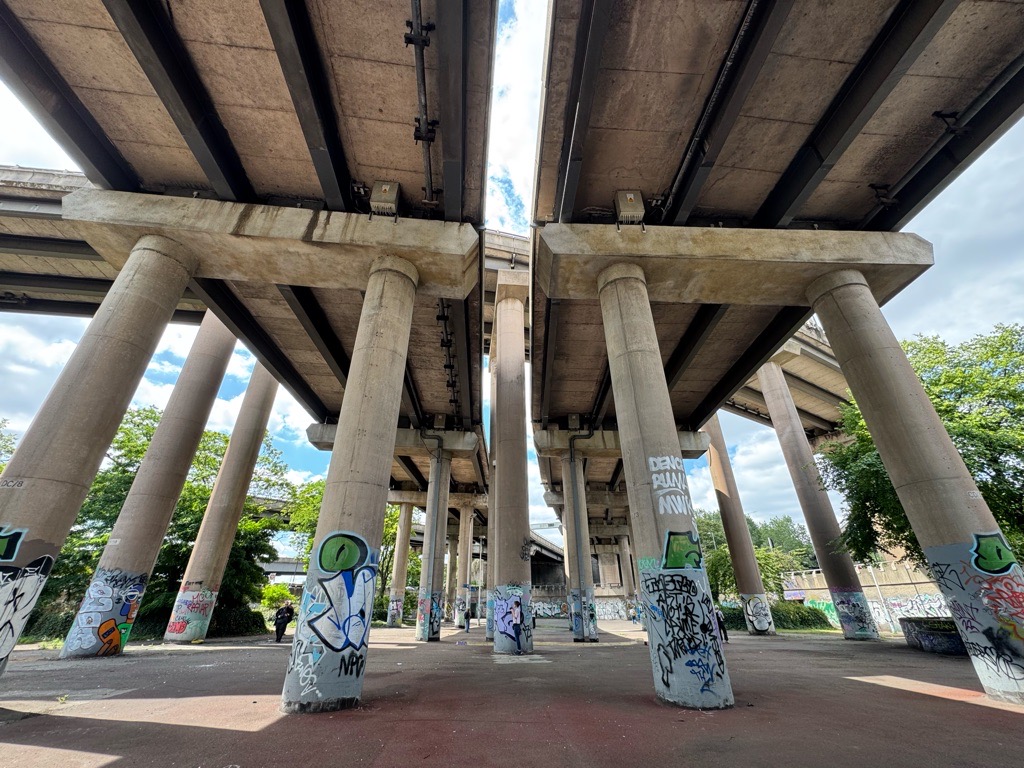
The main feature of the concrete structures is the pillars. Reaching to the sky they hold the roads in place. If the pillars disappear then there so will the roads.
Reaching for the skyThe height of the pillars dwarfs the people who dare wander next to them.The cathedral pillars of Salford circus.Gaps between the Pillars.
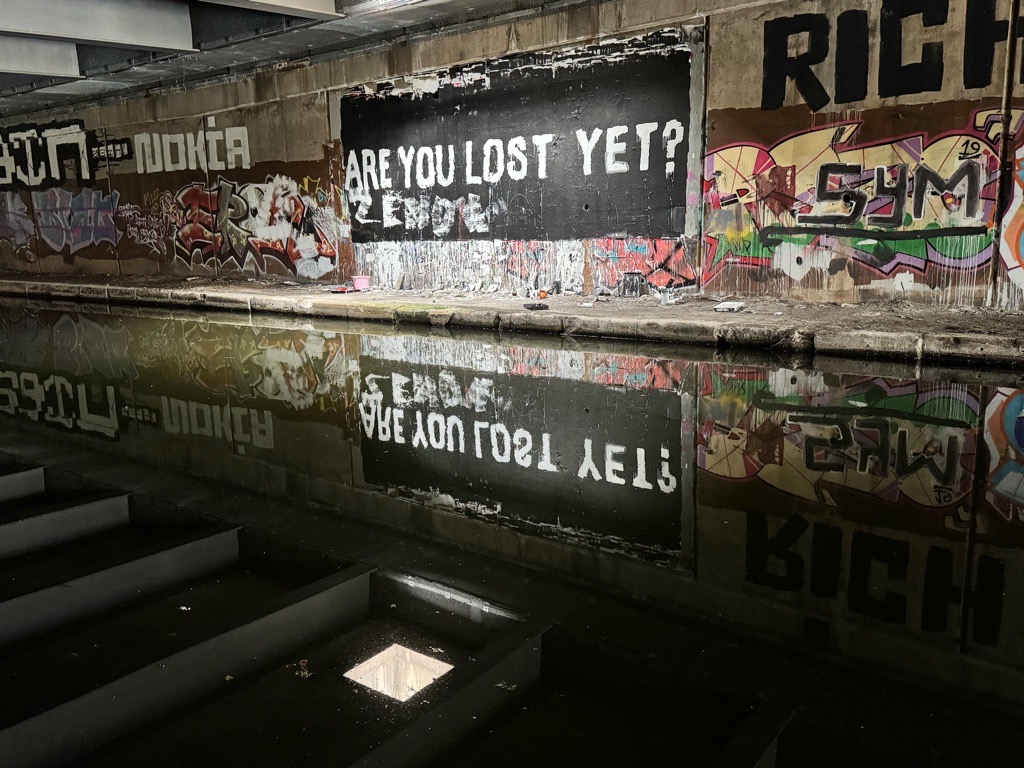
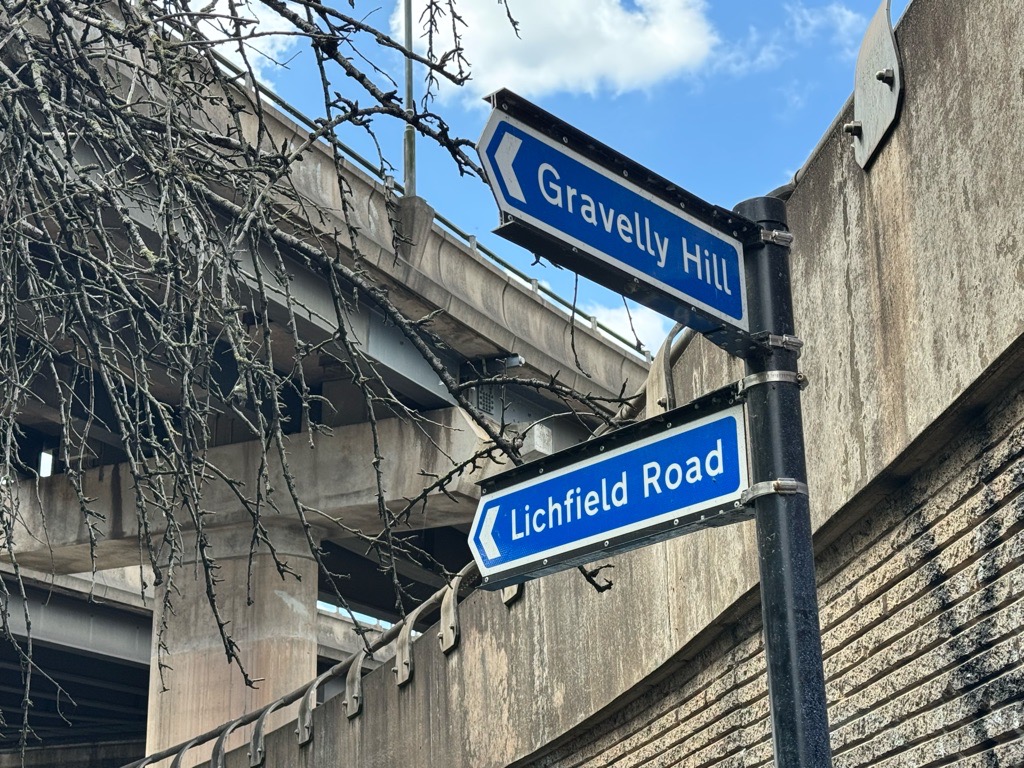
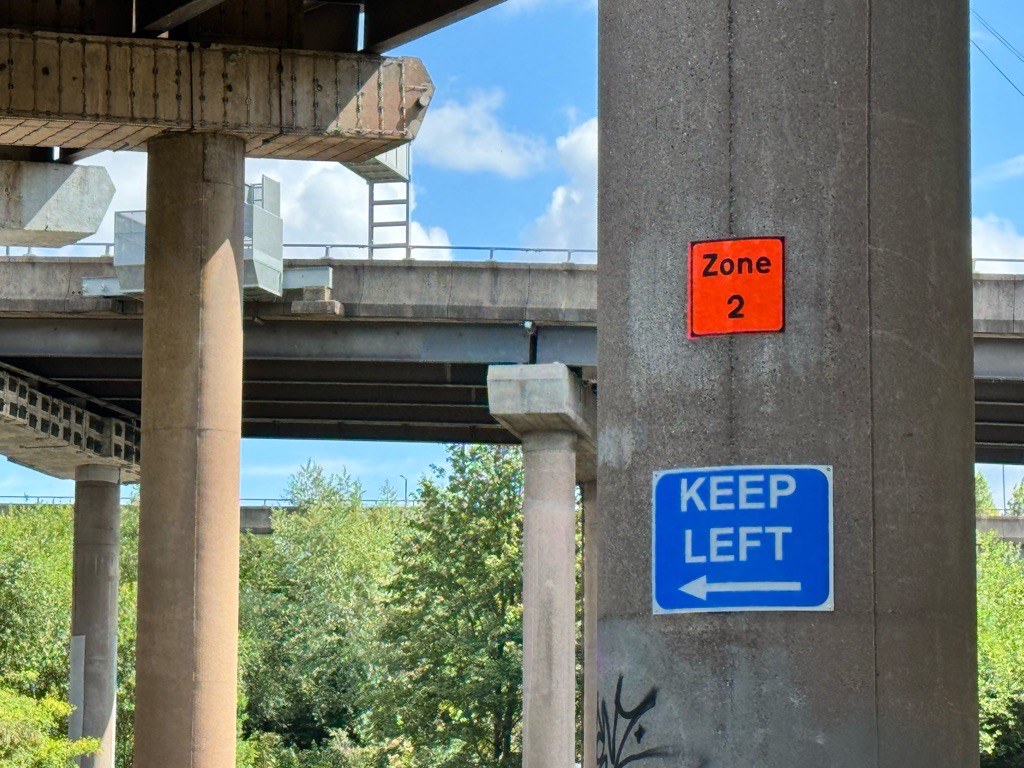
So easy to lose your way under the motorway.There is signage to help.Colourful signs break through the concrete monotones.A scrawled sign lets you know where you are.
Traces of humanity
There are examples that humans have passed through the area.
Real MagicBirmingham, EnglandA smashing time.Walk this way
Nature fights back
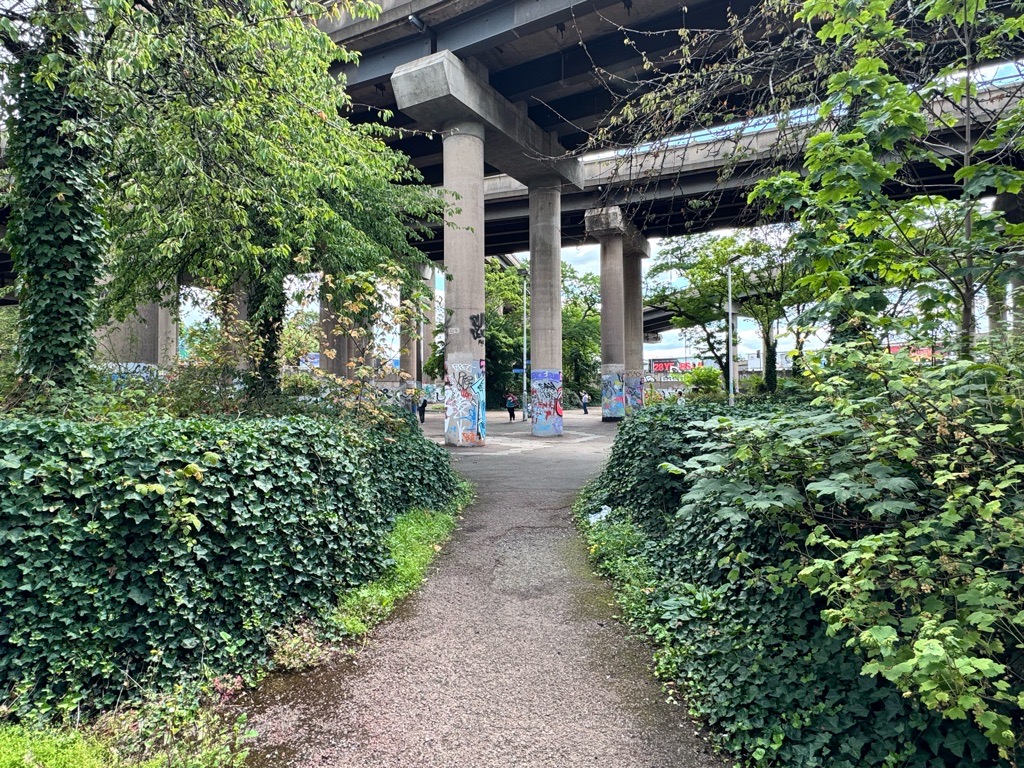
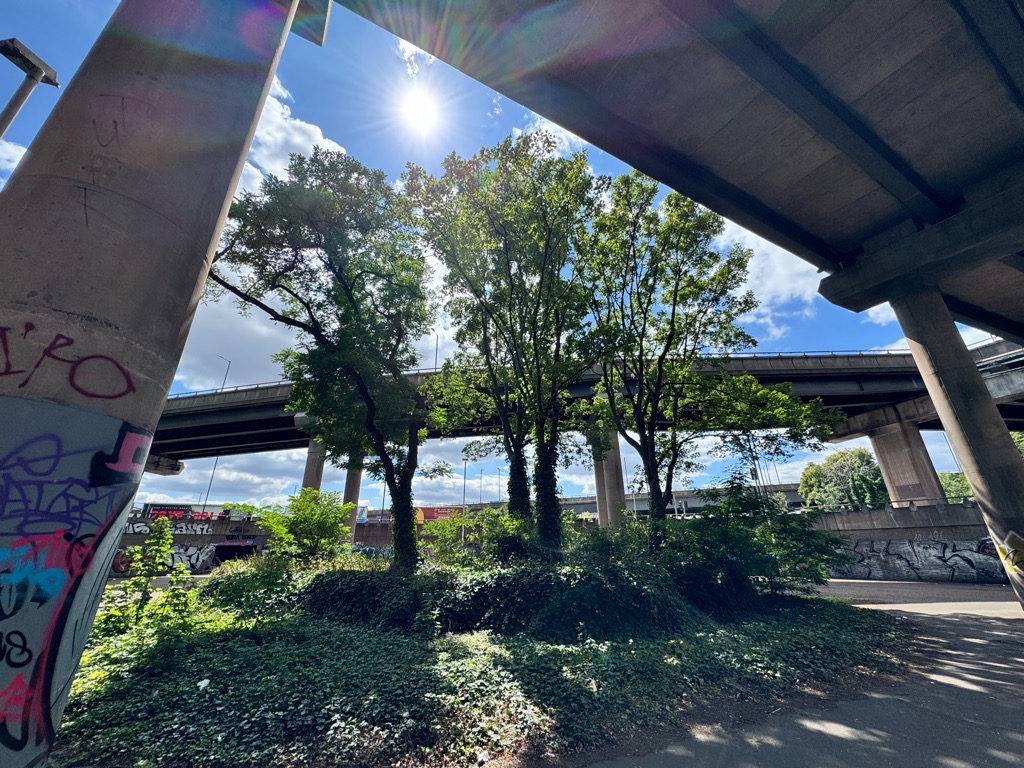
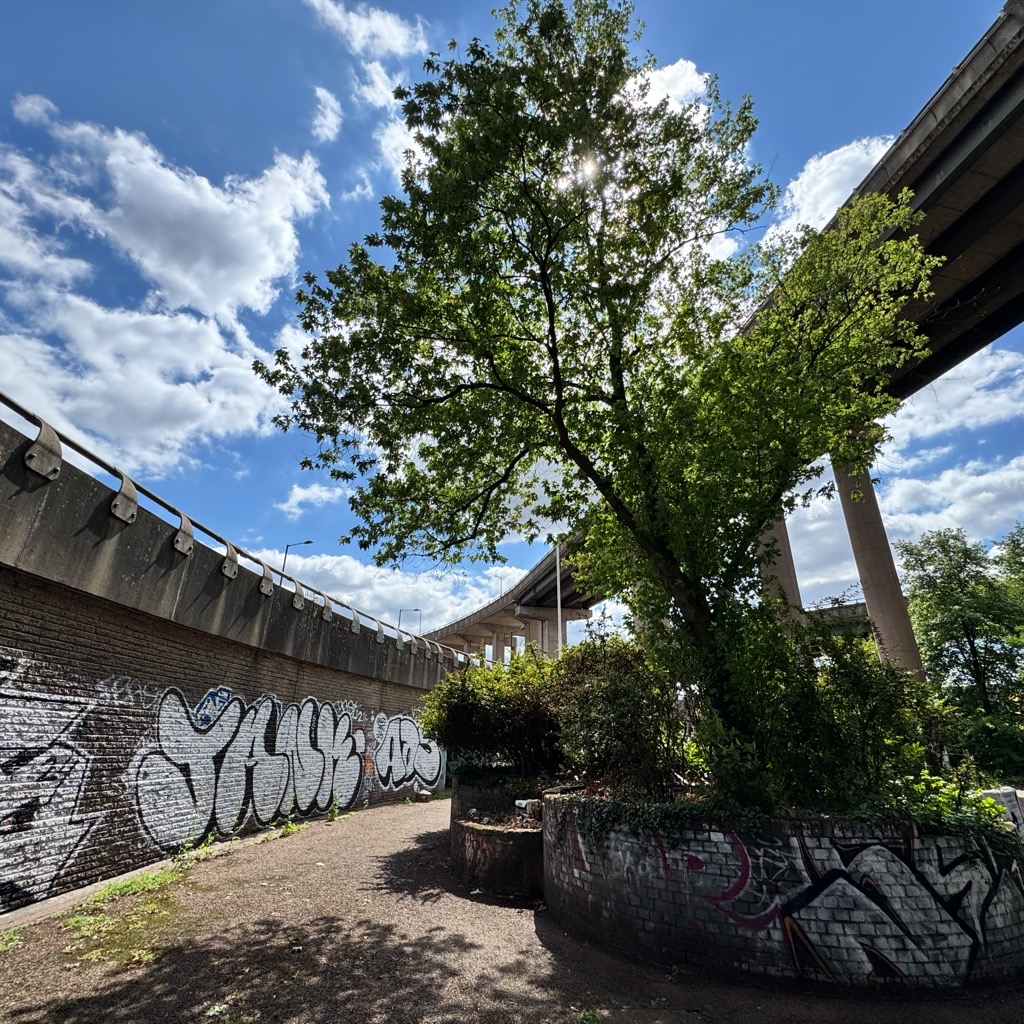
Nature is slowly eroding the concrete jungle. Trees and greenery have established themselves amongst the pillars.
Greenery lines the paths.Trees in the sunlight.Concrete vs nature standoff.
I hope you enjoyed this photo essay of my recent visits to Spaghetti Junction. If you ever have the chance to visit the area then do take up the opportunity. There are regular tours that take in Aston Reservoir and the more interesting parts of the canal network. The interchange does become very quiet at the weekends. During the week, there is construction activity focused on maintaining the pillars that are essential to holding the motorway network together. The highs and lows of a visit around the Gravelley Hill interchange are illustrated below. The highlights include the wonders of the construction and architecture. The lows are the faceless nature of the area which has areas that are not particularly inviting.
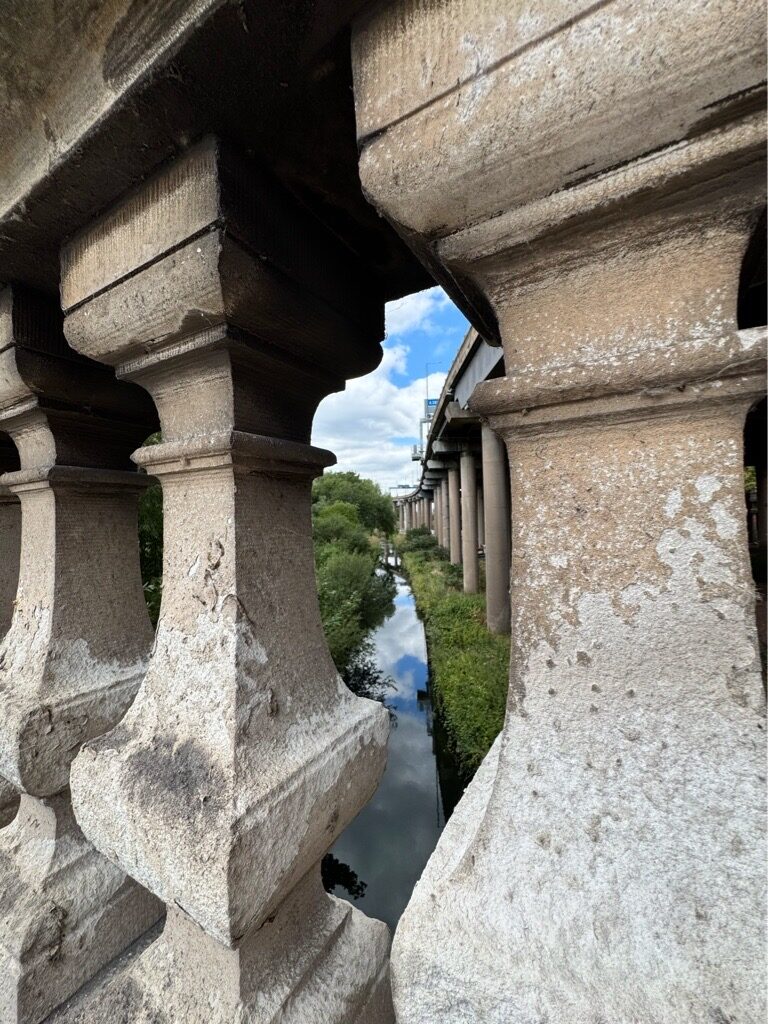
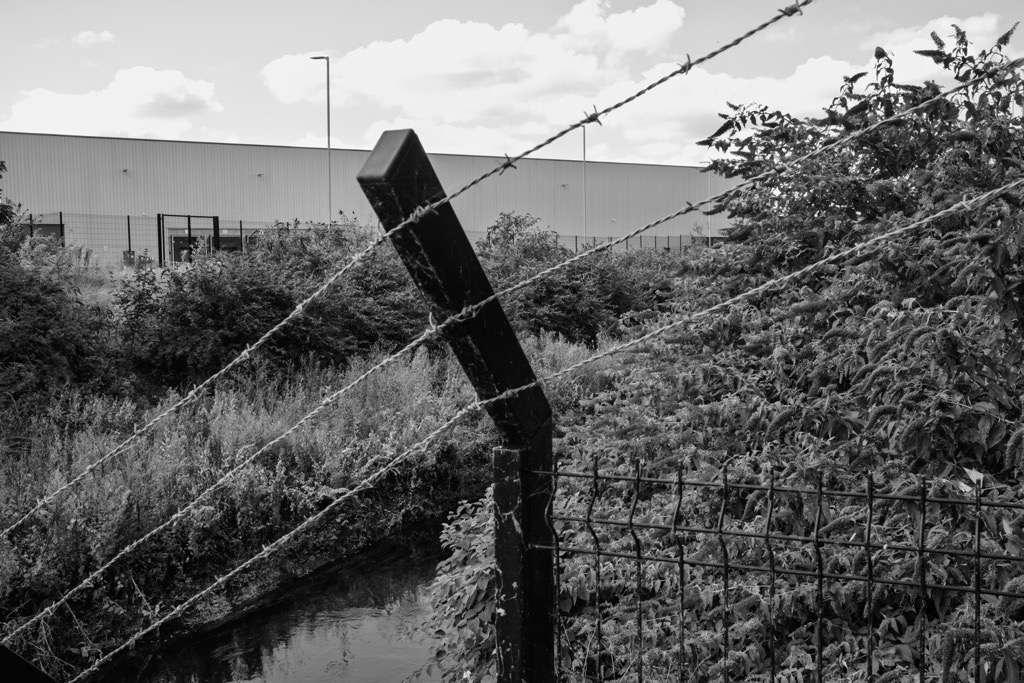
The classical view of the pillars lined up along the river Rea.Barbed wire and undistinguished areas of the Junction.
Are you wanting to read more about Spaghetti Junction then here are more of my visits about what lies beneath the M6. I recommend starting with this blog post that sets the scene for my photo essay.
The passing of Ozzy Osbourne leaves a large imprint on the people of Birmingham. The band Black Sabbath are very much loved and their Birmingham origins are celebrated throughout the city. Back in 1974, I remember “Paranoid” blasting out loudly through the student common room speakers. I loved the Black Sabbath album covers which stood out from others at the time with their own distinctive take on the early seventies. Even as my musical tastes moved towards glam rock, punk and new wave, I still had fondness for the distinctive Tony Iommi guitar riffs from “Iron Man,” and “Paranoid”. Black Sabbath and Ozzy Osbourne still connect with me especially as their influences are all around Birmingham.
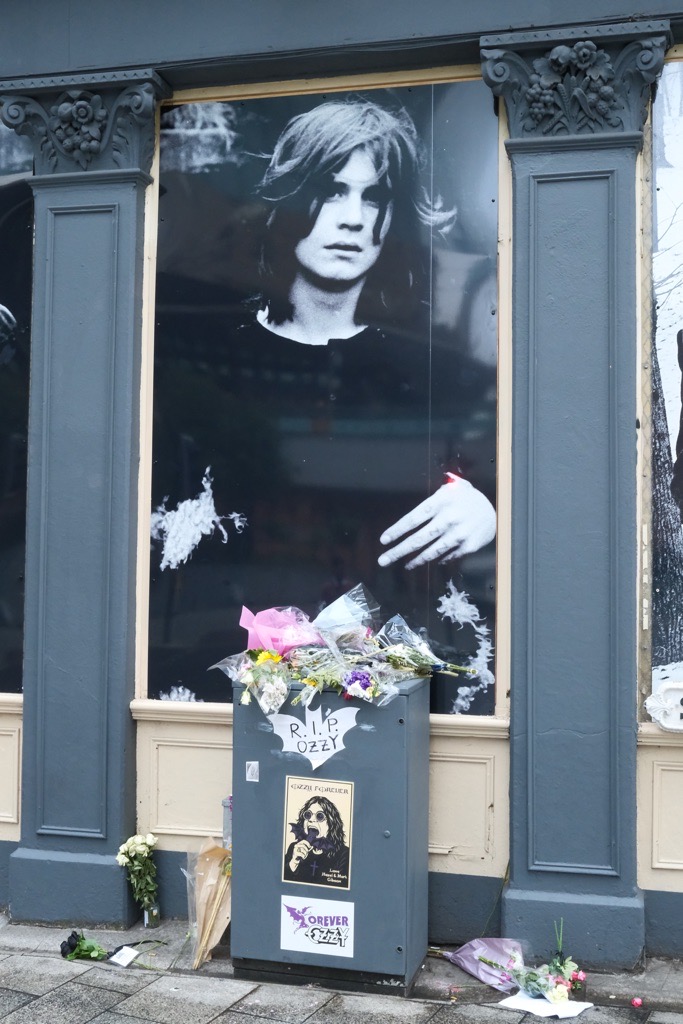
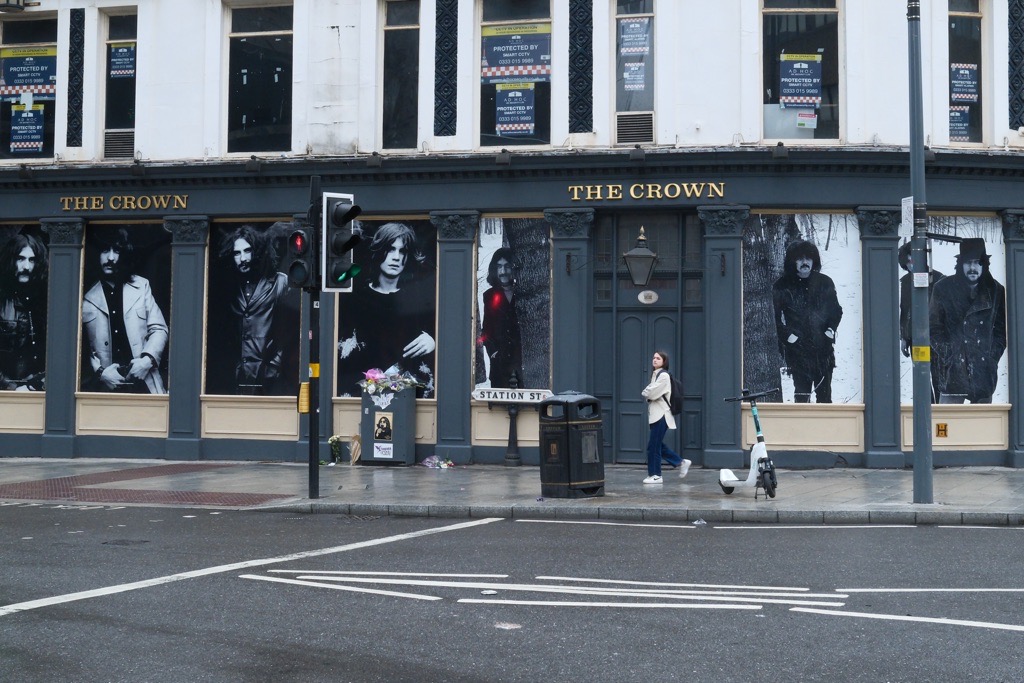
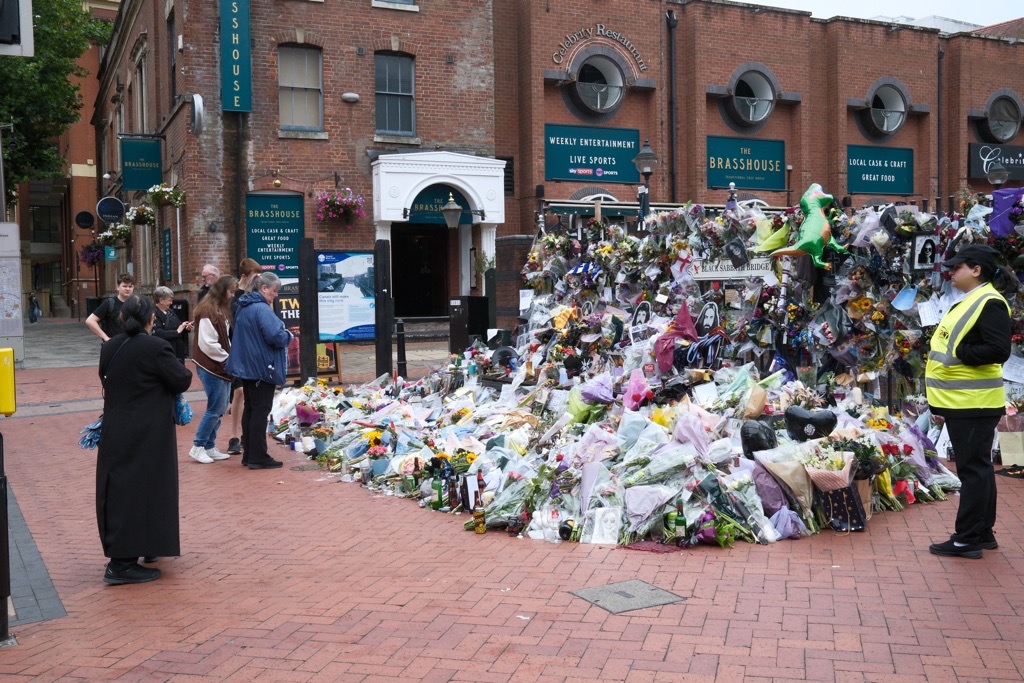
The shrine to Ozzy outside the Crown pub on Station Street.
Getting caught up in the emotion around the city from the reunion concert and people gathering to honour Ozzy, I went in the day before his funeral to visit the notable Black Sabbath sites in the city and pay my respects.
The Crown pub, Station St.
My first stop was the Crown pub often known as the birthplace of legends. Many famous bands played there including the early Black Sabbath concerts. Closed since 2014, the building is now protected by its Grade II listed status although what the future will be is uncertain. The Crown has had a lick of paint and the boarded-up windows now have pictures of the band. A small shrine has taken shape below the picture of Ozzy. There are a few candles, flowers and fan messages set out. Pedestrians entering New Street rail station glance curiously at all the commotion.
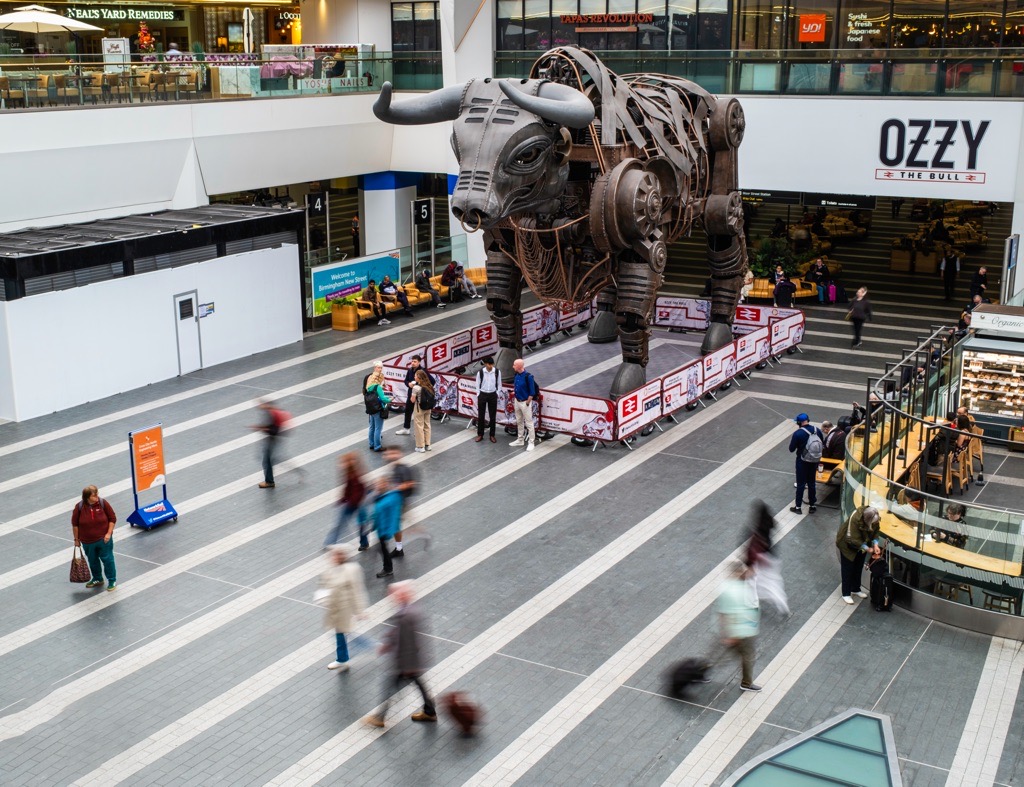
Ozzy the Bull at New Street station.
Then there is Ozzy the Bull. Towering above the concourse of New Street Station, this animatronic sculpture was a massive success during the Commonwealth Games. Once forgotten, now restored, much like the man himself, Ozzy the Bull is a great symbol of the City.
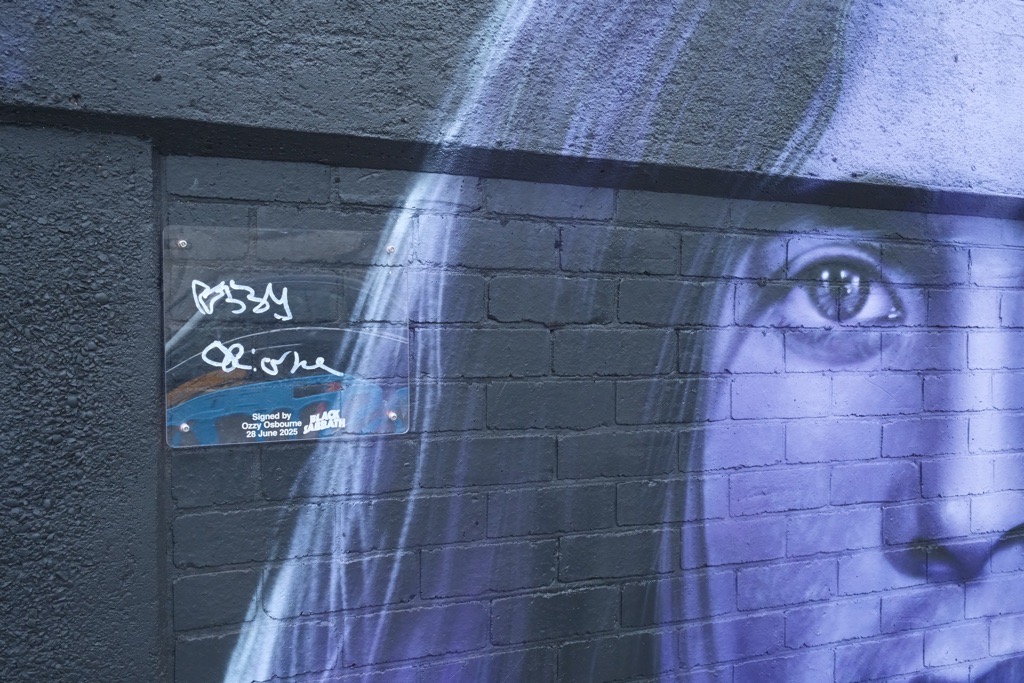
Ozzy’s signature on the wall in Navigation Street.
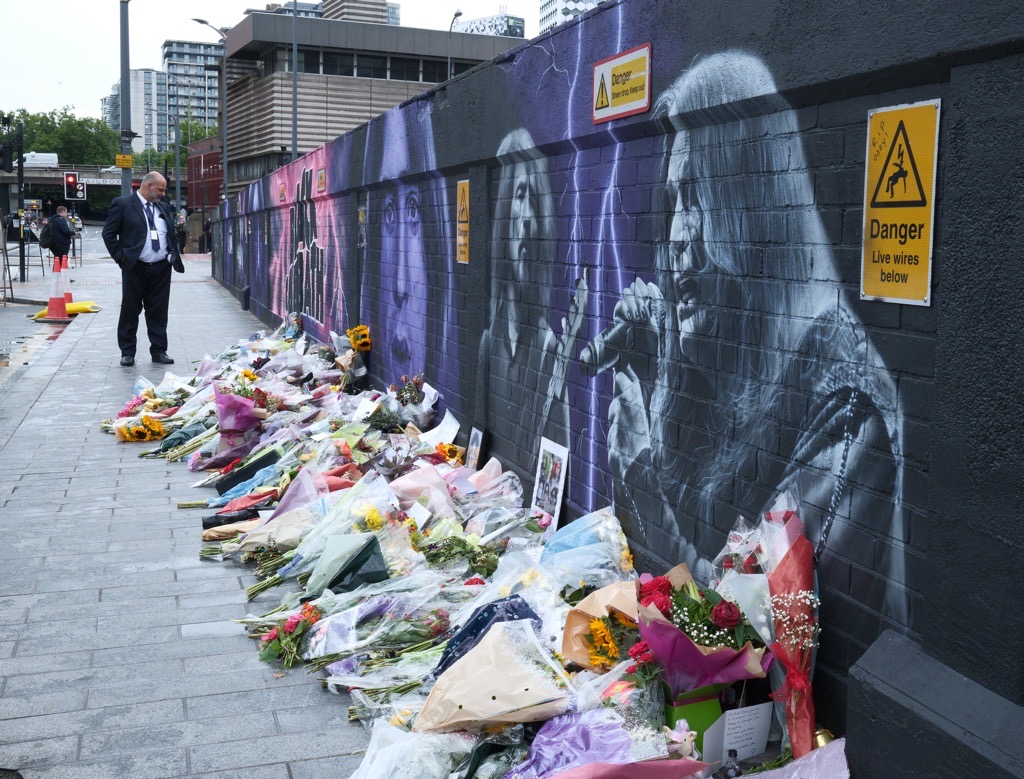
Outside the front of the station, Navigation street has attracted the City’s attention where Mr Murals, a local artist has created a striking Black Sabbath mural. Along the wall facing the station are photorealistic spray can pictures of the four band members. The Black Sabbath logo looms large beside them. Less than a month ago, the group came to look at the murals and each signed their name against their picture. The signatures have been protected with Perspex glass. The length of the street has become another shrine for Ozzy with flowers lined up against the wall.
More floral tributes along the Black Sabbath mural.
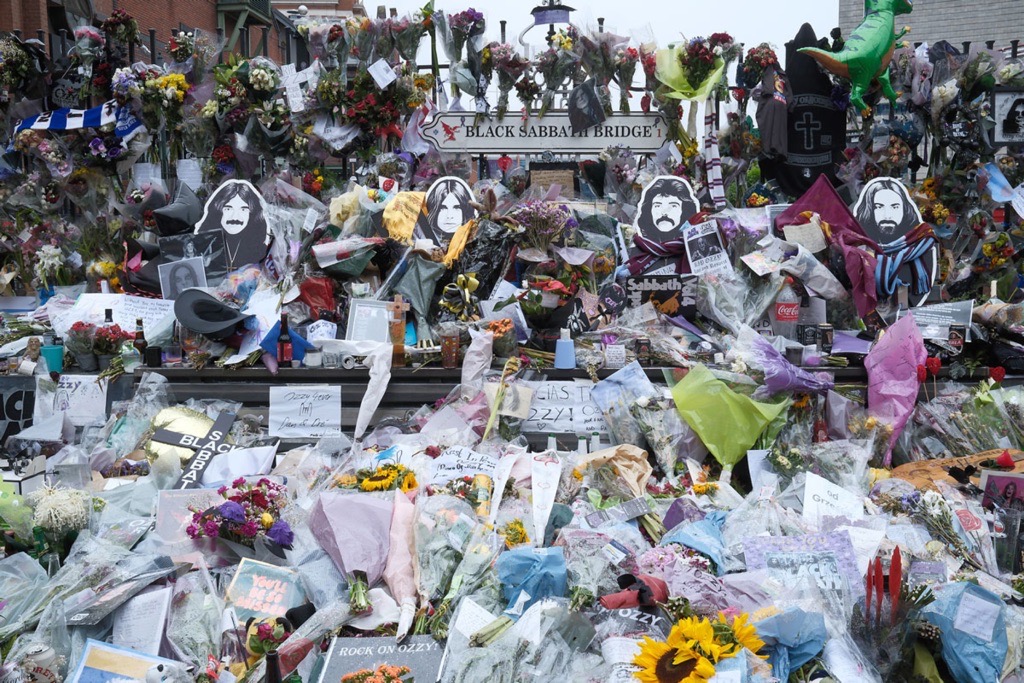
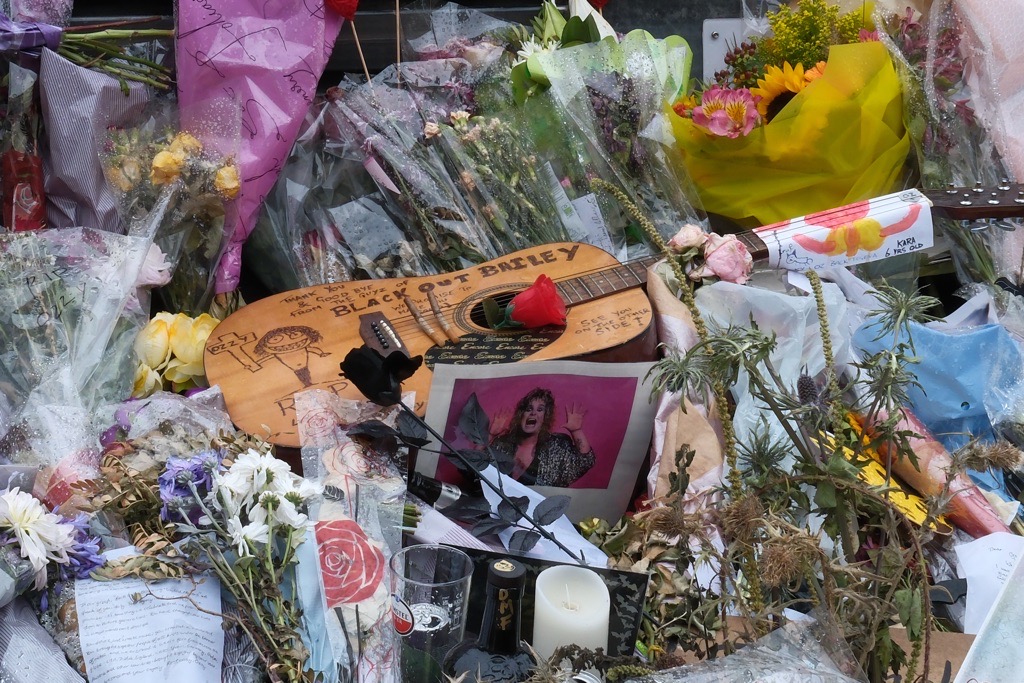
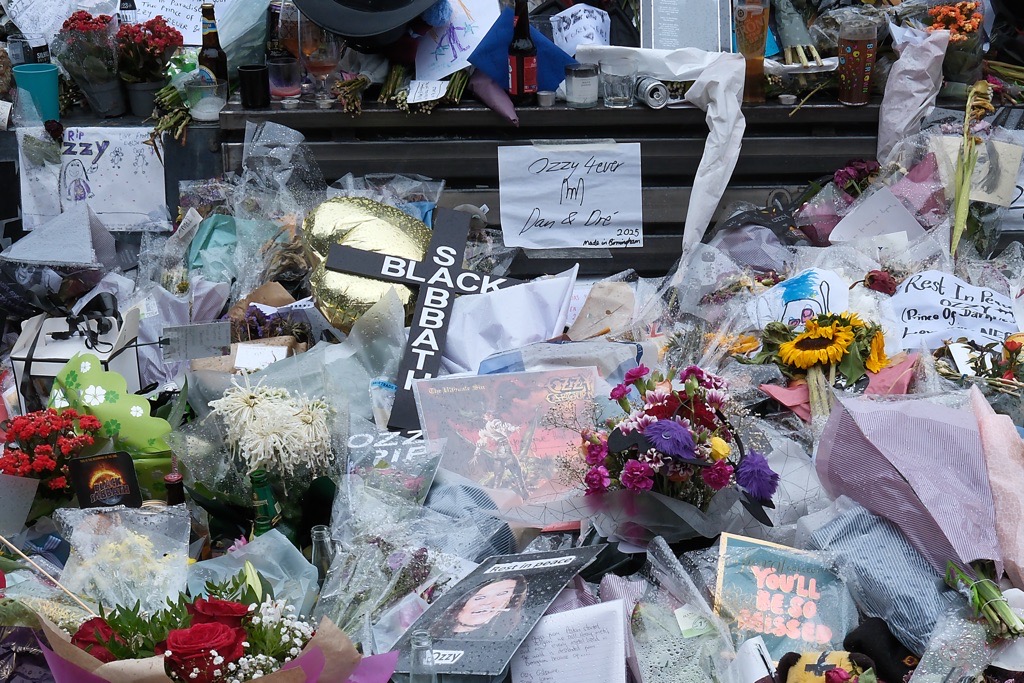
The focus of the outpouring of grief for Ozzy was taking place at the Black Sabbath Bridge on Broad Street. In 2019, the city dedicated this space to the band with a bench featuring the faces of Ozzy, Tony, Geezer, and Bill. Now, the bench is transformed with flowers, tributes, hand-written notes, empty Jack Daniels bottles, and even a guitar. The tribute has taken over the pavement and security are required to keep a semblance of order. On the day of the funeral, this was the place where the hearse bearing Ozzy stopped and the family paid their respects. The news and pictures from the BBC and Rolling Stone magazine show how much he will be missed.
This is the day before the funeral at Black Sabbath Bridge.A guitar with inscription amongst the tributes.More details of the tributes.
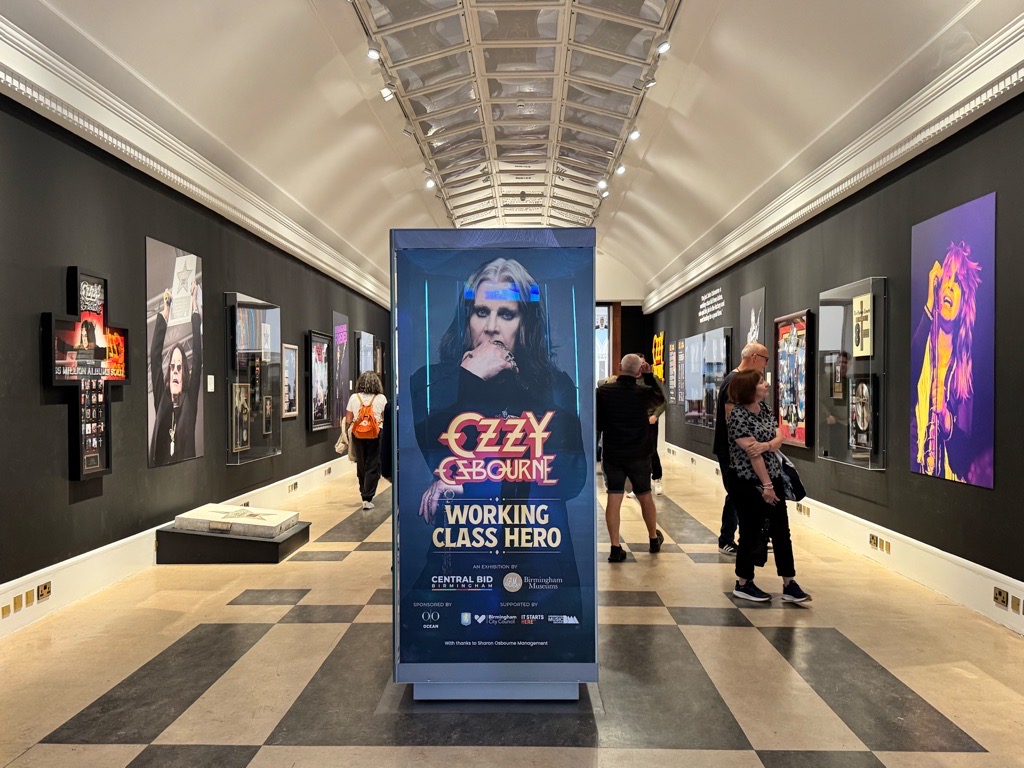
Next I find myself in the Birmingham Museum and Art Gallery. Here a special tribute holds centre stage. The ” Ozzy Osbourne (1948-2025): Working Class Hero” exhibition celebrates the lead singer’s astonishing career. Videos play on loop; photographs of his successful career adorn the walls. The many gold and platinum records are displayed. At the entrance, The civic book of condolence for Ozzy waits. I stood in the queue, looking up at all the artwork around waiting my turn to add my condolences.
The working class hero exhibition.
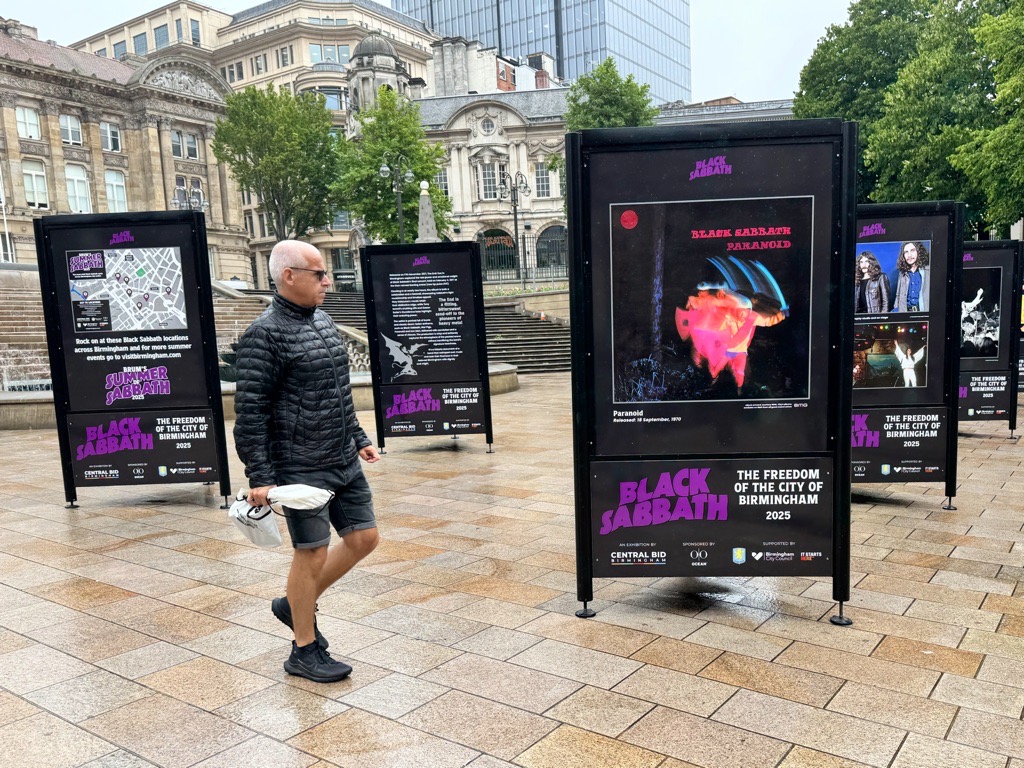
On my way home, I pass through Victoria Square where there is an exhibition of Black Sabbath with many posters arranged to tell the history of the band that will forever be associated with Birmingham.
The Black Sabbath poster board exhibition in Victoria Square.
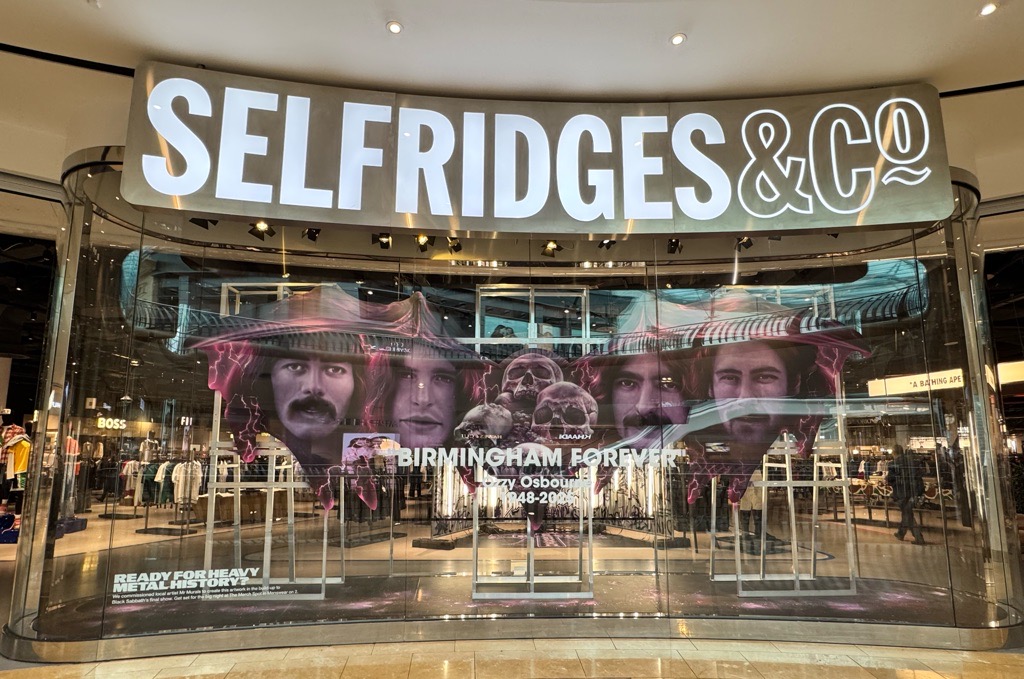
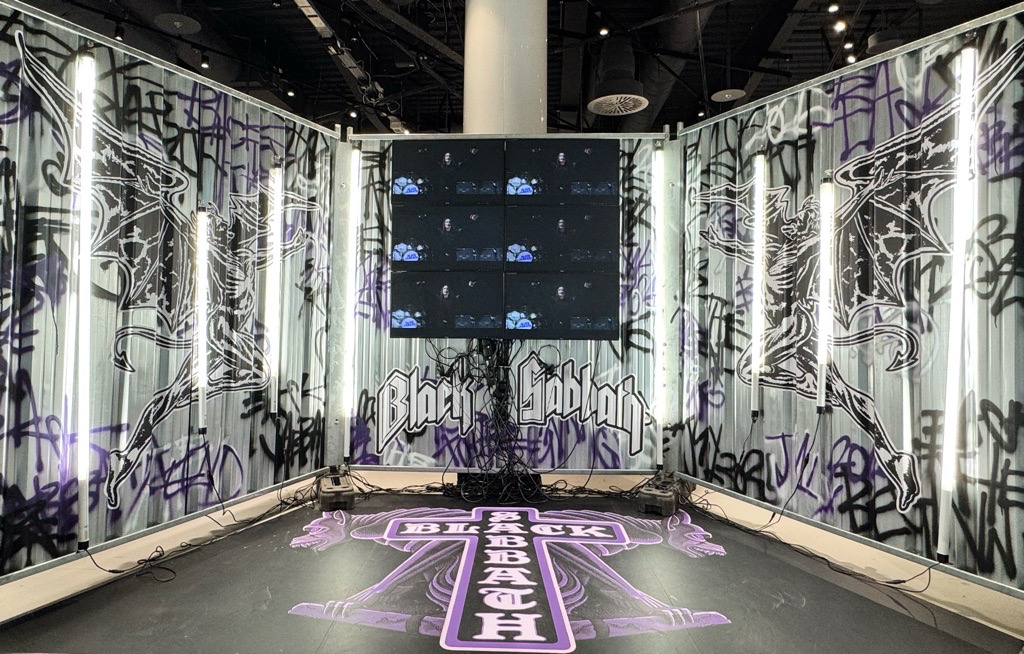
Even at Selfridges, the modern temple of retail, screens shimmered with Black Sabbath’s images. Pictures of the band and Ozzy great you at the store entrance. A place is set aside to stand and watch a continual loop of the greatest Black Sabbath songs.
Tributes to Black Sabbath.A mini theatre inside the store.
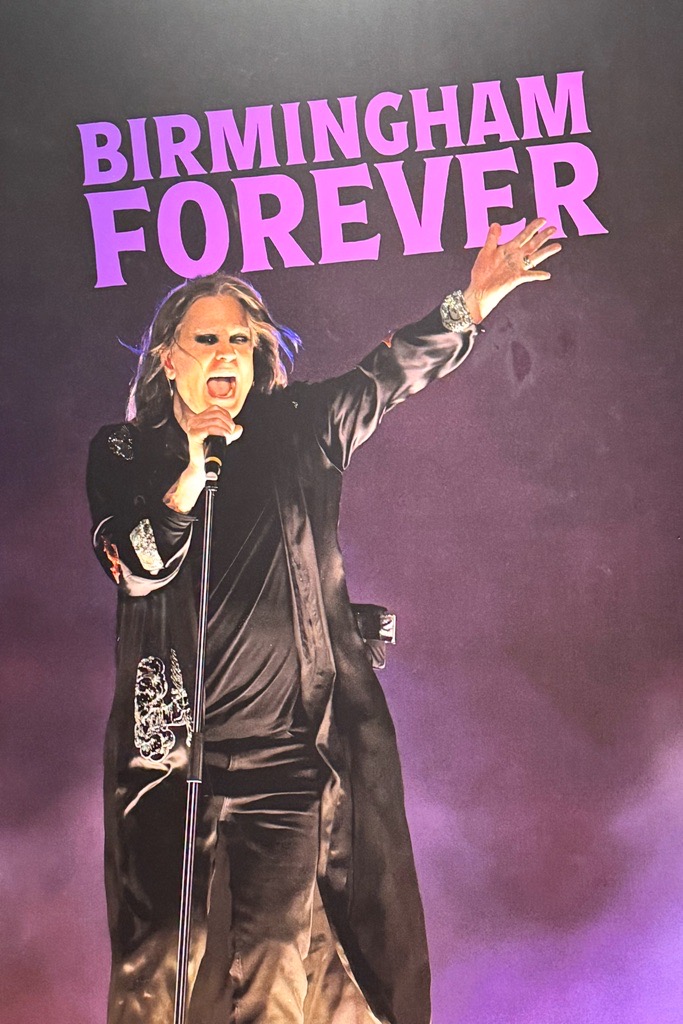
There is much to take in and the legacy of Ozzy and Black Sabbath is celebrated on the streets. He is a hero not only of the working class but everyone who looks to make a better future for themselves. Ozzy with his charismatic personality will forever symbolise the City of Birmingham.
Ozzy at the Commonwealth Games in 2022. (picture from the Working class hero exhibition).
I follow Imbue on Instagram and enjoy his thought-provoking artwork. Over the last few weeks, my Instagram feed went wild with notifications about his forthcoming exhibition. The images circulating included the Mona Lisa as viewed on mobile phones and a horse constructed from Amazon boxes. The exhibition was called ‘Lost All Meaning’, so I headed down to Digbeth to see the artwork. I do enjoy contemporary art. Having lived through the glam rock, punk and new romantic music movements, the album covers were always treasured. Imbue’s work captures much of that excitement and brings it right up to date.
The exhibition space for the Imbue artwork.
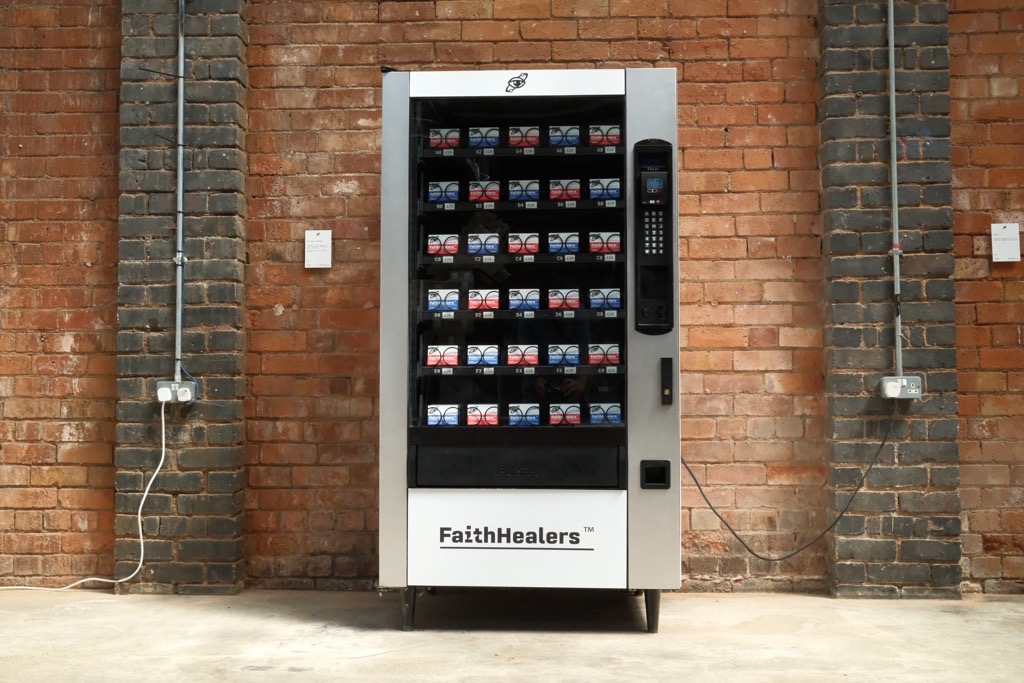
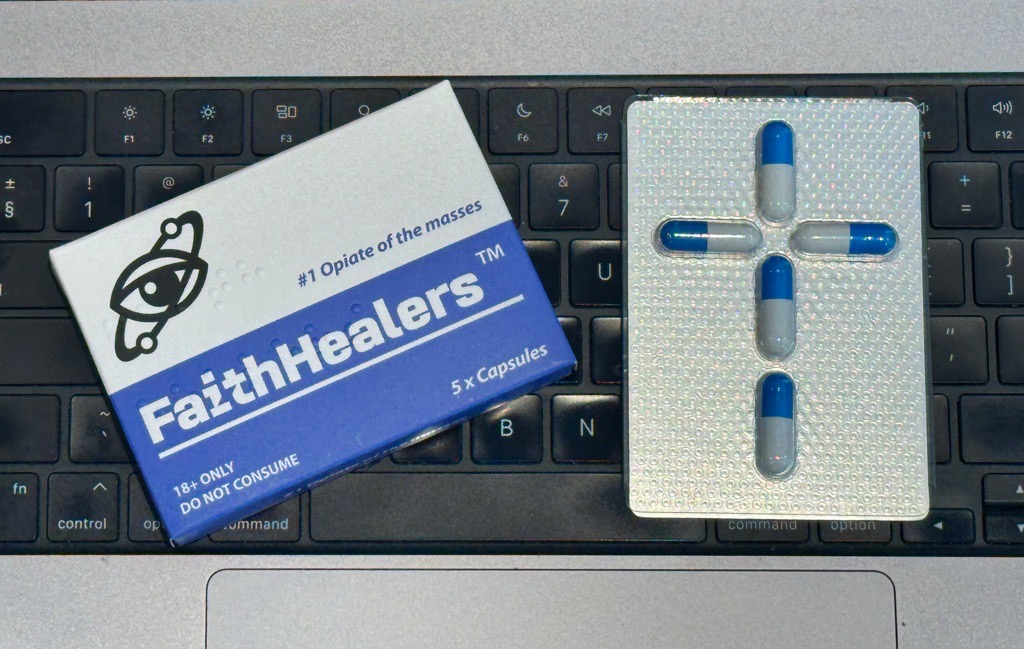
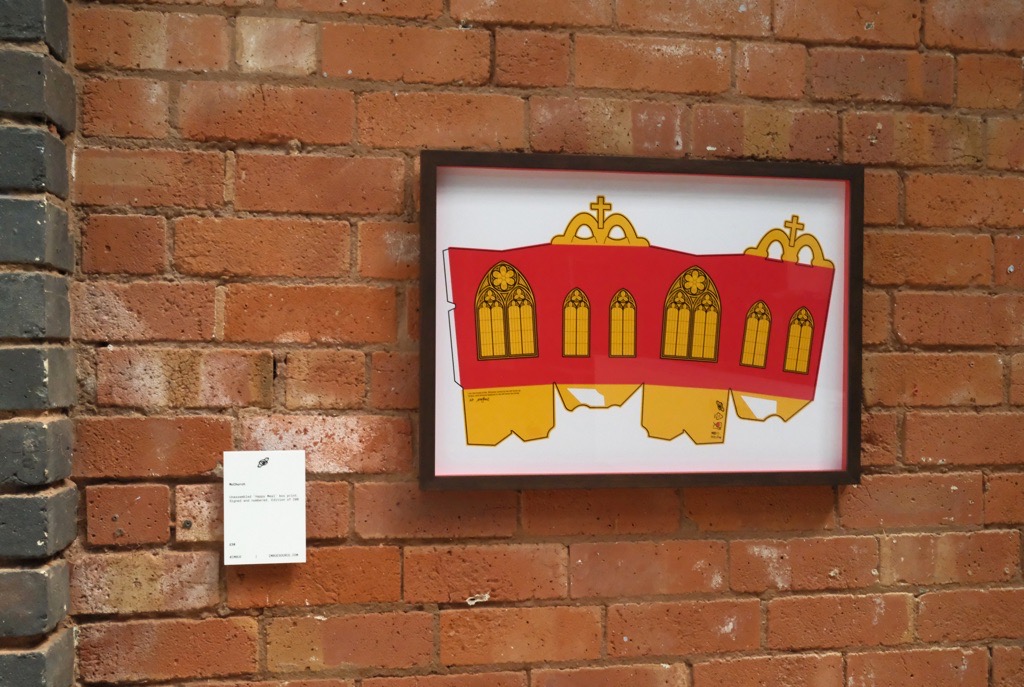
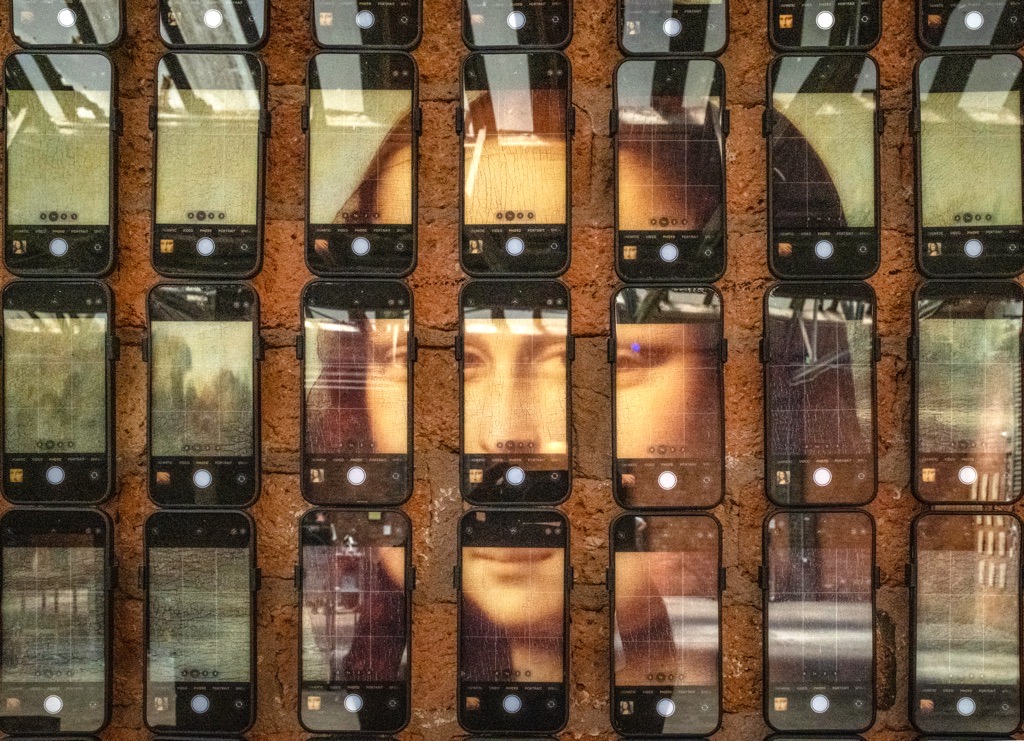
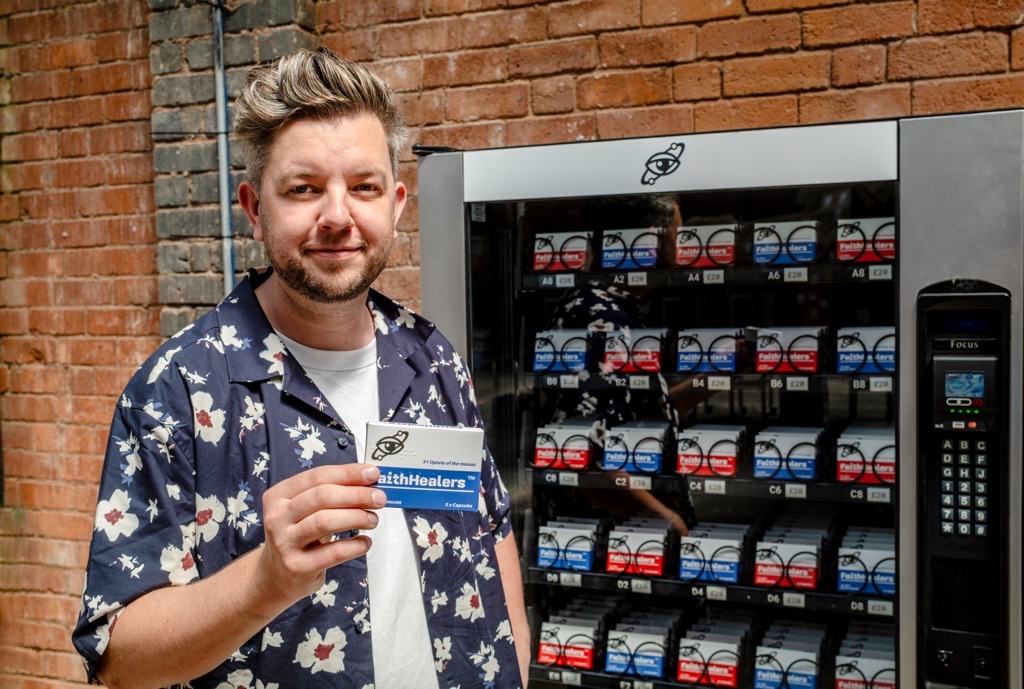
I arrived at the building on Floodgate Street and was immediately drawn to the walls where Imbue had arranged his work. A food and drinks machine was set up to dispense “faith healing” drugs. I bought a pack from the machine dispenser, and inside the blister pack, the tablets were arranged in the shape of a cross. This religious theme ran throughout the exhibition, with pieces such as The Fall of Man (UV print on a used MacBook lid) and McChurch, which, when cut out, resembles a McDonald’s Happy Meal box. The 100 Phones exhibit depicting the Mona Lisa was remarkable, though it makes me feel I really must go and see the actual Mona Lisa now!
Faithhealers make a cross.Mc Church which if brought allows you the option to but out and make a box.Close up of the 100 phones Mona Lisa.
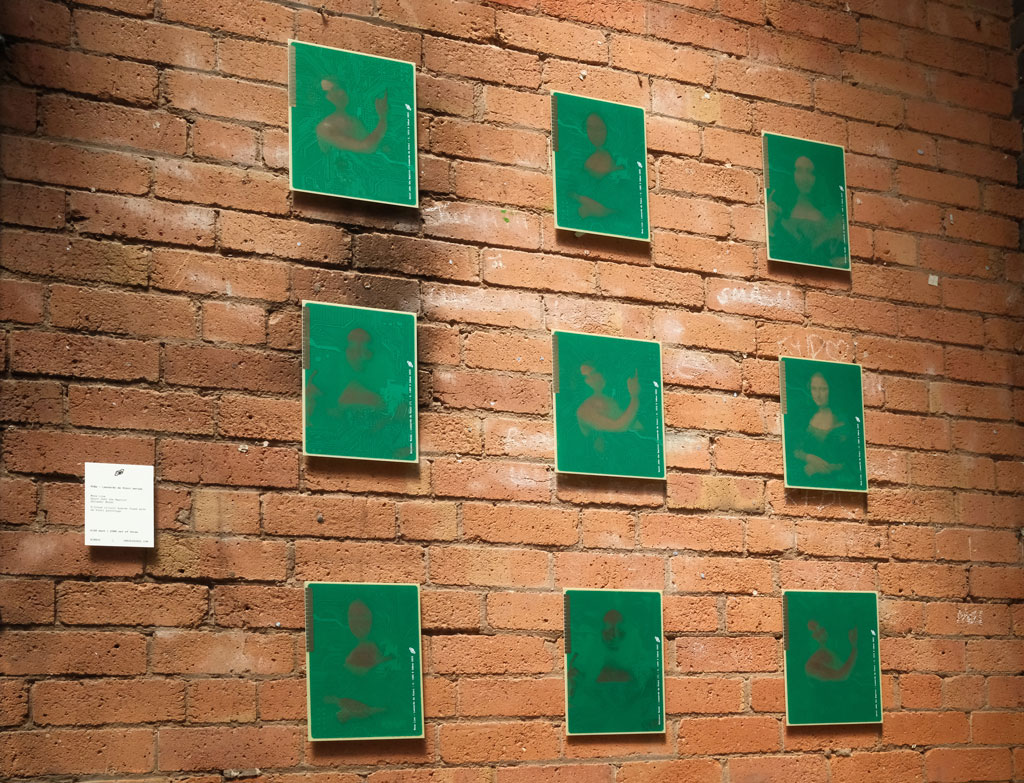
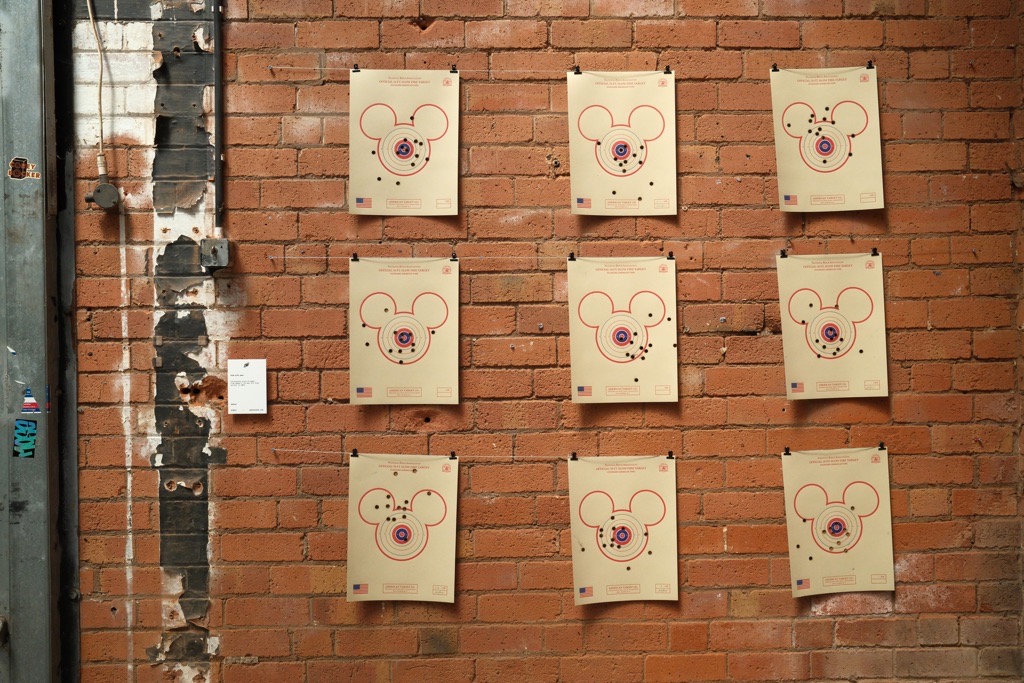
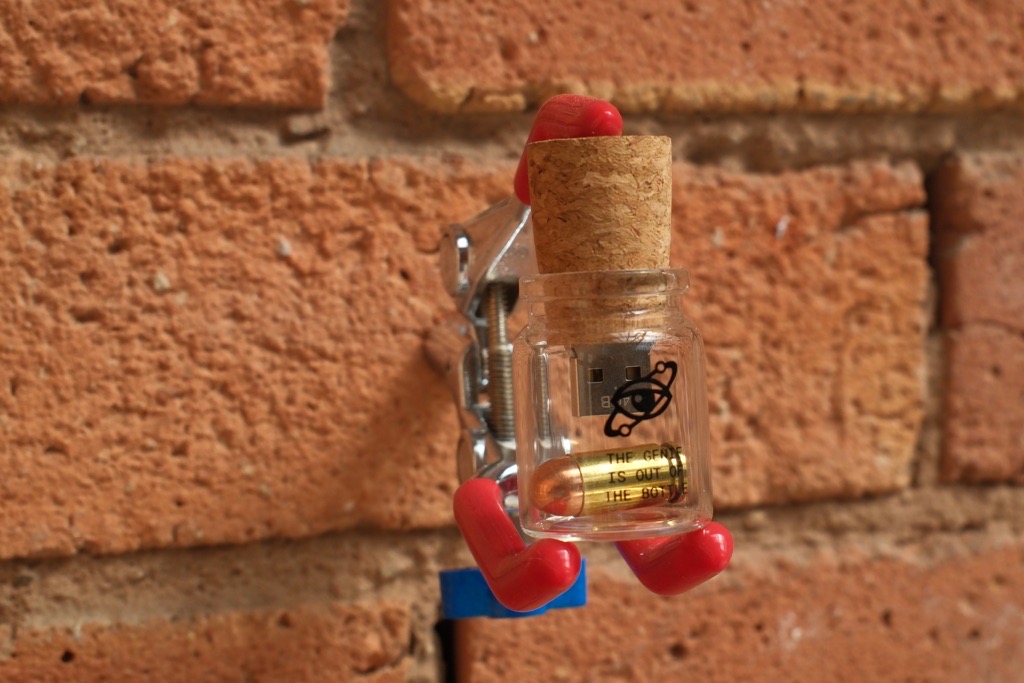
Many of the prints were mounted on the wall and arranged in a 3-by-3 grid, including Leonardo da Vinci–inspired printed circuit boards with images of the Mona Lisa, Salvator Mundi, and Saint John the Baptist. Kids with Guns used shooting targets with added Mickey Mouse ears, a powerful indictment of the world’s current gun problems. Nearby was a bullet encased in a bottle, designed to be used in a 3D-printed gun.
Leonardo da Vinci seriesShooting targets for kids.A bullet for a 3D printed gun.
The theme of 3D printing ran through the exhibition, with the interplay of technology and everyday life presented not only to shock but also to make you think.
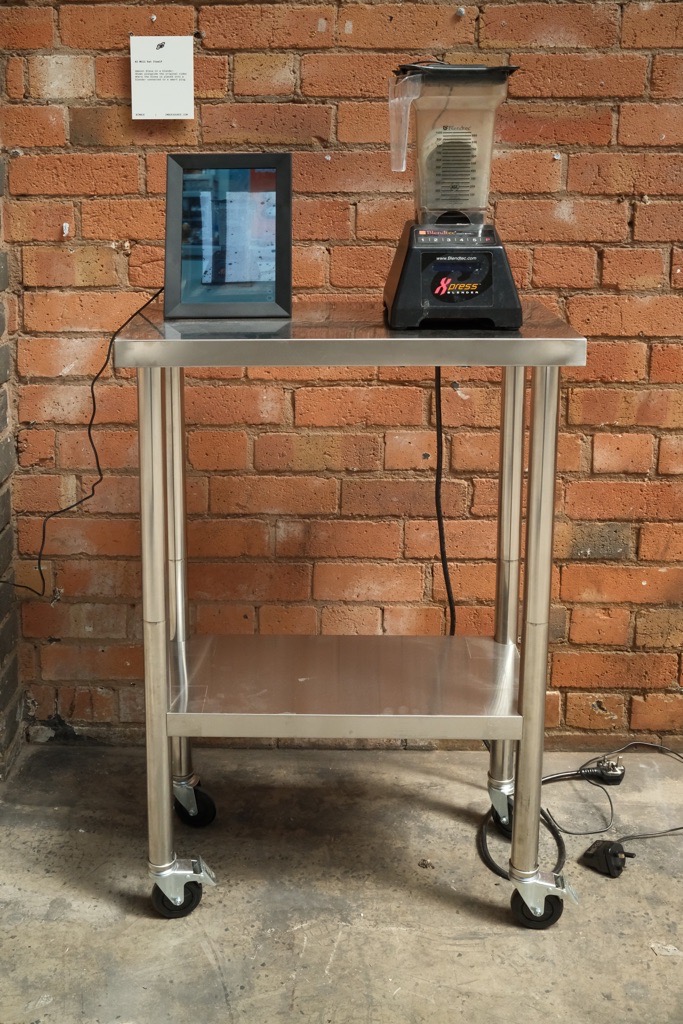
Liquidising Alexa which I have to admit is such a good idea.
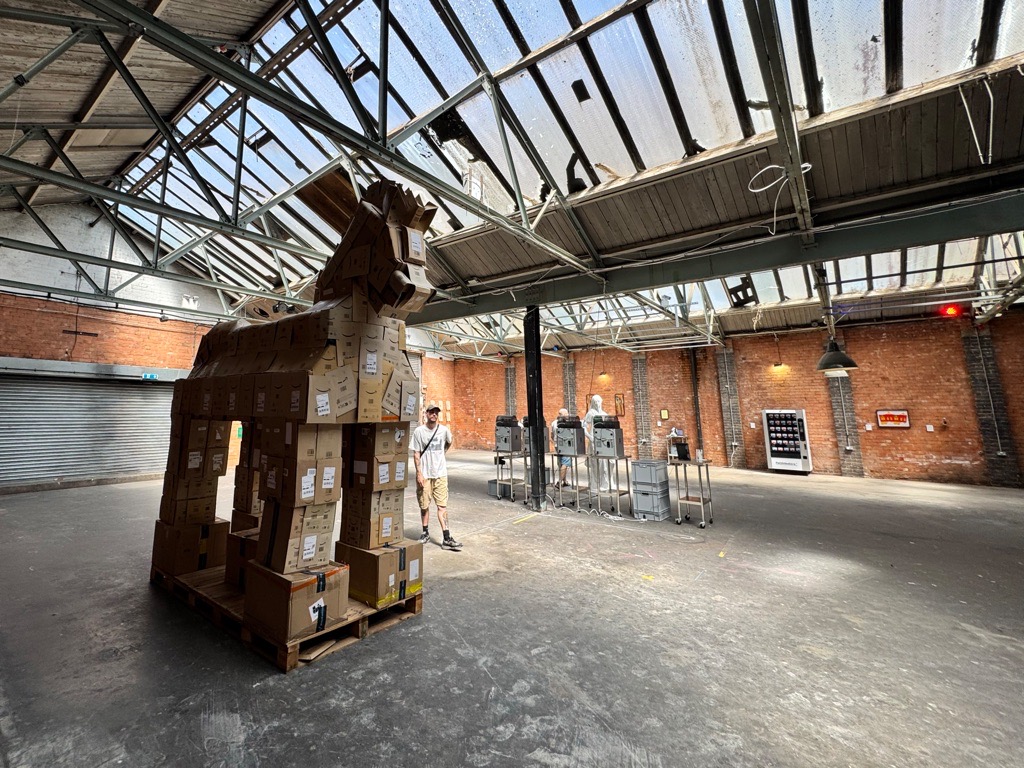
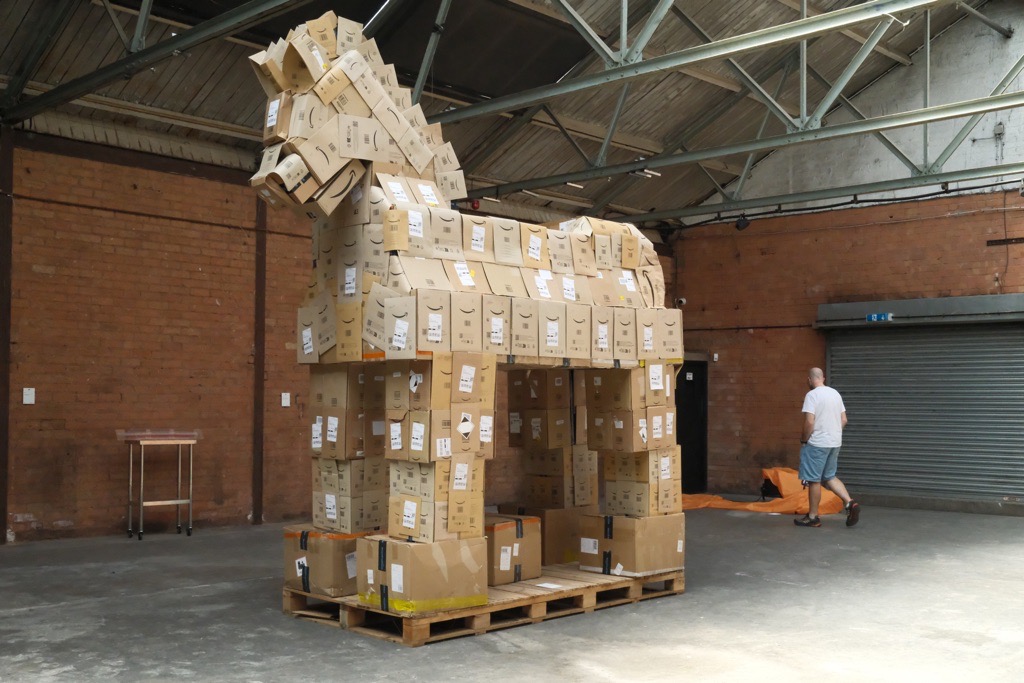
Two large exhibits dominated the centre of the warehouse. The horse made from Amazon boxes must have stood 12 metres tall, as shown in the photos. Quite a few home deliveries were needed to construct this horse. To my mind, it resembled a Trojan Horse. Very fitting, as we bring Amazon boxes into our homes without a moment’s thought.
The Amazon Boxes Horse.
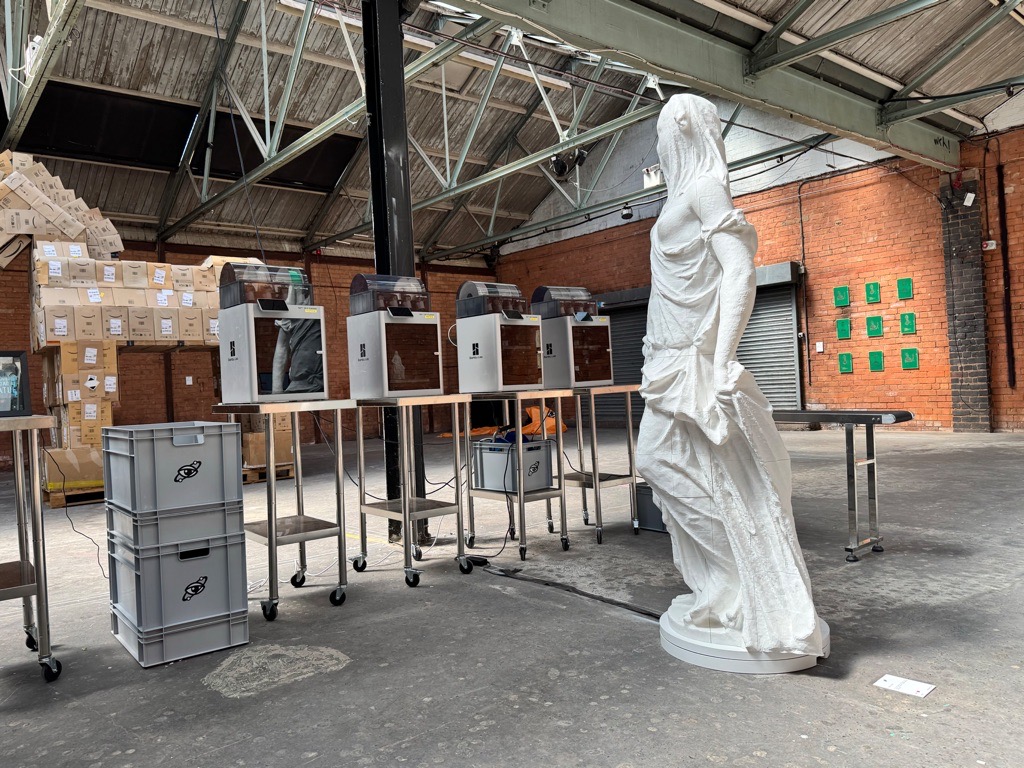
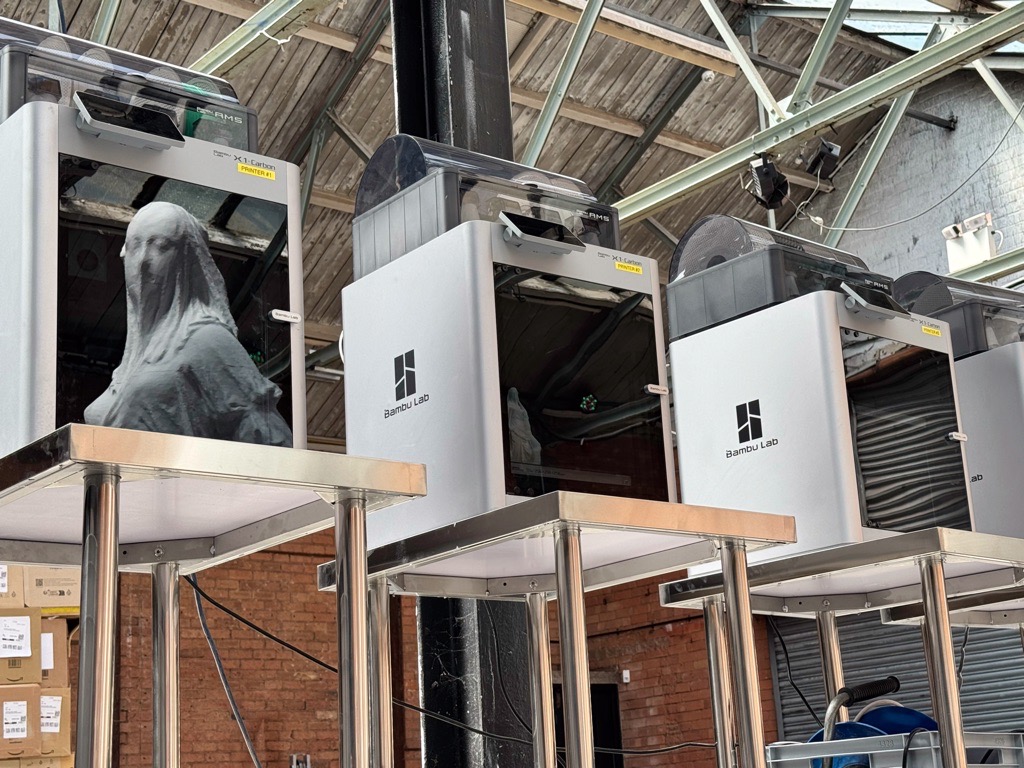
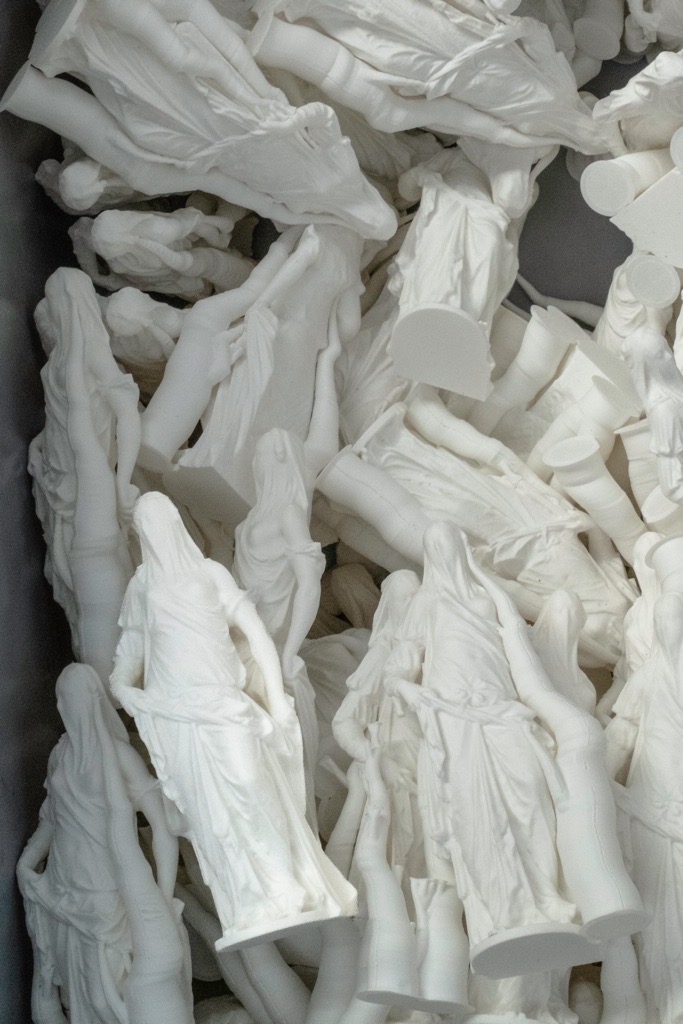
The other large exhibit was a veiled statue that Imbue had secretly scanned during a visit to the Louvre. The replica of Antonio Corradini’s Femme Voilée rotated in front of a bank of 3D printers. Small white statues were being printed and stored in a box, ready to be sold. This work raised many questions: how is it possible to scan such famous statues and then make them accessible to all? Did Imbue “steal” the statue from the Louvre, or is this simply how art will be shared in the future?
The veiled lady in front of a bank of 3D printing machines.A reflection of the veiled lady in the 3D printing window.The one that I want.
There were many other exhibits, too many to describe in detail. There are several accounts of the exhibition on the Internet each featuring their favoured artwork.
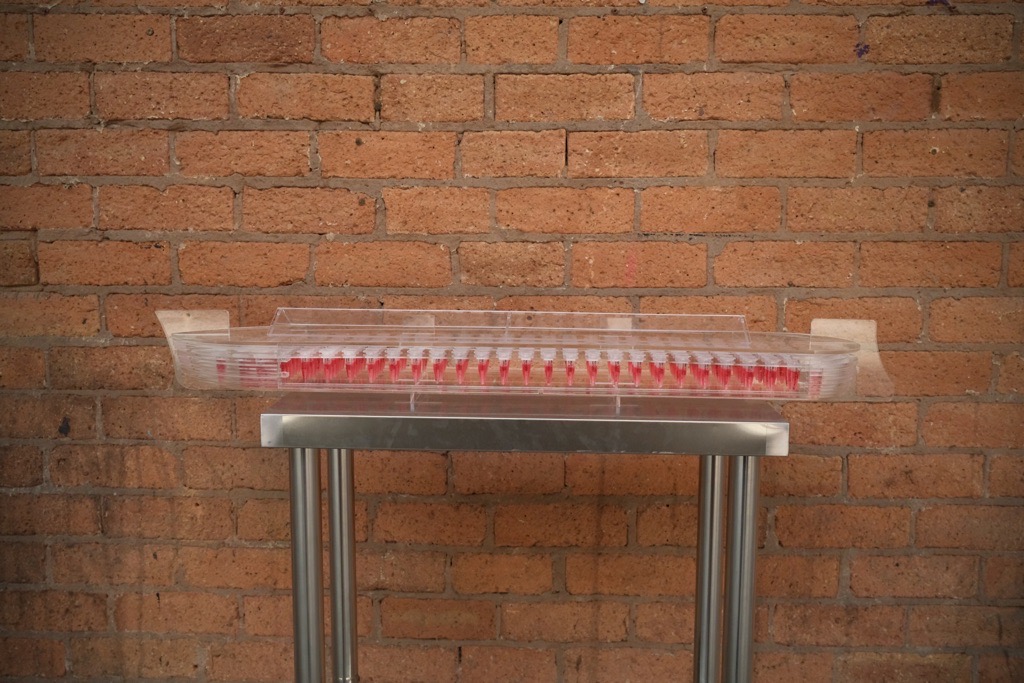
Personally, my favourite work was DNArk. I am currently watching a cheesy but entertaining TV series on the Syfy channel called The Ark, where the last of humanity is sent into space carrying the DNA of the animal world. Imbue’s artwork consists of a transparent boat with multiple rows of red vials representing DNA samples. It left me wondering: how are we going to preserve the world’s DNA if we keep destroying the environment?
DNArk
The bonus of the visit was meeting Imbue himself and taking his picture. He was open to conversation and happy to discuss his artwork and the ideas behind it. The exhibition only ran for a few days, but I will be on the lookout for his future work. Imbue has created artwork that resonates with today’s technology, cleverly weaving in references to past masters while exploring how we interact with the modern world. The role of religion seems to have morphed into technology, as people reinvent the world around them.
The artist, Imbue.
As a photographer, I appreciated how the exhibition was staged against the backdrop of an old industrial engineering workshop. The natural light from the ceiling windows and the texture of the walls provided the perfect setting for the artwork. As always, I used my X100VI for most of the pictures, whilst favouring my iPhone’s wide-angle lens for the overall views.
Lost all Meaning.
I found this exhibition space interesting as last year I was at the same place for the final day of the Floodgate an entertainment complex. As ever Digbeth changes and I have added my blog link below.
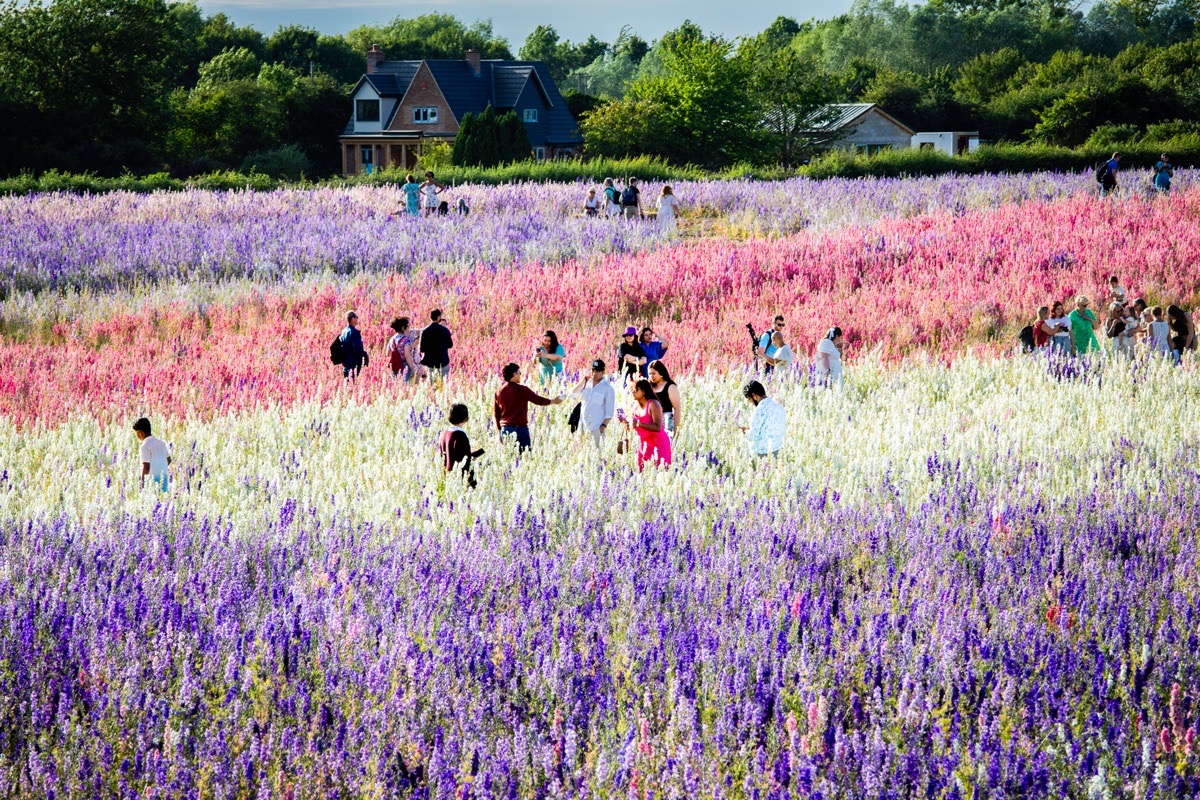
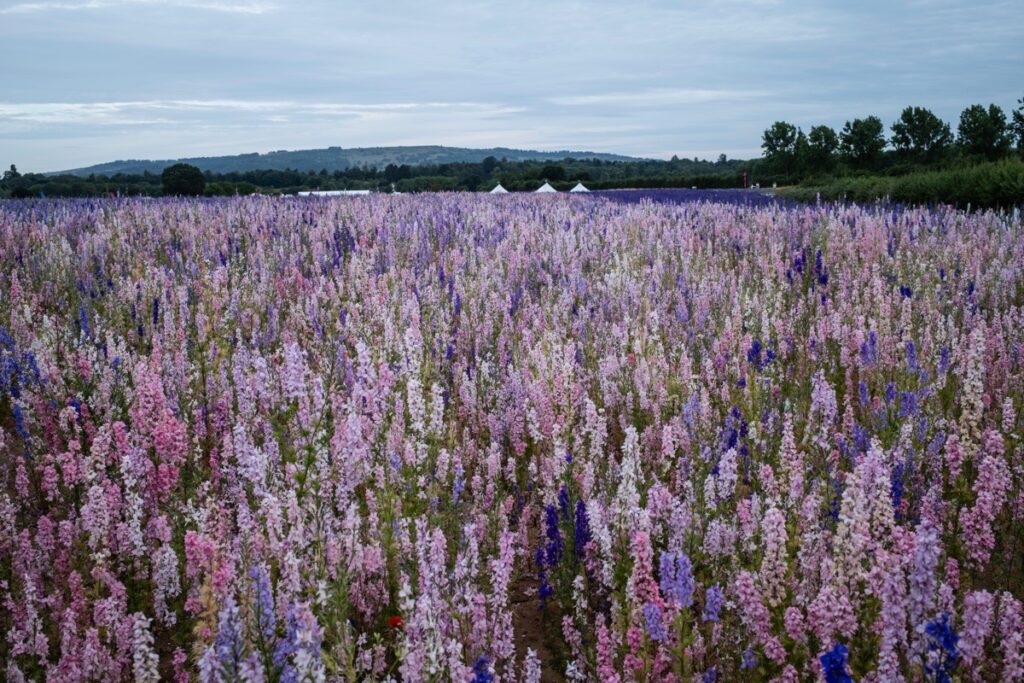
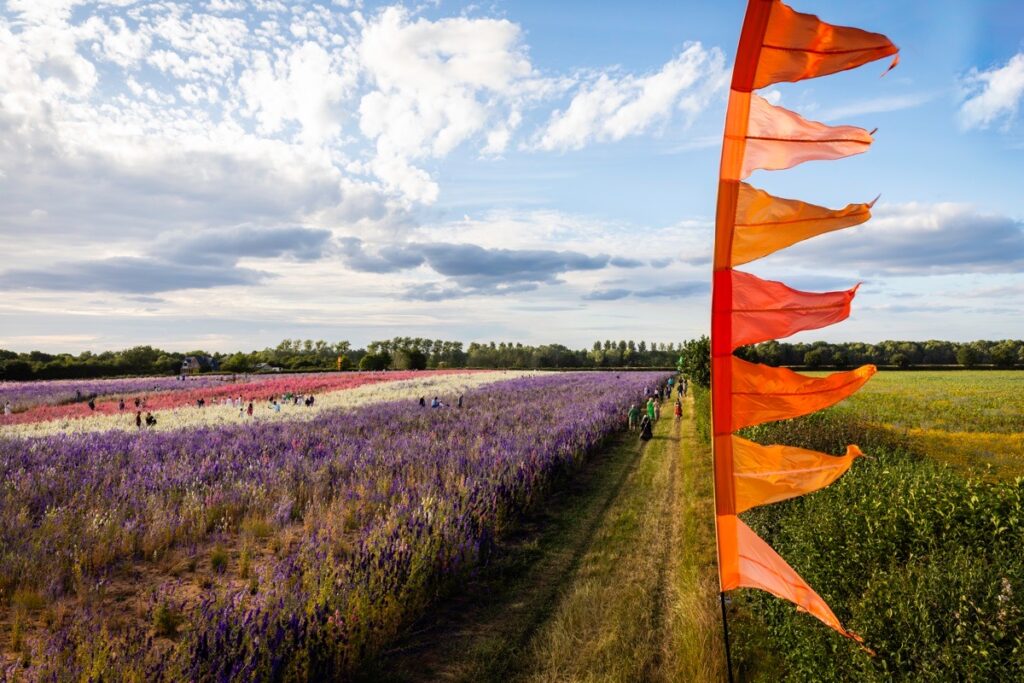
This year, the Real Confetti Company offered evening viewings of the Confetti Fields for the first time, and I signed up immediately. There is always a short window when the Confetti Fields at Wick, near Pershore, open to the public. The weather and the timing of the delphinium blooms have a significant influence on this.
The view from the top of the field looking down towards Bredon Hill.
Although the dates did not suit the family calendar during the day, the evening timing worked for me. On a warm June evening, I arrived at the fields two hours before sunset.
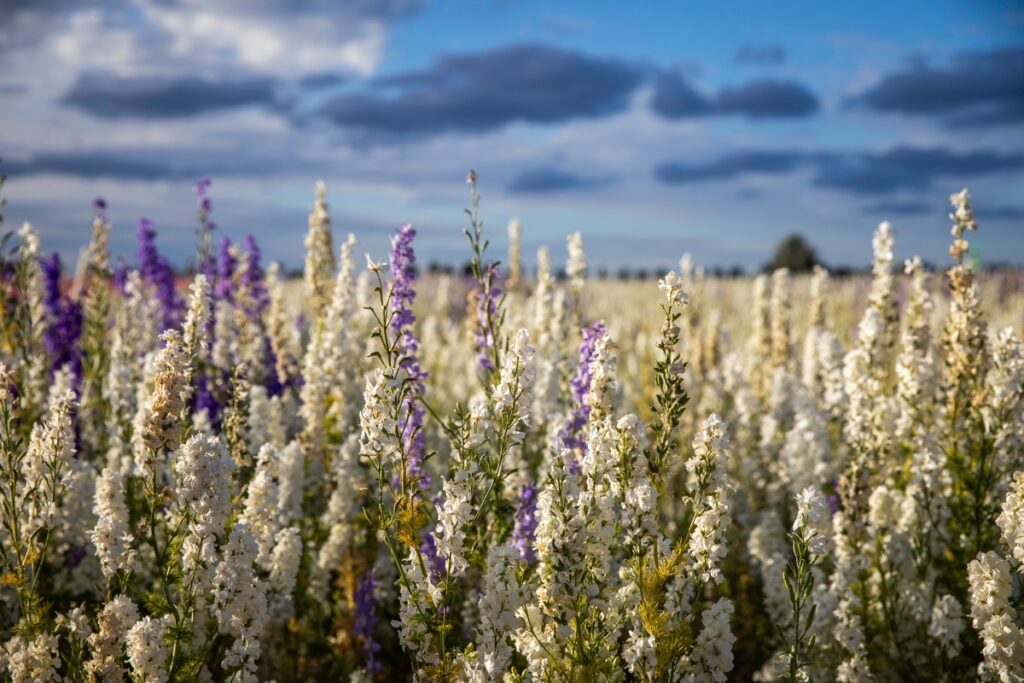
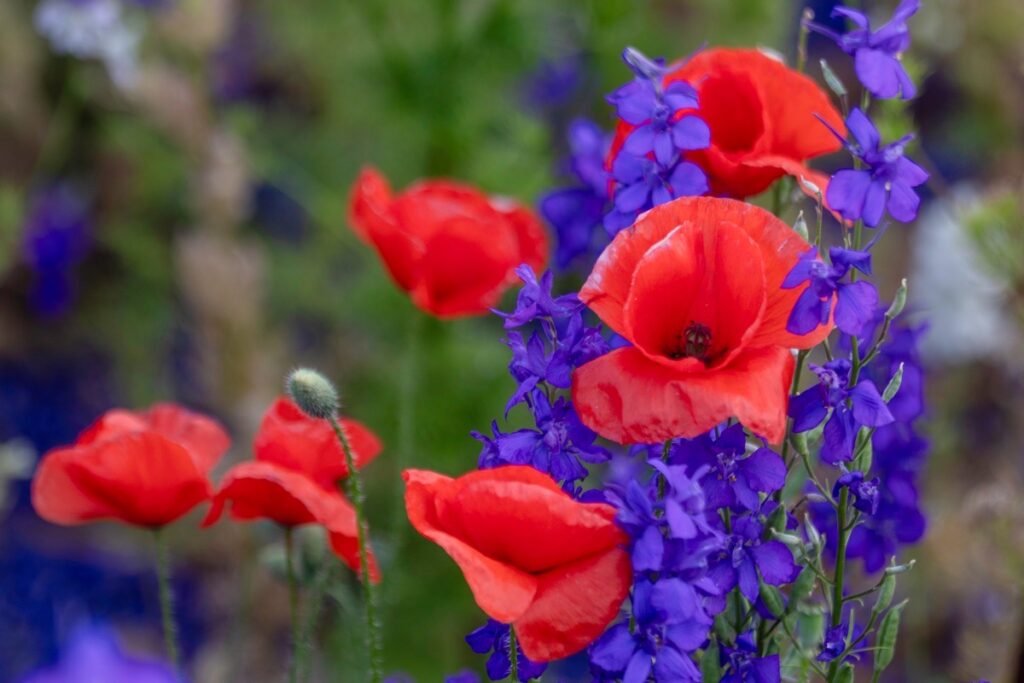
On top of the viewing platform.The Delphinium flowers
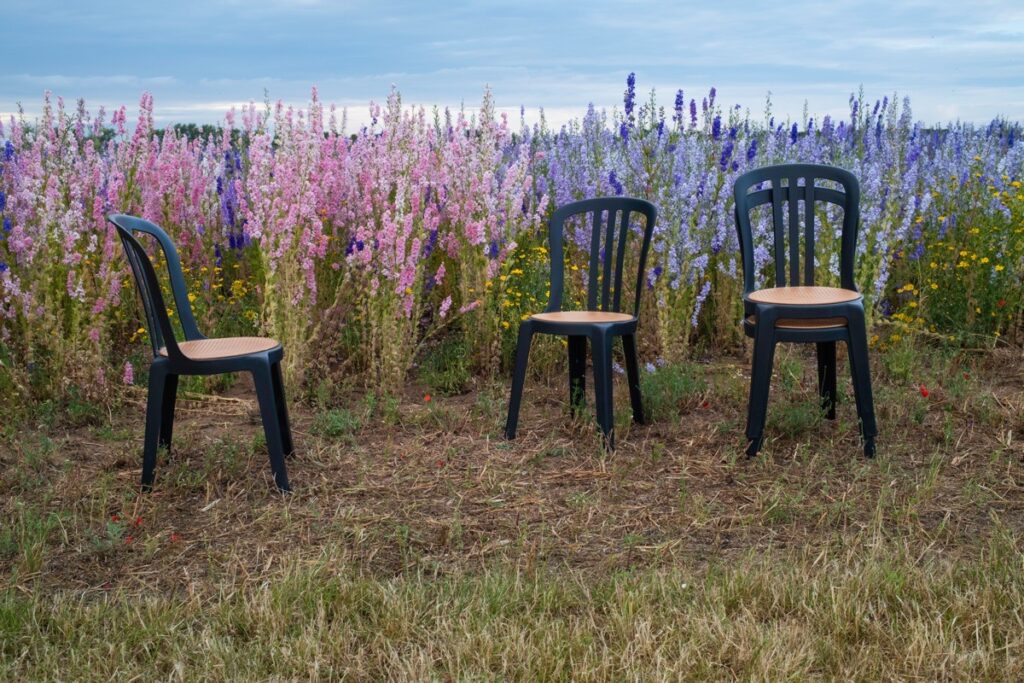
As always, the vibrant colours of the flowers, neatly arranged in colour zones, were quite magical. The evening opening meant the field was less busy, allowing time to take pictures without the usual distractions of people walking through the lanes and avenues. When I arrived, the light was excellent and really brought out the colours. I met up with fellow photographer Dave Wells, and we were able to compare notes as we took our pictures.
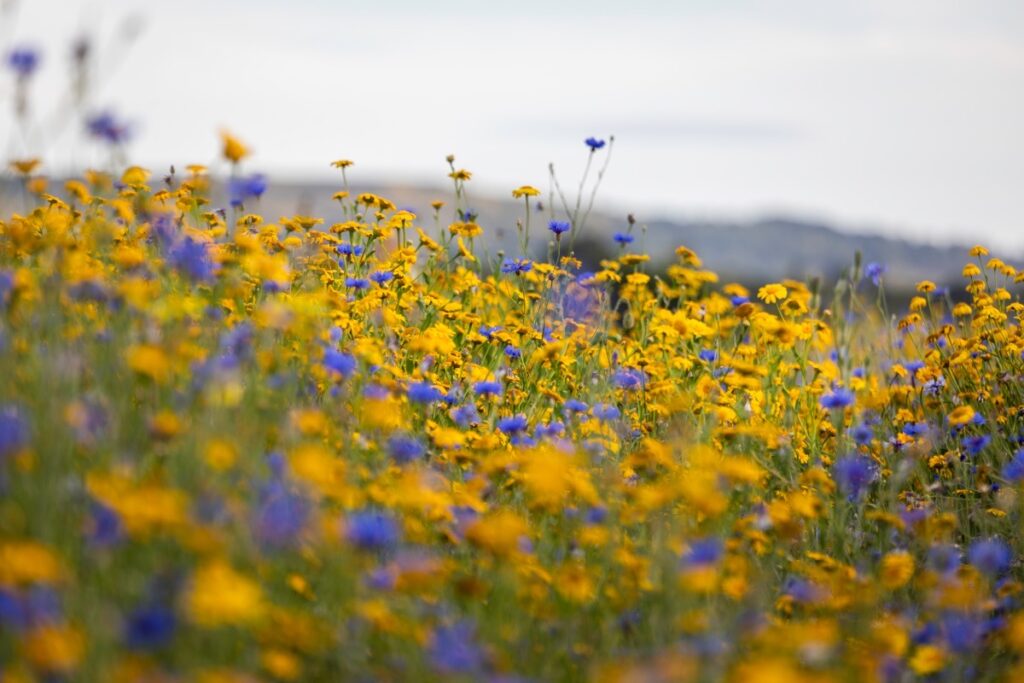
The wildflowers were spectacular.Colour contrasts in the field.
Unfortunately, a sunset never materialised. The sun disappeared behind clouds on the horizon, and rain arrived just as we were leaving. However, this did not dampen my enthusiasm for photographing the flowers. Enjoy the pictures—and I have provided links to previous visits to the Confetti Fields in 2023, 2020, 2019, and 2018.
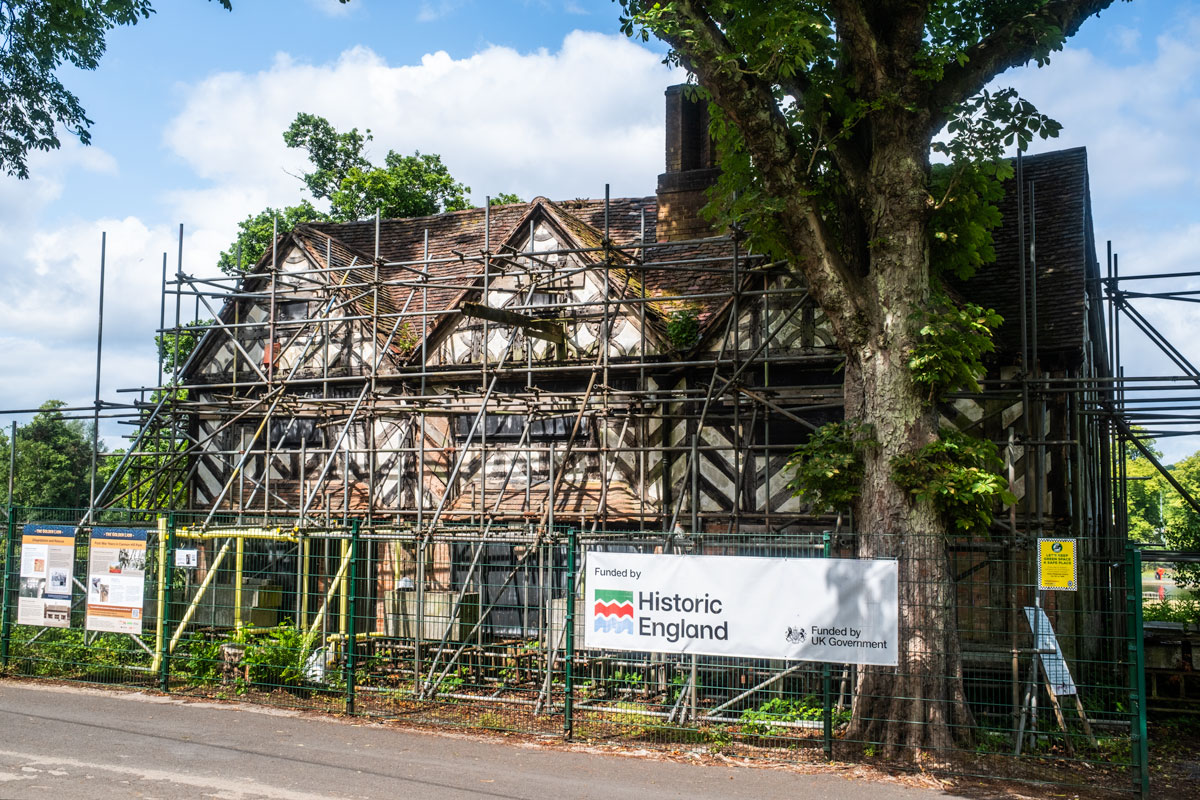
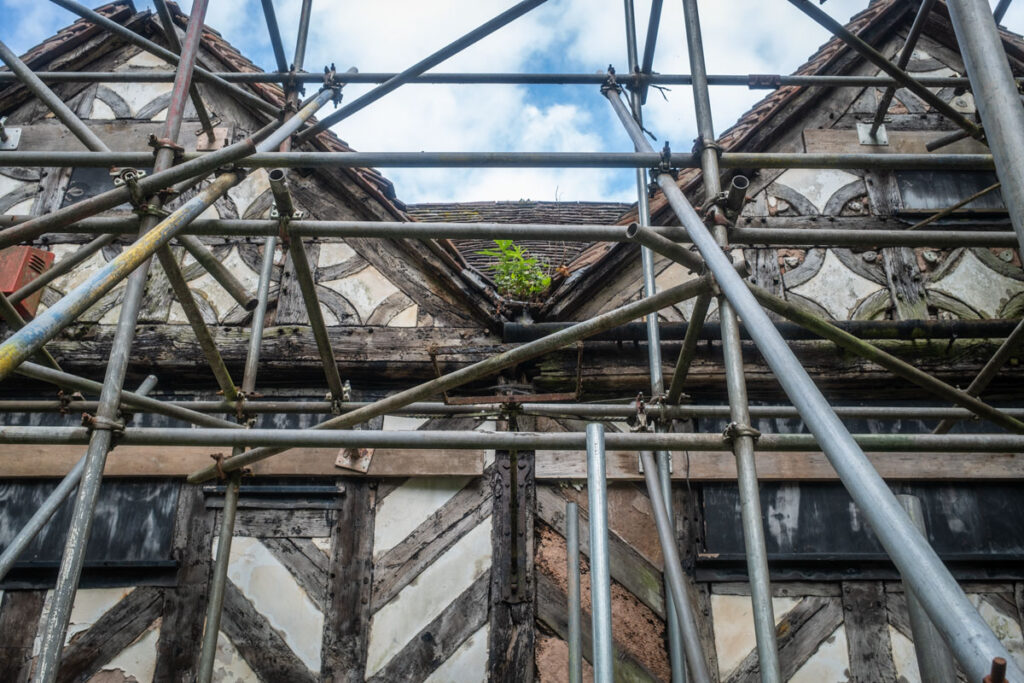
The Golden Lion is a building with a long and varied history. Walk along the main path in Canon Hill Park, and you will soon come across it. The scaffolding surrounding the structure gives its location away. You then realise that it commands a striking view of the green space, the boating lake, and the MAC.
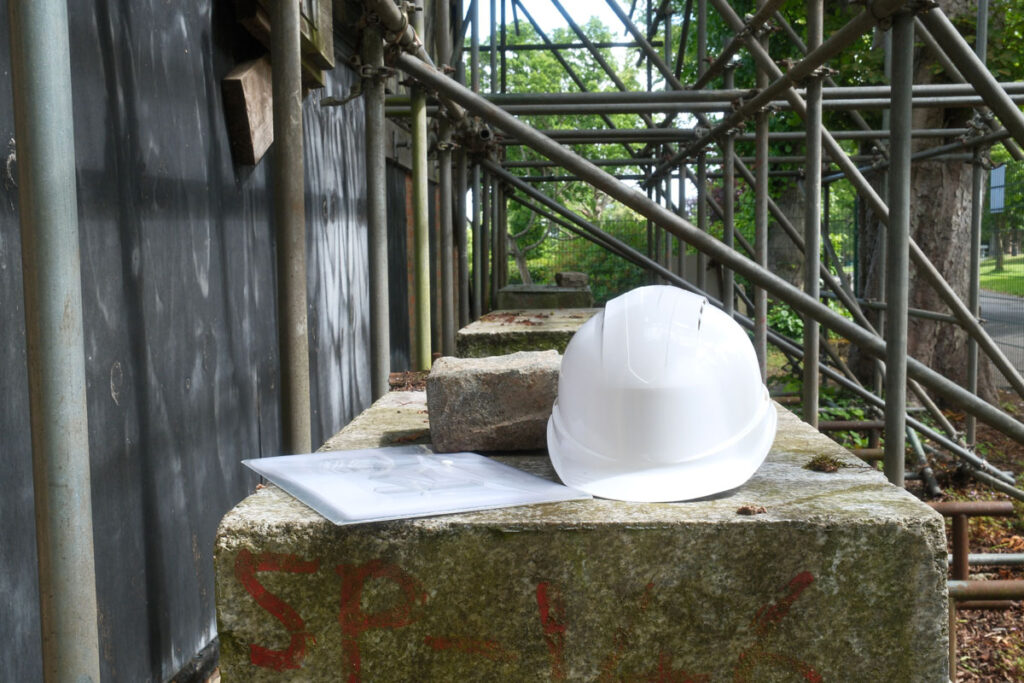
Hard Hats at the Ready.
The Golden Lion has served many purposes over the years, including being used as a living space, public house, and a cricket pavilion. Its original location was on Deritend High Street, but it was moved to Canon Hill Park in 1911. If you wish to learn more about its background, the Birmingham Conservation Trust (BCT) website is a good place to start.
The outside scaffolding.
This blog describes my hard hat tour of the Golden Lion, organised by the BCT. Irene from the Trust was our guide, and she explained that restoration work on the building would soon begin. Only a few tours were scheduled before work commenced, so this was a rare opportunity to see inside the structure before any changes took place.
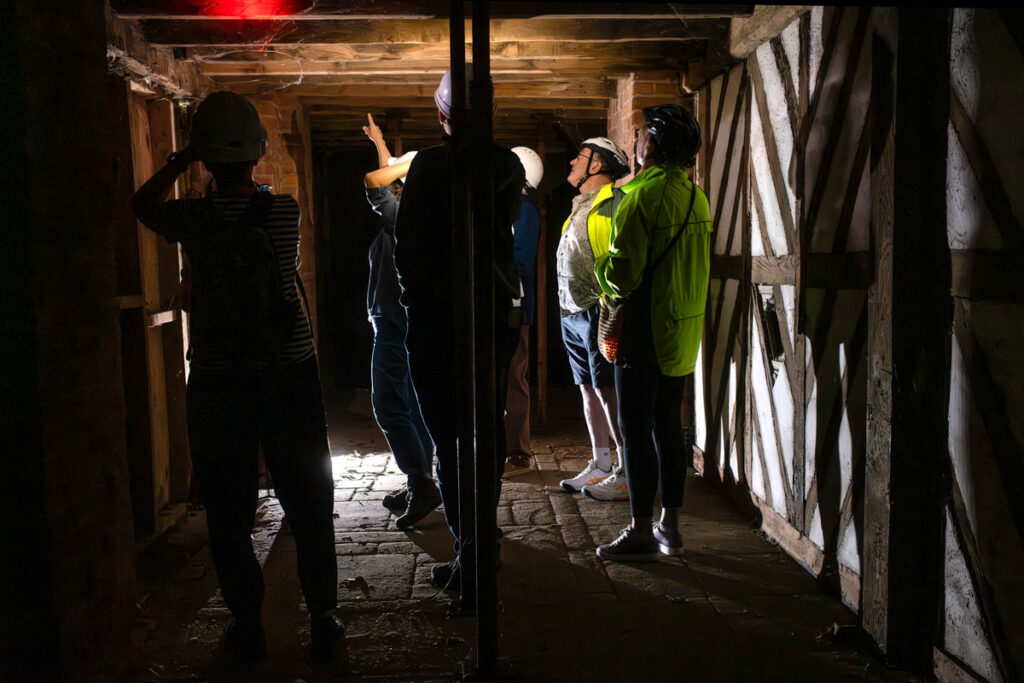
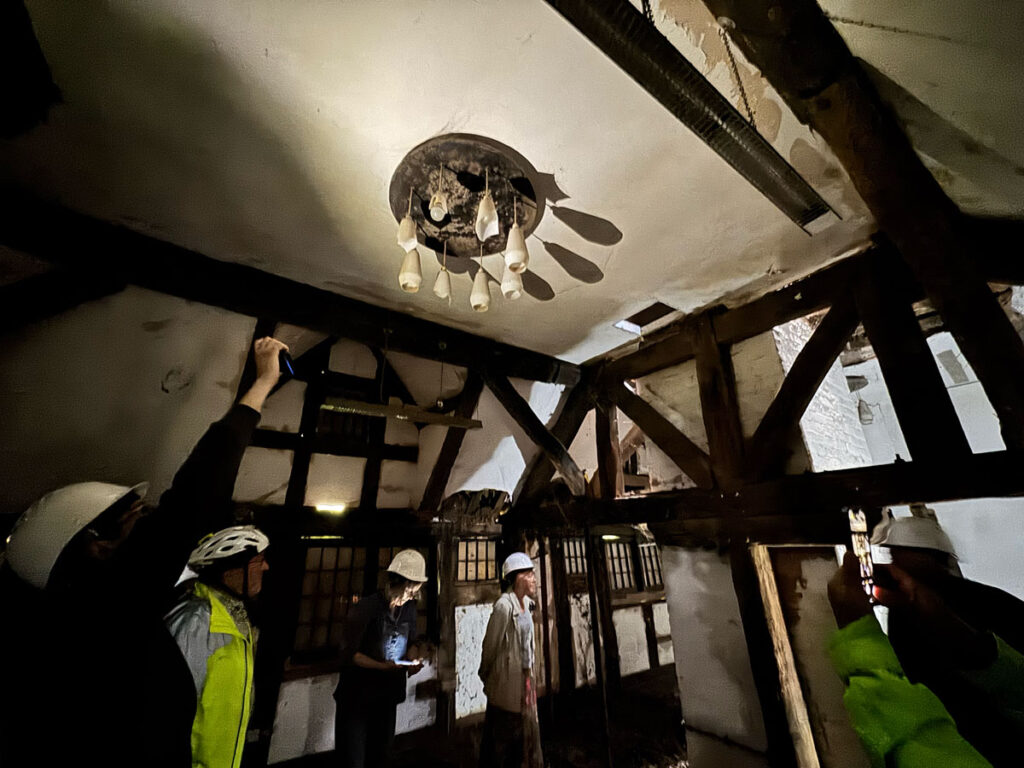
Inside the Golden Lion, Ground Floor inspecting the ceiling.Looking at the walls.Looking up to the roof and the space where orignially there was a second floor.
Irene was full of enthusiasm. As she explained both the history and the upcoming plans for the building, it became clear how closely the two are connected. We donned our hard hats and entered. Since the windows were boarded up, we needed torches to see. We were warned about low ceilings—and spiders. The latter, we were told, were actually a good sign, as they indicated that bats had not nested in the building, which would have delayed the restoration.
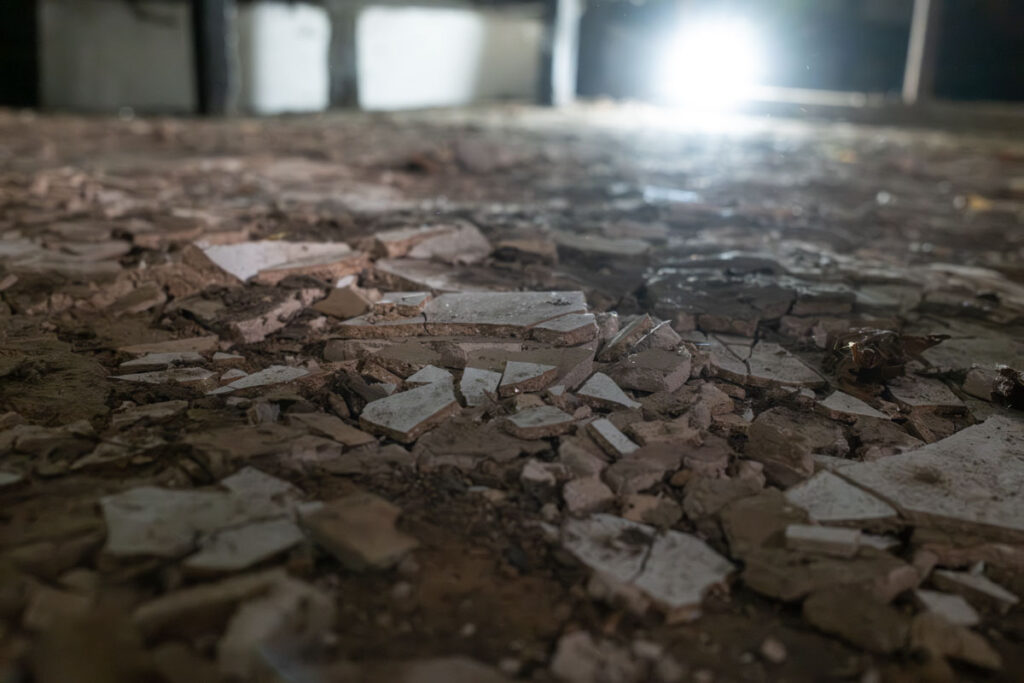
Debris on the floor.
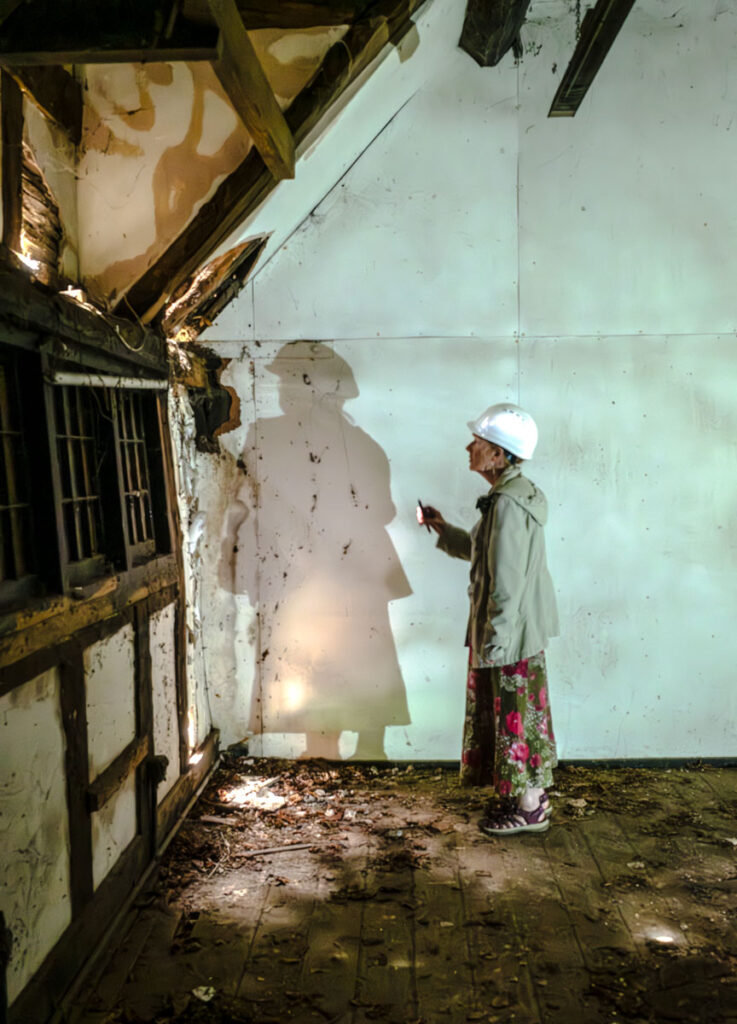
We explored the ground floor and then the first floor. Debris lay scattered on the floors, and shards of light pierced through cracks in the walls. Despite this, the building was remarkably dry and structurally intact. Small holes in the walls provided natural ventilation, allowing the building to dry out quickly after rain.
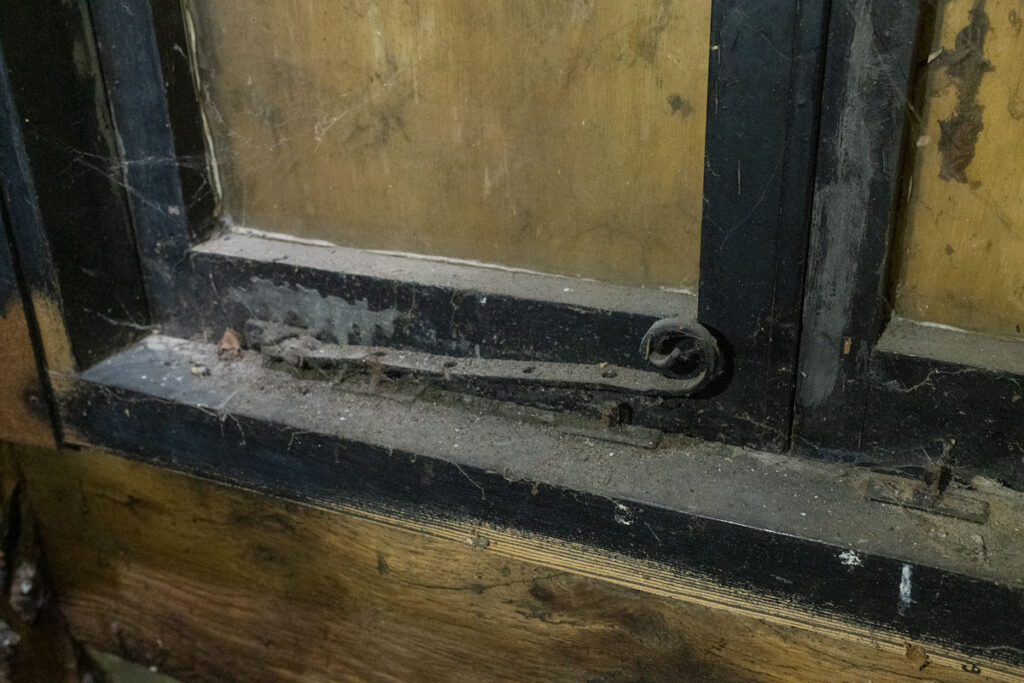
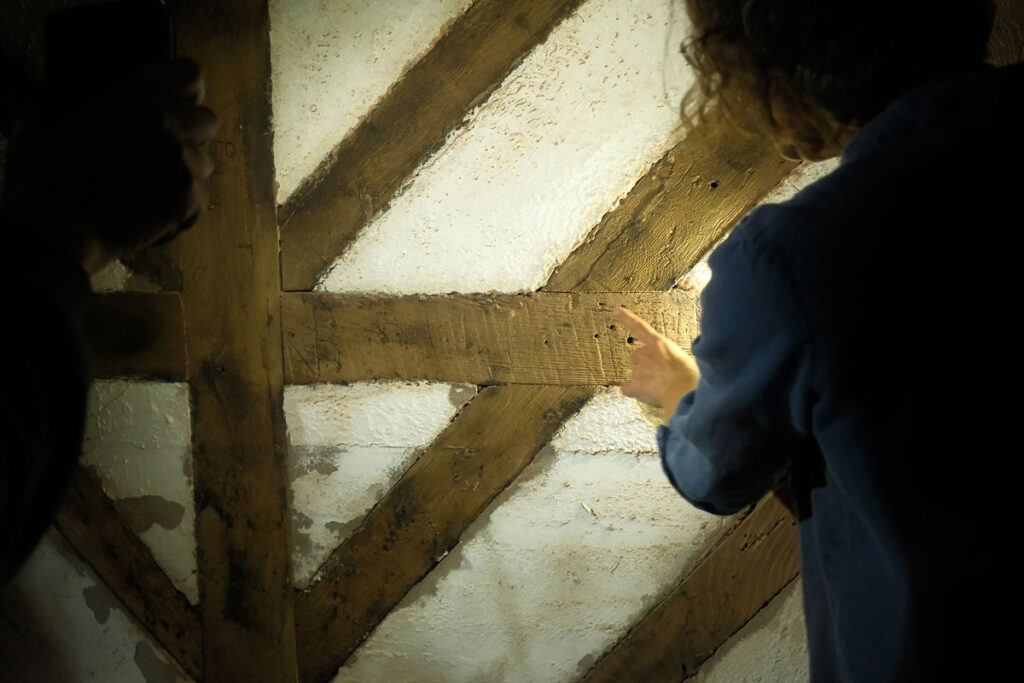
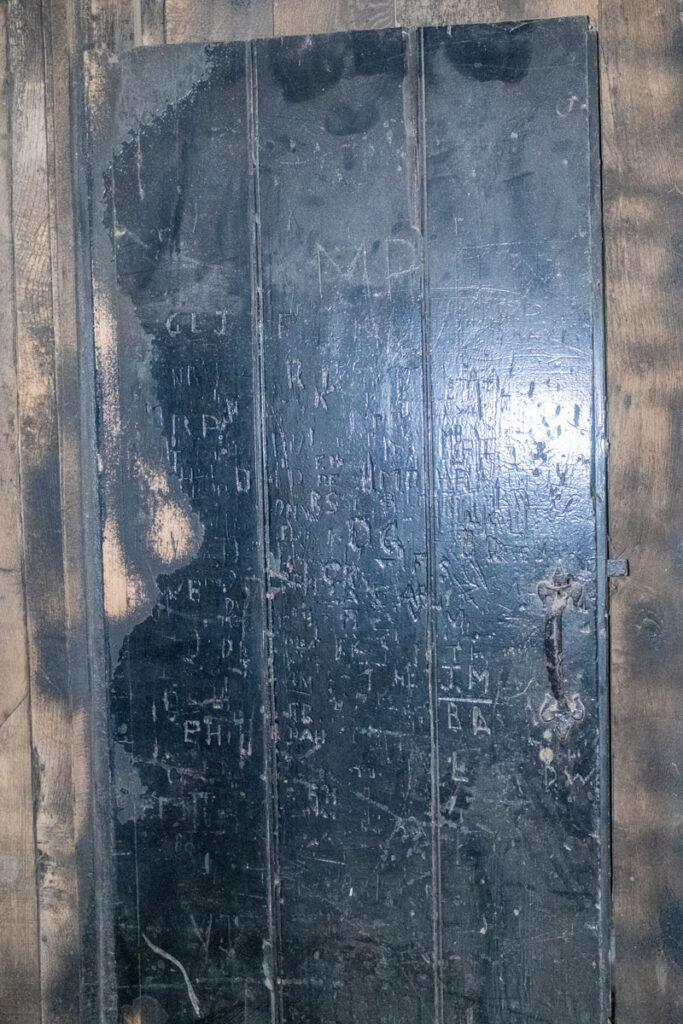
Window latch.Secrets in the wood.Markings on the door.
As we moved through the space, there were clear reminders of its previous uses as a cricket pavilion and a ranger’s office. These later modifications were visible on the interior walls. There were fittings for benches, and the windows had been fitted with modern locks and latches. Originally, the building had another floor, and the outlines of where it once stood could still be seen on the walls. Early records from the 1851 census report that up to 50 people once lived in and around the building when it stood in Deritend. This included the courtyard at the rear where there were 6 small (slum) dwellings
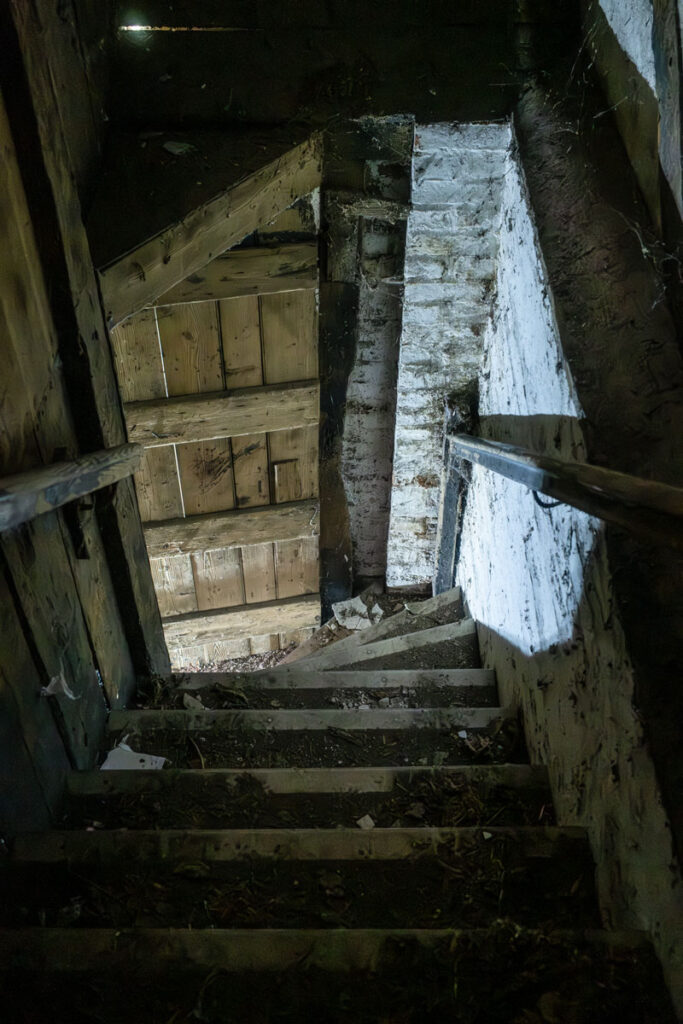
Going down the stairs
The visit was fascinating, and the history embedded in the walls came alive during our conversations. I am looking forward to seeing the Golden Lion restored and given a new lease of life. Thank you to the Birmingham Conservation Trust for organising the visit, and to Irene for being such an informative and enthusiastic guide. Finally a special thanks to Pat Rodwell for obtaining tickets.
If you are interested in exploring historical buildings around Birmingham which are a lot safer and accessible then I would recommend a visit to Selly Manor as my blog shows below.
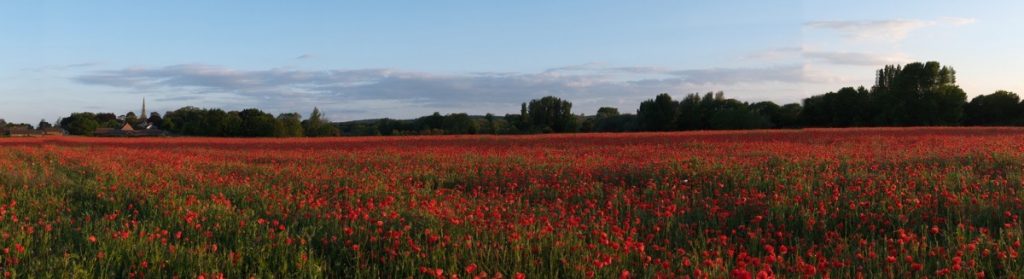
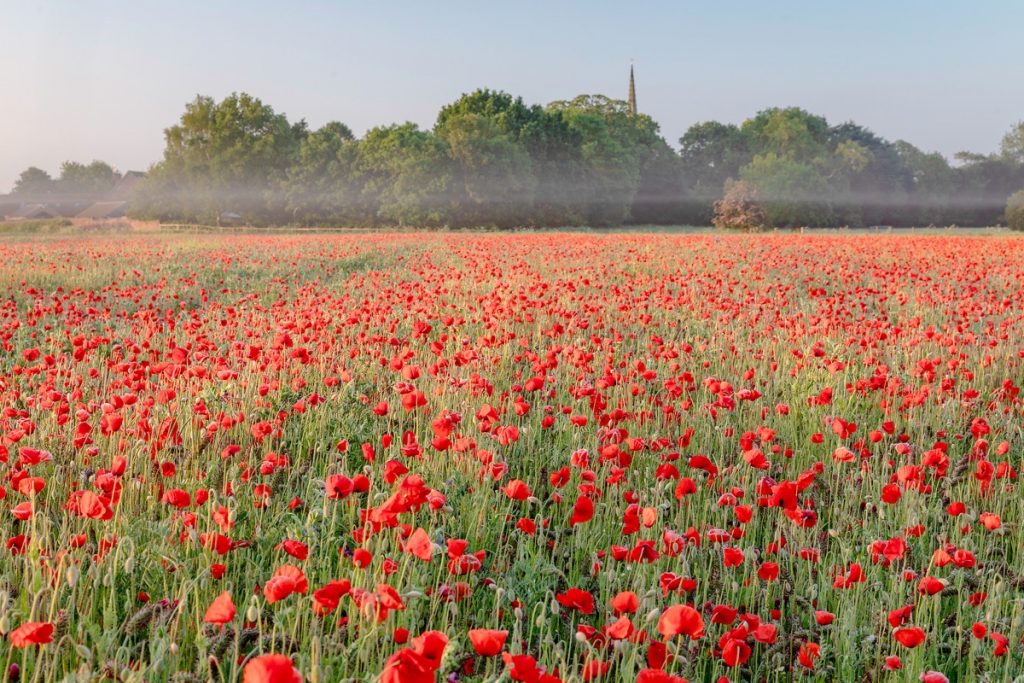
The poppy season does throw up surprises. Most poppy fields in the West Midlands are found around Bewdley and Kidderminster. Last year, there was a spectacular field in Kinver. Occasionally, a field appears closer to home, such as in Leamington Spa. This year’s surprise poppy field which was initially photographed by Jack March, a fellow weather watcher based around Nuneaton. He had posted some striking pictures taken in a poppy field in Leicestershire which were featured on the BBC.
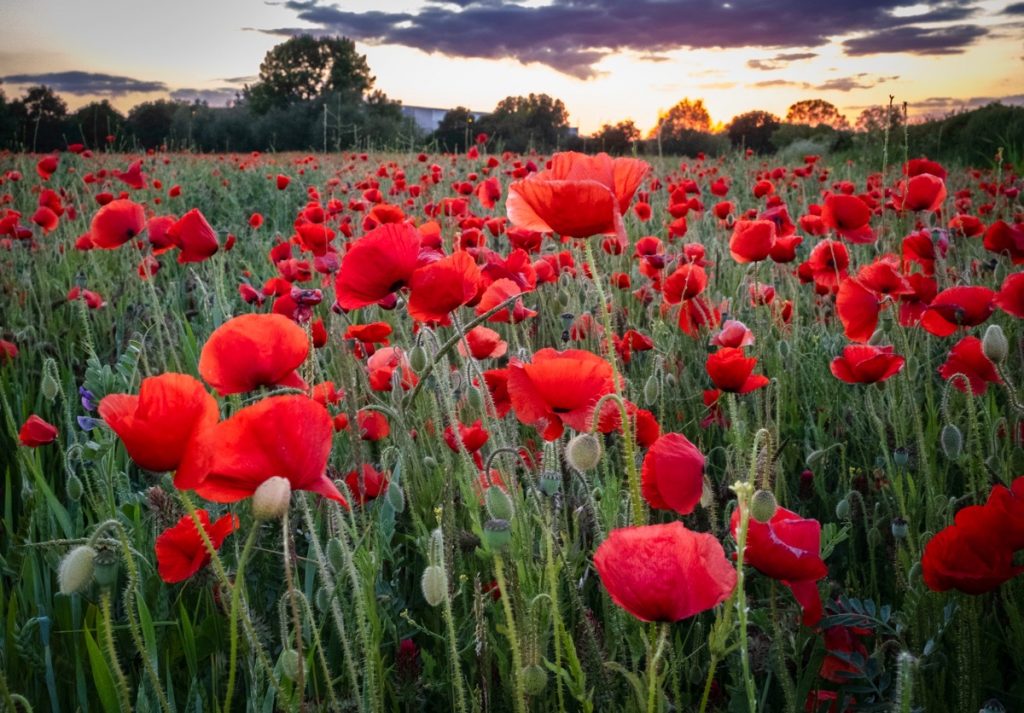
The dramatic red of the poppies at dusk.
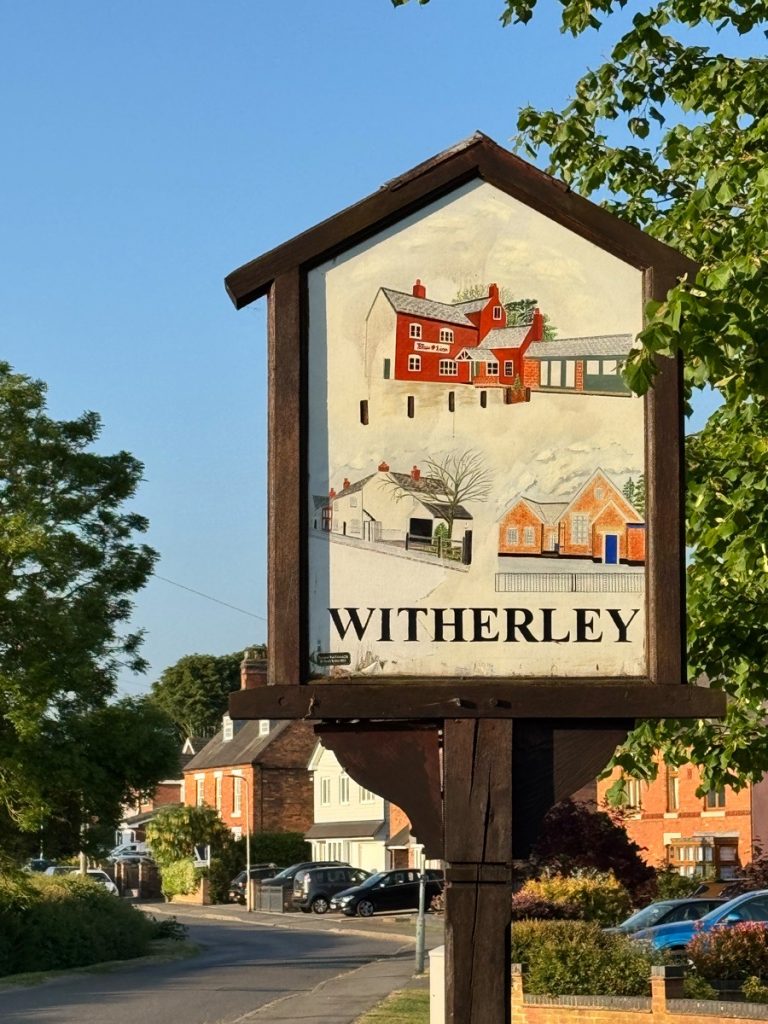
After some internet detective work, it became clear that the field was in Witherley, a charming village just outside Atherstone — only a 30-minute drive from home. As soon as I discovered the location, I checked the weather forecast. The month of May had brought good weather, though a change was expected later in the month. Fortunately, the forecast looked promising for the evening and the following morning. It was time for action. I packed my camera kit and tripod into the car and set off for Witherley to catch the evening light.
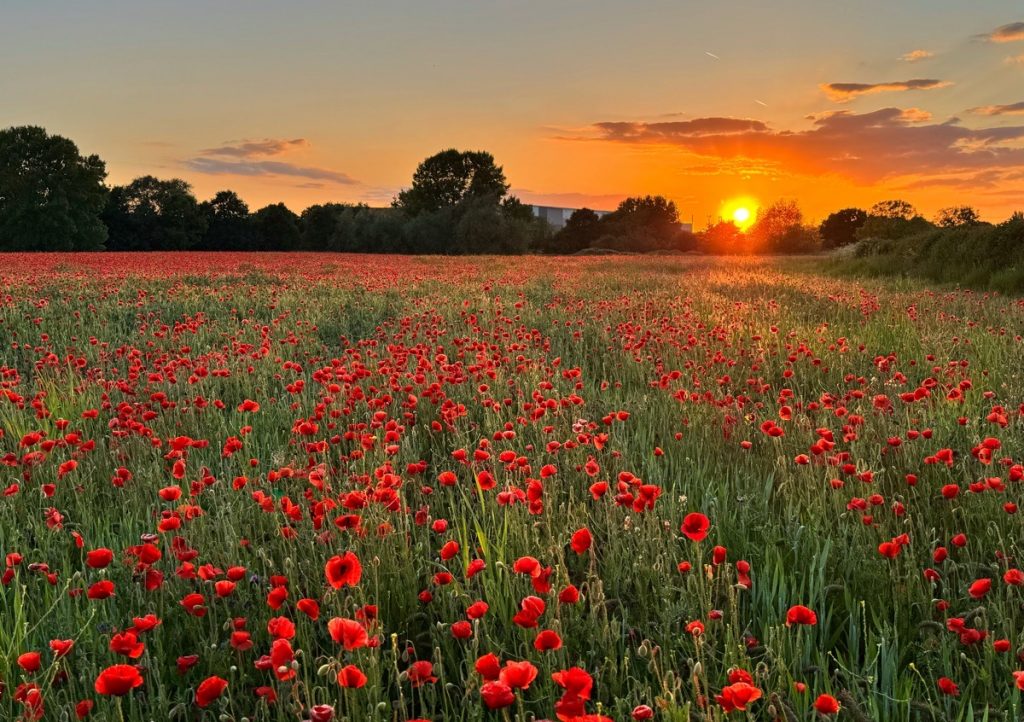
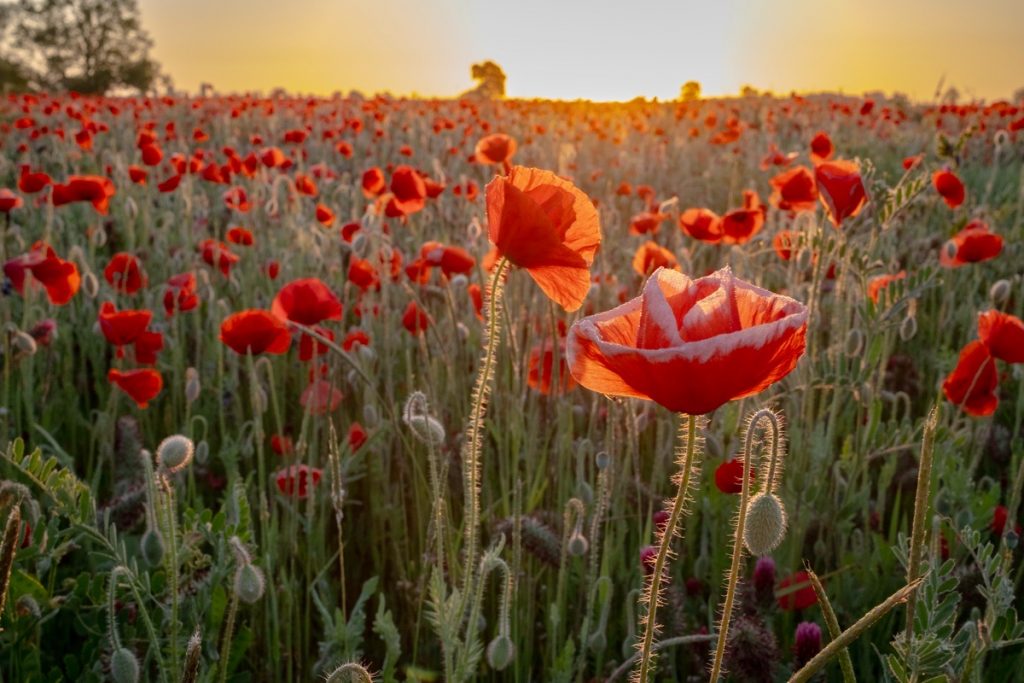
Sunset on the poppy field.
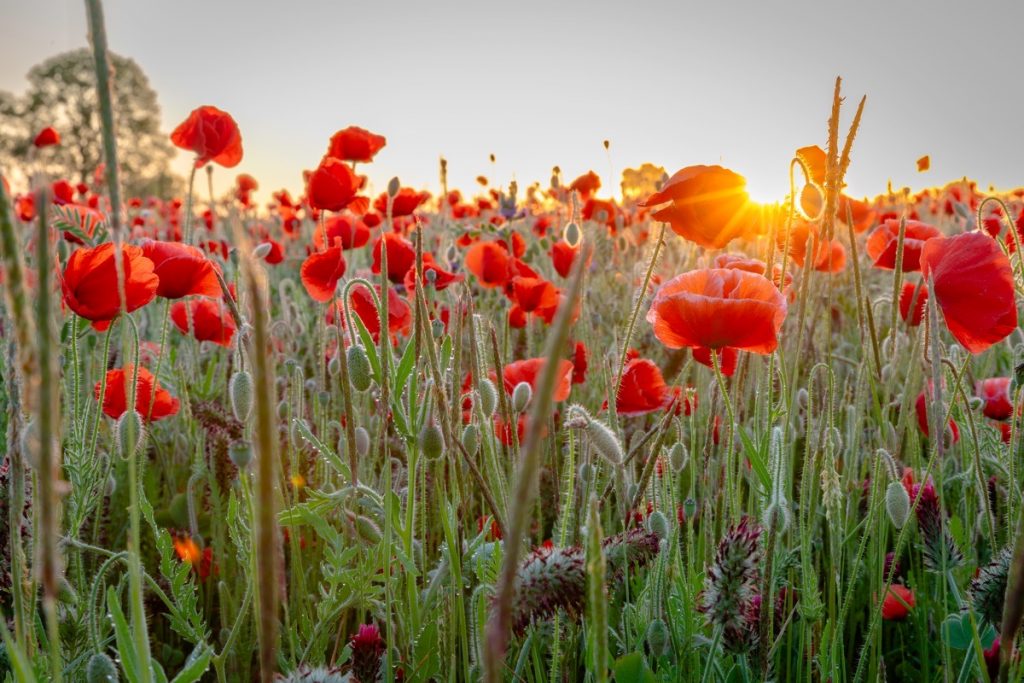
Finding the field was straightforward compared to some other locations I have written about. It was both easy to find and to access. When I arrived, two photographers were already there, focusing on close-ups of the poppies. I parked at the top of the field, and walked down towards the village along the side of the poppies. I found a good vantage point and began taking photographs. I captured some lovely images of the church bathed in the warm evening light. Looking back up the field, I noticed the sun setting beautifully over the crest. I quickly reset my camera to catch several shots of the golden sunset. The poppies glowed, their paper-thin red petals shimmering with life and shadows of nearby flowers. Poppy fields lend themselves both to sweeping landscapes and intimate portraits of individual flowers. Time passed quickly, and soon dusk settled in. I stayed to capture the colours of the clouds and the twilight. As the temperature dropped sharply, I was grateful for the warmth of the car once it had heated up.
One of many close ups of the flowers.Panorama of the field
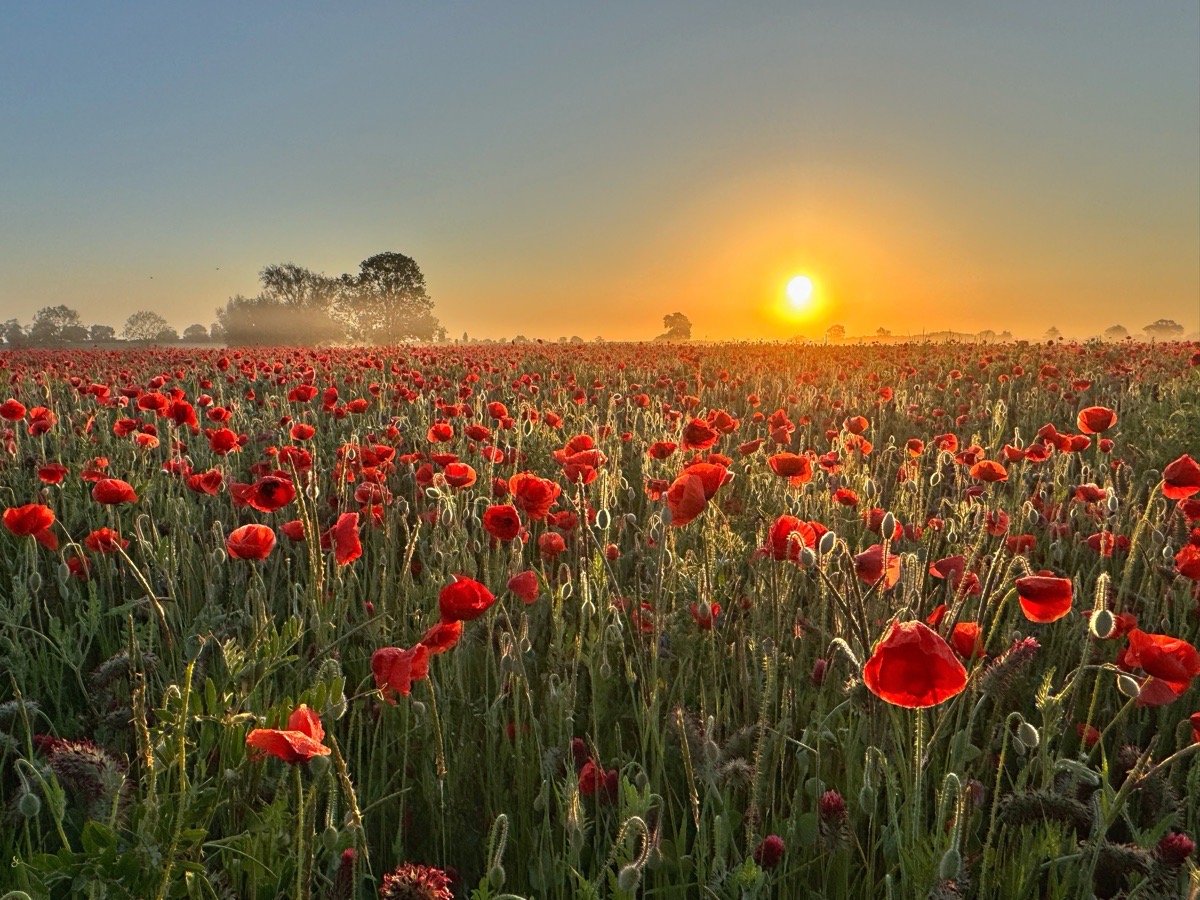
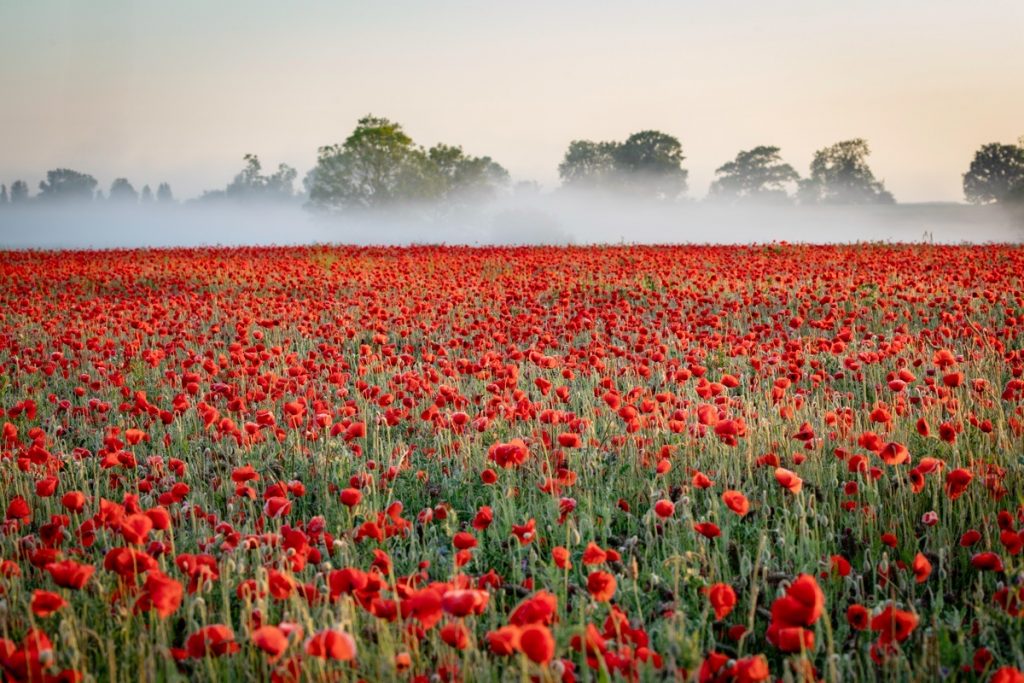
It was a superb poppy field. I had enjoyed the evening session so much that I decided to return the next morning. With sunset at 9:00 pm in late May, I knew sunrise would be early — at 5:00 am. After just a few hours of sleep, I was up again and back with the poppies before dawn. This time, I parked closer to the village and entered the field via the footpath. I made my way to the opposite side and settled in to await the sunrise. The field is bordered on the west by the River Anker. As the sun began to rise, the scene transformed. Mist started to rise from the river and slowly spread across the field. For a surreal five to ten minutes, the entire field was shrouded in mist. Just as suddenly as it appeared, the mist lifted as the sun’s warmth burned it away.
The rise of mist from the river Anker.Sunlight bursting through the poppies.Close ups of the different poppies taking in the sunrise.Mist hanging over the poppy filed.
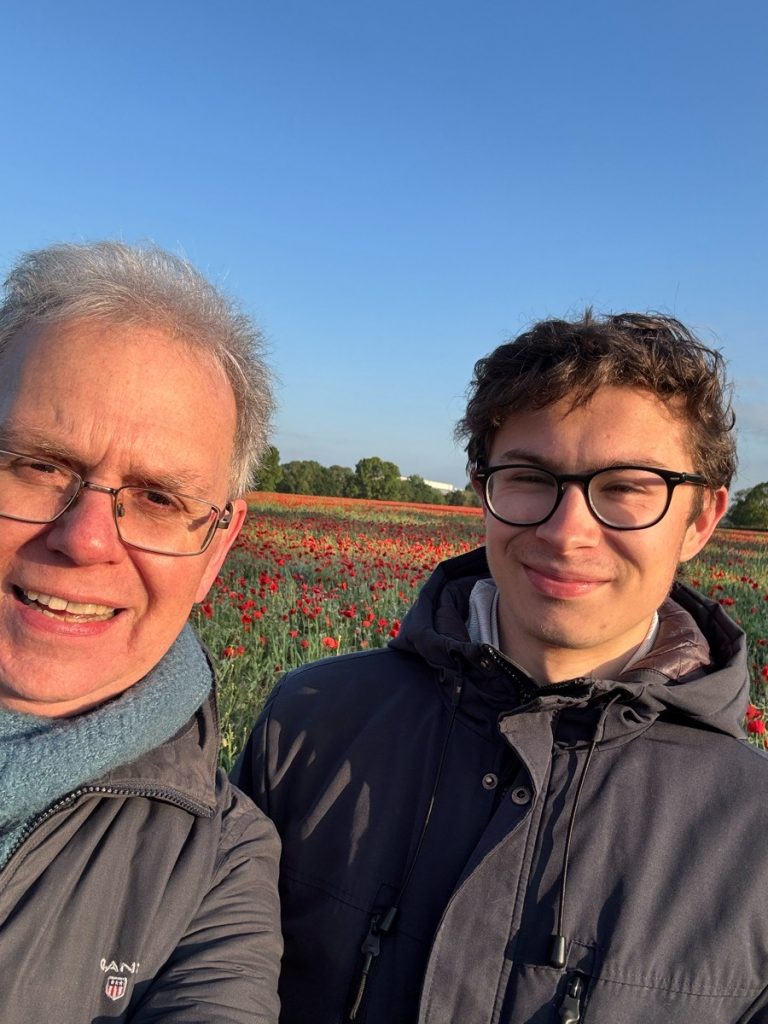
The sunrise was glorious, and I took many photographs with the cameras I had brought. The iPhone, always a reliable companion, captured some great shots as well. Eventually, there comes a point where you know you have taken enough pictures. Unbeknown to me, Jack March, the weather watcher himself, had been observing me and taking photos. I was so engrossed in my work that I had not realised he was there. At the end of the session, as I returned to my car, I met Jack, who had been waiting. Jack is an excellent photographer, and I have long admired his work. We had a fantastic chat about the poppy field, weather watching, and photography in general. I even took a selfie of us with the poppy field in the background. After saying our goodbyes, I set off home to review and post my pictures.
Selfie with Jack March, BBC Weather WatcherThe poppy field capital
Epilogue
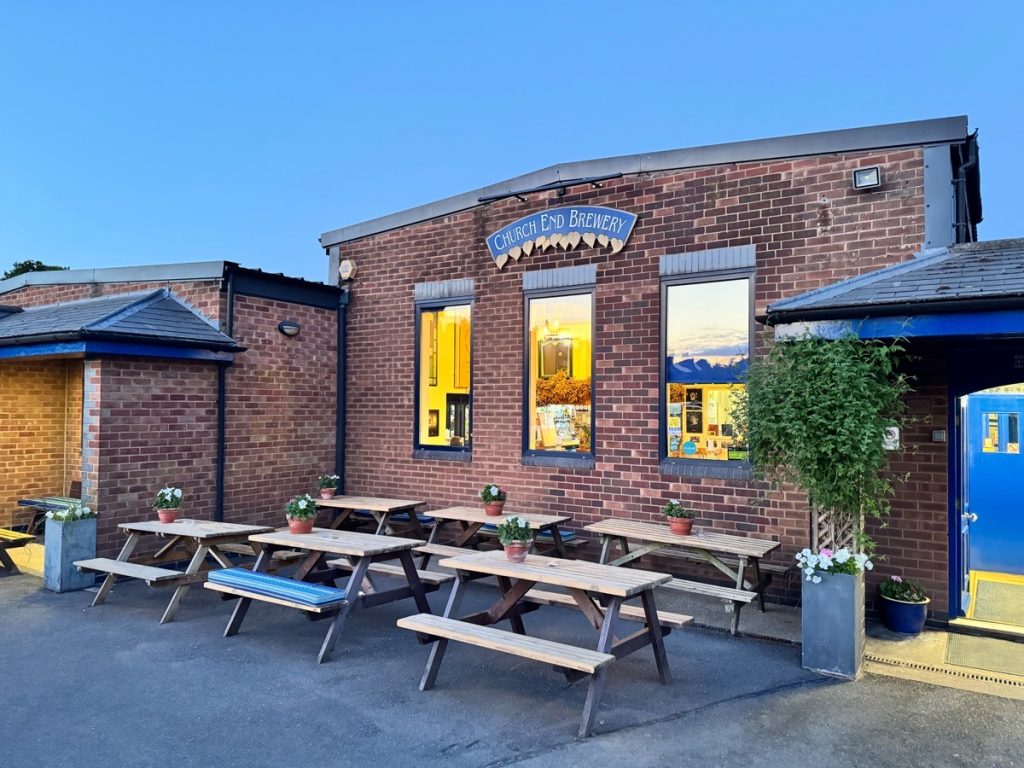
There was another benefit from this trip to Witherley. On my way home after the evening session, I took a short detour to Church End Brewery. I found it tucked away behind Ridge Lane in a small village near Nuneaton. The tap room was open, and I came away with bottles of Fallen Angel and Goat’s Milk pale ale. It was a perfect photographic outing — capturing poppies at both sunset and sunrise, and returning home with some excellent beers for the evenings to come.
A few bottles brought at Church End Brewery to help during editing of my pictures.
If you enjoyed the latest addition to my poppy field journey then please read last year’s visit to Kinver. There are many other places I have visited and sadly some of these fields are no more. However, there are good memories of these places.
I took a walk from Snow Hill train station up towards Edgbaston village where I had a meeting. This is a collection of 10 images in black and white from my walk. All taken with my Fujifilm x100vi and converted to monochrome.
Brutilistic designCube 20Tagged windowsBusy towpathBnW not blueFive ways HouseForgotten entranceBroken WindowsEdgbaston Village
Enjoyed this, then read some more about Birmingham in Black and White.
Early starts in photography are always exciting, but only once you have set things in motion. As soon as the alarm goes off, I am on a mission. This time, my destination was Chesterton Windmill to see its newly restored sails. Sunrise at the spring equinox made the occasion even more significant. Since the clocks had not yet gone forward, the start was not too early.
A proud windmill on the top of the hill.
Driving towards Chesterton, I noticed a lingering mist over the fields. On arrival, the scene was too good to pass up, so I pulled over, took out my camera, and captured the ethereal landscape. This was one of the first photographs of the windmill with its restored sails, and the conditions were perfect—a leading fence, mist-covered trees, and in the distance, the windmill’s sails standing proudly.
The start of the spring equinox
When I reached the top of the hill, the moon was still visible, adding to the atmosphere as I prepared for the arrival of the day. The sunrise was beautiful, and though there were no clouds, the first rays of sunlight made the trip worthwhile. As the sun rose higher, its light reflected off the white sails, making them shine brilliantly. I took several more photographs with both my camera and iPhone before heading home for breakfast.
The moon sits alongside the sails.
I plan to return in a few weeks, as the windmill holds a special place for our family, particularly during those bleak lockdown days.
I was absolutely thrilled to learn that the sails were finally going to be placed back on Chesterton Windmill. This Grade I listed building holds so many cherished memories from before lockdown—a place to explore, take photographs through the changing seasons, or simply enjoy the historic beauty of this iconic location. During lockdown, the windmill became a refuge, a meeting point for family while maintaining social distancing. As a lover of landscape photography, the windmill has featured in many of my pictures. In fact, the Chesterton Windmill is an iconic location for many landscape photographers and is high on the list of Instagram influencers’ favourite buildings.
This classical view of the windmill with leading lines from the fields will soon have the addition of windmill sails.
Then, in the spring of 2021, the sails were taken down. There was no notice, no explanation, and no indication of when they would return. For years, the windmill stood without them—dignified yet incomplete. Over time, many local people gave up hope that the sails would ever be restored.
Behind the scenes, however, Warwickshire County Council had commissioned the production of brand-new sails, carefully crafted to honour the windmill’s heritage. The company appointed for this task was Owlsworth Conservation, specialists in the preservation and repair of historic buildings. Behind the scenes of apparent inactivity, both the council and Owlsworth Conservation had been diligently working through the challenges that come with such a project.
When I received an email from my close friend John Bray with the news that the sails were being installed, I was, as I said at the beginning, absolutely thrilled.
The newly made sails lie to the side of the Windmill as the supporting stocks are put in place.
The day arrived, and I gathered my cameras and set off for the windmill. When we arrived, the site was buzzing with activity. The sails were being installed using traditional, handcrafted techniques—pulleys and ropes at the ready. The only concession to the modern day was the use of a motorised articulated boom. One of the stocks that will hold the sails was already in place. Over the course of the morning, the second stock was hoisted into position. Although the sails would not be attached until the following week, the cross-bar mechanism was now ready to accept them.
The craftsmanship is evident of the newly constructed sails (plus attached earthing metal tape.)
The team was happy to talk about the process and the dedication required to restore the windmill. The work demanded skill, patience, and perseverance. The weather was bright, with blue skies and white clouds, but it was bitterly cold. The previous day, the restoration had continued despite a wave of hailstones. Yet none of this dampened the enthusiasm of the men working on the windmill. A video of the work being done is on the BBC website
From above, the work aims to pull the second beam upwards.From below, all hands keep the beam ready as it is hoisted upwards.The cross bars are ready for the addition of the sails.Paul Millwright of Owlsworth Conservation with the windmill in the background.
I look forward to seeing the sails in place, and in the coming months, my family will visit to relive our treasured memories of this beloved landmark. This ancient monument has witnessed so much change over the centuries, standing tall through shifting landscapes and history itself. Now, as it regains the sails that define it as a windmill, it is once more ready to embrace whatever the future may bring.
The team includes members of Warwickshire county council and Owlsworth Conservation
I have included one of several blogs I have written about Chesterton Windmill. The blog featured was written in 2019 and shows how the windmill looked with sails prior to their breakage.
I encouraged my daughter and grandson to join me on a walk to see the HS2 works next to 16 Acre Wood. It’s now 2025, and it’s time for an update on my visits to the site. These visits began in 2021, and I’ve kept a diary documenting all the changes that have taken place over the years.
Over the hill and far awayHS2 signsNew bridges on the line.Concrete structures.Heavy machinery.The gate
We’ve had a lot of rain recently, and the walk reflected this as the footpath became quite muddy. When we reached the area, the first thing I noticed was the progress made with two bridges. A lot of concrete had been poured, resulting in two large structures. The special pond had also received some attention. The overgrown foliage had been cut back, and we were now able to see the water and grass more clearly. No trees have been planted around the pond yet, so it will be interesting to see how it fares over the coming summer.
Lots of numbersThe new pond.The old pond is still looking on.Nature is always near.The wood is a lot thinner.
Walking around the site on the weekend meant there were no concerns about taking photographs, which was a nice bonus. However, it was a long walk which Noah was not so happy about!
Walking along the footpath.
This is an update on a continuing story on 16 Acre Wood and the intrusion of HS2. Feel free to read the my other entries starting with the one highlighted below.
We use cookies on our website to give you the most relevant experience by remembering your preferences and repeat visits. By clicking “Accept”, you consent to the use of ALL the cookies.
This website uses cookies to improve your experience while you navigate through the website. Out of these, the cookies that are categorized as necessary are stored on your browser as they are essential for the working of basic functionalities of the website. We also use third-party cookies that help us analyze and understand how you use this website. These cookies will be stored in your browser only with your consent. You also have the option to opt-out of these cookies. But opting out of some of these cookies may affect your browsing experience.
Necessary cookies are absolutely essential for the website to function properly. These cookies ensure basic functionalities and security features of the website, anonymously.
Cookie
Duration
Description
cookielawinfo-checkbox-analytics
11 months
This cookie is set by GDPR Cookie Consent plugin. The cookie is used to store the user consent for the cookies in the category "Analytics".
cookielawinfo-checkbox-functional
11 months
The cookie is set by GDPR cookie consent to record the user consent for the cookies in the category "Functional".
cookielawinfo-checkbox-necessary
11 months
This cookie is set by GDPR Cookie Consent plugin. The cookies is used to store the user consent for the cookies in the category "Necessary".
cookielawinfo-checkbox-others
11 months
This cookie is set by GDPR Cookie Consent plugin. The cookie is used to store the user consent for the cookies in the category "Other.
cookielawinfo-checkbox-performance
11 months
This cookie is set by GDPR Cookie Consent plugin. The cookie is used to store the user consent for the cookies in the category "Performance".
viewed_cookie_policy
11 months
The cookie is set by the GDPR Cookie Consent plugin and is used to store whether or not user has consented to the use of cookies. It does not store any personal data.
Functional cookies help to perform certain functionalities like sharing the content of the website on social media platforms, collect feedbacks, and other third-party features.
Performance cookies are used to understand and analyze the key performance indexes of the website which helps in delivering a better user experience for the visitors.
Analytical cookies are used to understand how visitors interact with the website. These cookies help provide information on metrics the number of visitors, bounce rate, traffic source, etc.
Advertisement cookies are used to provide visitors with relevant ads and marketing campaigns. These cookies track visitors across websites and collect information to provide customized ads.