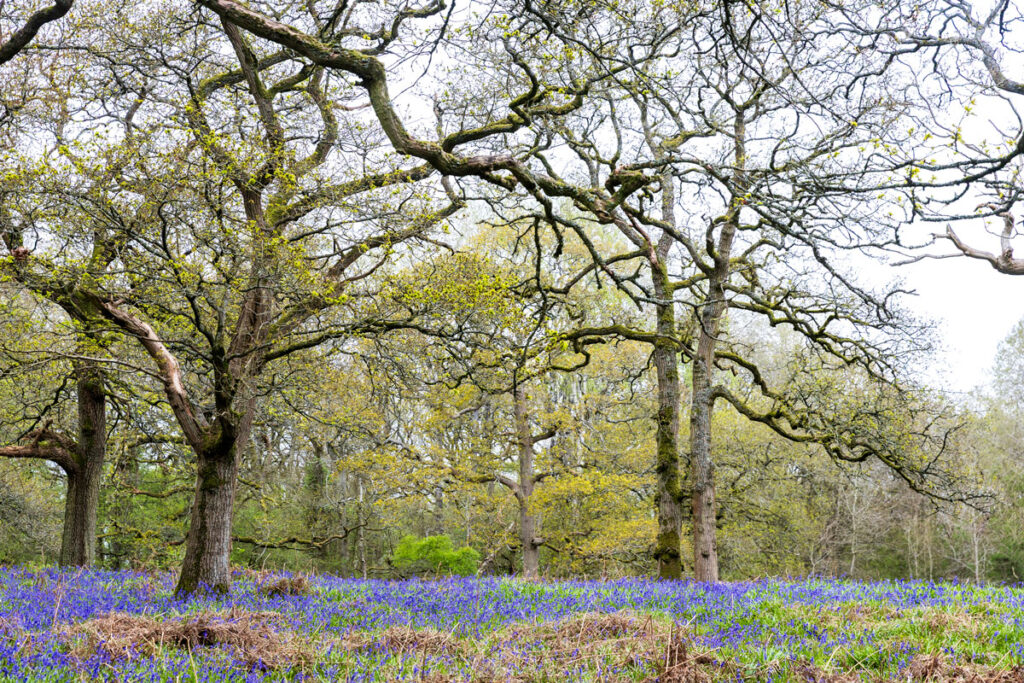
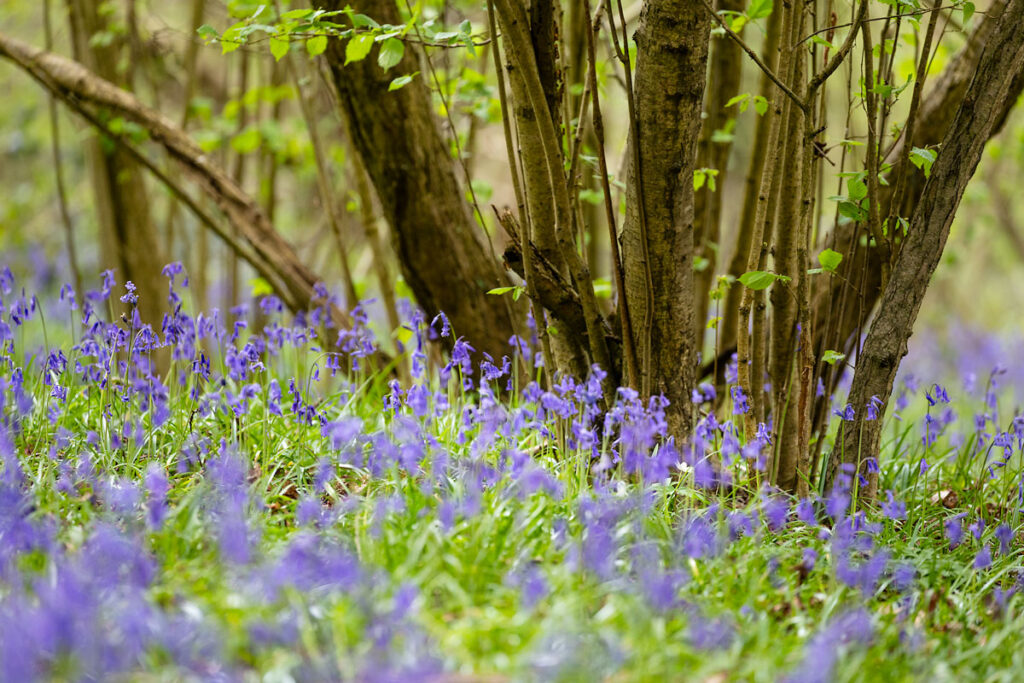
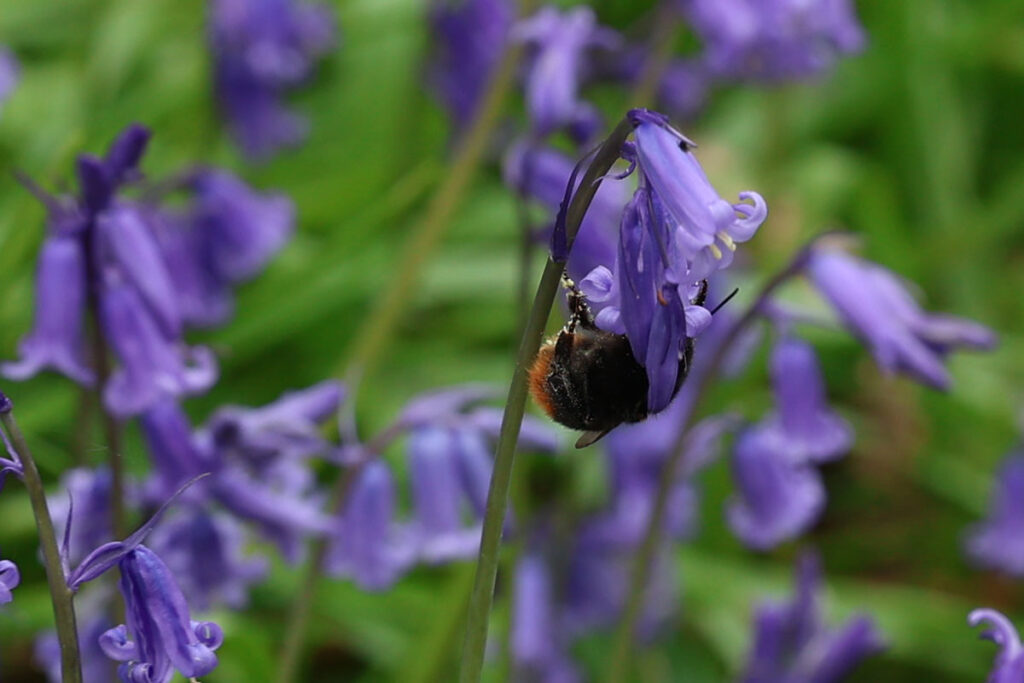
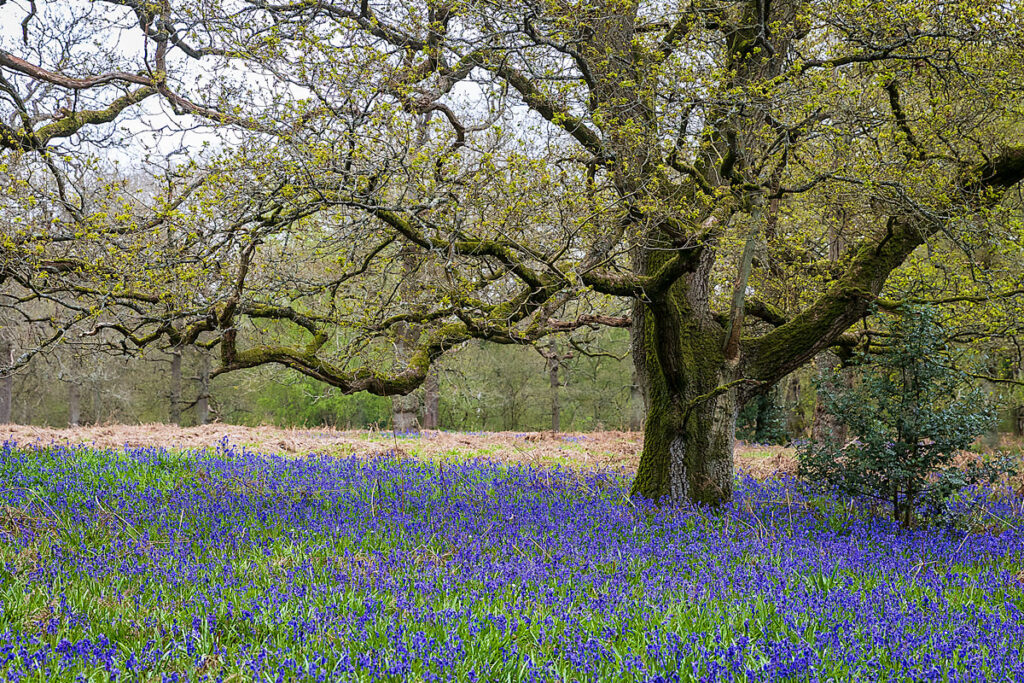
The bluebell season is always exciting, and this year I took the opportunity to visit three different locations. Each offered something unique, with each wood landscape shaping a different perspective of the blue-covered woodland floor.
Bluebells in Cawston Woods
Cawston Woods is located southwest of Rugby and is a small but charming area of woodland. There is a small lay-by for parking, and accessing the wildflowers is straightforward, as they are around 400 metres into the wood.
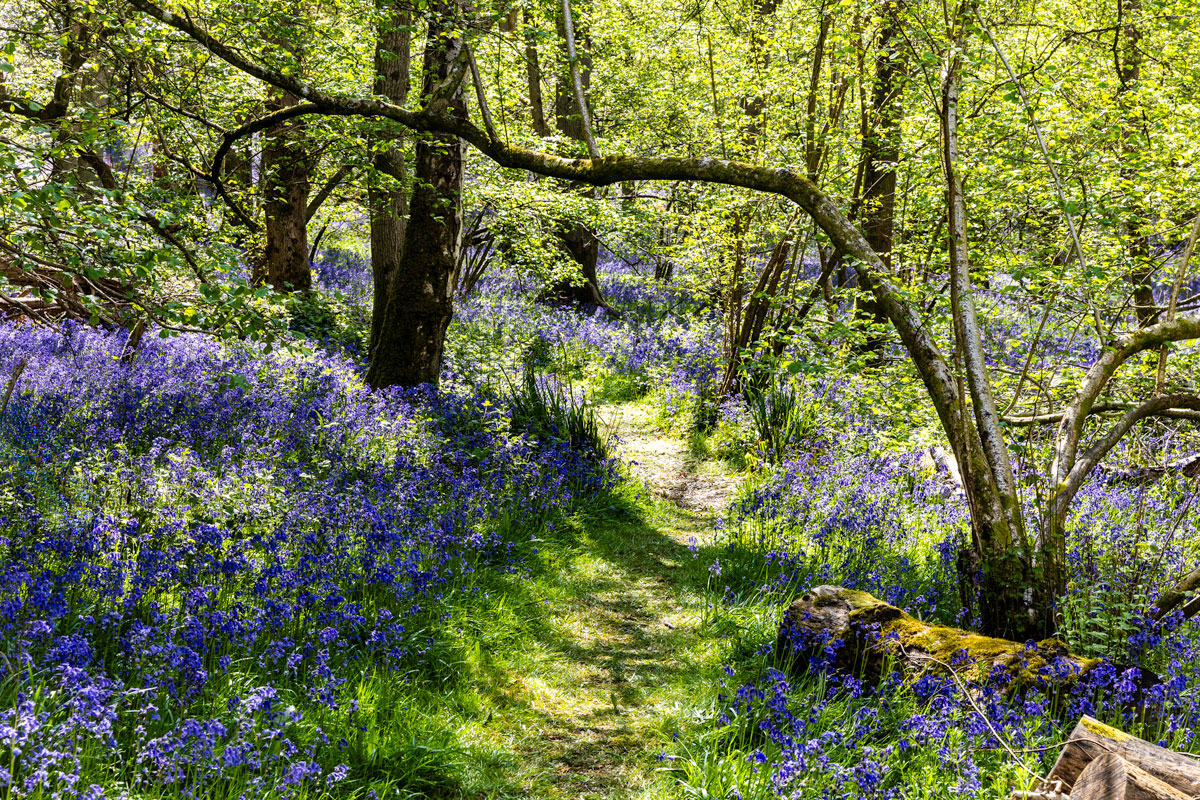
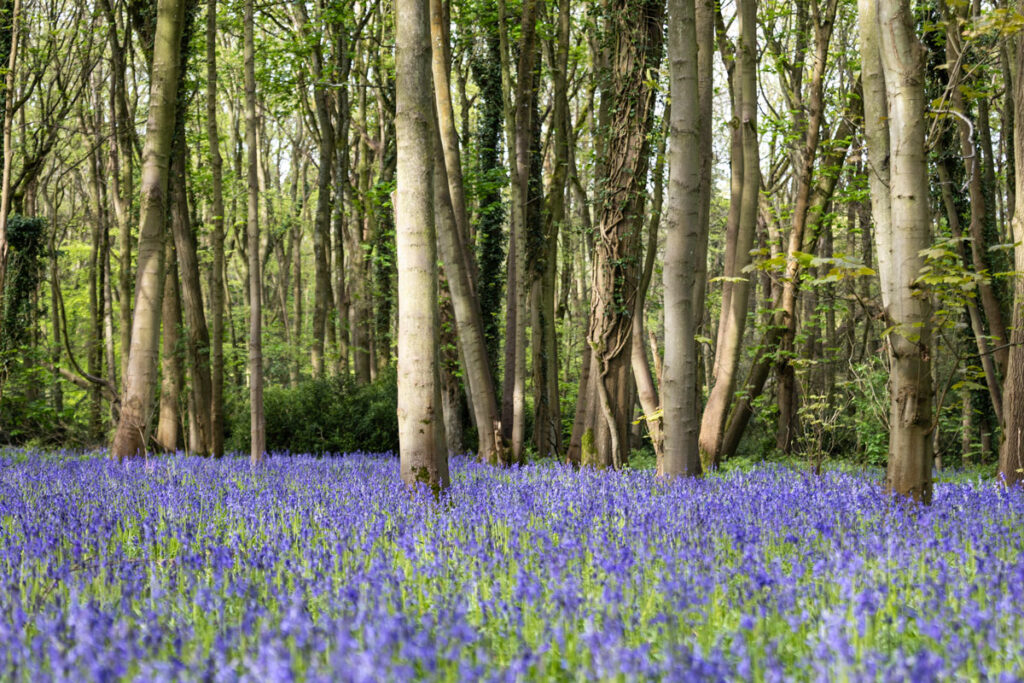
Cawston Wood near Rugby.
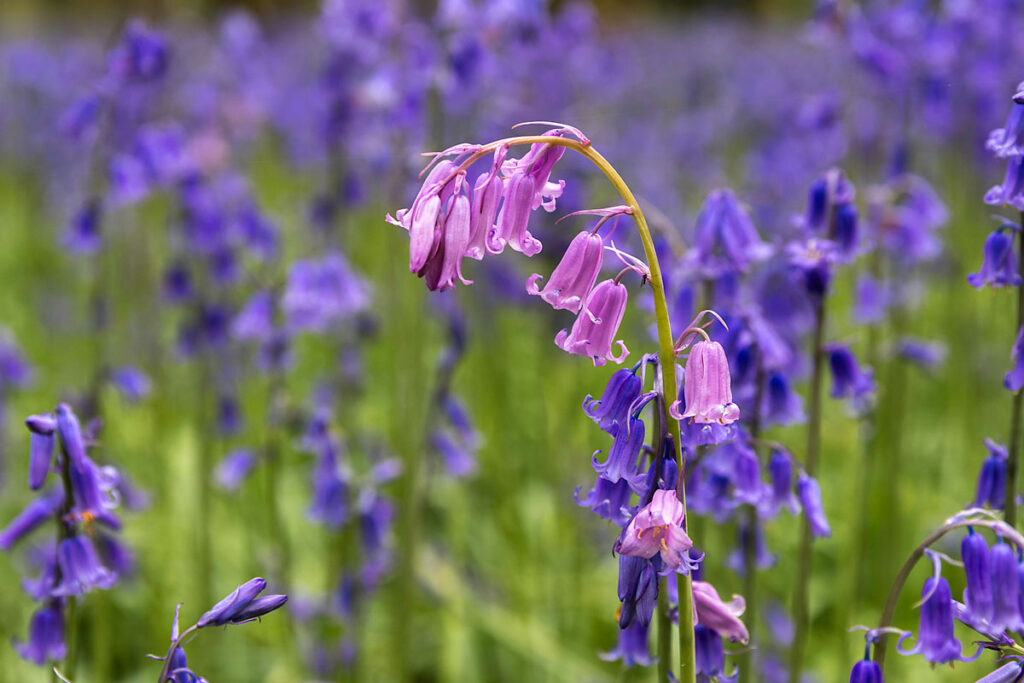
The tree canopy allows sunlight to break through onto the flowers, creating a pleasing display and offering excellent photographic opportunities. Several clumps of pink bluebells can also be found, adding variety to the scene.
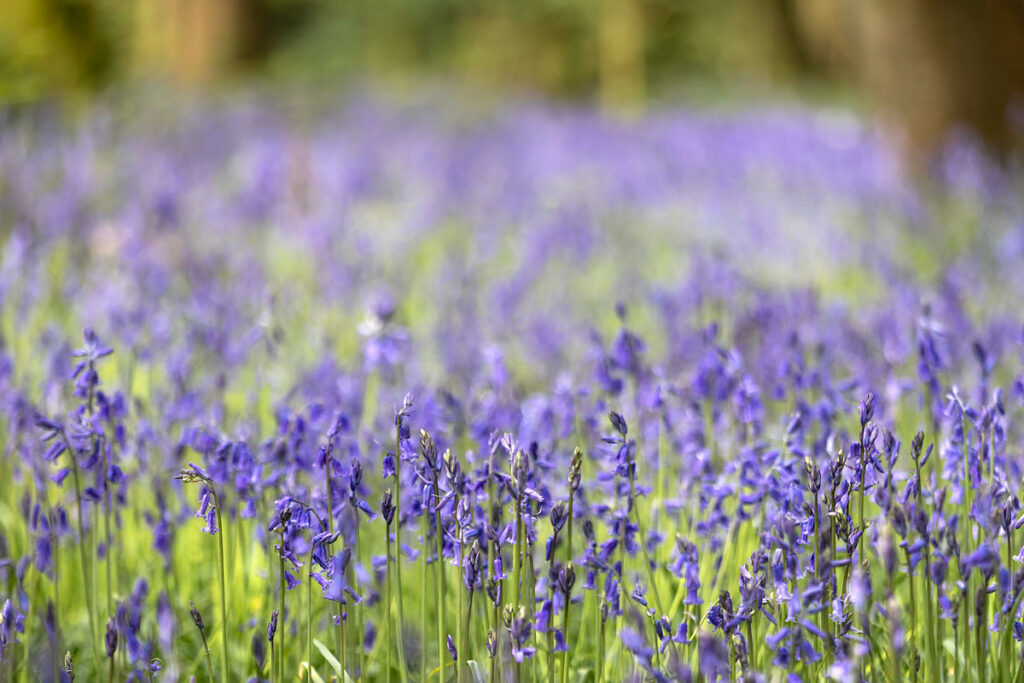
Focussing on a section of the woodland covering.Pink flowers contrasting against the blue-purple background.
Bluebells at Ryton Pools
Ryton Pools Country Park lies to the southeast of Coventry and is managed by the Warwickshire County Council. There is a visitor centre, which I made a mental note to return to at the end of the walk.
The trees guard over the woodland floor.
Once I had oriented myself, I headed into the woods. I stepped away from the main path to capture some of the displays scattered throughout the woodland. In a clearing at the centre, there was a strong display clustered around several trees, extending deeper into the forest.
The bluebells gathered around a small tree.A visitor to the flowers enjoys what is on offer
The area felt peaceful, with only occasional walkers passing by. It’s easy to lose yourself in the quiet atmosphere, accompanied by the gentle movement of flowers in the breeze. Compared to Cawston Woods, this is a larger woodland, offering more expansive and varied displays. Also the cafe at the visitor centre is very good.
In the clearing the bluebells gather under a tree.
Bluebells at Heart of England Forest
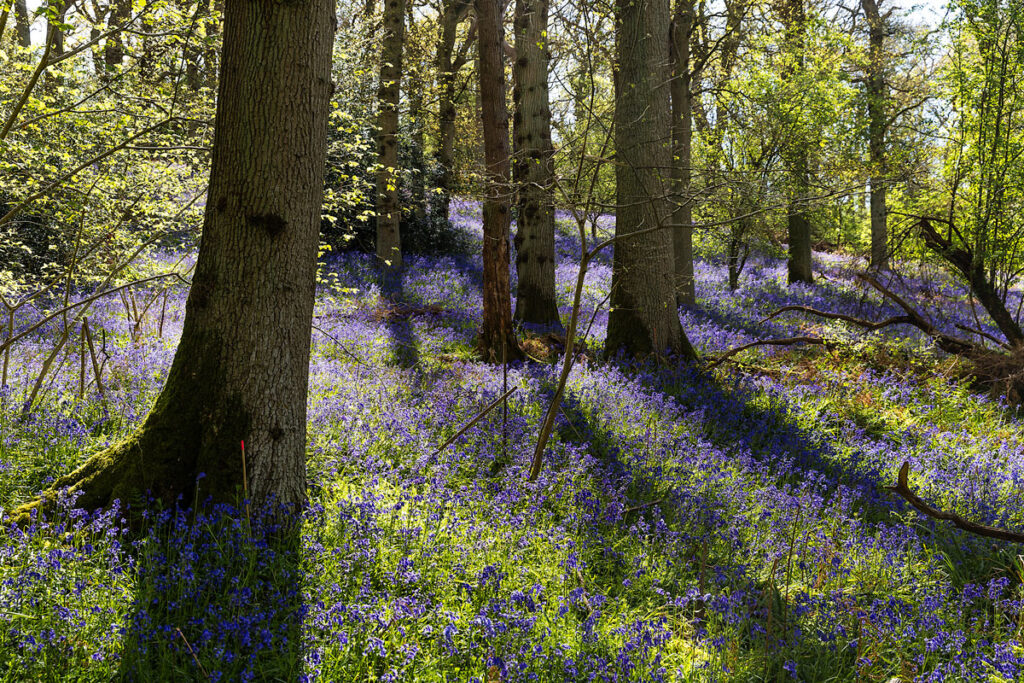
Heart of England Forest is a privately managed woodland that only opens to the public for two days each year. Although I had booked in advance for the end of April, I was concerned that the main display might be over, as the wildflower season started earlier than usual this year.
The shadows of the trees lying over the bluebells.
Fortunately, the flowers were still in full bloom. The walk takes you through gently rolling hills, initially passing small clusters of blue. As you continue, the displays become increasingly impressive.
Bluebells in the Heart of England Forrest
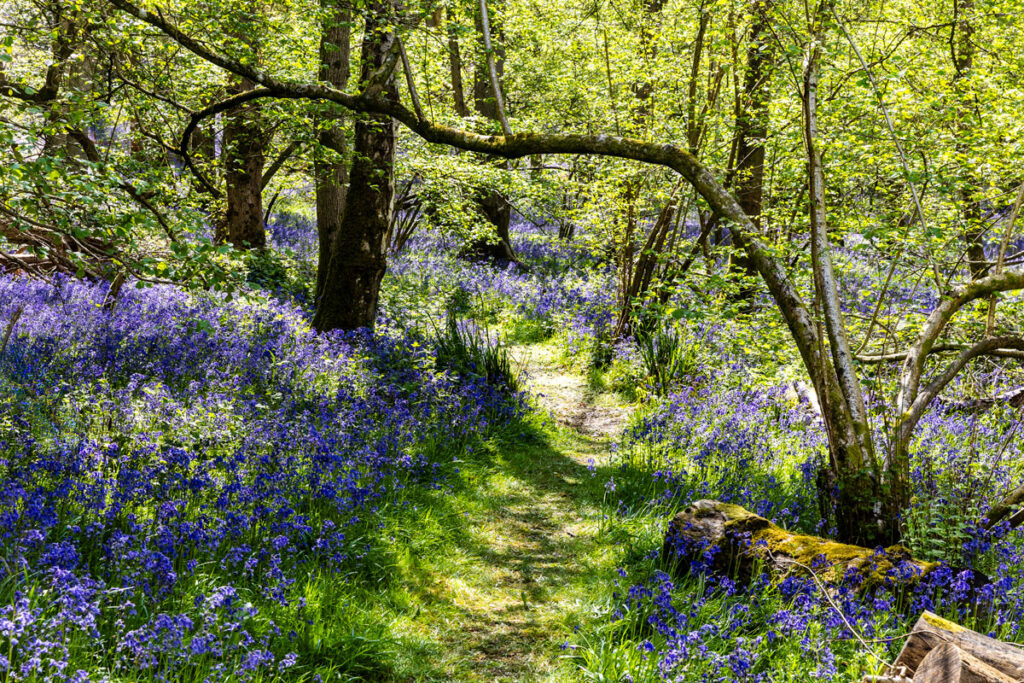
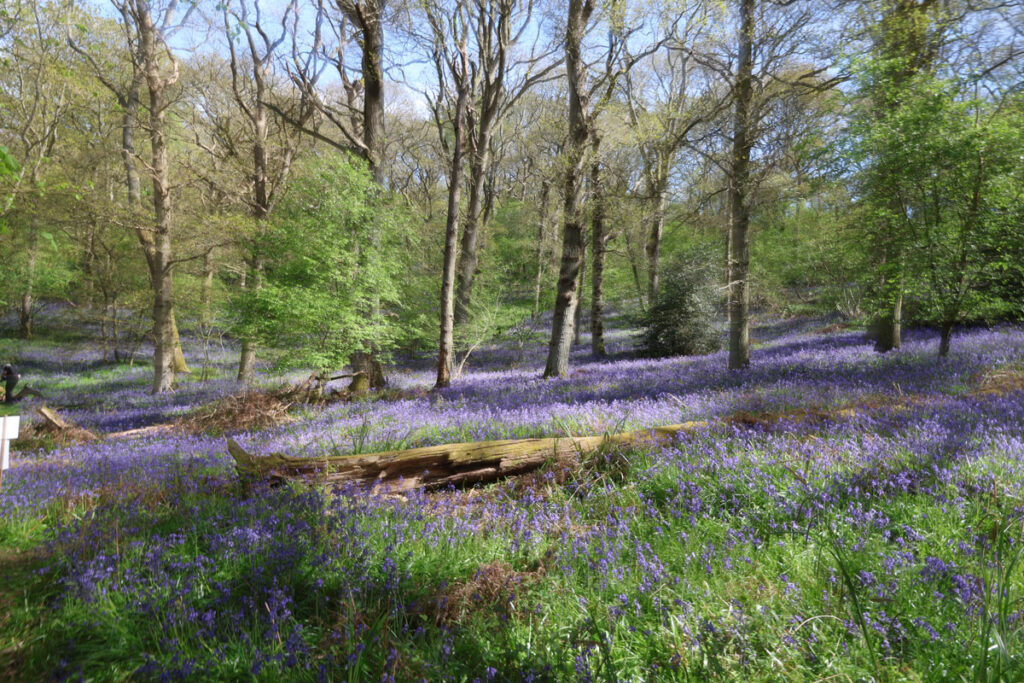
The final stretch reveals a breathtaking scene with a vast carpet of bluebells sweeping up the hillside into the distance. It is truly spectacular. From my previous visit, I recognised many familiar views, though my favourite this year features an arching branch over the path, with sunlight filtering through the ancient woodland. Finally the wood opens up to a hill which is a natural burial ground. The views are beautiful and a lovely end to the bluebell walk.
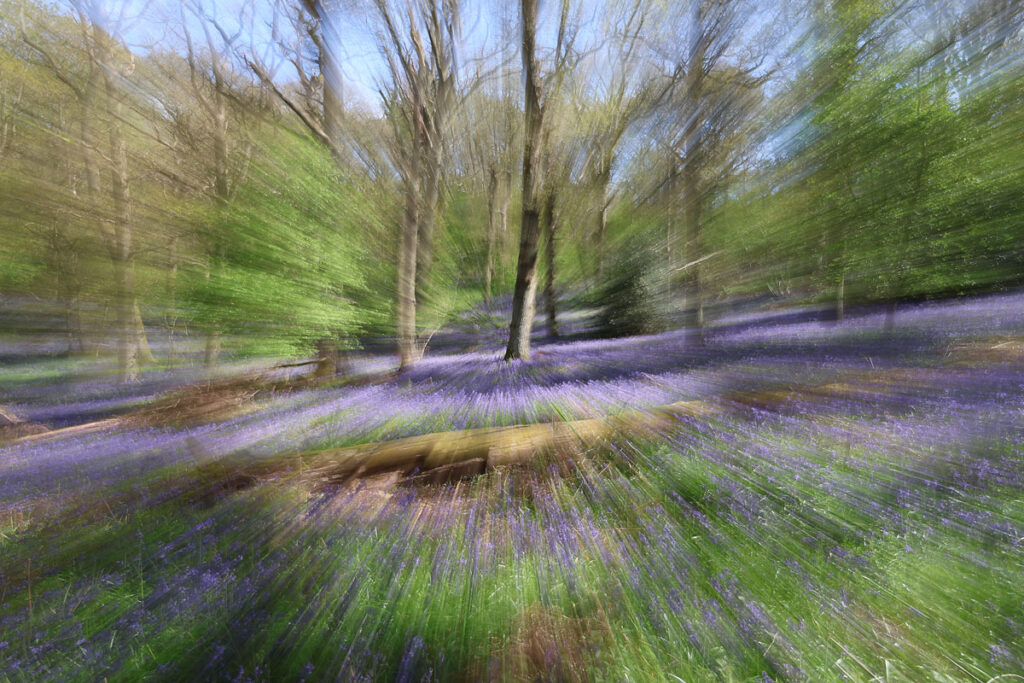
The carpet of blue stretches along and beyond the hill.Having fun with zooming out of the scene of bluebells.
I enjoyed the pop up cafe at the end of the walk and we sat out in the sunshine with our coffee and cake reviewing our photographs that we had taken.
Final Thoughts
This year’s season has already felt like a feast of wildflower displays. Each woodland offered a different experience, from intimate clearings to expansive carpets of colour, making it a memorable exploration of spring in the countryside.
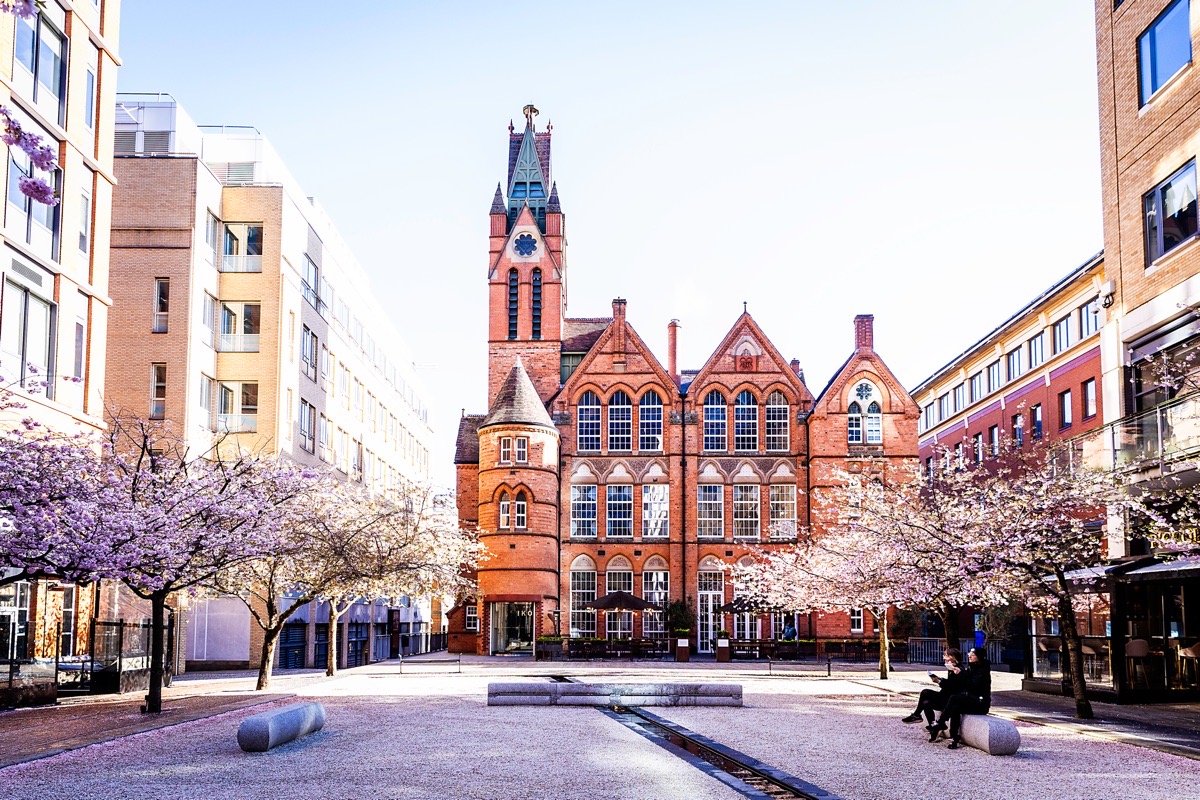
Each spring, Oozells Square in Birmingham is transformed by a brief but beautiful display of cherry blossom. In this reflective piece, I capture the fleeting nature of the season, the atmosphere of the square, and the photographic opportunities created by light, colour, and passing moments.
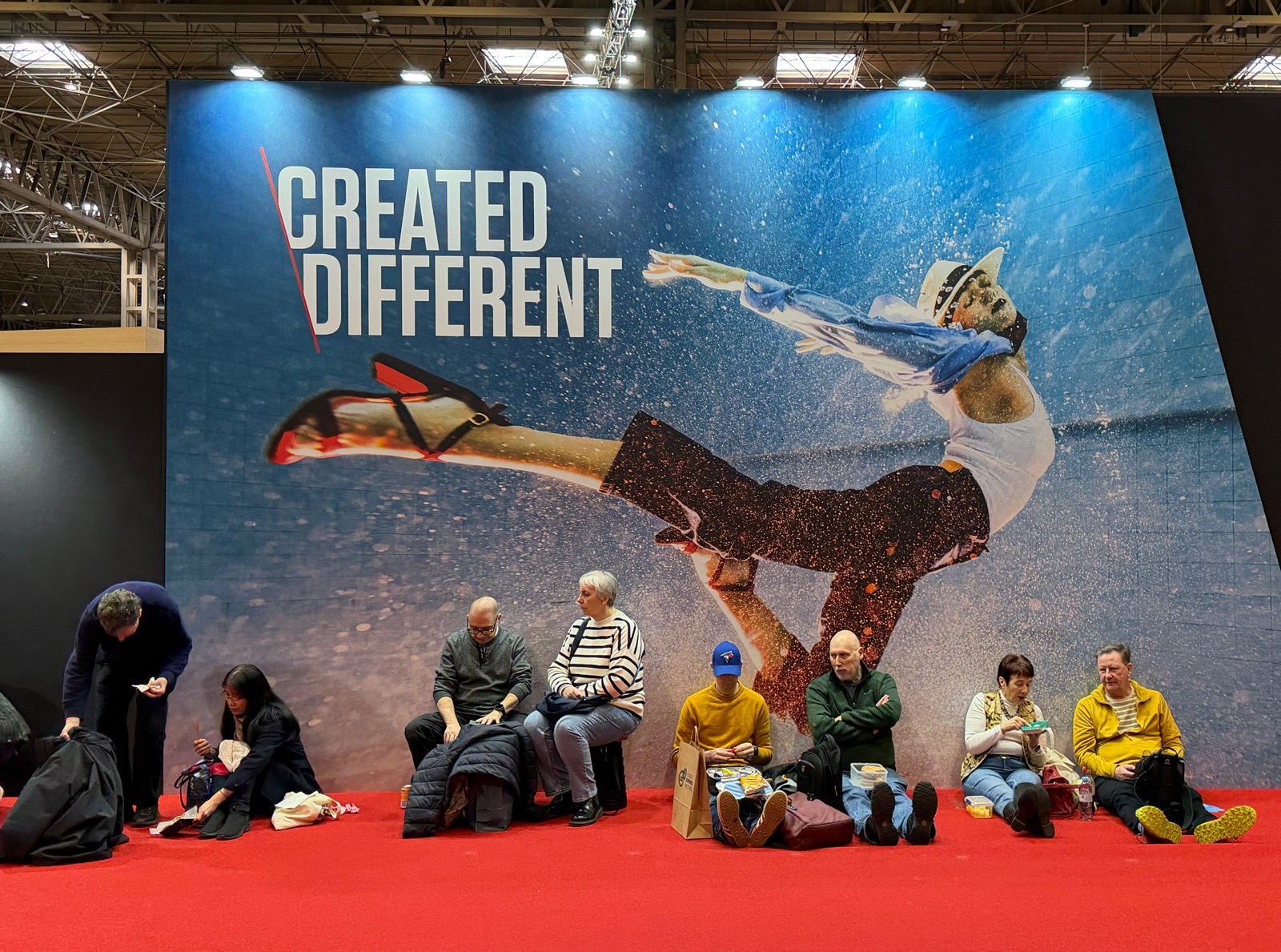
Overall, the Photography and Video Show 2026 at the NEC Birmingham was an enjoyable experience. With so much to see and explore, the day passed quickly. I may differ from many delegates, as I was not there to purchase equipment or products on the spot. I consider myself a reflective photographer and, for the time being, I am content with my current equipment. My main interest lies in how to present my work through photobooks and in exploring accessories that might support my photography.
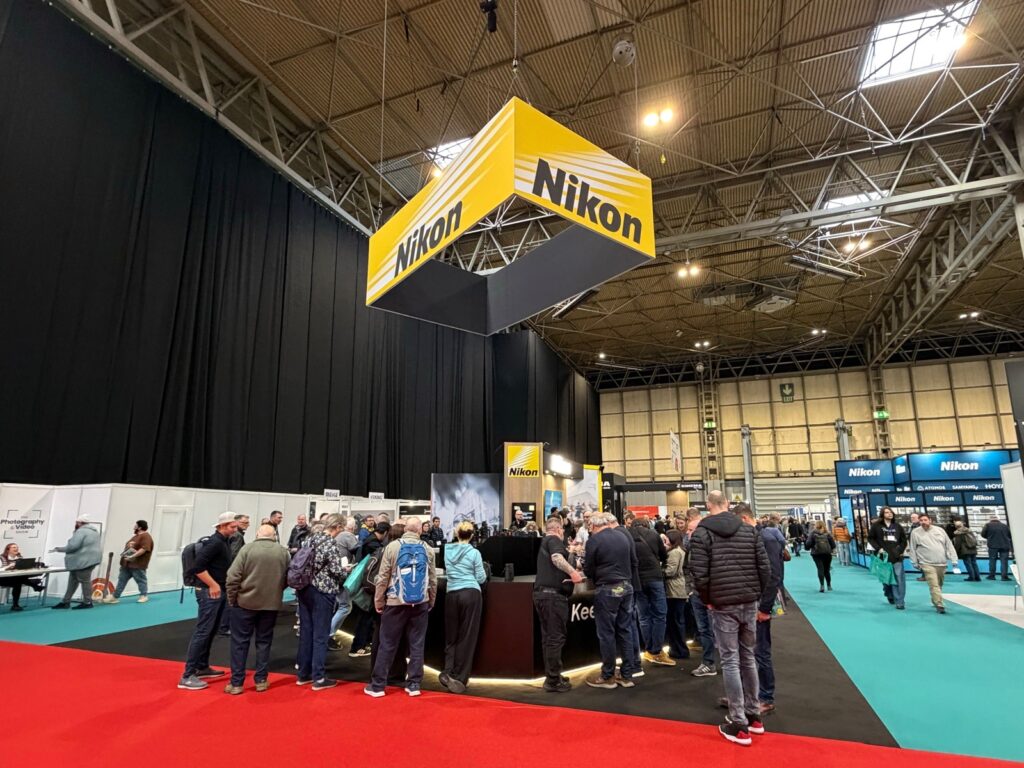
The Nikon stand at the Photography and Video Show 2026
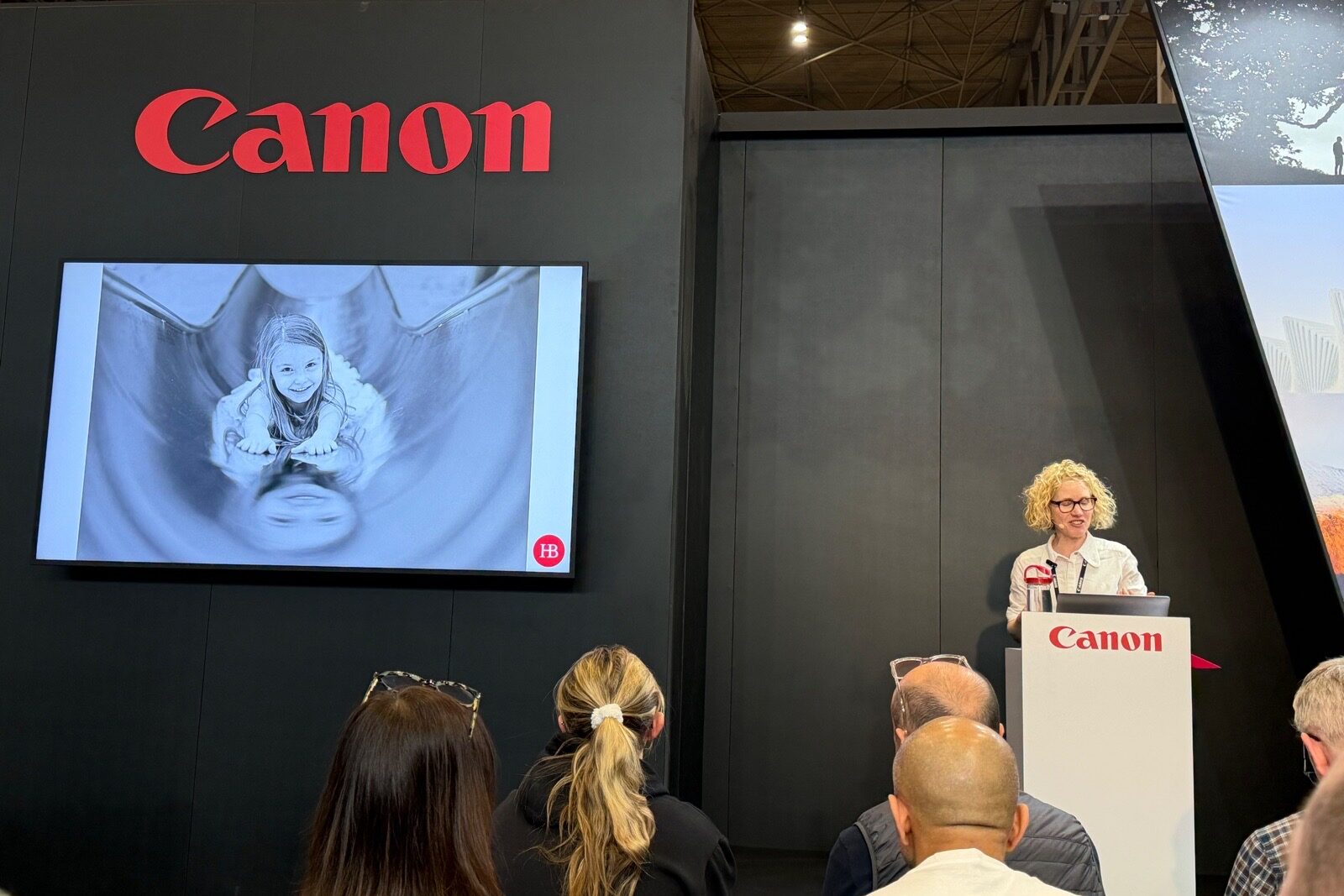
A key feature of the show is the programme of talks, which I find can be somewhat variable. The open theatre sessions are often difficult to follow due to the noise from surrounding activities in the hall. In addition, space is limited for the more popular speakers. I particularly liked the Canon speaker setup, which felt more intimate and made it easier to hear the presenters. I found the talks given at the Amateur Photographer magazine festival of photography held in Greenwich earlier this year to be much more informative. Check out my blog on this event.
Helen Bartlett speakding at the Canon speaker talks.
One talk I was especially keen to attend was by Helen Bartlett on family photography. Her work is highly distinctive, with a strong preference for black and white processing. She also shared valuable insights on how to approach younger members of the family. I came away with several practical ideas and felt inspired to try them out with my grandchildren. I attended other sessions as well, including those on double exposure and Photoshop techniques. Whilst these were informative, the background noise made them challenging to follow at times. This is one area where the photography and video show 2026 disappoints.
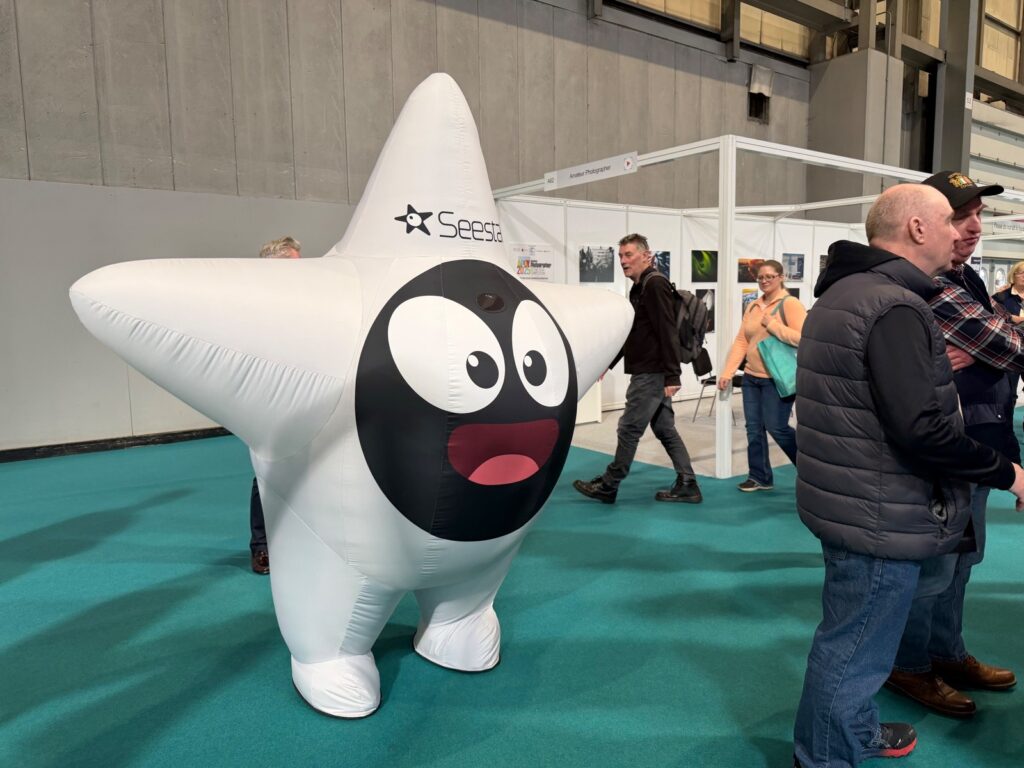
Lots of fun costumes were on display at the Photography and Video Show 2026.
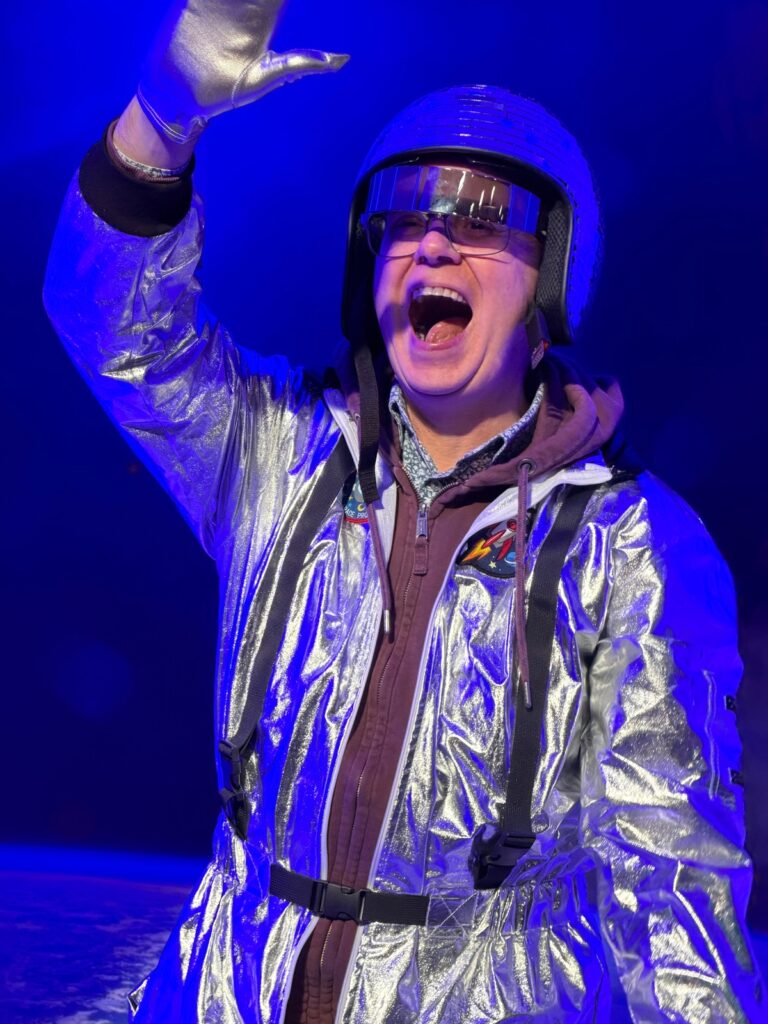
The show is also excellent for networking and meeting people. The Creator Playground (CreatorCon) was particularly enjoyable. One of my highlights was dressing up as a spaceman, and fortunately a local photographer, Jack Babbington, was on hand to take my photograph. The area was creatively set up with a variety of backgrounds, allowing visitors to immerse themselves in scenes ranging from snowy landscapes to the casinos of Las Vegas.
Dressed as a spaceman in the CreaterCon playground (Photo – Jack Babbington)
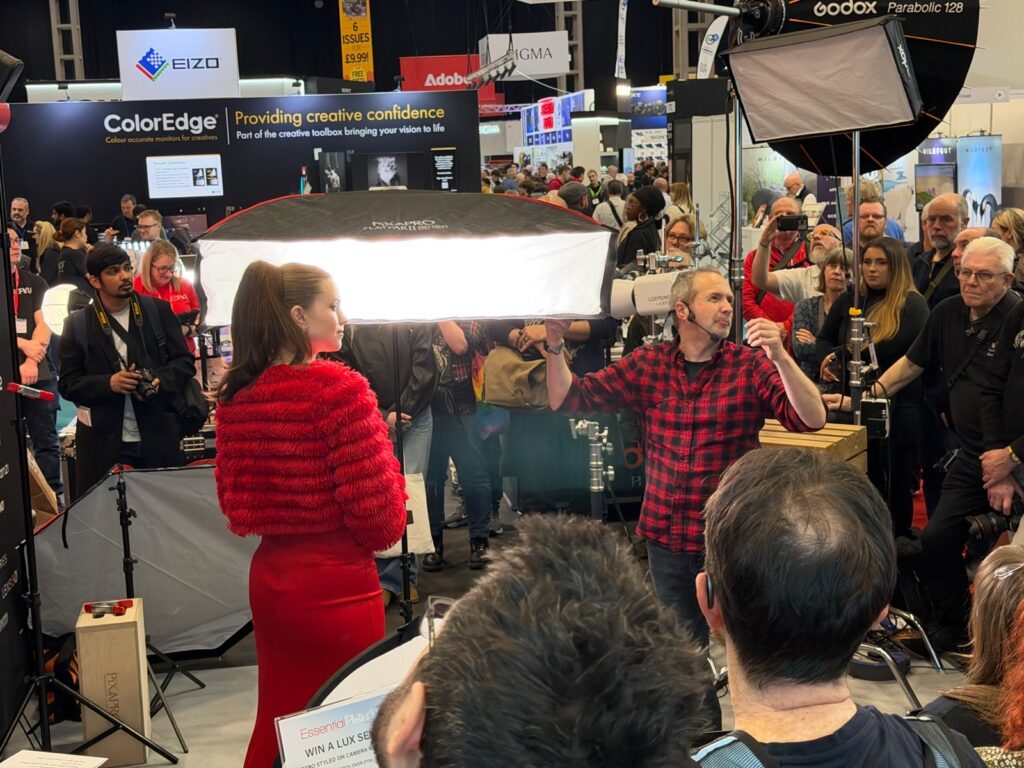
The models on the stands attracted considerable attention from visiting photographers. I have learned to be cautious about joining these crowded groups, where many are competing for the same shot. On this occasion, I chose to keep a respectful distance and simply observe the atmosphere.
Model shoots always attract a large crowd of photographers.
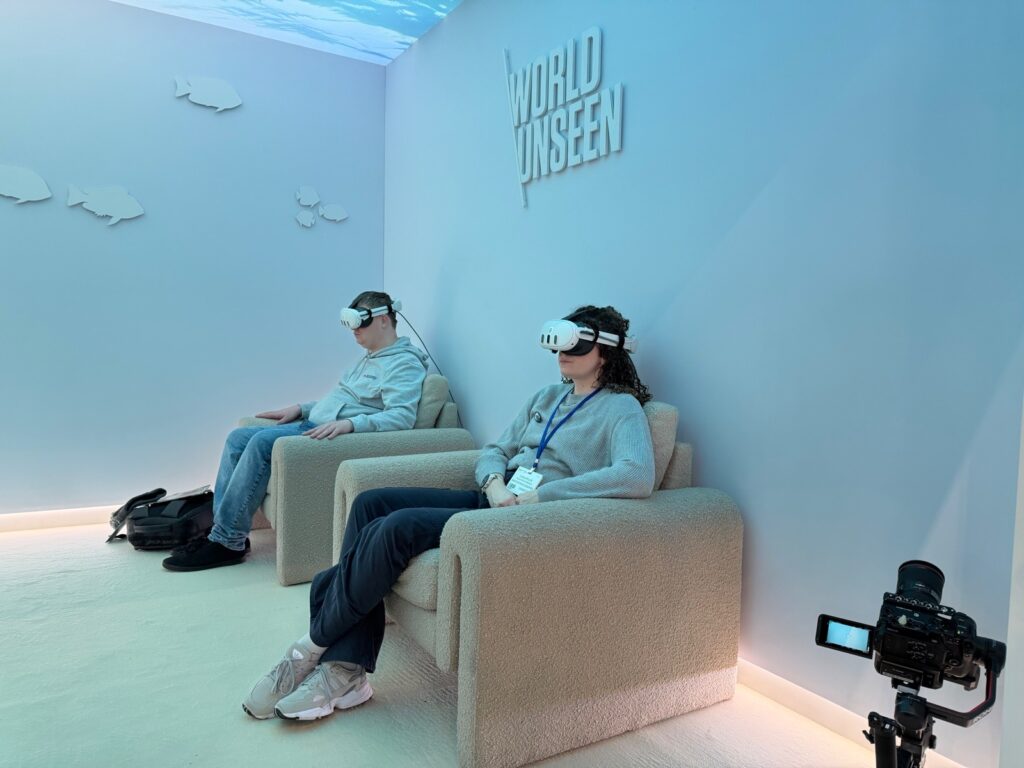
I also enjoyed the virtual reality experience of deep-sea diving over coral shelves in the Seychelles. This carried an important environmental message, illustrating the contrast between healthy, dying, and regenerated coral ecosystems. However, the picture of people with their headsets on does look very dystopian.
VR experience of deep sea diving in the Seychelles.
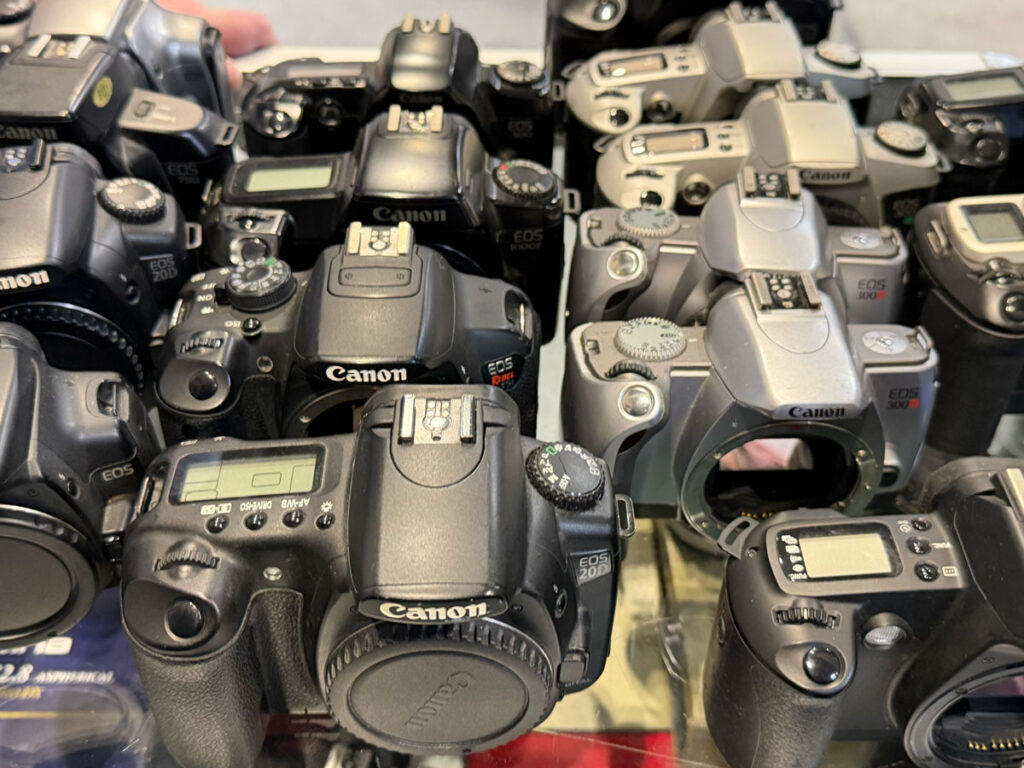
Other favourites included the Disabled Photographers’ Society stand, where there is always interest in vintage cameras and accessories. I also enjoy trying the long lenses displayed on podiums, which allow you to appreciate the remarkable reach of such equipment. All the major manufacturers had impressive cameras and lenses on display.
Camera bodies on display at the Disabled Photographers stand. Lots of Choice.
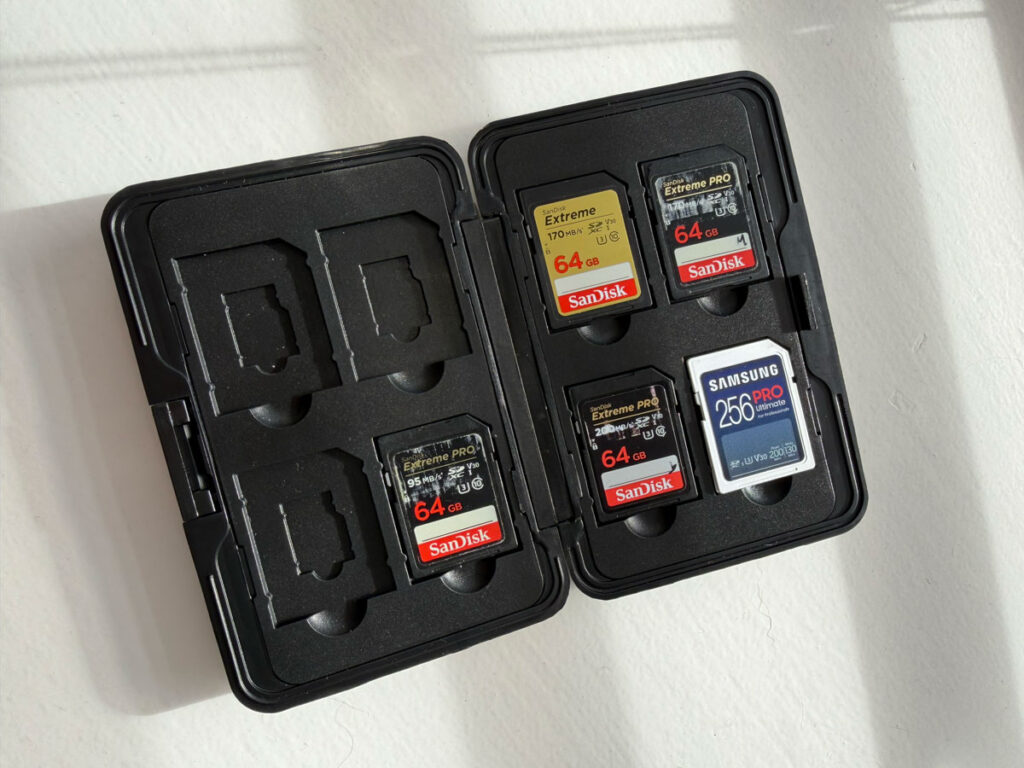
One unexpected highlight of the photography and video show was the lucky dip at the SanDisk stand. After queuing to take part, I won an SD card holder. It was not something I had previously considered essential, but since the show it has proved to be a very useful accessory. Who would have thought?
I look forward to the next Photography and Video Show in London in 2027.
At long last, the Golden Lion is coming back to life. I first visited the building last year, before restoration began, when Irene from Birmingham Conservation Trust gave us a fascinating behind-the-scenes look at the plans for this Grade II listed gem. Now, with work well underway, I had the chance to return to see the progress taking place.
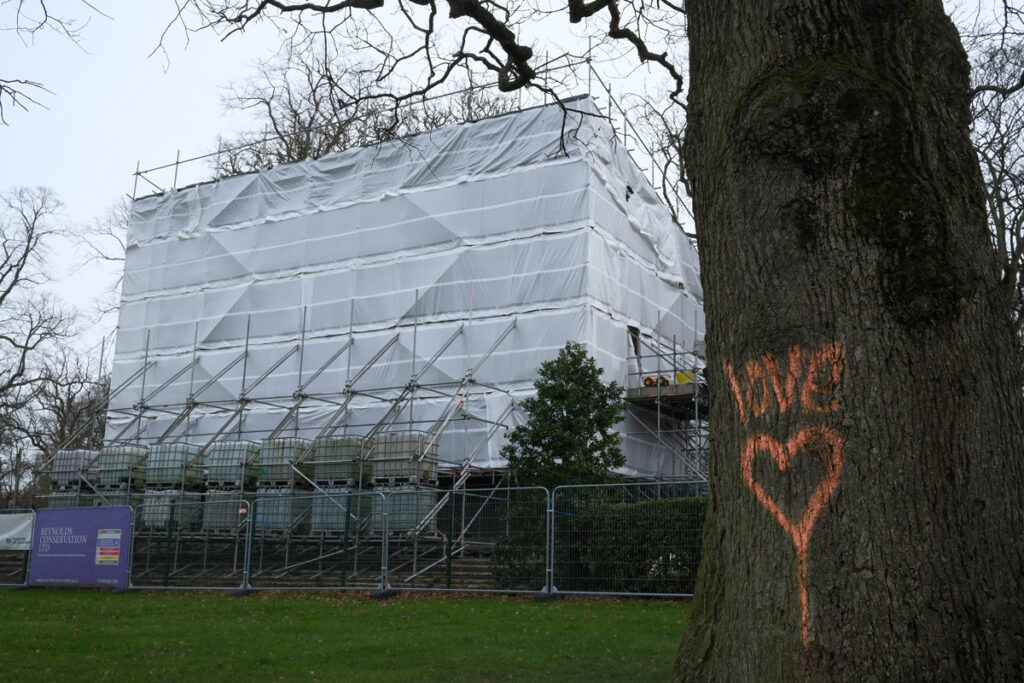
Golden Lion Conservation in Progress – Overall view of the Golden Lion building mid-restoration surrounded by scaffolding in Cannon Hill Park.
The Golden Lion has quite a story. Built in the early 1600s, it originally stood in Deritend High Street and has lived many different lives over the centuries. In 1911 it was moved to Cannon Hill Park, where it later served as a cricket pavilion and refreshment room. For more than 20 years, however, it has stood empty until support from Historic England and local funders allowed Birmingham Conservation Trust and the City Council to begin the restoration.
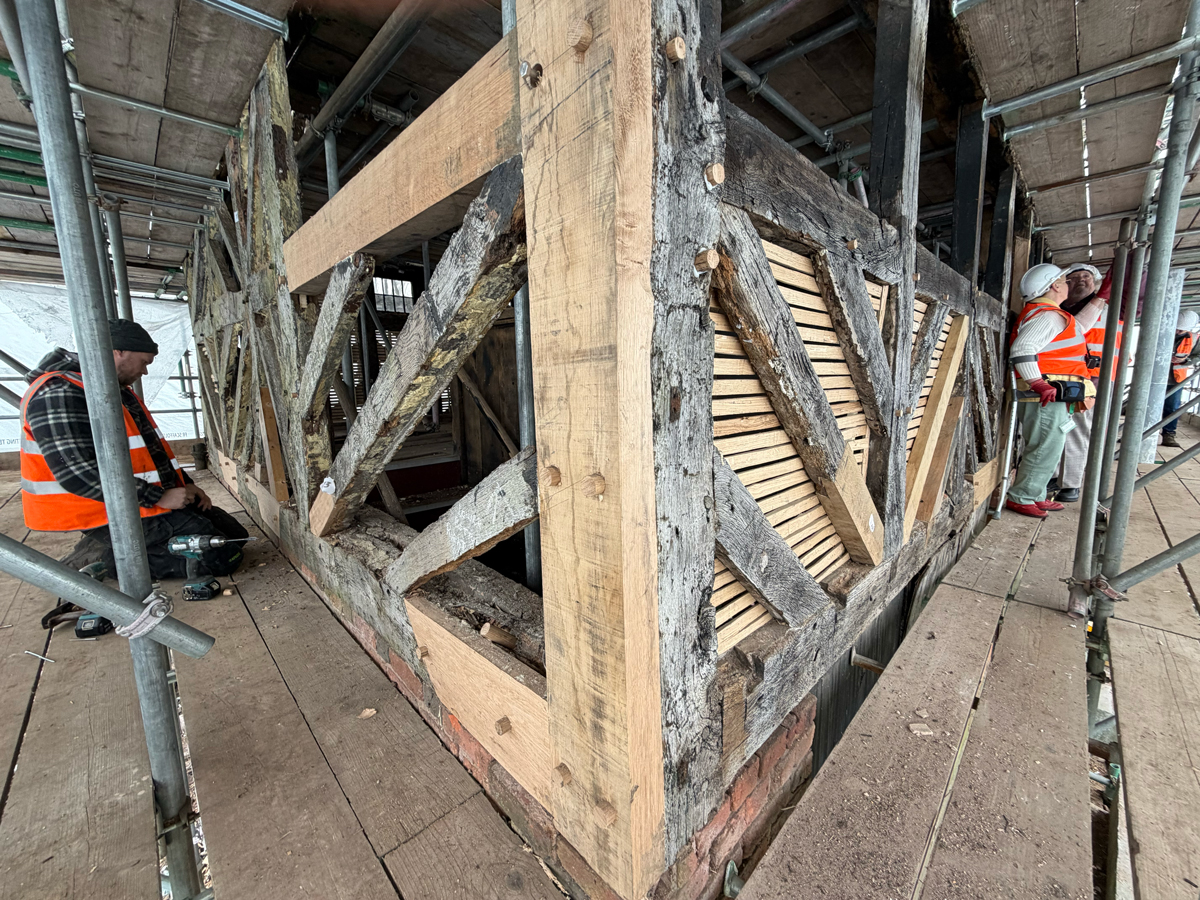
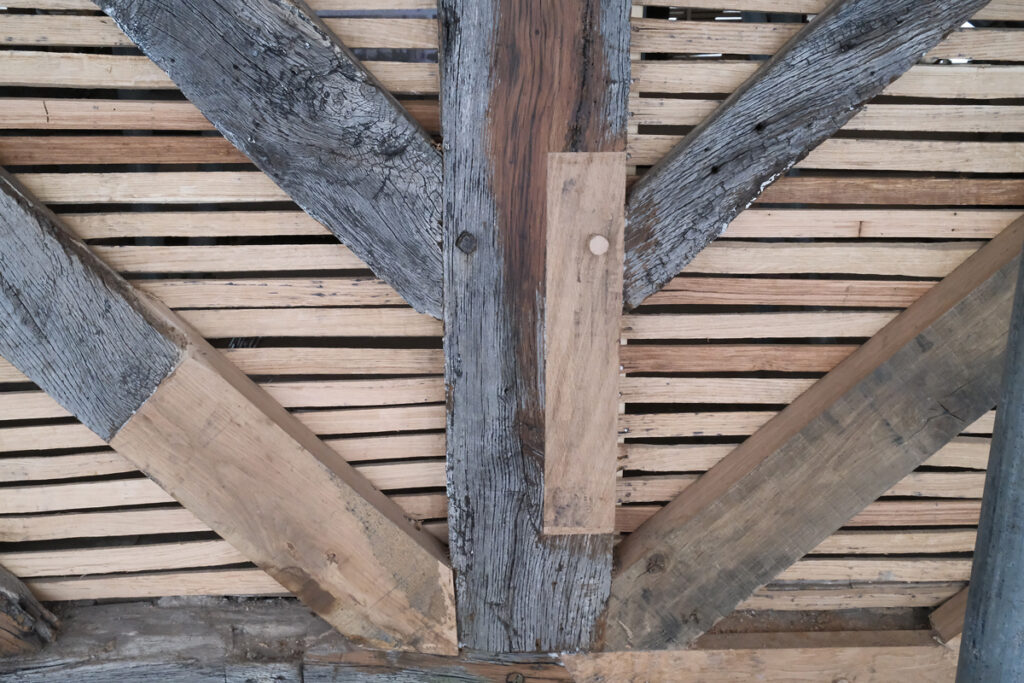
Old and New Timber Joinery – Detail showing new timber carefully joined with original wood during Golden Lion restoration.
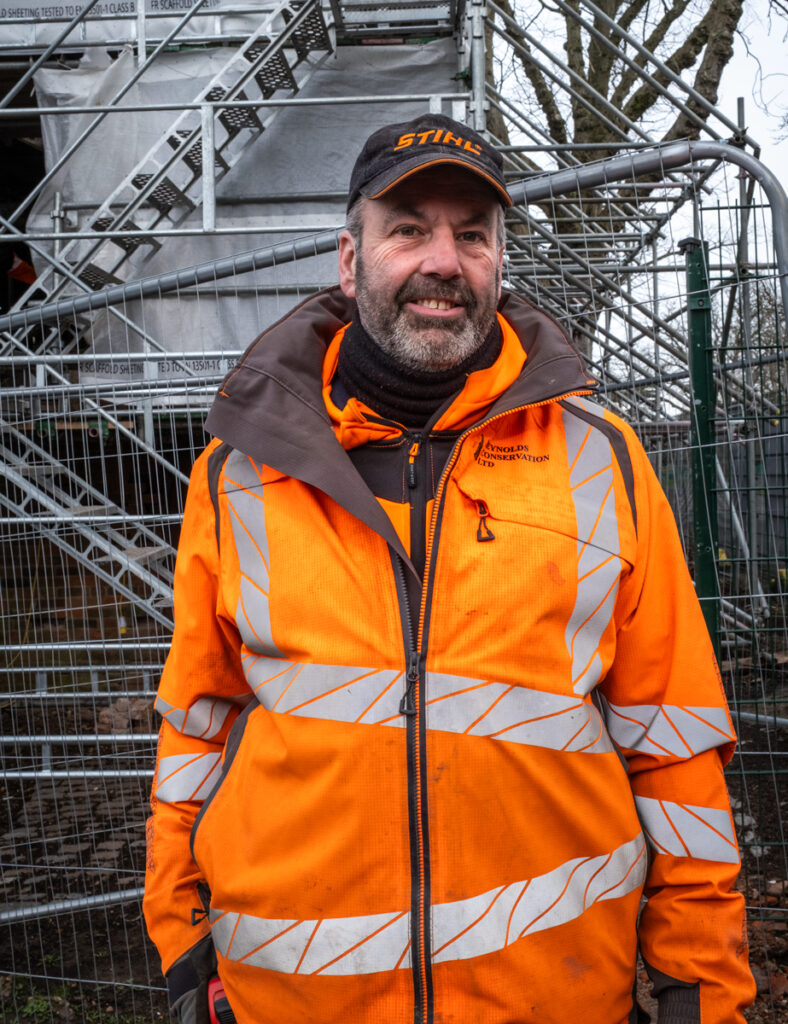
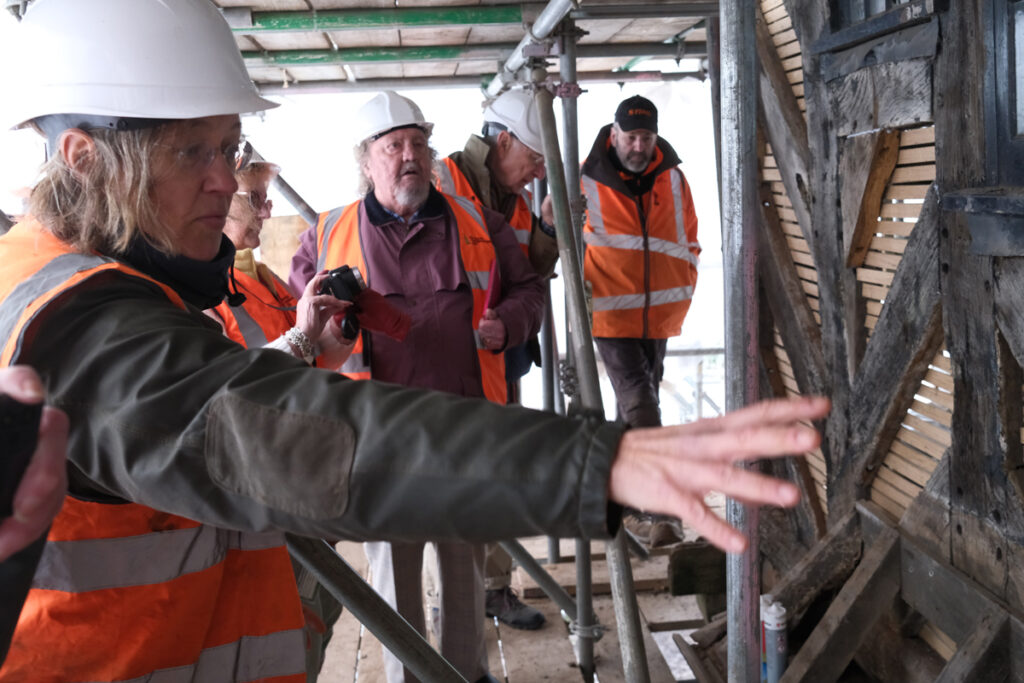
This latest visit was something special. The hard hat tour was limited to just six people, making it a rare opportunity to see the restoration up close. Irene once again led the visit, starting with an update on progress so far before introducing us to Richard, the site manager from Reynolds Conservation. After the essential health and safety briefing, we were suited up in hard hats and high-vis and then it was time to explore.
Richard, the site manager from Reynolds Conservation – Golden Lion Restoration Project
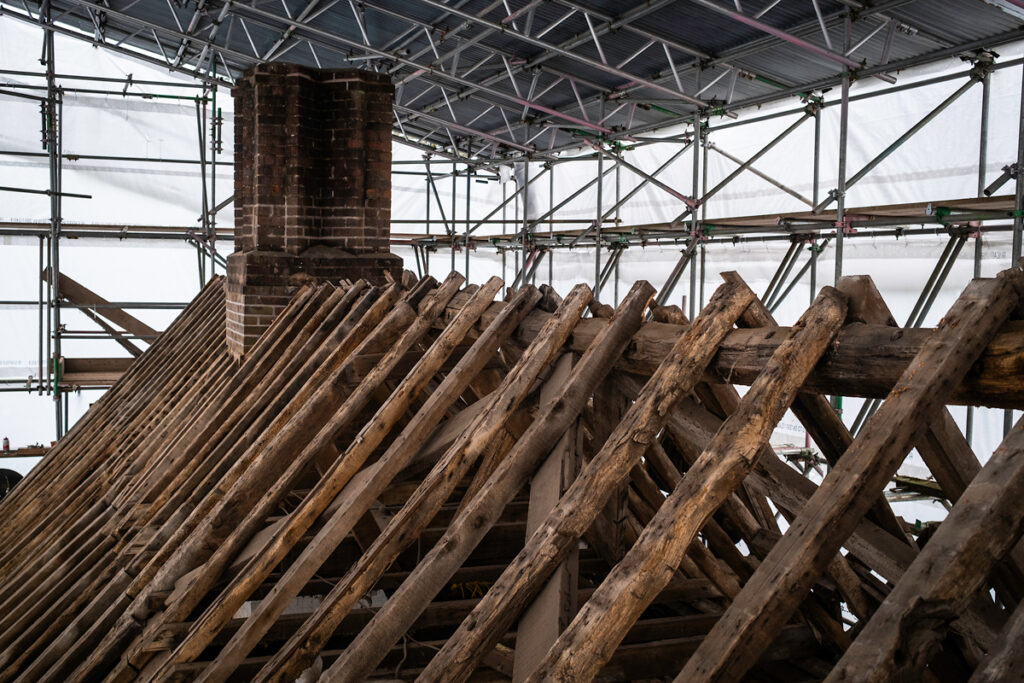
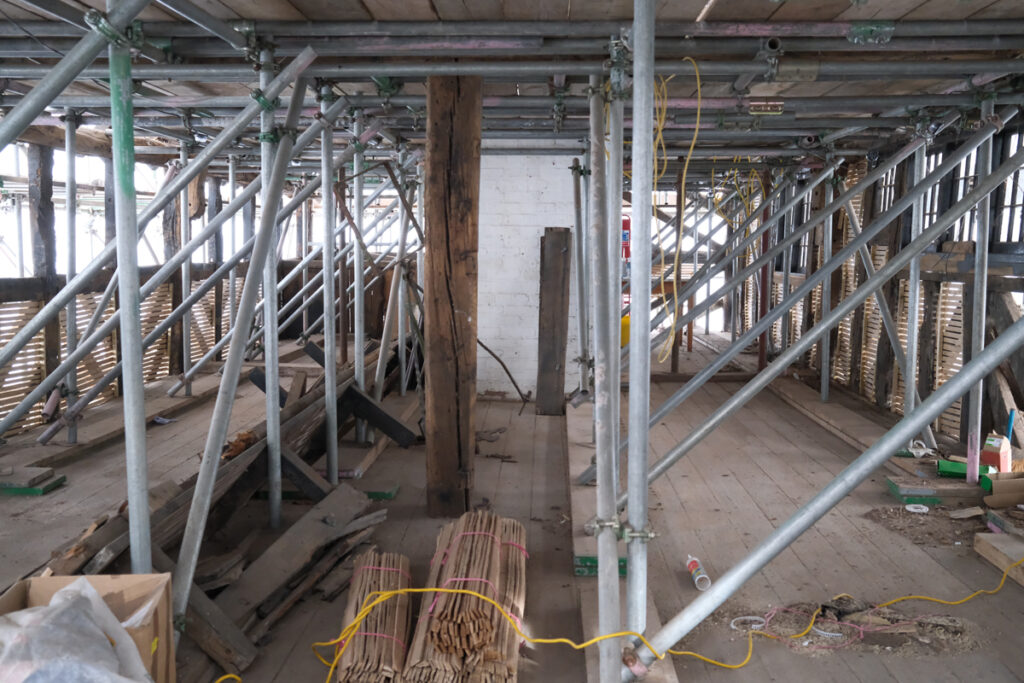
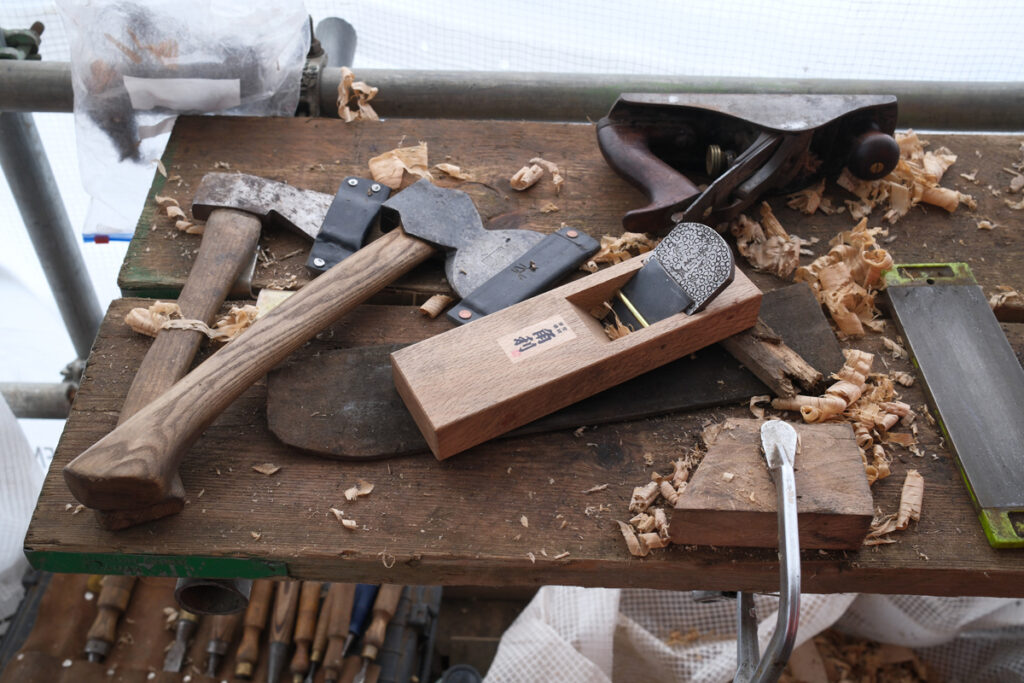
Unlike my previous visit, when we viewed the interior, this time we walked around the outside via scaffolding. It gave a completely different perspective to the house. The focus of the work is currently on the timber frame i.e. the true skeleton of the building. The roof timbers are in surprisingly good condition, but the lower sections have needed careful repair. Everywhere you looked, numbered markings showed where attention was required, and skilled carpenters were meticulously blending new timber with old. The result is a fascinating mix of a centuries old building meeting modern craftsmanship.
Roof Timbers View – Historic roof timbers of the Golden Lion building during conservation works.Golden Lion Upper Structure from Scaffolding – View of the Golden Lion upper structure taken from scaffolding during restoration.
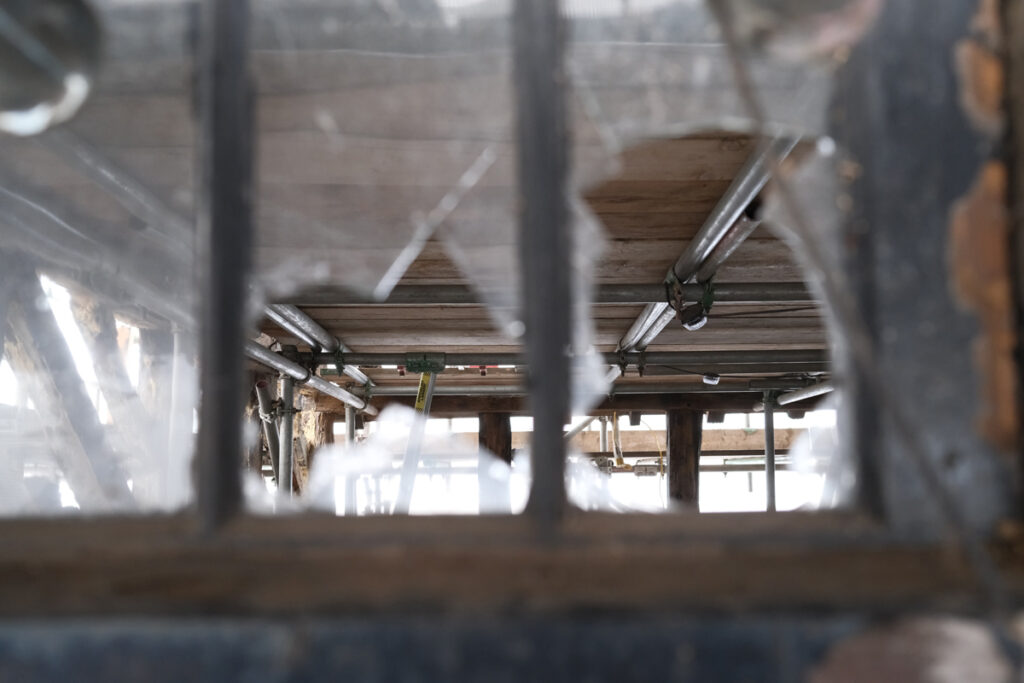
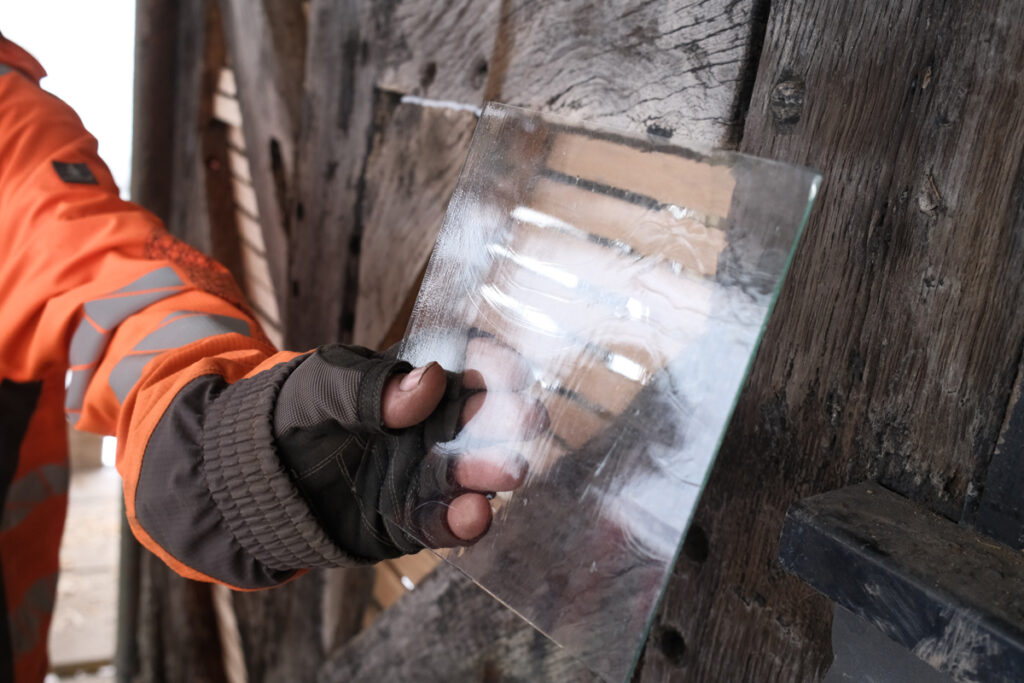
The same careful approach is being taken with the brickwork. Damaged bricks are removed and replaced with historically appropriate materials, following Historic England guidelines. Listening to Irene and Richard discuss the restoration was a highlight. Their passion for getting every detail right was obvious. Even the replacement window glass has been specially researched to ensure it matches the original look and character of the Golden Lion.
Hard Hat Tour Group with Irene and Richard – Visitors wearing hard hats and high-visibility jackets during the guided Golden Lion restoration tour.Window Frame Restoration – Window frame and broken glass at the Golden Lion.Window Frame Restoration – Restored window frame and historically matched glass installed at the Golden Lion.
From a photography perspective, it was a dream visit. The exposed timber frame was particularly striking. I loved the geometric angles, and the texture of the wood used, new and old. Standing there, you could almost feel the building poised between past and future, ready for its next chapter.
Craftsmanship Detail Shot – Close-up showing traditional craftsmanship techniques used in timber repairs.
I felt incredibly lucky to be part of such a small tour, and I can’t wait to see the Golden Lion fully restored. It’s one of those projects that reminds you how much history still survives and in this case fortunate that the right people provide the chance for the building to shine again.
Birmingham Light Festival is back for its second year, brightening up Valentine’s weekend. The nights are still dark; the weather has been wet for so long that a burst of colour and light is exactly what is required to lift the mood before spring finally arrives.
I signed up for a photo walk organised by IgersbirminghamUK as part of the Birmingham Light festival. Our mission was to cover as many installations as possible on foot. Birmingham is a big city, but the artworks are placed at key spots, each linked by a brisk 5 to 10 minute walk.
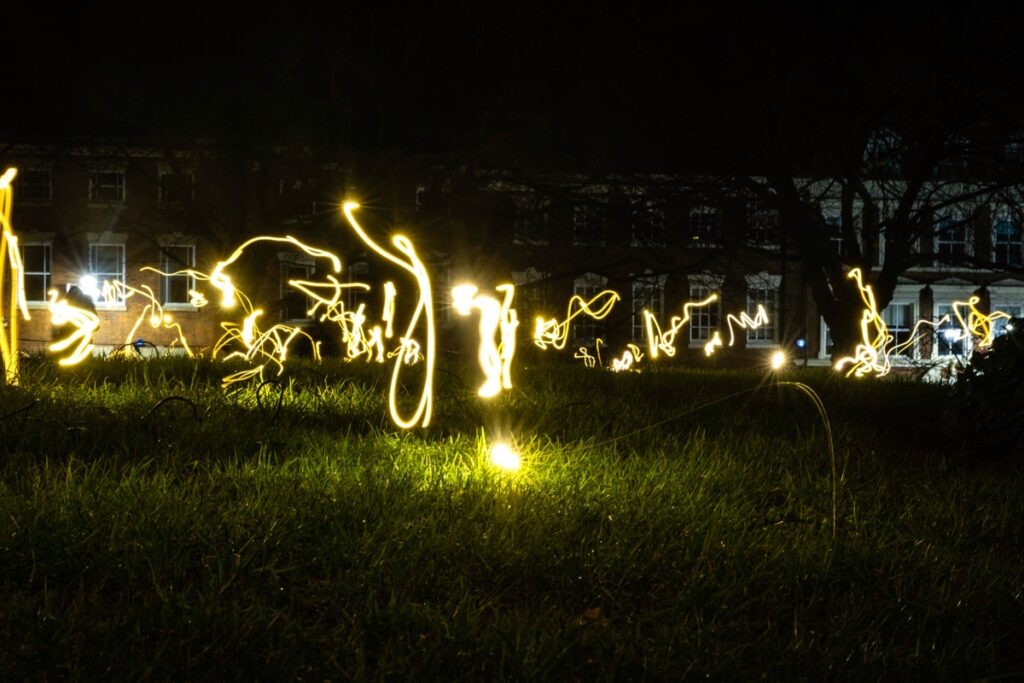
Firefly Field We met at St Paul’s Church, where the lawn shimmered with tiny moving lights. Up close, they revealed themselves as hundreds of glowing points gently “dancing” in the dark. This ‘Firefly Field’ looked magical to the eye, but photographing the movement was a challenge. A tripod and long exposure did the trick, turning the flickers into sweeping trails of light.
Firefly Field Long Exposure – Long-exposure light trails showing the movement of firefly-style lights at Birmingham Light Festival.
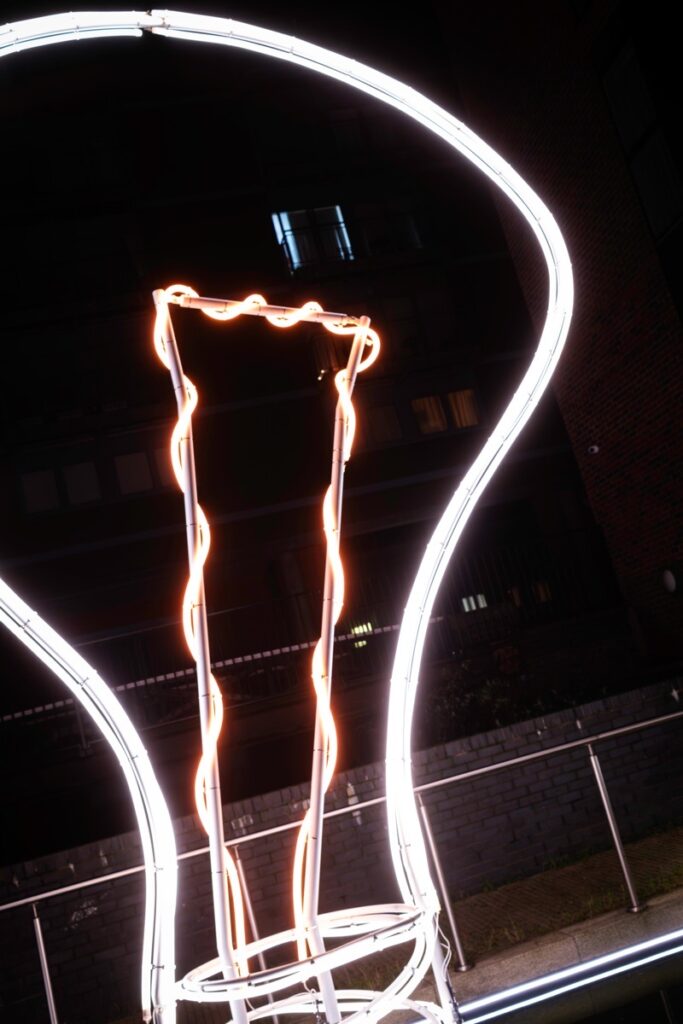
Ideas Happen Here Our next stop was Newhall Square hear to the canal. Here, a giant glowing lightbulb sat beside a reflection pool. The artwork was bold, playful, and perfect for photography. The reflections doubled the impact, offering endless composition options. I had seen this at last year’s Birmingham Light Festival, but it still felt fresh when viewed for a second time.
Ideas Happen Here – Large illuminated lightbulb sculpture at Newhall Square during Birmingham Light Festival.
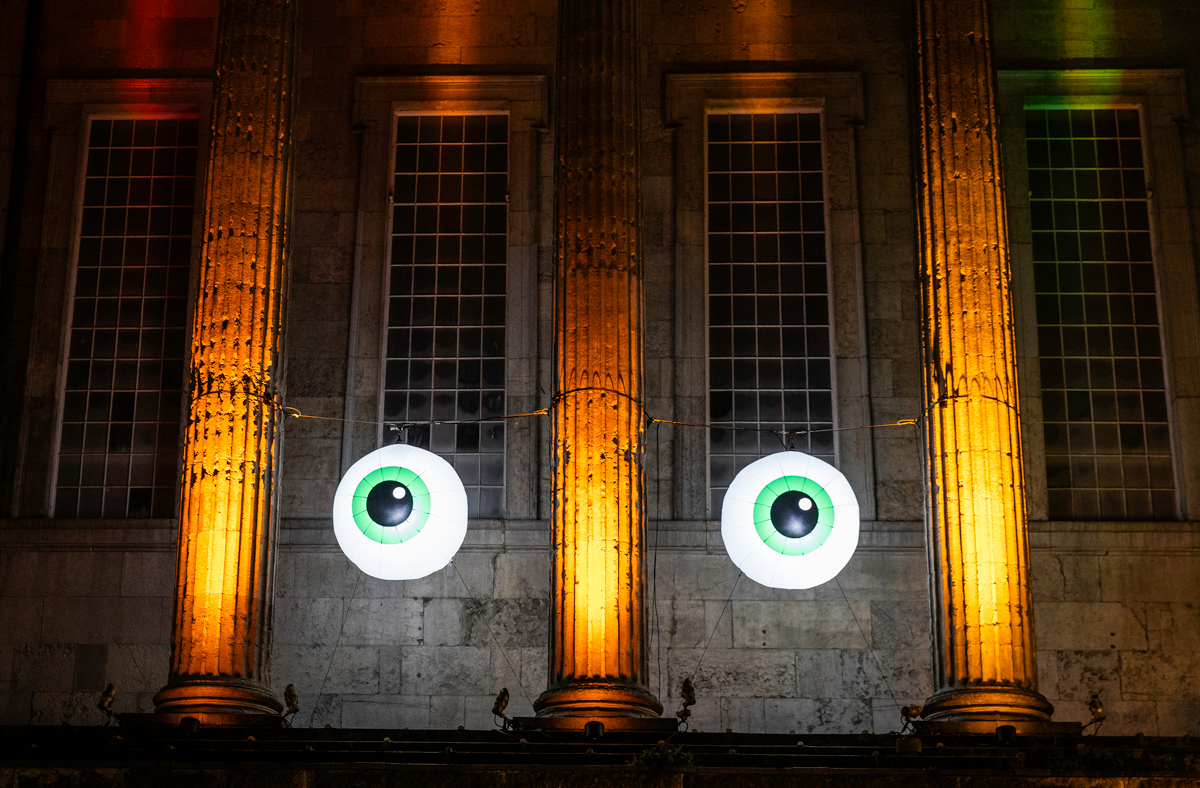
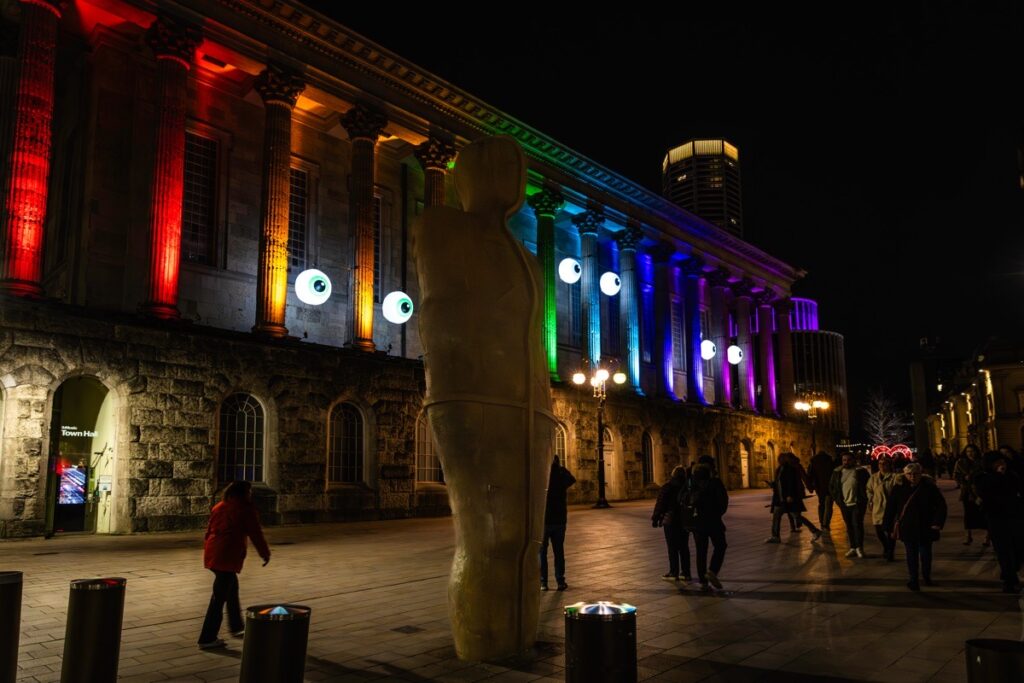
Victoria Square Victoria Square was packed with activity. In nearby Chamberlain Square, a giant Valentine’s heart glowed for the selfie crowd. Meanwhile, Birmingham Town Hall was watched over by huge, illuminated eyes. These were quirky and slightly surreal surrounded by the columns which were lit in shifting colours.
All Eyes on the Town Hall – Giant illuminated eyes on the Birmingham Town Hall look down on Iron:Man.
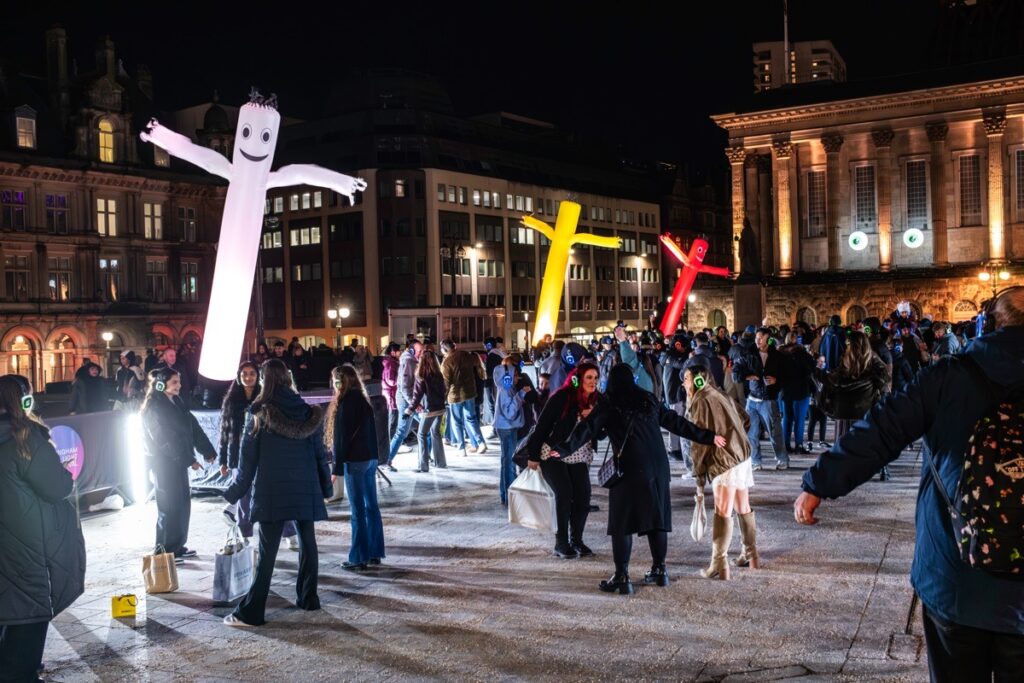
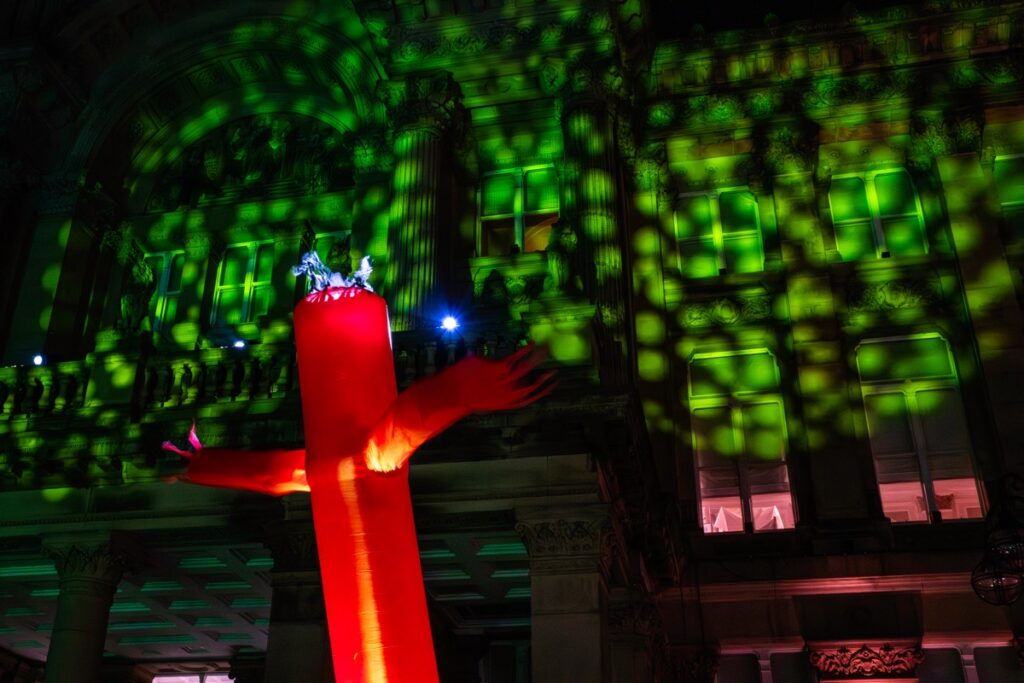
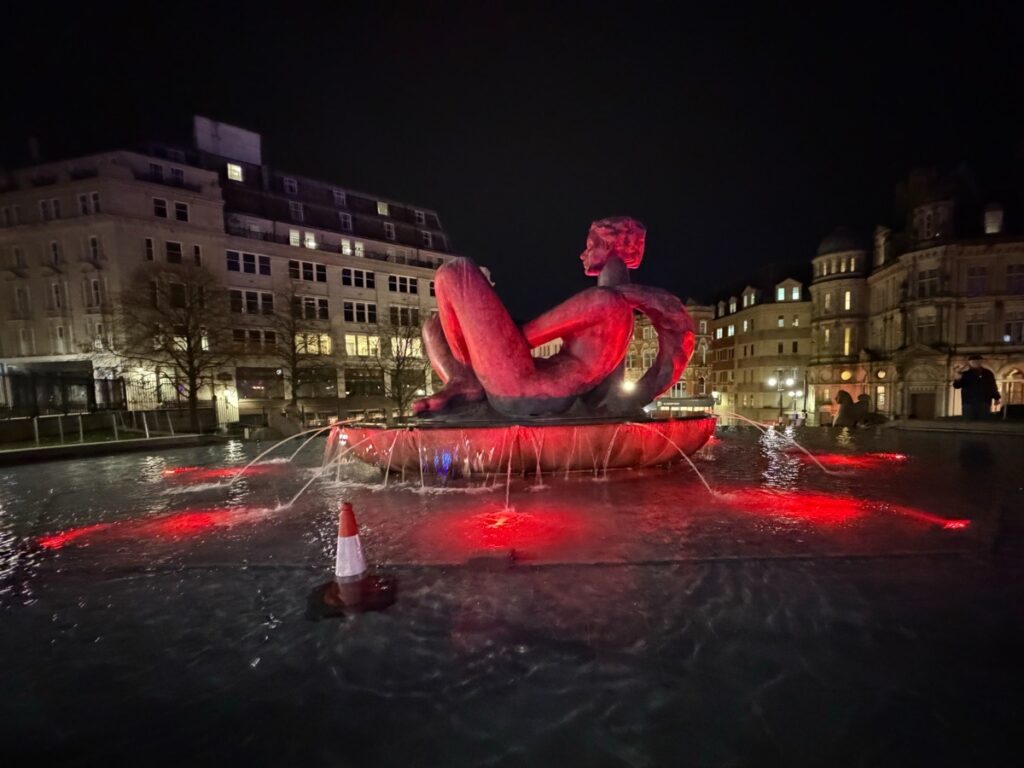
In the square, a silly statues x silent disco was in full swing. Dozens of people danced freely in total silence, headphones glowing. Light projections covered the Council House, inflatable figures waved overhead, and the whole scene felt wonderfully absurd. Even the Floozie in the Jacuzzi looked extra glamorous for the Birmingham Light Festival.
Silent Disco Crowd – People dancing with glowing headphones during a silent disco in Victoria Square at night.Birmingham Light Festival with a balloon man dancing in front of the Council House.Birmingham Light Festival – the Floozie in the Jacuzzi.
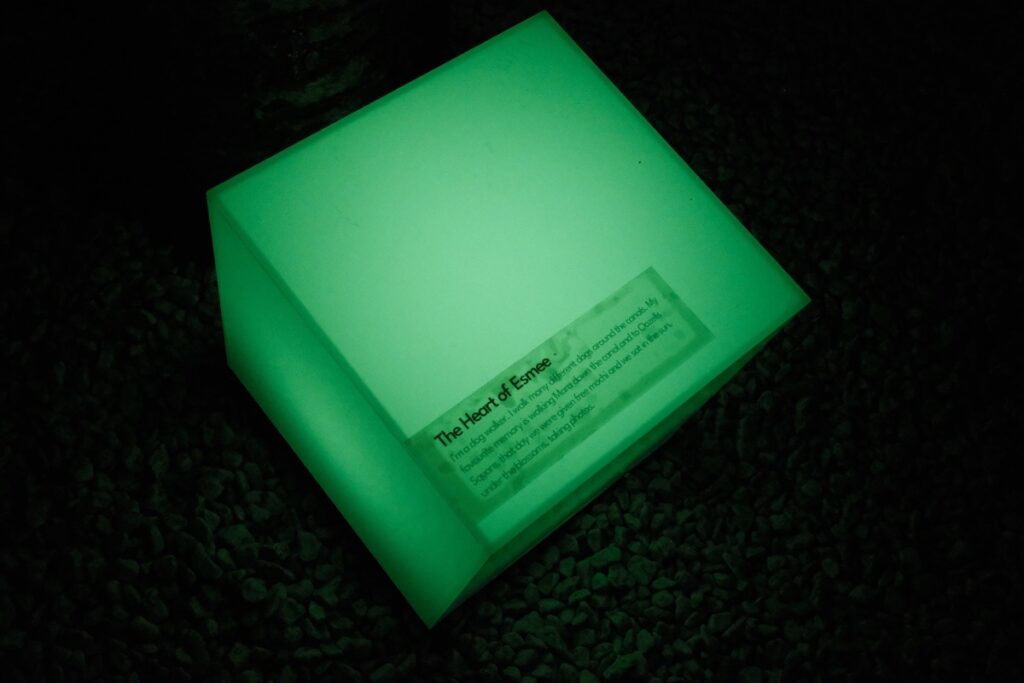
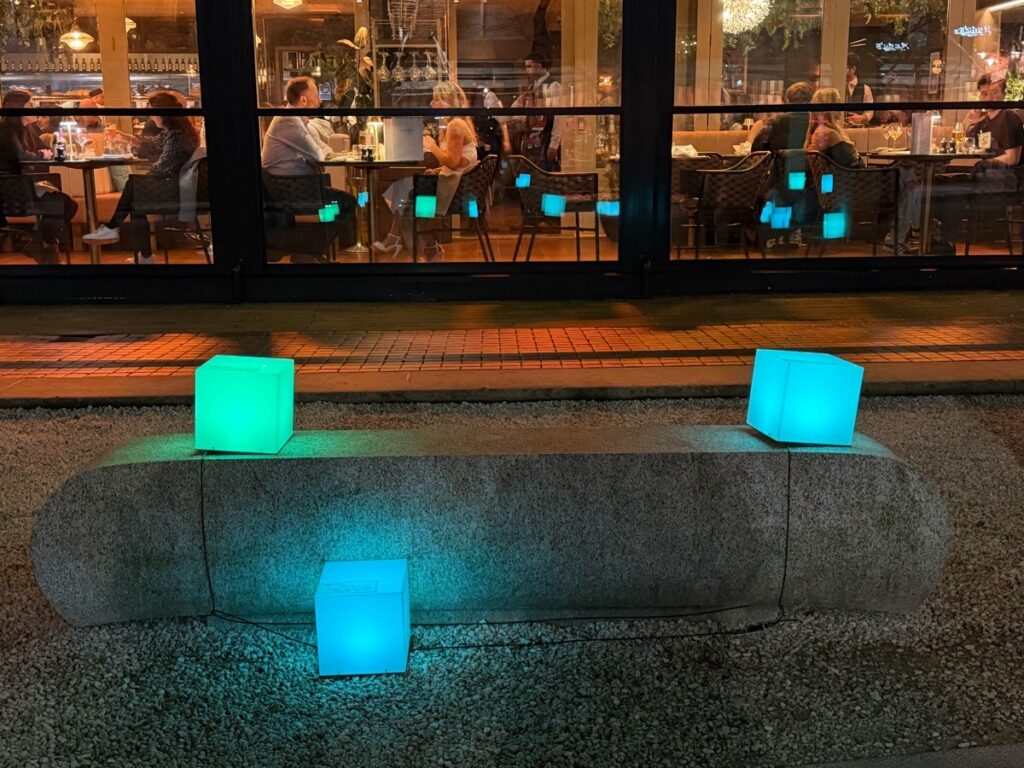
The Heartbeat of Brindleyplace After more walking, we reached Oozells Square, where glowing green boxes pulsed gently with real human heartbeats from across the city. Each box represented a person going about their day creating a strangely intimate and surprisingly moving concept. Capturing their reflections in nearby restaurant windows added another layer of storytelling.
Heartbeat of Brindleyplace – Green glowing boxes pulsing with light in Oozells Square pulsing in time with real human heartbeats.Birmingham Light Festival – beating hearts reflected in a restaurant window.My Beating Heart
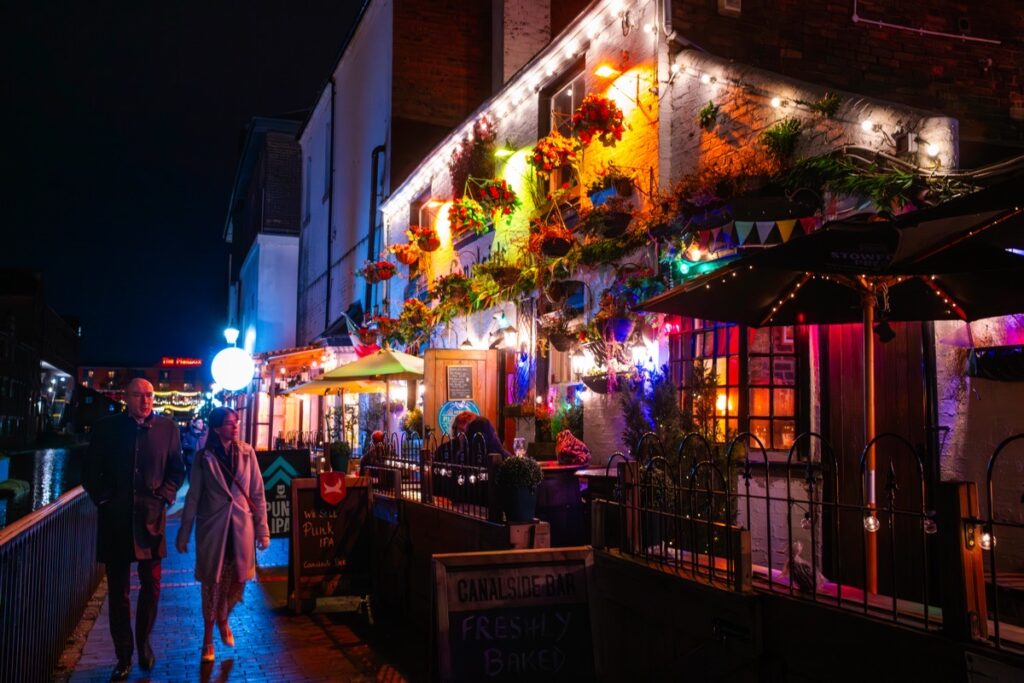
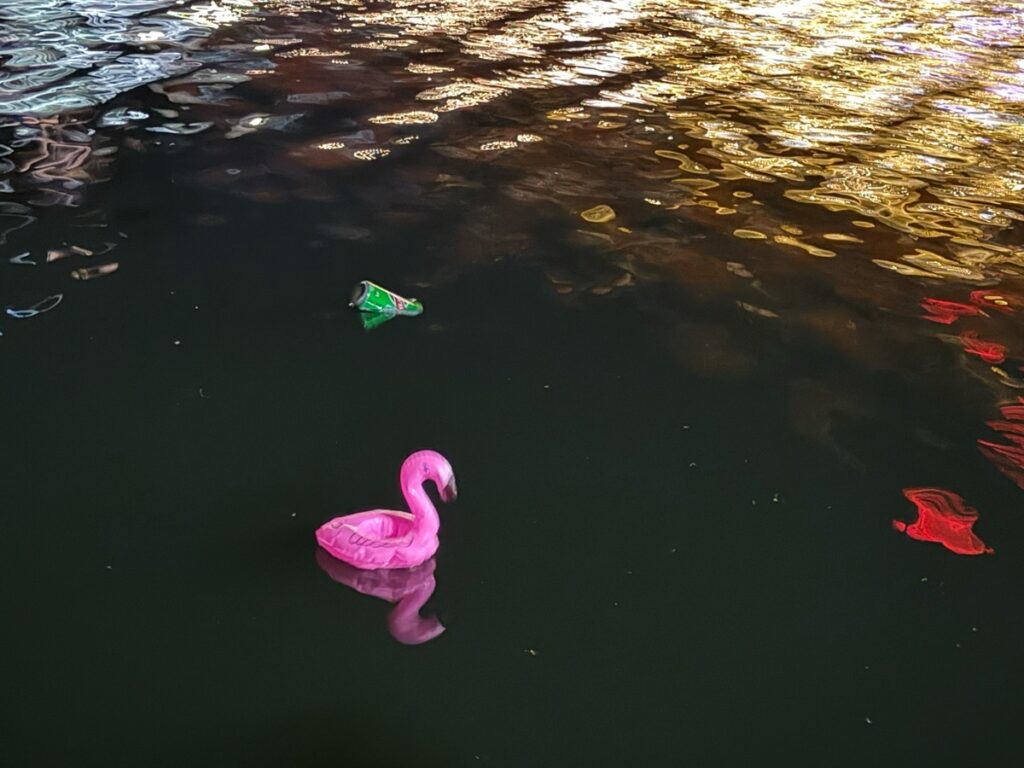
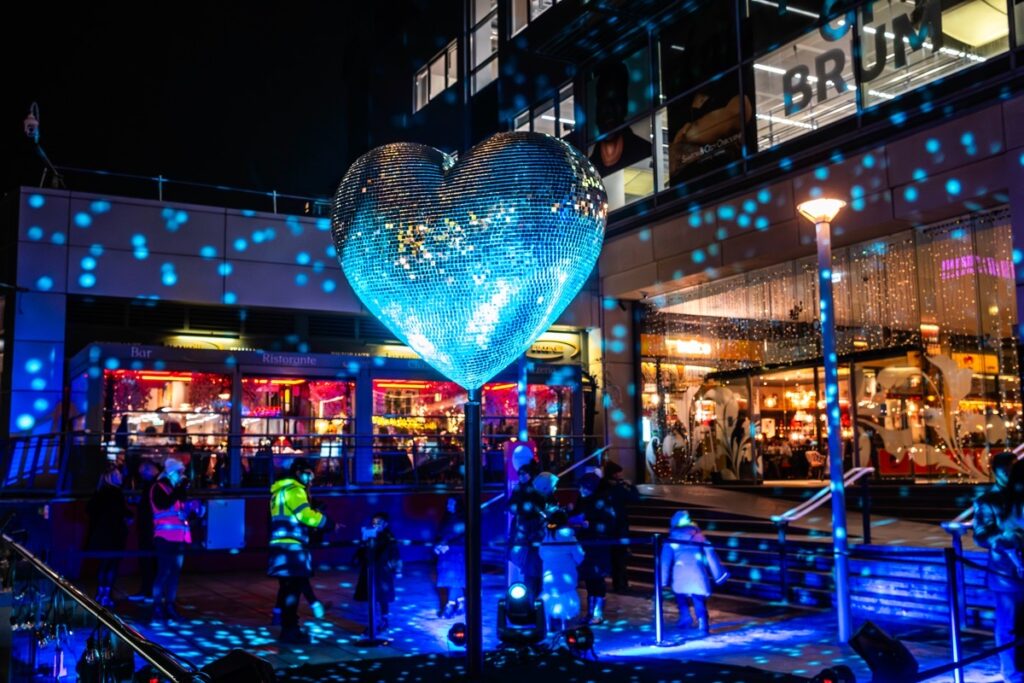
Our Beating Heart The walk between the artworks became part of the experience as we headed off towards the Mailbox. There were canal reflections, glowing restaurant lights, and even a rogue flamingo hat floating in the water. At the Mailbox, we found a giant illuminated heart installation. I preferred the Heart’s past location at Snow Hill where there is more space, but it still made an eye-catching stop for photography.
Brightly lit restaurants along the canal water near the Mailbox in Birmingham.Birmingham Light Festival – whose flamingo hat is this?Our Beating Heart Installation – Large illuminated heart sculpture displayed on the steps at the Mailbox.
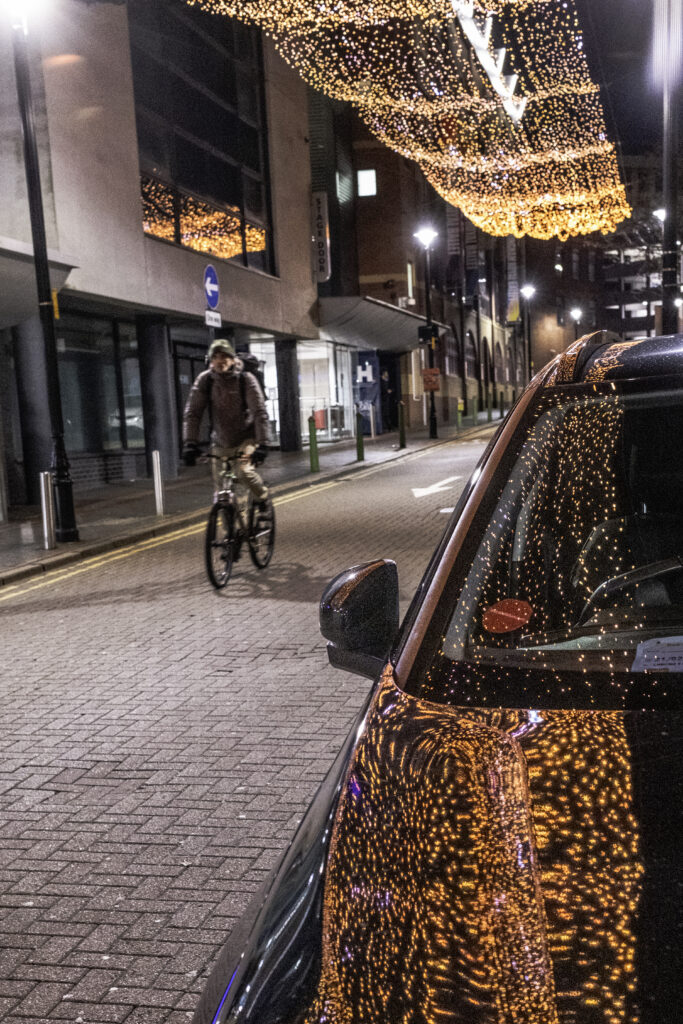
Roof of Stars On Thorp Street outside Birmingham Hippodrome’s stage door, strings of star-like lights stretched overhead They are beautiful to see, but tricky to photograph. Thankfully, some shiny parked cars nearby provided perfect reflective surfaces.
Roof of Stars – Overhead canopy of star-like lights suspended across Thorp Street.
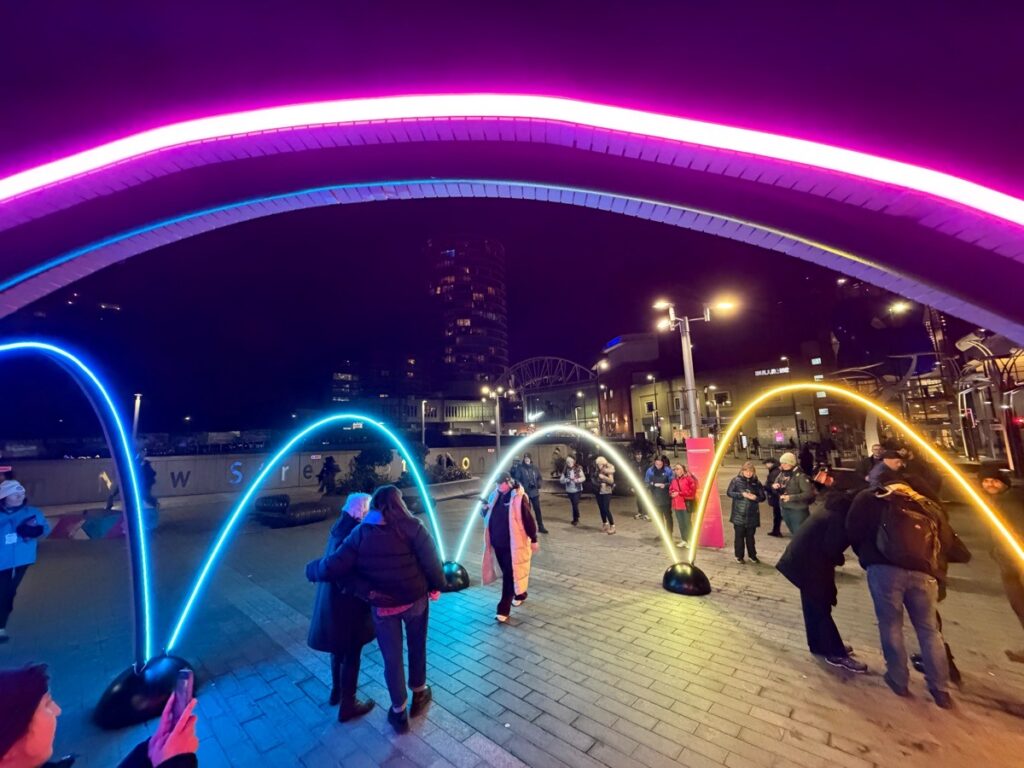
Reunion Back to our walk and the 1,000 trades square had arches of light symbolising connection between people. The colourful arches outside New Street station symbolised reunions and framed the streams of passing travellers. This was a dream place for street photography with light, movement, and real human moments all in one place.
Reunion Light Arches – Glowing archway installation near Birmingham New Street Station with people walking underneath.
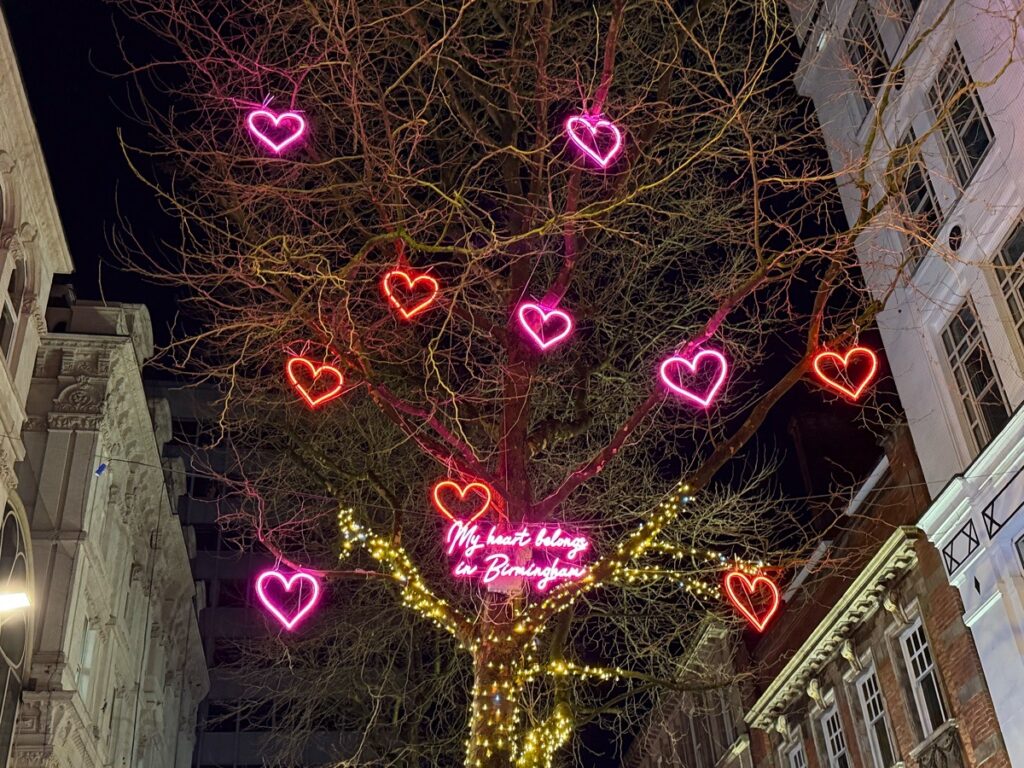
My Heart Belongs in Birmingham By now, my legs were protesting, but there was time for one final stop. Tucked into a tree near the Shakespeare pub were glowing hearts withthe “Instagram-ready” slogan, “My heart belongs in Birmingham. We joined the long line of photographers capturing the same shot but it was worth it.
My Heart Belongs in Birmingham – Illuminated heart shapes hanging in a tree on Lower Temple Street.
Huge thanks to Nadia, Kasim, and Jack from IgersbirminghamUK for leading such an energetic tour of the Birmingham Light Festival. Covering that much ground and that many installations in one evening was seriously impressive.
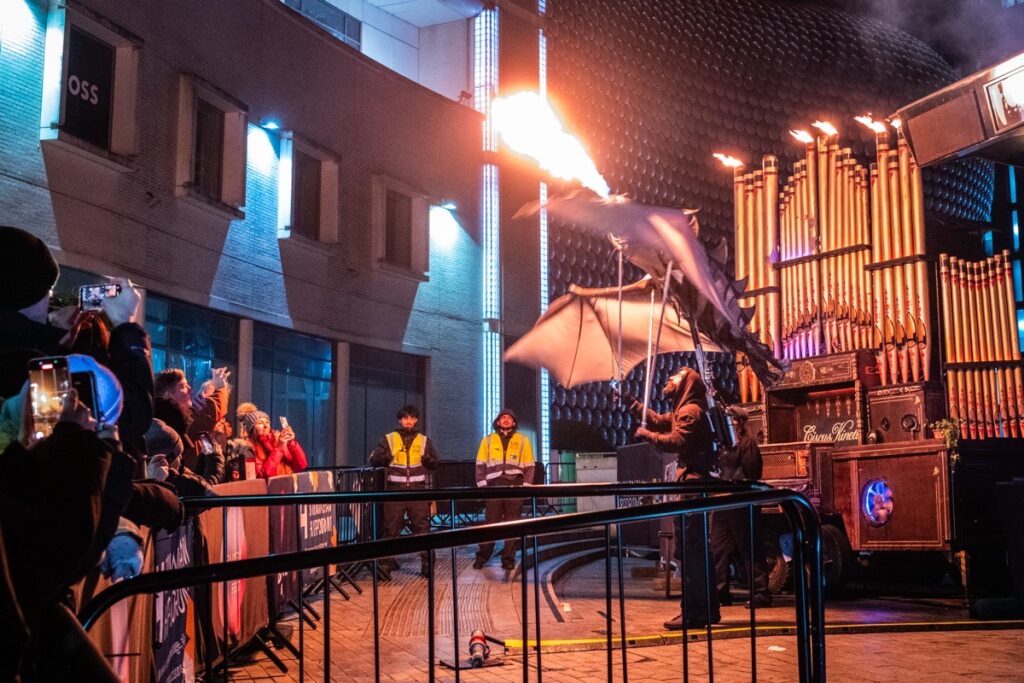
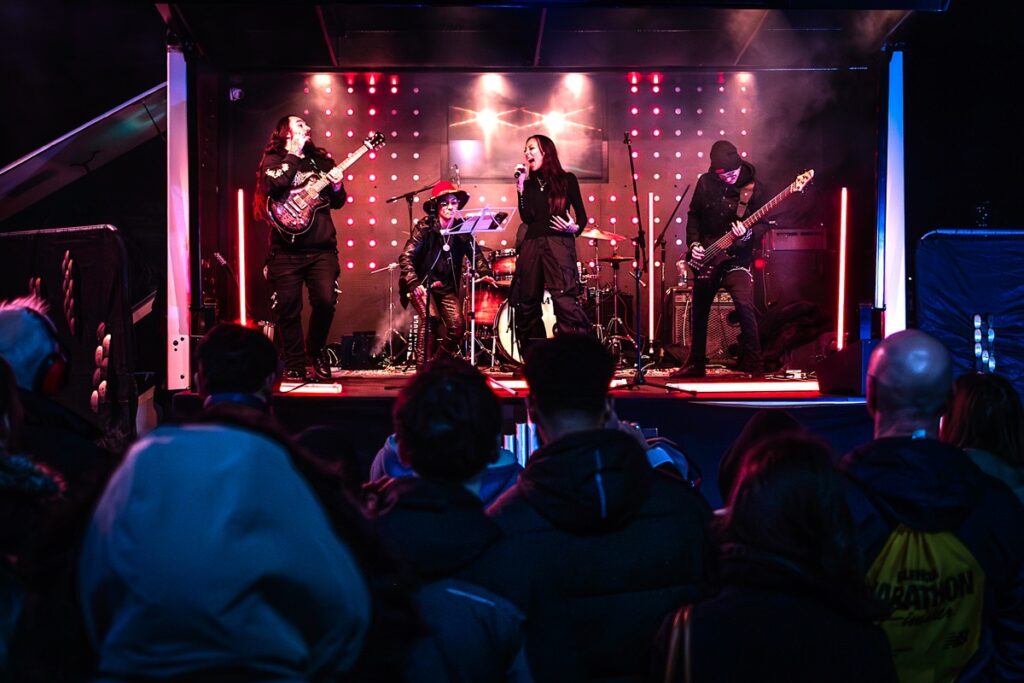
FORGED I returned the following night to catch a fiery animatronic installation featuring pounding industrial music (Insurgent), flame effects, and dramatic mechanical movement. It perfectly captured Birmingham’s industrial heritage brash and noisy, it was spectacular and impossible to ignore.This year’s festival clearly built on the success of the first. If this is the direction that the Birmingham Light Festival is heading, then it will be a highlight of Birmingham’s winter calendar for years to come.
FORGED – Fiery animatronic installation with flames and industrial lighting effects at Birmingham Light Festival.The fire breathing bat at FORGEDInsurgent playing at the FORGED art installation. I would love to hear them again.Insurgent at FORGED
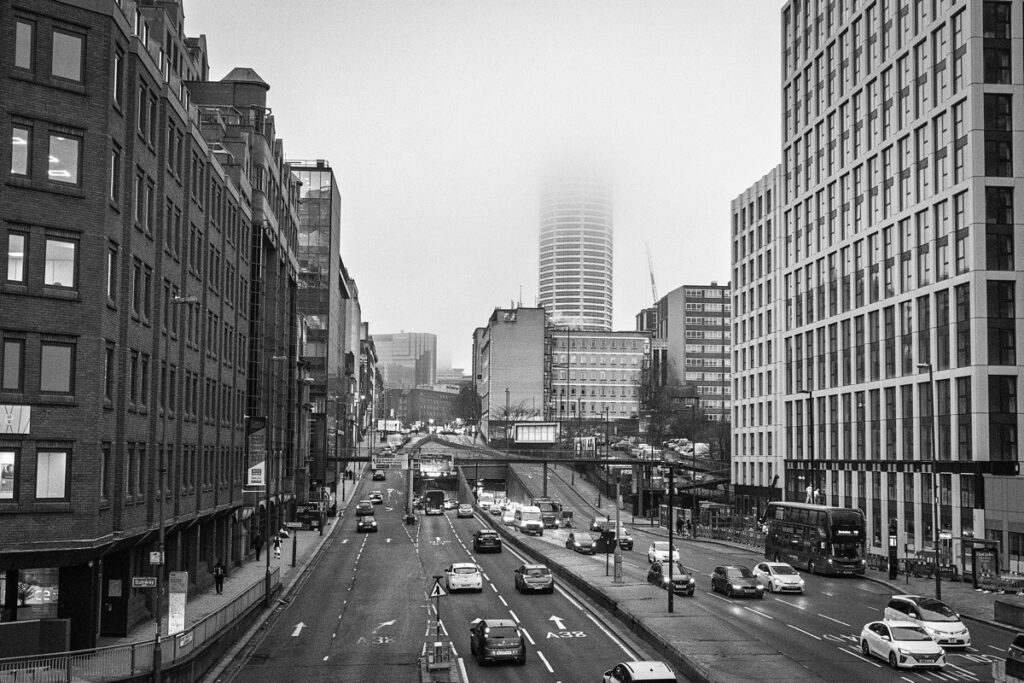
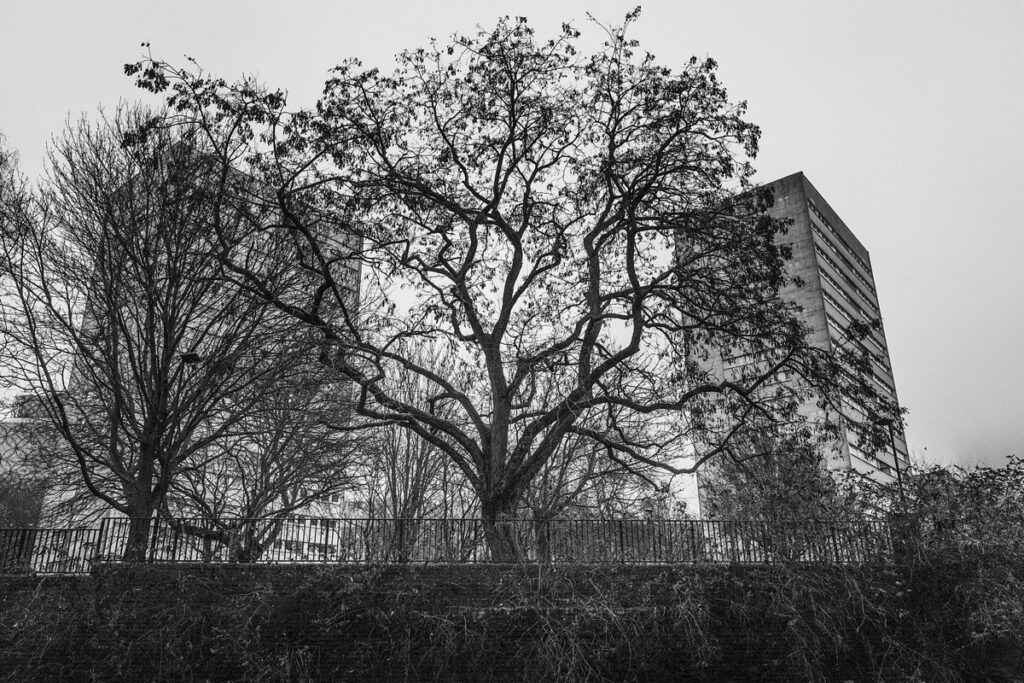
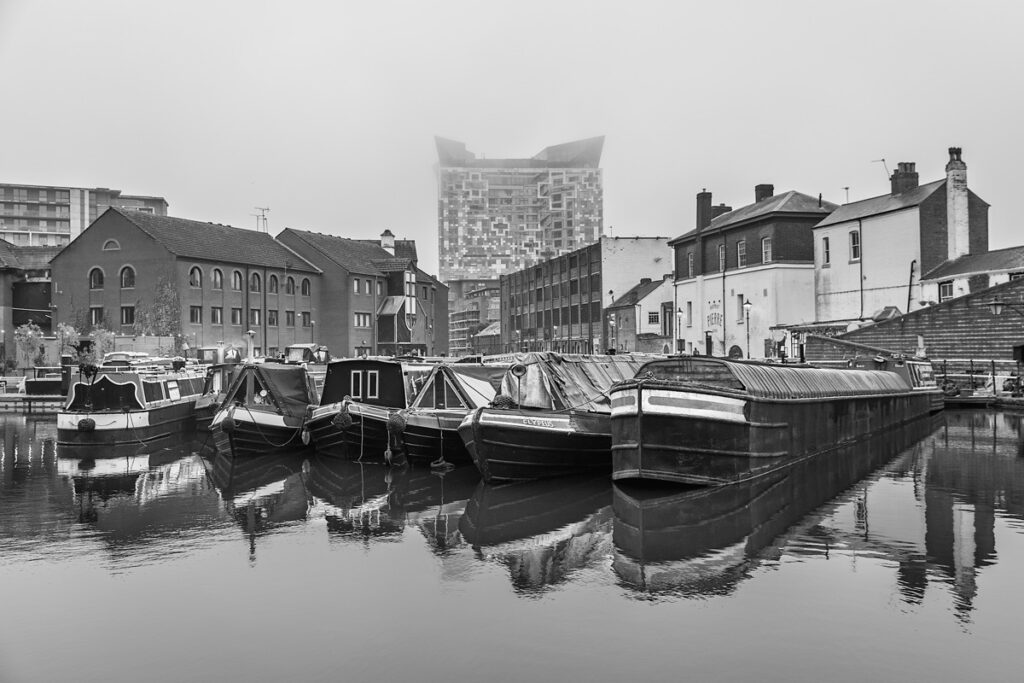
The day was black and white, and the Birmingham weather matched the mood. A dull sky hung overhead as mist rolled in, partially obscuring several buildings along the way.
The area of my journey at Snow Hill StationThe tree branches out and covers the tower blocks
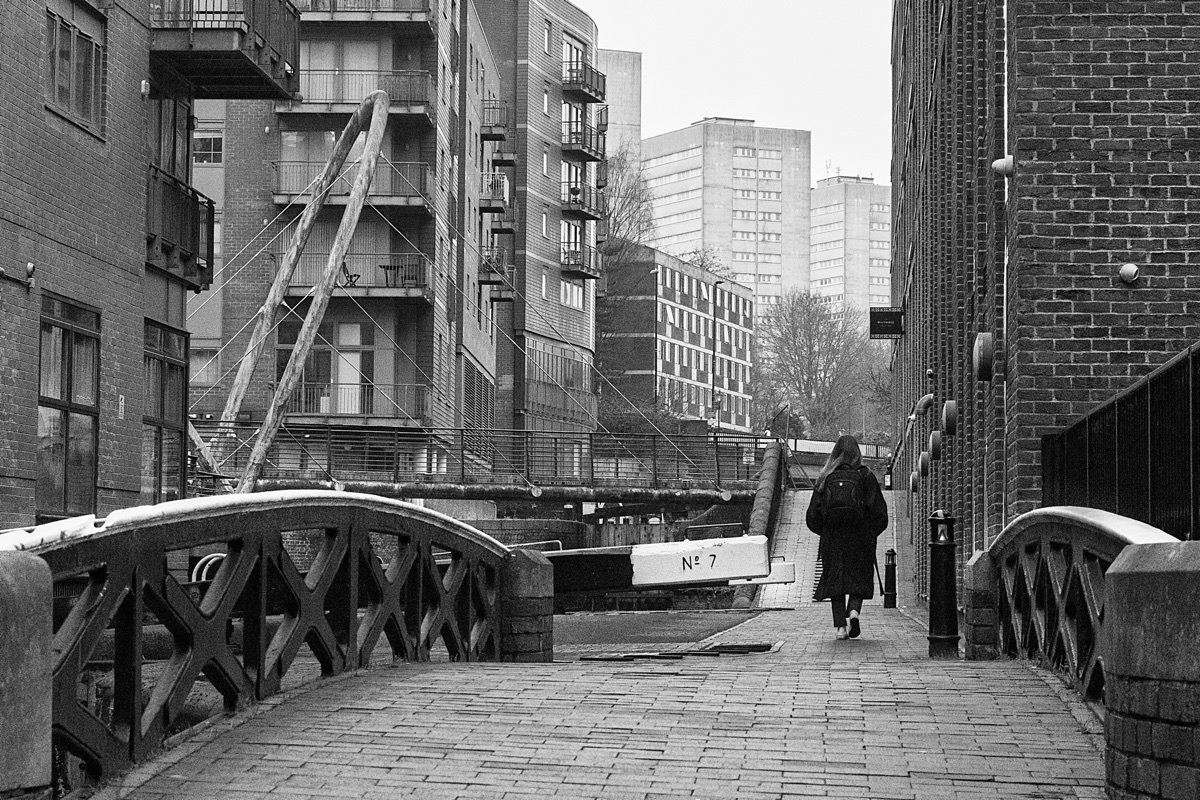
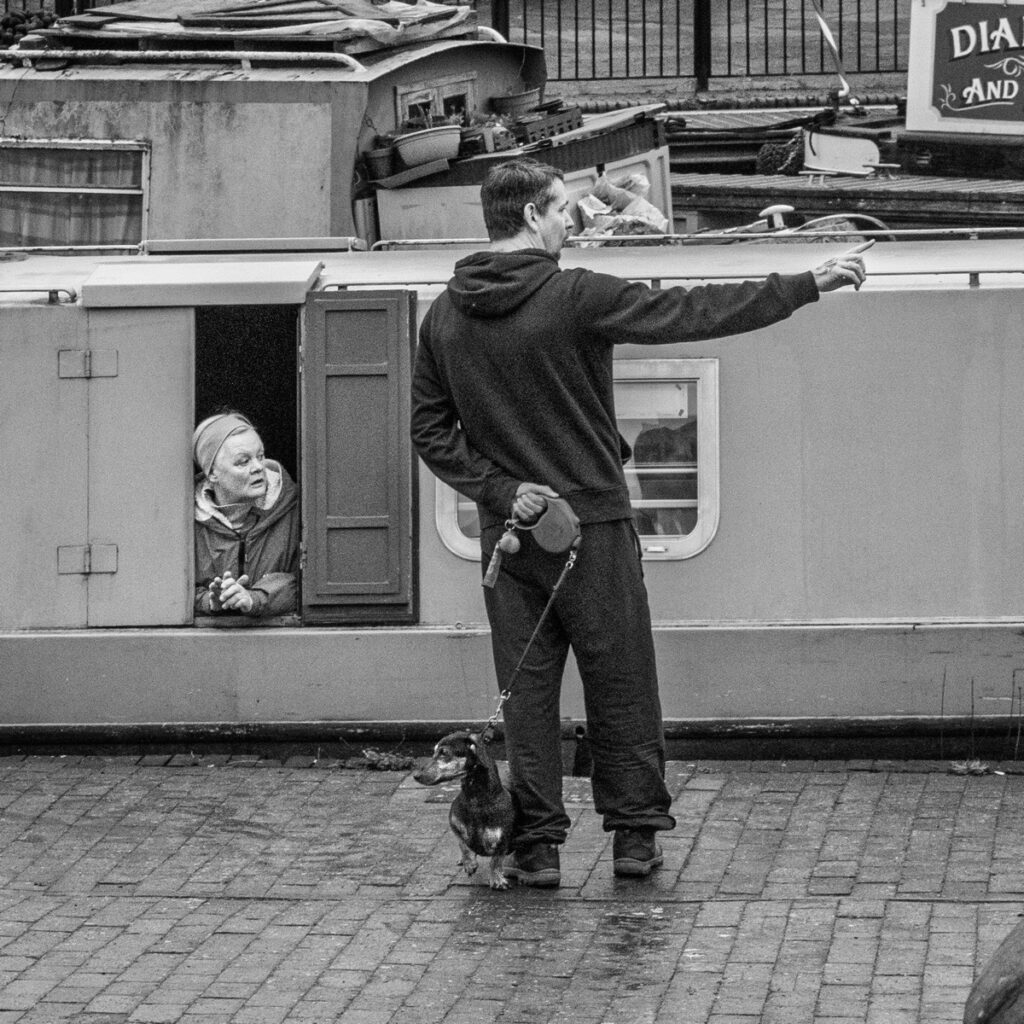
Walking beside the Birmingham Canal Navigations, the mist created a stark, atmospheric view of the city. I found the conditions ideal for photography, with a strong black and white theme naturally emerging in my images.
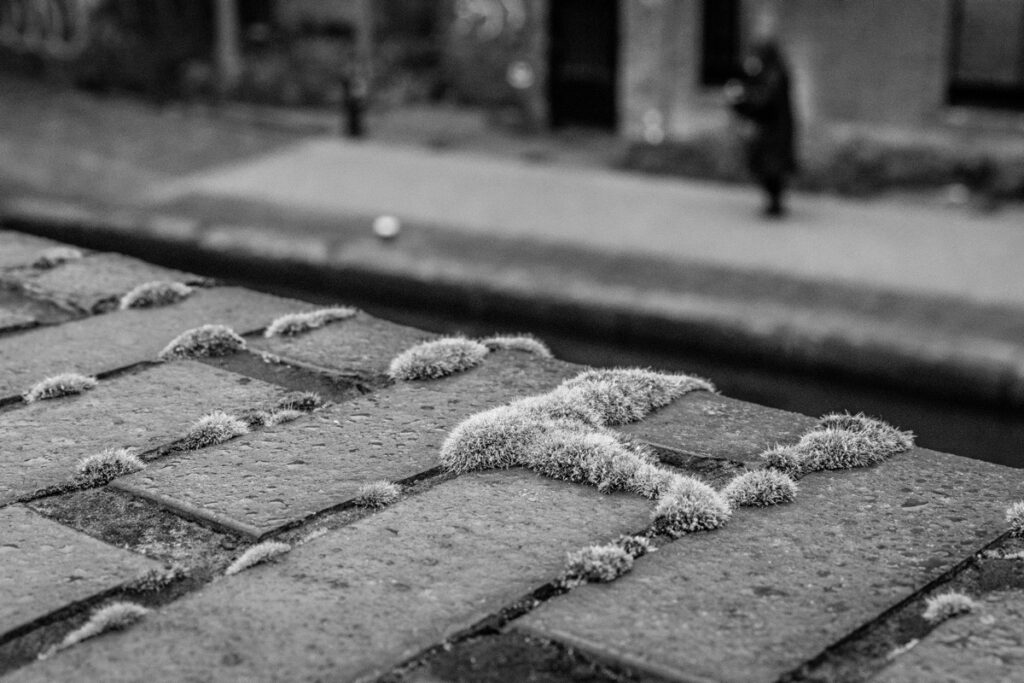
Pointing the way to what is happening in Birmingham.A close up of the moss on the brickwork around the canal
I was using what I like to call my big camera, a Canon R6 Mark II. Paired with a fast zoom lens, it’s a setup I’m comfortable with, although it’s not something you can slip into a coat pocket like a compact camera. Because of that, I was careful not to keep the camera out from under my coat for long periods.
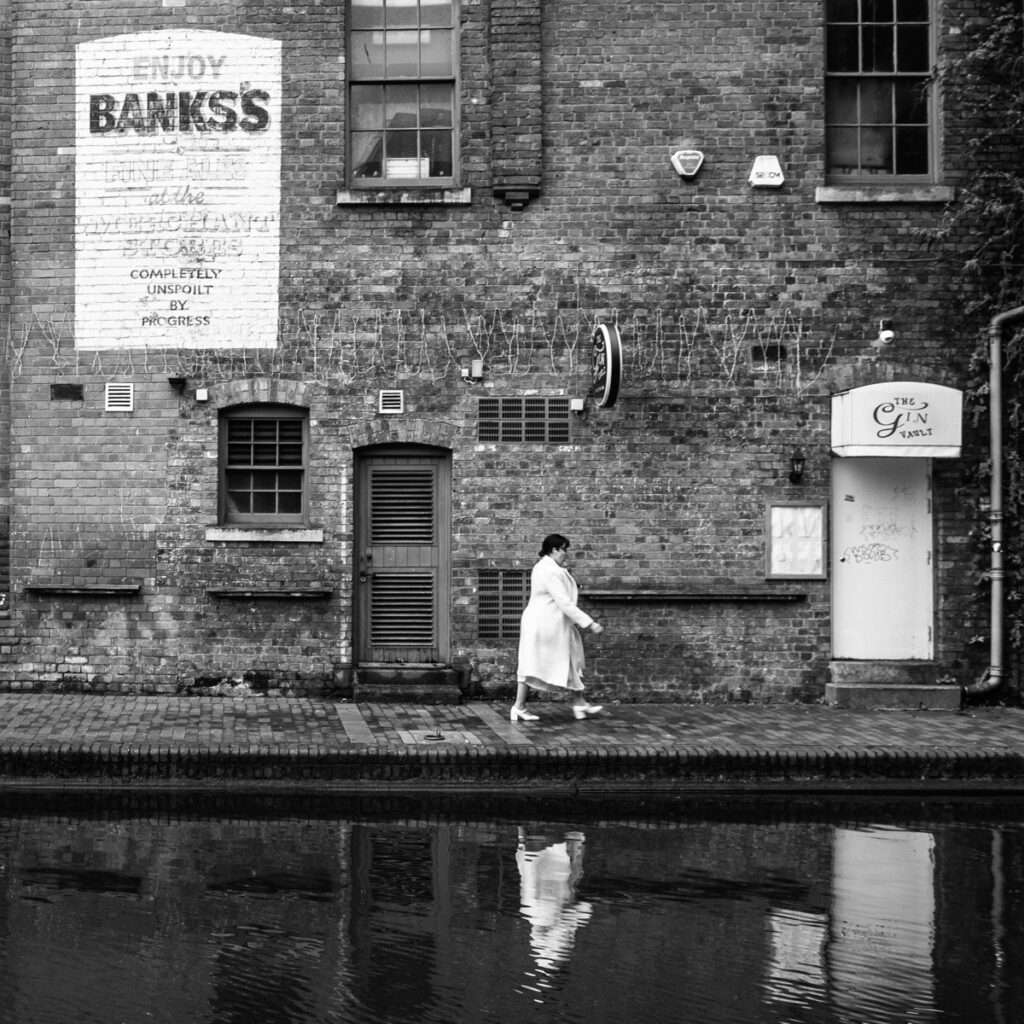
I saw this person with a white coat and she lined up perfectly with the surround viewsA classic view of the Gas Street Basin
During those brief moments when I did take it out, I looked for both unusual and familiar views of the canals focussing on the black and white. The walk from Snow Hill to Gas Street Basin was an enjoyable one, and the photographs reflect that journey through Birmingham in misty, monochrome conditions.
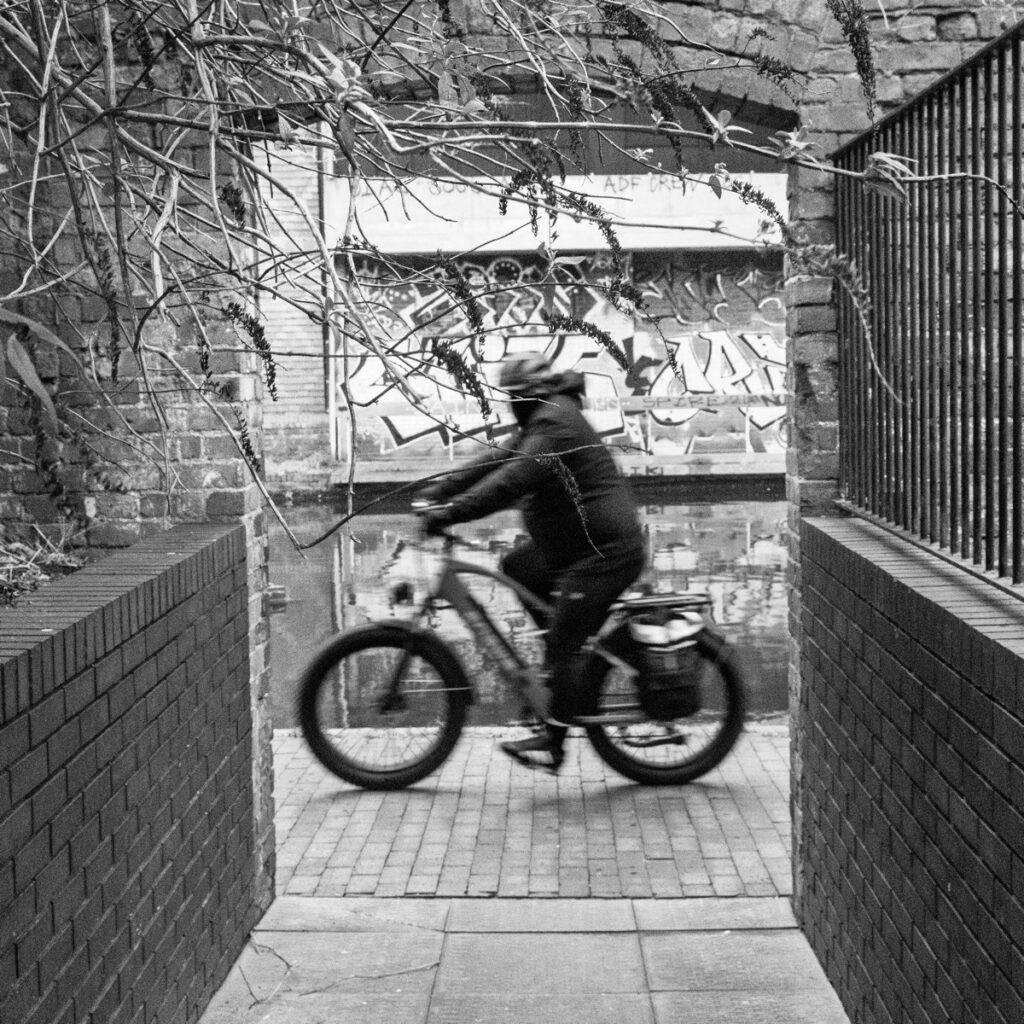
A cyclist goes past at speed just off Water Street.
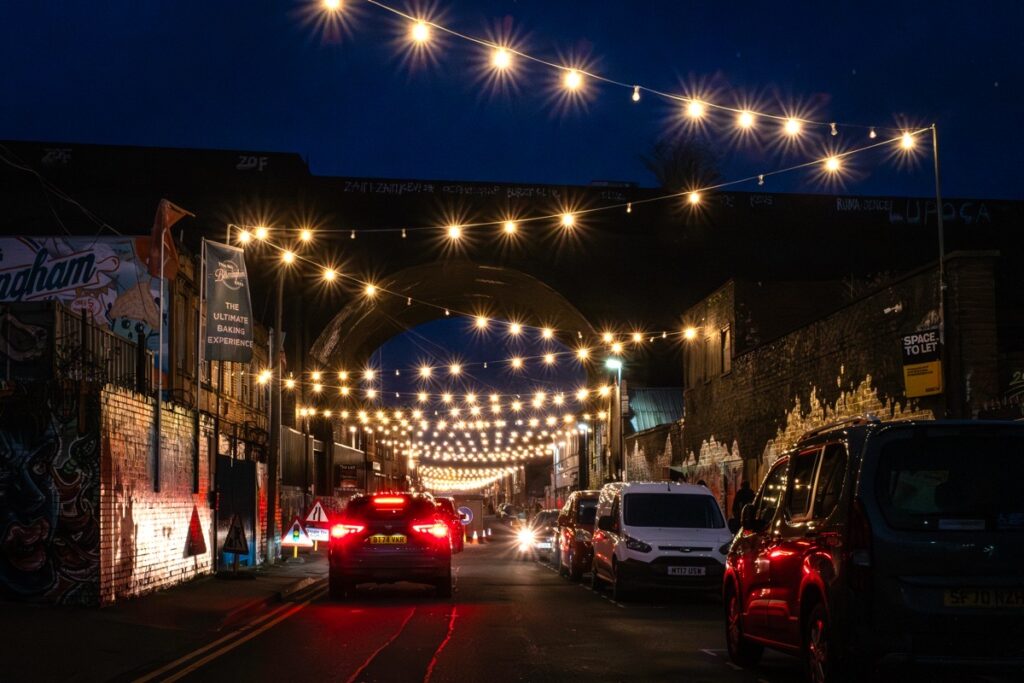
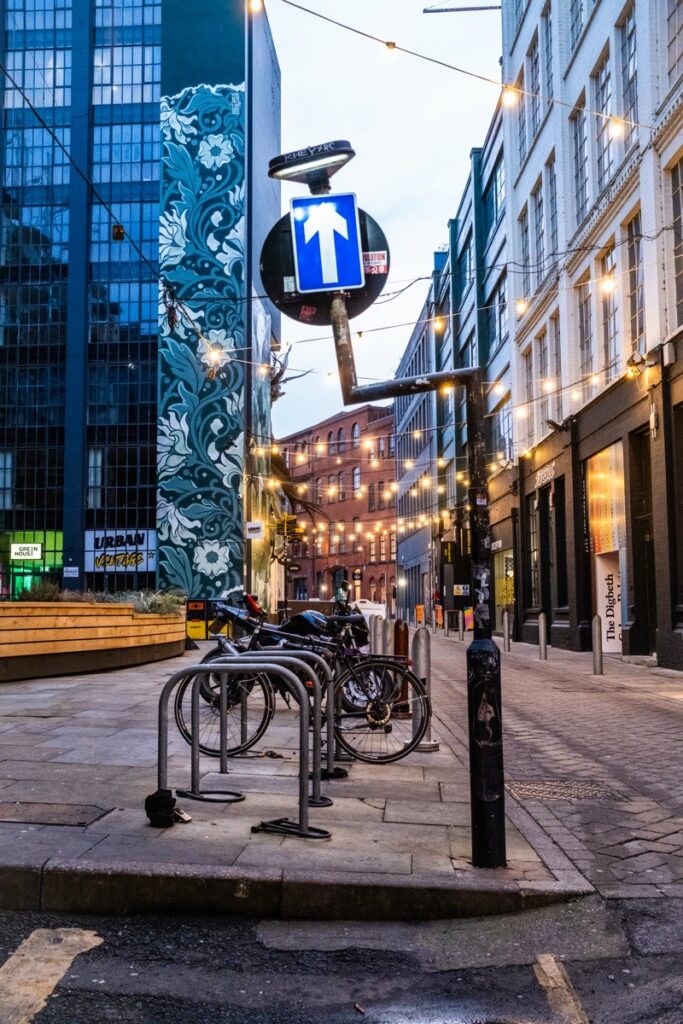
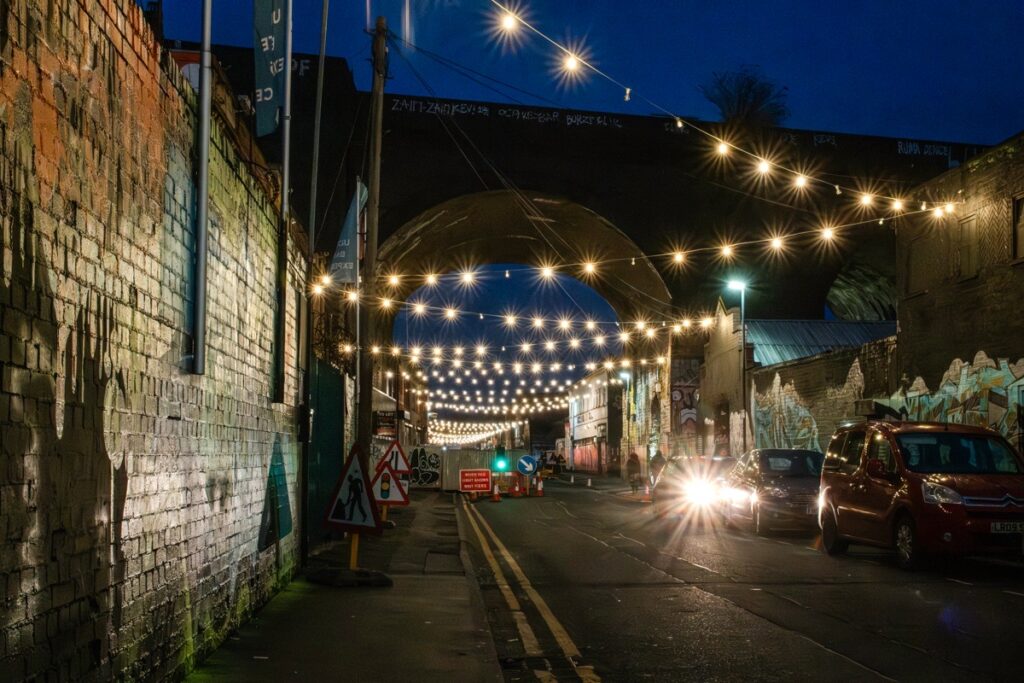
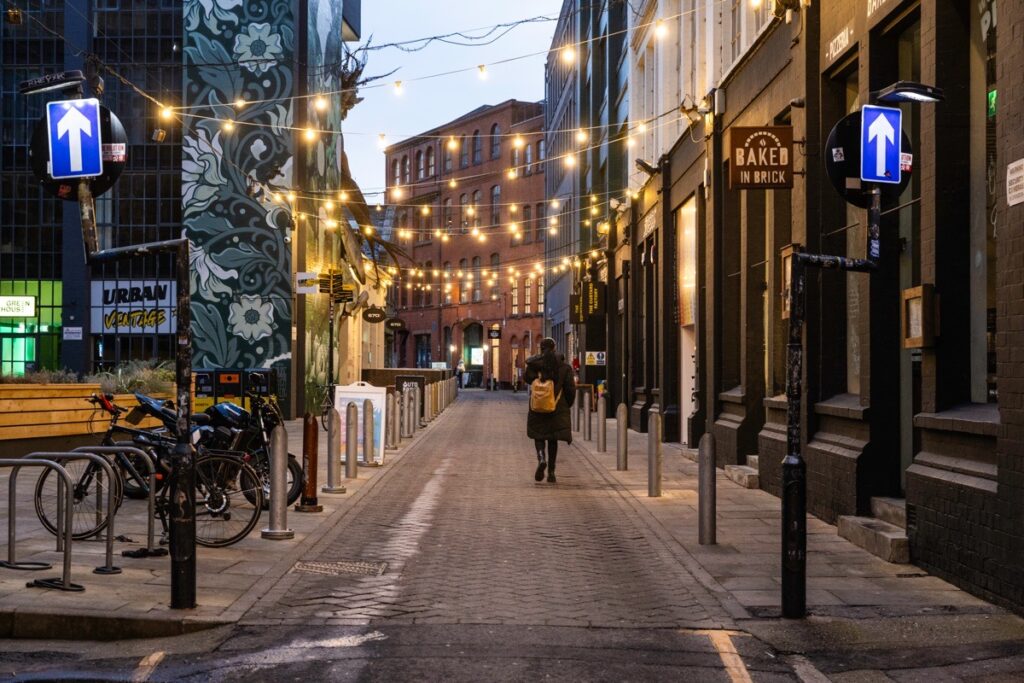
January offers many advantages when photographing Digbeth. The sunset lines up along many of the streets, including Floodgate Street. The main thoroughfares through the area have lights strung across the sides of buildings. The combination of the yellow lights and the blue-hour skies makes for a pleasing picture. My blog has photography of my visit last year.
Blue Hour in Digbeth: Winter Street Photography at Sunset
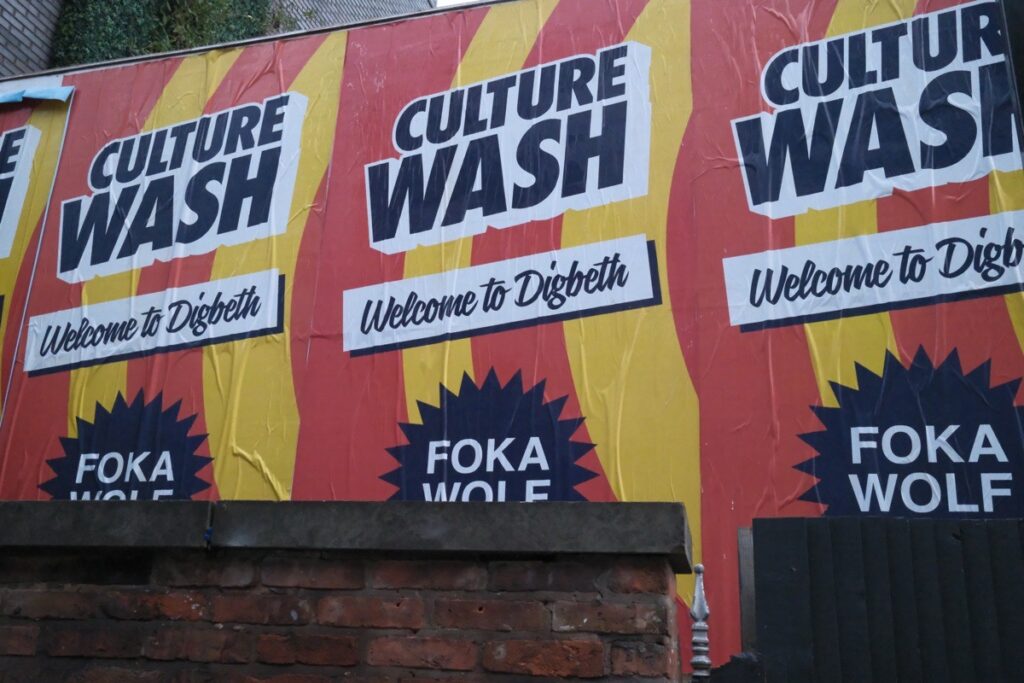
When I arrived in Digbeth, I was despondent, as there were roadworks under the railway arches and traffic light controls were in place. This was going to spoil the aesthetics of my pictures. I walked around the familiar sights along Gibb Street and Floodgate street. I took photographs of the murals and other interesting features. I like the satirical messages from Fokawolf and his posters were in the garden of the Old Crown. There is so much to see in Digbeth.
One way directions along Gibb Street.The artist Fokwolf and his poster on culture wash.
As the sunset began, there were some colours in the sky, which helped create a suitable backdrop. The light faded further, and the yellow lights above became more prominent. The blue hour was well underway, and the bright lights shone strongly overhead. I found that the roadworks had turned to my advantage. The traffic lights made the cars slow down and stop. The green, red and yellow lights added colour to the scene.
The cars go slow for the roadworks in Floodgate Street
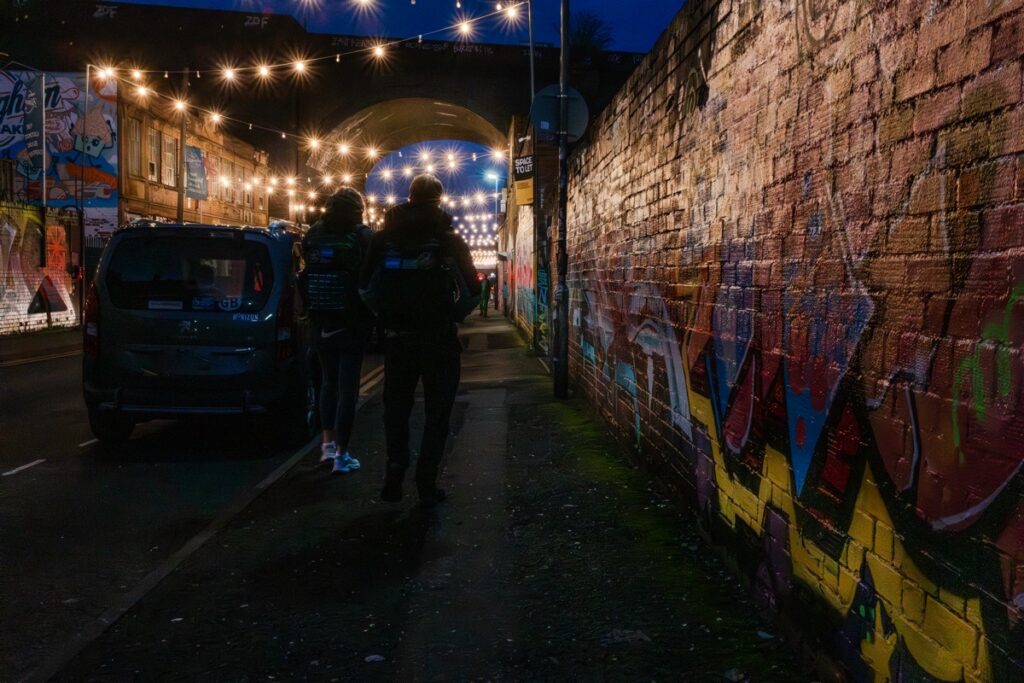
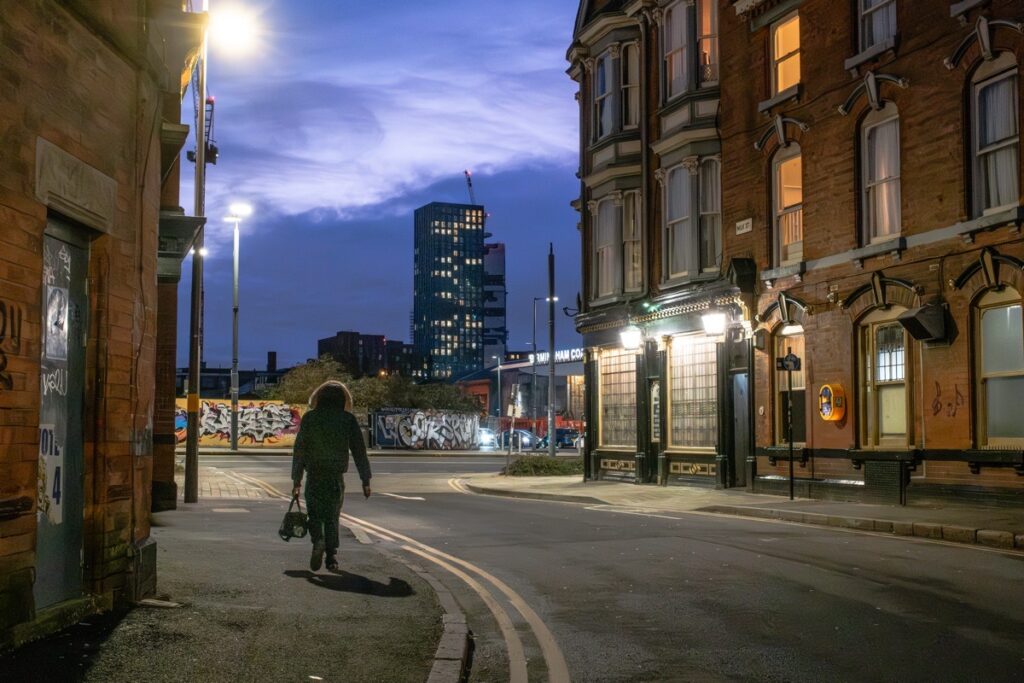
Young people had finished at the local colleges for the day and added their silhouettes to the street scenes as they blocked the bright lights from the cars. Some of the street art appeared to come alive, as the silvers and yellows jumped out when stray light caught the paint.
Silhouettes on Floodgate Street.The long walk along Gibb Street.
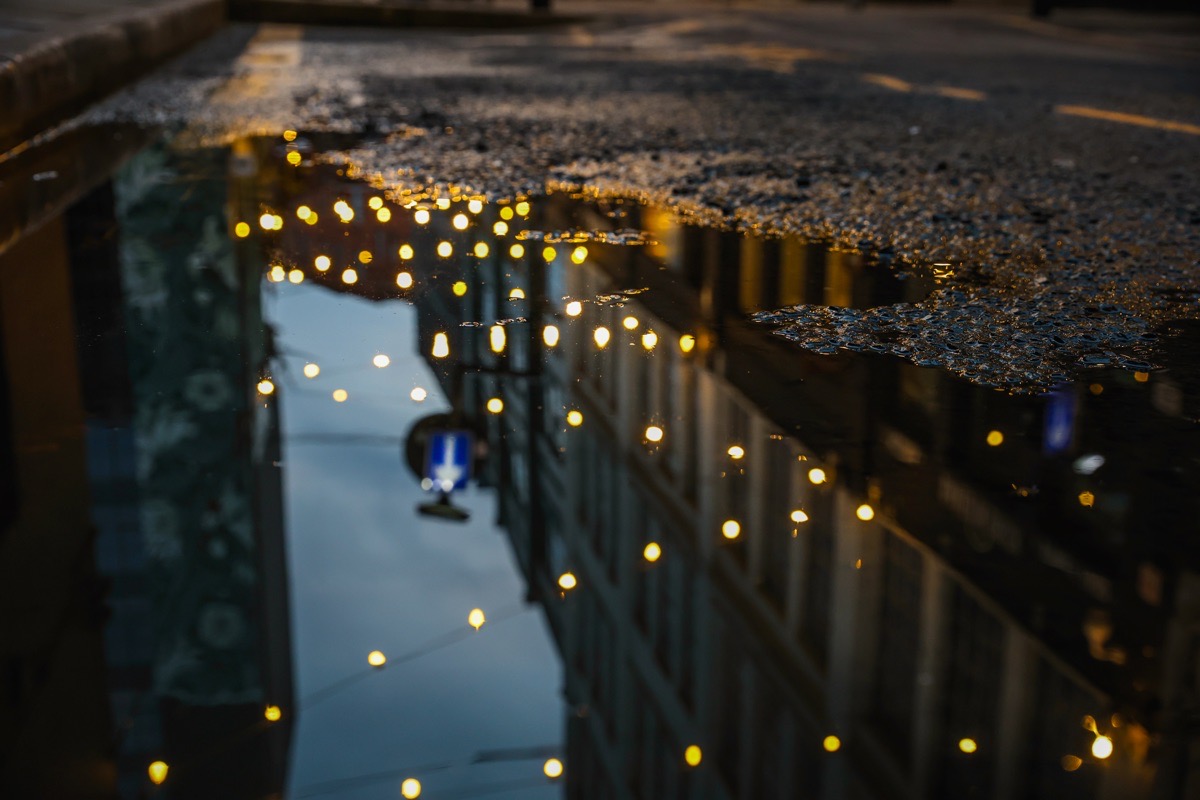
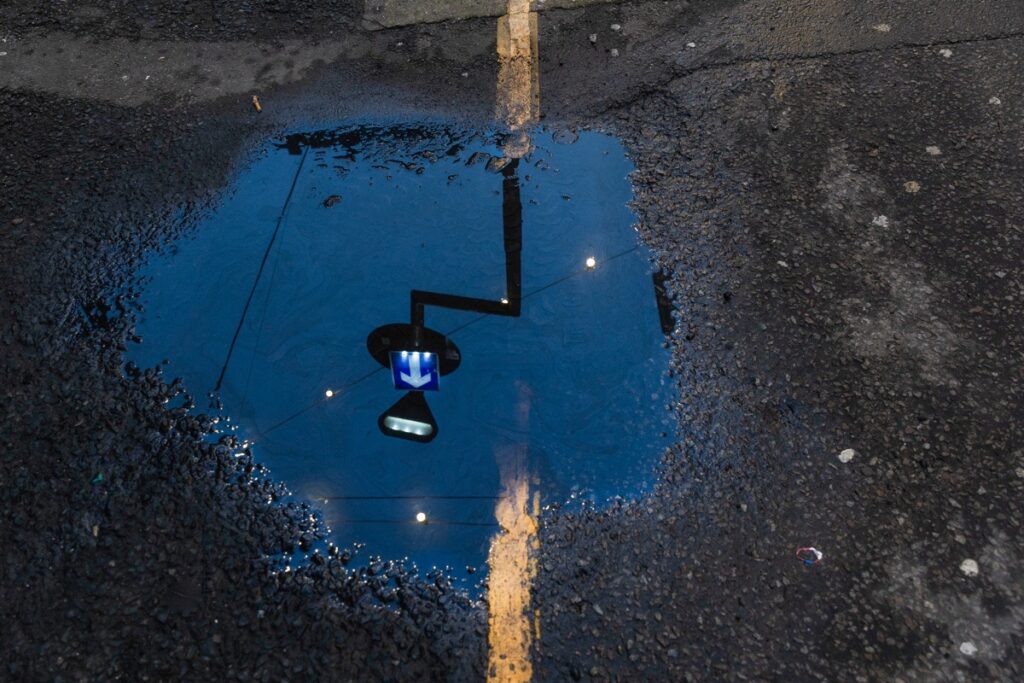
There is a classic puddle that is ever-present at the end of Gibb Street. I am aware that the area has a high water table, but this may simply be a blocked drain. I enjoy seeing this puddle, as I like photographing reflections. Using the reflections, I captured several images that were different from those I had taken before. I was able to catch more of the Digbeth lights.
Blue Hour reflections in the puddles of Gibb Street.On the way home
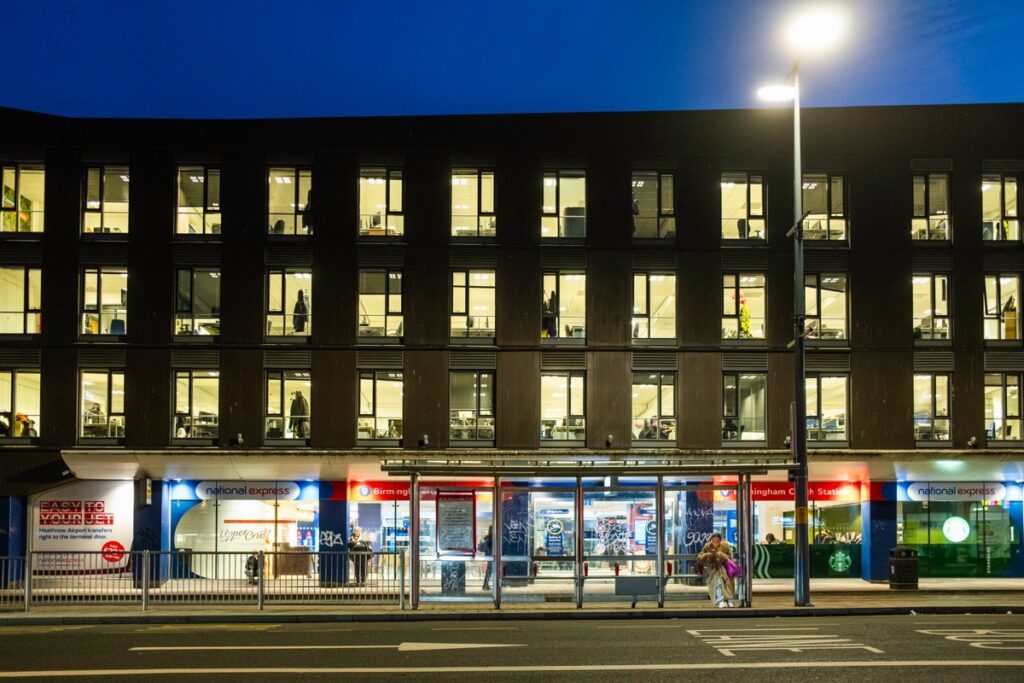
I returned to Floodgate Street and captured the lights, people, and buildings against the blue-hour sky. Pleased with the results, I walked back towards Moor Street. On the way, I noticed the bus station fully lit and, of course, took a few photographs of the scene. As I reflected on the train, photography in Digbeth always delivers.
Waiting for the bus at the bus station.
Digbeth features a lot in my blog over the years and here are some links to get you up to speed with the area.
Snowfall at first light is an uplifting sight. The cold weather is welcome and the snow creates idyllic winter scenes. The long range weather forecast was predicting snow and the BBC weather watchers were getting very excited. On the night when the snow fell, pictures were flooding my social media feed as people ventured out to see the first flakes. I did not get drawn into going out as for me too cold! I would wait for the first light of the morning.
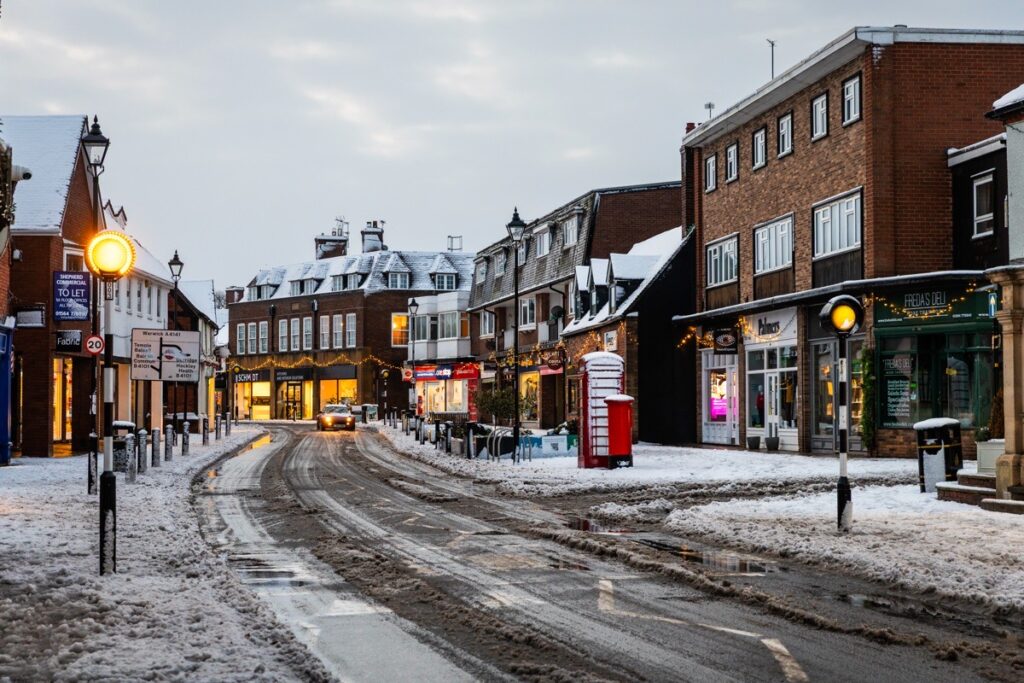
The classic view of Knowle High Street in the Snow
Walking through the park and already there were several snowmen. My goal was to get to the village highstreet and take what is for me the classic view up towards the shops. I used both iPhone and my Canon cameras to take the picture. The iPhone picture was uploaded immediately to the BBC weather watchers page.
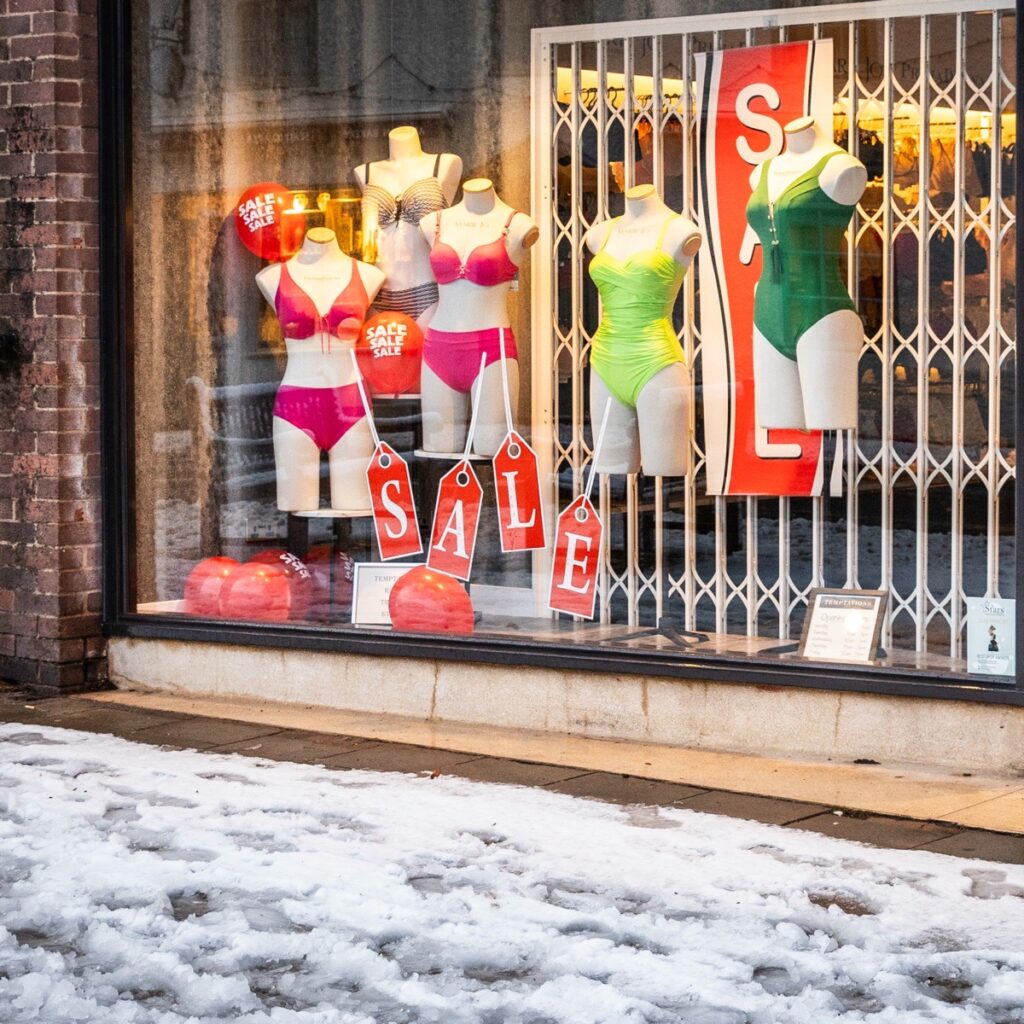
Looks a touch cold for Bikinis.
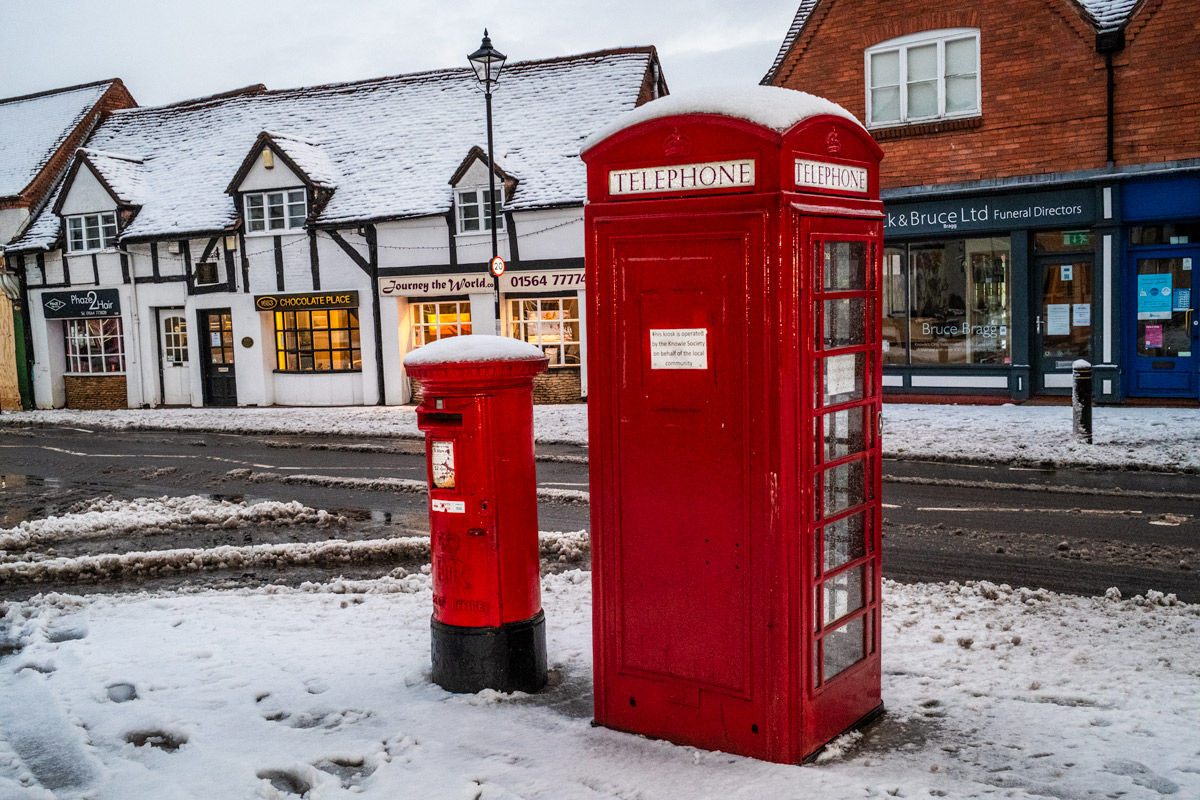
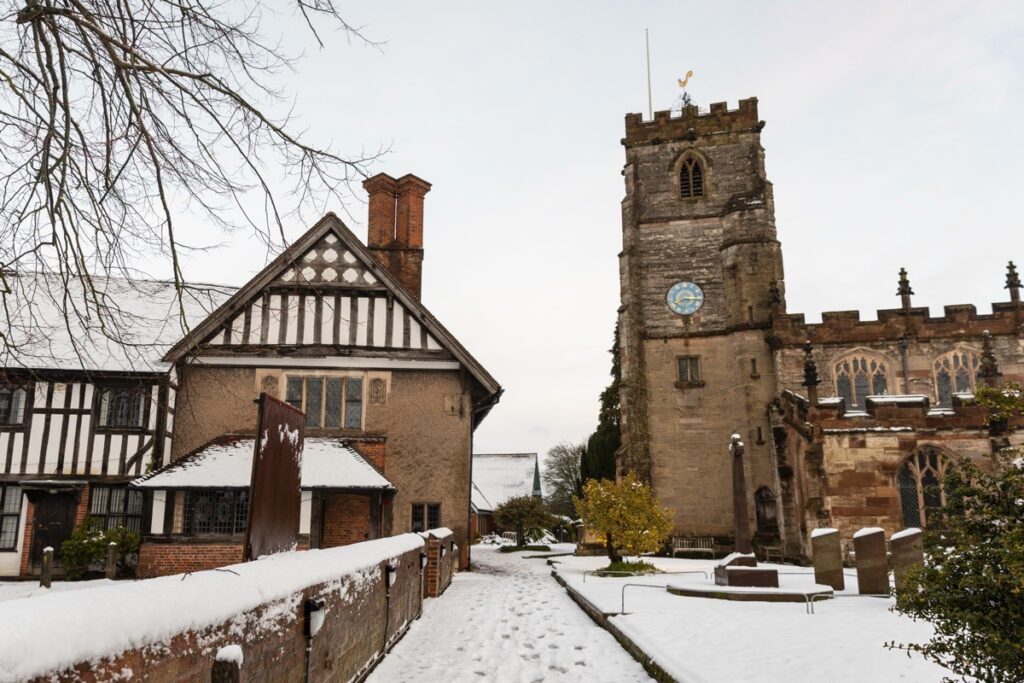
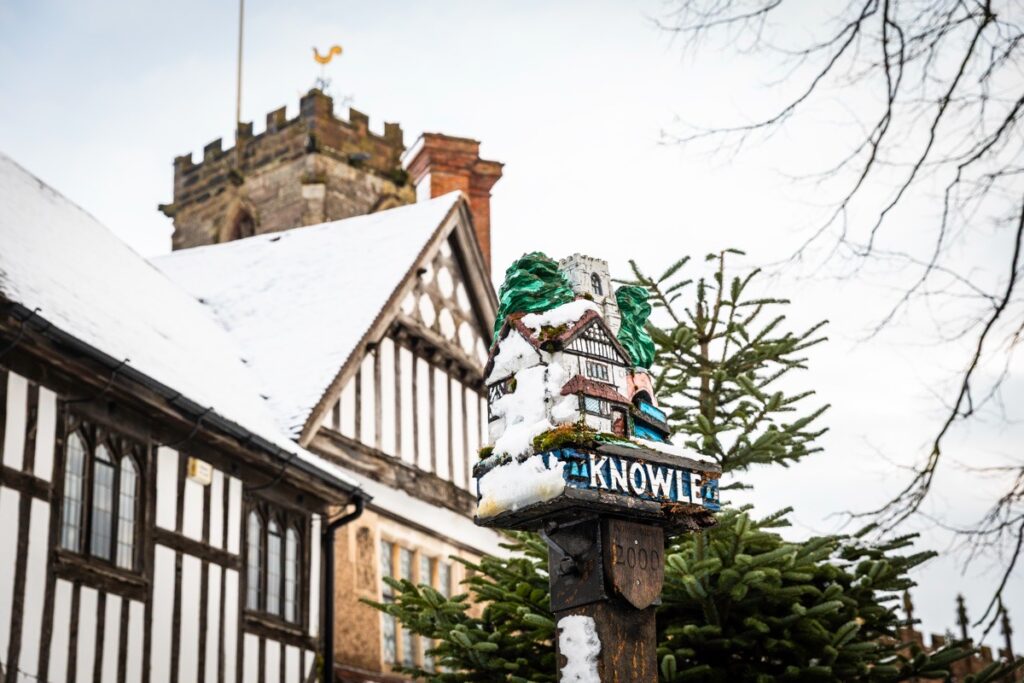
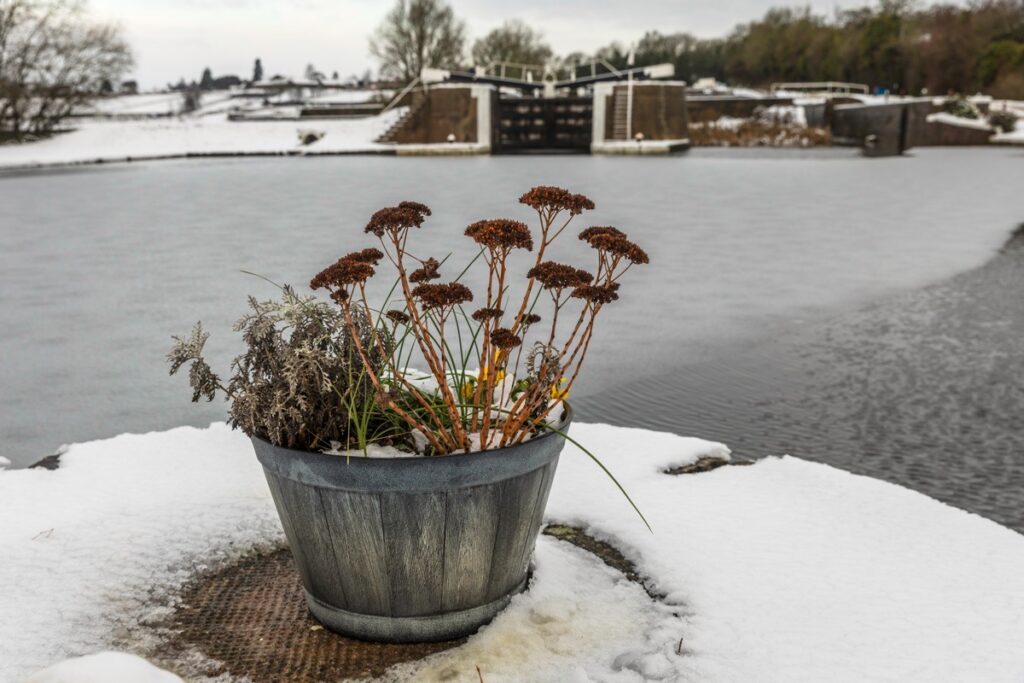
My next goal was the red pillar box and telephone box. The bright red contrasts well with the white snow and I spent several minutes photographing them. I went onto take pictures of Knowle Parish Church which dates to 1400 and always looks wonderful when snow has fallen. The Grand Union canal passes by Knowle and the large flight of locks was built to negotiate the hill. Knowle is an old English word for hill. The landscape around the locks was enhanced by the beginning of a sunset. The colours were short lived and when present lifted the landscape.
Knowle Church and the Guild House in the Snow.Knowle Village sign with the church and Guild house in the background.Knowle locks in the snowSnowman in Knowle Park
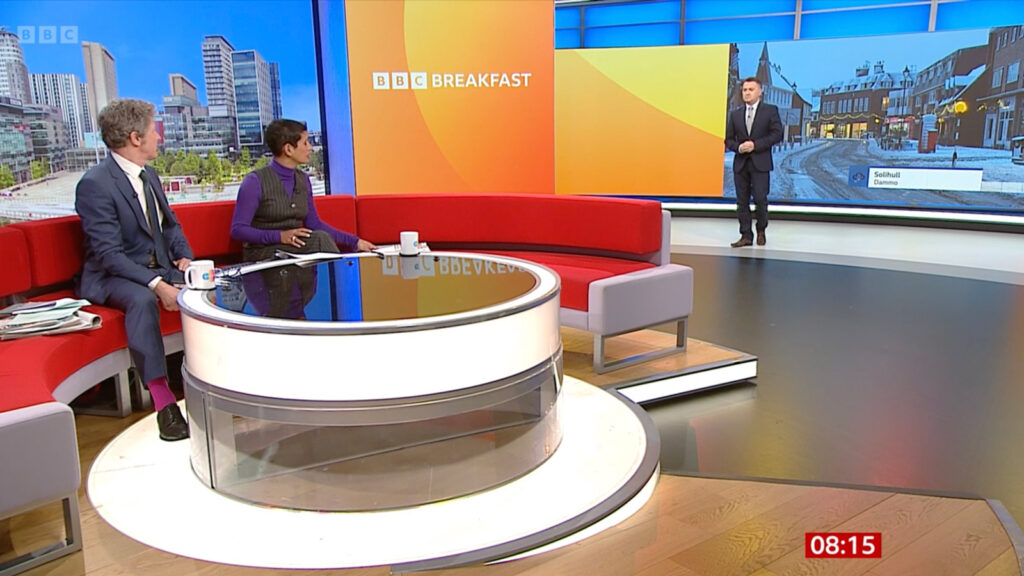
The cold weather was now taking its toll and I headed home for a hot cup of coffee. On the way back I found out from friends that my picture of Knowle High Street had been shown by Matt on Breakfast TV. This news made my trip worthwhile.
My snowfall picture of Knowle on BBC Breakfast time.
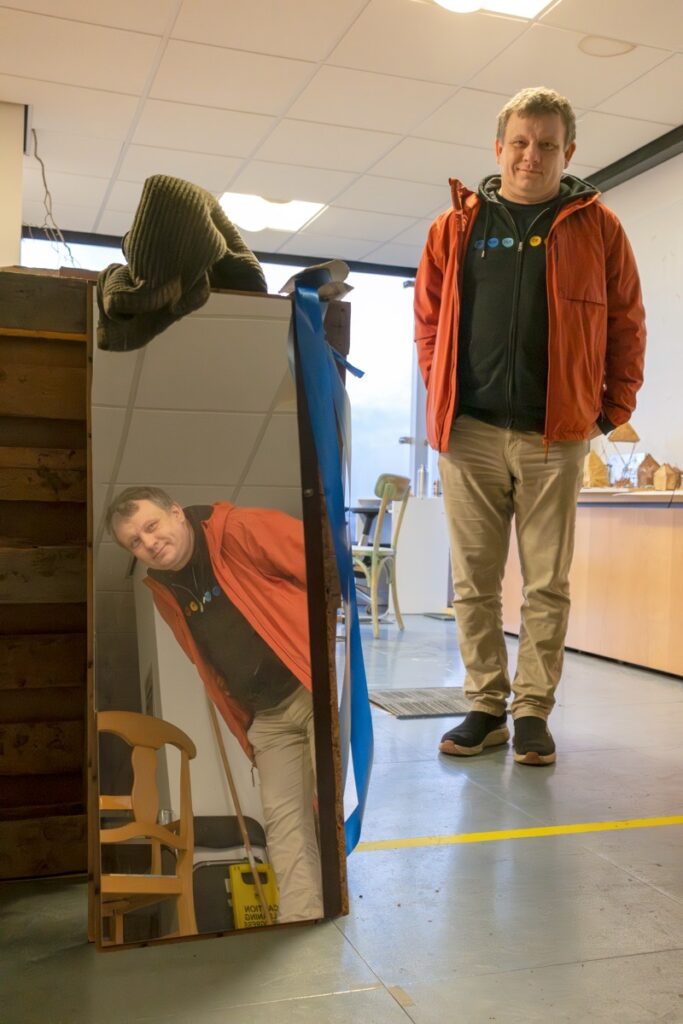
Marcin SZ has been leading Birmingham photowalks since 2020. An accomplished photographer, he shares his work on Instagram under Birmingham_Photography, capturing the city during the golden and blue hours in vibrant colour and bold black and white.
Marcin our host for the Birmingham photowalk
As part of my New Year’s resolution to explore new photographic opportunities, I joined one of Marcin’s photowalks. We met outside the Library of Birmingham, where a small group of photographers gathered before heading out to explore the city.
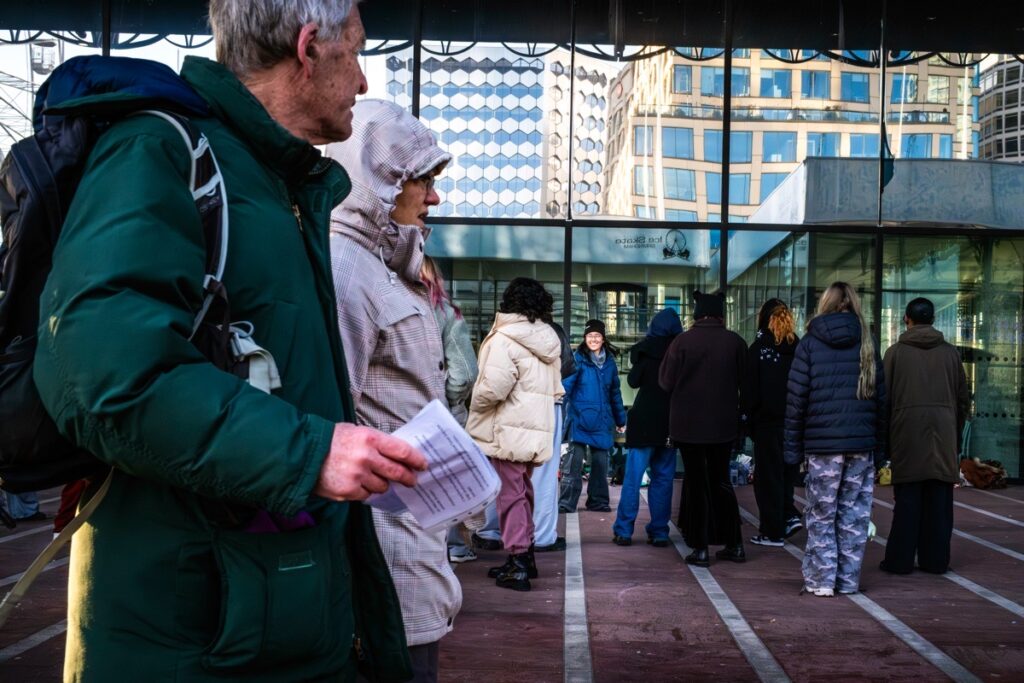
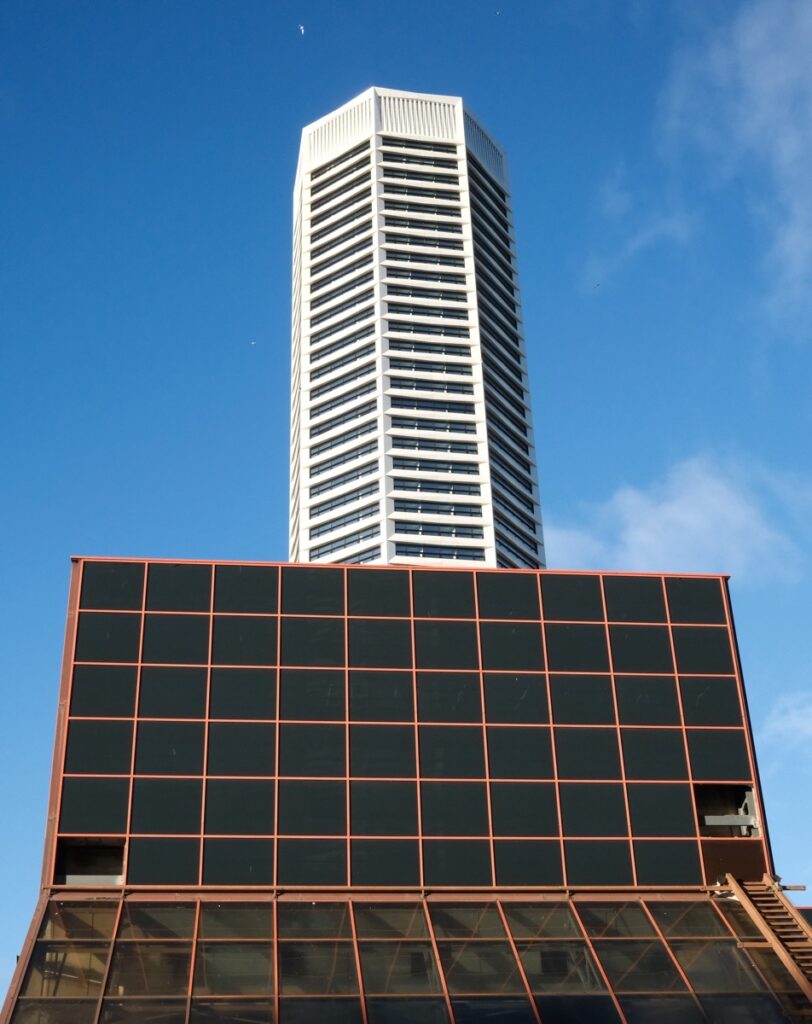
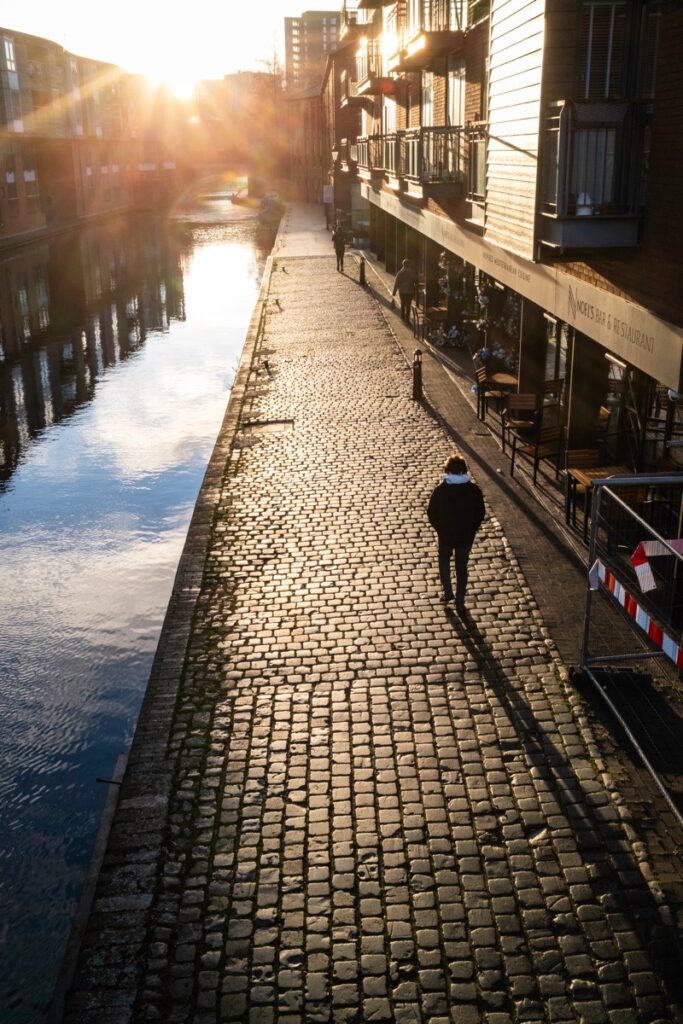
Dancers gather outside the windows of the Library to practice their routines. This causes bemusement to people passing by.A street cleaner creates a striking silhouette in the light.The brand new Octagon building towers over the former four-star Copthorne Hotel now scheduled for demolition.
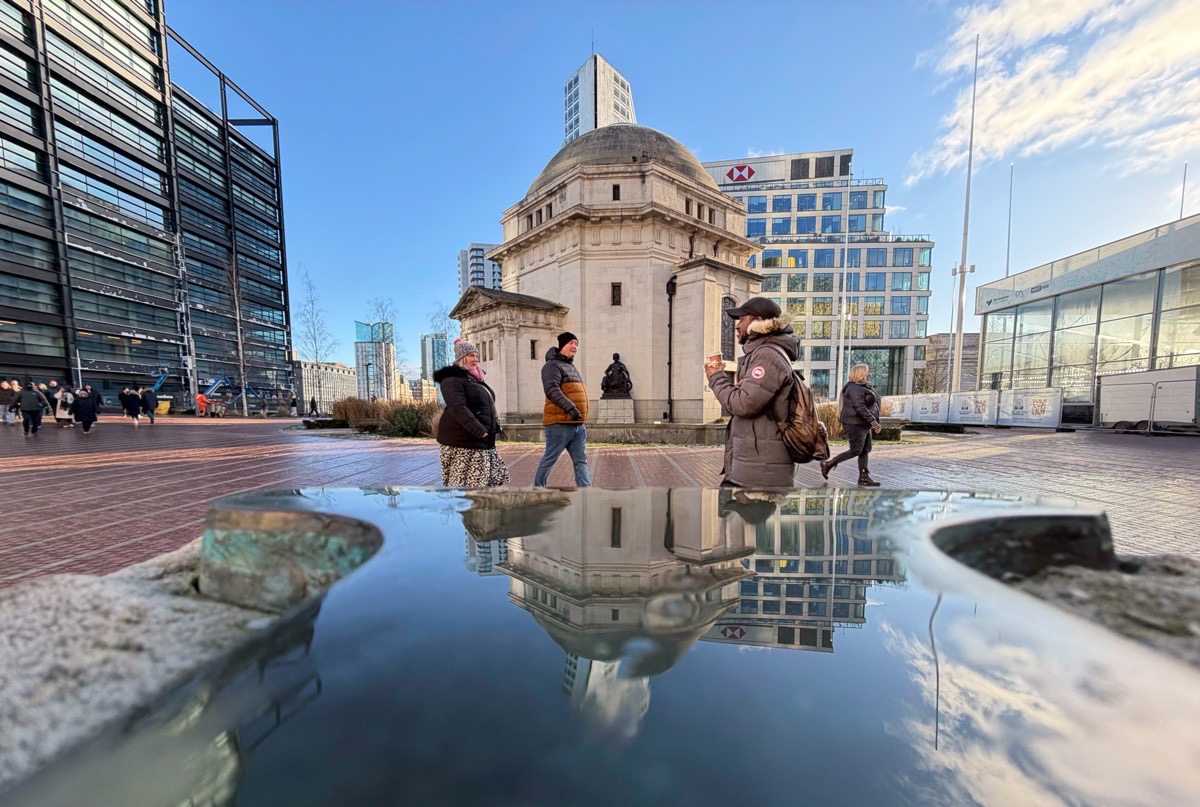
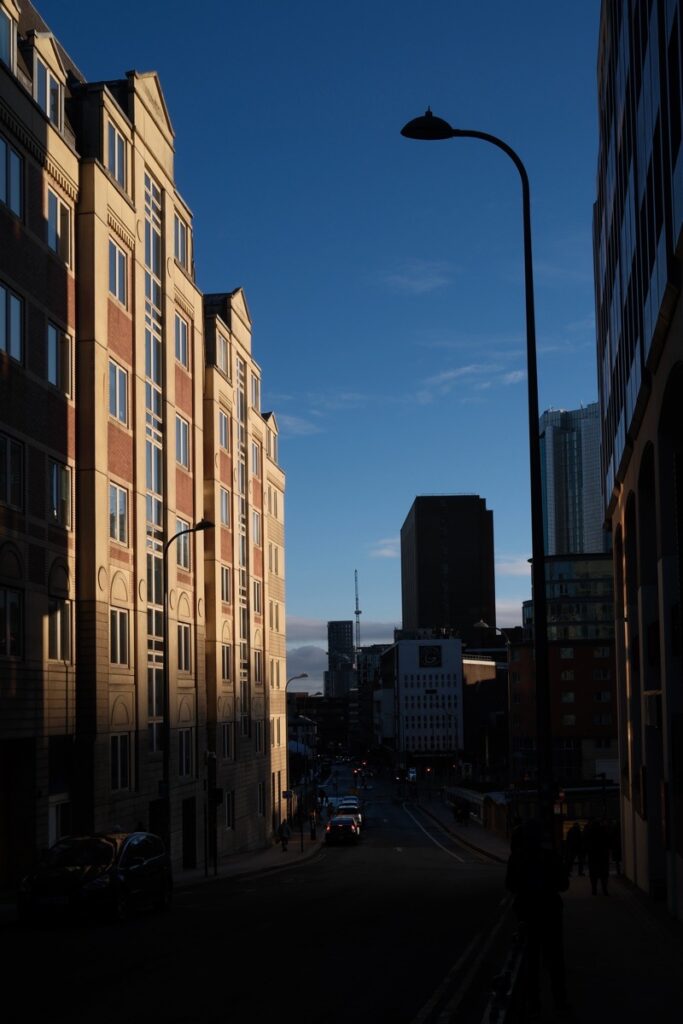
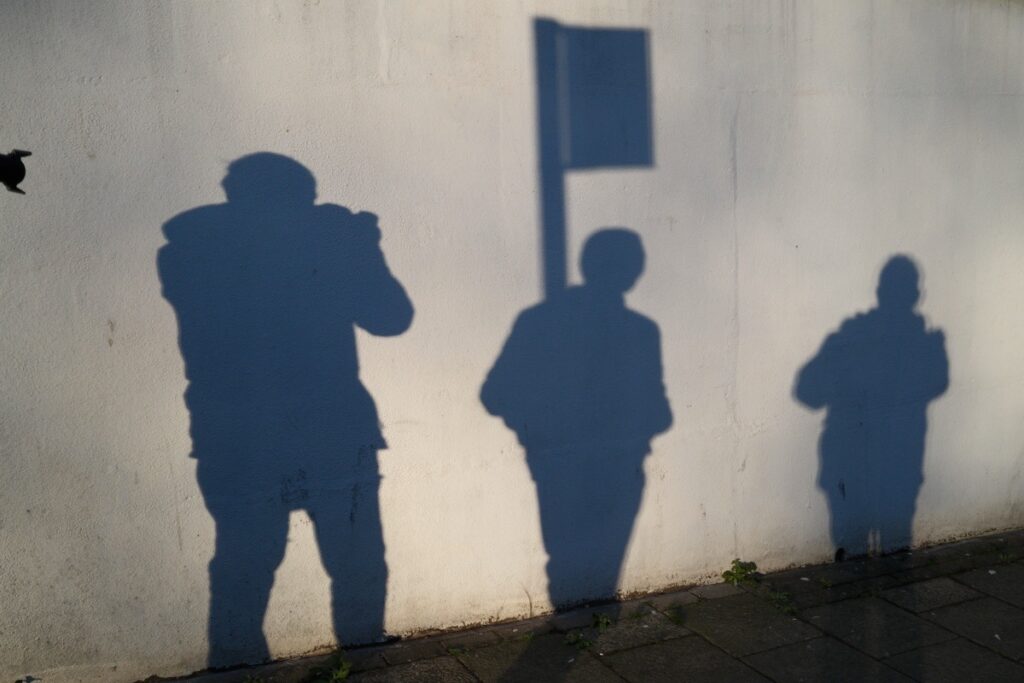
Despite the cold winter weather, Centenary Square was full of activity. The low afternoon sun reflected off the Library’s glass façade, creating long shadows and strong contrast—ideal conditions for street photography in Birmingham.
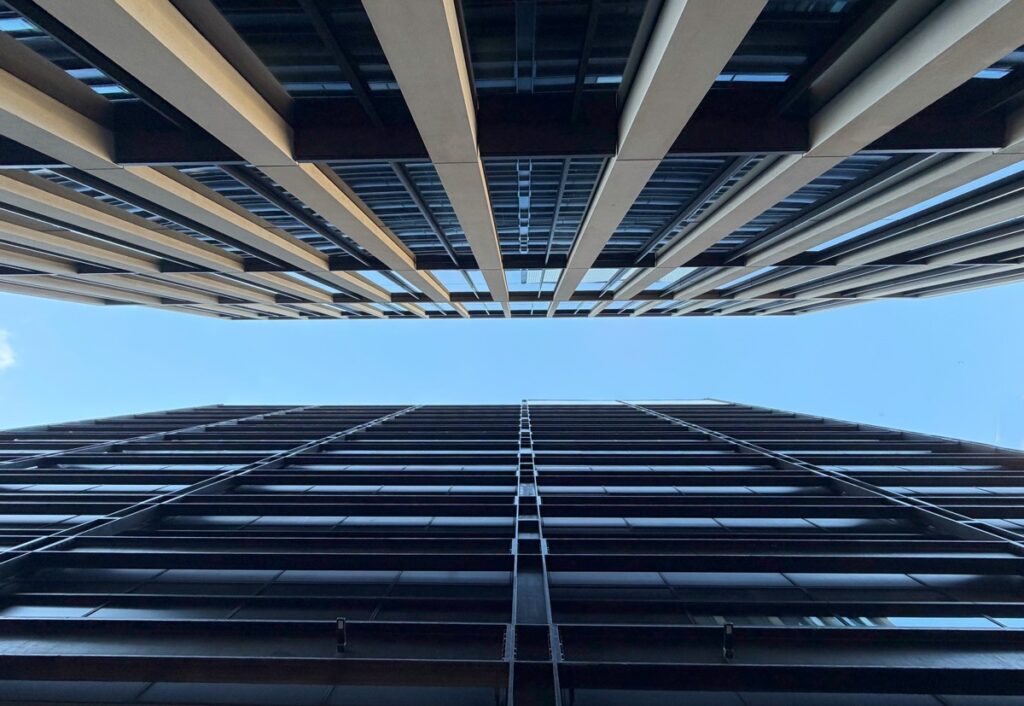
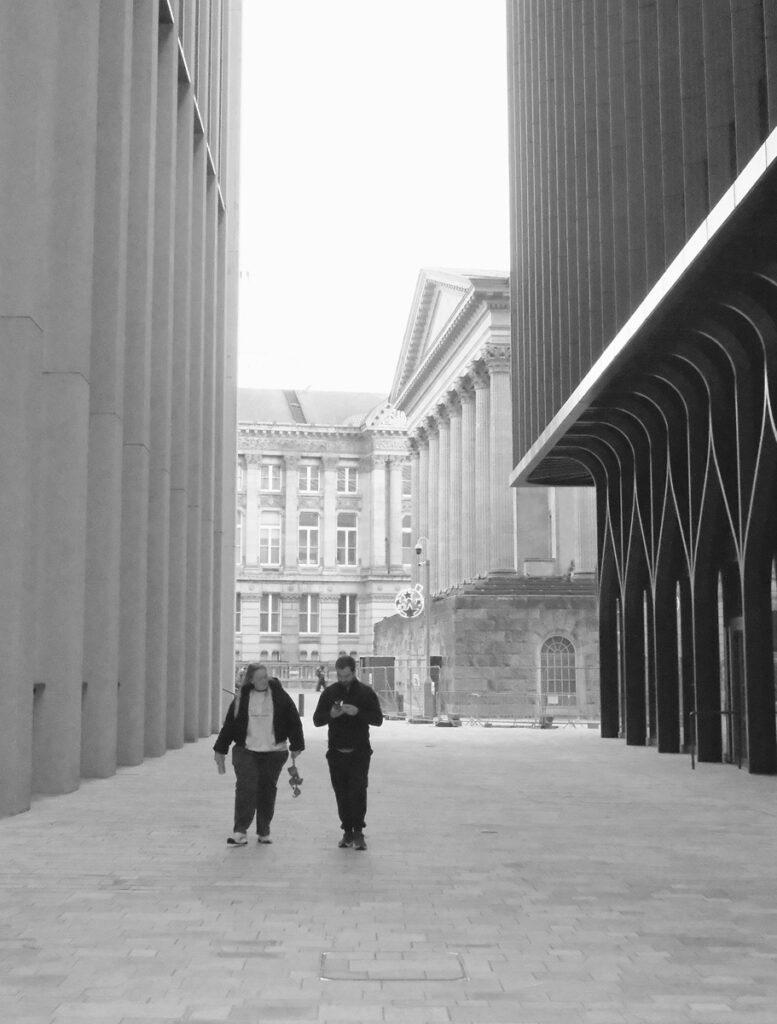
Whilst the walkways between buildings are wide, they are made to look narrow by the height of the buildings.Two figures move along the walkway between buildings.The Town Hall is partly revealed by the available light.Major Birmingham landmarks take their turn in catching the light.
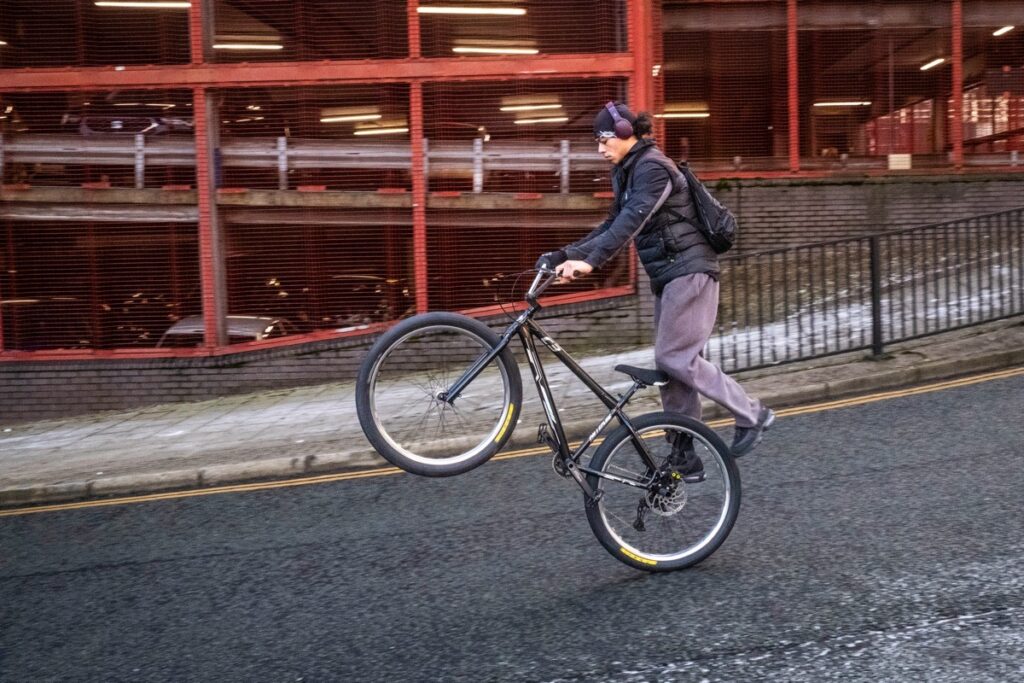
Our Birmingham photowalk took us through Chamberlain Square and past the Town Hall, where Marcin encouraged us to look for architectural details and light patterns often overlooked. Hill Street, bathed in winter light, offered compositions reminiscent of New York. Along the way, spontaneous moments appeared, including a group of cyclists performing wheelies near Brunel Street.
Hill street has those New York vibes about it especially with the low level sun.This picture is to remind me that sometimes the best pictures arise when you least expect them.This cyclist was performing a wheelie on his bicycle as he ride down Brunel Street.
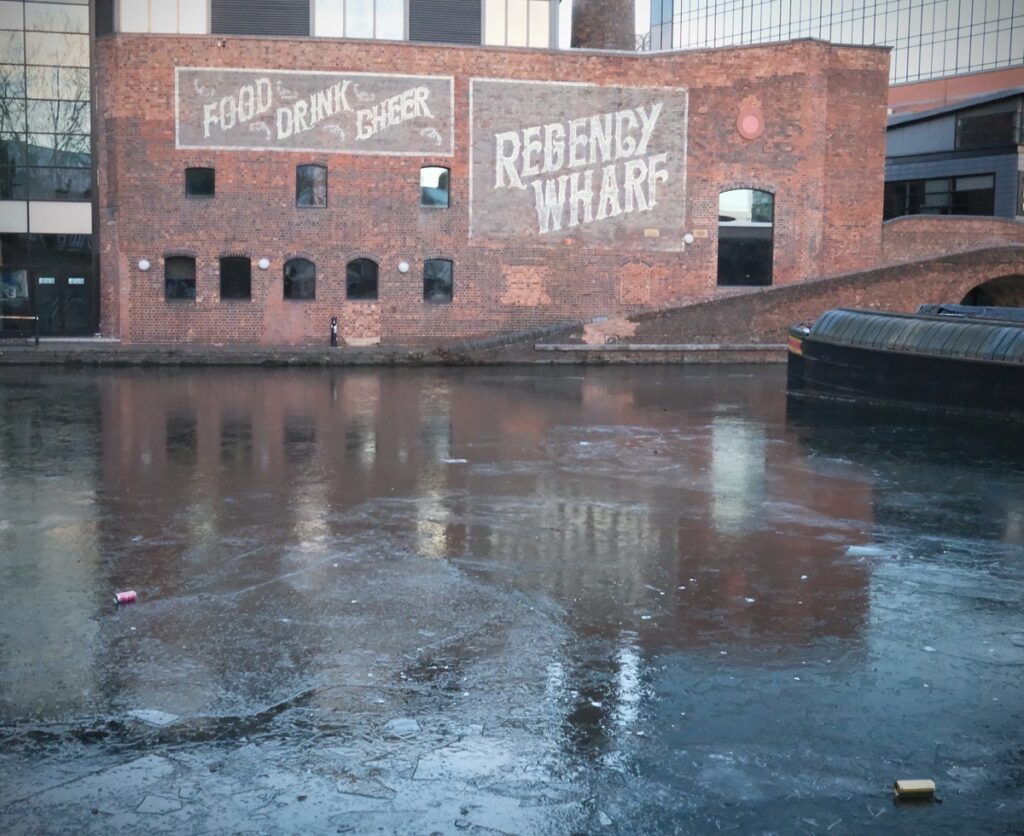
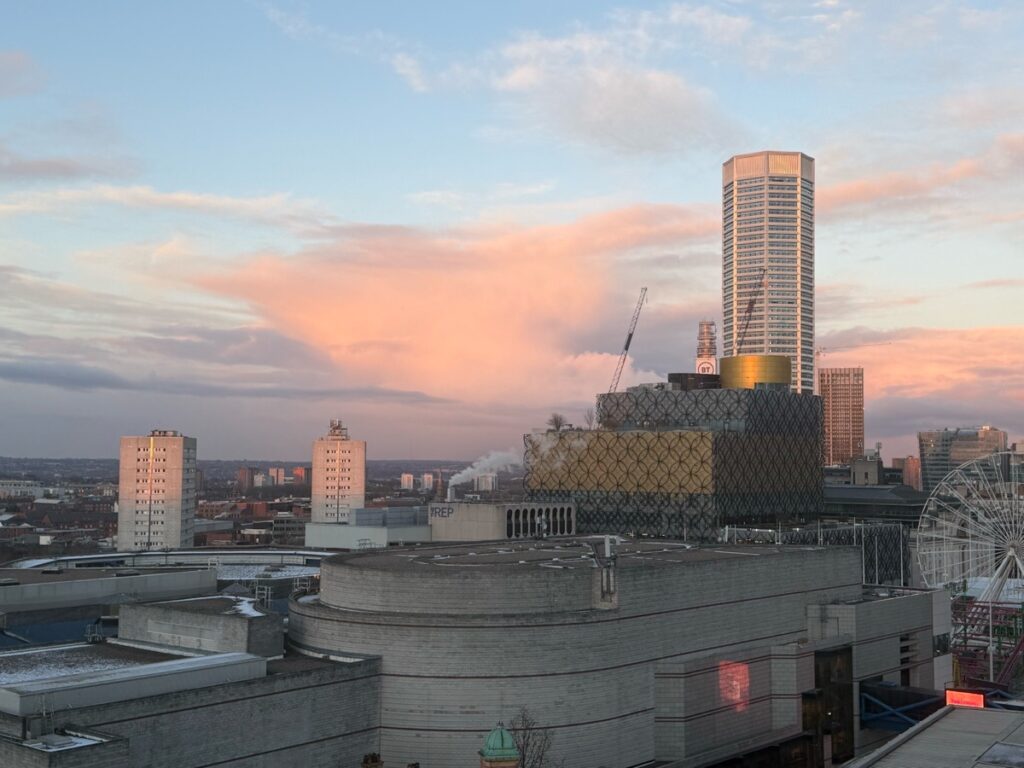
We continued towards the Mailbox and the Cube, where intense horizontal light produced striking graphic shadows. After photographing the frozen waters of Gas Street Basin, Marcin invited us to his studio on the 10th floor of Quayside Tower. From there, we enjoyed panoramic views across Birmingham as the setting sun filled the sky with warm tones and soft pink clouds.
Overlooking the towpath from the Cube bridge. Long shadows in the setting sun start to look atmospheric.The surface of the water in Gas Street Basin has frozen leaving consumer debris on the ice.Golden hour over the City generates vibrant colours.
Birmingham Photowalk reflections
I highly recommend joining such a Birminghamphotowalk with Marcin SZ. He is genuinely passionate about photography and has a natural ability to guide people towards compelling scenes. The atmosphere is relaxed, welcoming, and suitable for all experience levels. It was a memorable afternoon, made even better by beautiful winter light and inspiring company.
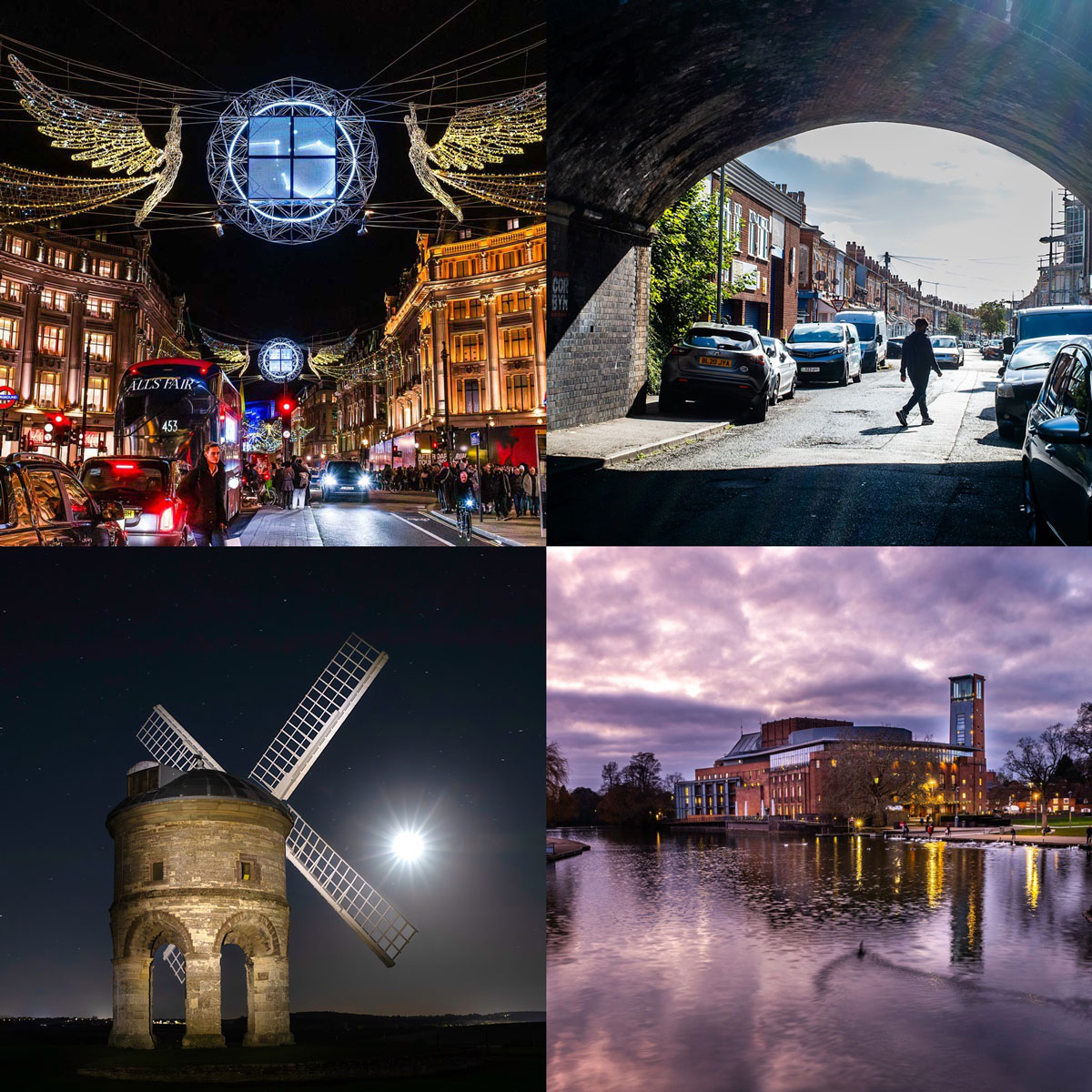
If you enjoyed this account of a Birmingham photowalk then here are some links to previous walks done in Manchester and London.
We use cookies on our website to give you the most relevant experience by remembering your preferences and repeat visits. By clicking “Accept”, you consent to the use of ALL the cookies.
This website uses cookies to improve your experience while you navigate through the website. Out of these, the cookies that are categorized as necessary are stored on your browser as they are essential for the working of basic functionalities of the website. We also use third-party cookies that help us analyze and understand how you use this website. These cookies will be stored in your browser only with your consent. You also have the option to opt-out of these cookies. But opting out of some of these cookies may affect your browsing experience.
Necessary cookies are absolutely essential for the website to function properly. These cookies ensure basic functionalities and security features of the website, anonymously.
Cookie
Duration
Description
cookielawinfo-checkbox-analytics
11 months
This cookie is set by GDPR Cookie Consent plugin. The cookie is used to store the user consent for the cookies in the category "Analytics".
cookielawinfo-checkbox-functional
11 months
The cookie is set by GDPR cookie consent to record the user consent for the cookies in the category "Functional".
cookielawinfo-checkbox-necessary
11 months
This cookie is set by GDPR Cookie Consent plugin. The cookies is used to store the user consent for the cookies in the category "Necessary".
cookielawinfo-checkbox-others
11 months
This cookie is set by GDPR Cookie Consent plugin. The cookie is used to store the user consent for the cookies in the category "Other.
cookielawinfo-checkbox-performance
11 months
This cookie is set by GDPR Cookie Consent plugin. The cookie is used to store the user consent for the cookies in the category "Performance".
viewed_cookie_policy
11 months
The cookie is set by the GDPR Cookie Consent plugin and is used to store whether or not user has consented to the use of cookies. It does not store any personal data.
Functional cookies help to perform certain functionalities like sharing the content of the website on social media platforms, collect feedbacks, and other third-party features.
Performance cookies are used to understand and analyze the key performance indexes of the website which helps in delivering a better user experience for the visitors.
Analytical cookies are used to understand how visitors interact with the website. These cookies help provide information on metrics the number of visitors, bounce rate, traffic source, etc.
Advertisement cookies are used to provide visitors with relevant ads and marketing campaigns. These cookies track visitors across websites and collect information to provide customized ads.