
Loading...
The Coffin Works, a photographic journey.

The Coffin Works Birmingham sits on the edge of the Jewellery Quarter and is a place that I have wanted to visit for some time. On the spur of the moment, I booked a ticket, and the next day I was at the Coffin Works, where I met Robin, who was to be my guide for the morning.

The Coffin Works, a photographic journey.
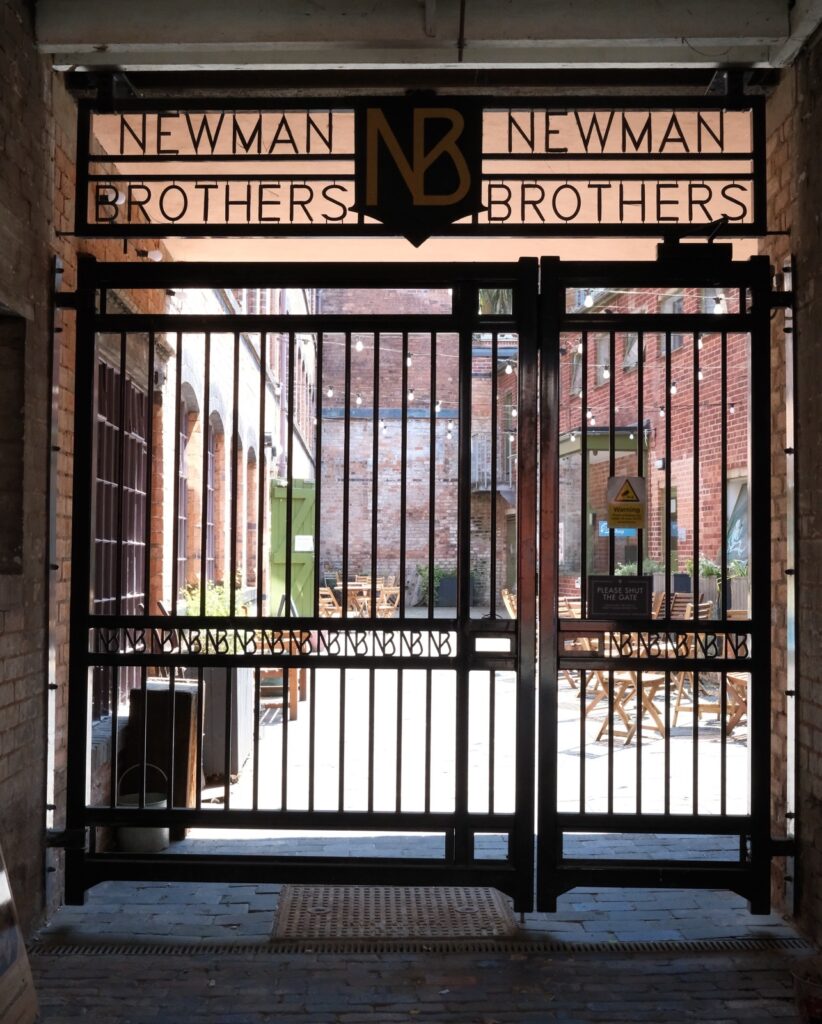
A view through the metal gates to the Coffin Works courtyard.

A One-to-One Tour

I was the only one booked in for the early tour, so I was fortunate to have a one-to-one tour of the museum. Robin, who is a member of the Church Monuments Society, has a deep knowledge of the Coffin Works, and throughout the tour he provided a fascinating history.

The Coffin Works, a photographic journey.
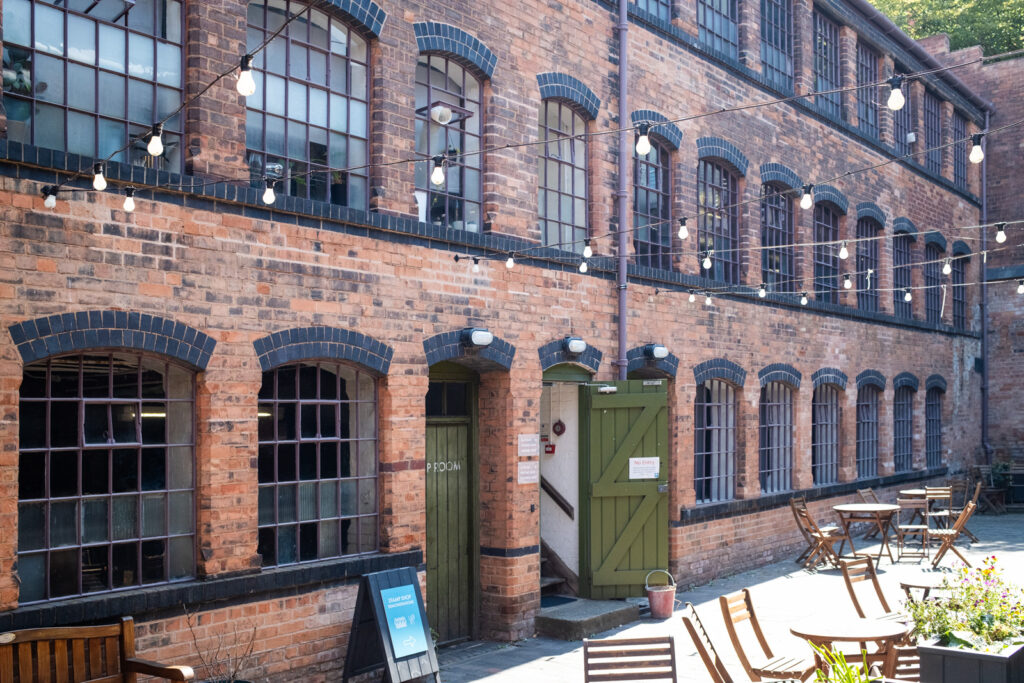
In the Coffin Works Courtyard.

We started in the courtyard. Looking up and around, the new Birmingham towers looked down at us. The traditional architecture of the building is in direct contrast to the new surrounding buildings.

The Workshop Floor

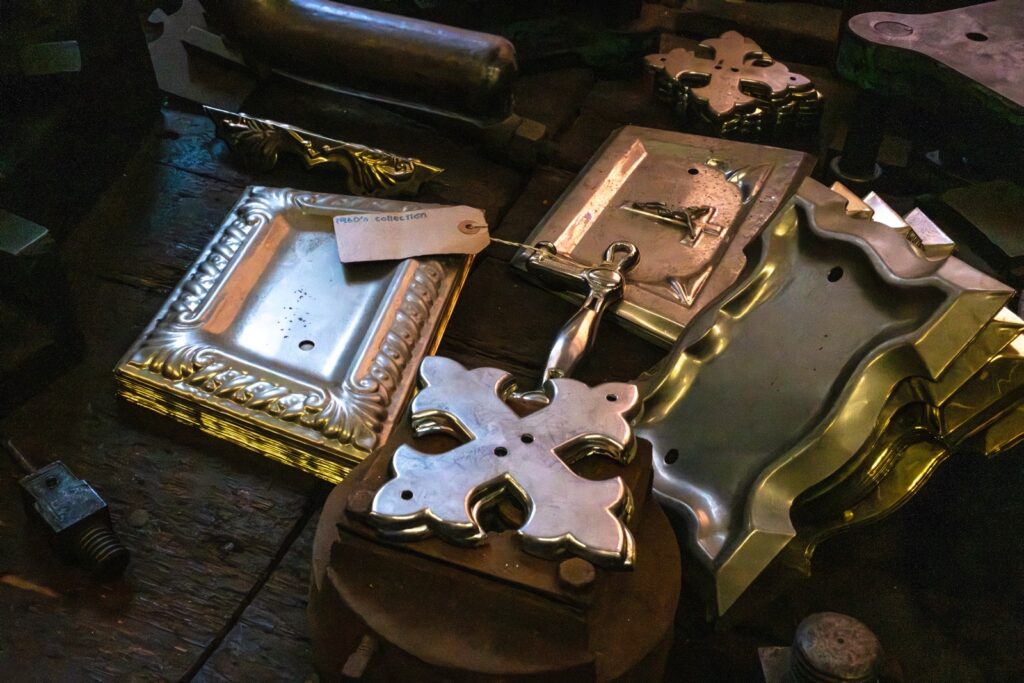
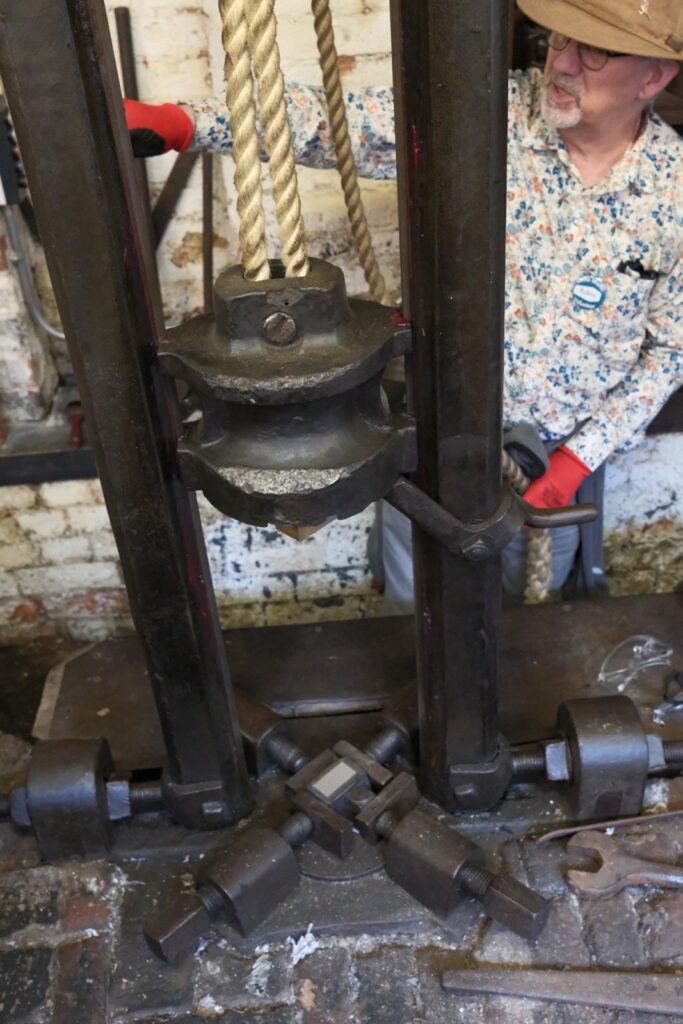
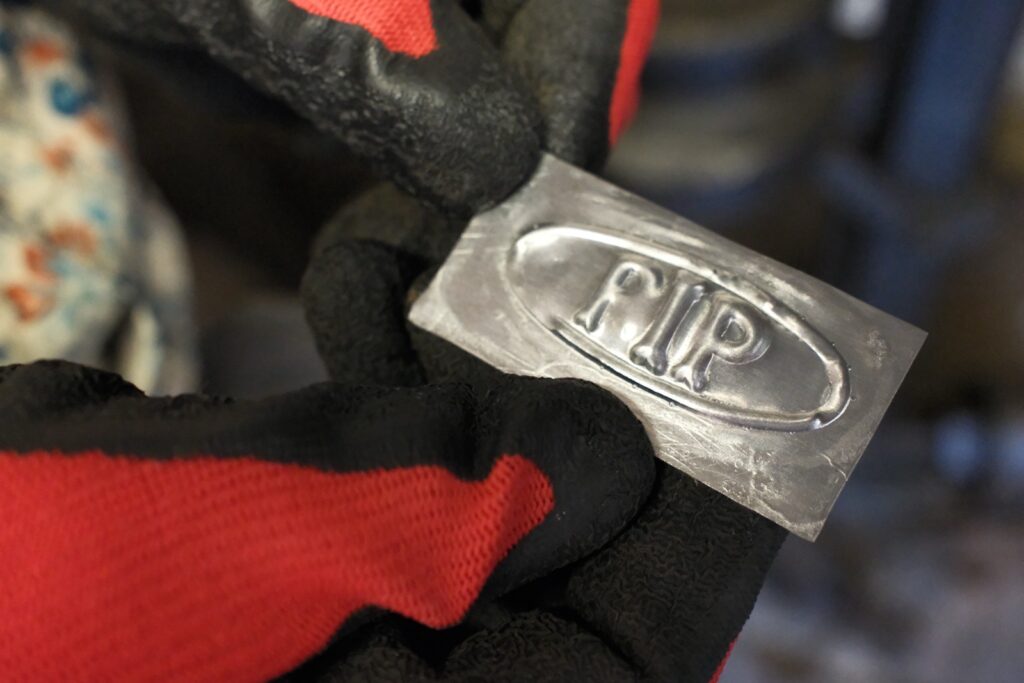
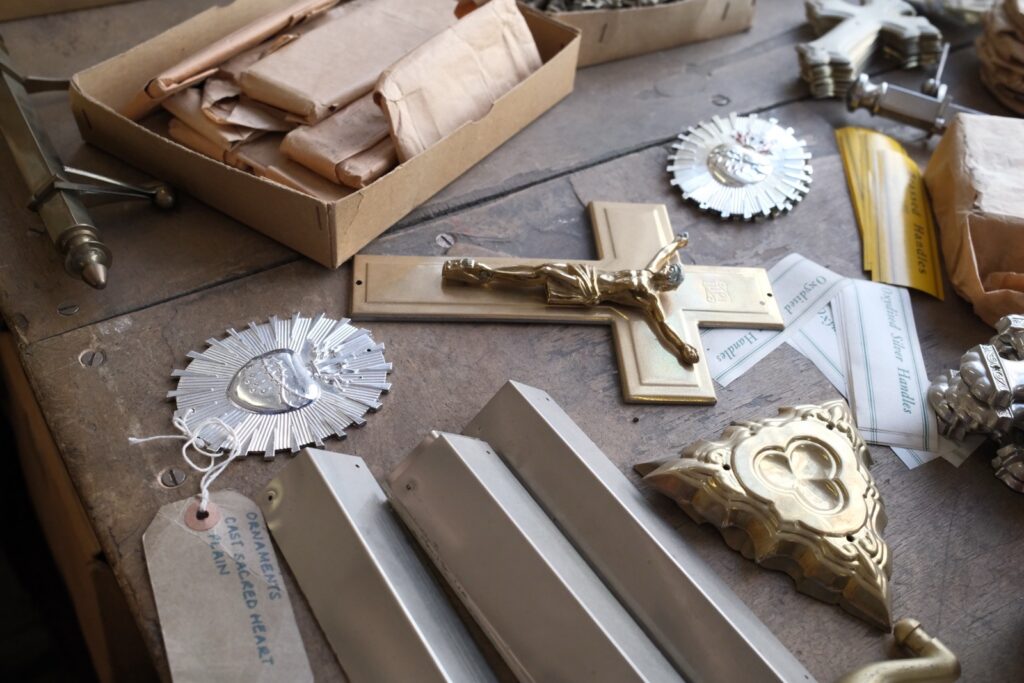
I learnt that coffins were not made in the factory. The Coffin Works manufactured the brass fittings and other metal work that is attached to coffins otherwise know as Coffin furniture. Robin took me into one of the workshops with the heavy metal machinery that was used to mould and cut out the coffin fixtures. There was a demonstration of one of the working machines, and an “RIP” metal label was produced.

The Coffin Works, a photographic journey.
Some of the Coffin fixture designs that are on display in the workshop
The Coffin Works, a photographic journey.
Robin operating one of the machines.
The Coffin Works, a photographic journey.
A metal RIP ready for the coffin. (The R needs some work)

Fittings Fit for Royalty

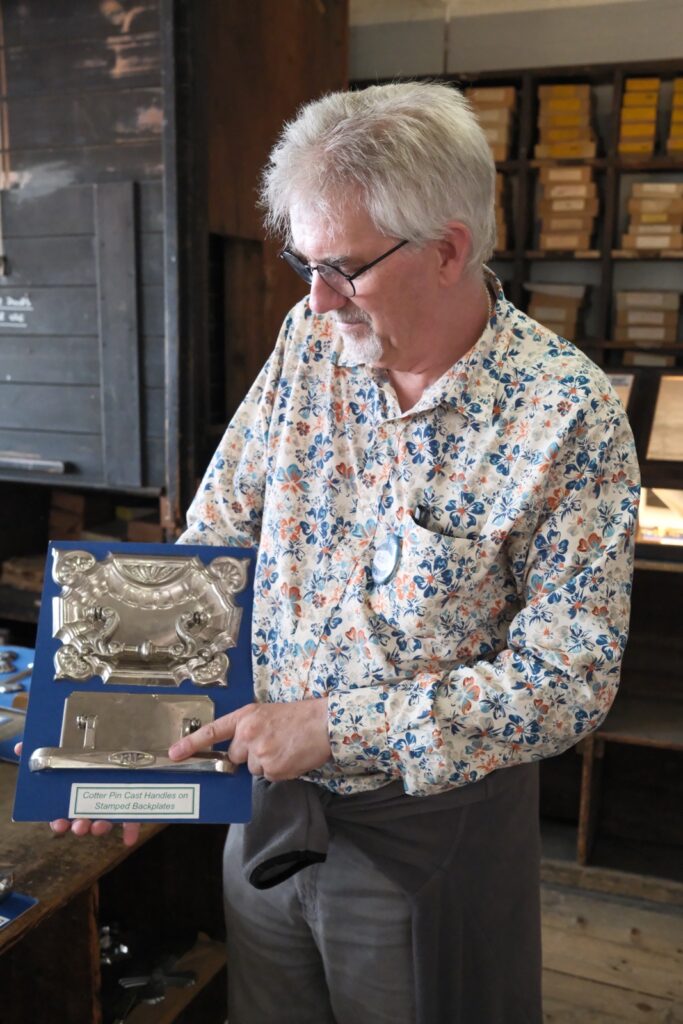
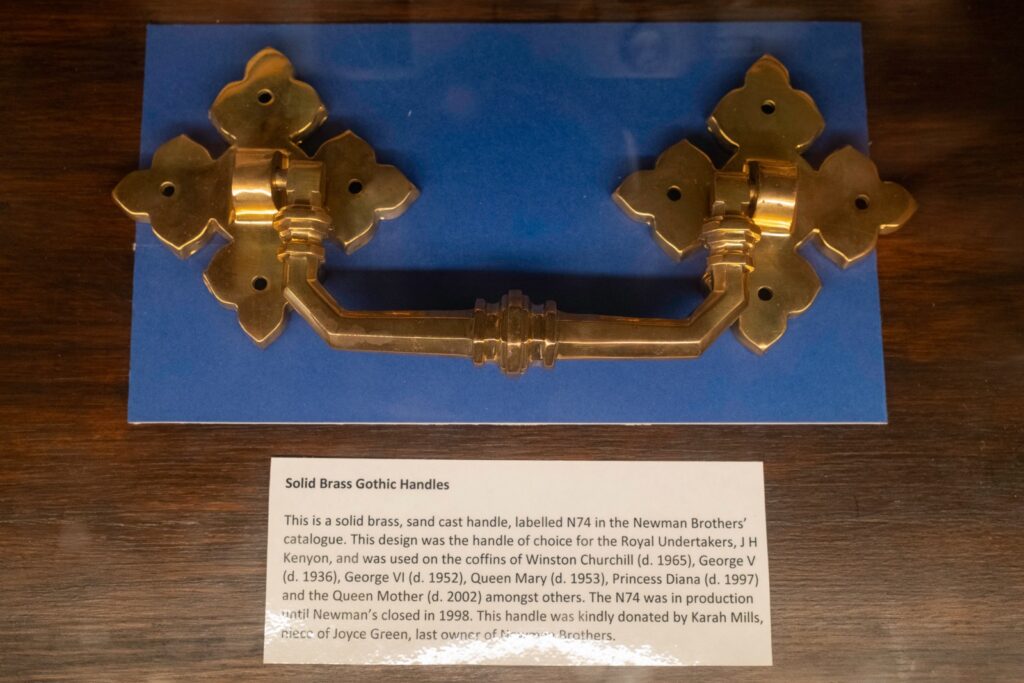
We left the workshop to climb to the first floor at the front of the building, where there was a timeline of many of the elaborate funeral fixtures that had been made during the operation of the Coffin Works. I was most impressed with the coffin handles that had been made for distinguished people over the years, including Joseph Chamberlain, Cardinal John Newman, Winston Churchill and members of the Royal Family. Robin provided a background story to the items on display. The mixture of industrial craftsmanship backed up with human stories made my visit memorable.

The Coffin Works, a photographic journey.
Robin is explaining the history behind the cast coffin handles.
The Coffin Works, a photographic journey.
I found the description behind this coffin handle fascinating.

The Shroud Room

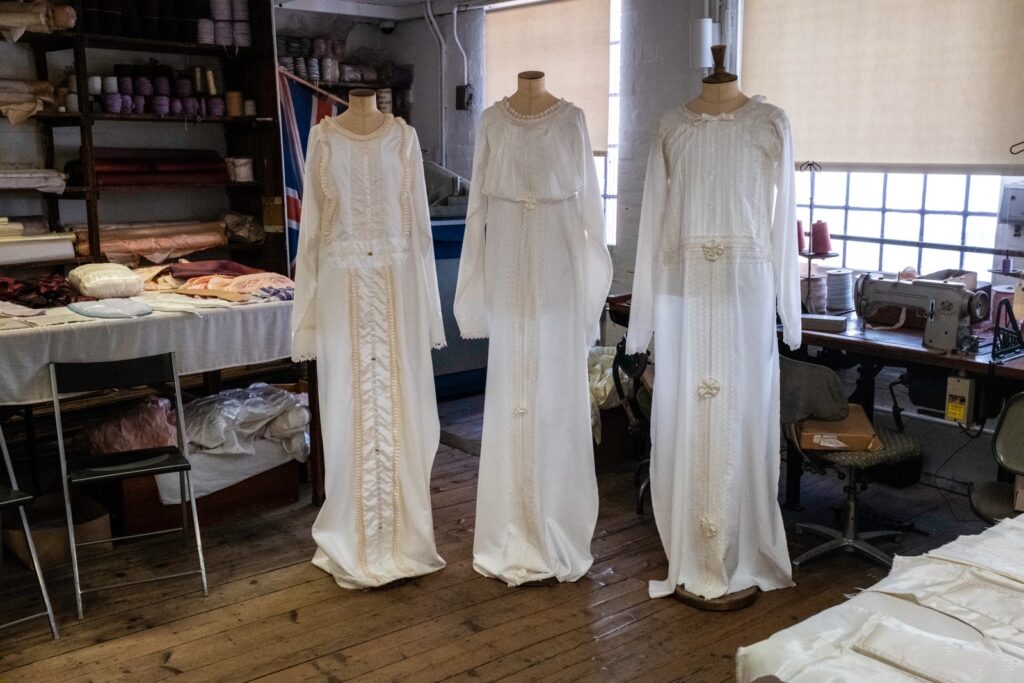
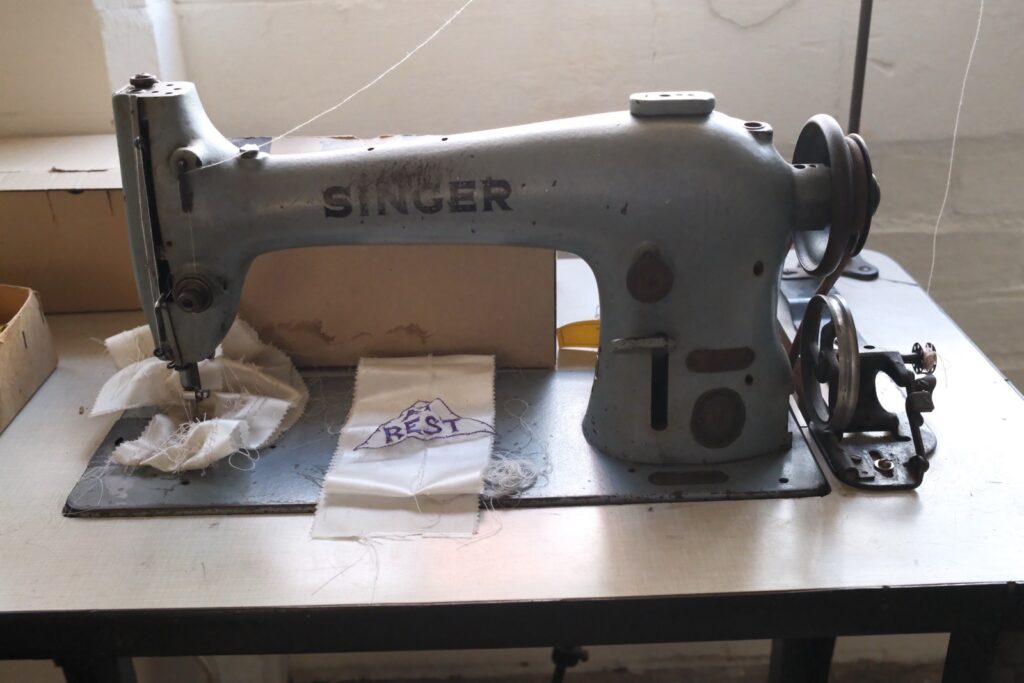
The second floor of the Coffin Works is where they made shrouds. The room had a bank of Singer sewing machines along the window, and three mannequins were dressed in shrouds at the end of the room. Examples of the intricate work involved in making the shrouds were on display, including shrouds made for the local football teams, Aston Villa and Birmingham City.

The Coffin Works, a photographic journey.
Three shrouds ready for a halloween party.
The Coffin Works, a photographic journey.
There were many Singer sewing machines on view.

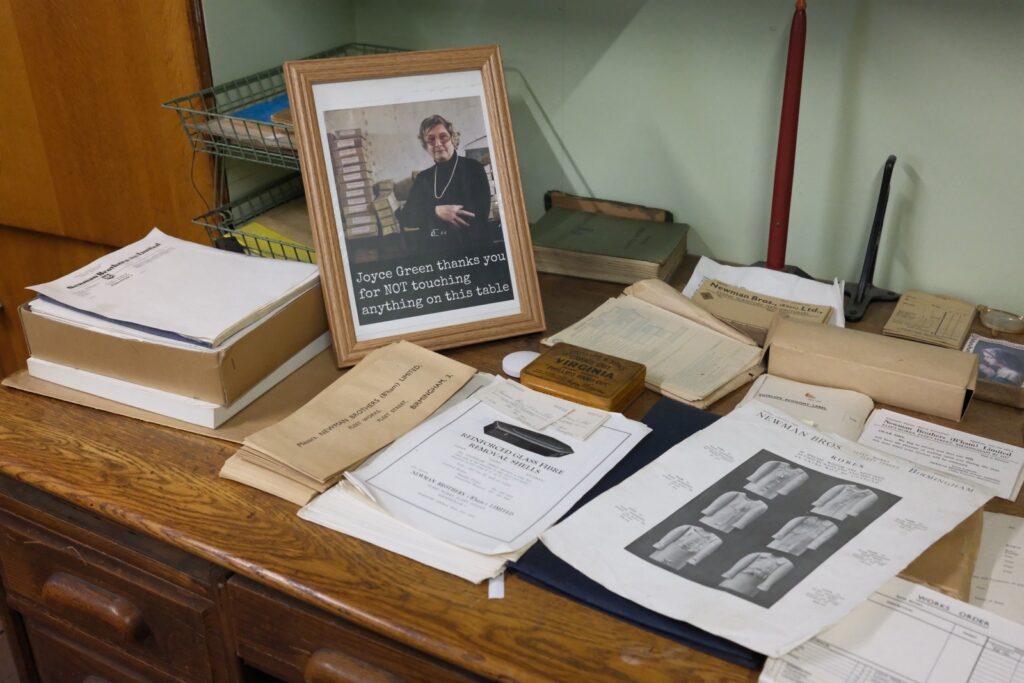
The room was set up with examples of the working day, and even the cups and teaspoons plus the tea rota were on display. The administration offices were neatly laid out with the paperwork and included the latest typewriters of the day.

The Coffin Works, a photographic journey.
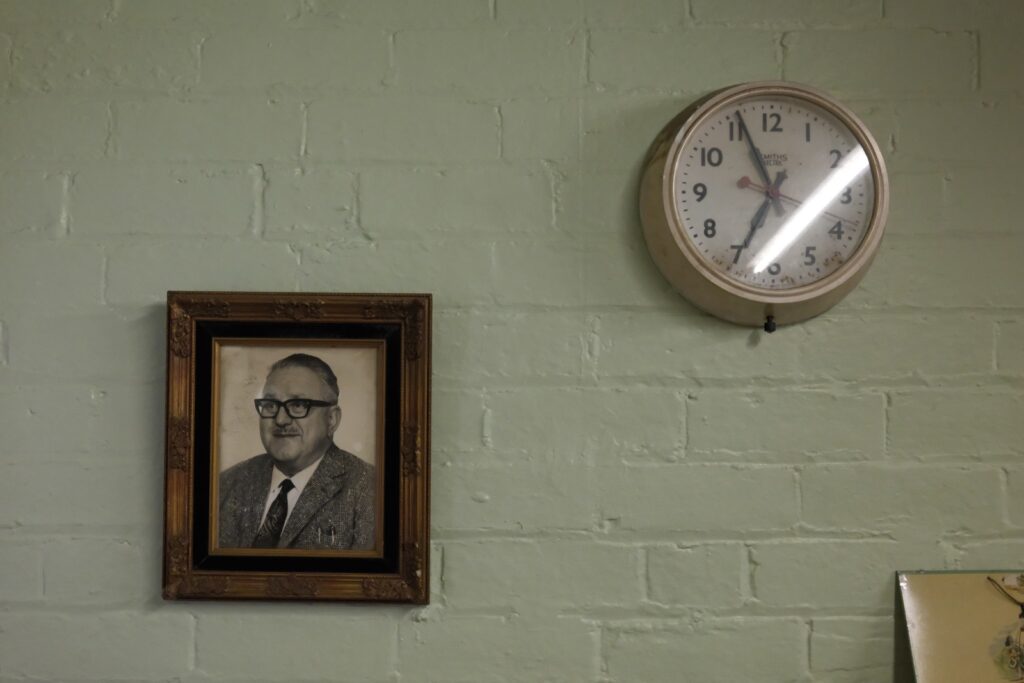
A picture of Horace Newman on the wall of the office.
The Coffin Works, a photographic journey.
The desk laid out with administrative work. Joyce Green was in charge of the Coffin Works when it finally closed.

The End of an Era

Robin informed me that the Coffin Works eventually succumbed to the national requirement for plastic fittings, which were ideal for cremations. Over the last century, the number of cremations outstripped the number of burials. Slowly but surely, the traditional metal fixtures were phased out. The Coffin Works closed but then reopened as a museum under the ownership of the Birmingham Conservation Trust.

The Coffin Works, a photographic journey.
Religious icons on display at the Coffin works

The Coffin Works – Final thoughts

The Coffin Works, a photographic journey.
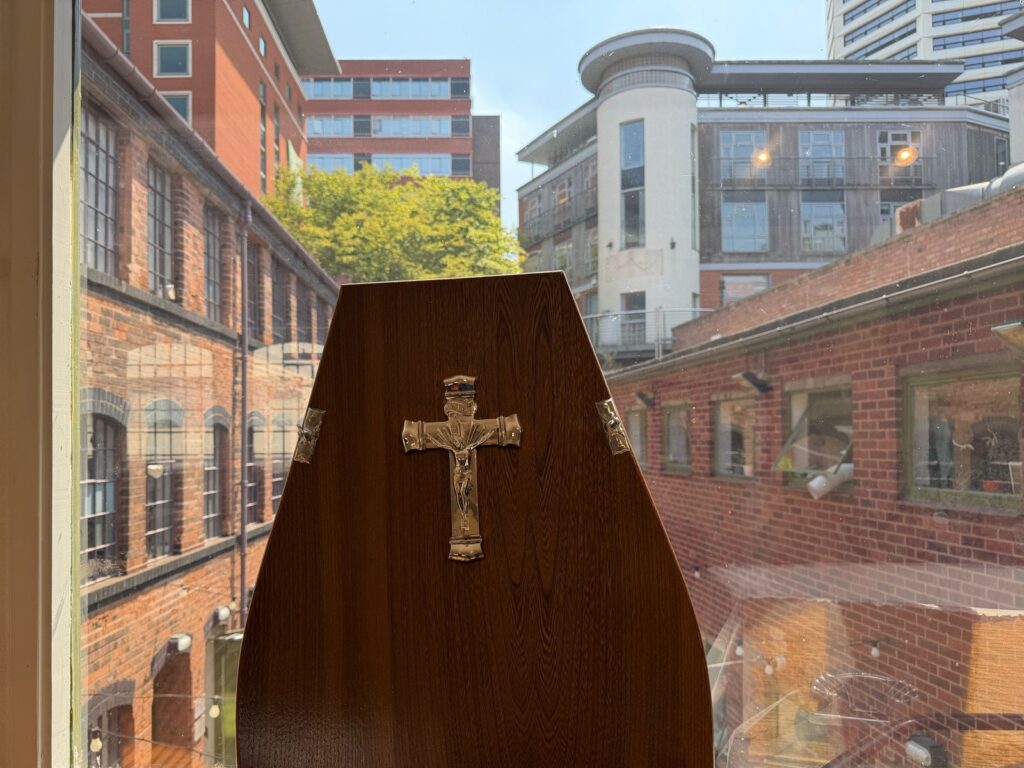
A coffin with modern Birmingham in the background.

The tour was finished, and I made my way downstairs to the entrance. I chatted to Paul, who had initially greeted me at the start of the tour, and had time to thank Robin for taking me around the Coffin Works.

The museum provides a history of Victorian Birmingham and the enterprise and vision of the Newman Brothers. There are many other similar places to visit, and the Whistle Factory is still open for business and offers group visits by prior arrangement. Please read my account of my visit there.

Key Hill Cemetery, Jewellery Quarter, April 2023

The cemeteries of the Jewellery Quarter offer a fascinating glimpse into Birmingham’s past.  There are two sites, Key Hill and Warstone Lane, with both cemeteries containing the burials of notable Birmingham people.  The Friends of Key Hill cemetery and Warstone Lane cemetery work to maintain and protect these important historical landmarks. An @igersbirminghamuk Instameet was held in conjunction with @JQ_BID (Jewellery Quarter Business Improvement District). We aimed to start at Key Hill and then move to Warstone cemetery. As it transpired, we spent so much time in Key Hill that we agreed we must return for a Warstone Lane Cemetery tour later in the year. This blog is about our visit to Key Hill Cemetery.

Key Hill Cemetery, Jewellery Quarter, April 2023
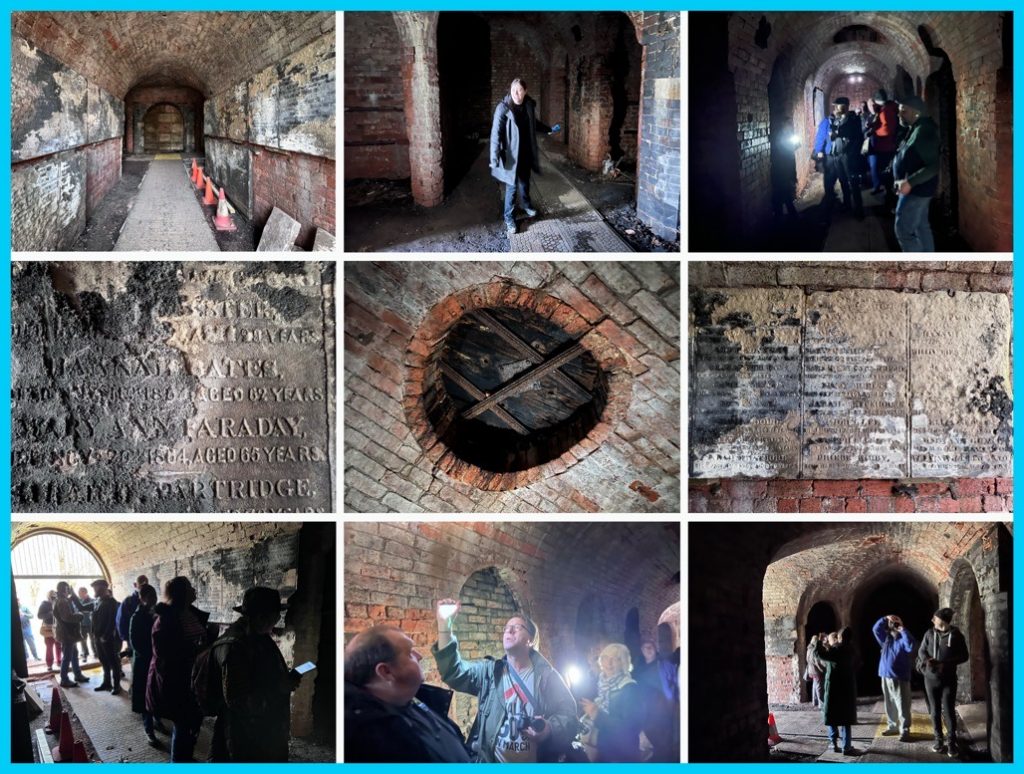
A collage of photographs taken on my iPhone

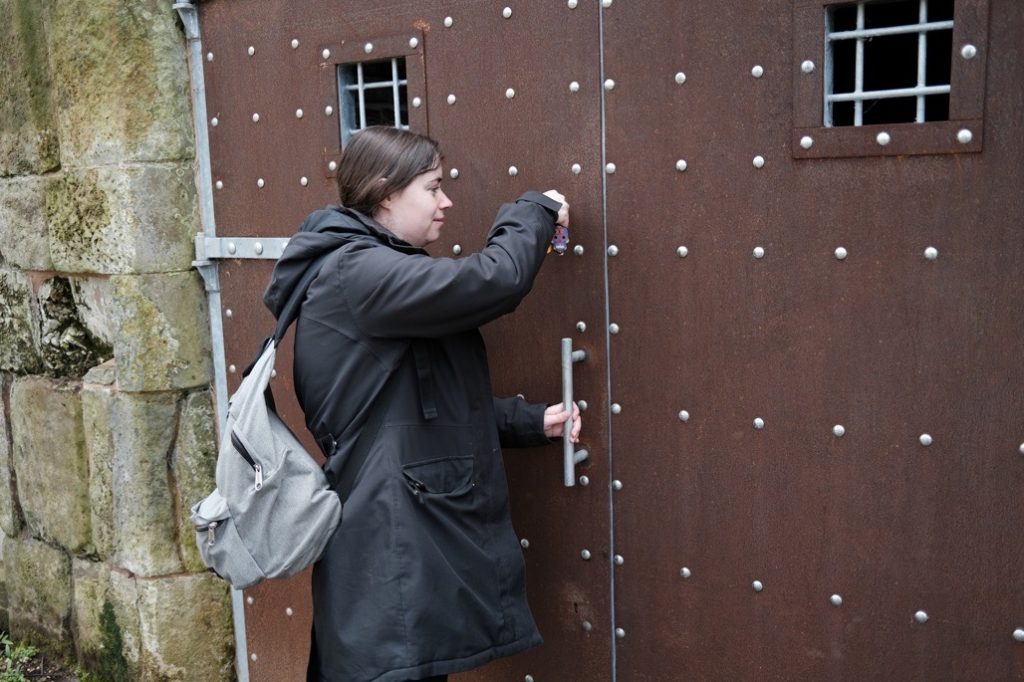
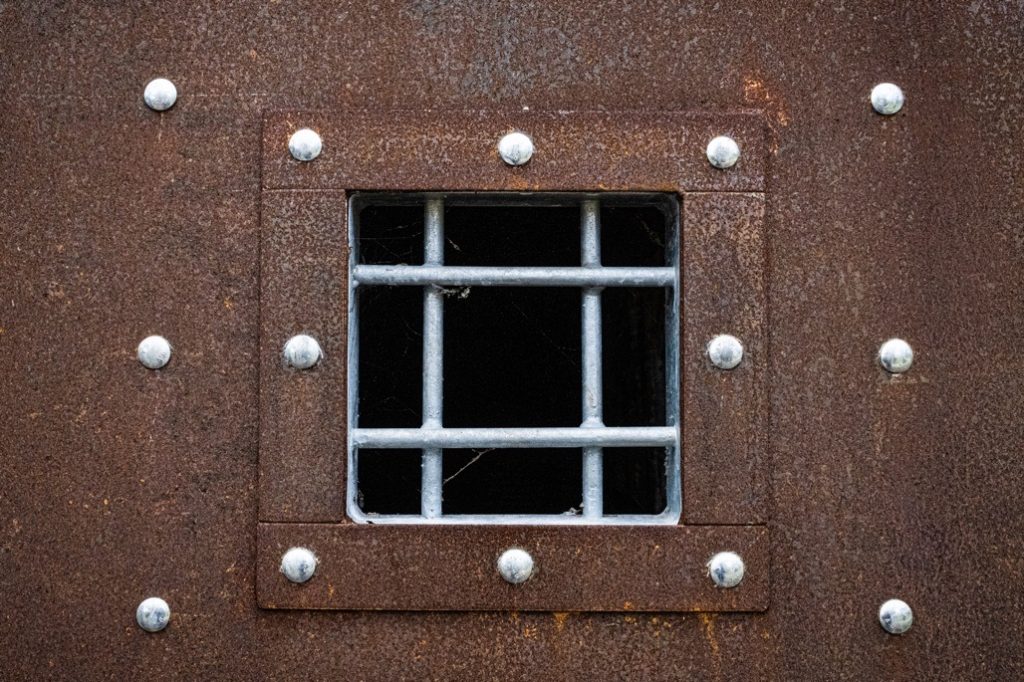
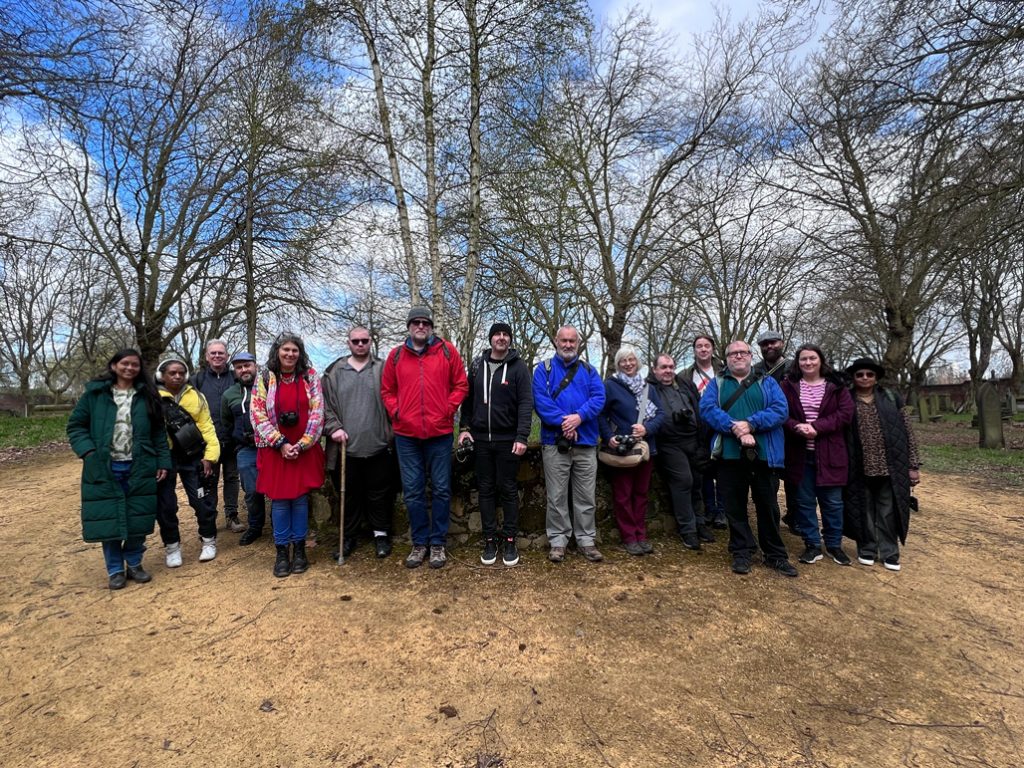
Key Hill is part of the Jewellery Quarter and I have visited the area before. The sister cementery Warstone is more popular due to it being nearer to the heart of the Jewellery Quarter. Key Hill is often overlooked yet it has so much to offer in history and stories of people buried in the cemetery. As organiser of the meeting, I had arranged for people to meet at the Key Hill entrance near to the ring road, forgetting there is another entrance at Key Hill Road.  Then a few people got mixed up with the 2 cemeteries.  Luckily, we all found each other and the Instameet got started.  Josie from the JQ_BID was our host and proved to be a knowledgeable guide.  Her enthusiastic storytelling brought the past histories of the area to the present.  We were very fortunate as Josie agreed to open the Catacombs for viewing.  First she gave some fascinating insights into the background of the cemetery. There was the obligatory group photograph and then we congregated outside the entrance to the catacombs.  The large cast iron doors were unlocked.  
Key Hill Cemetery, Jewellery Quarter, April 2023
The IgersbirminghamUk participants for the JQ meeting.

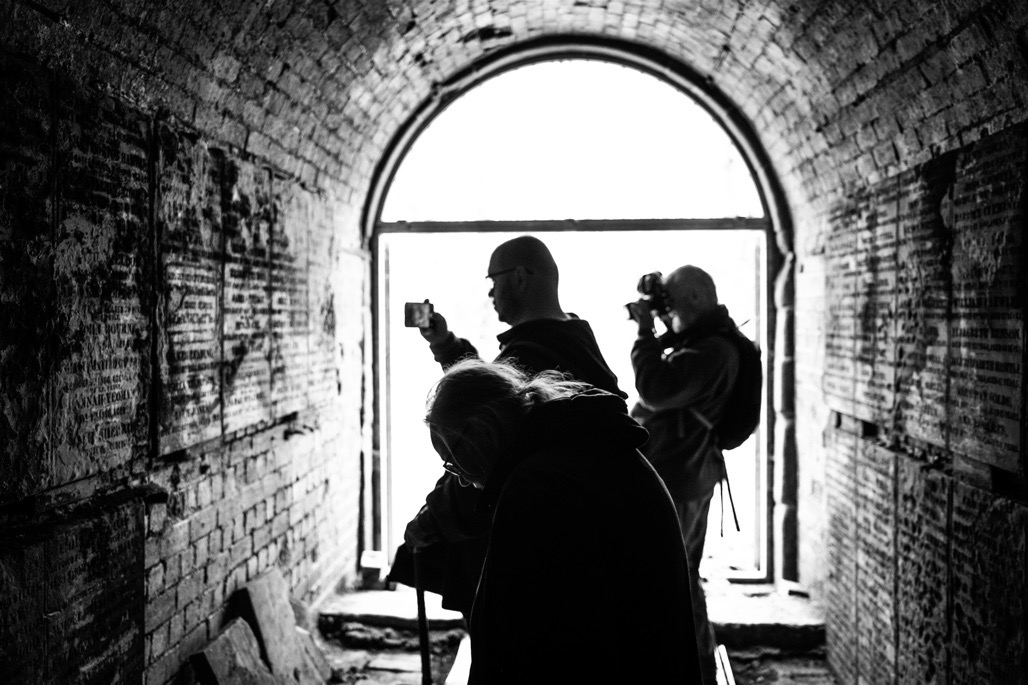
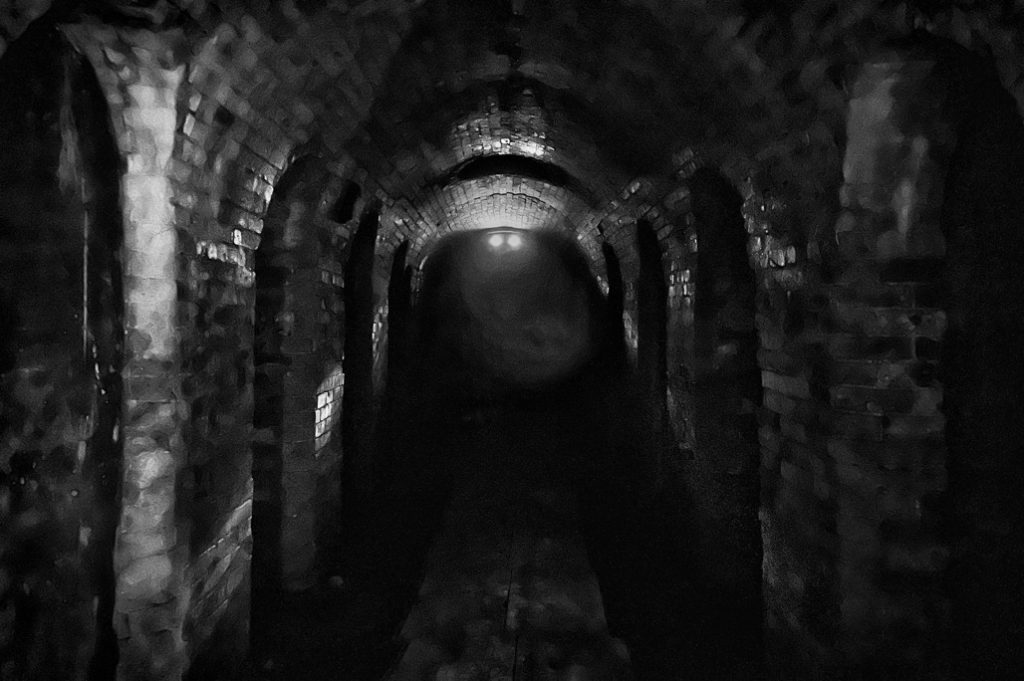
This was the first opening of the year and, as Josie explained, catacombs may work well in Mediterranean climates but in Birmingham the inside chamber was cool and damp.  We used our iPhones for illumination and looked around the walls which included inscriptions of the people who were buried there. Picture taking was not straightforward due to the lack of light. The many iPhones helped bring some light to the dark interior. Some of the IgersbirminghamUK photographers did well with the low light levels and I encourage you to review their photographs on Instagram and other social feeds. The links are below.

Key Hill Cemetery, Jewellery Quarter, April 2023
The opening of the catacombs.
Key Hill Cemetery, Jewellery Quarter, April 2023
Deep into the catacombs with light at the end of the tunnel.
Key Hill Cemetery, Jewellery Quarter, April 2023
The entrance door at the catacombs
Key Hill Cemetery, Jewellery Quarter, April 2023
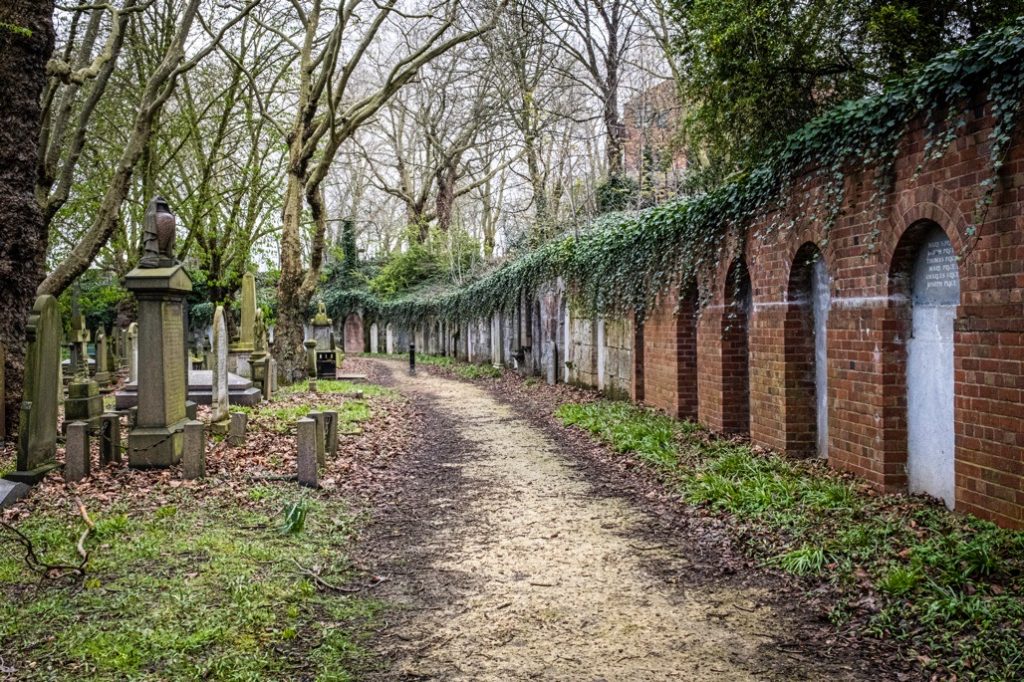
The view from the catacomb entrance.
Key Hill Cemetery, Jewellery Quarter, April 2023
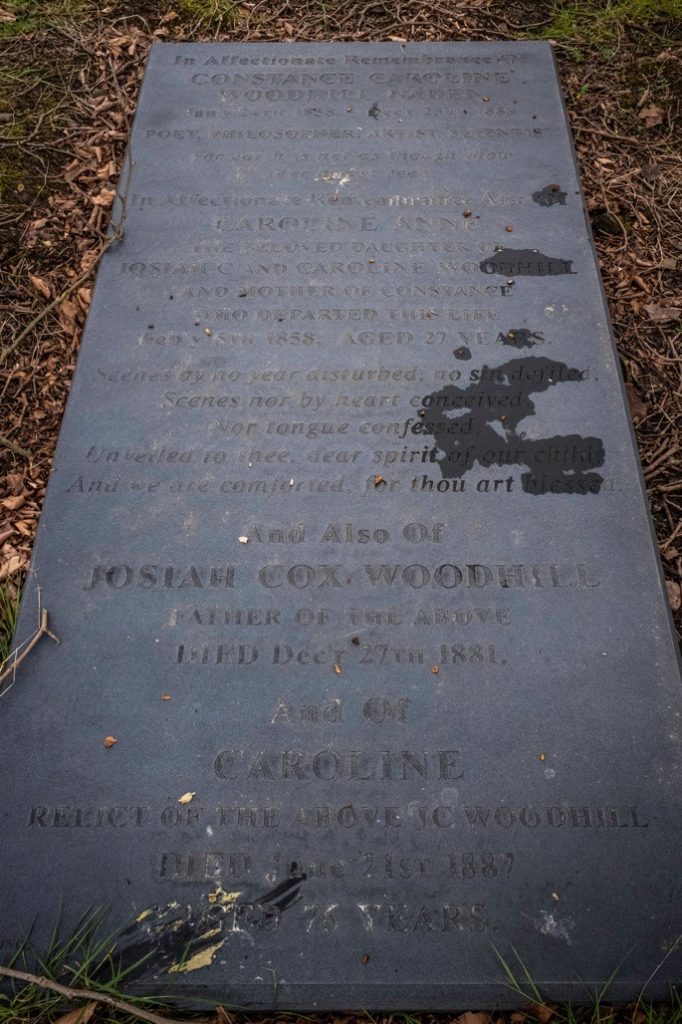
The grave of Constance Naden

Following the tour of the catacombs, Josie took us to several notable graves. The first was Constance Naden (1858 – 1889) who was a writer, poet and philosopher. Whilst Constance’s work was well regarded in her lifetime, there has been a resurgence of interest in her writings especially her ability to bring science and literature together. Learning about her life and legacy proved to be enlightening and she achieved so much in a short life succumbing to ovarian cancer at the age of 31.

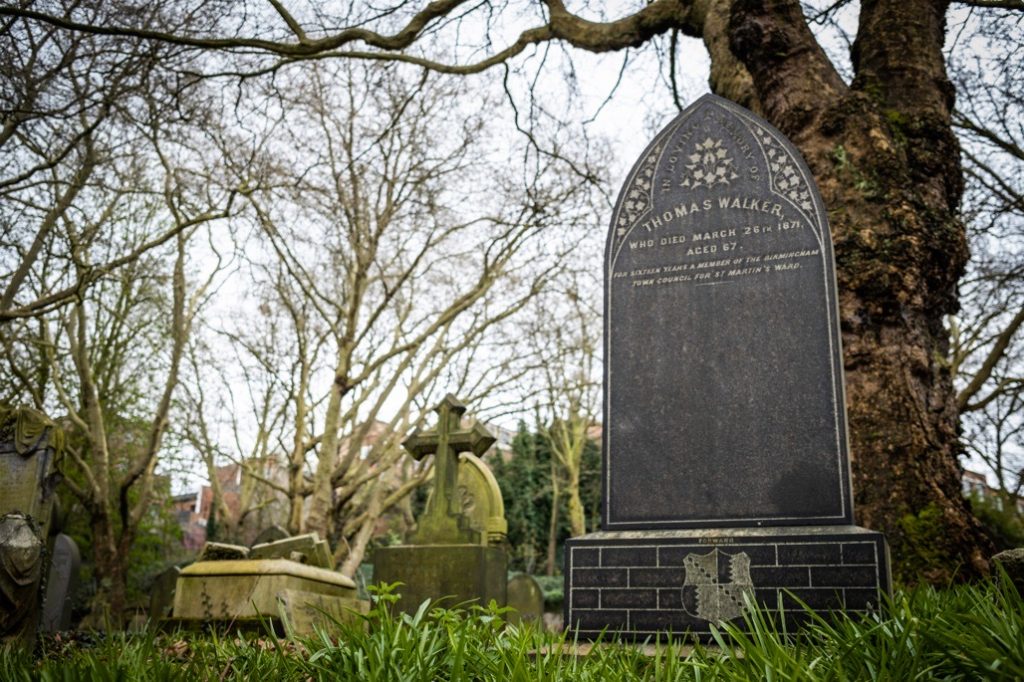
Other notable graves that we stopped to discuss further stories included John Benjamin Tolkien (1784 – 1840) the grandfather of J.R. Tolkien and Thomas Walker. The grave of Thomas Walker has a brick design and the coat of arms of the City council. He had the idea of using highly durable blue engineering bricks for paving roads which led to better pavements and roads throughout Birmingham. We moved onto the family graves of the Chamberlain family which included Joseph Chamberlain (1836 – 1914). As former Mayor of Birmingham and founder of the University, the city owes a great debt to Joseph Chamberlain but as Dr Matt Cole writes on the University of Birmingham web site “Chamberlain’s legacy is so broad and idiosyncratic that it likely to leave no-one in full agreement with him.”. As a group we discussed his legacy and then one of the IgersbirminghamUK organisers @James_never_jim noticed the adjacent grave of James Austin Gargory who lived in Bull Street. He was an optician but also brought in different engineering items and was also an enthusiastic photographer.

Key Hill Cemetery, Jewellery Quarter, April 2023
The grave stone of Thomas Walker with the brick design and coat of arms.

Other graves included the Martineau family which linked to our previous Instameet at Martineau Gardens. We also visited the grave of Alfred Bird, the inventor of Custard. An interesting grave was that of Shadi Mohammed who died during the Blitz, In an episode known as the “Sand Bag” deaths, Shadi, his wife and several others died when a wall of sand bags collapsed on them. There were many many more stories to be told.

Key Hill Cemetery, Jewellery Quarter, April 2023
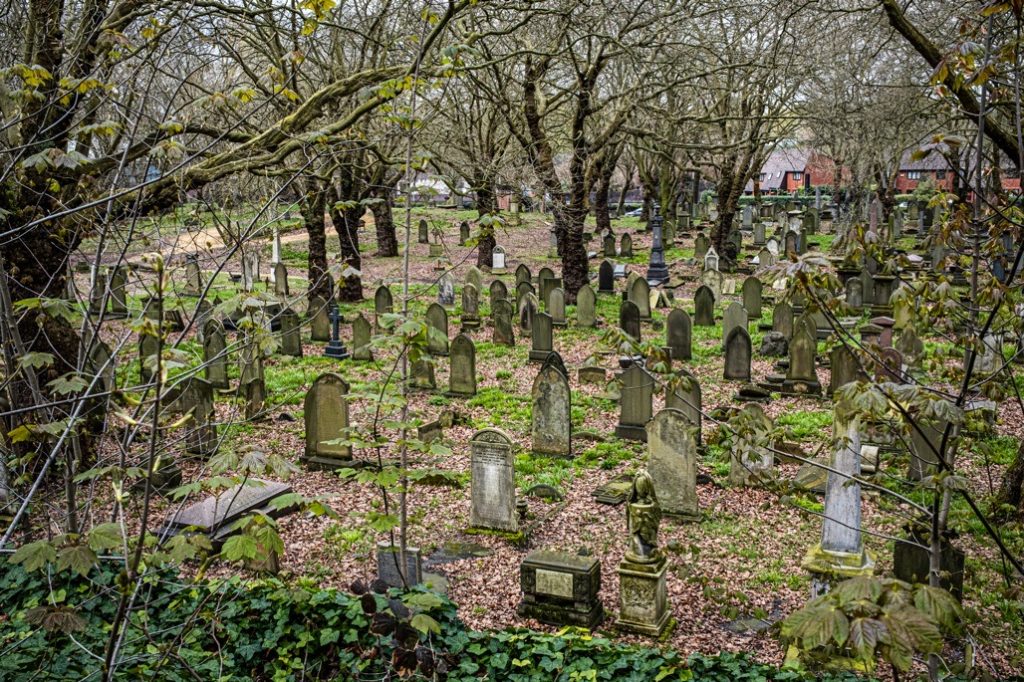
A view from on top of the cemetery.

The storytelling of Josie was excellent and we lost all track of time until she remembered that she needed to help at the JQ beer festival. The morning was eventful and many photographs were taken. We thanked Josie for hosting the meeting and we all made our separate ways. A few of us ended up in the Rose Taven in the centre of the JQ for a drink and a chat about the photographs we took and those that got away.

Key Hill Cemetery, Jewellery Quarter, April 2023
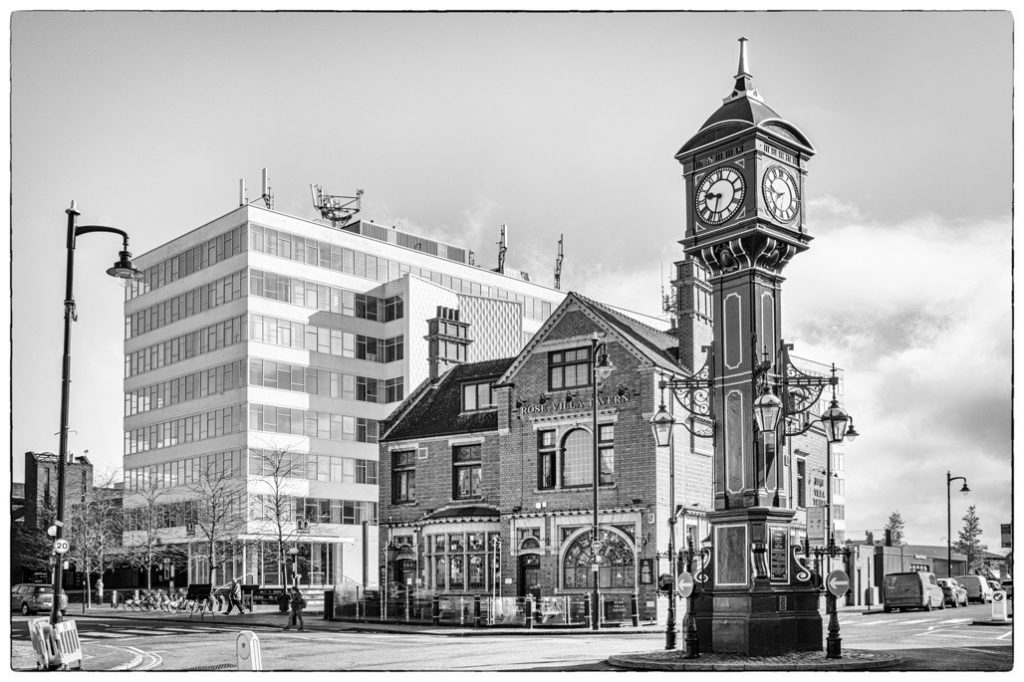
A view of the Jewellery Quarter buildings. The Rose Villa was one of the venues for the JQ beer festival and a final stop of the Instameet.

If you want to catch up on photographs taken by the IgersbirminghamUK community then please use these hashtags to search Instagram, Twitter and Facebook for more pictures.

#igersbirminghamuk 
#jqbid 
#igbuk_meet_JQBID

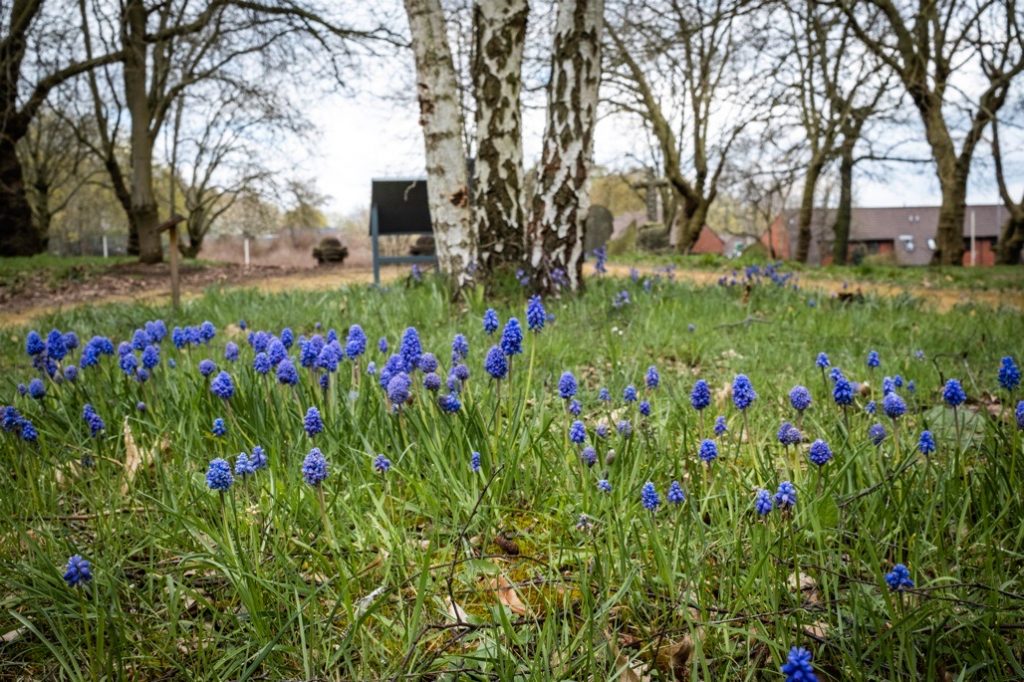
Whilst we were visiting, we could see many bluebells getting ready to bloom in the next few weeks.  I aim to return and take some pictures of the flowers when they are in full flower. Hope to see you there!

Key Hill Cemetery, Jewellery Quarter, April 2023
No bluebells as yet but blue grape hyacinths make up the colour.

If you like this post then you may like the following blog.

Latest products

ccbe bc d dbee jpg

Architectural details Framed Poster

I recently teamed up with Amateur Photographer and the brilliant Jimmy Cheng to uncover the secrets of street photography. We…

0
    0
    Your Cart
    Your cart is emptyReturn to Shop