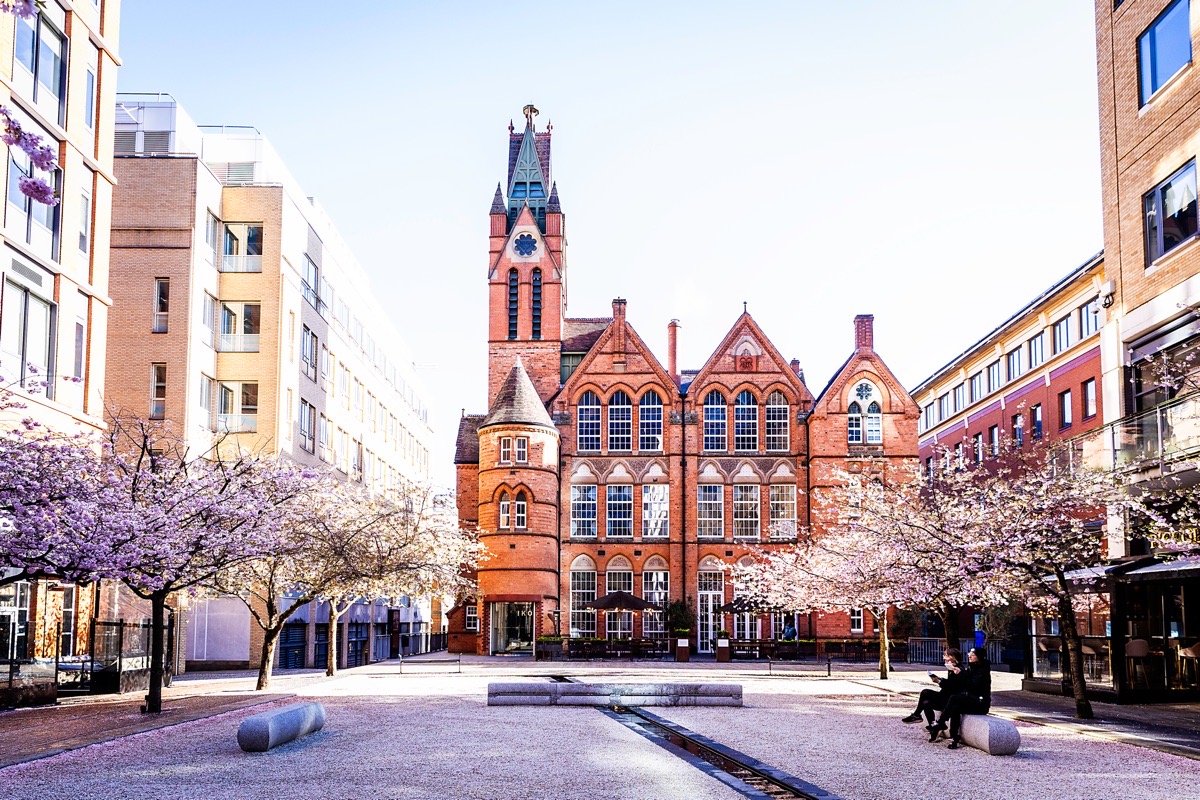
Each spring, Oozells Square in Birmingham is transformed by a brief but beautiful display of cherry blossom. In this reflective piece, I capture the fleeting nature of the season, the atmosphere of the square, and the photographic opportunities created by light, colour, and passing moments.
The Open Exhibition in Birmingham, organised by PRISM photography in collaboration with IgersBirminghamUK and Darkroom Birmingham, brought together a vibrant display of local talent at The Old Print Works in Balsall Heath. Centred on the theme of “Community“, the open exhibition showcased a diverse range of images, highlighting both the creativity and strong sense of connection within Birmingham’s photographic scene. The project is part funded by the UK Government through the UK Shared Prosperity Fund.
Exhibition Format and Display
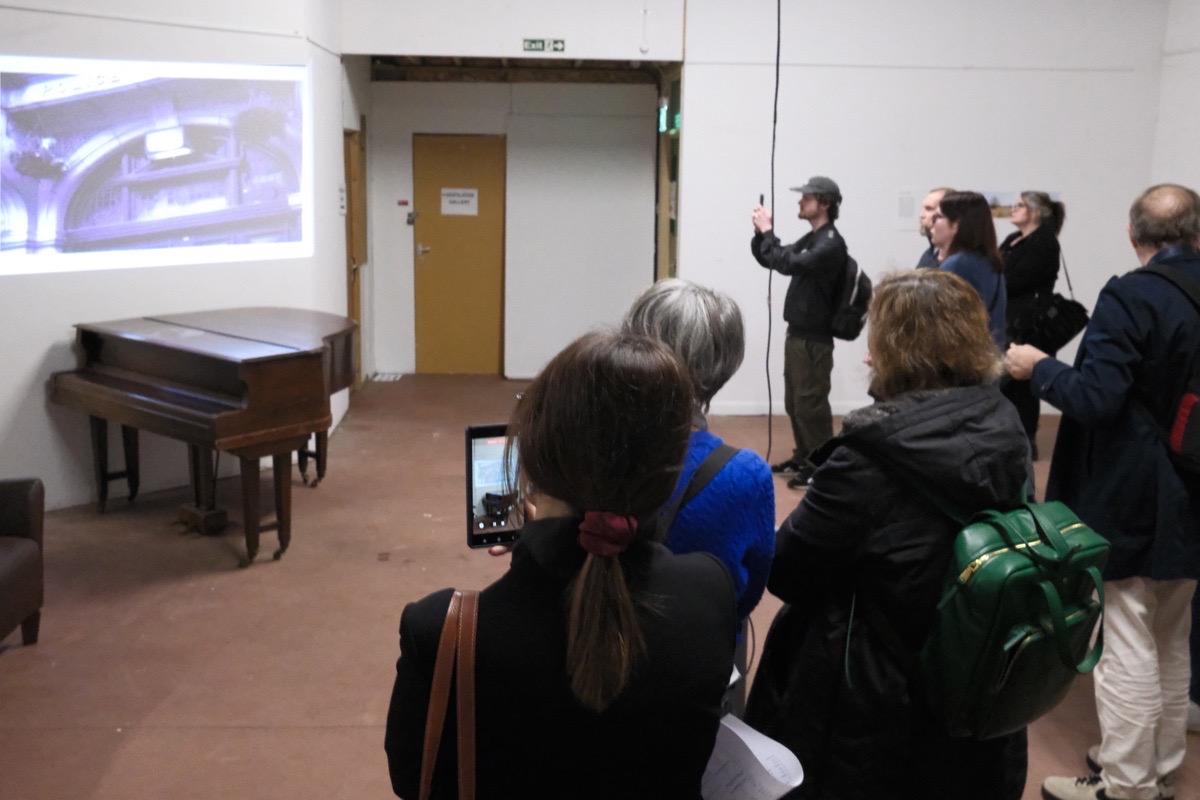
Each photographer was allowed three submissions, with one image printed for display. All entries were also included in a rolling PowerPoint presentation, ensuring every photograph received visibility. Thirteen photographers, whose series particularly impressed the judges, had all three of their images printed and mounted on the surrounding whitewashed walls.
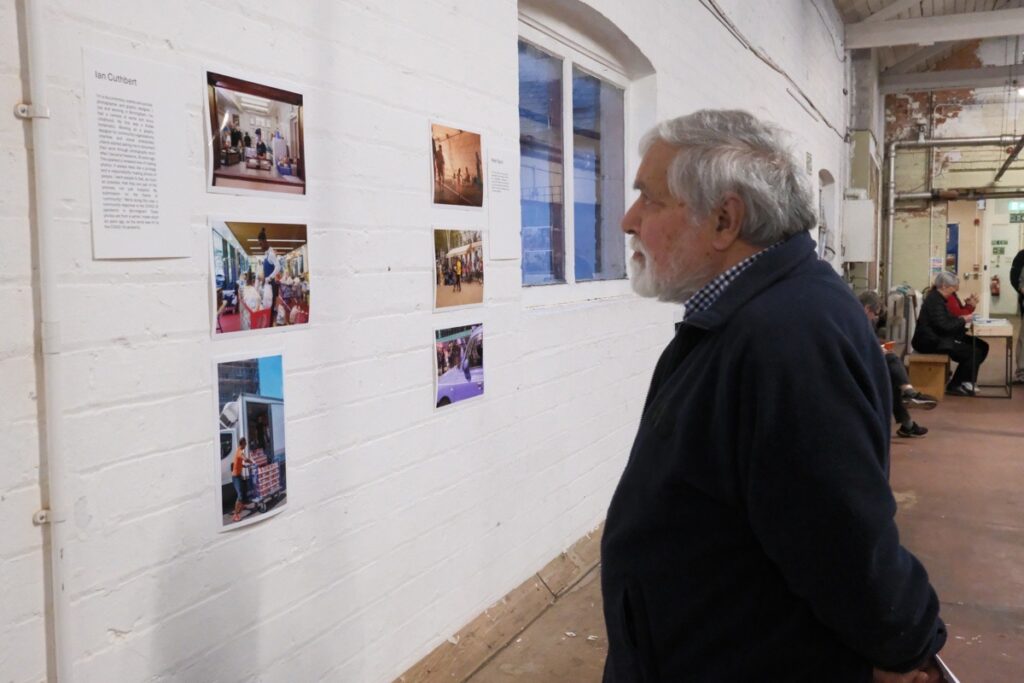
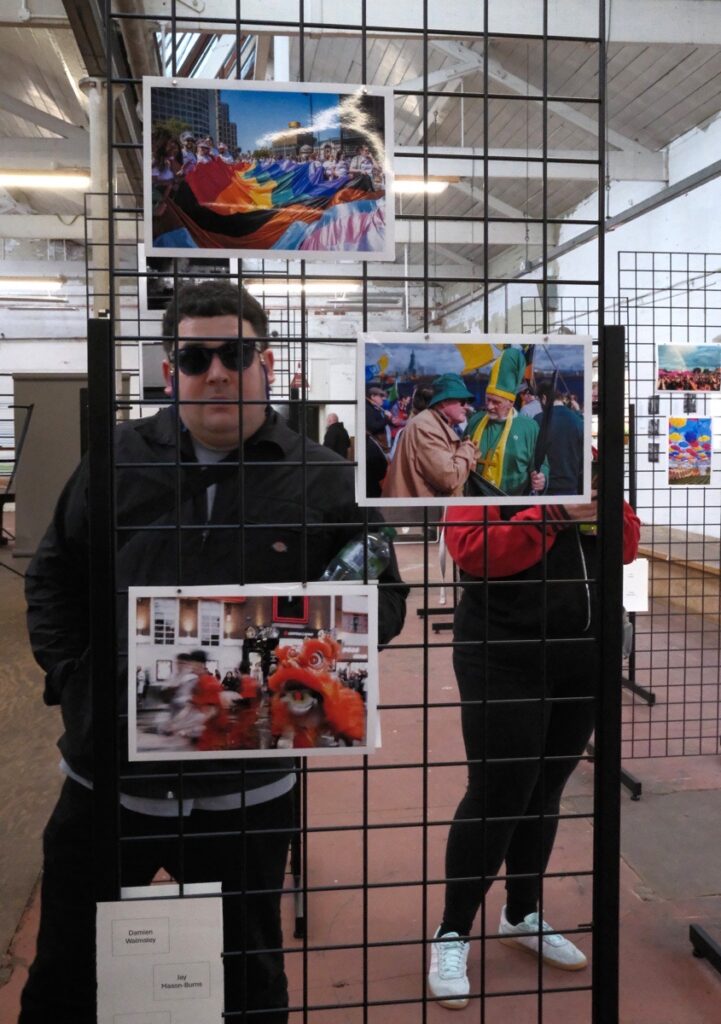
Selected artists had three of their submissions printed and placed on the surrounding walls.
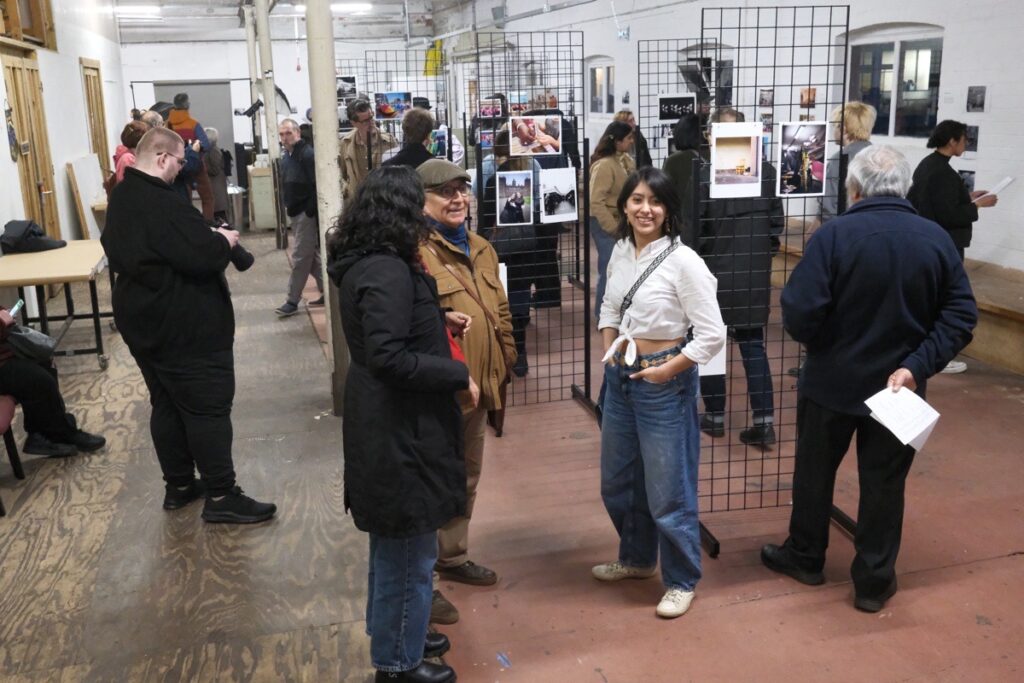
The first floor of The Old Print Works features a long room with seating along the sides and a spacious central area, making it ideal for both viewing and networking. Visitors could move easily around the exhibition, engaging with the work and with fellow photography enthusiasts.
Opening Night Highlights
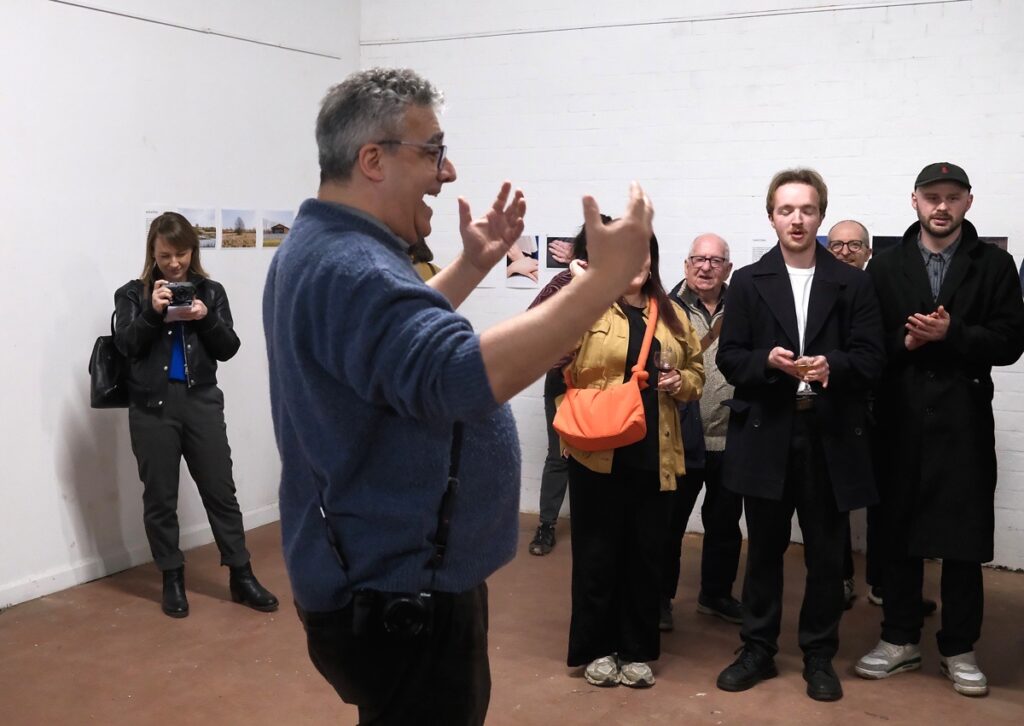
The opening evening of the exhibition was a clear success, with over 75 photographers participating and more than 100 attendees. Francesco Falcini welcomed guests, followed by Hannah Greenwood speaking on behalf of the Old Printworks charity. Additional contributions came from Dan Burwood (Darkroom Birmingham) and Nadia Malik (speaking on behalf of IgersbirminghamUK), while Oksana Birchin from PRISM photography encouraged attendees to select their favourite photograph from the exhibition.
Francesco enthusiastically greets the guests at the Open Exhibition at the Old Printworks.
Celebrating Birmingham’s Photography Community
The exhibition highlighted the enthusiasm for photography in Birmingham and showcased the region’s vibrant creative community. While attending, I found it challenging to balance capturing images with simply enjoying the event, yet I was pleased to document several moments from the evening.
The pictures were placed on metal stands in the centre of the room.
For those unable to attend the exhibition, the organisers’ Instagram channels feature a wealth of photographs and video highlights. Following PRISM Photography, Igers Birmingham UK, and Darkroom Birmingham provides a broader view of the exhibition.
A Personal Reflection
Events such as this demonstrate the strength and inclusivity of Birmingham’s photography scene. Exhibitions that combine printed work, digital displays, and opportunities for networking reinforce the city’s position as a hub for both emerging and established photographers. I look forward to attending future exhibitions and continuing to share my observations and images.
The exhibition open night was very successful with over 100 photographers and guests.
The following YouTube video shows all the submissions from the 75 photographers who submitted pictures.
A short video of the opening night of the exhibition is shown below.
My image that was displayed was from Birmingham Pride in 2024. If you want to know more about where my image originated from then please read the following blog
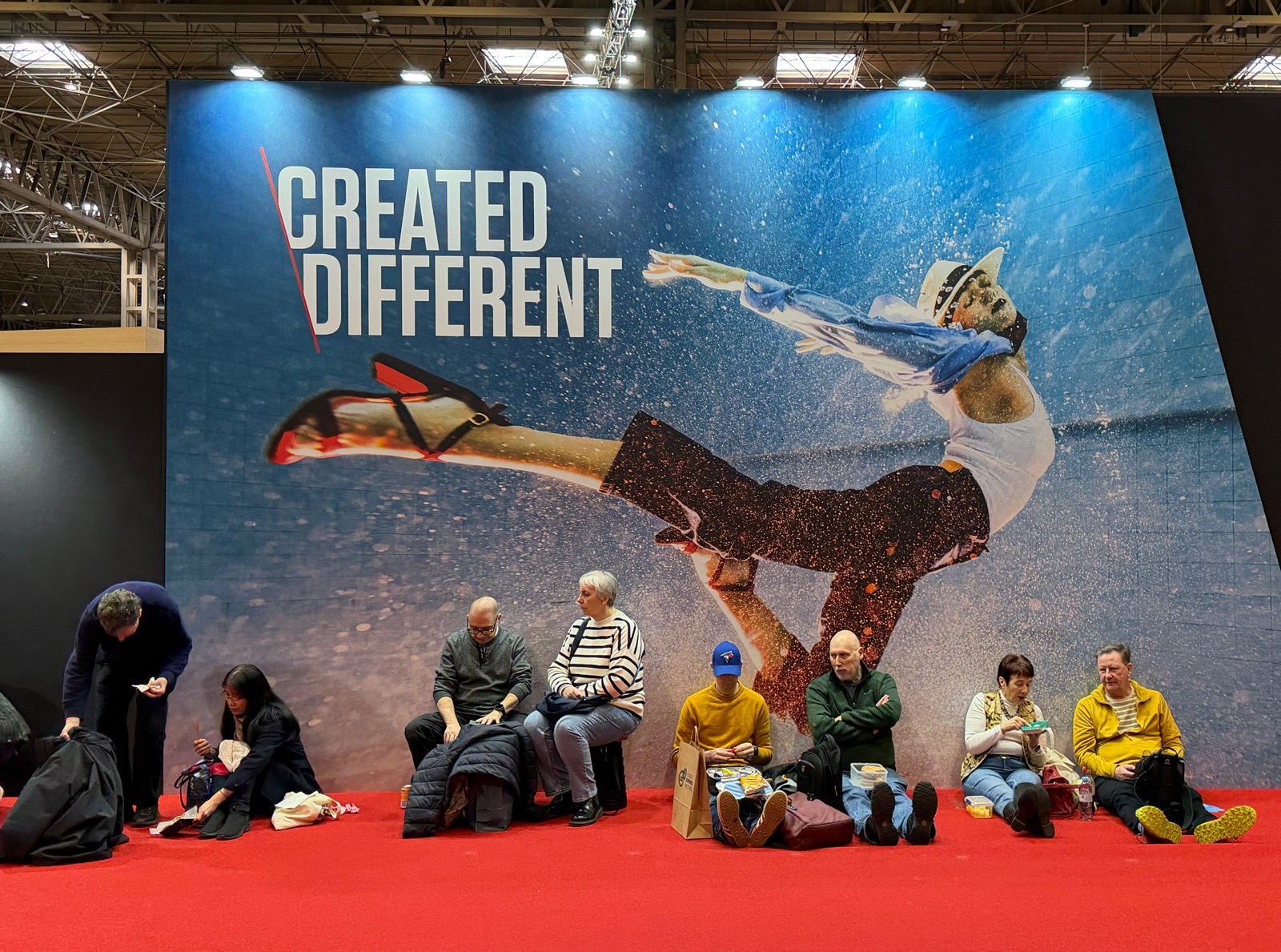
Overall, the Photography and Video Show 2026 at the NEC Birmingham was an enjoyable experience. With so much to see and explore, the day passed quickly. I may differ from many delegates, as I was not there to purchase equipment or products on the spot. I consider myself a reflective photographer and, for the time being, I am content with my current equipment. My main interest lies in how to present my work through photobooks and in exploring accessories that might support my photography.
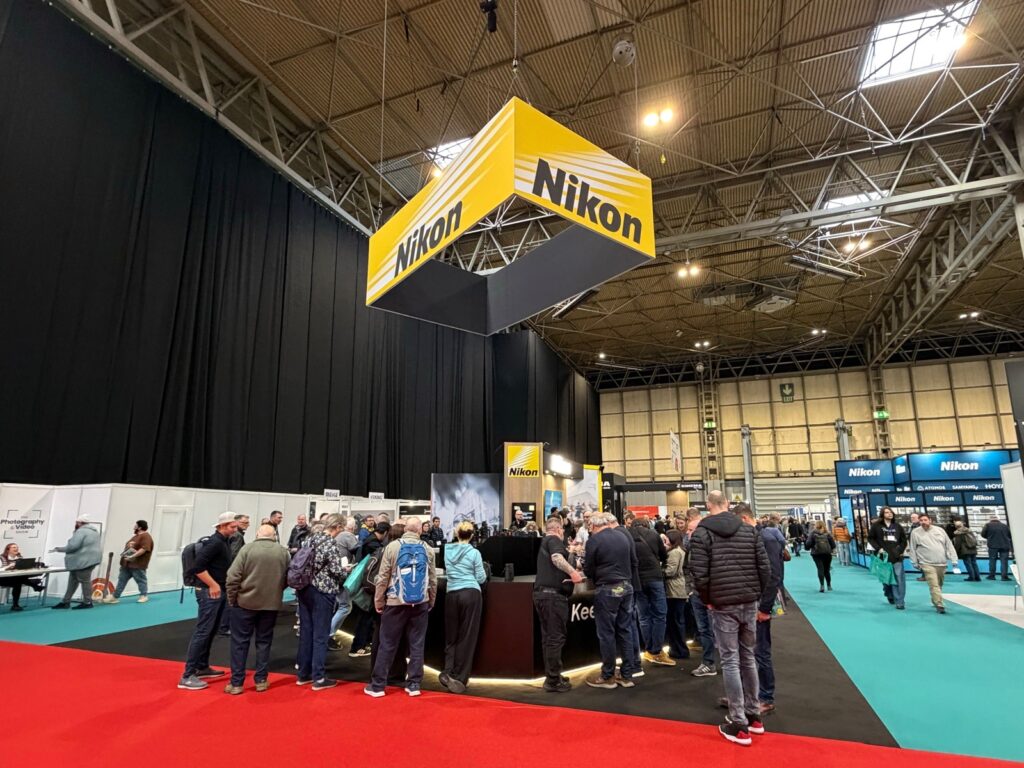
The Nikon stand at the Photography and Video Show 2026
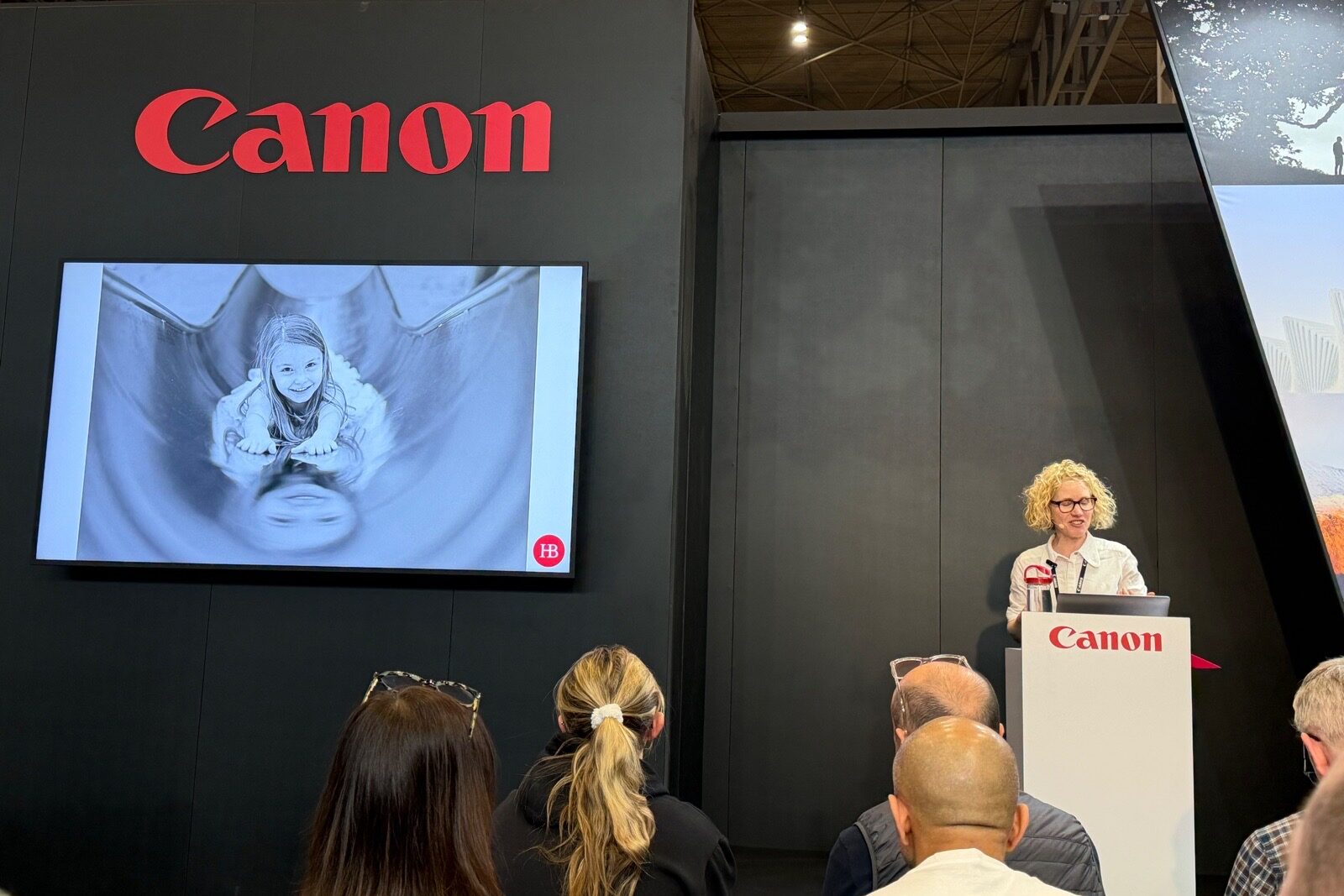
A key feature of the show is the programme of talks, which I find can be somewhat variable. The open theatre sessions are often difficult to follow due to the noise from surrounding activities in the hall. In addition, space is limited for the more popular speakers. I particularly liked the Canon speaker setup, which felt more intimate and made it easier to hear the presenters. I found the talks given at the Amateur Photographer magazine festival of photography held in Greenwich earlier this year to be much more informative. Check out my blog on this event.
Helen Bartlett speakding at the Canon speaker talks.
One talk I was especially keen to attend was by Helen Bartlett on family photography. Her work is highly distinctive, with a strong preference for black and white processing. She also shared valuable insights on how to approach younger members of the family. I came away with several practical ideas and felt inspired to try them out with my grandchildren. I attended other sessions as well, including those on double exposure and Photoshop techniques. Whilst these were informative, the background noise made them challenging to follow at times. This is one area where the photography and video show 2026 disappoints.
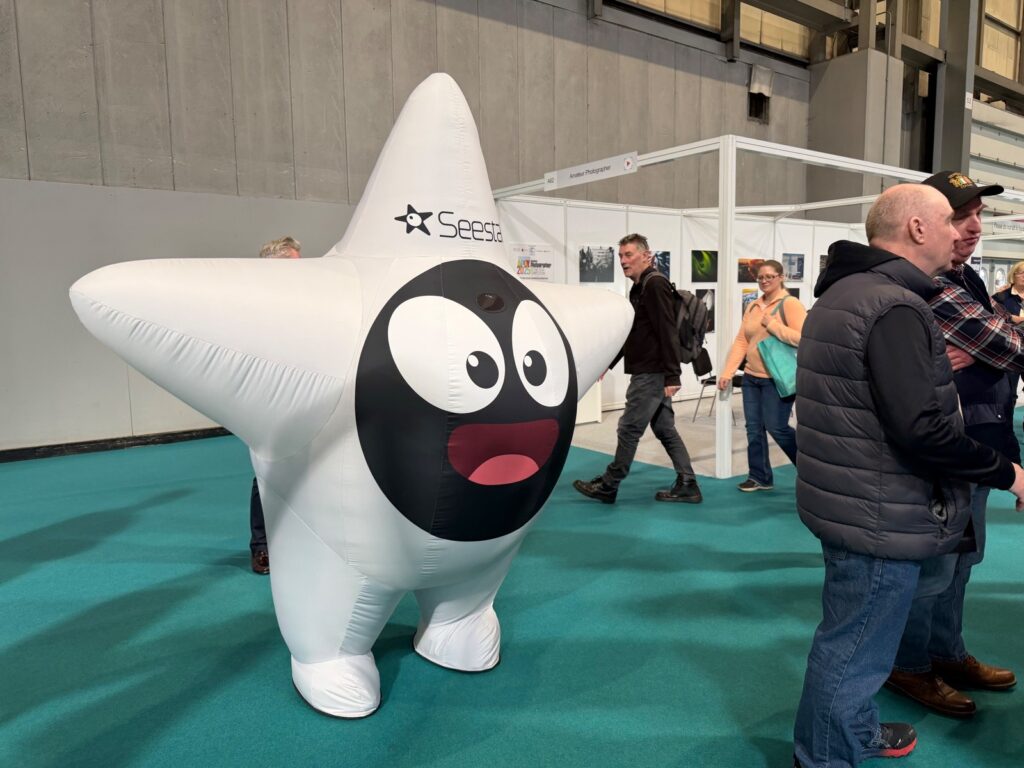
Lots of fun costumes were on display at the Photography and Video Show 2026.
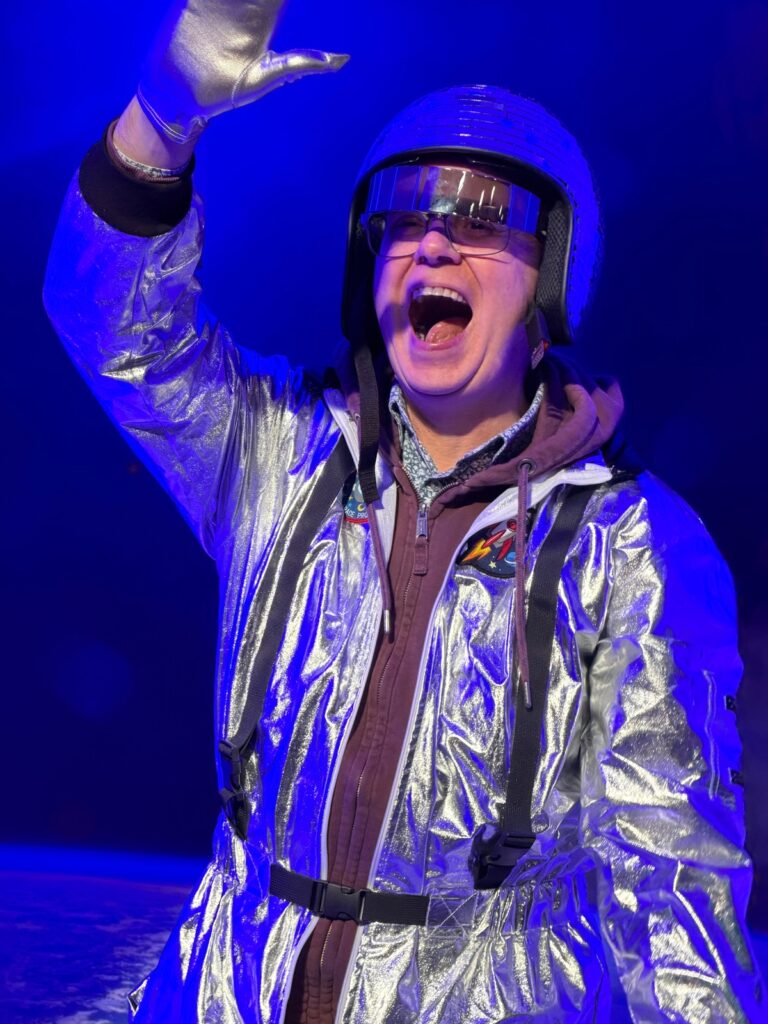
The show is also excellent for networking and meeting people. The Creator Playground (CreatorCon) was particularly enjoyable. One of my highlights was dressing up as a spaceman, and fortunately a local photographer, Jack Babbington, was on hand to take my photograph. The area was creatively set up with a variety of backgrounds, allowing visitors to immerse themselves in scenes ranging from snowy landscapes to the casinos of Las Vegas.
Dressed as a spaceman in the CreaterCon playground (Photo – Jack Babbington)
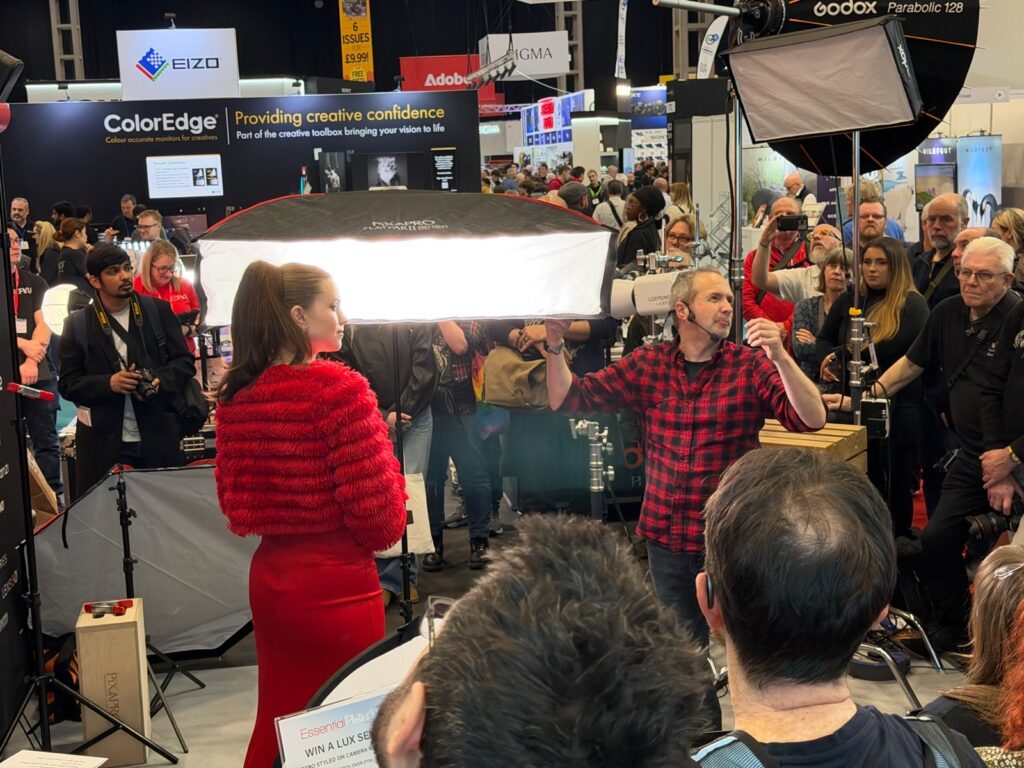
The models on the stands attracted considerable attention from visiting photographers. I have learned to be cautious about joining these crowded groups, where many are competing for the same shot. On this occasion, I chose to keep a respectful distance and simply observe the atmosphere.
Model shoots always attract a large crowd of photographers.
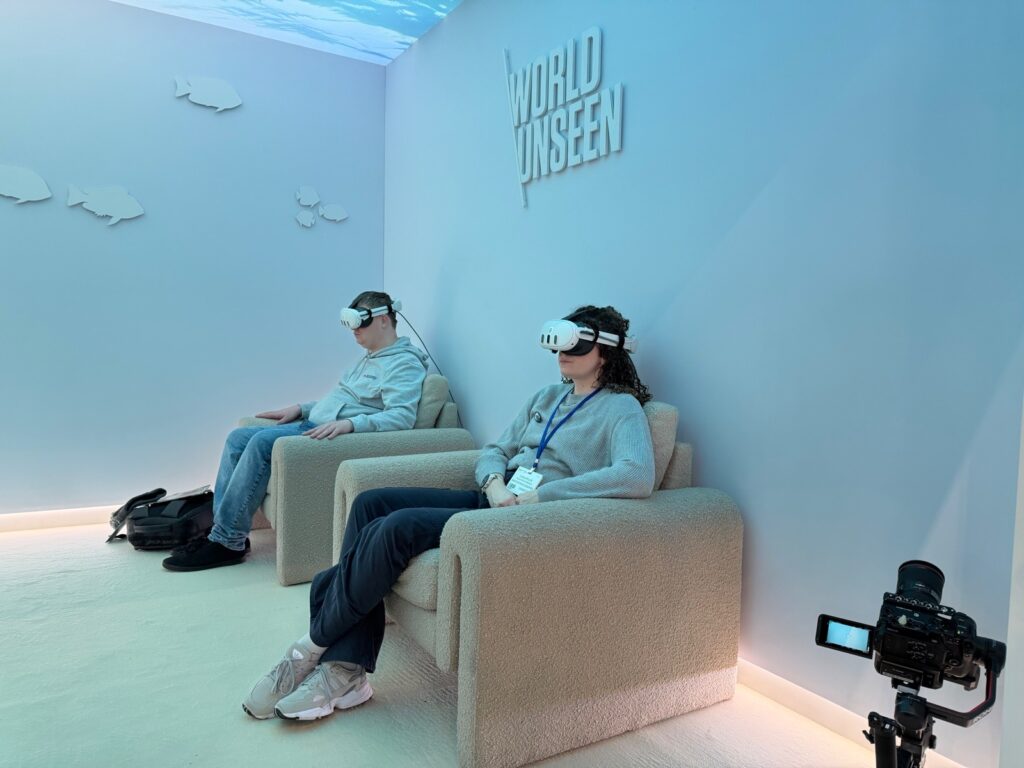
I also enjoyed the virtual reality experience of deep-sea diving over coral shelves in the Seychelles. This carried an important environmental message, illustrating the contrast between healthy, dying, and regenerated coral ecosystems. However, the picture of people with their headsets on does look very dystopian.
VR experience of deep sea diving in the Seychelles.
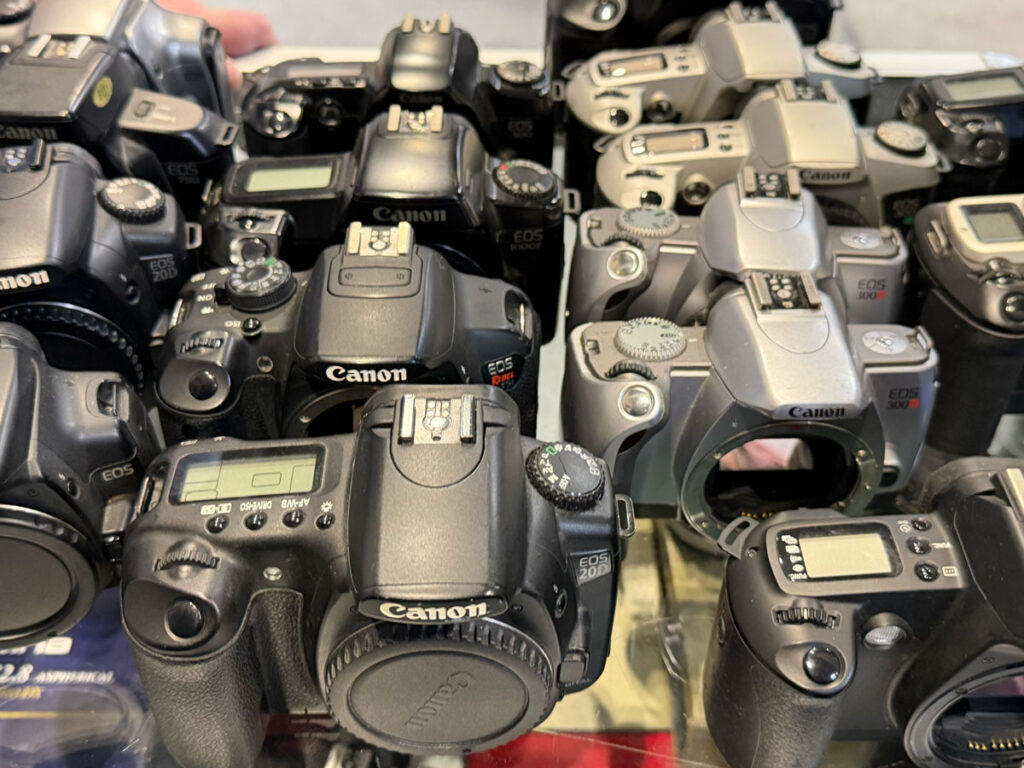
Other favourites included the Disabled Photographers’ Society stand, where there is always interest in vintage cameras and accessories. I also enjoy trying the long lenses displayed on podiums, which allow you to appreciate the remarkable reach of such equipment. All the major manufacturers had impressive cameras and lenses on display.
Camera bodies on display at the Disabled Photographers stand. Lots of Choice.
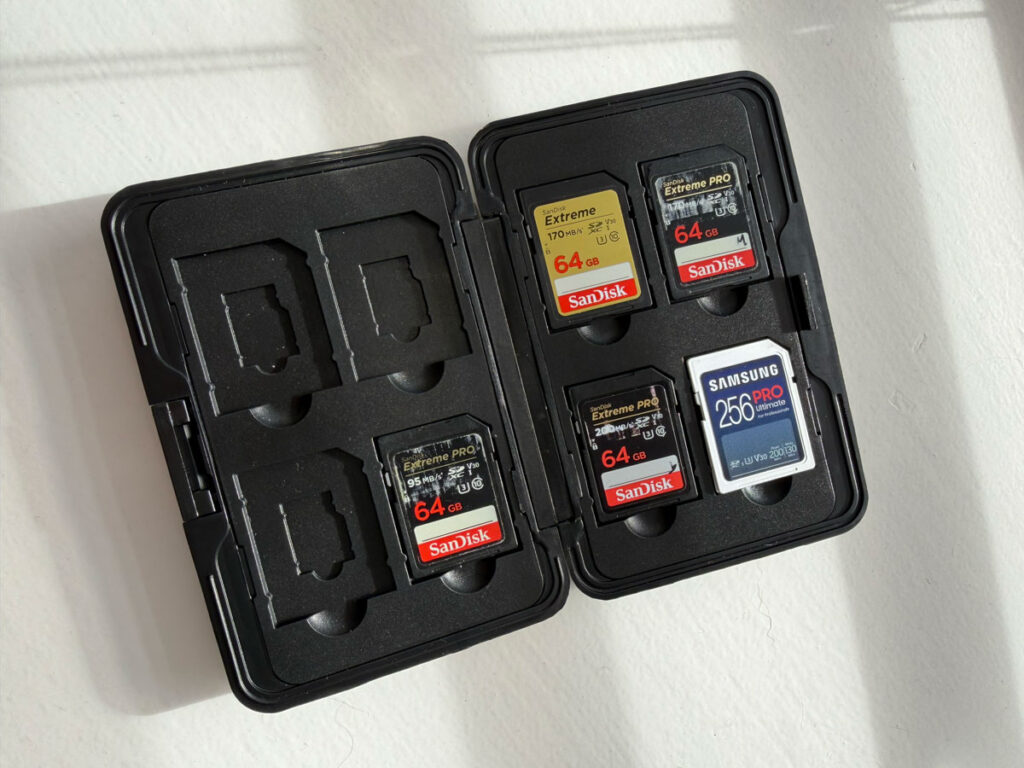
One unexpected highlight of the photography and video show was the lucky dip at the SanDisk stand. After queuing to take part, I won an SD card holder. It was not something I had previously considered essential, but since the show it has proved to be a very useful accessory. Who would have thought?
I look forward to the next Photography and Video Show in London in 2027.
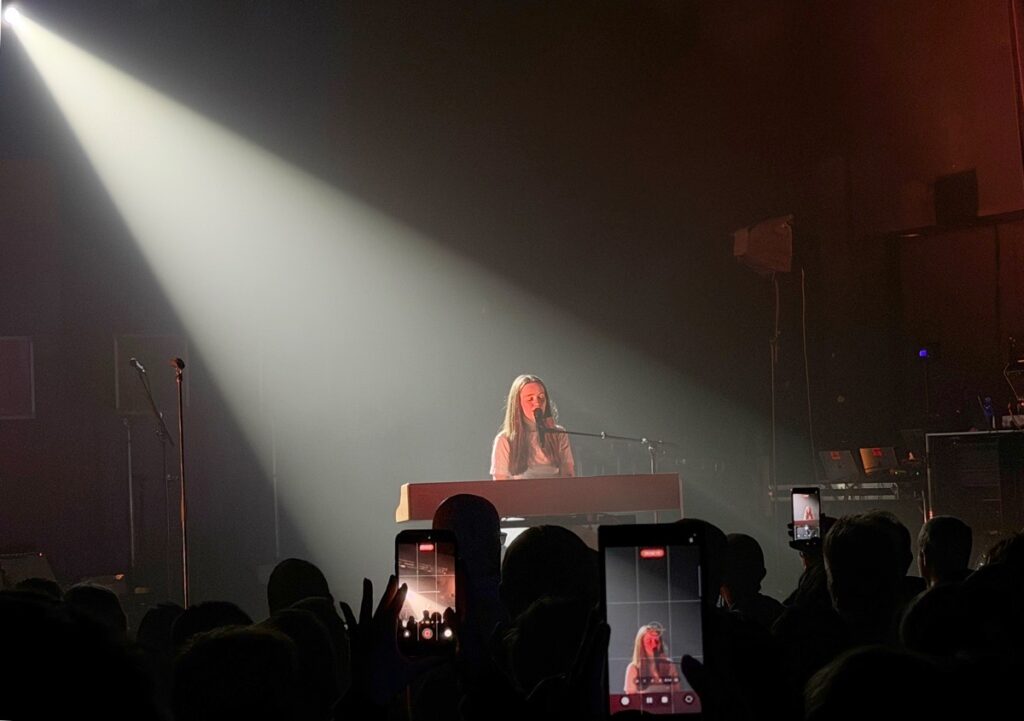
Sigrid played at the O2 Academy in Birmingham in March 2025. I went to her concert courtesy of tickets of my son-in-law. Small concert venues to me are the best places for live music. In contrast, I have never enjoyed music festivals preferring the intimate dark surroundings of a venue such as the O2 academy.
Sigrid on the piano playing “There’s Always More That I Could Say”
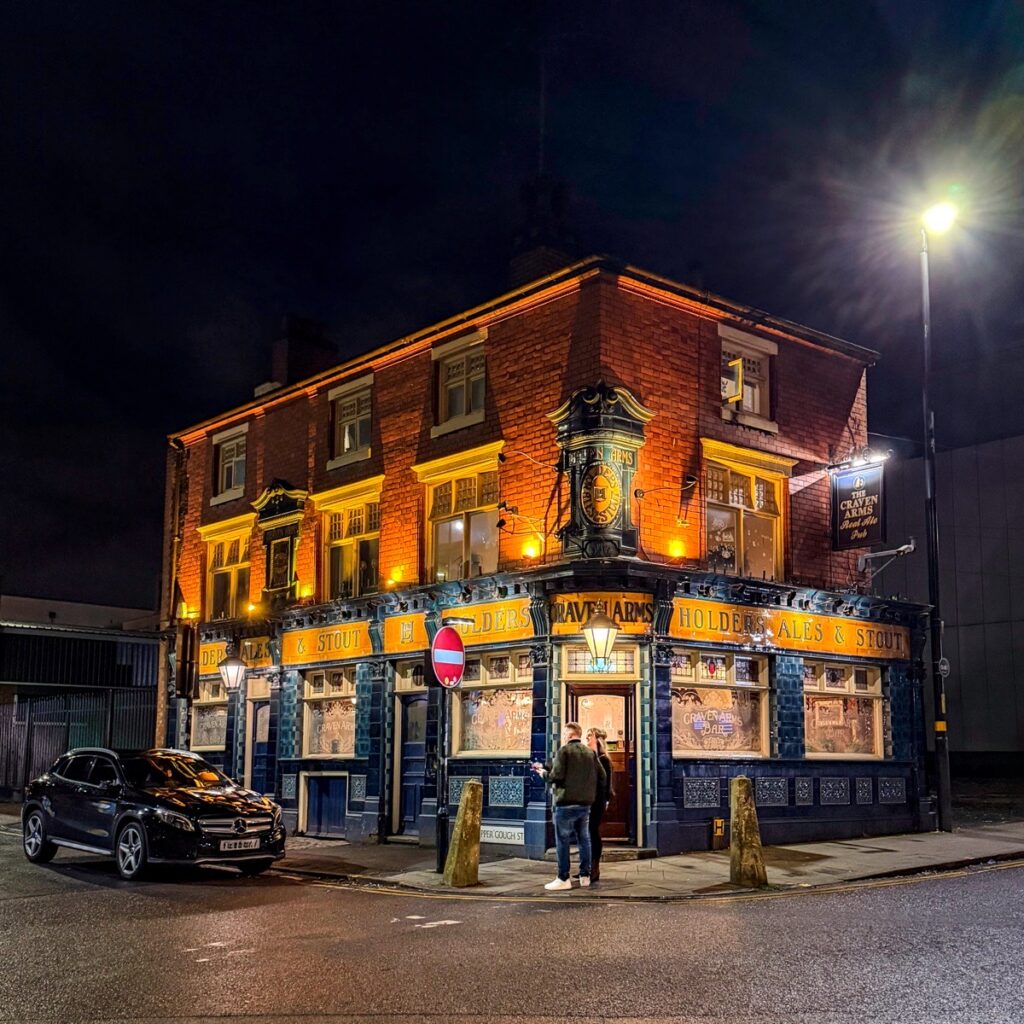
Prior to the concert we had drinks at the Craven Arms which is close by. Highly recommended but it did mean we missed the support act. When we arrived at the venue there was ample opportunity to find a good space to watch the show. As it happens, a few people taller than me were blocking the view. Despite this I was able to get a good view of Sigrid during the concert.
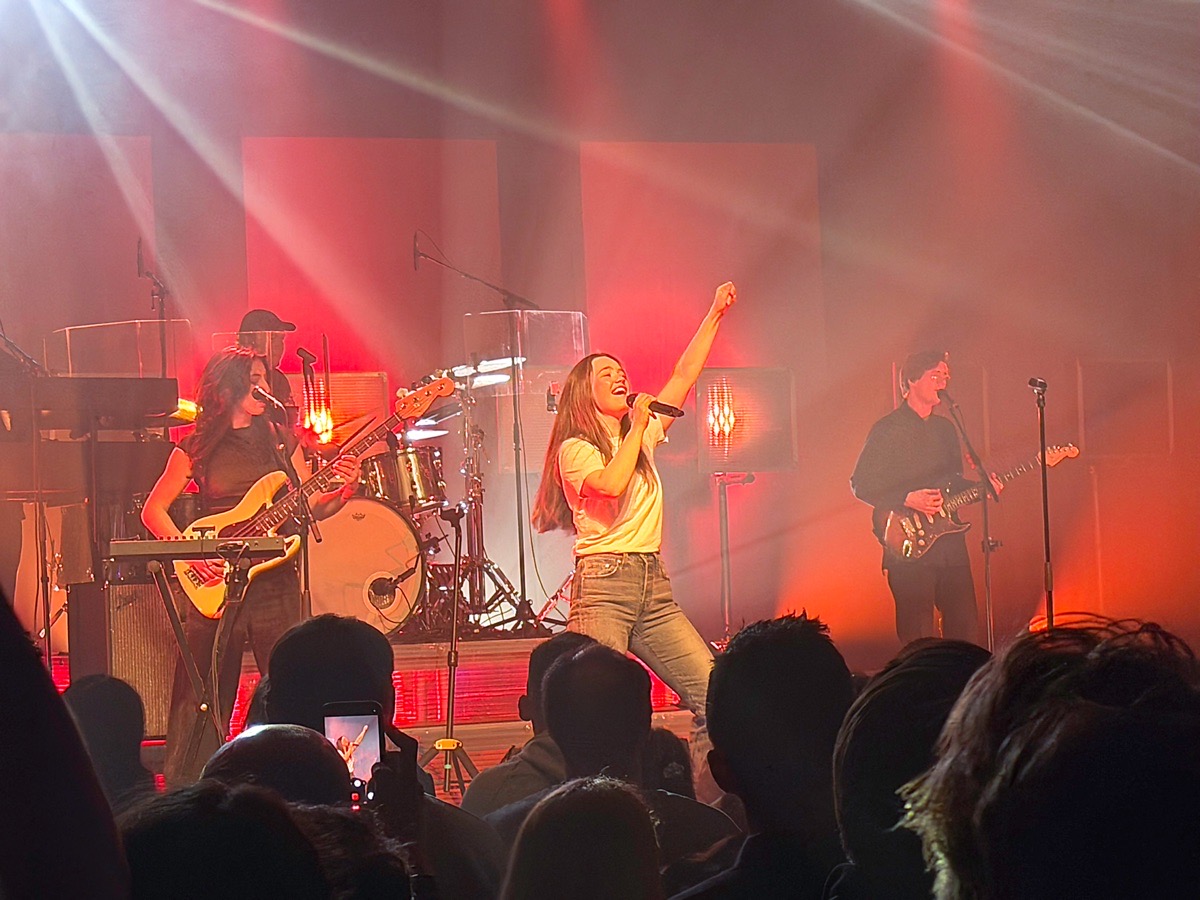
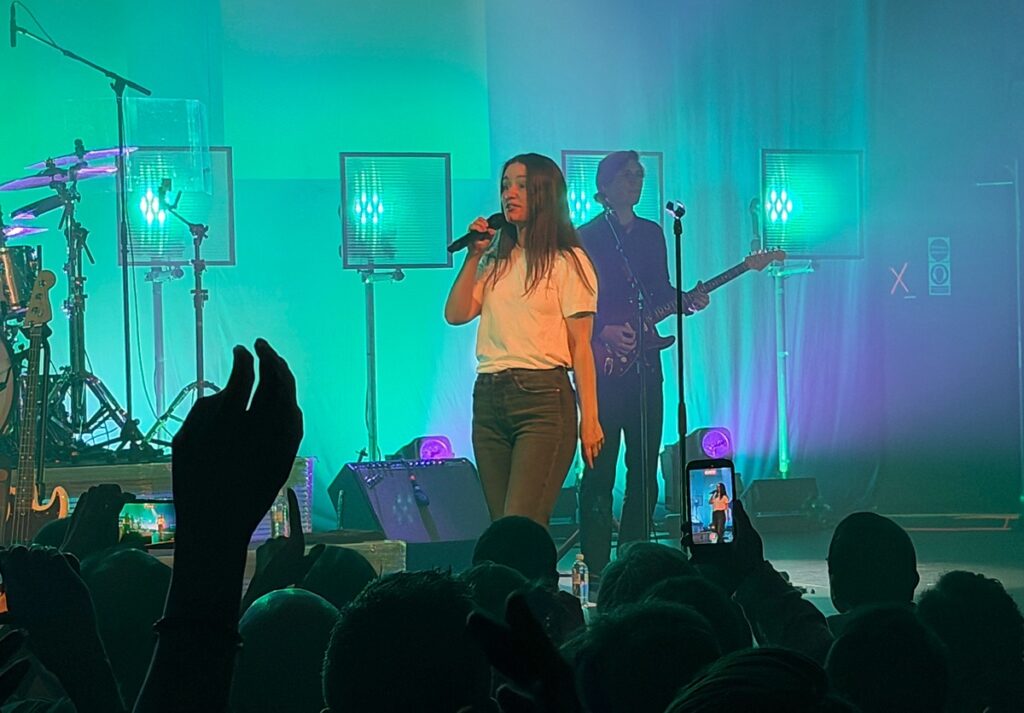
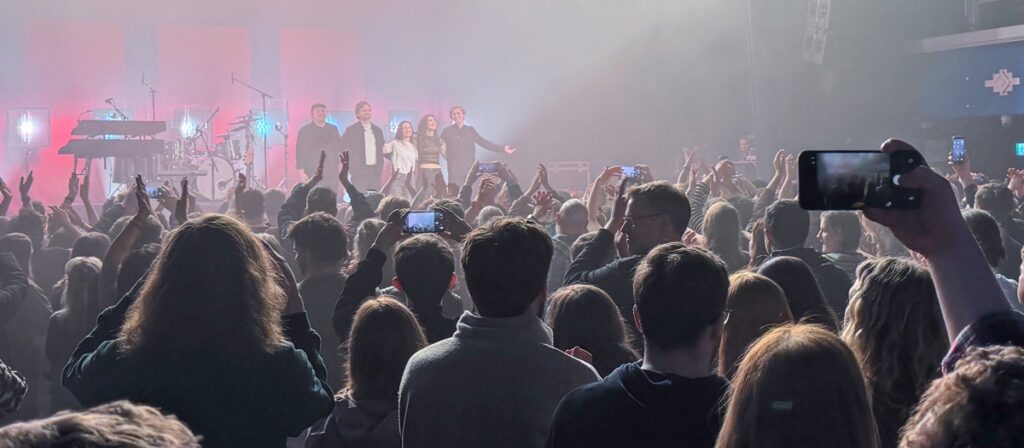
Sigrid on stage.
Taking pictures of concerts has changed for me over the years and I have used various compacts. See my write up on Steve Gunn back in 2019 at the Hare and Hounds where I was using a Sony RX100v5. This blog discusses the use of my iPhone17pro. A simple technique with the iPhone is to control the exposure using the inbuilt camera app. Reducing the exposure in this way helps to reduce the glare from the bright lights.
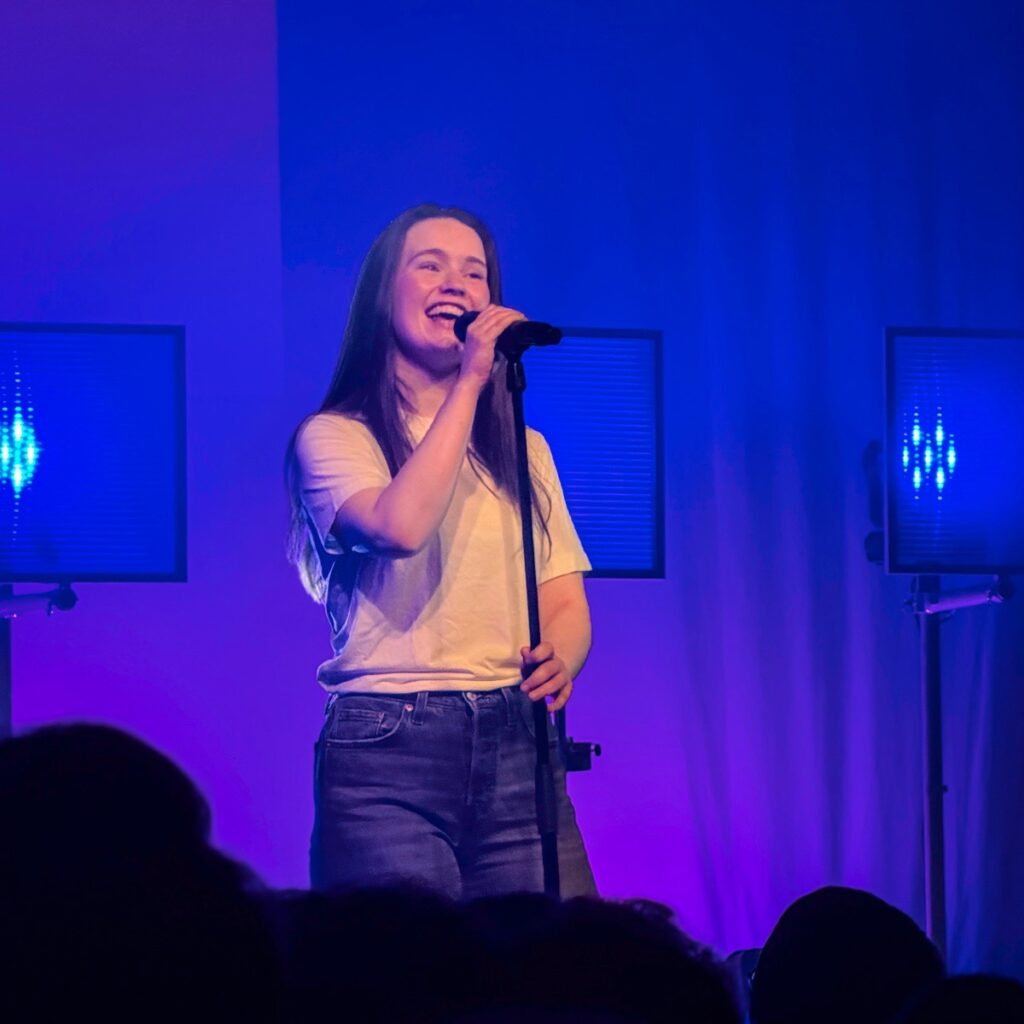
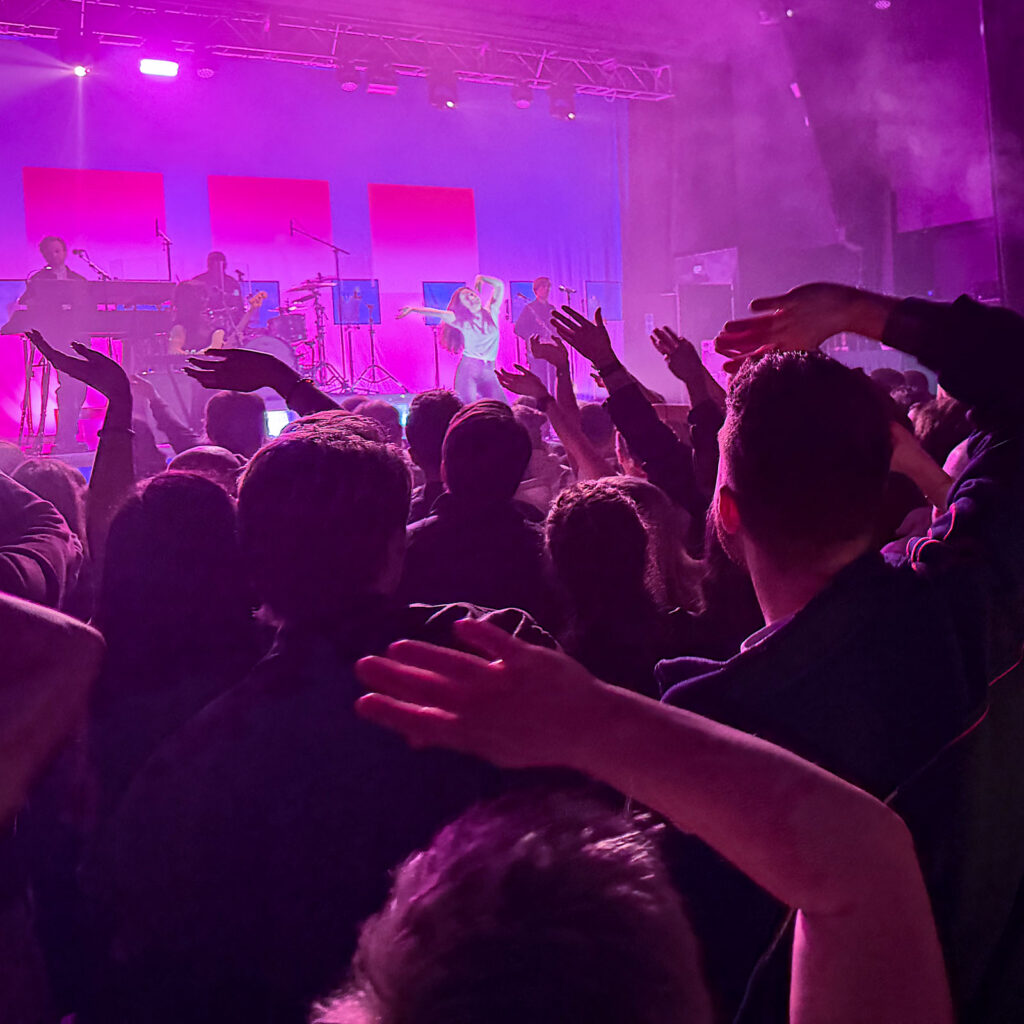
SigridThe crowd
.
I did take close pictures of Sigrid but most of the time I was in the main crowd enjoying her music. There are pictures of the crowd which show the audience participation led by the singer. Another tip with the iPhone is not to overuse the digital zoom as you will find your pictures are excessively noisy. Where possible I did not go over x2 zoom.
Sigrid and band say goodbye until the next time.
As to the concert, Sigrid is such an accomplished performer and has an exuberant personality. There is no fancy stage show as Sigrid prefers to showcase her excellent singing enhanced by her infectious personality. She played mostly from her new album “There’s always more that I can say” and favourite songs including “Strangers” were played much to the audience’s delight. The band were excellent including some excellent guitar solos. Sigrid’s set list shows the songs that were featured. Definitely an entertaining concert by an artist who is at the top of their game.
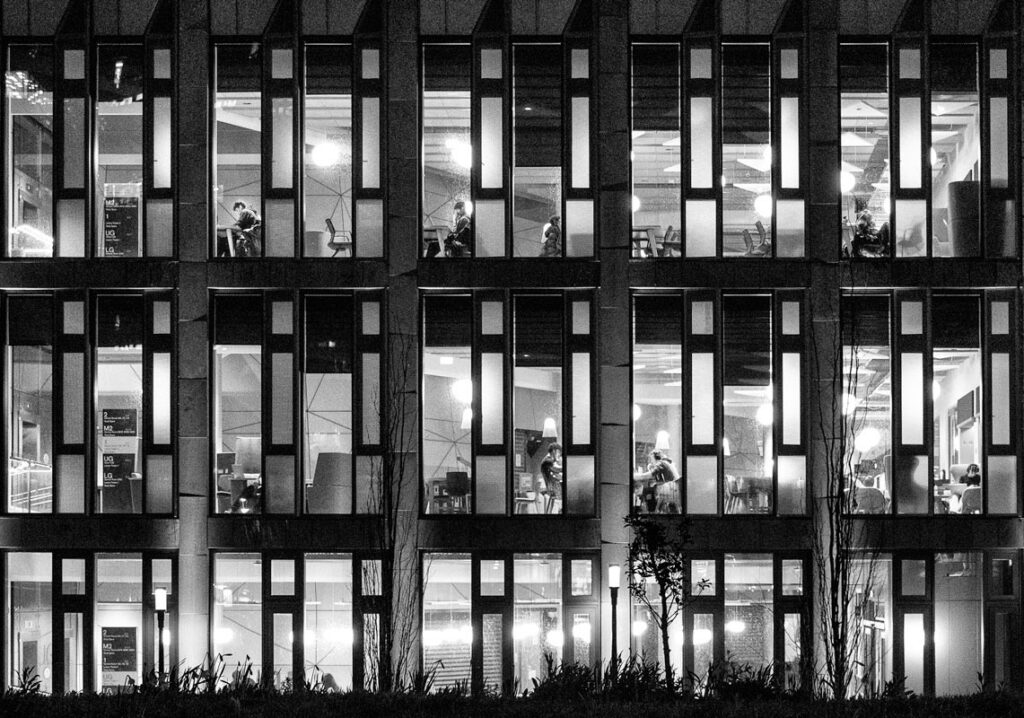
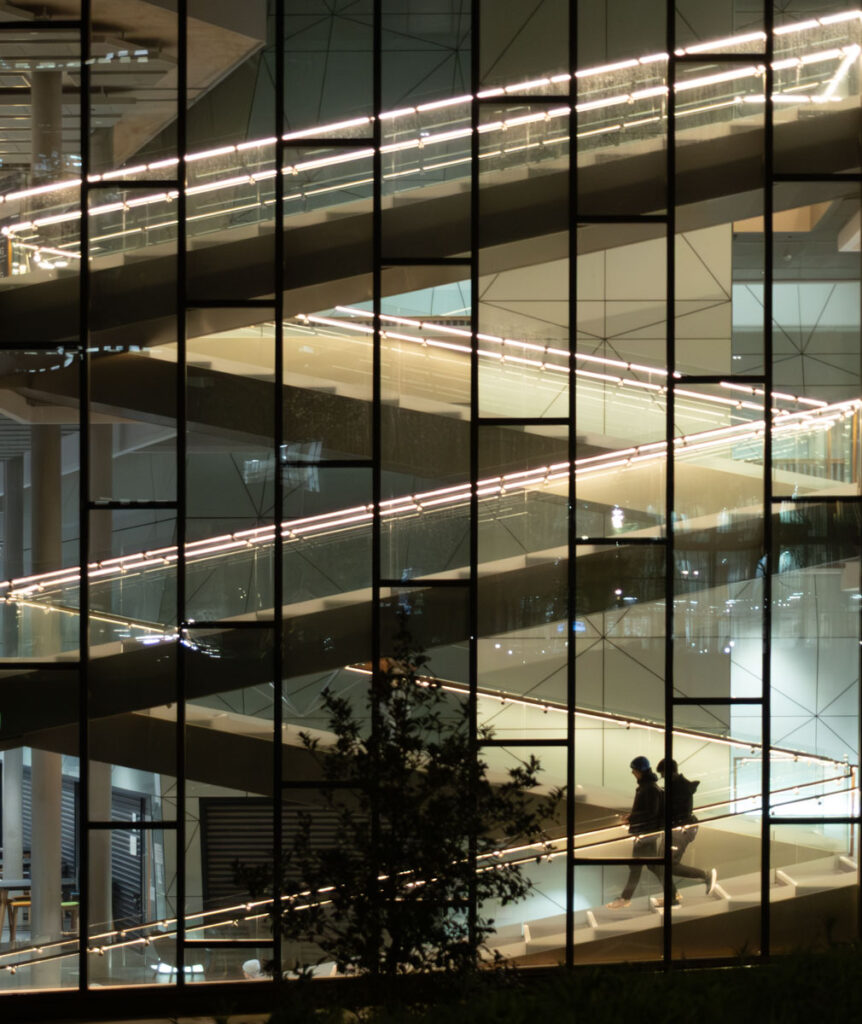
A student makes their way into the Teaching and Learning block.
A Wet Evening on Campus
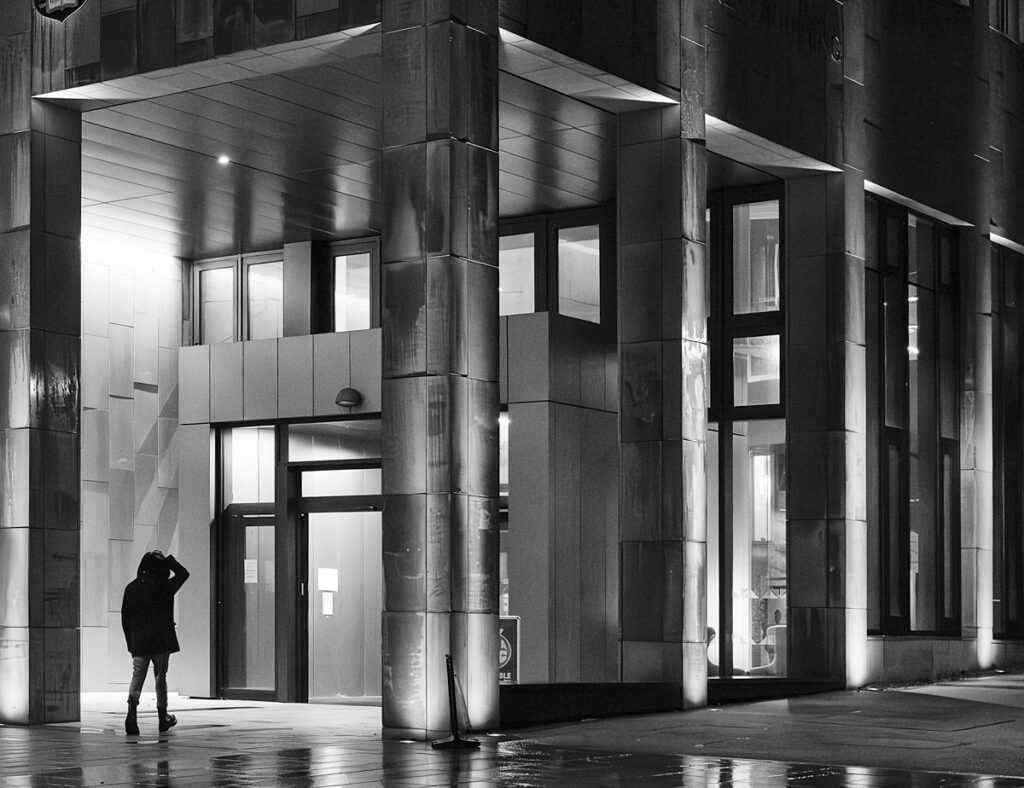
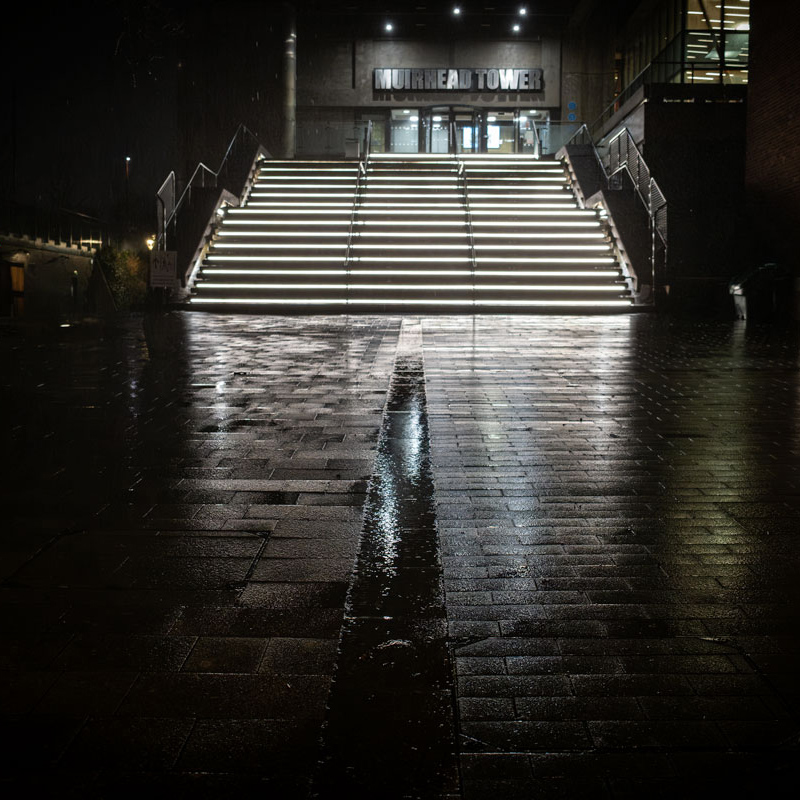
The University of Birmingham campus is very beautiful at night. I enjoy wandering around with my camera, photographing the buildings when the lights are on. The bright lights from the buildings and the rain-swept pavements create wonderful reflections. I realise that this may not be the best environmental practice, but the campus does look splendid illuminated after dark.
People studiing in the teaching and learning block
Earlier in the evening I had attended a talk on therapeutic photography by Neil Gibson, which inspired me to take more pictures of the campus at night.
Old Joe Lights Up the Night
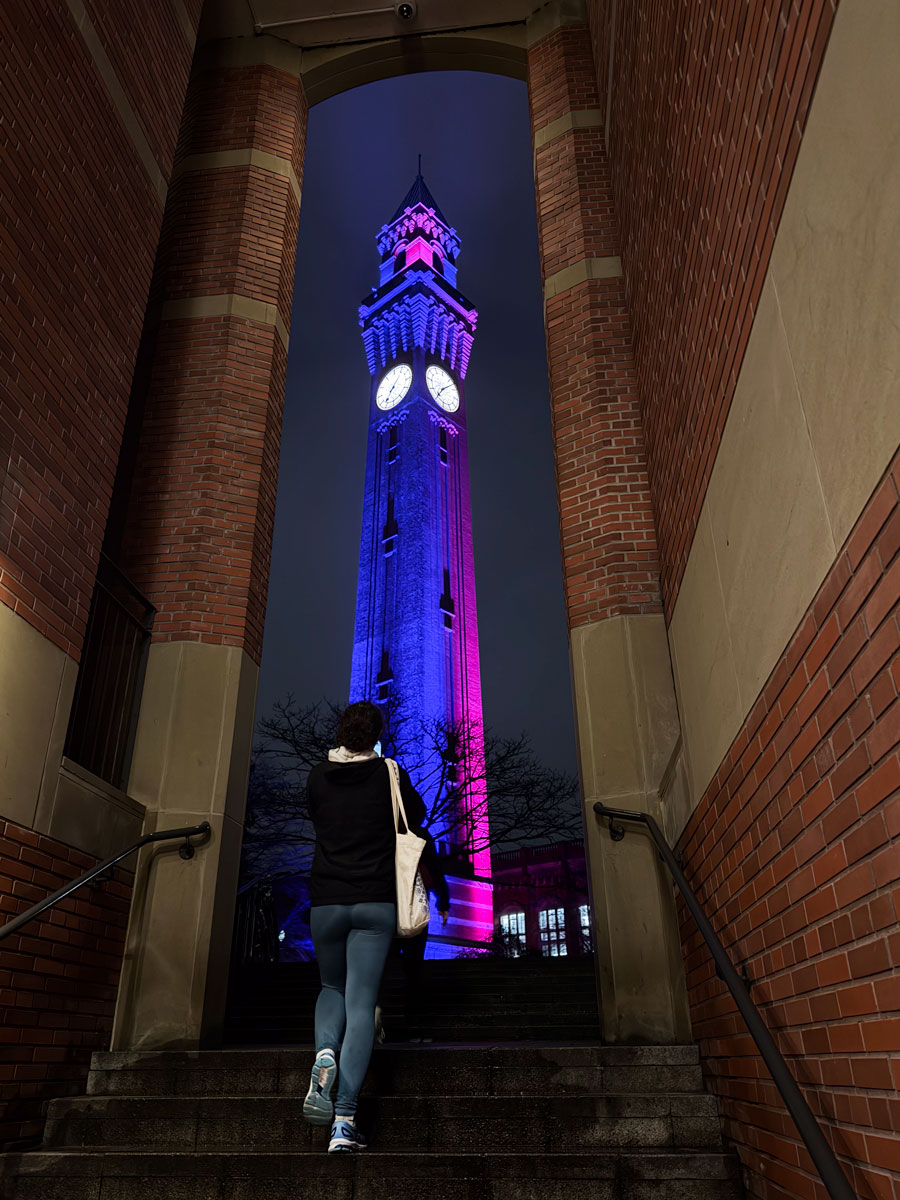
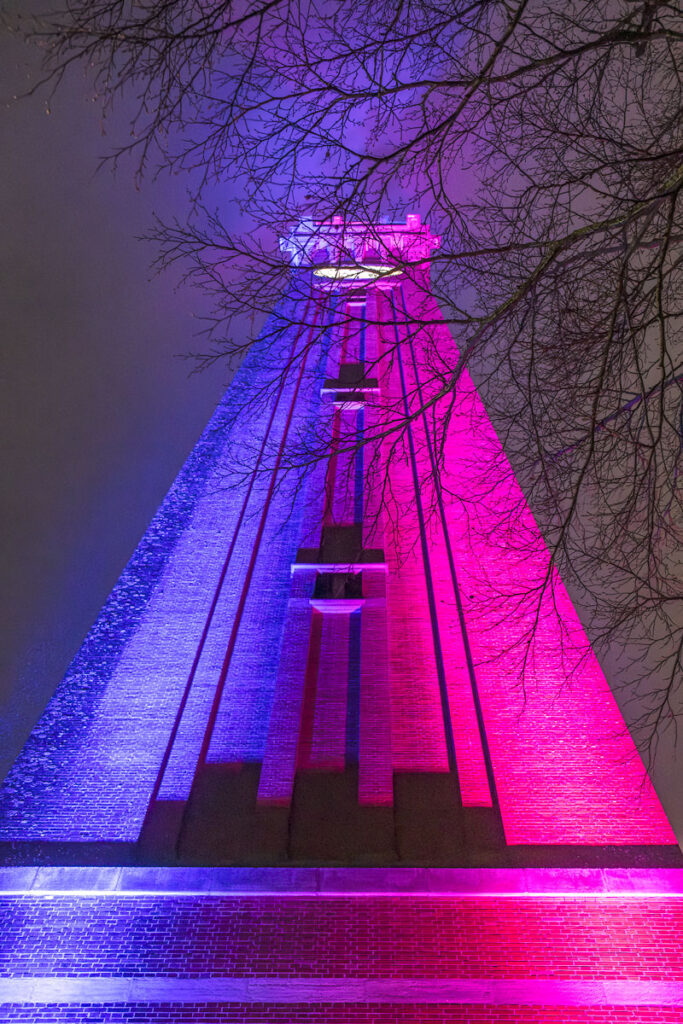
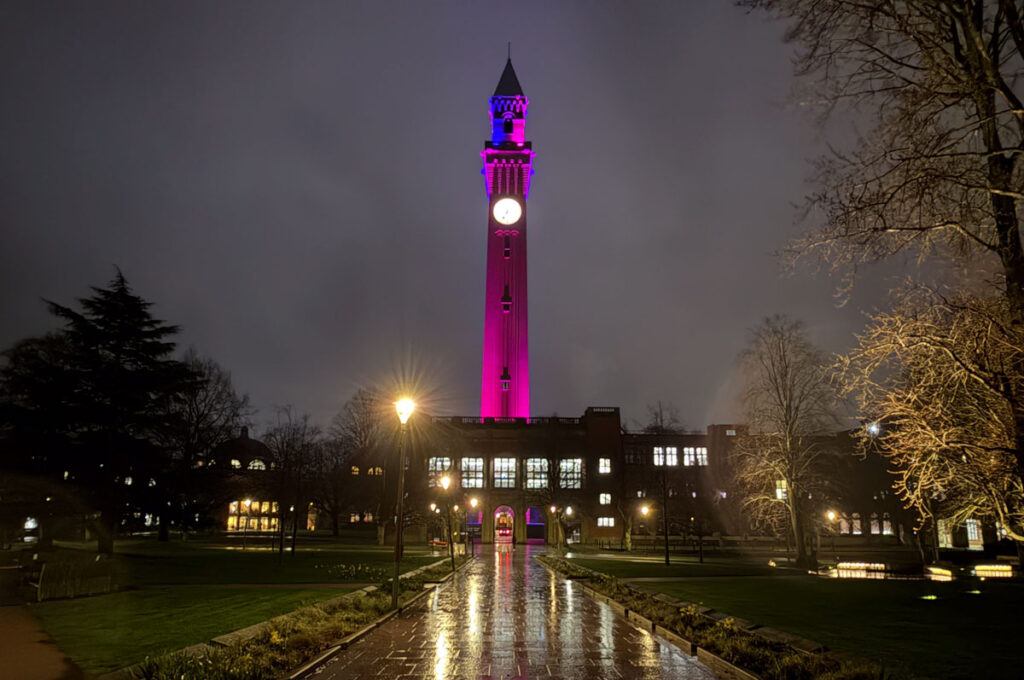
The rain was lashing down and, at first, the idea of an evening stroll was not particularly appealing. However, when I saw Old Joe lit up in vibrant colours to celebrate 125 years, I was captivated and could not resist taking photographs. There were puddles of water that offered several opportunities for reflections of the lights from the building.
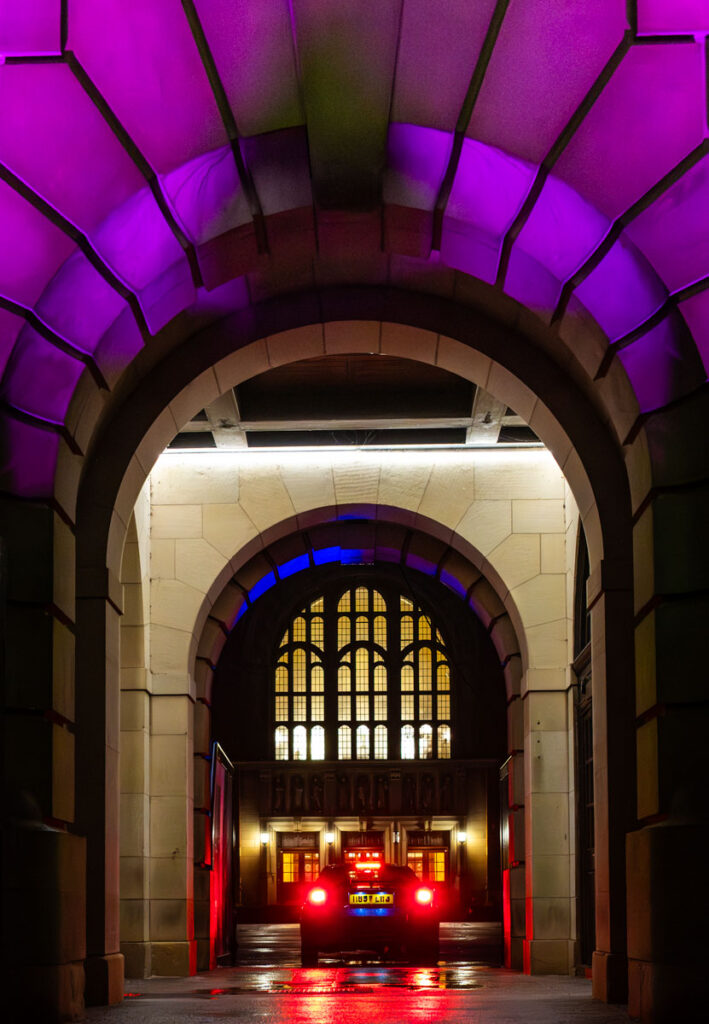
Looking up at the colours of Old JoeUnderneath Old Joe, a car sits looking at the Aston Webb building.
Cameras for a Rainy Night
My Fujifilm X100VI is ideal for wet nights, as I have weather-proofed the camera. The iPhone 17 Pro is always with me and is also an excellent camera for capturing wet-weather reflections.
The steps at the entrance to the Muirhead Tower create interesting patterns in the dark
Starting at the North Gate
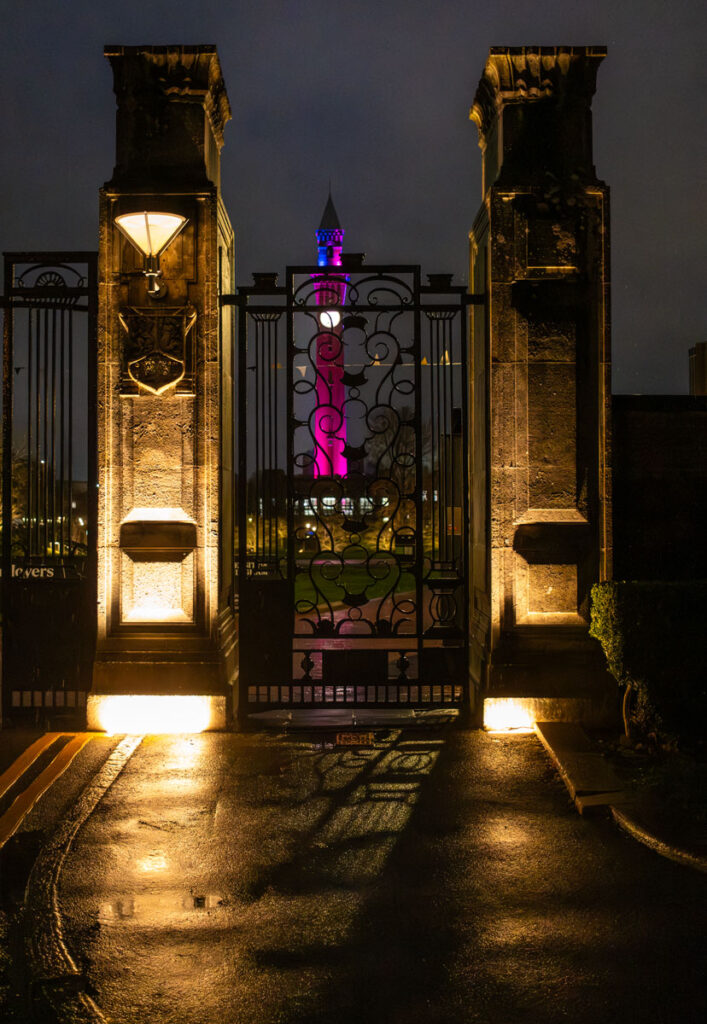
As the talk began at the Gisbert Kapp Building, the North Gate was an ideal starting point. There are some wonderfully cinematic night views here featuring Old Joe. It is difficult not to become distracted by the envelope of vibrant colours surrounding the clock tower.
The North Gate of the University at night with Old Joe in the distance.
Student Life After Dark
The newer buildings on the right were a hive of student activity. Both the Library and the Teaching and Learning Building were brightly lit, and I stayed nearby for a while to capture students moving in and out.
The teaching and learning block provides geometric patterns.
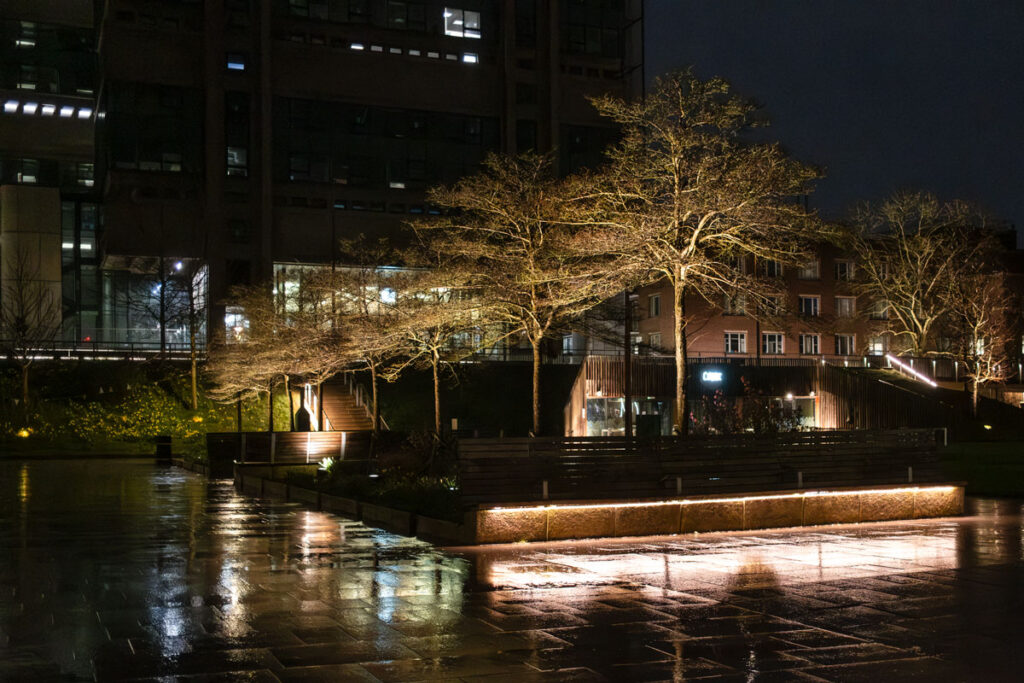
The trees in front of the Muirhead Tower looked particularly striking and slightly eerie in the rain.
Trees illuminated by ground lighting look very stark in the light.
The Classic Views of Old Joe
Everyone takes the classic views of the clock tower with strong leading lines, and I thought, why not? I headed to the usual Instagram-friendly spots around the Aston Webb Building to capture those iconic perspectives.
A classic view of the Chamberlain clock tower in lights for the 125 years anniversary.
A Quiet, Rainy Walk Back
After taking a few close-up shots of Old Joe, I wandered back towards the Muirhead Tower and along the walkways to the North Gate. It was a very wet night, so unfortunately there were not many people around. Once again there were several reflections creating photographic opportunities.
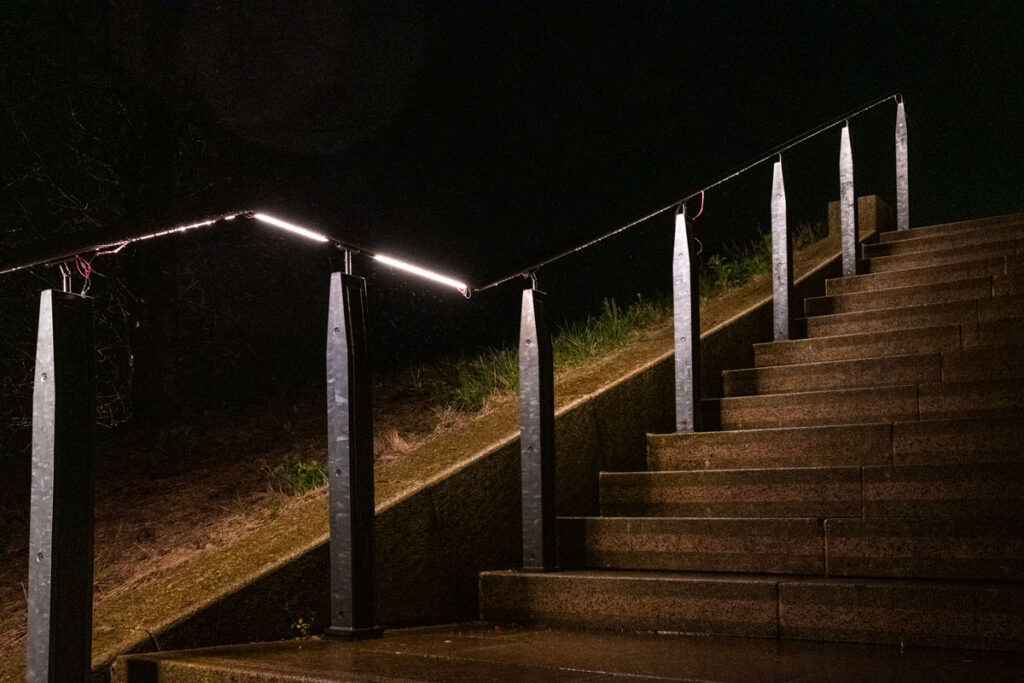
Railings on the steps leading to the walkways around the Green Heart.
I like to catch the occasional silhouette in the glare of the lights, but most people were sensibly staying inside the buildings. After one last look around the campus, I made a welcome retreat to the shelter of my car.
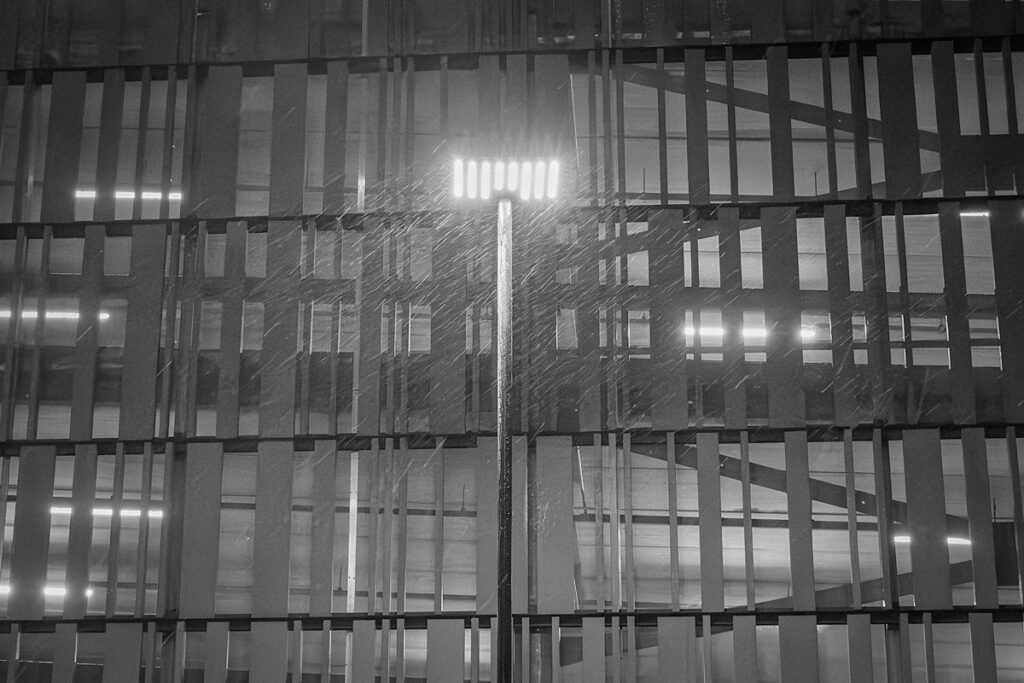
The lights at the Pritchatts Road highlight the rain.
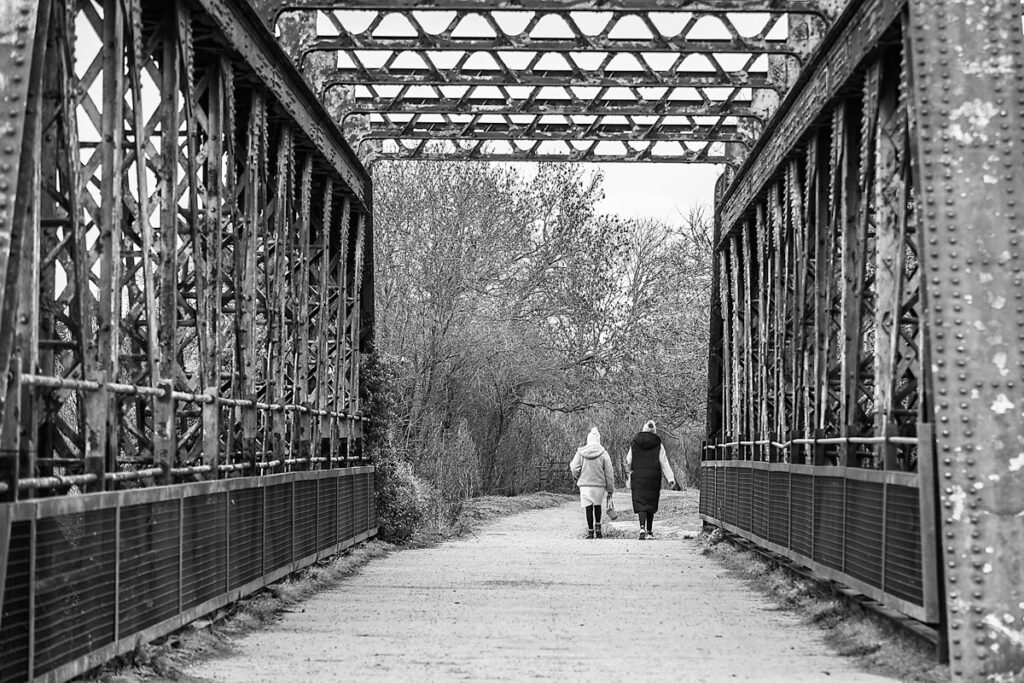
Stannels Bridge is part of the Stratford Greenway, located just outside Stratford-upon-Avon. The disused railway track is now a haven for cyclists and walkers. A landmark structure near the start of the greenway is an old railway bridge. It was built in the early 1900s and formed part of the Great Western Railway. The steel girder structure allowed the railway line to cross the River Avon.
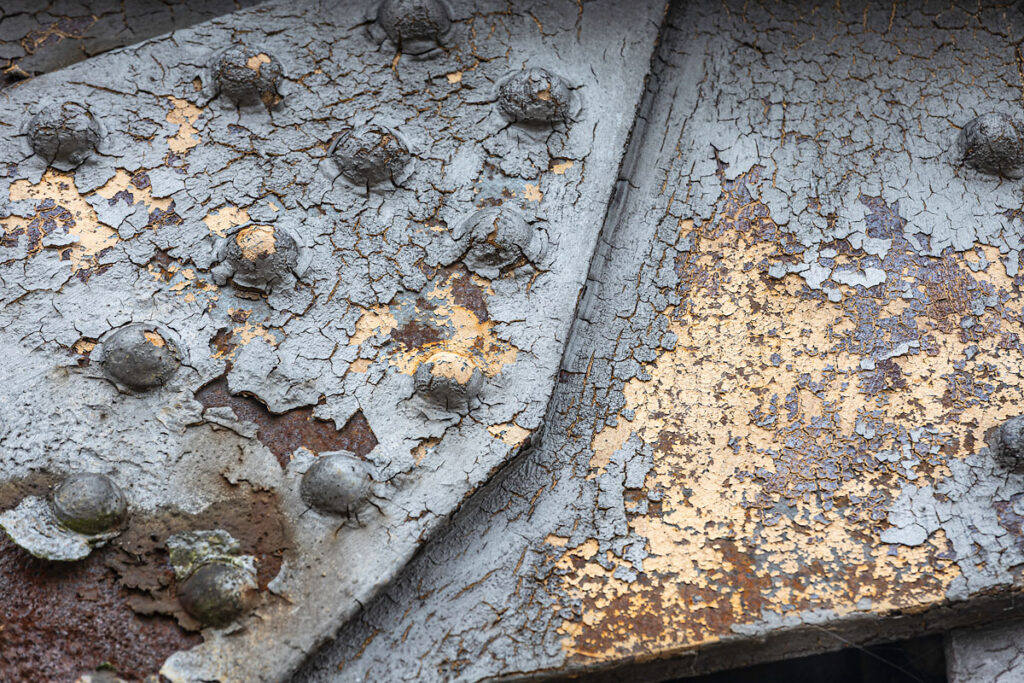
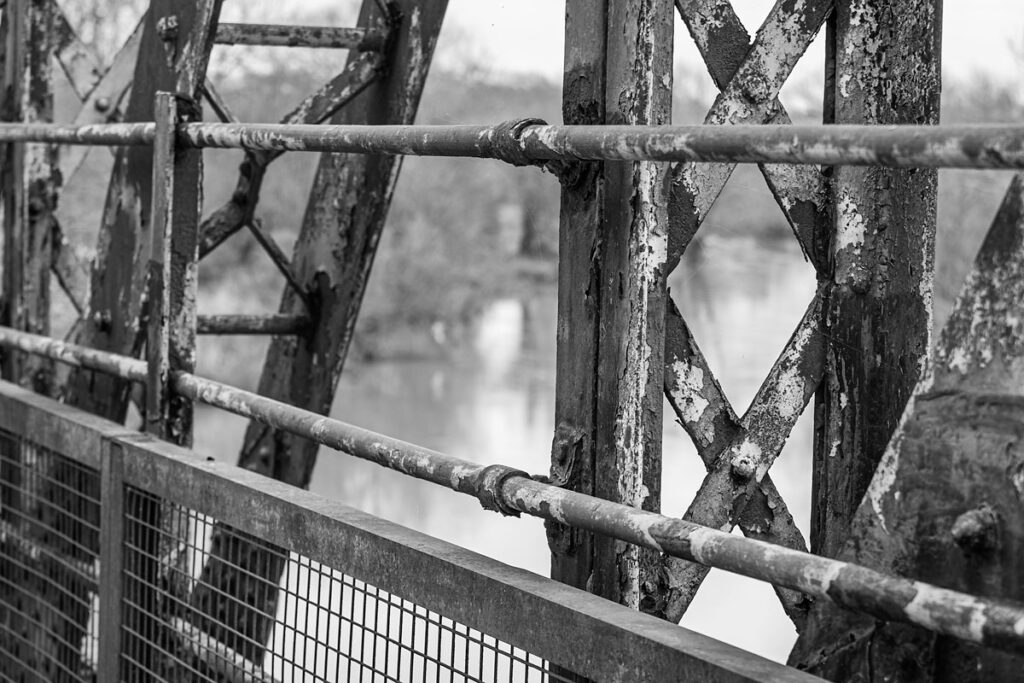
Close up of Stannels Bridge iron work shows patterns of rust and peeling paintwork.
Now used for recreational purposes, the rather grand structure shows signs of neglect, with rusting and peeling paint. The bridge has been well documented from a historical point of view. Many photographers have become fascinated by it, as this website demonstrates, with photographs dating back to 2012.
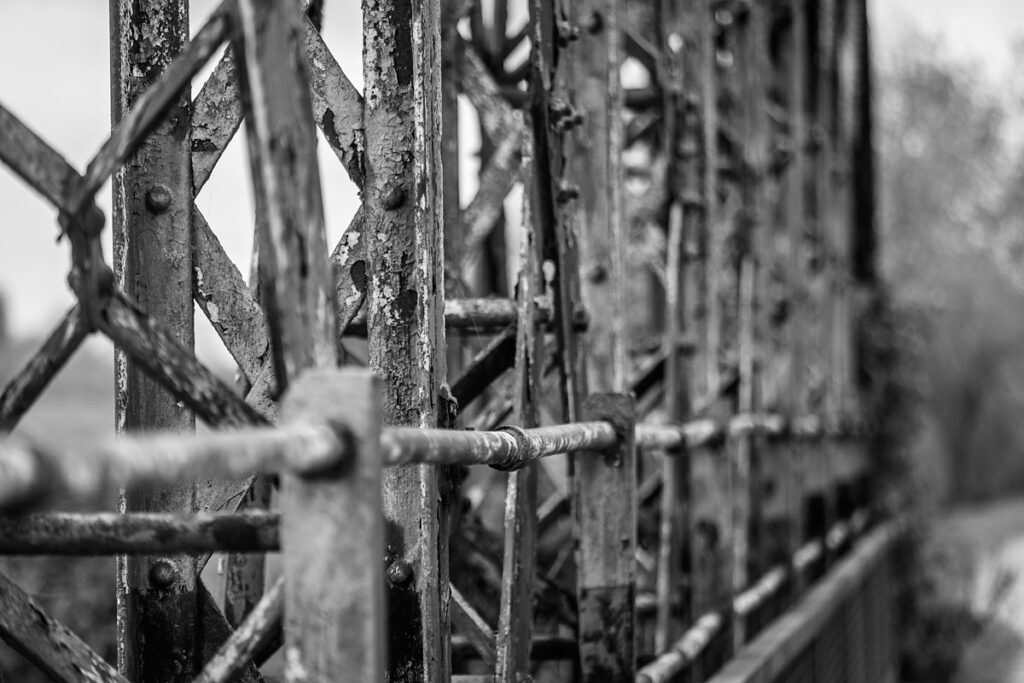
The interlacing pattern of iron girders of Stannels Bridge creates an imposing structure.
I spent time focusing on the details of the rust and peeling paint on Stannels bridge, then on the repeating patterns of the ironwork, and finally on an overview of the structure. I have taken several other pictures, as shown.
The paintwork of lStannels Bridge reveals the different layers added over the years.
I am adding a few of my own photographs to this interesting iron bridge.
Stannels Bridge spans the river Avon which is seen in the background of this picture.
Stannels Bridge is a distinctive structure found along the Stratford Greenway, the former Great Western Railway line that once connected Stratford-upon-Avon with the wider rail network. Accessing the Greenway by foot or bike allows you to take in the old railway line. Stannels bring is near to the start of your journey on the Greenway. Whilst you visit, you can add to the enjoyment of the day with two cafes offering refreshments. They are strategically situated along the Greenway and they are based in former passenger dining coaches.
Stannels Bridge is now part of the Stratford Greenway used by walkers and cyclists.
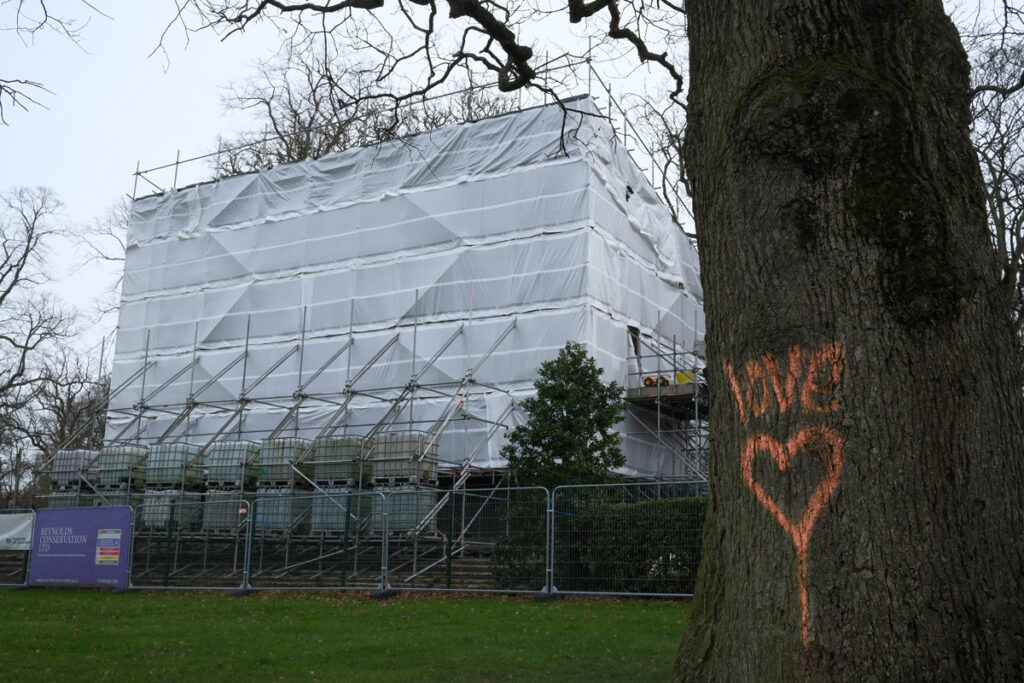
At long last, the Golden Lion is coming back to life. I first visited the building last year, before restoration began, when Irene from Birmingham Conservation Trust gave us a fascinating behind-the-scenes look at the plans for this Grade II listed gem. Now, with work well underway, I had the chance to return to see the progress taking place.
Golden Lion Conservation in Progress – Overall view of the Golden Lion building mid-restoration surrounded by scaffolding in Cannon Hill Park.
The Golden Lion has quite a story. Built in the early 1600s, it originally stood in Deritend High Street and has lived many different lives over the centuries. In 1911 it was moved to Cannon Hill Park, where it later served as a cricket pavilion and refreshment room. For more than 20 years, however, it has stood empty until support from Historic England and local funders allowed Birmingham Conservation Trust and the City Council to begin the restoration.
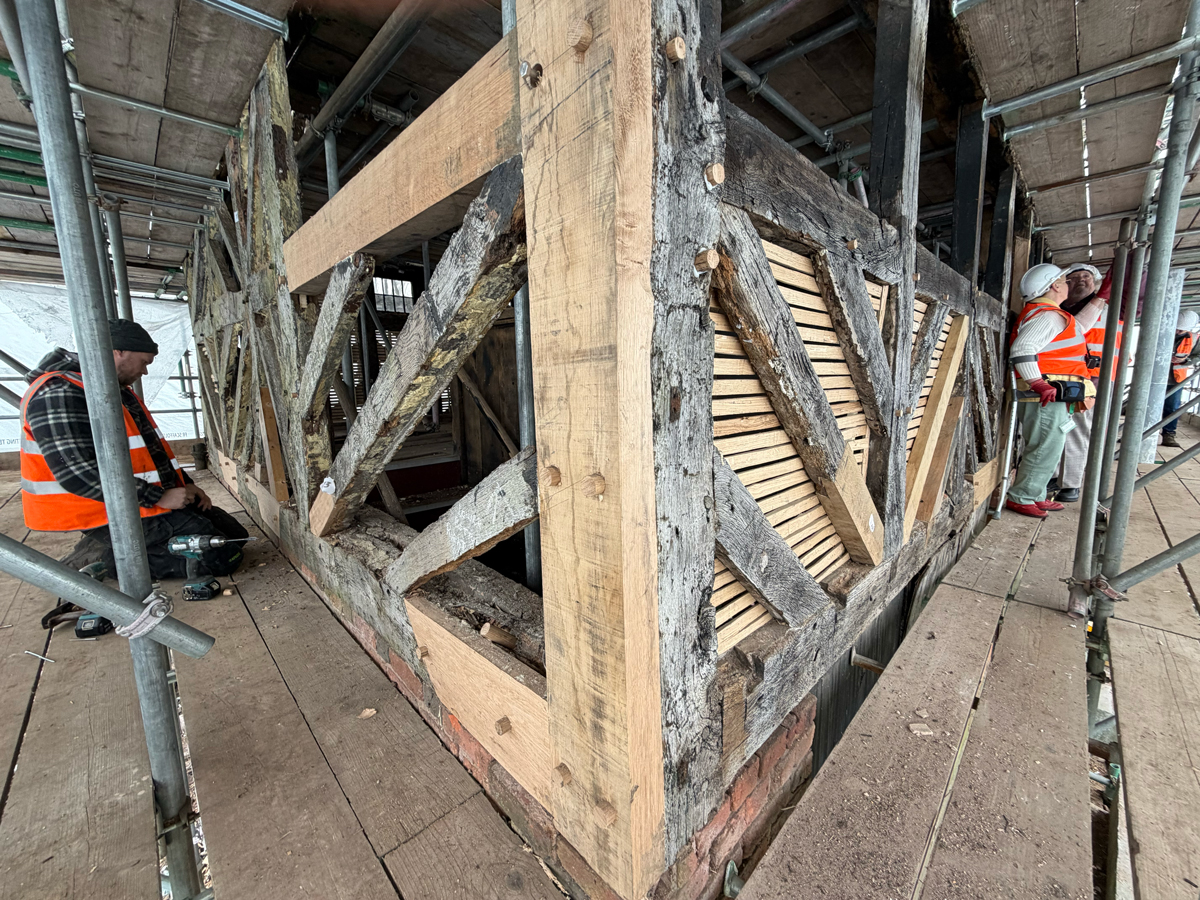
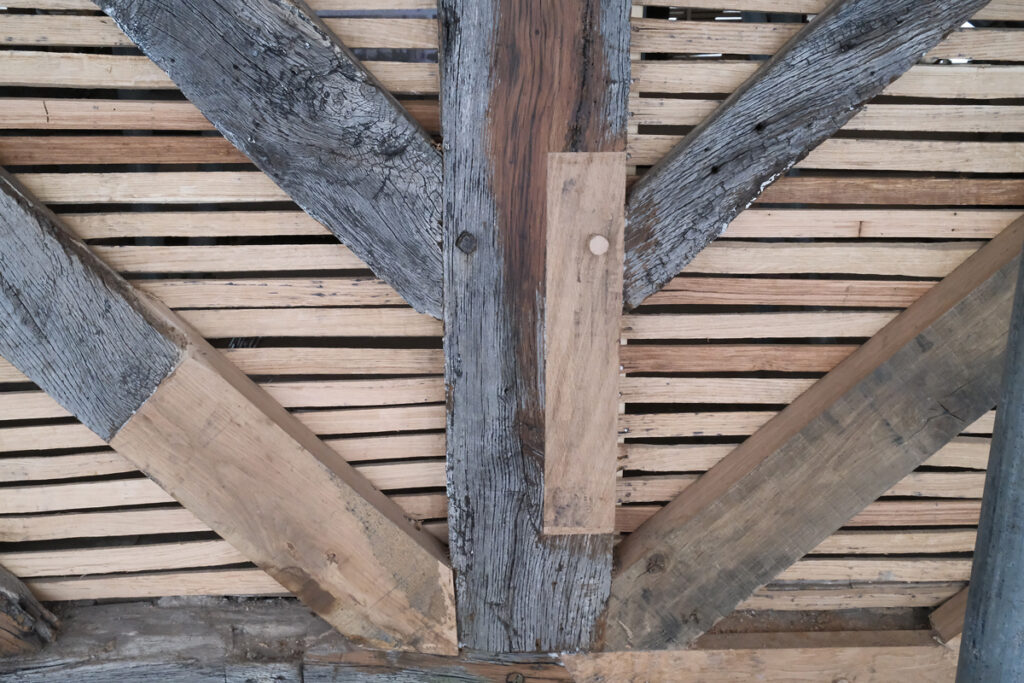
Old and New Timber Joinery – Detail showing new timber carefully joined with original wood during Golden Lion restoration.
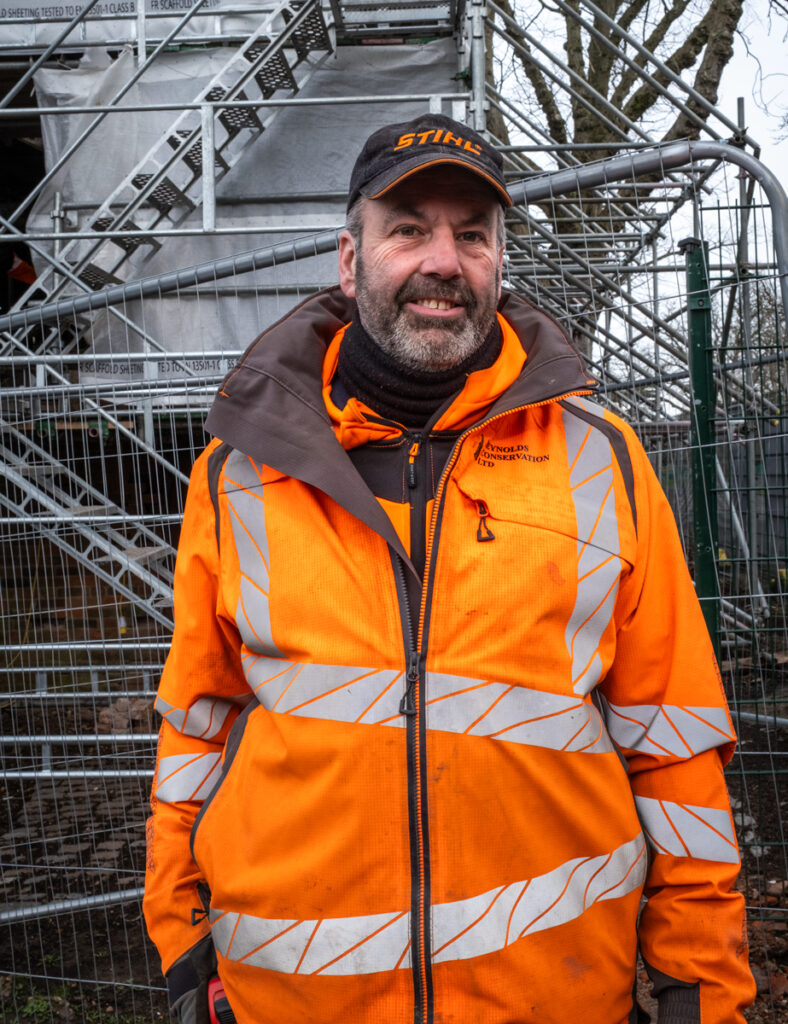
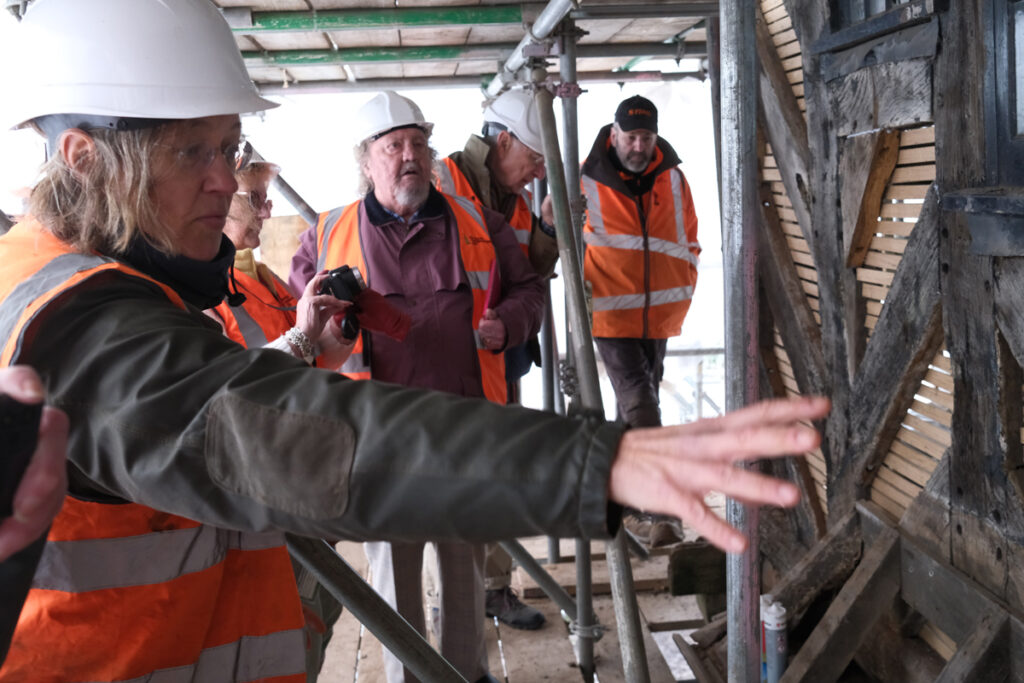
This latest visit was something special. The hard hat tour was limited to just six people, making it a rare opportunity to see the restoration up close. Irene once again led the visit, starting with an update on progress so far before introducing us to Richard, the site manager from Reynolds Conservation. After the essential health and safety briefing, we were suited up in hard hats and high-vis and then it was time to explore.
Richard, the site manager from Reynolds Conservation – Golden Lion Restoration Project
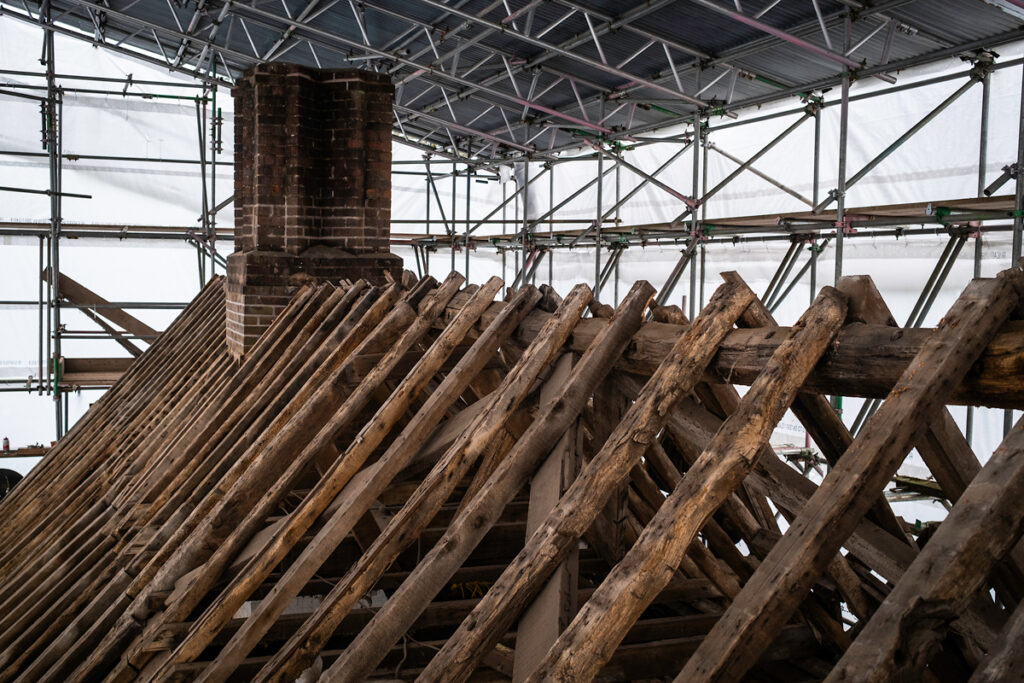
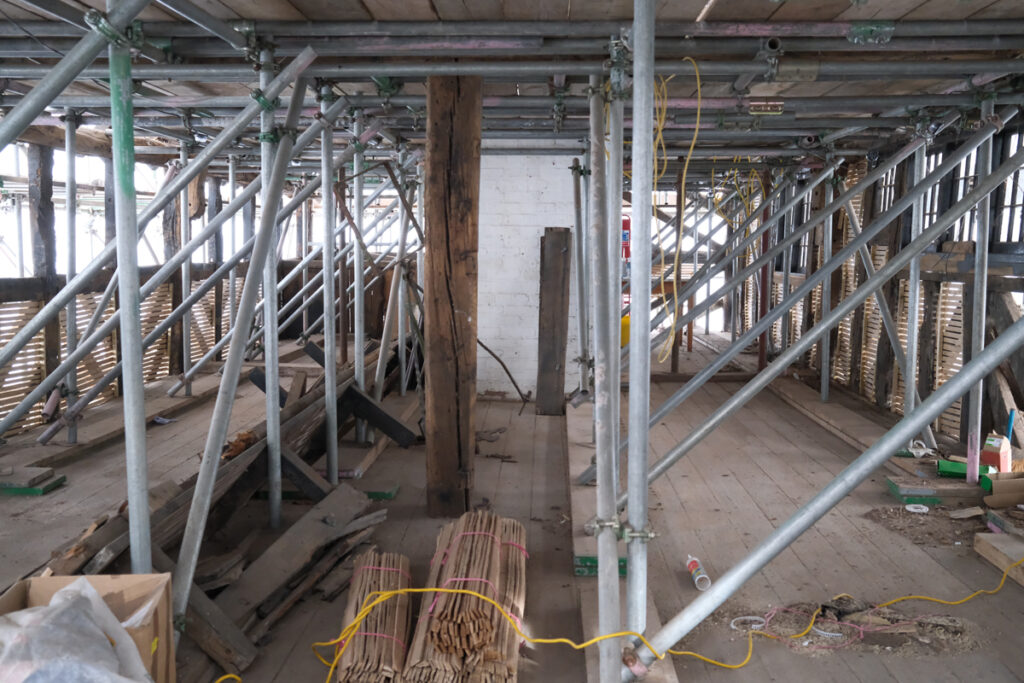
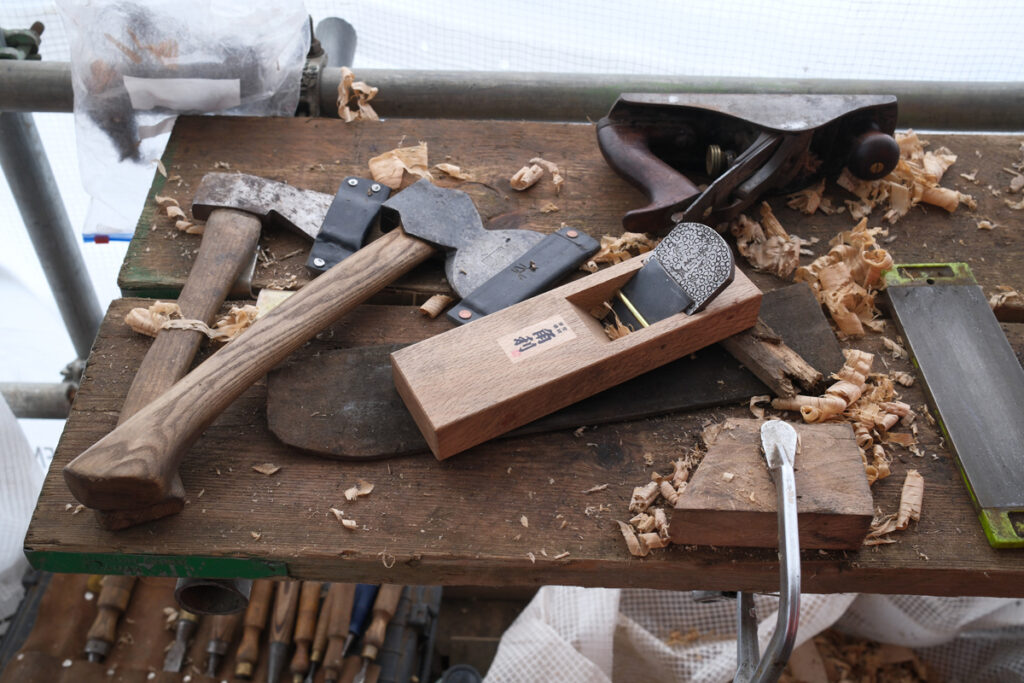
Unlike my previous visit, when we viewed the interior, this time we walked around the outside via scaffolding. It gave a completely different perspective to the house. The focus of the work is currently on the timber frame i.e. the true skeleton of the building. The roof timbers are in surprisingly good condition, but the lower sections have needed careful repair. Everywhere you looked, numbered markings showed where attention was required, and skilled carpenters were meticulously blending new timber with old. The result is a fascinating mix of a centuries old building meeting modern craftsmanship.
Roof Timbers View – Historic roof timbers of the Golden Lion building during conservation works.Golden Lion Upper Structure from Scaffolding – View of the Golden Lion upper structure taken from scaffolding during restoration.
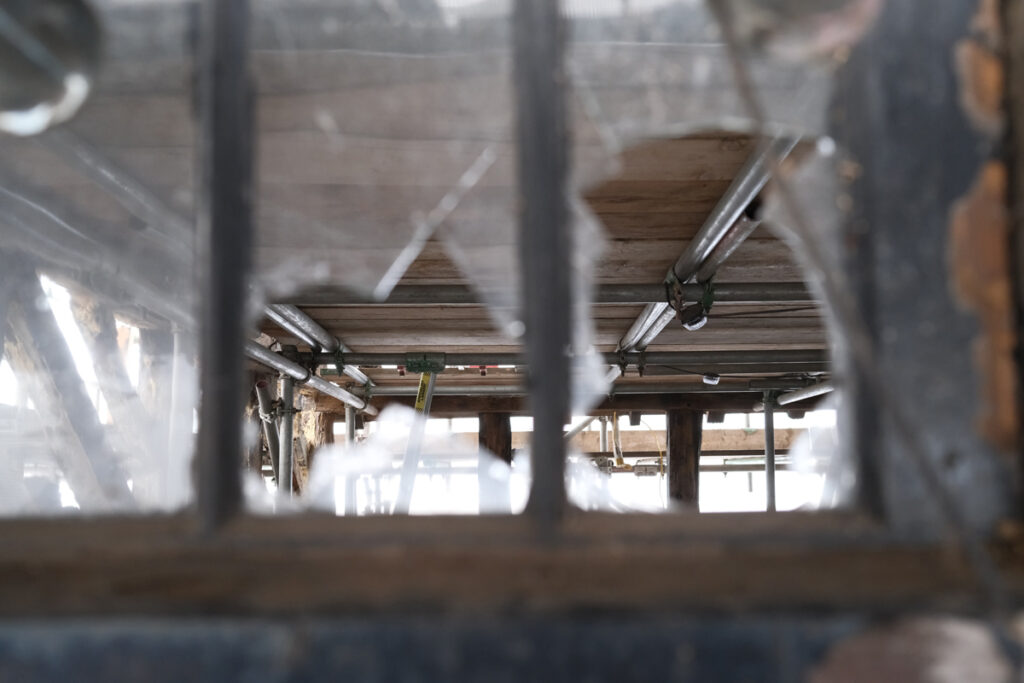
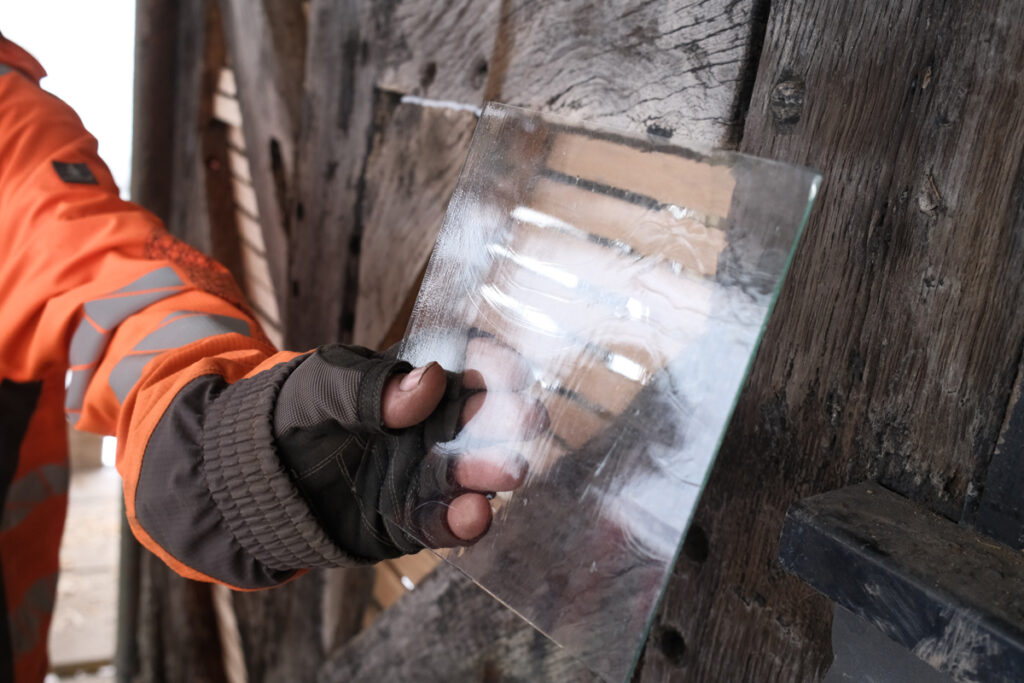
The same careful approach is being taken with the brickwork. Damaged bricks are removed and replaced with historically appropriate materials, following Historic England guidelines. Listening to Irene and Richard discuss the restoration was a highlight. Their passion for getting every detail right was obvious. Even the replacement window glass has been specially researched to ensure it matches the original look and character of the Golden Lion.
Hard Hat Tour Group with Irene and Richard – Visitors wearing hard hats and high-visibility jackets during the guided Golden Lion restoration tour.Window Frame Restoration – Window frame and broken glass at the Golden Lion.Window Frame Restoration – Restored window frame and historically matched glass installed at the Golden Lion.
From a photography perspective, it was a dream visit. The exposed timber frame was particularly striking. I loved the geometric angles, and the texture of the wood used, new and old. Standing there, you could almost feel the building poised between past and future, ready for its next chapter.
Craftsmanship Detail Shot – Close-up showing traditional craftsmanship techniques used in timber repairs.
I felt incredibly lucky to be part of such a small tour, and I can’t wait to see the Golden Lion fully restored. It’s one of those projects that reminds you how much history still survives and in this case fortunate that the right people provide the chance for the building to shine again.
Birmingham Light Festival is back for its second year, brightening up Valentine’s weekend. The nights are still dark; the weather has been wet for so long that a burst of colour and light is exactly what is required to lift the mood before spring finally arrives.
I signed up for a photo walk organised by IgersbirminghamUK as part of the Birmingham Light festival. Our mission was to cover as many installations as possible on foot. Birmingham is a big city, but the artworks are placed at key spots, each linked by a brisk 5 to 10 minute walk.
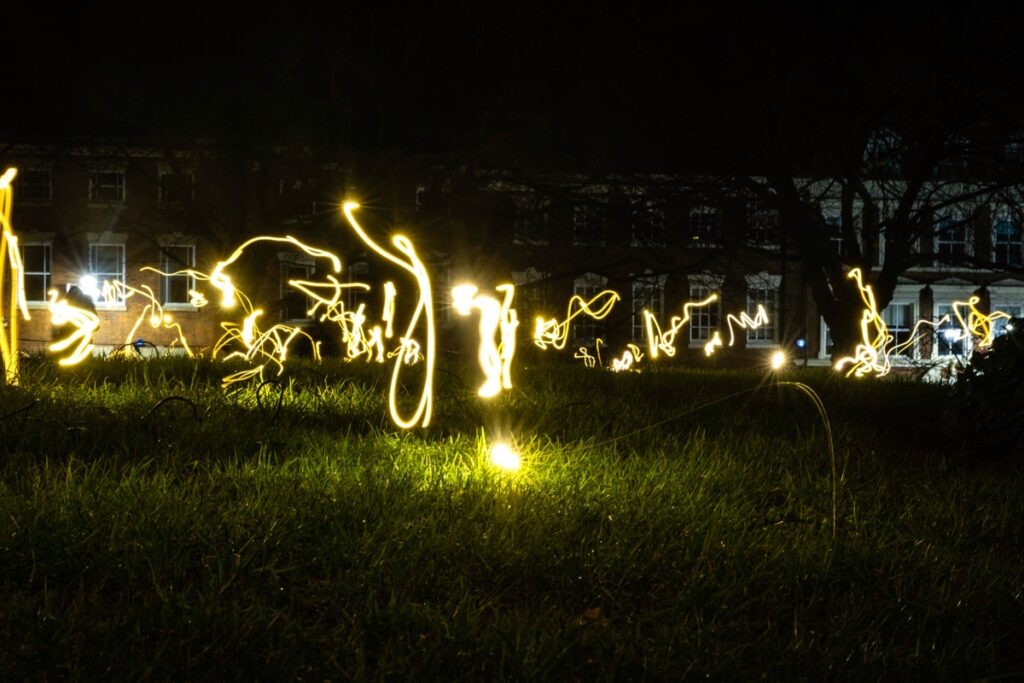
Firefly Field We met at St Paul’s Church, where the lawn shimmered with tiny moving lights. Up close, they revealed themselves as hundreds of glowing points gently “dancing” in the dark. This ‘Firefly Field’ looked magical to the eye, but photographing the movement was a challenge. A tripod and long exposure did the trick, turning the flickers into sweeping trails of light.
Firefly Field Long Exposure – Long-exposure light trails showing the movement of firefly-style lights at Birmingham Light Festival.
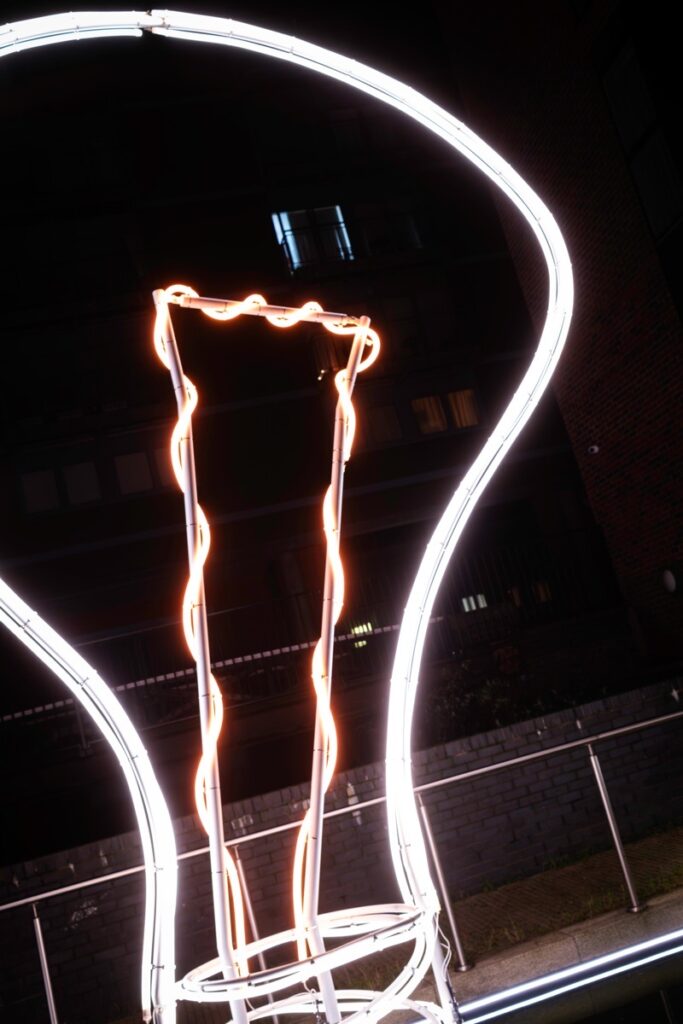
Ideas Happen Here Our next stop was Newhall Square hear to the canal. Here, a giant glowing lightbulb sat beside a reflection pool. The artwork was bold, playful, and perfect for photography. The reflections doubled the impact, offering endless composition options. I had seen this at last year’s Birmingham Light Festival, but it still felt fresh when viewed for a second time.
Ideas Happen Here – Large illuminated lightbulb sculpture at Newhall Square during Birmingham Light Festival.
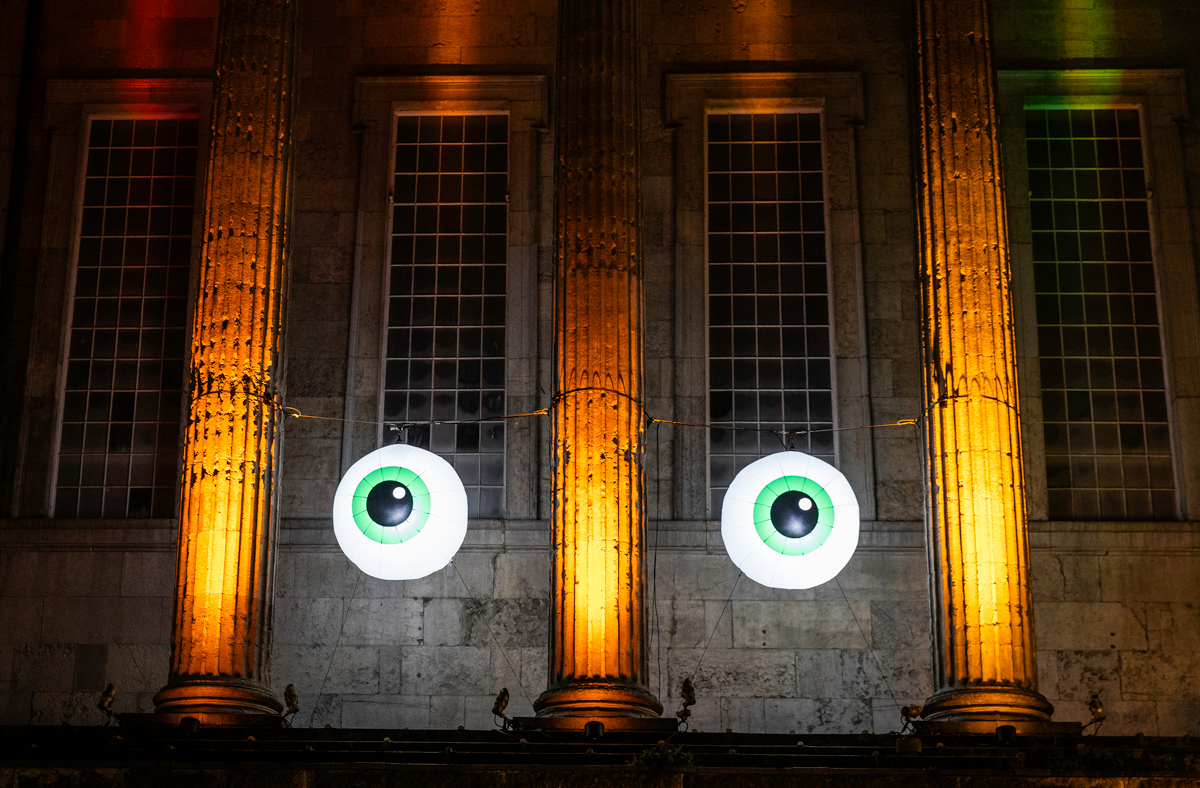
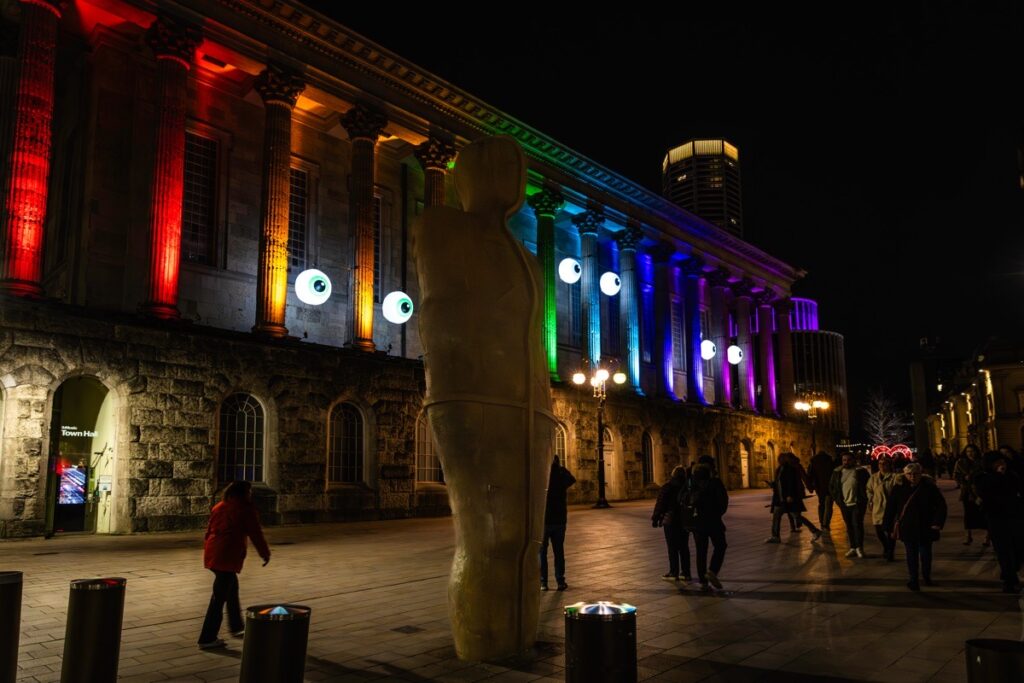
Victoria Square Victoria Square was packed with activity. In nearby Chamberlain Square, a giant Valentine’s heart glowed for the selfie crowd. Meanwhile, Birmingham Town Hall was watched over by huge, illuminated eyes. These were quirky and slightly surreal surrounded by the columns which were lit in shifting colours.
All Eyes on the Town Hall – Giant illuminated eyes on the Birmingham Town Hall look down on Iron:Man.
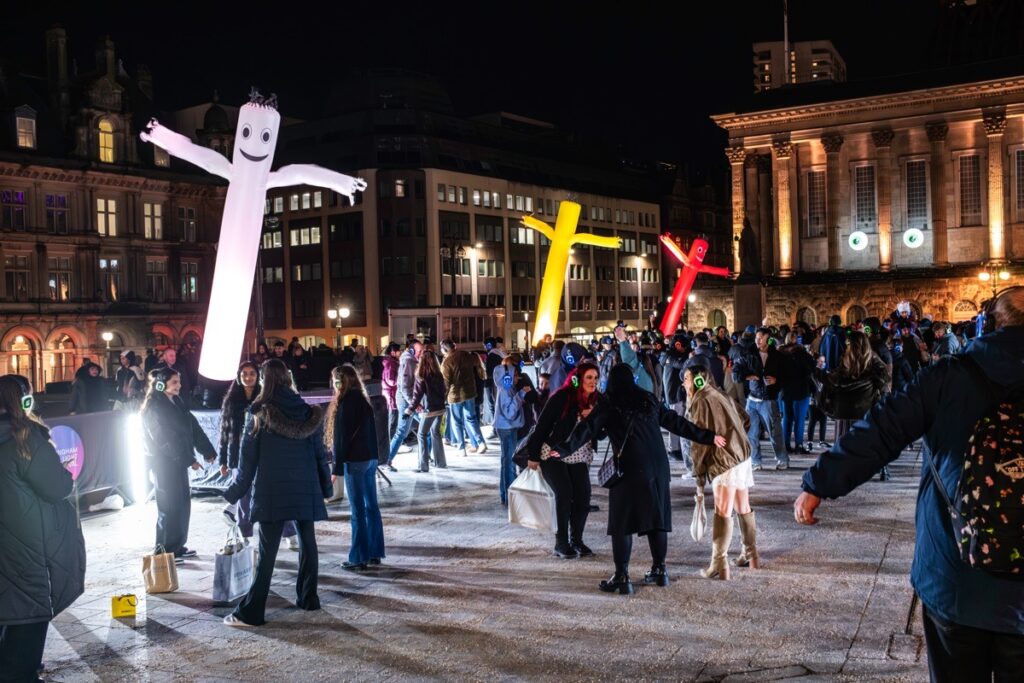
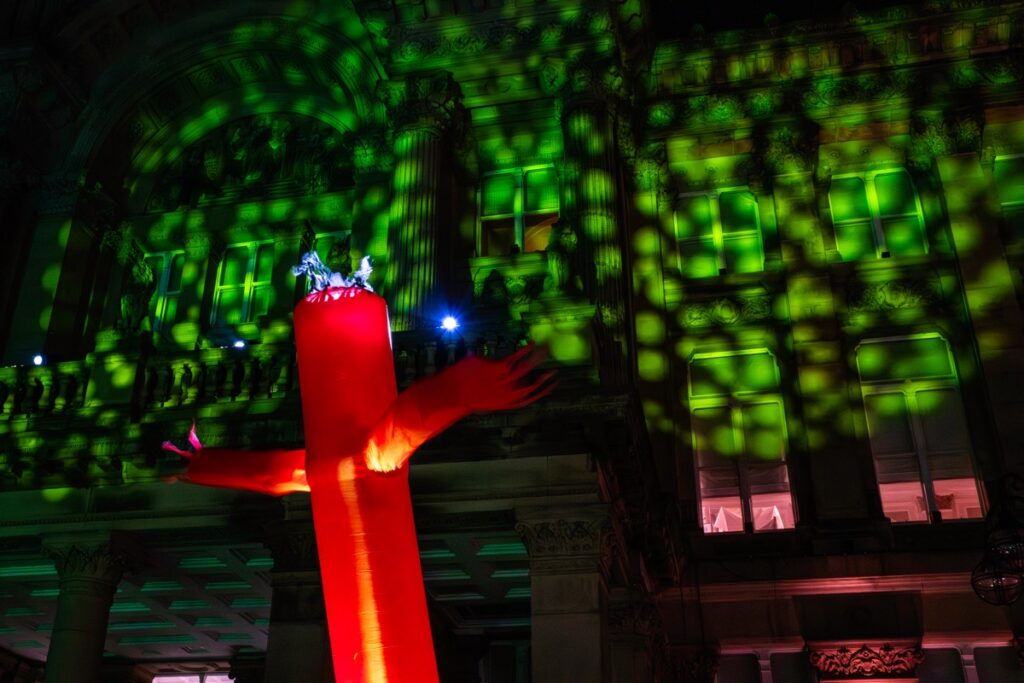
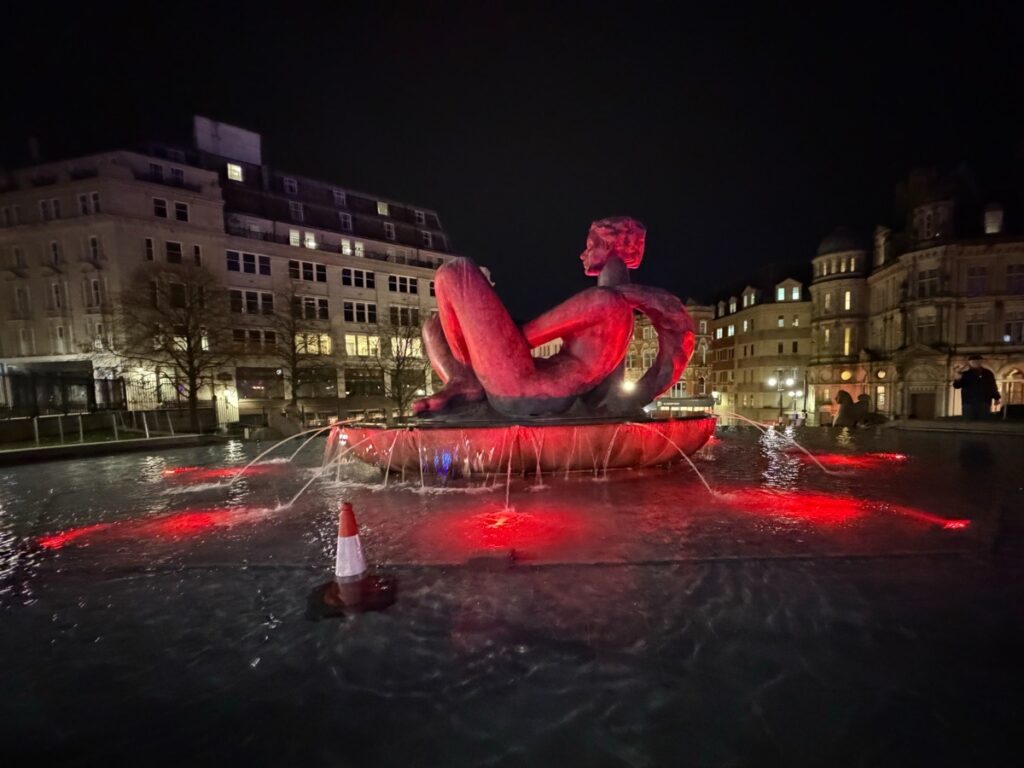
In the square, a silly statues x silent disco was in full swing. Dozens of people danced freely in total silence, headphones glowing. Light projections covered the Council House, inflatable figures waved overhead, and the whole scene felt wonderfully absurd. Even the Floozie in the Jacuzzi looked extra glamorous for the Birmingham Light Festival.
Silent Disco Crowd – People dancing with glowing headphones during a silent disco in Victoria Square at night.Birmingham Light Festival with a balloon man dancing in front of the Council House.Birmingham Light Festival – the Floozie in the Jacuzzi.
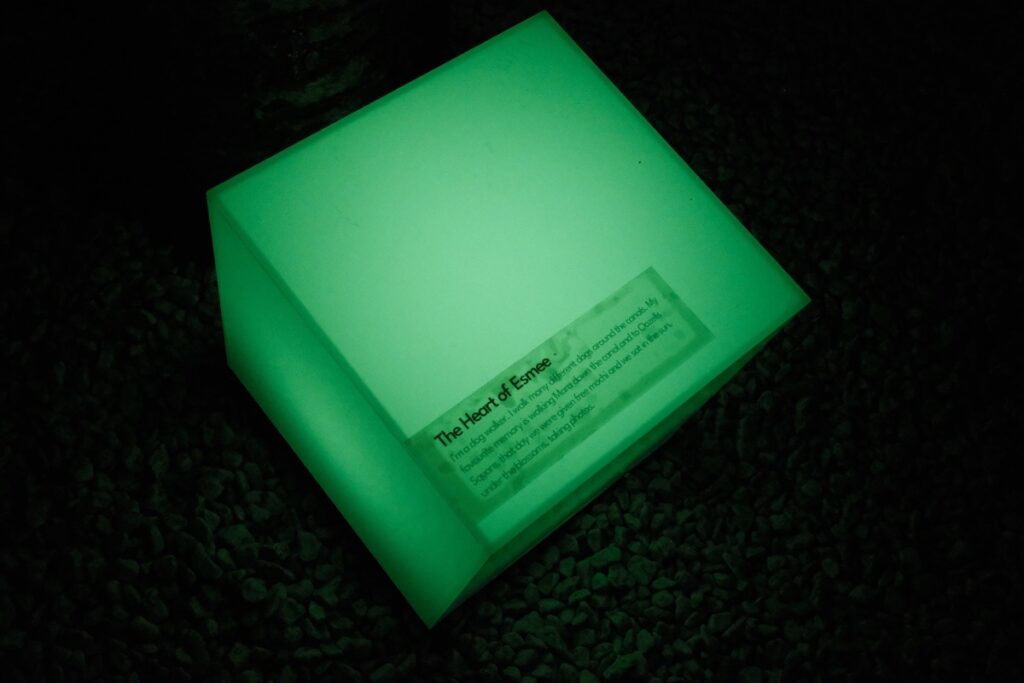
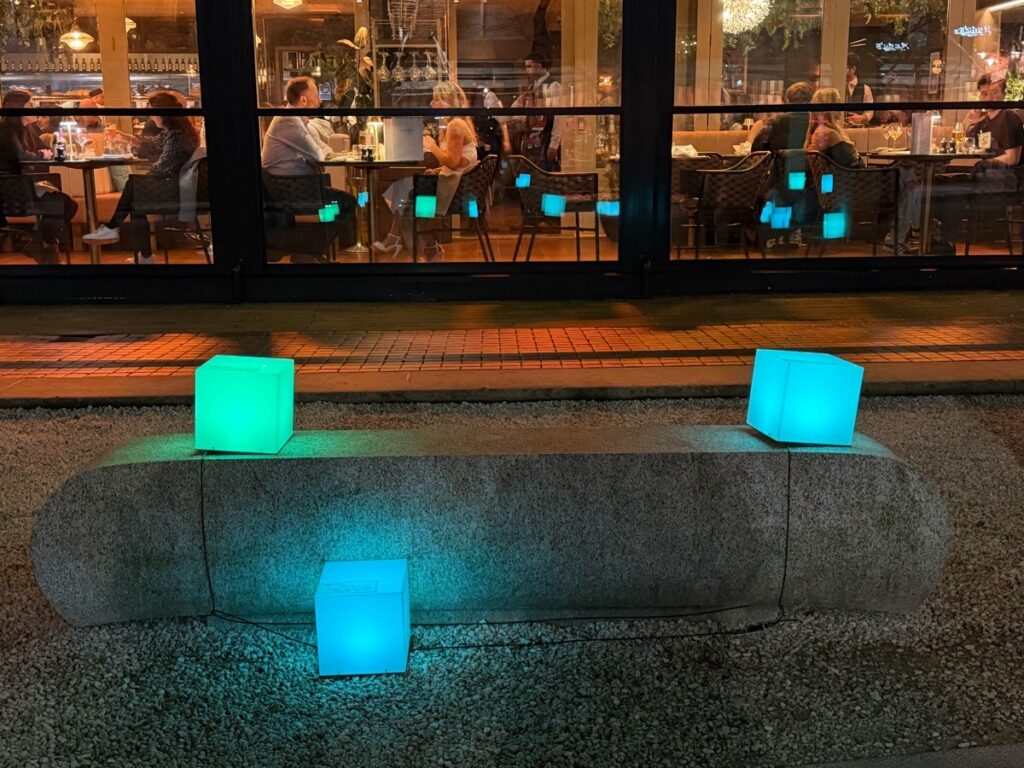
The Heartbeat of Brindleyplace After more walking, we reached Oozells Square, where glowing green boxes pulsed gently with real human heartbeats from across the city. Each box represented a person going about their day creating a strangely intimate and surprisingly moving concept. Capturing their reflections in nearby restaurant windows added another layer of storytelling.
Heartbeat of Brindleyplace – Green glowing boxes pulsing with light in Oozells Square pulsing in time with real human heartbeats.Birmingham Light Festival – beating hearts reflected in a restaurant window.My Beating Heart
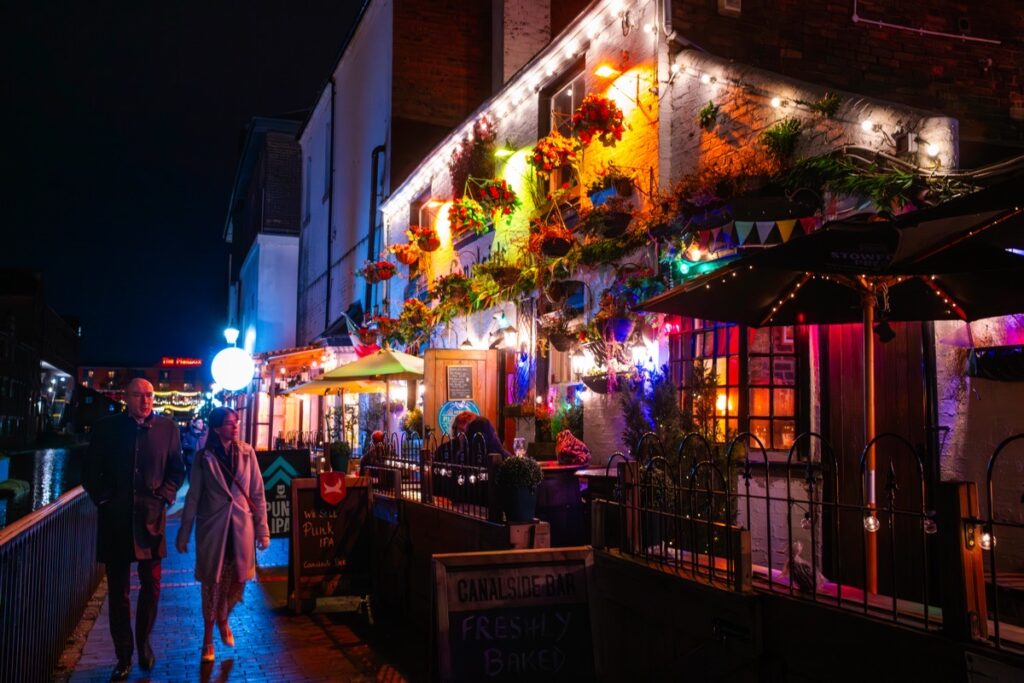
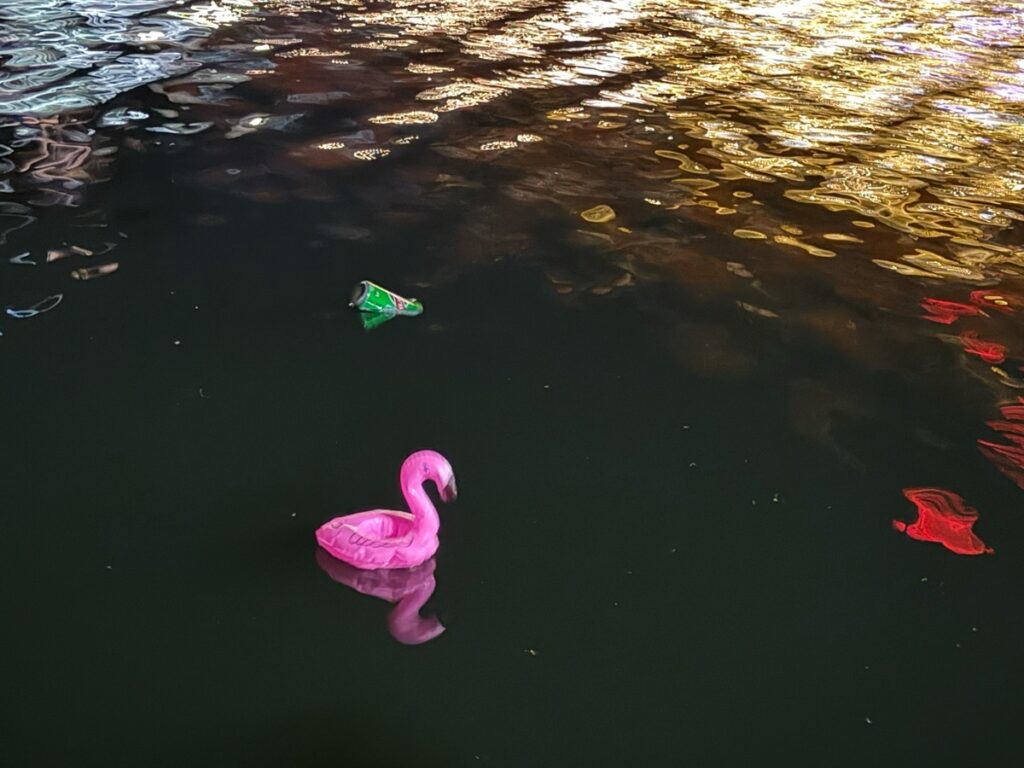
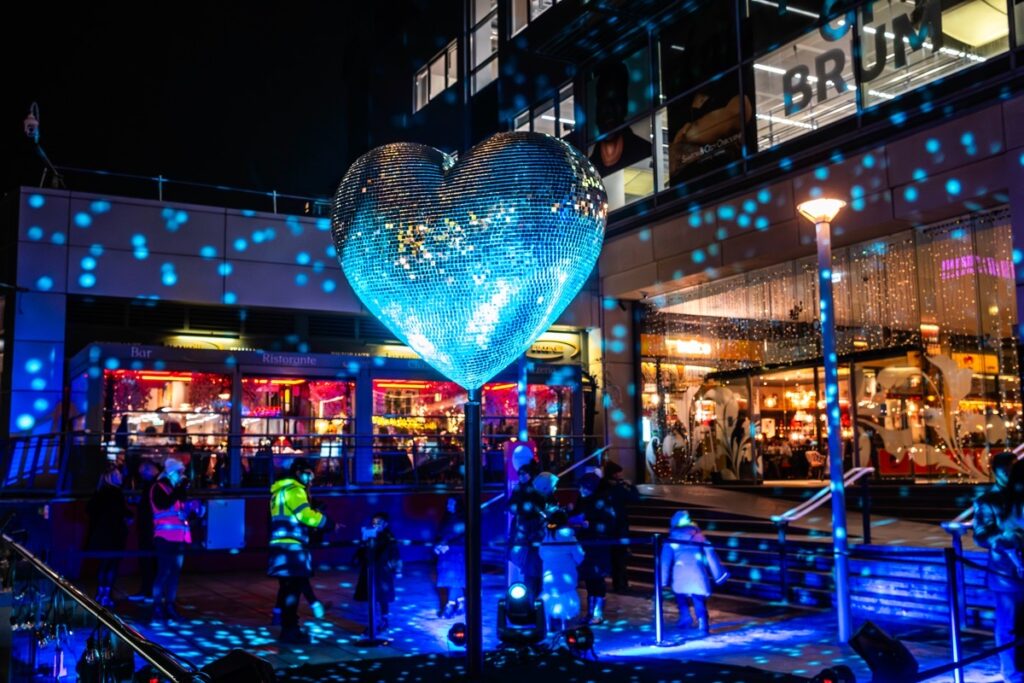
Our Beating Heart The walk between the artworks became part of the experience as we headed off towards the Mailbox. There were canal reflections, glowing restaurant lights, and even a rogue flamingo hat floating in the water. At the Mailbox, we found a giant illuminated heart installation. I preferred the Heart’s past location at Snow Hill where there is more space, but it still made an eye-catching stop for photography.
Brightly lit restaurants along the canal water near the Mailbox in Birmingham.Birmingham Light Festival – whose flamingo hat is this?Our Beating Heart Installation – Large illuminated heart sculpture displayed on the steps at the Mailbox.
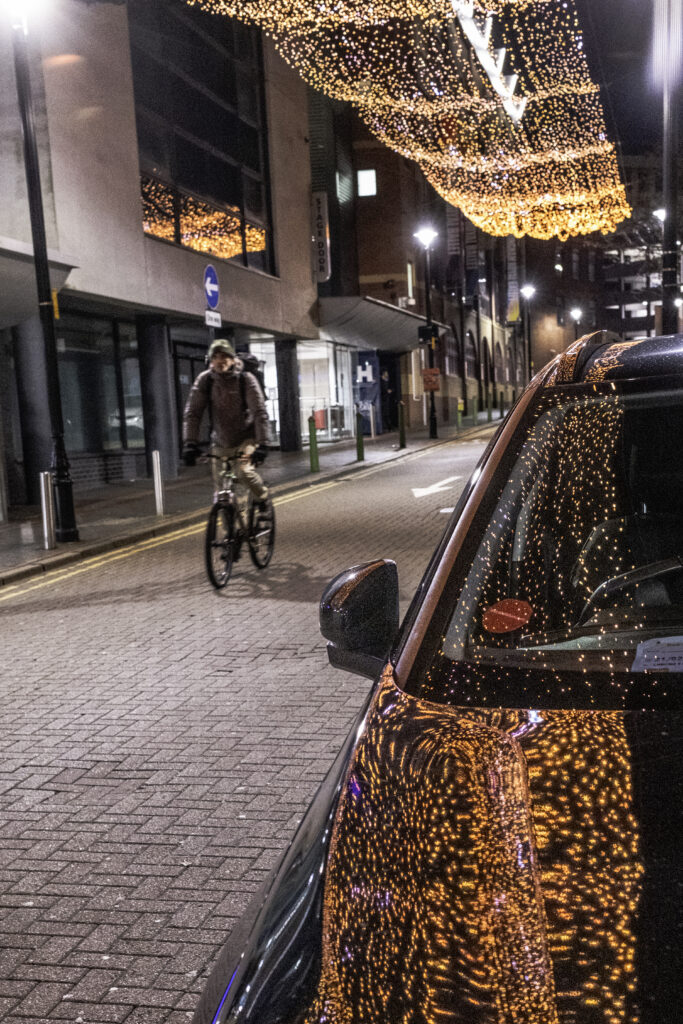
Roof of Stars On Thorp Street outside Birmingham Hippodrome’s stage door, strings of star-like lights stretched overhead They are beautiful to see, but tricky to photograph. Thankfully, some shiny parked cars nearby provided perfect reflective surfaces.
Roof of Stars – Overhead canopy of star-like lights suspended across Thorp Street.
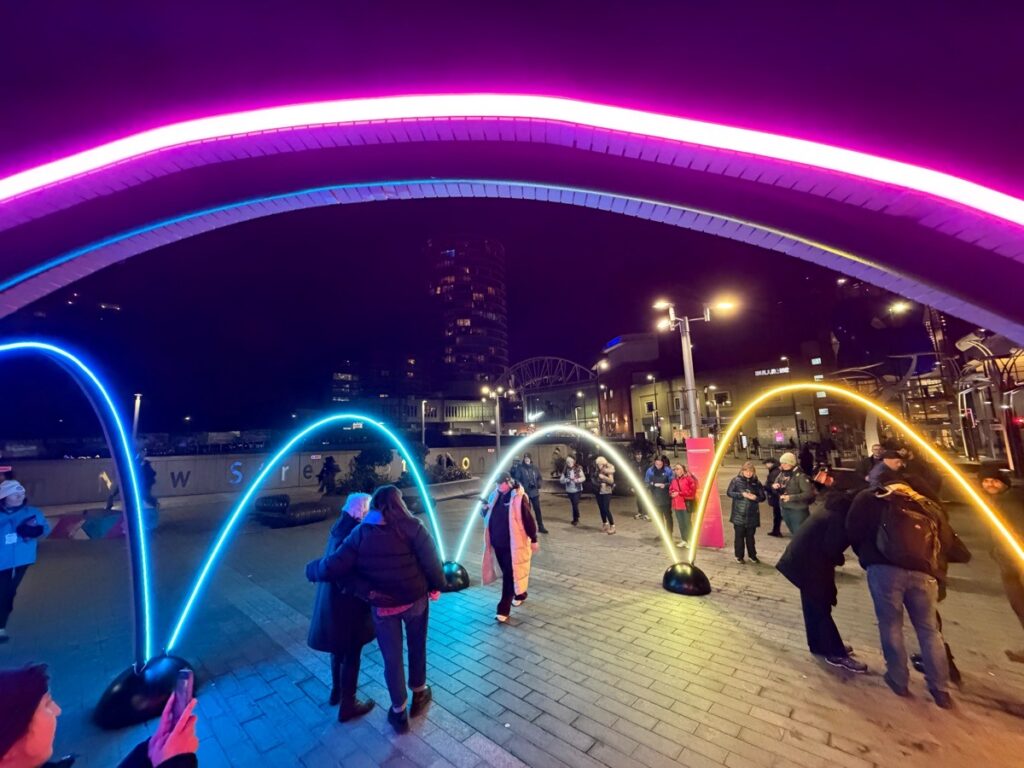
Reunion Back to our walk and the 1,000 trades square had arches of light symbolising connection between people. The colourful arches outside New Street station symbolised reunions and framed the streams of passing travellers. This was a dream place for street photography with light, movement, and real human moments all in one place.
Reunion Light Arches – Glowing archway installation near Birmingham New Street Station with people walking underneath.
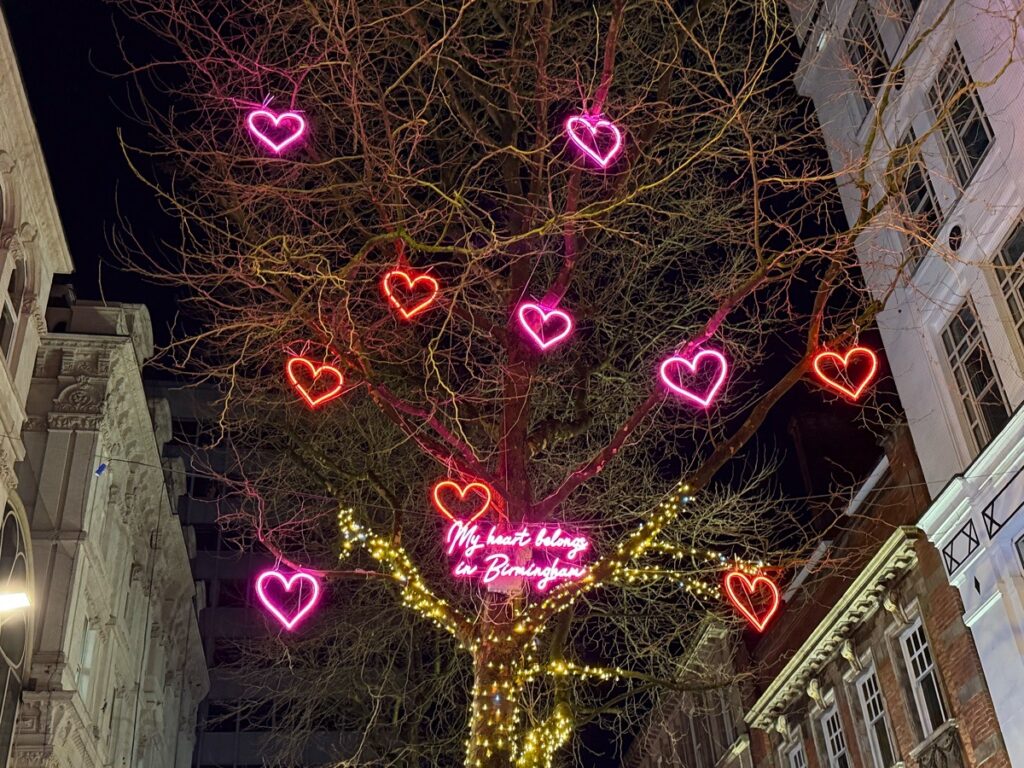
My Heart Belongs in Birmingham By now, my legs were protesting, but there was time for one final stop. Tucked into a tree near the Shakespeare pub were glowing hearts withthe “Instagram-ready” slogan, “My heart belongs in Birmingham. We joined the long line of photographers capturing the same shot but it was worth it.
My Heart Belongs in Birmingham – Illuminated heart shapes hanging in a tree on Lower Temple Street.
Huge thanks to Nadia, Kasim, and Jack from IgersbirminghamUK for leading such an energetic tour of the Birmingham Light Festival. Covering that much ground and that many installations in one evening was seriously impressive.
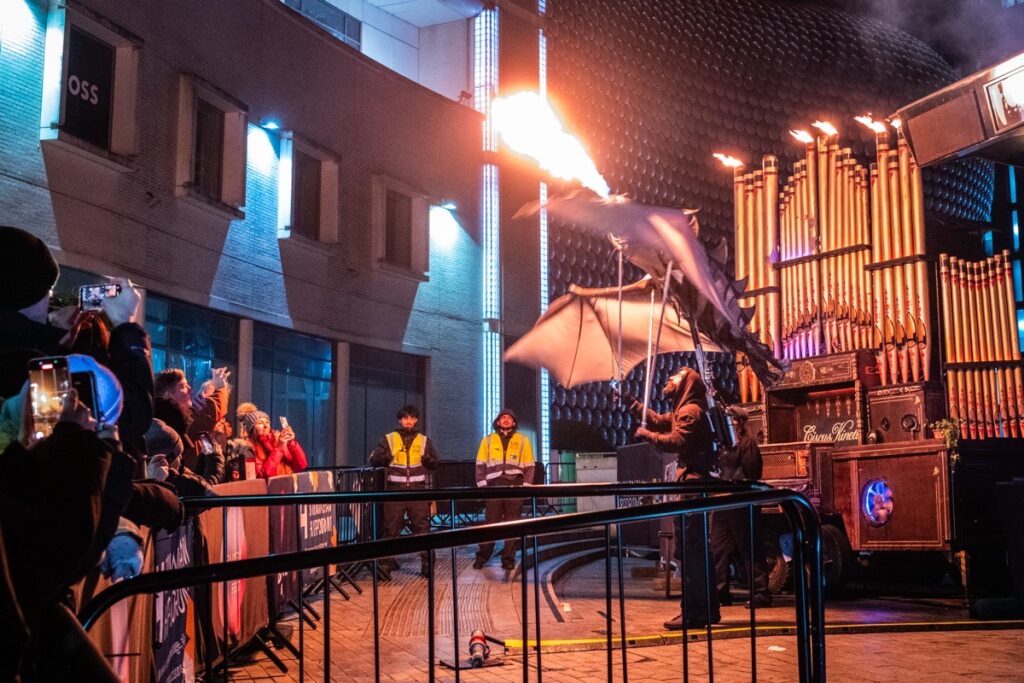
FORGED I returned the following night to catch a fiery animatronic installation featuring pounding industrial music (Insurgent), flame effects, and dramatic mechanical movement. It perfectly captured Birmingham’s industrial heritage brash and noisy, it was spectacular and impossible to ignore.This year’s festival clearly built on the success of the first. If this is the direction that the Birmingham Light Festival is heading, then it will be a highlight of Birmingham’s winter calendar for years to come.
FORGED – Fiery animatronic installation with flames and industrial lighting effects at Birmingham Light Festival.The fire breathing bat at FORGEDInsurgent playing at the FORGED art installation. I would love to hear them again.Insurgent at FORGED
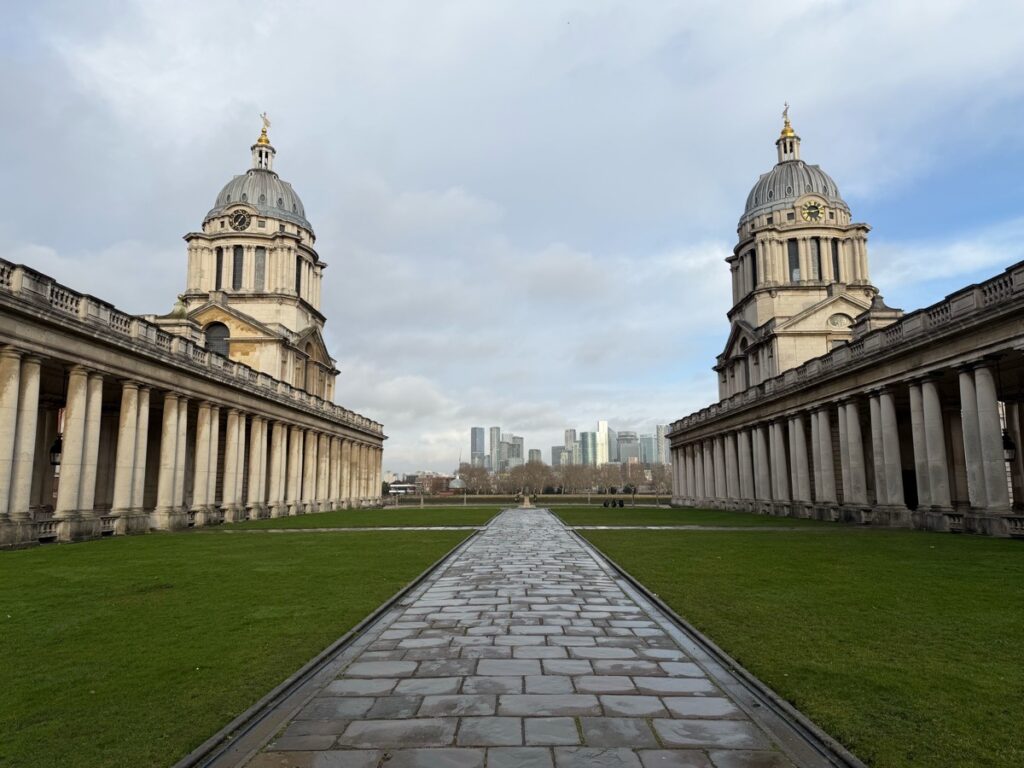
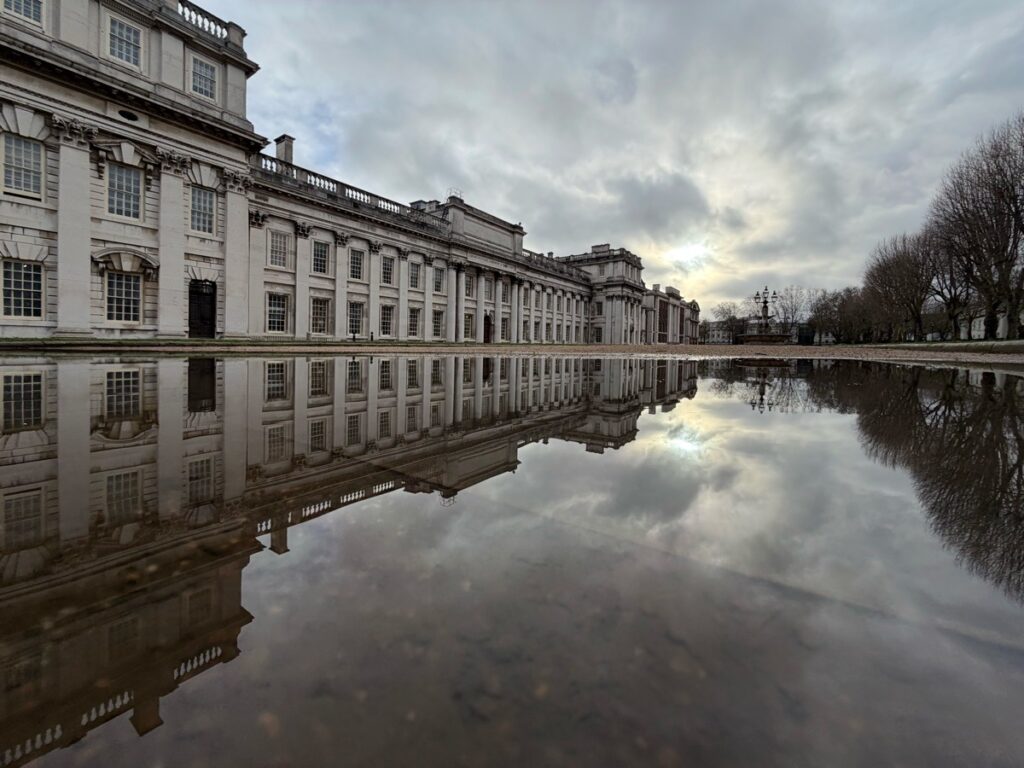
Amateur Photographer magazine held its Festival of Photography at the University of Greenwich. Getting to the south bank area of London from Birmingham was a long journey, but I was pleasantly surprised by how quick and efficient London’s transport system was, with tubes and buses linking up seamlessly. I arrived an hour before the start, which gave me ample opportunity to wander around the beautiful buildings of the old Navy School.
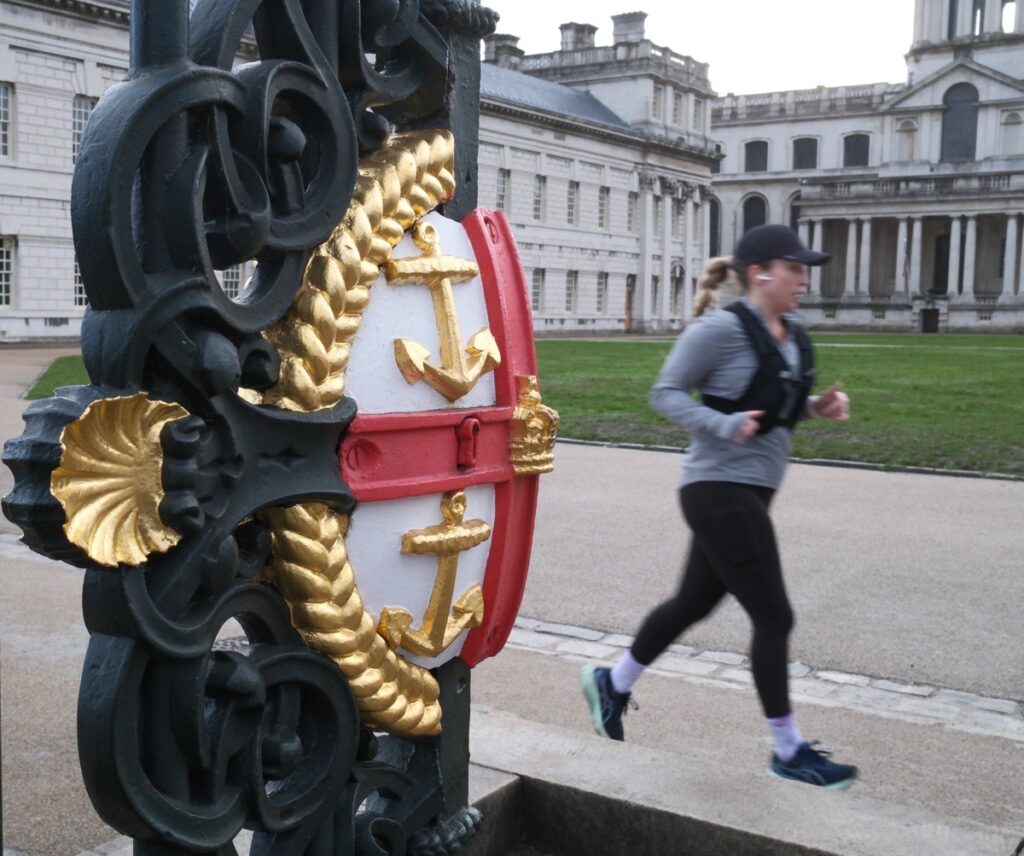
Historic architecture of the University of Greenwich photographed at sunrise (featured by the BBC)Reflection of the sunrise at the old Navy Buildings, GreenwichA runner passes part of the historic coat of arms at the old Navy College, Greenwich.
I took several pictures as the early sun began to rise, and one was selected by BBC Weather. The conference itself was very good. During the morning session, I heard several speakers, including Ron Timehin and Amanda Akokhia, both of whom gave lively talks packed with photographic advice.
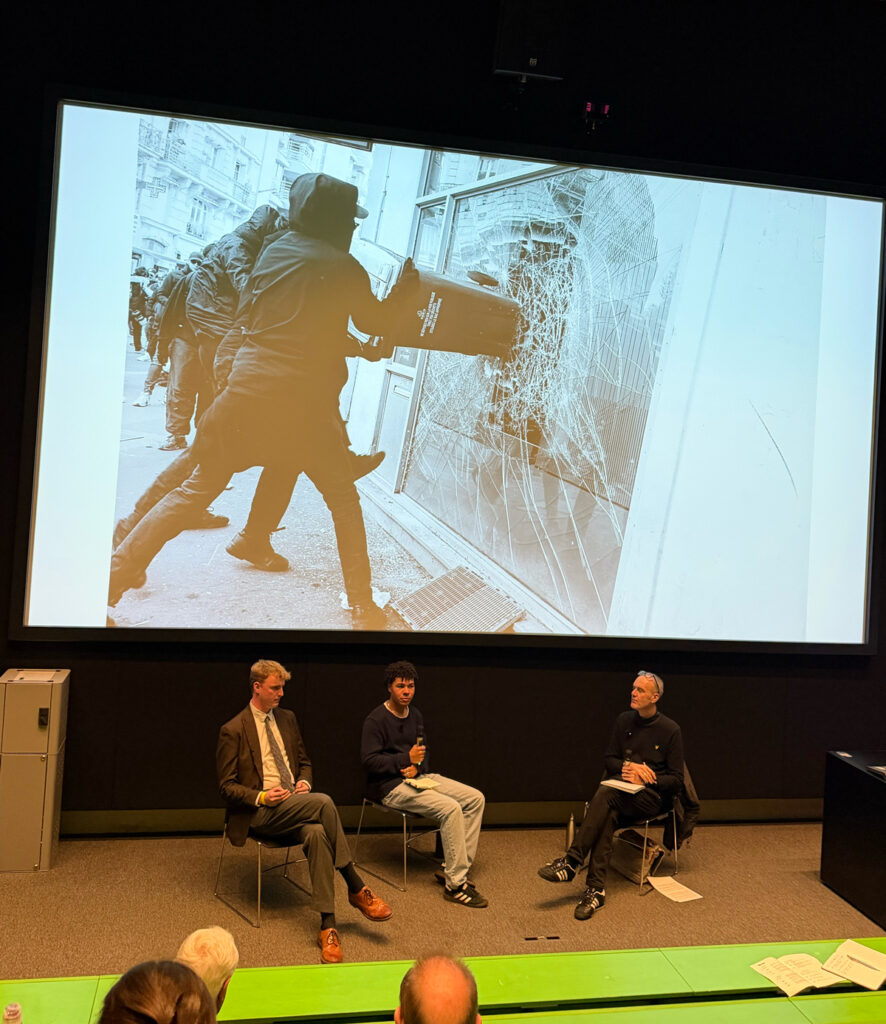
Peter Dench interviewing Ethan Parker and James Manning at the Amateur Photographer Festival of Photography, Greenwich.
One session was a discussion forum on “A Career in News and Documentary Photography.” Peter Dench interviewed Ethan Parker and James Manning, two young photographers who have quickly become established in their field. James works for PA Media, while Ethan is a recent winner of the Amateur Photographer Emerging Photographer of the Year award. The discussion covered many issues in documentary photography, and all three panellists kept the conversation engaging and insightful. All the lectures I attended were excellent and provided valuable tips on improving photography.
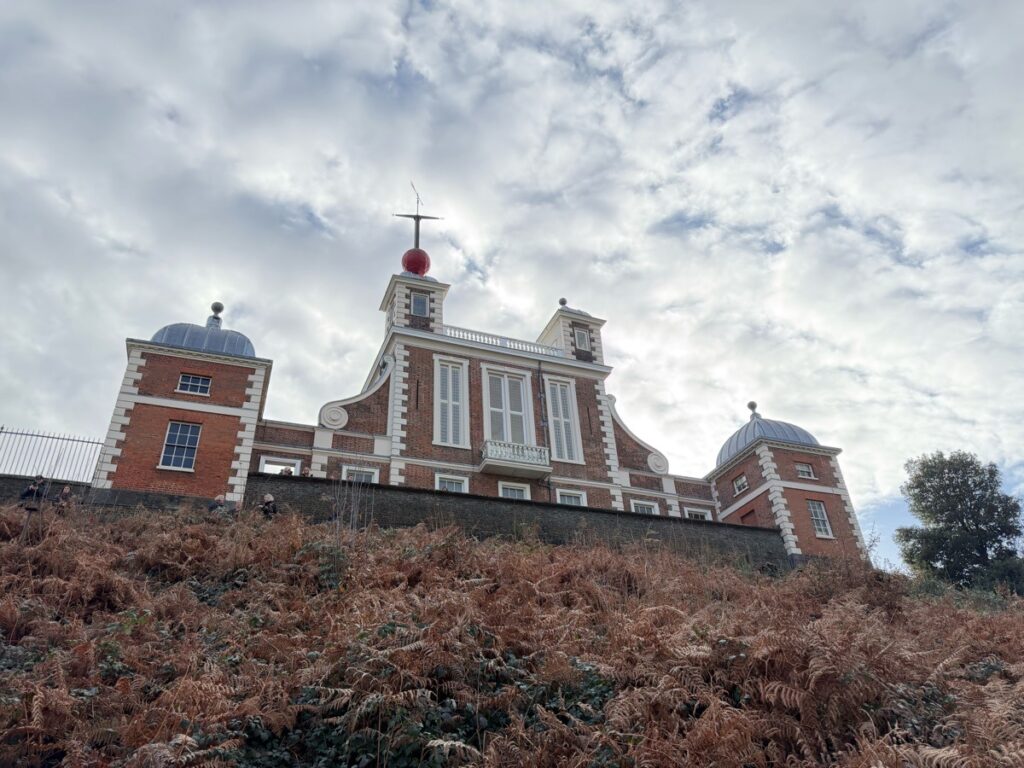
The Royal Greenwich Observatory towering above the town.
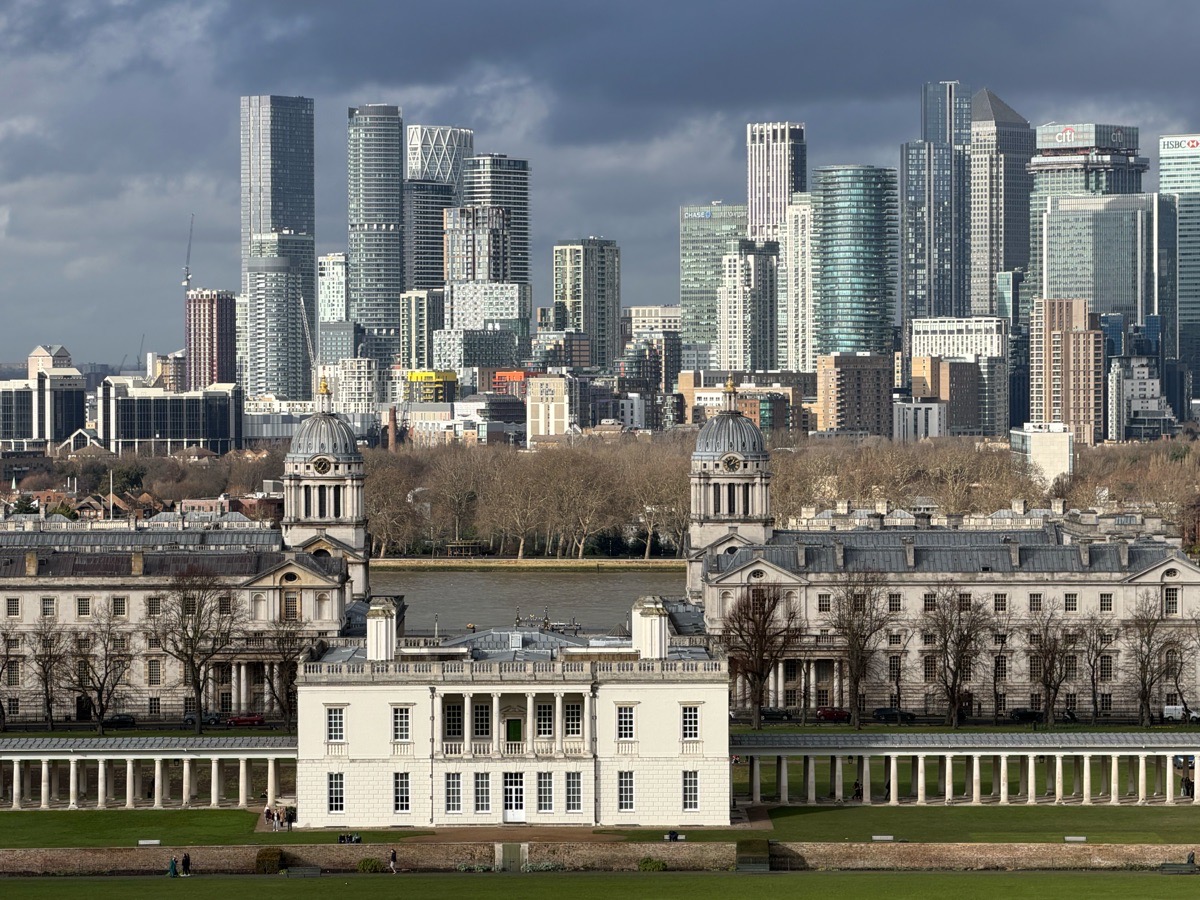
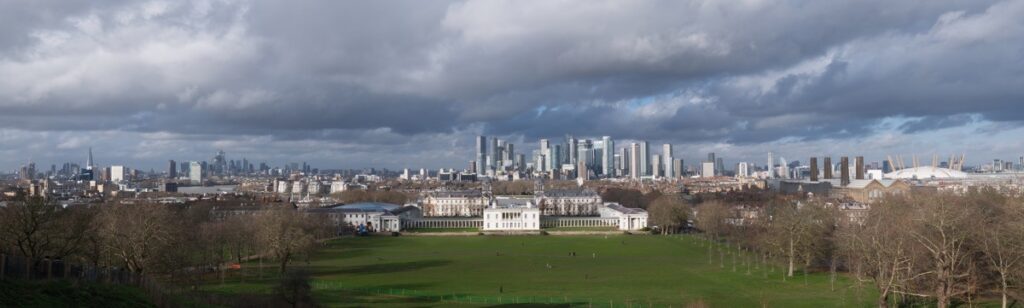
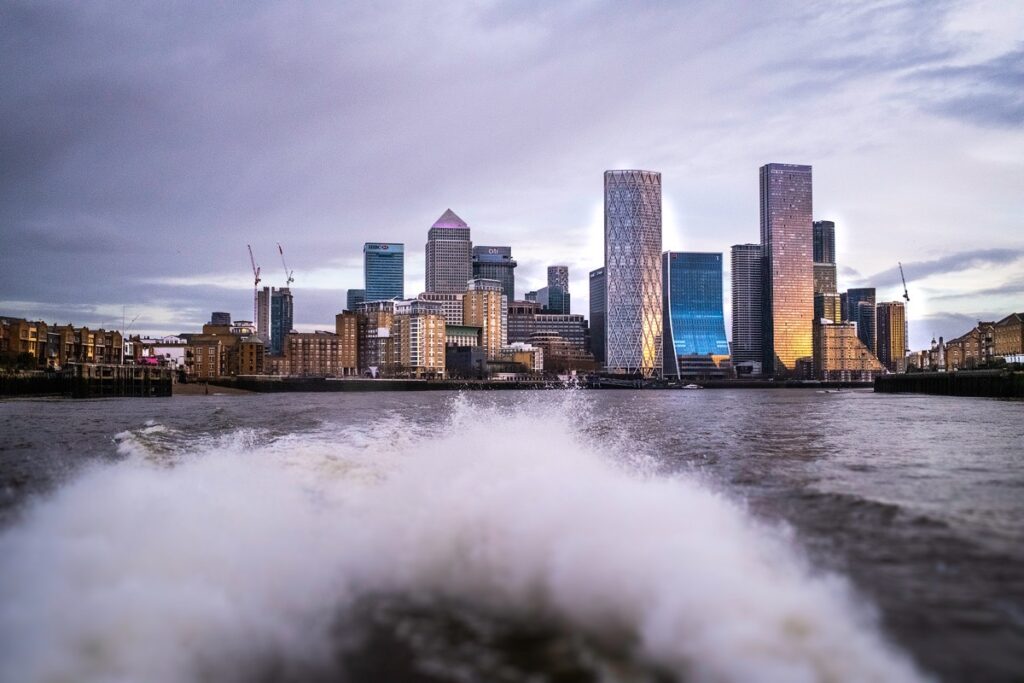
At lunchtime, I visited the National Maritime Museum and then had time to walk up the hill to the Royal Observatory Greenwich. The view from the summit is amazing, and I found that my iPhone zoom captured a lovely compressed image of the old Navy School against the skyscrapers of Canary Wharf. This picture is at the start of my blog and below is the panoramic view of London.
Panorama view of London from the Royal Obersvatory Greenwich
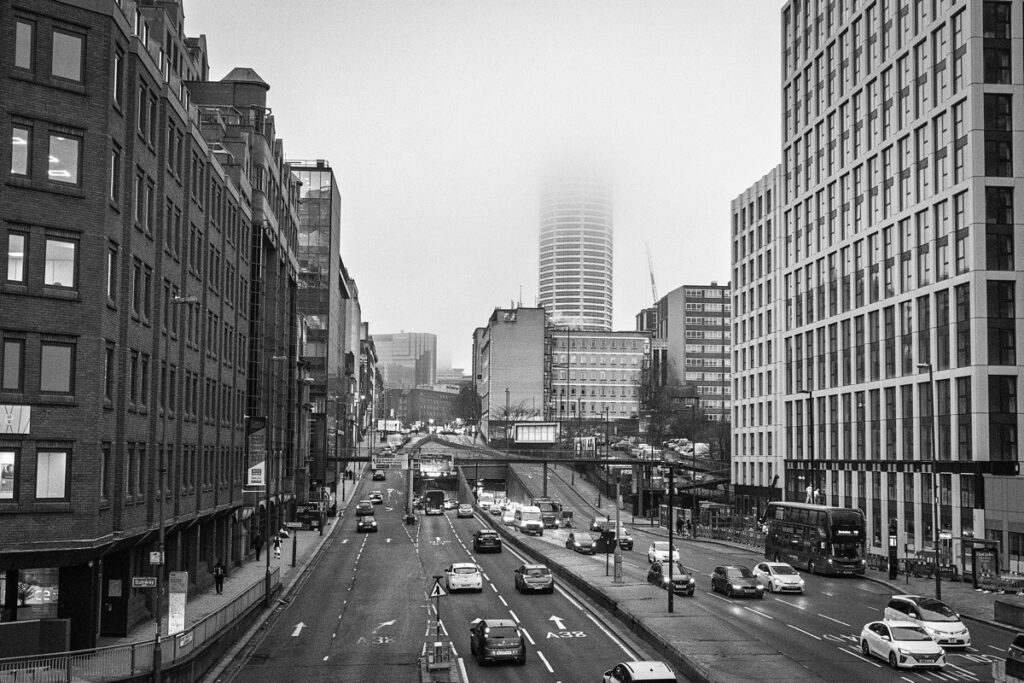
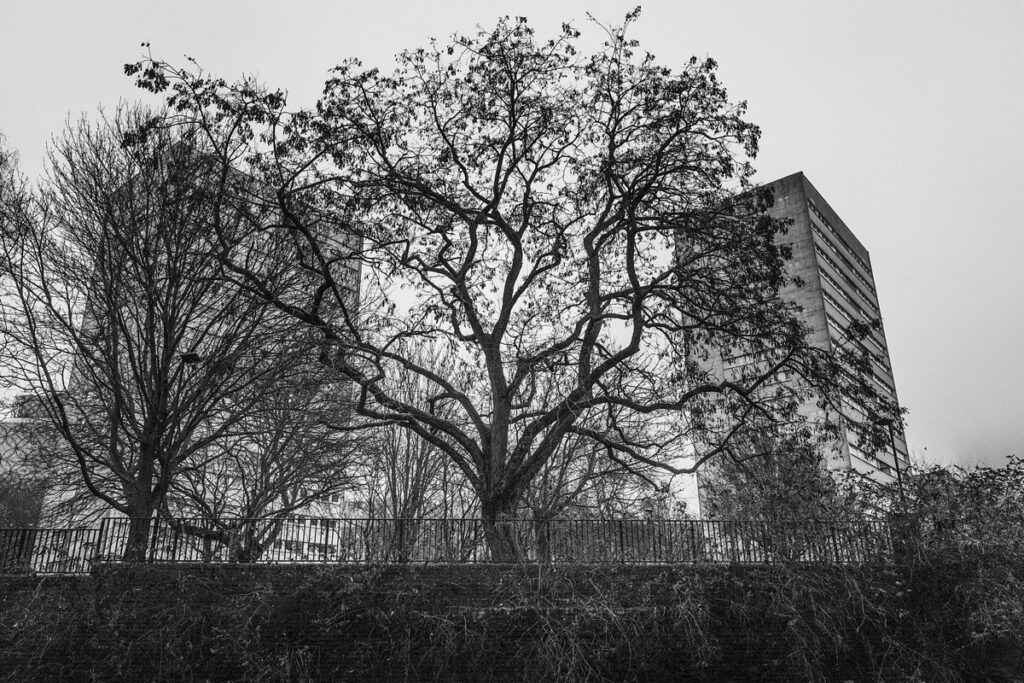
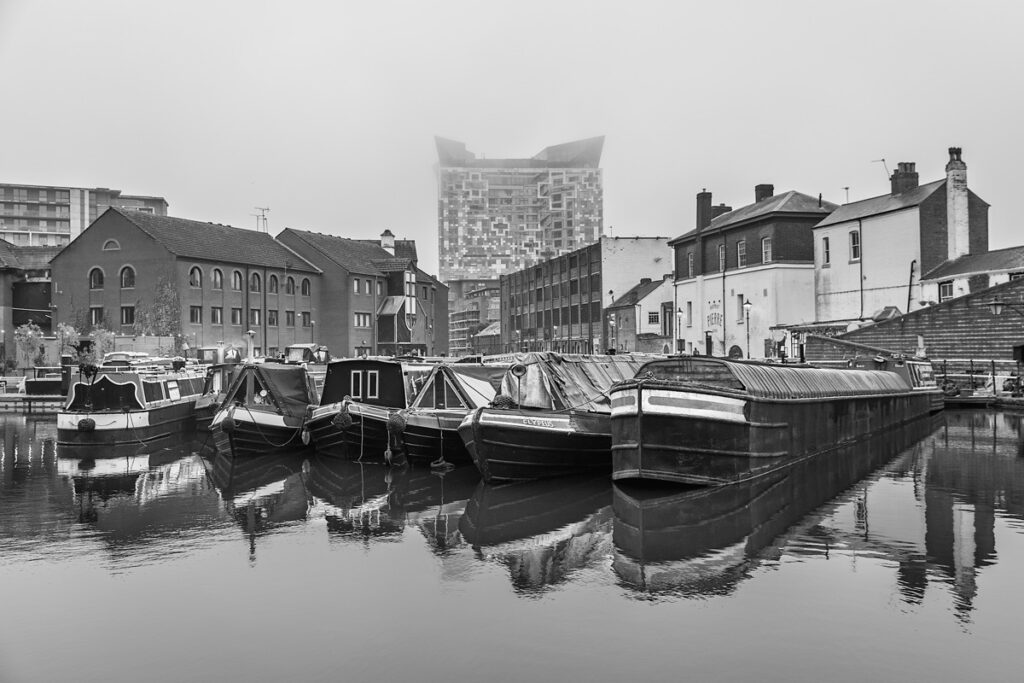
The day was black and white, and the Birmingham weather matched the mood. A dull sky hung overhead as mist rolled in, partially obscuring several buildings along the way.
The area of my journey at Snow Hill StationThe tree branches out and covers the tower blocks
Walking beside the Birmingham Canal Navigations, the mist created a stark, atmospheric view of the city. I found the conditions ideal for photography, with a strong black and white theme naturally emerging in my images.
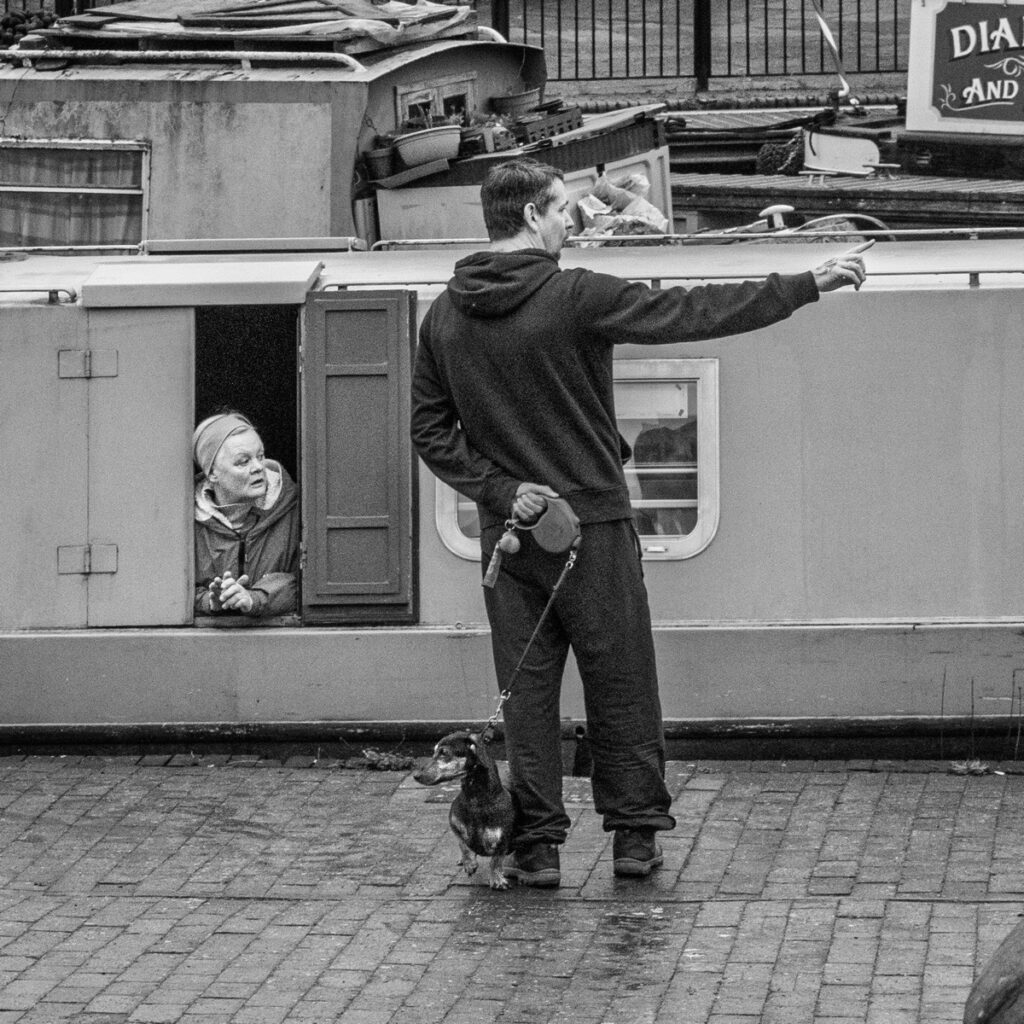
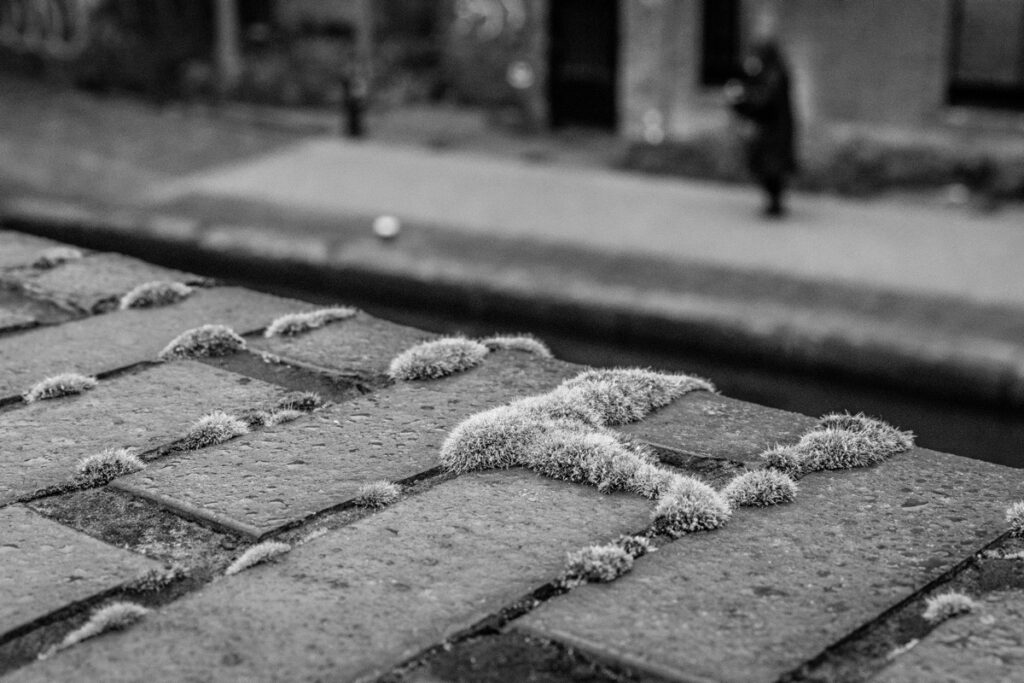
Pointing the way to what is happening in Birmingham.A close up of the moss on the brickwork around the canal
I was using what I like to call my big camera, a Canon R6 Mark II. Paired with a fast zoom lens, it’s a setup I’m comfortable with, although it’s not something you can slip into a coat pocket like a compact camera. Because of that, I was careful not to keep the camera out from under my coat for long periods.
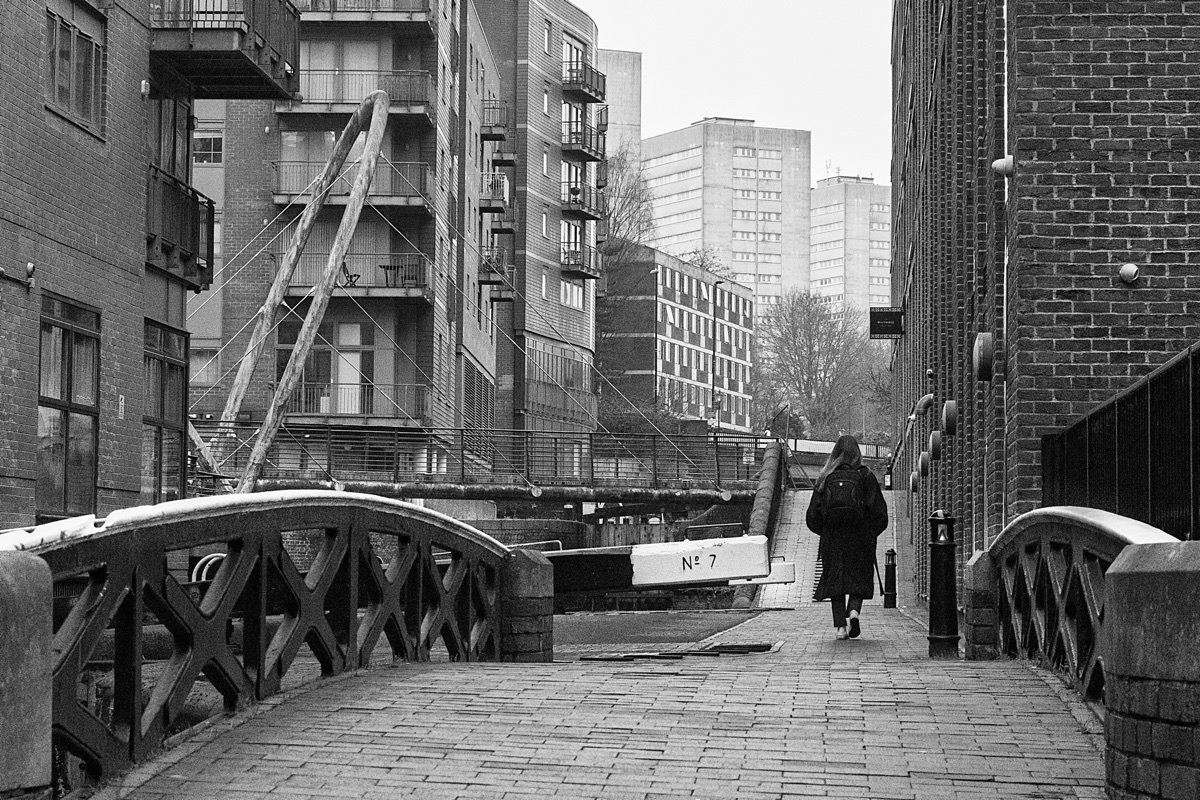
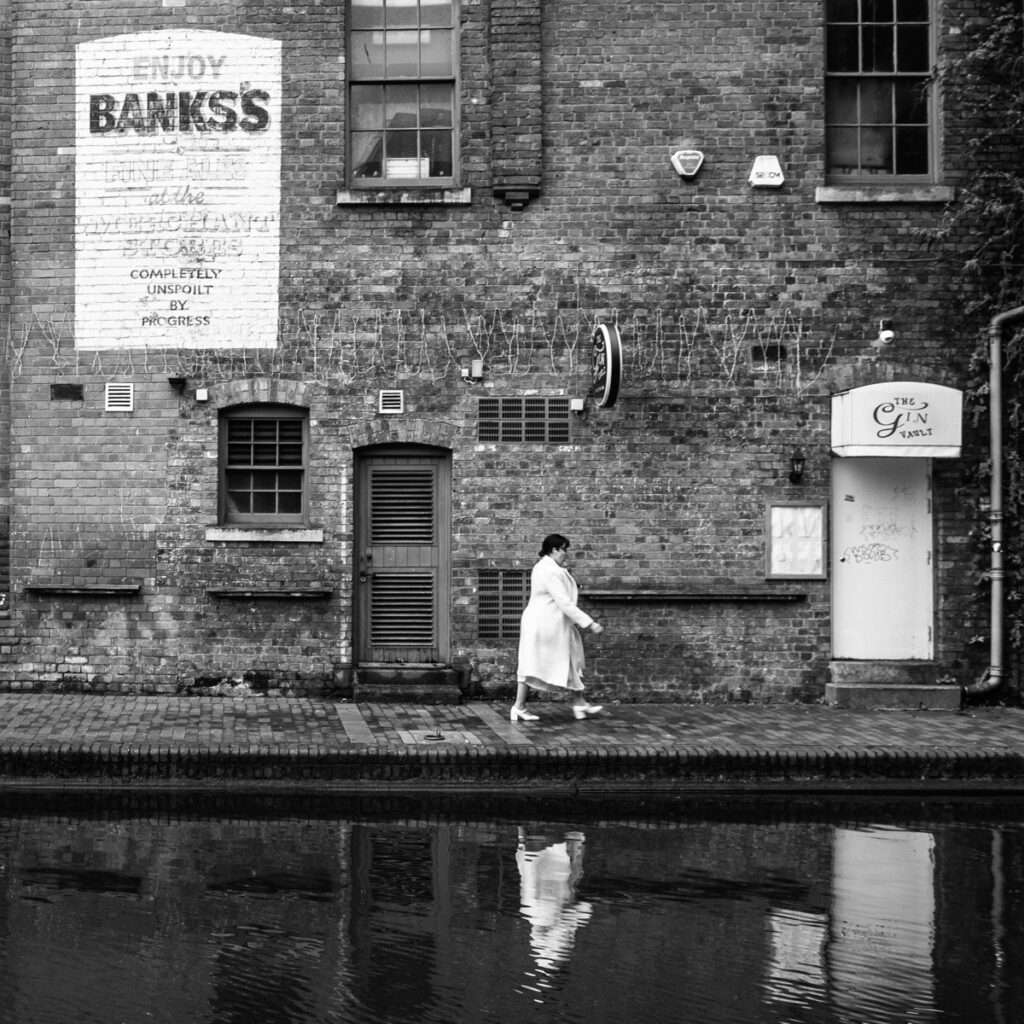
I saw this person with a white coat and she lined up perfectly with the surround viewsA classic view of the Gas Street Basin
During those brief moments when I did take it out, I looked for both unusual and familiar views of the canals focussing on the black and white. The walk from Snow Hill to Gas Street Basin was an enjoyable one, and the photographs reflect that journey through Birmingham in misty, monochrome conditions.
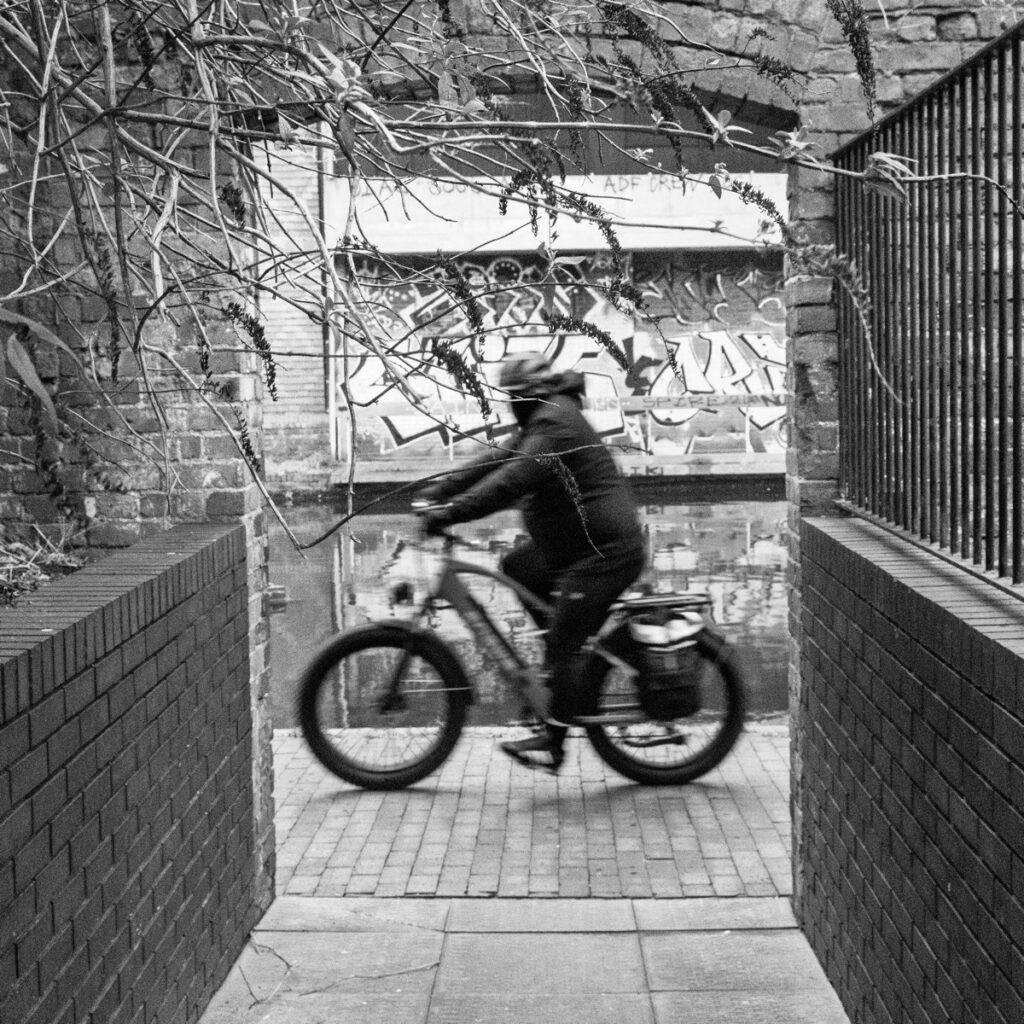
A cyclist goes past at speed just off Water Street.
We use cookies on our website to give you the most relevant experience by remembering your preferences and repeat visits. By clicking “Accept”, you consent to the use of ALL the cookies.
This website uses cookies to improve your experience while you navigate through the website. Out of these, the cookies that are categorized as necessary are stored on your browser as they are essential for the working of basic functionalities of the website. We also use third-party cookies that help us analyze and understand how you use this website. These cookies will be stored in your browser only with your consent. You also have the option to opt-out of these cookies. But opting out of some of these cookies may affect your browsing experience.
Necessary cookies are absolutely essential for the website to function properly. These cookies ensure basic functionalities and security features of the website, anonymously.
Cookie
Duration
Description
cookielawinfo-checkbox-analytics
11 months
This cookie is set by GDPR Cookie Consent plugin. The cookie is used to store the user consent for the cookies in the category "Analytics".
cookielawinfo-checkbox-functional
11 months
The cookie is set by GDPR cookie consent to record the user consent for the cookies in the category "Functional".
cookielawinfo-checkbox-necessary
11 months
This cookie is set by GDPR Cookie Consent plugin. The cookies is used to store the user consent for the cookies in the category "Necessary".
cookielawinfo-checkbox-others
11 months
This cookie is set by GDPR Cookie Consent plugin. The cookie is used to store the user consent for the cookies in the category "Other.
cookielawinfo-checkbox-performance
11 months
This cookie is set by GDPR Cookie Consent plugin. The cookie is used to store the user consent for the cookies in the category "Performance".
viewed_cookie_policy
11 months
The cookie is set by the GDPR Cookie Consent plugin and is used to store whether or not user has consented to the use of cookies. It does not store any personal data.
Functional cookies help to perform certain functionalities like sharing the content of the website on social media platforms, collect feedbacks, and other third-party features.
Performance cookies are used to understand and analyze the key performance indexes of the website which helps in delivering a better user experience for the visitors.
Analytical cookies are used to understand how visitors interact with the website. These cookies help provide information on metrics the number of visitors, bounce rate, traffic source, etc.
Advertisement cookies are used to provide visitors with relevant ads and marketing campaigns. These cookies track visitors across websites and collect information to provide customized ads.