Up the Folly: Inside Perrott’s Tower
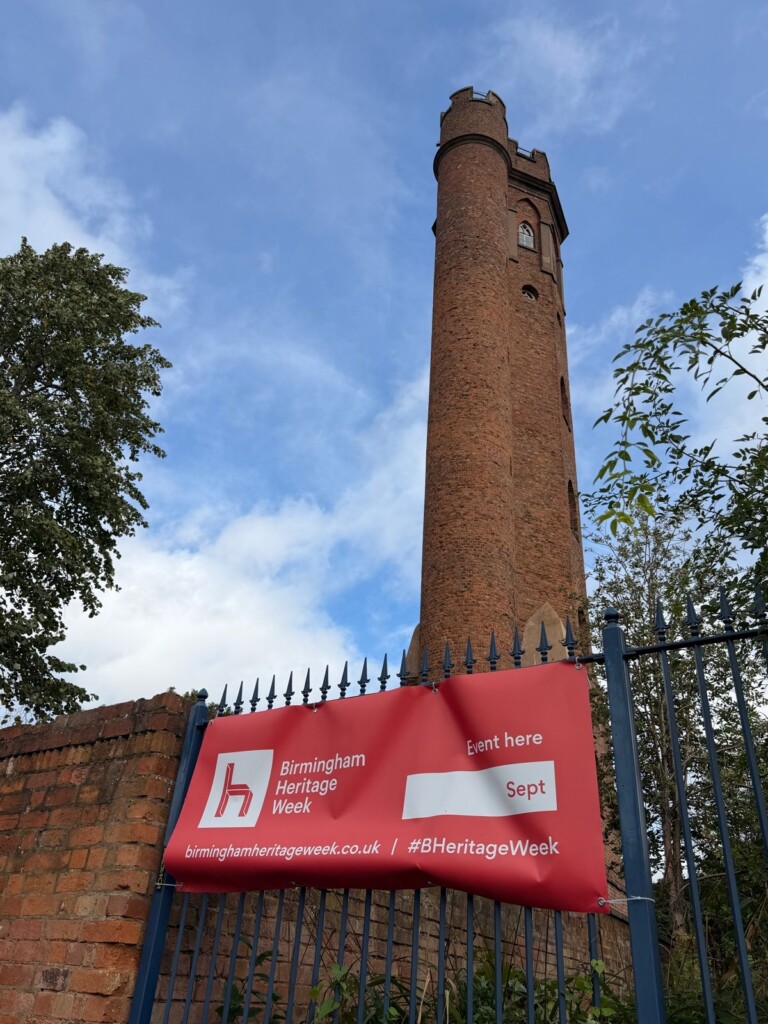
Perrott's Folly has been on my bucket list as a place to visit, so I was pleased to secure a place on the tour of the tower as part of Birmingham Heritage Week. The Folly was built by John Perrott in 1758…
Jump to section
Background to my visit
Perrott’s Folly has been on my bucket list as a place to visit, so I was pleased to secure a place on the tour of the tower as part of Birmingham Heritage Week. The Folly was built by John Perrott in 1758 and, at 29 metres tall, dominates the Edgbaston landscape along with its neighbouring tower at Edgbaston Waterworks. A young JRR Tolkien attended mass at the nearby Edgbaston Oratory and there has always been speculation that these two towers were part of his inspiration for the story line in Lord of the Rings.
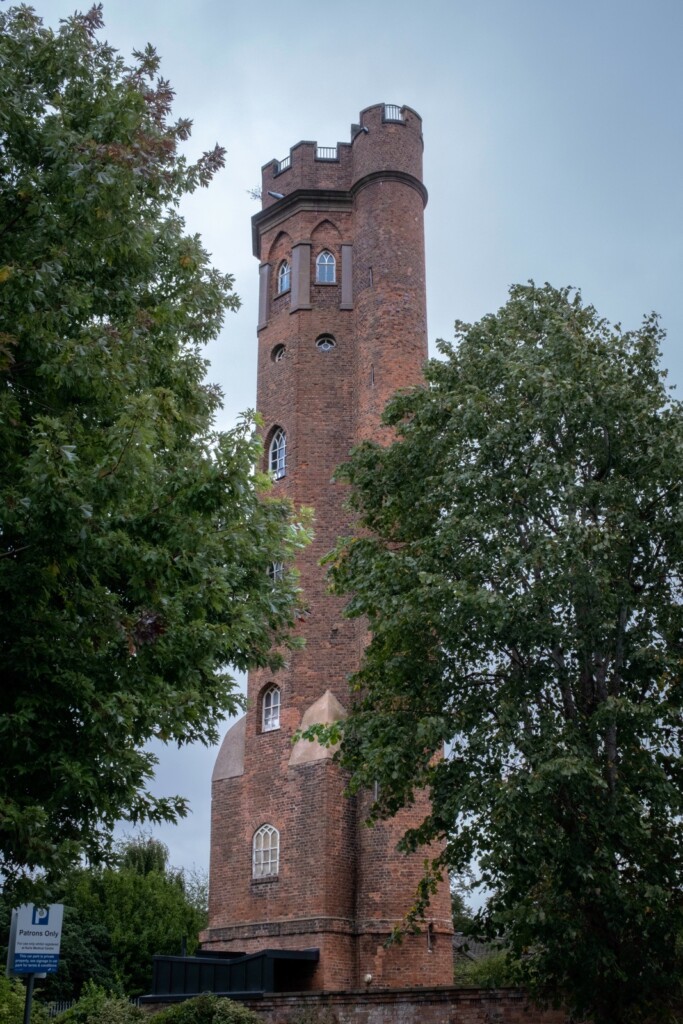
The Folly is now managed by the Re. Future Collective who organised the opening of the tower to the public. I used to work at the dentist’s practice on Monument Road nearby, and now at long last I was going to see inside.
Up the spiral staircase to the rooms
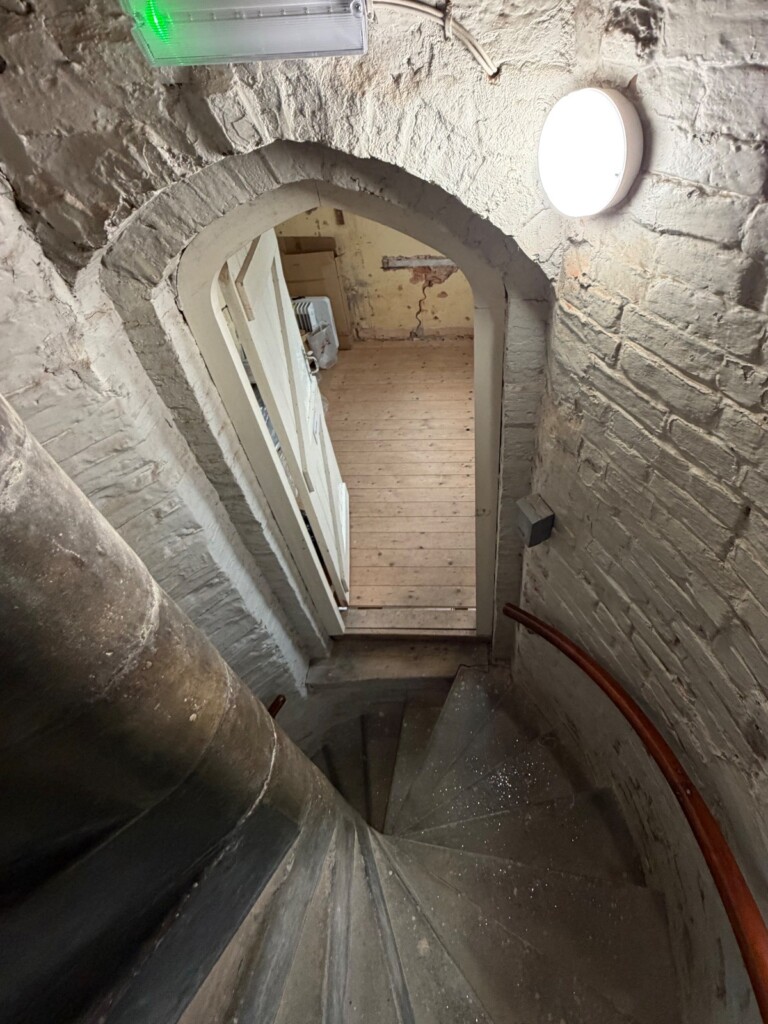
Our guide was very enthusiastic and she took us up the spiral staircase, stopping off to visit the room on each of the 6 floors. Initially the view from the small rooms showed views just above the roofs of the adjacent houses. As we gradually ascended the Folly, more of the surrounding view of Edgbaston was revealed.
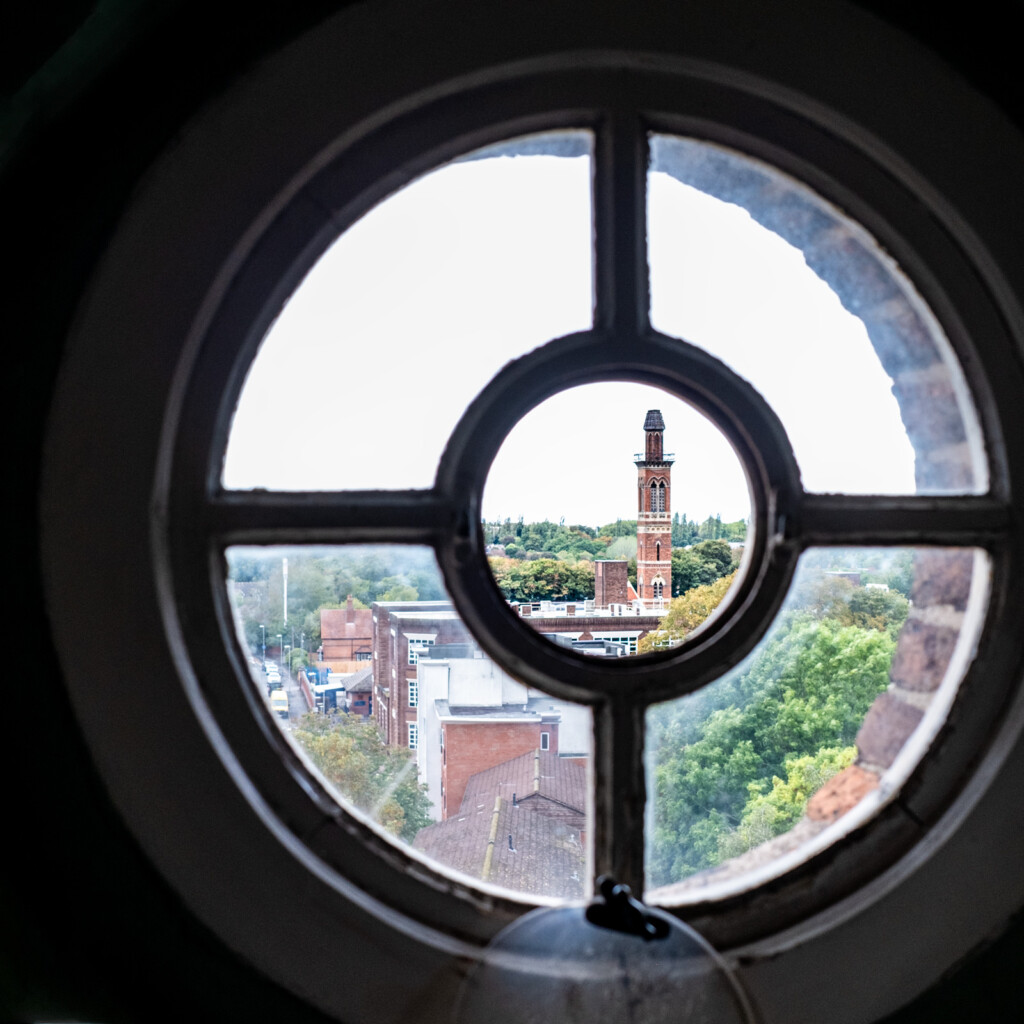
I was excited to see the other tower at Edgbaston Waterworks. The imposing dome of the Birmingham Oratory was also visible. By the time we had reached the top, the complete panorama of Birmingham including the city centre and the surrounding hills could be appreciated.
The rooms of Perrott’s Folly
Once past the first-floor room that revealed the stresses of the tower, the other rooms provided more interesting stories. One room contained an arrangement of tiles featuring the Folly. The window design also changed and the penultimate floor had circular windows which were opened by removing the central glass pane.
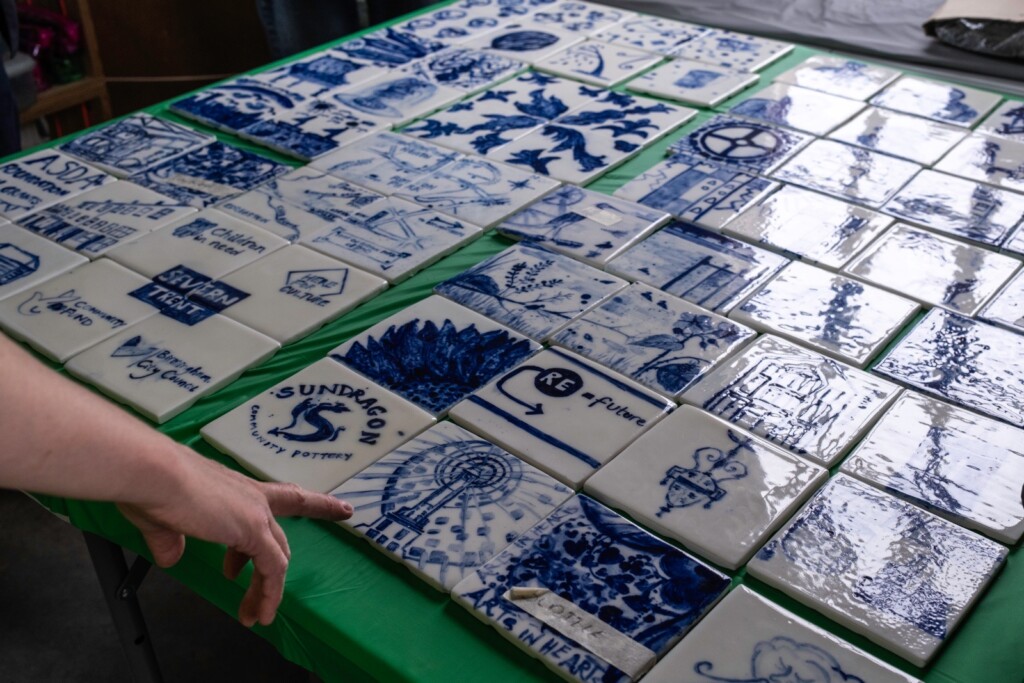
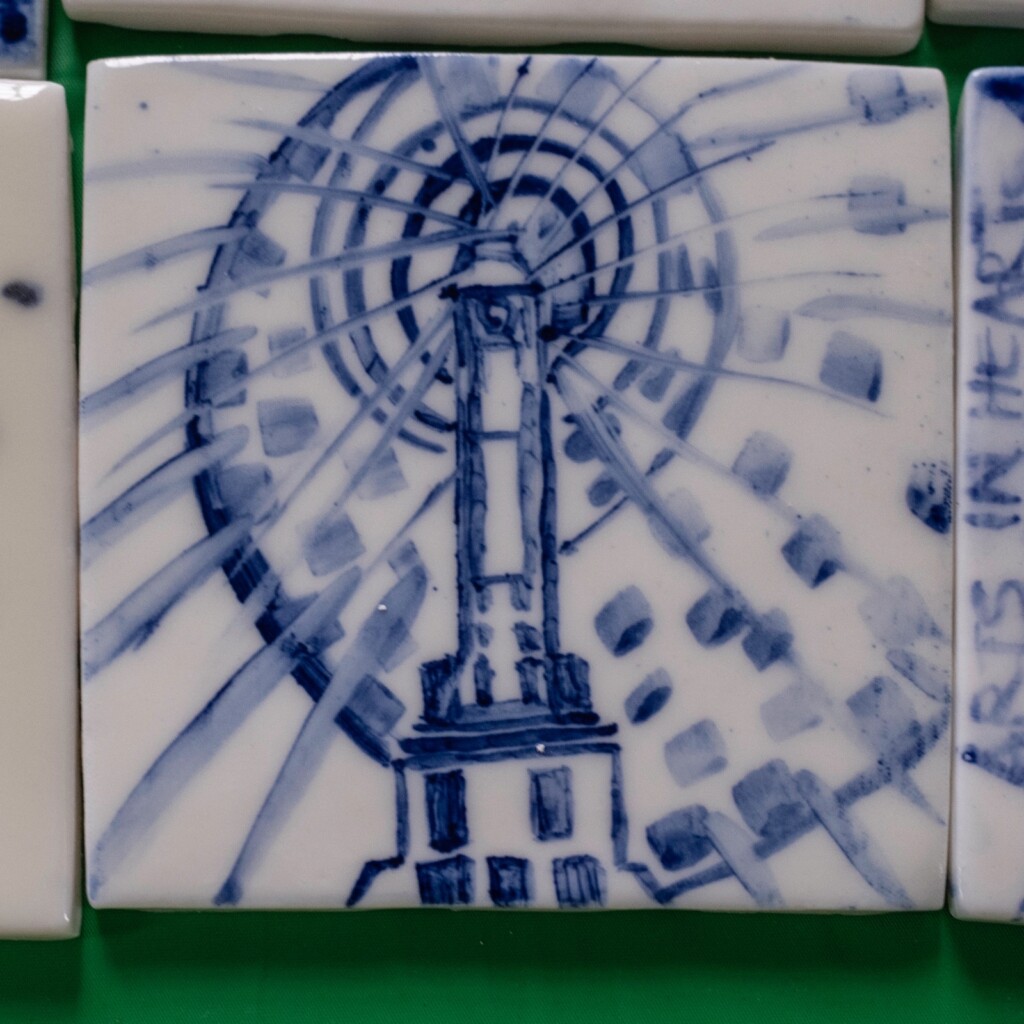
The final room was the most remarkable. Although the paintwork was deteriorating, the details of the plaster work on the walls and ceiling. reminded you how grand the room must have been. Our guide explained both the technical and historical details behind the tower.
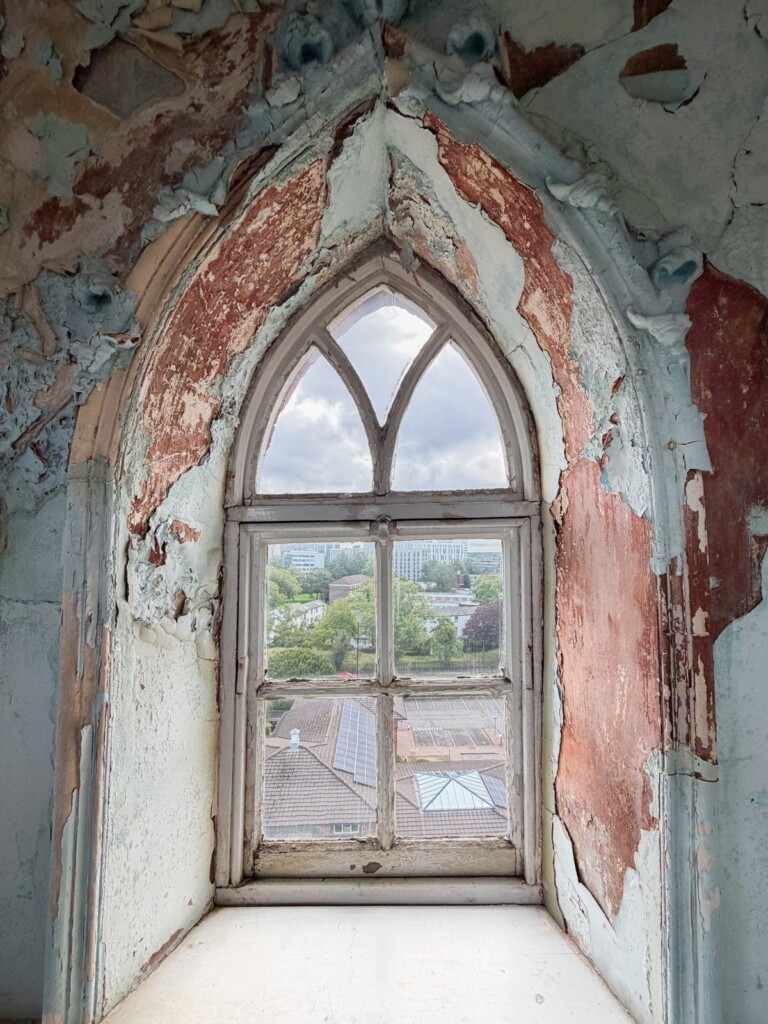
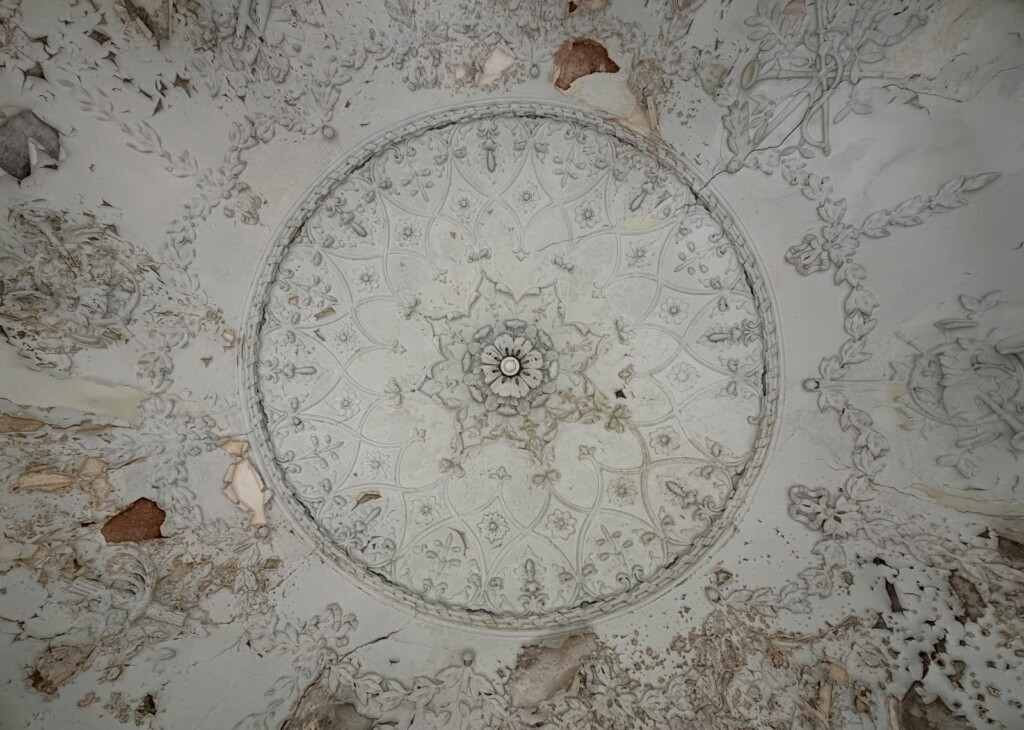
There were little things of interest such as the writing on the wall that was being revealed by the peeling paintwork. We spent the remaining time of the tour looking out of the windows. We could now see both the Birmingham Oratory and the city centre clearly. We were fortunate that the day was bright and clear.
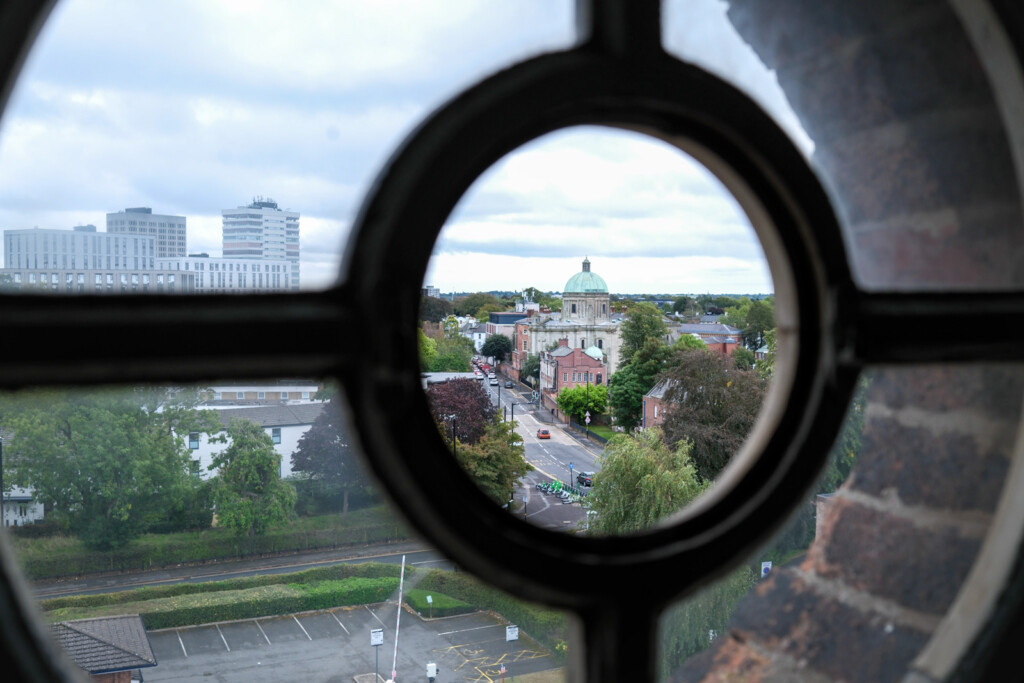
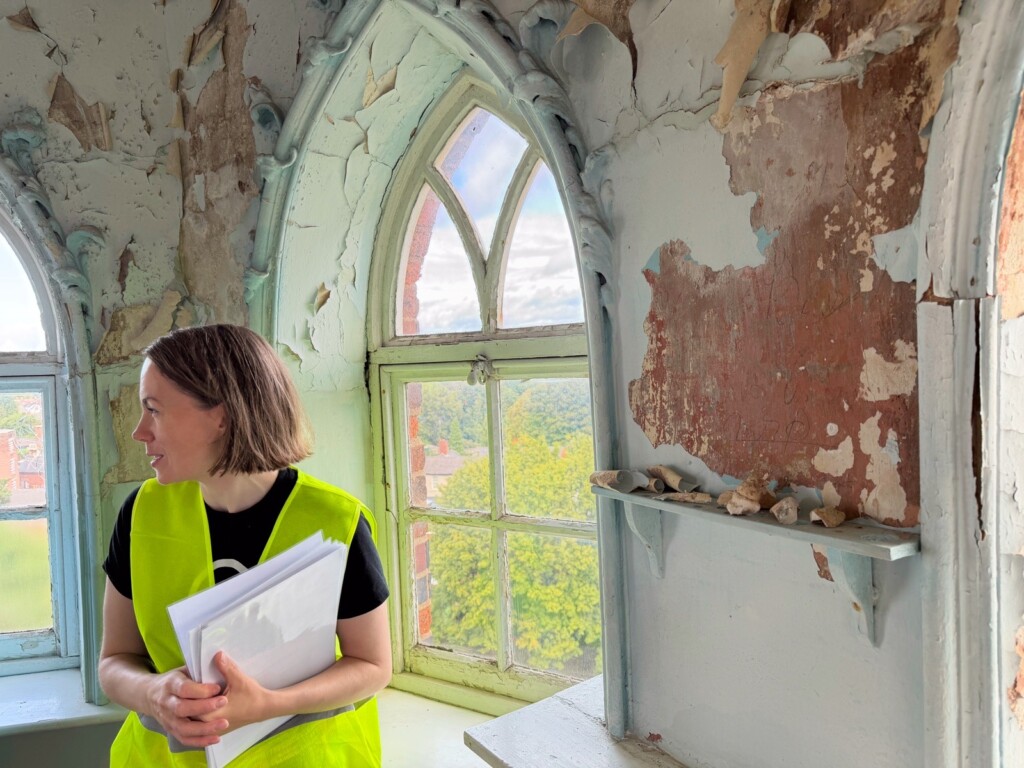
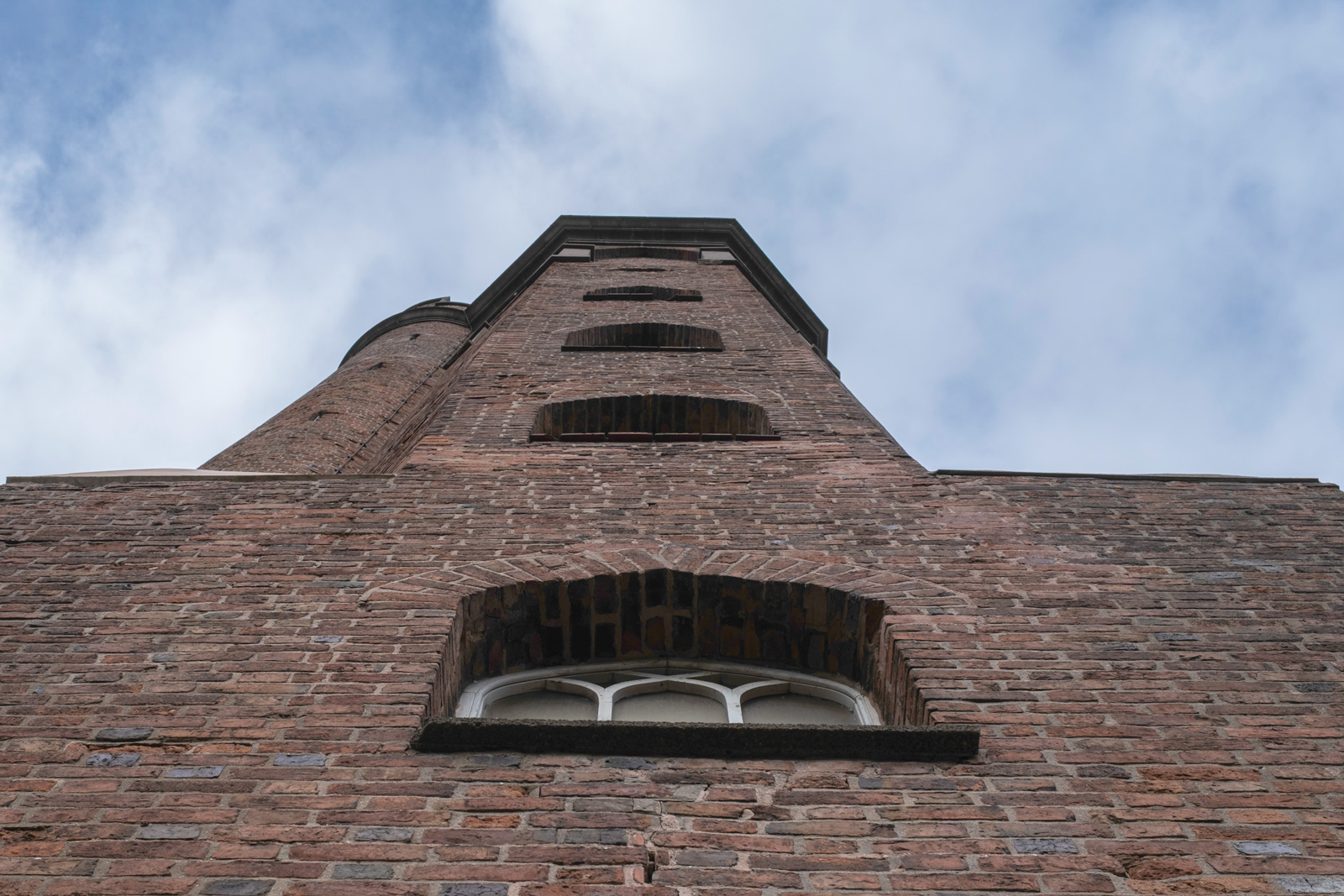
The roof was not safe to venture onto and once again this reminded visitors that such a building required a lot of upkeep after being continually exposed to the British weather. One could feel the wind rushing into the tower when the windows were open. The brickwork showed weather erosion in many places.
Back the stairs and time to leave
After an enjoyable visit, it was time to descend the steps back to the ground. The journey down was not an easy one as the handrail disappeared on each floor to allow the entrance to the rooms. The group made it down safely and we met the next group ready for the tour.
At the base of the Folly, there was tea, coffee and biscuits and a chance to talk to other members of the Re. Future Collective. Everyone was so enthusiastic and willing to talk about the Folly. I left feeling pleased that I had been given a chance to go up the Folly and learn about the history and future of the building.
Browse 11 photographs
1 / 11