Birmingham Medical History Walk: Hospitals, Plaques and a famous Portrait
The medical history and development of health care in Birmingham is fascinating. Dr James Burgess, chair of the Birmingham History Society and the voice behind the Birmingham History Podcast, was the lead for a tour of the major sites in the history…
Jump to section
- Birmingham Heritage Week Walk with Dr James Burgess
- Hospital Street and the Site of the First General Hospital
- Birmingham Children's Hospital and Coleridge Passage Workhouse
- The Old Square Mural and Edmund Hector
- Rackhams: William Sands Cox and John Ash
- Hotel du Vin and Birmingham's Former Specialist Hospitals
- The John Ash Portrait by Joshua Reynolds
- Queen's College Medical School
- The Birmingham and Midland Skin and Lock Hospital
- X-rays, Foxgloves and Cotton Wool: The Answers Revealed
- Reflections
- Comments
Birmingham Heritage Week Walk with Dr James Burgess
The medical history and development of health care in Birmingham is fascinating. Dr James Burgess, chair of the Birmingham History Society and the voice behind the Birmingham History Podcast, was the lead for a tour of the major sites in the history of medicine in Birmingham. The walking tour was part of the Birmingham Heritage Week activities, and the title was “X-rays, Foxgloves and Cotton Wool: Medical History Tour of Birmingham”. This blog is a photographic record of the walk and I would recommend enrolling on this insight into the medical history of Birmingham brought alive by Dr James Burgess.
Hospital Street and the Site of the First General Hospital
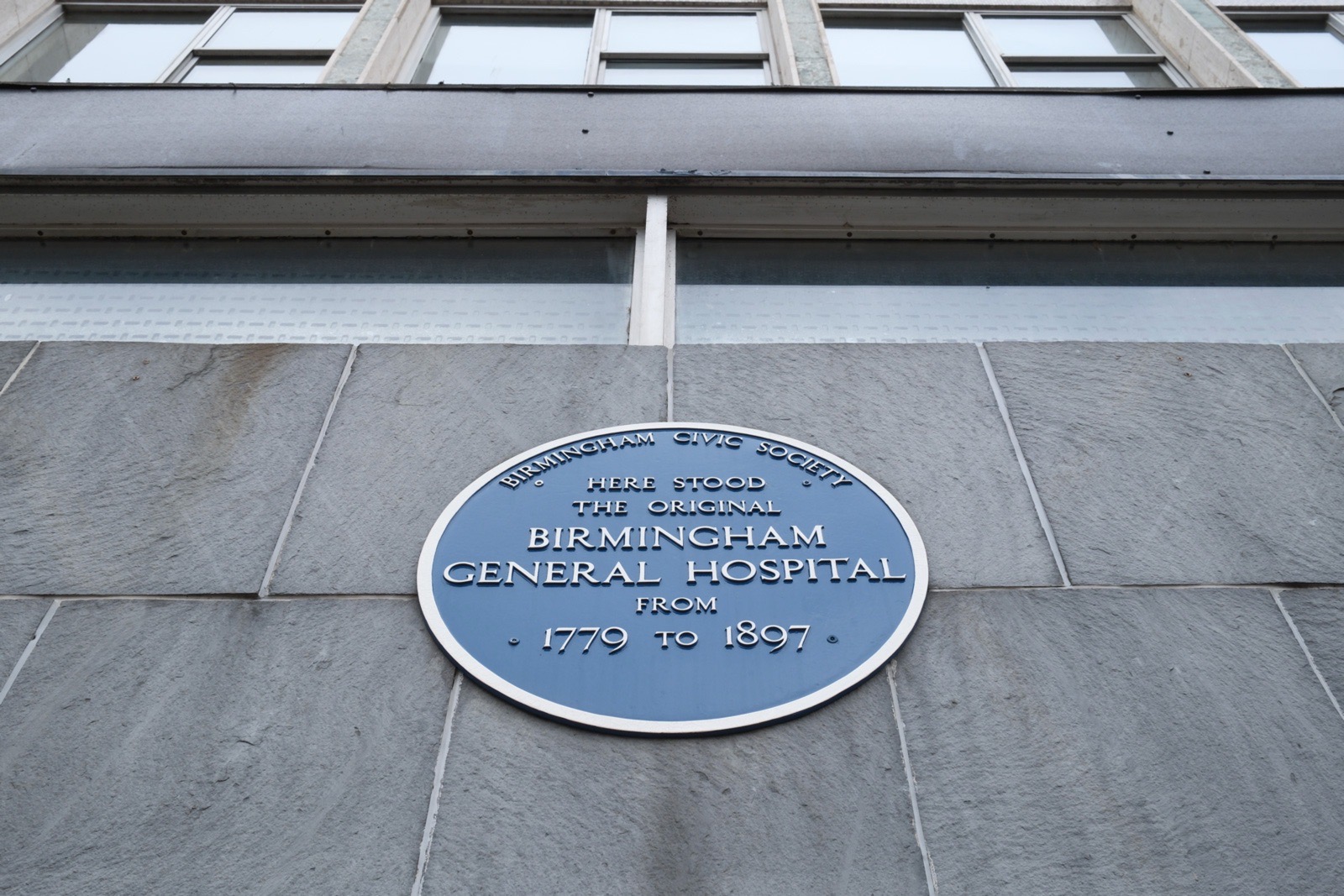
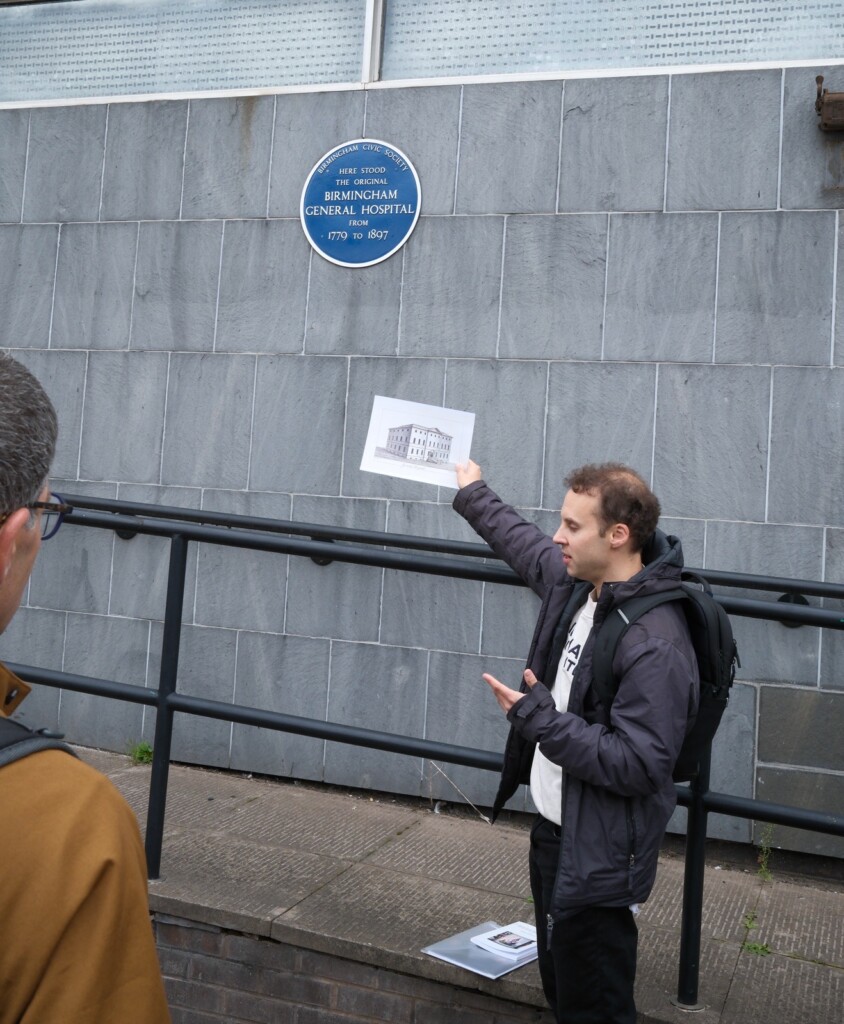
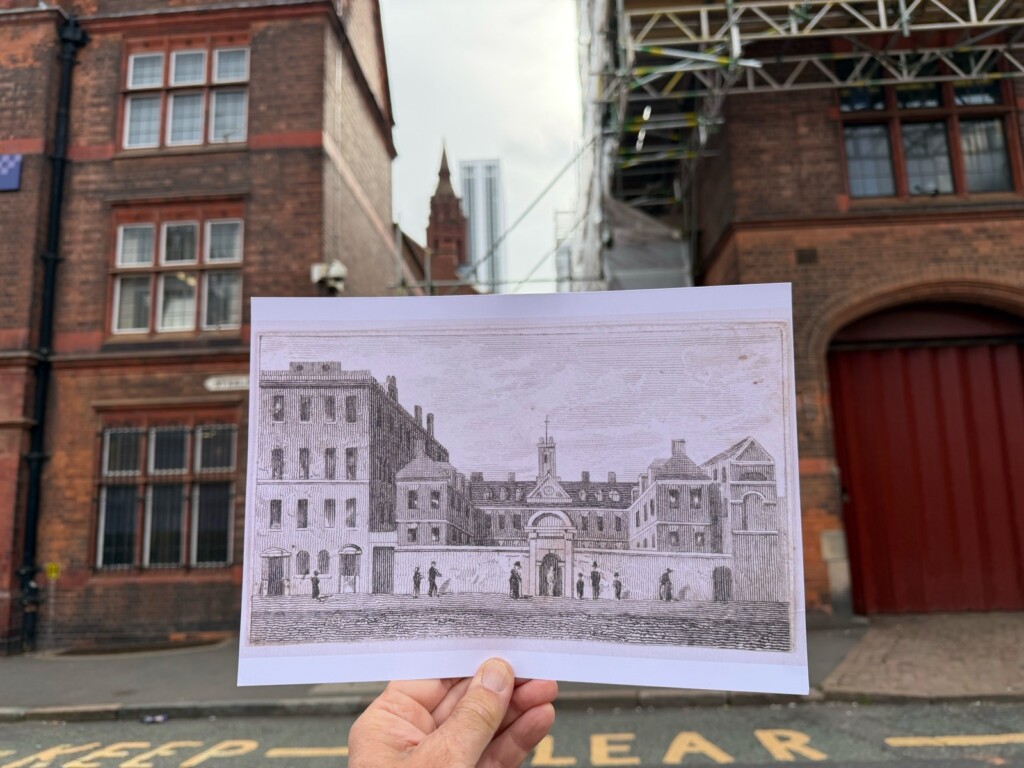
We met at the corner of Hospital Street, next to a large car park. James took us across to Summer Lane, where there was a large, nondescript modern building belonging to the West Midlands Combined Authority. On the steps of the building is a blue plaque stating that this was the site of the first General Hospital from 1779 to 1897. James gave us a history of the origins and work of the General Hospital, illustrating his talk with laminated pictures. This was the first stop of many, and we set off at a brisk pace to our next stop, the former General Hospital and now the Birmingham Children’s Hospital.
Birmingham Children’s Hospital and Coleridge Passage Workhouse
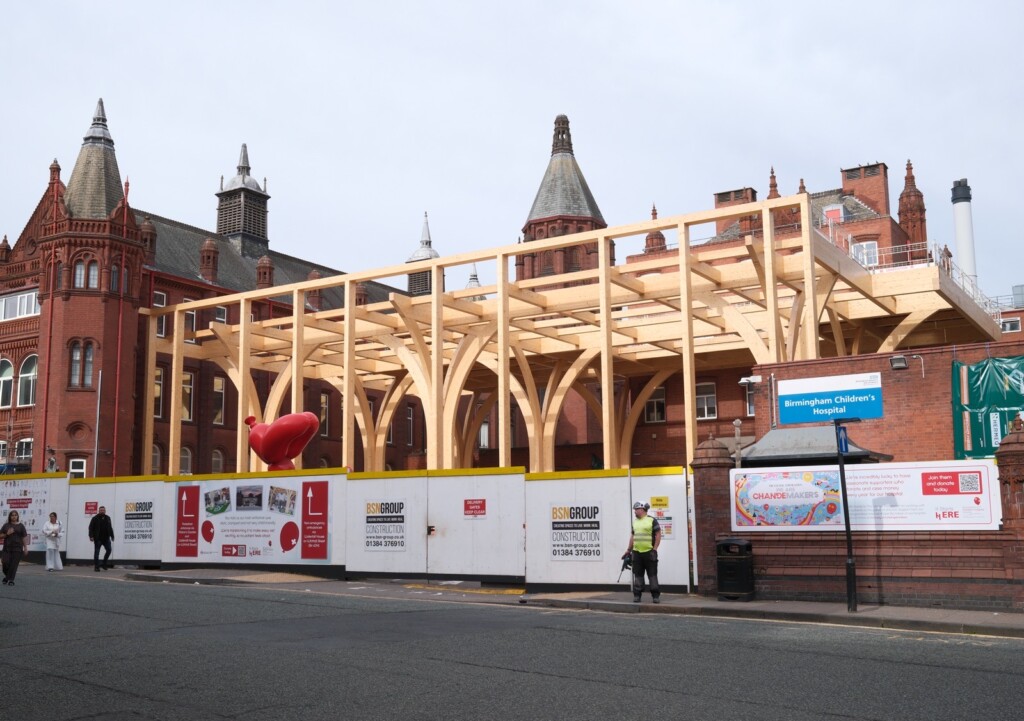
The hospital is undergoing structural change, with the construction of a welcoming foyer. The area was full of vehicles and noise as the next chapter of the building was being built. We moved on a hundred yards to Coleridge Passage, where the Birmingham workhouse stood from 1734, accepting sick and diseased people.
The Old Square Mural and Edmund Hector
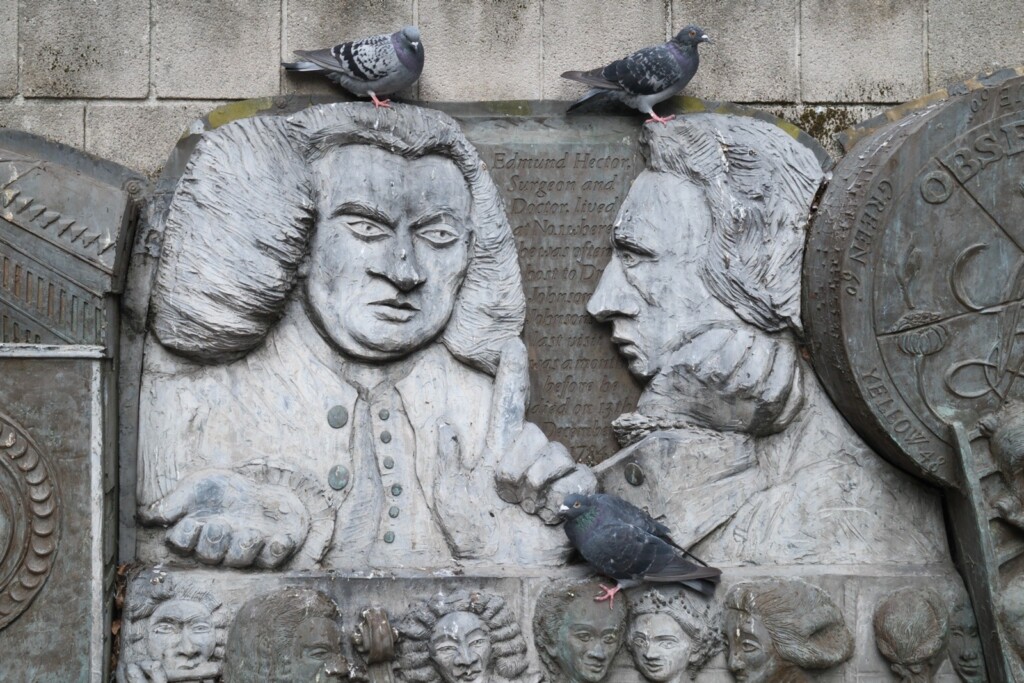
Our walk moved on to the wall mural in Old Square, which illustrates some of the history of the area. One part depicts Edmund Hector, an eminent surgeon who was friends with Dr Samuel Johnson.
Rackhams: William Sands Cox and John Ash
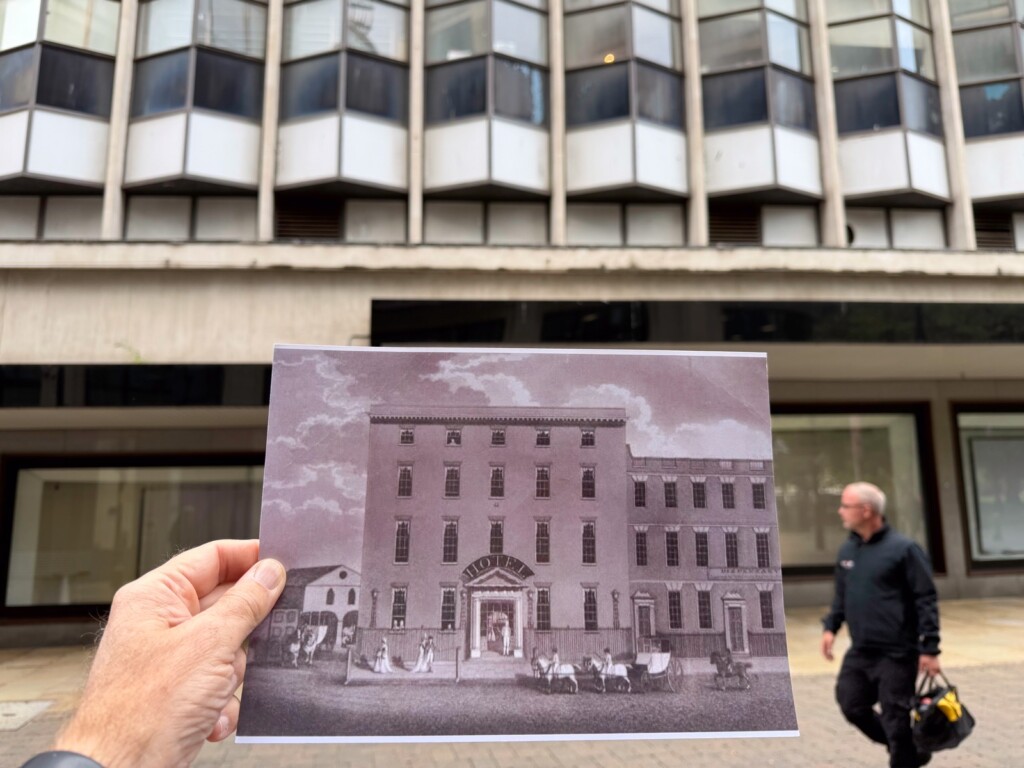
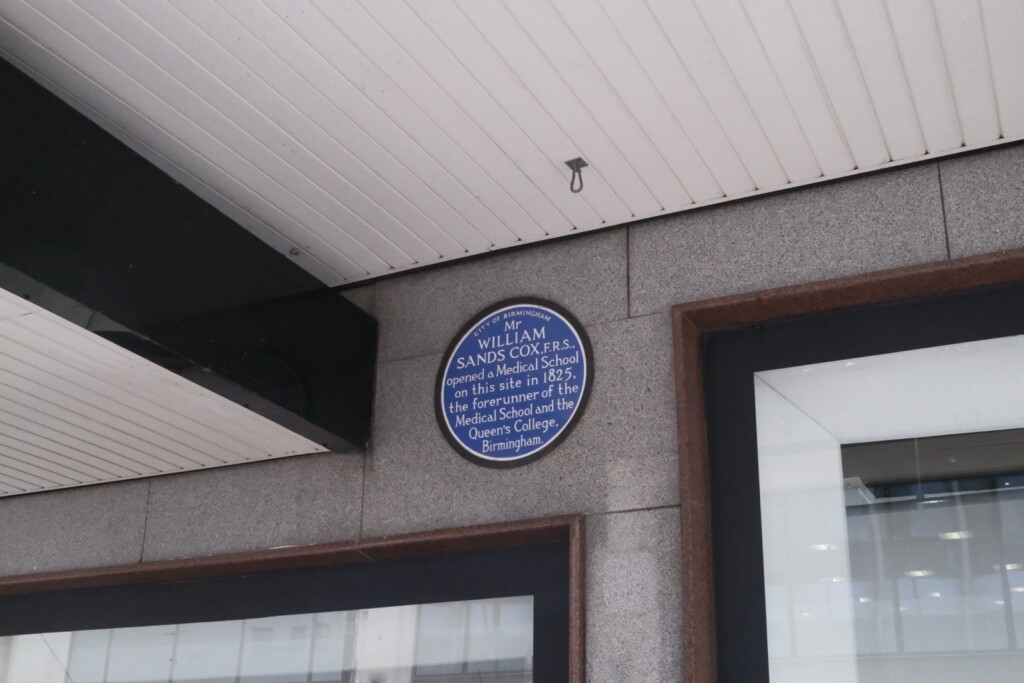
Our next port of call was Rackhams, the former department store. There are two blue plaques here: one for William Sands Cox, who founded a medical school on the site in 1825, and the other for John Ash, the founder of the first General Hospital.
Hotel du Vin and Birmingham’s Former Specialist Hospitals
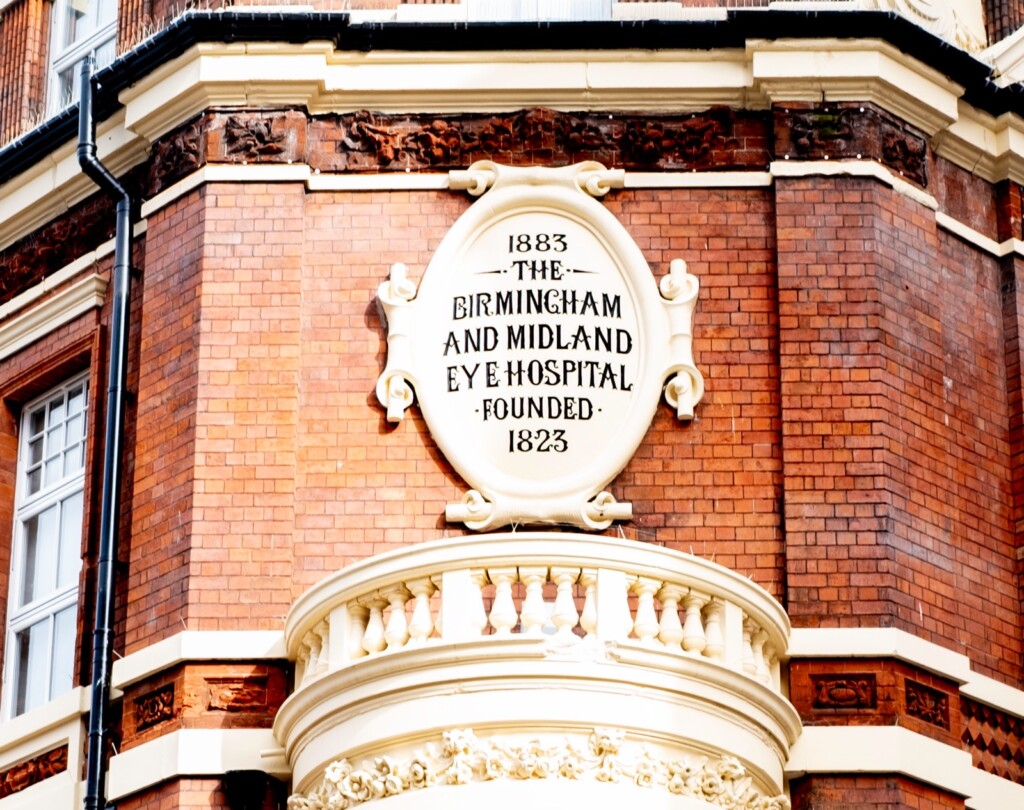
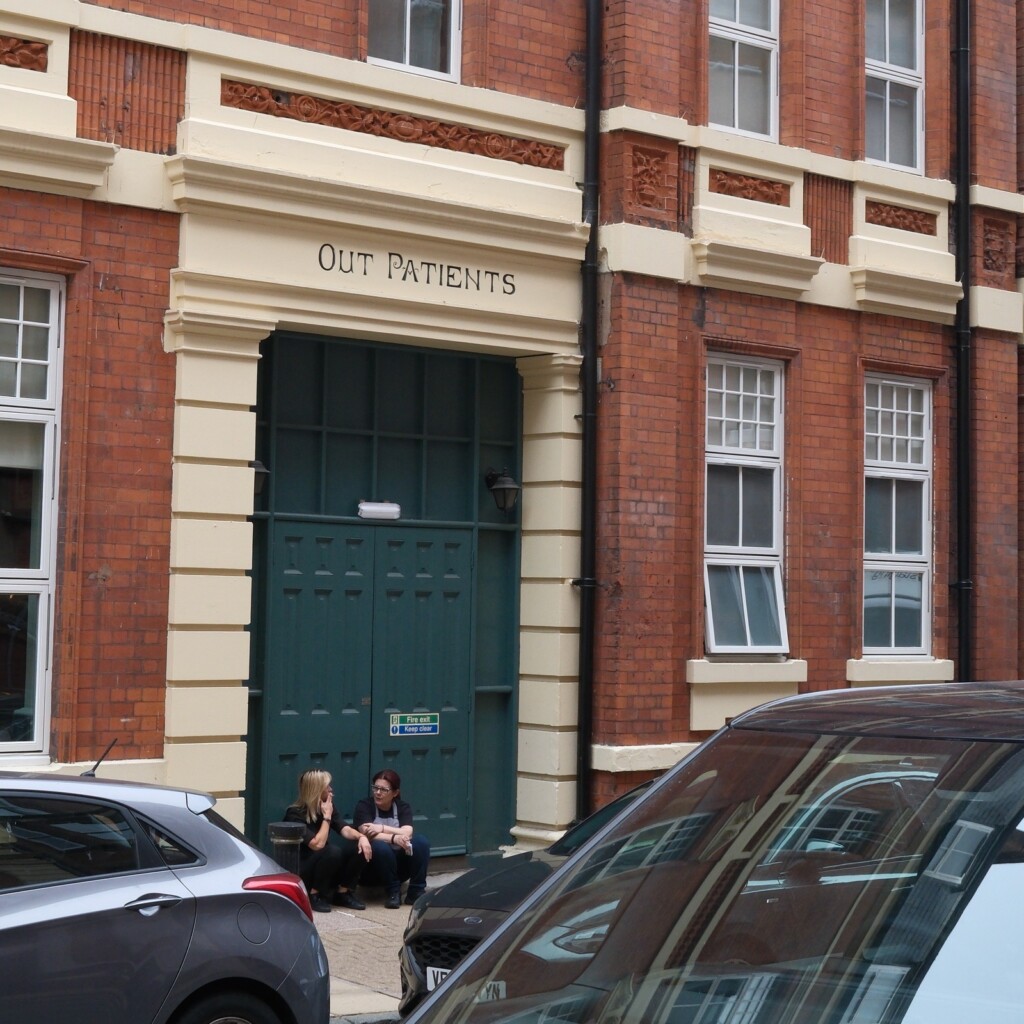
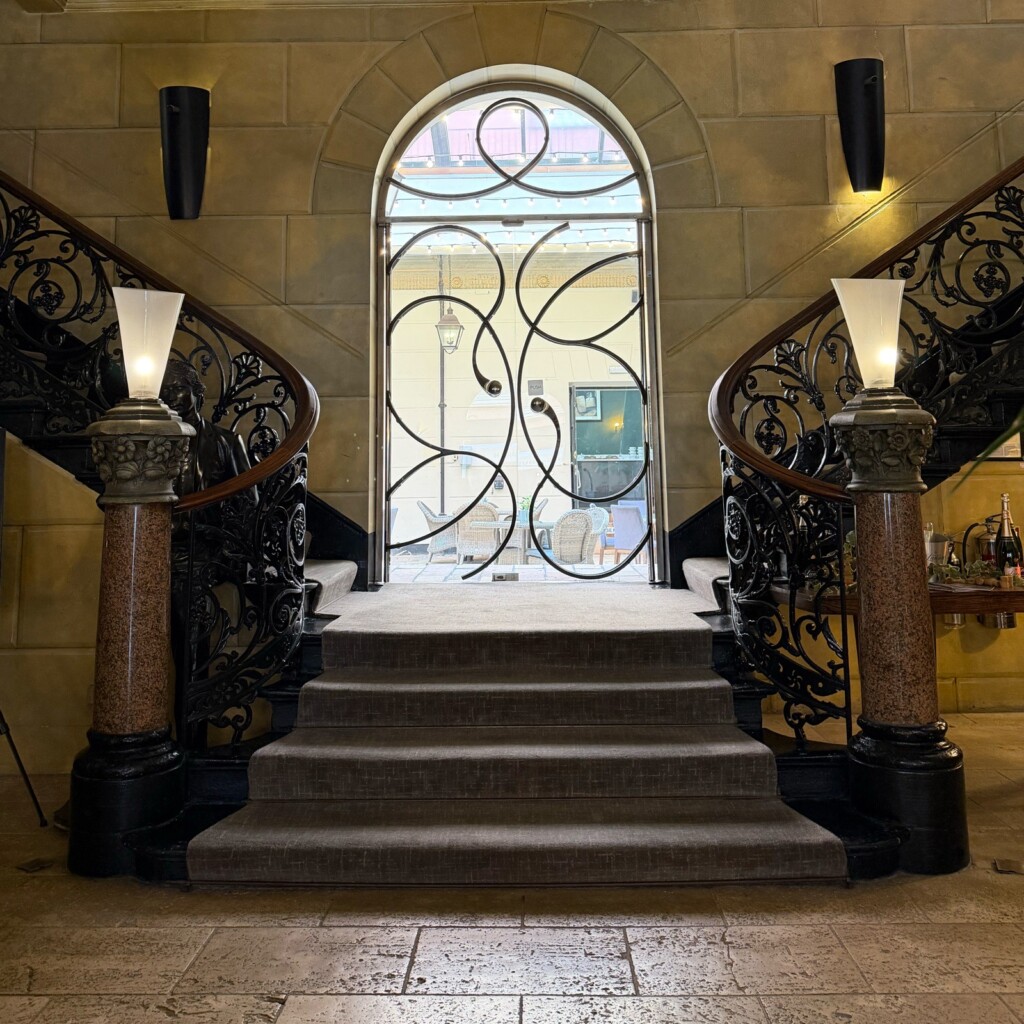
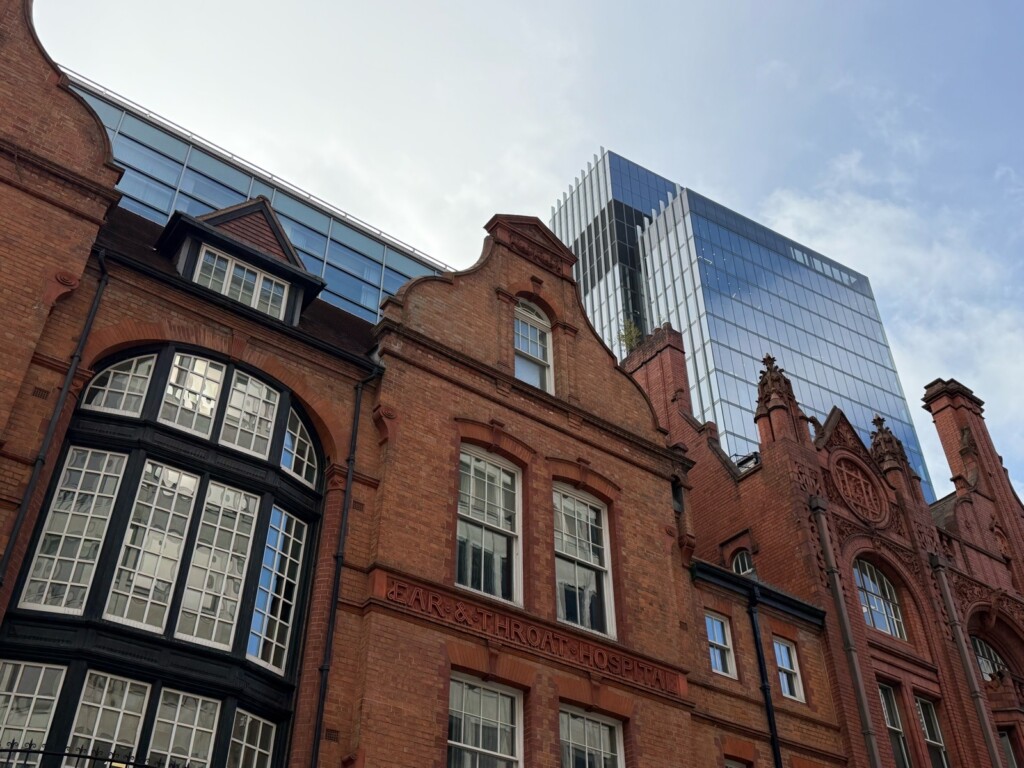
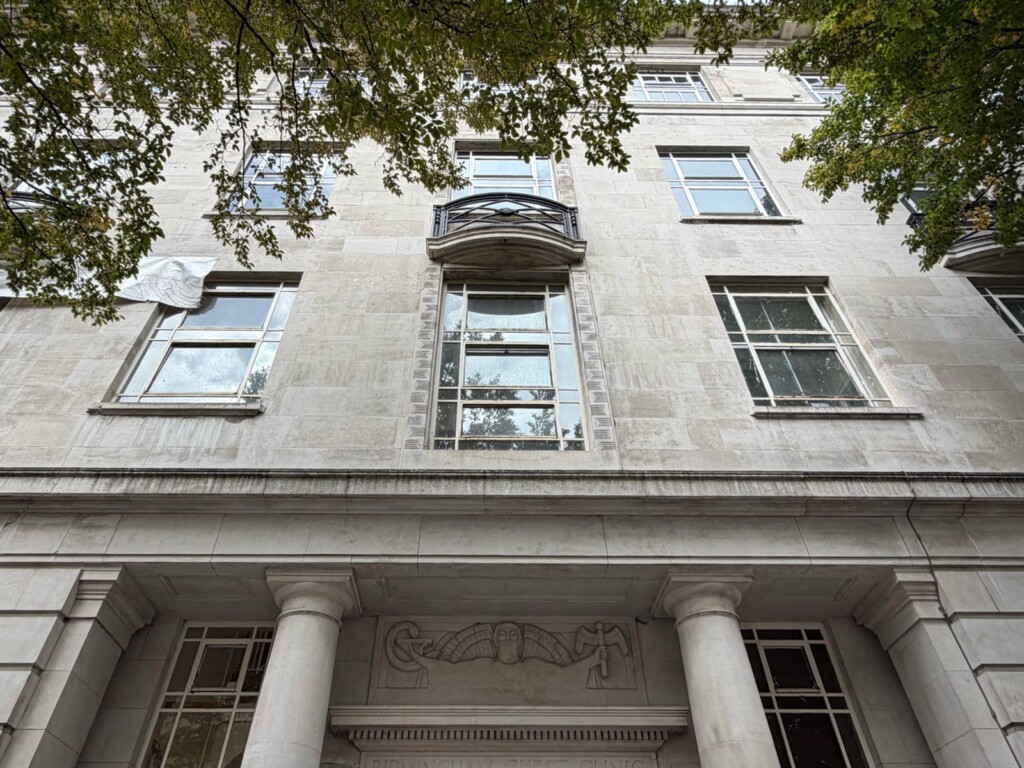
The Hotel du Vin is a luxury hotel in the Colmore Business District with a former life as the Birmingham and Midland Eye Hospital. We ventured inside to see the beautiful stairs and reception area. A little further down the street is the former Ear and Throat Hospital, and beyond that, on St Chad’s Queensway, is the Birmingham Chest Clinic.
The John Ash Portrait by Joshua Reynolds
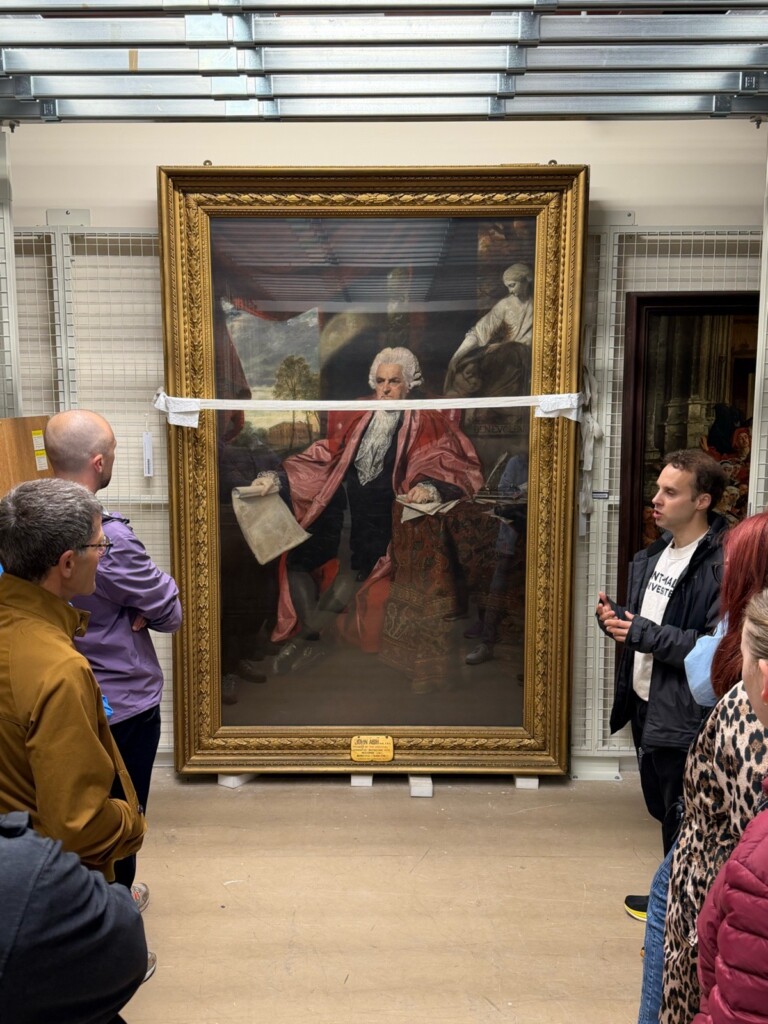
The highlight of the visit was the private viewing of the portrait of John Ash, an eminent physician who was the founder of the first General Hospital in 1779. Joshua Reynolds was a friend of John Ash and painted his portrait. The magnificent artwork was once housed in the boardroom of the General Hospital, which had moved to Steelhouse Lane. In 1995, the General Hospital became the Children’s Hospital, and the portrait was bought by the Birmingham Museum and Art Gallery.
Queen’s College Medical School
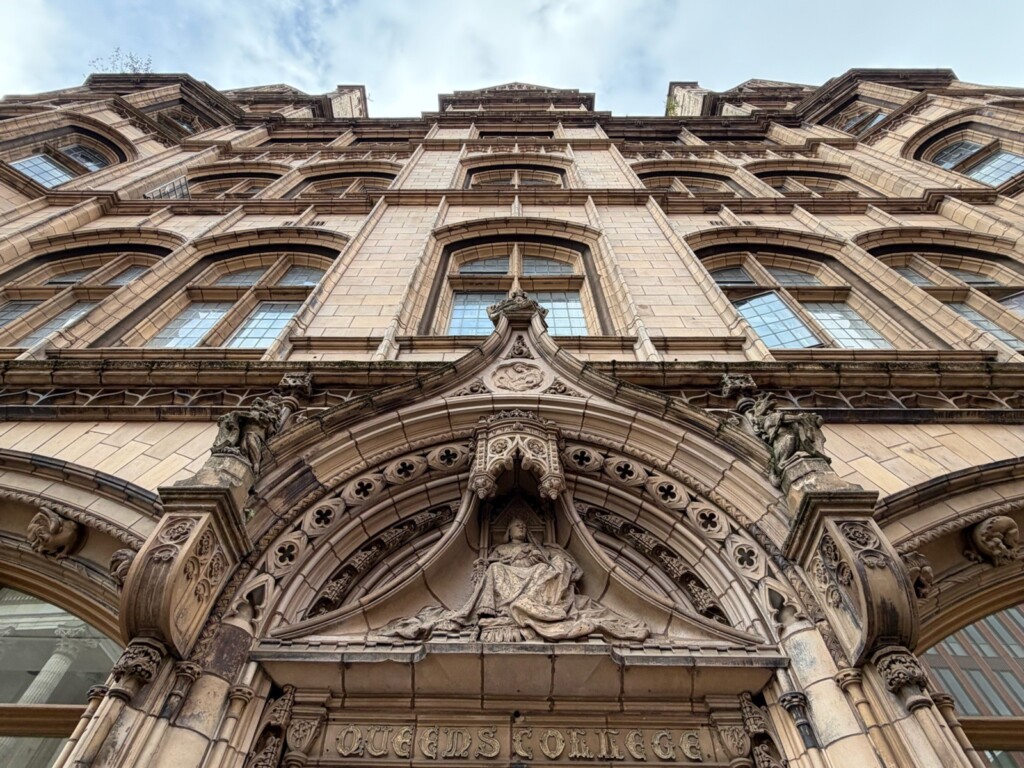
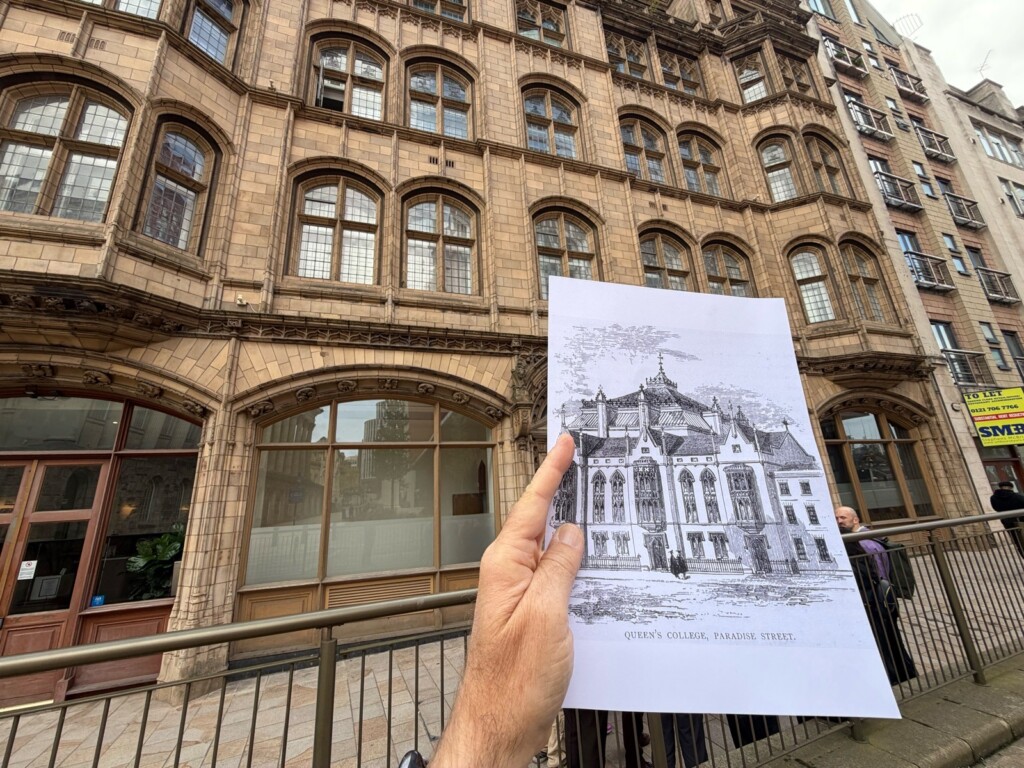
Immediately after the Art Museum, we went to the magnificent building on Paradise Street, which was Queen’s College Medical School, founded by William Sands Cox. The buff-coloured terracotta architecture is stunning. The interior must have been something at the time, as there was a large lecture theatre and other rooms set up for teaching. All that remains is the Grade II listed façade with the name Queen’s College. Medical teaching moved to the University of Birmingham.
The Birmingham and Midland Skin and Lock Hospital
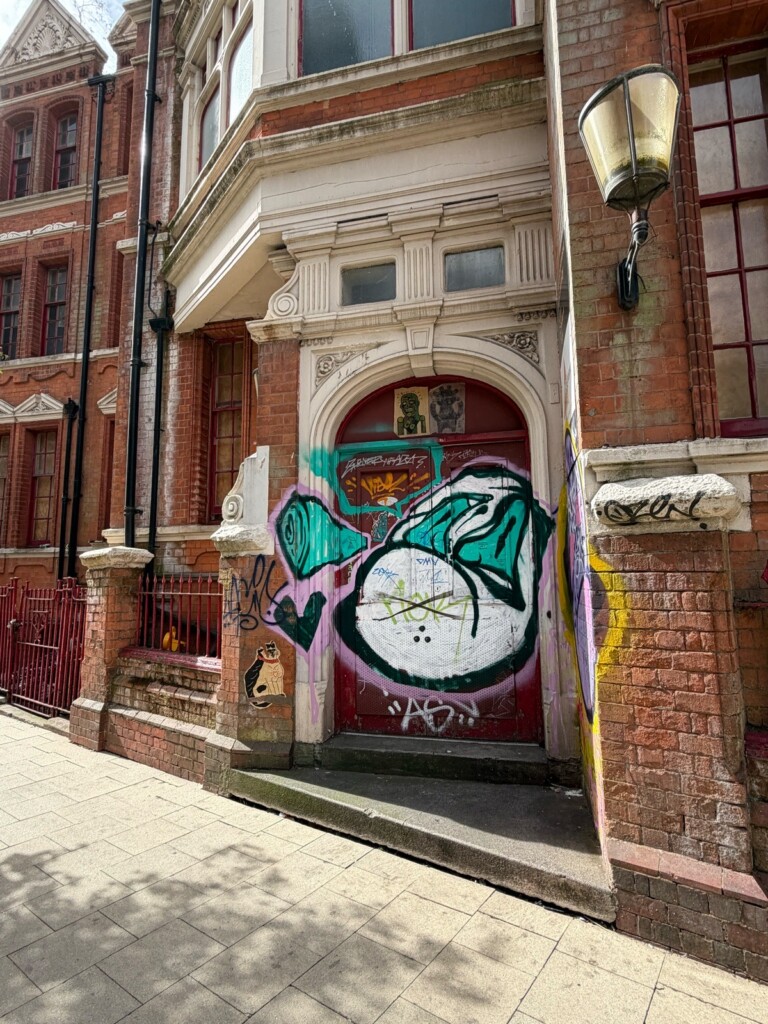
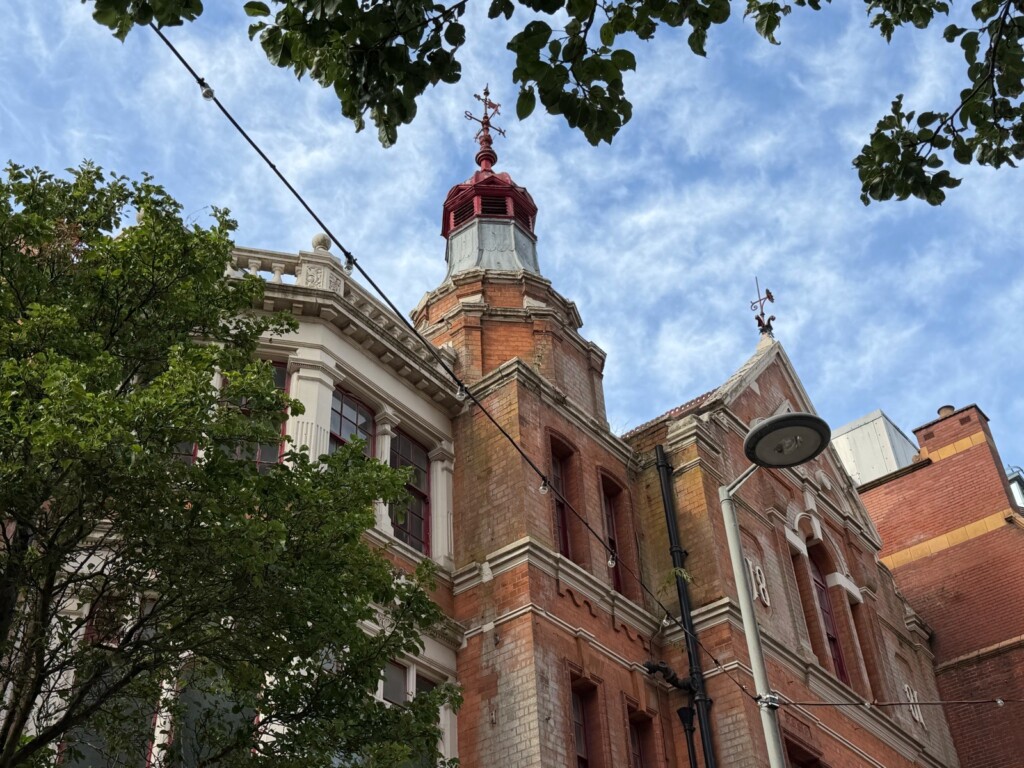
The walking tour still had one more place to visit, and after viewing the portrait, we made our way to our final stop on John Bright Street. A building I had passed many times, and whose interesting architecture had caught my eye, turned out to be the former Birmingham and Midland Skin and Lock Hospital, established in 1880 to treat people with both skin diseases and venereal diseases.
X-rays, Foxgloves and Cotton Wool: The Answers Revealed
The answers to the title:
X-rays – John Hall-Edwards was an early pioneer of the use of radiography with early X-rays at the General Hospital.
Foxgloves – William Withering observed that people with heart disease recovered following the use of digitalis from the foxglove plant. Digoxin is still used in treating heart disorders.
Cotton Wool – The first medical use of cotton wool in 1880 was by Joseph Sampson Gamgee. This took place at the Queen’s Hospital, Bath Row and cotton wool is still in use today.
Reflections
A big thank you to Dr James Burgess for arranging this walk through the History of Birmingham’s Hospitals. The walk brought to life the people who had shaped the course of Medicine in the City of Birmingham and I recommend following James on his podcast as he covers other historical timelines.
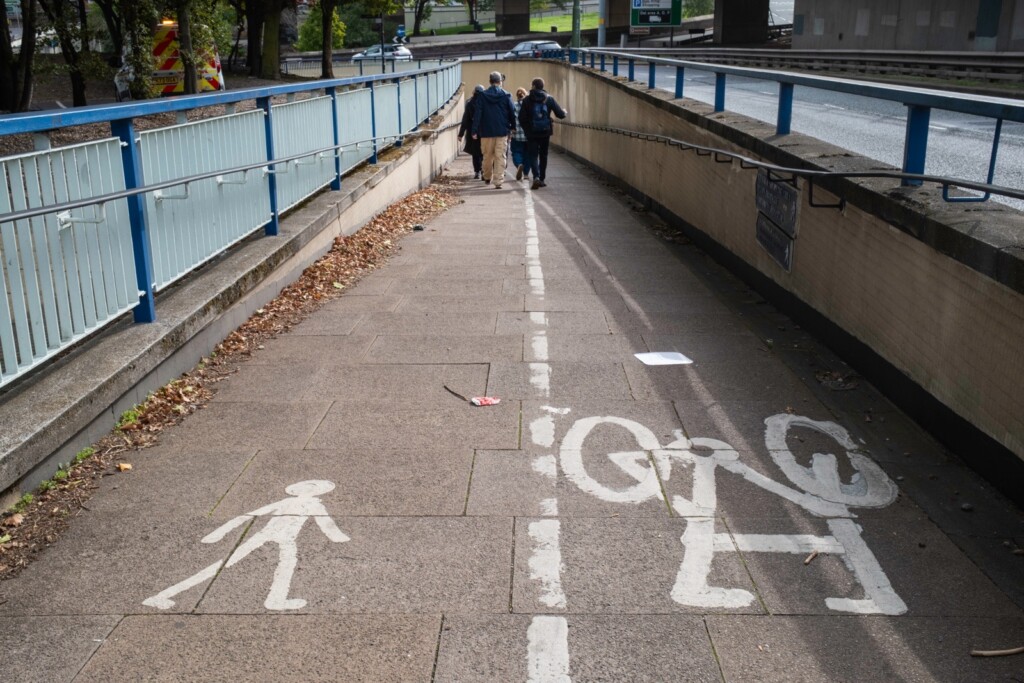
One of the places that we passed on our walk was the West Midlands Police Museum where one can learn more about Birmingham History.
Browse 18 photographs
1 / 18