Stannels Bridge is part of the Stratford Greenway, located just outside Stratford-upon-Avon. The disused railway track is now a haven for cyclists and walkers. A landmark structure near the start of the greenway is an old railway bridge. It was built in the early 1900s and formed part of the Great Western Railway. The steel girder structure allowed the railway line to cross the River Avon.
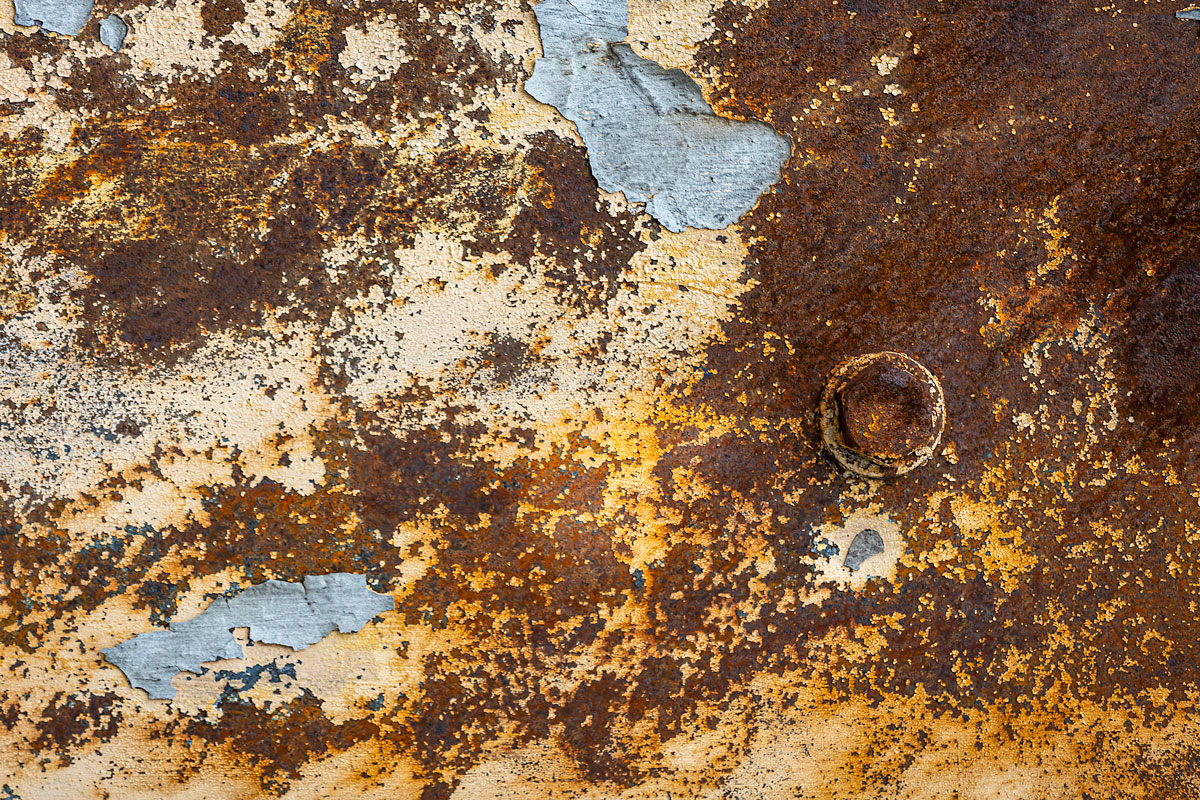
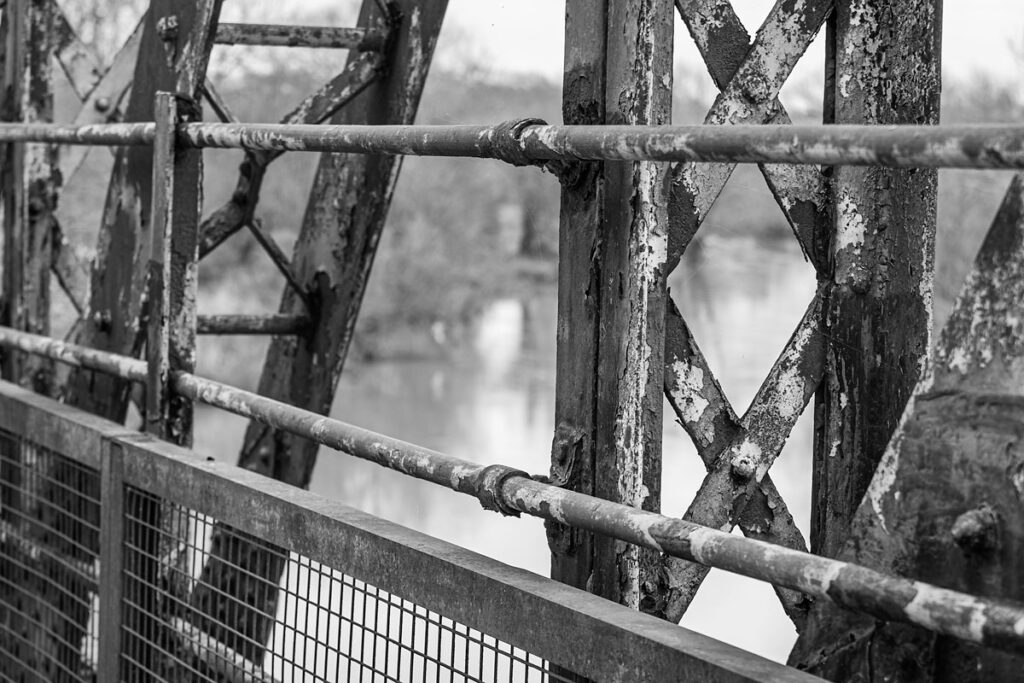
Close up of Stannels Bridge iron work shows patterns of rust and peeling paintwork.
Now used for recreational purposes, the rather grand structure shows signs of neglect, with rusting and peeling paint. The bridge has been well documented from a historical point of view. Many photographers have become fascinated by it, as this website demonstrates, with photographs dating back to 2012.
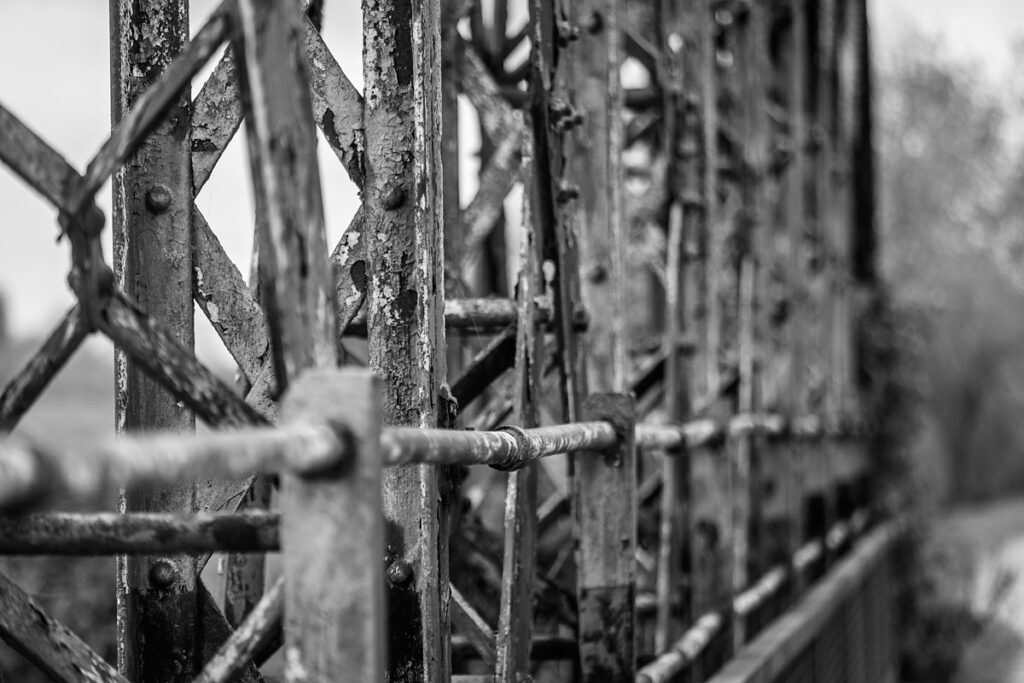
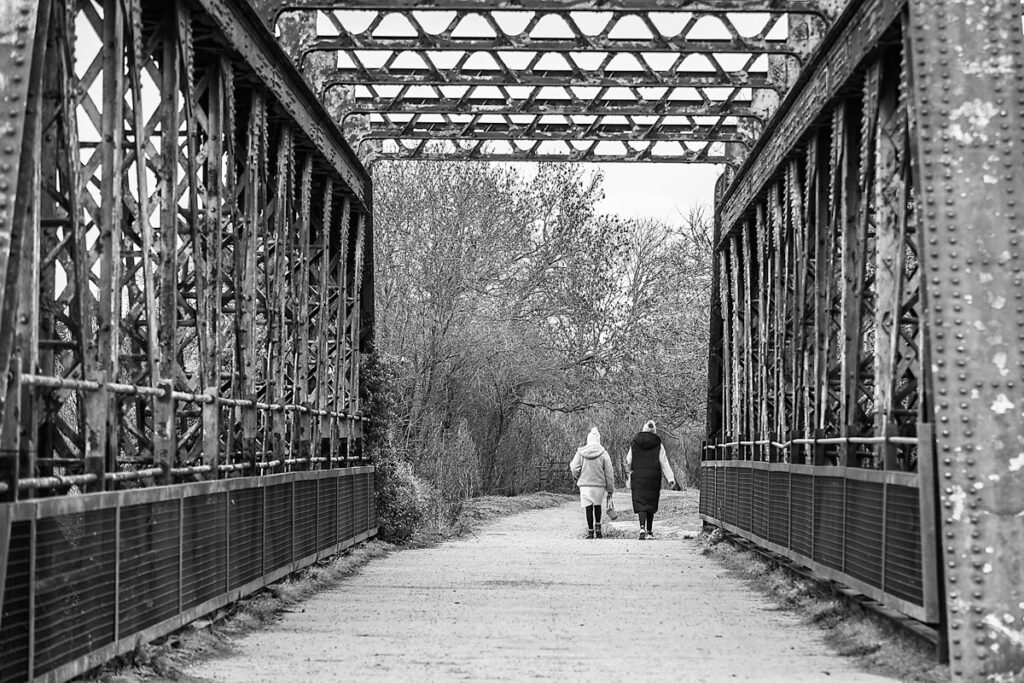
The interlacing pattern of iron girders of Stannels Bridge creates an imposing structure.
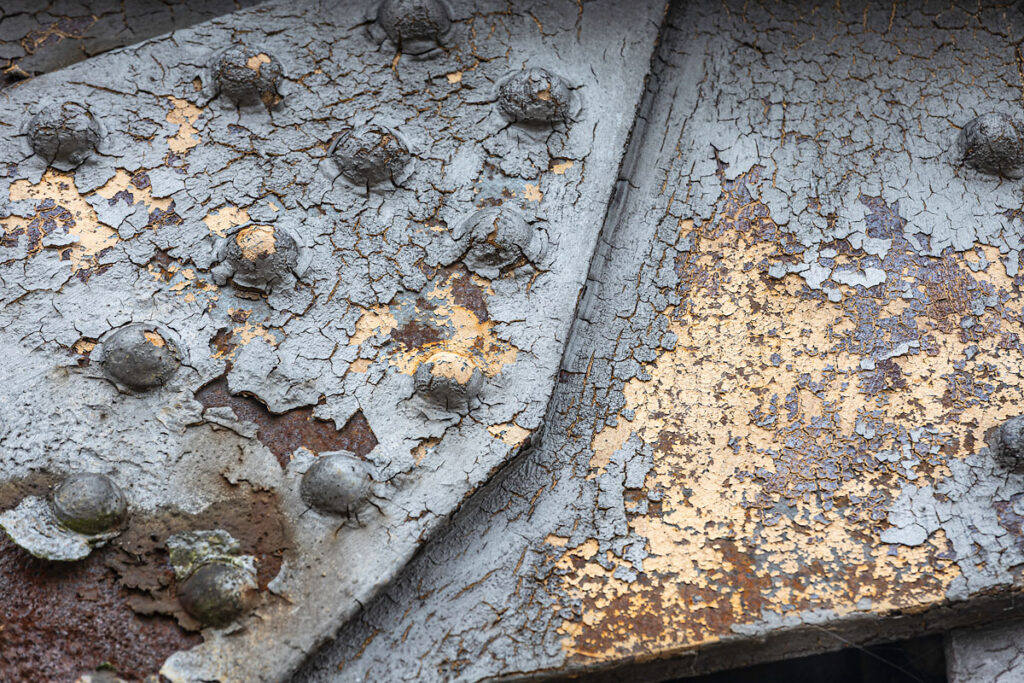
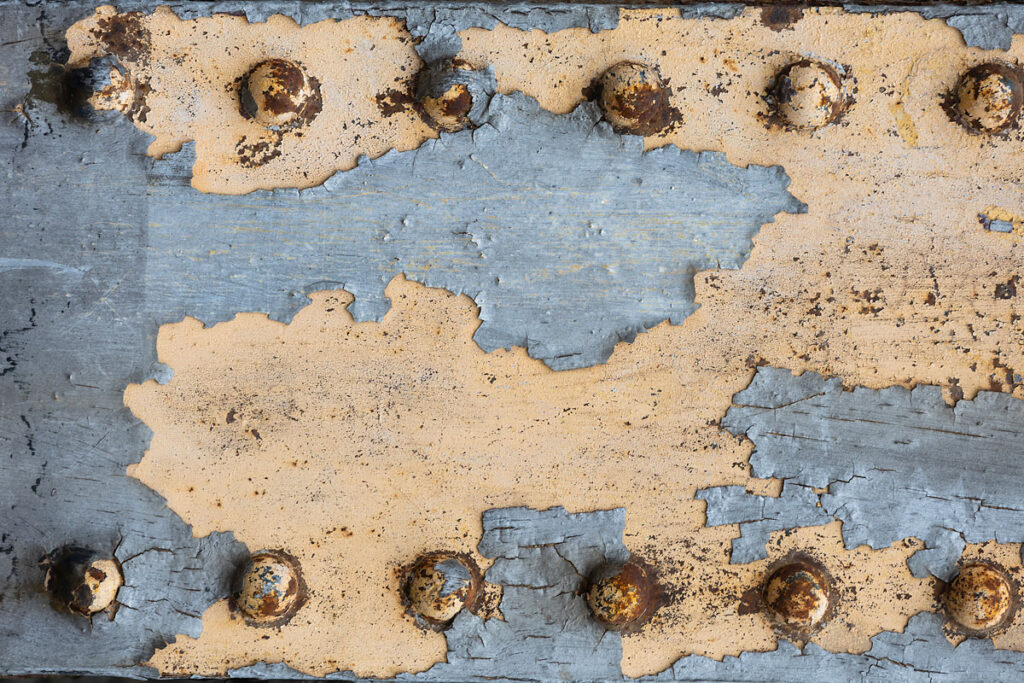
I spent time focusing on the details of the rust and peeling paint on Stannels bridge, then on the repeating patterns of the ironwork, and finally on an overview of the structure. I have taken several other pictures, as shown.
The paintwork of lStannels Bridge reveals the different layers added over the years.
I am adding a few of my own photographs to this interesting iron bridge.
Stannels Bridge spans the river Avon which is seen in the background of this picture.
Stannels Bridge is a distinctive structure found along the Stratford Greenway, the former Great Western Railway line that once connected Stratford-upon-Avon with the wider rail network. Accessing the Greenway by foot or bike allows you to take in the old railway line. Stannels bring is near to the start of your journey on the Greenway. Whilst you visit, you can add to the enjoyment of the day with two cafes offering refreshments. They are strategically situated along the Greenway and they are based in former passenger dining coaches.
Stannels Bridge is now part of the Stratford Greenway used by walkers and cyclists.
At long last, the Golden Lion is coming back to life. I first visited the building last year, before restoration began, when Irene from Birmingham Conservation Trust gave us a fascinating behind-the-scenes look at the plans for this Grade II listed gem. Now, with work well underway, I had the chance to return to see the progress taking place.
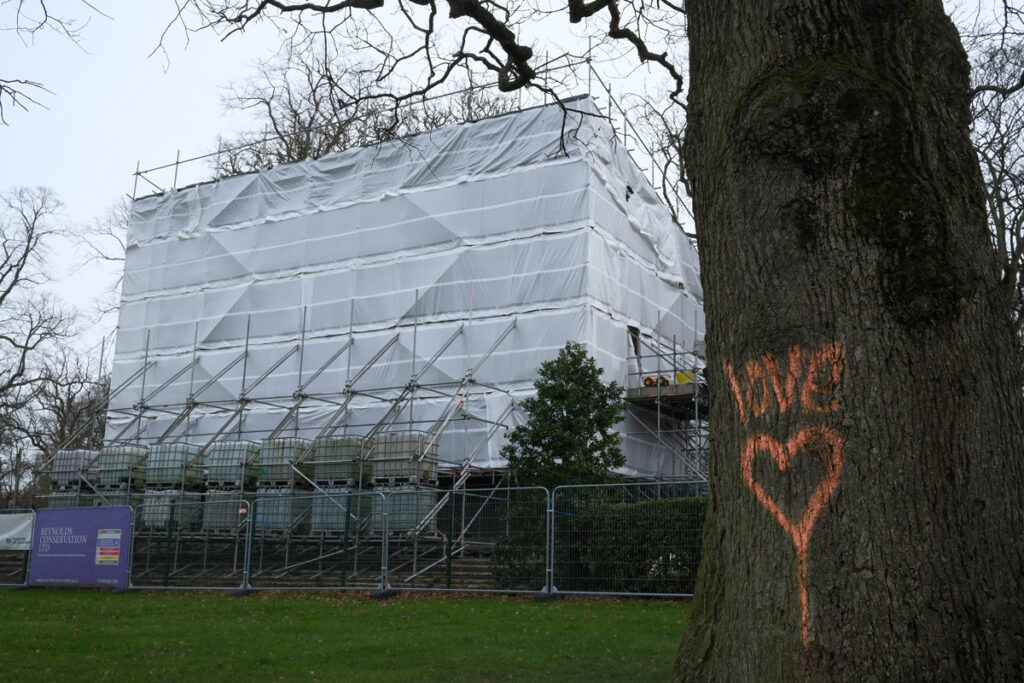
Golden Lion Conservation in Progress – Overall view of the Golden Lion building mid-restoration surrounded by scaffolding in Cannon Hill Park.
The Golden Lion has quite a story. Built in the early 1600s, it originally stood in Deritend High Street and has lived many different lives over the centuries. In 1911 it was moved to Cannon Hill Park, where it later served as a cricket pavilion and refreshment room. For more than 20 years, however, it has stood empty until support from Historic England and local funders allowed Birmingham Conservation Trust and the City Council to begin the restoration.
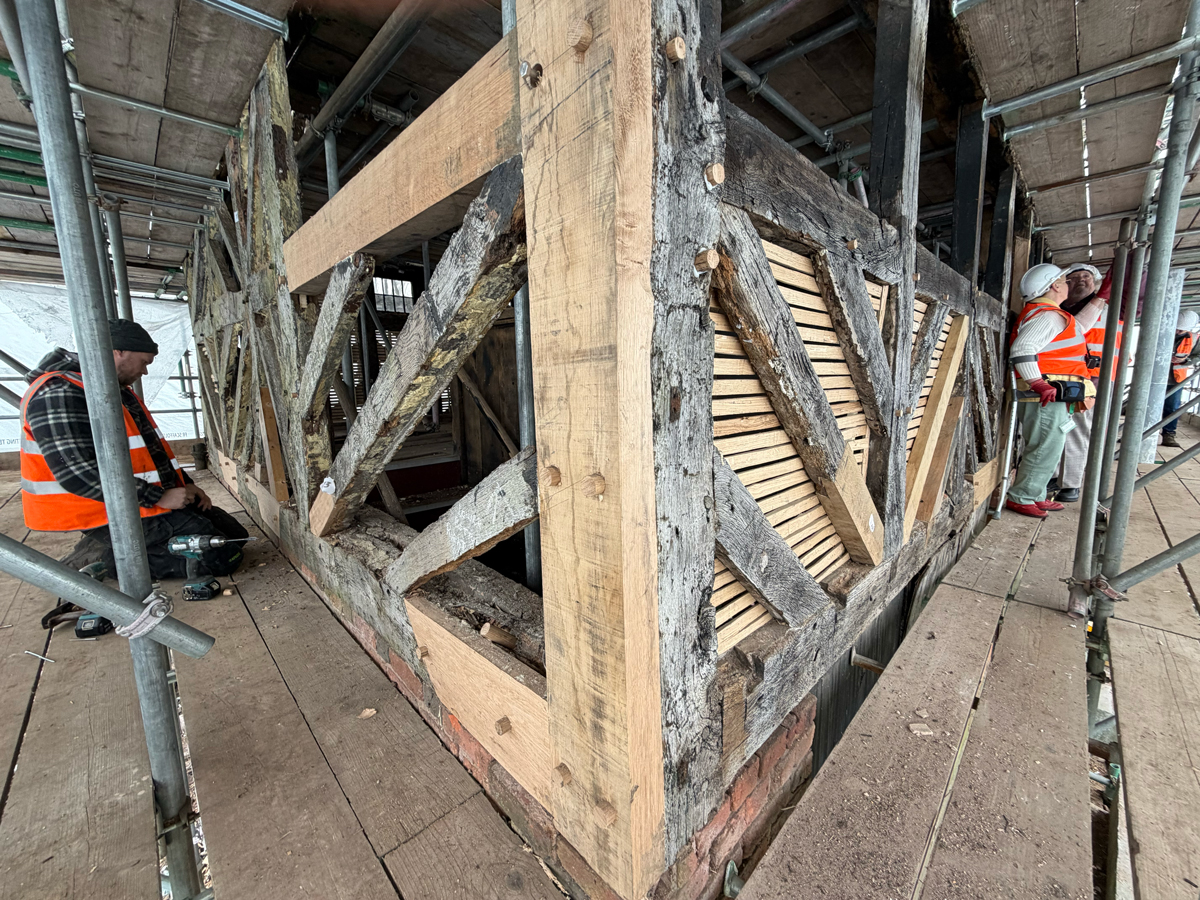
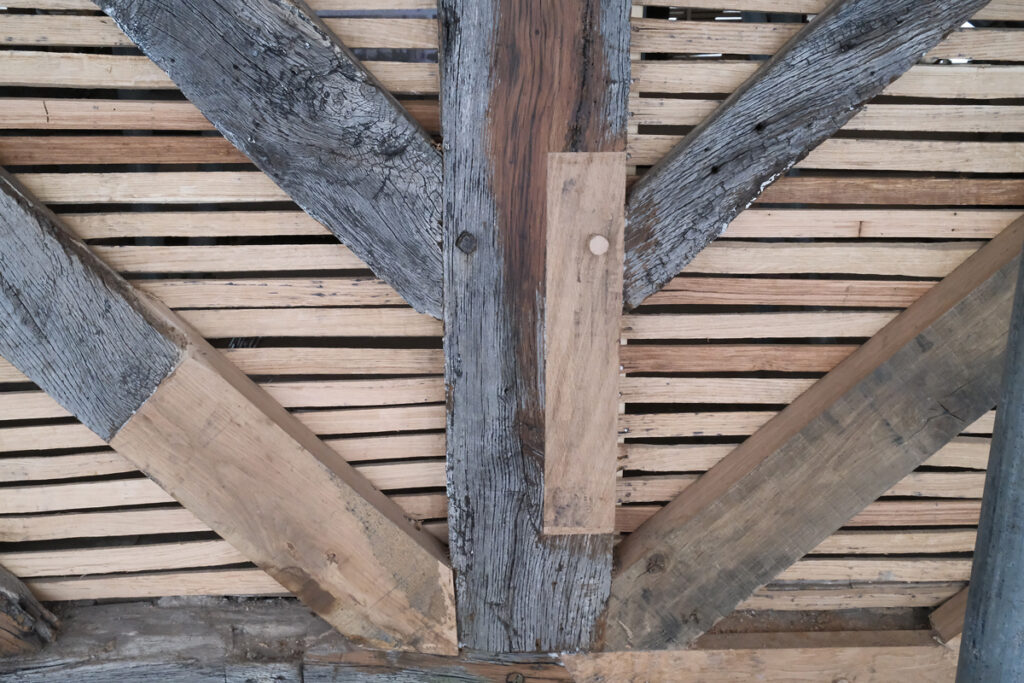
Old and New Timber Joinery – Detail showing new timber carefully joined with original wood during Golden Lion restoration.
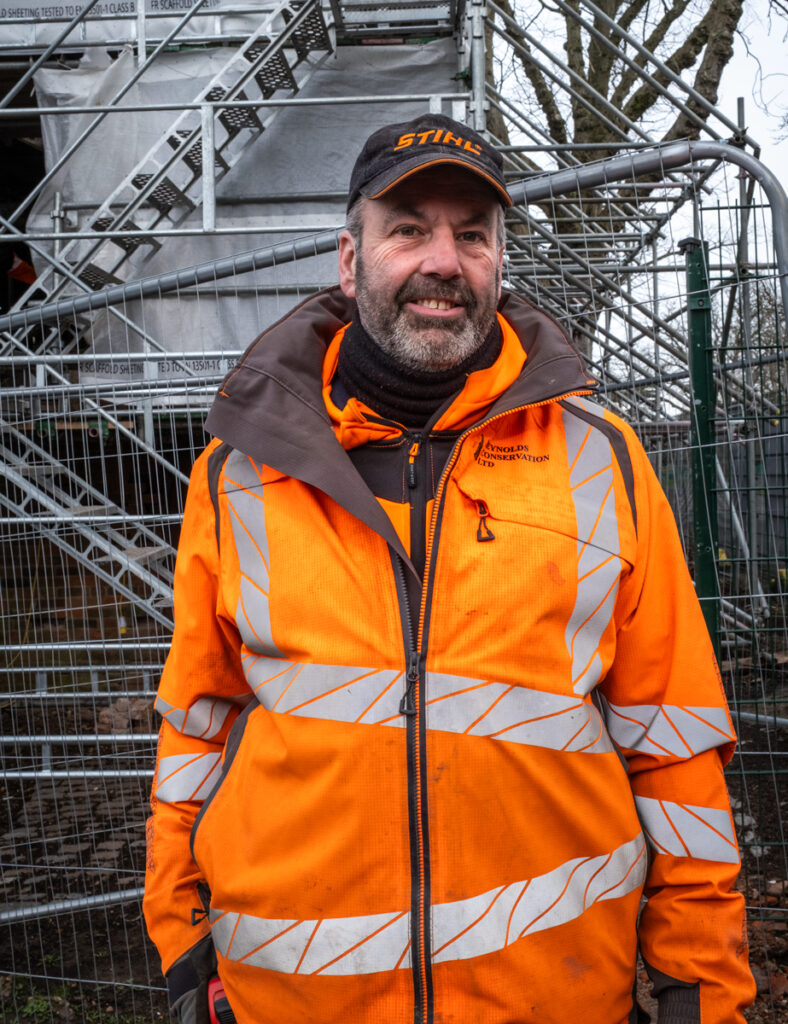
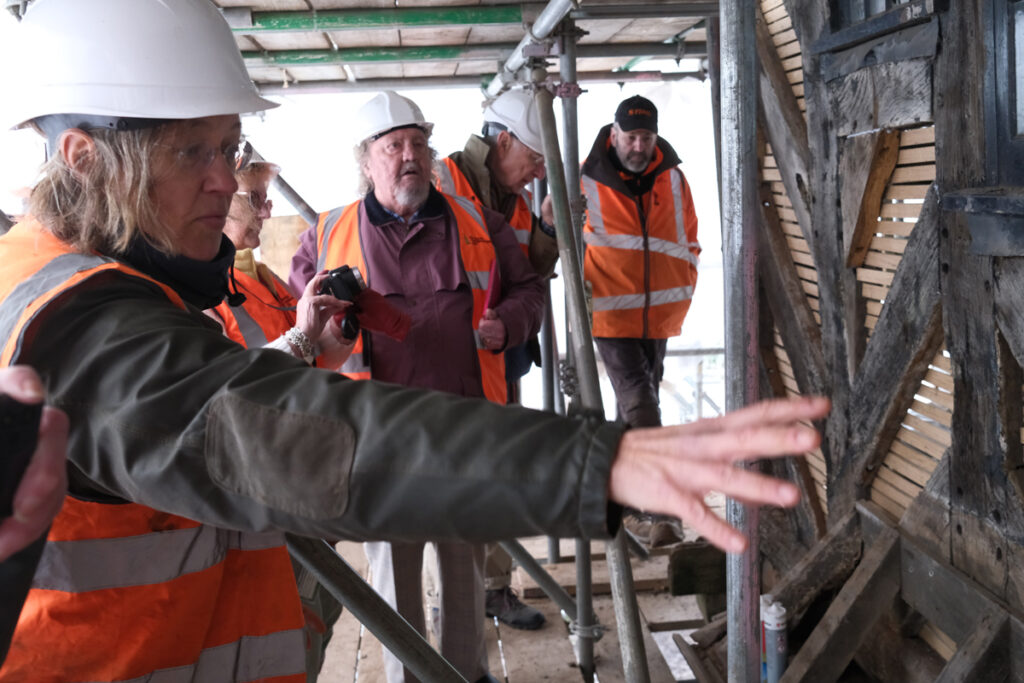
This latest visit was something special. The hard hat tour was limited to just six people, making it a rare opportunity to see the restoration up close. Irene once again led the visit, starting with an update on progress so far before introducing us to Richard, the site manager from Reynolds Conservation. After the essential health and safety briefing, we were suited up in hard hats and high-vis and then it was time to explore.
Richard, the site manager from Reynolds Conservation – Golden Lion Restoration Project
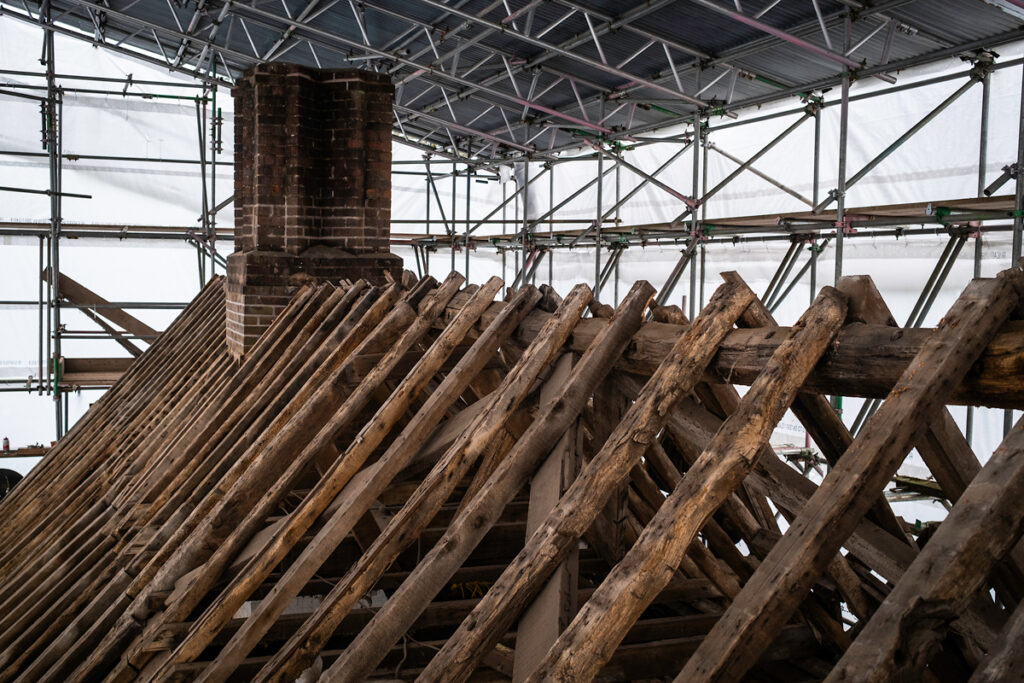
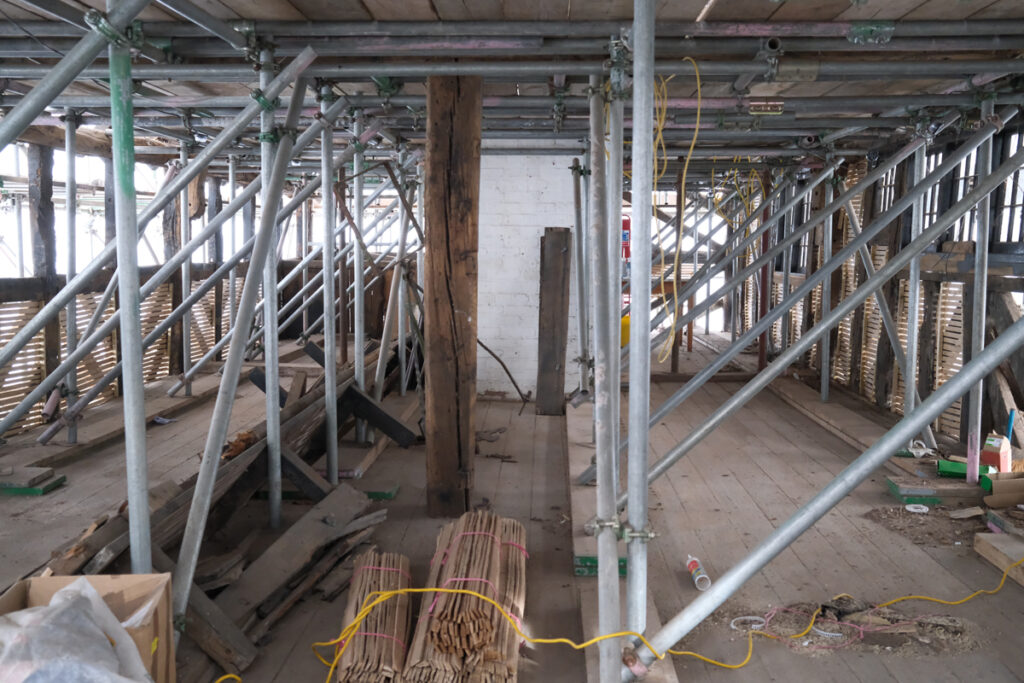
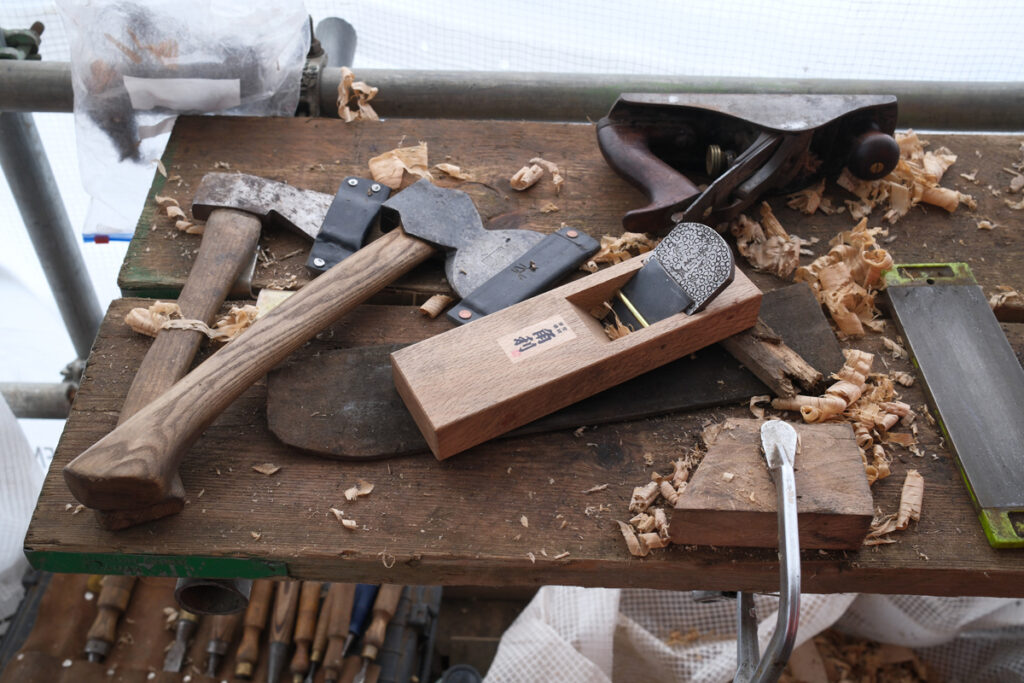
Unlike my previous visit, when we viewed the interior, this time we walked around the outside via scaffolding. It gave a completely different perspective to the house. The focus of the work is currently on the timber frame i.e. the true skeleton of the building. The roof timbers are in surprisingly good condition, but the lower sections have needed careful repair. Everywhere you looked, numbered markings showed where attention was required, and skilled carpenters were meticulously blending new timber with old. The result is a fascinating mix of a centuries old building meeting modern craftsmanship.
Roof Timbers View – Historic roof timbers of the Golden Lion building during conservation works.Golden Lion Upper Structure from Scaffolding – View of the Golden Lion upper structure taken from scaffolding during restoration.
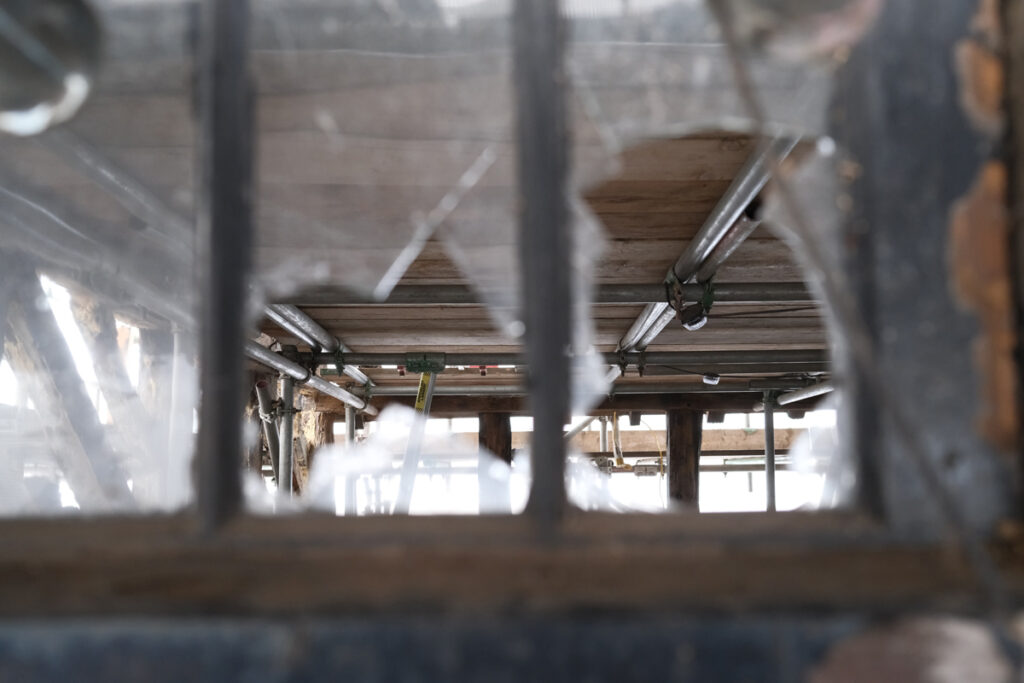
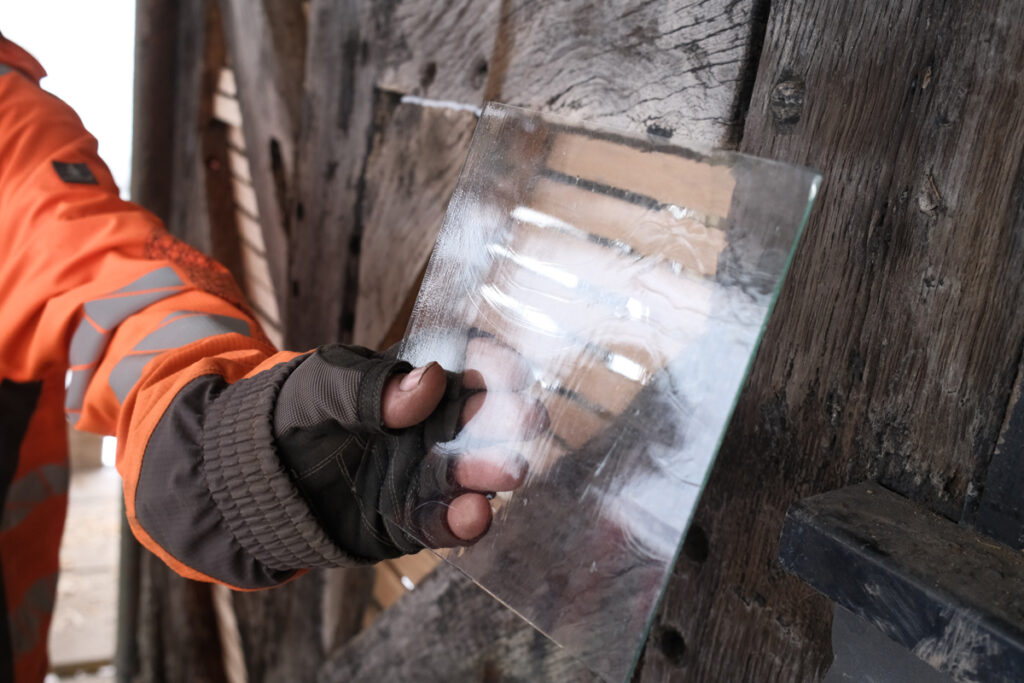
The same careful approach is being taken with the brickwork. Damaged bricks are removed and replaced with historically appropriate materials, following Historic England guidelines. Listening to Irene and Richard discuss the restoration was a highlight. Their passion for getting every detail right was obvious. Even the replacement window glass has been specially researched to ensure it matches the original look and character of the Golden Lion.
Hard Hat Tour Group with Irene and Richard – Visitors wearing hard hats and high-visibility jackets during the guided Golden Lion restoration tour.Window Frame Restoration – Window frame and broken glass at the Golden Lion.Window Frame Restoration – Restored window frame and historically matched glass installed at the Golden Lion.
From a photography perspective, it was a dream visit. The exposed timber frame was particularly striking. I loved the geometric angles, and the texture of the wood used, new and old. Standing there, you could almost feel the building poised between past and future, ready for its next chapter.
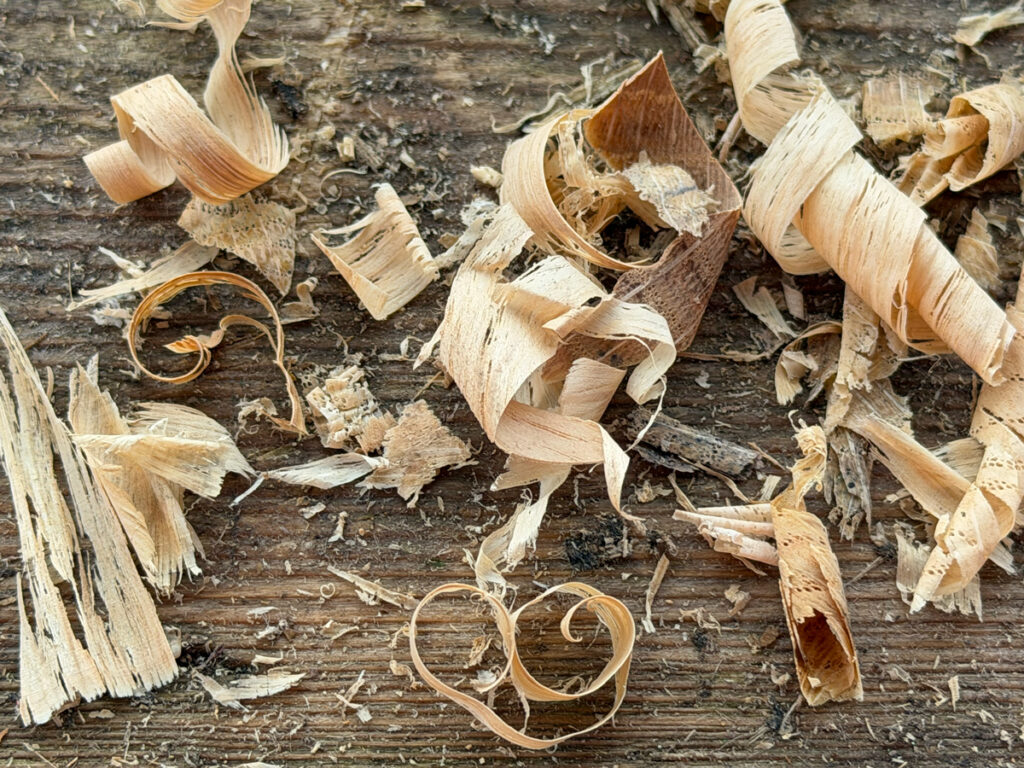
Craftsmanship Detail Shot – Close-up showing traditional craftsmanship techniques used in timber repairs.
I felt incredibly lucky to be part of such a small tour, and I can’t wait to see the Golden Lion fully restored. It’s one of those projects that reminds you how much history still survives and in this case fortunate that the right people provide the chance for the building to shine again.
We use cookies on our website to give you the most relevant experience by remembering your preferences and repeat visits. By clicking “Accept”, you consent to the use of ALL the cookies.
This website uses cookies to improve your experience while you navigate through the website. Out of these, the cookies that are categorized as necessary are stored on your browser as they are essential for the working of basic functionalities of the website. We also use third-party cookies that help us analyze and understand how you use this website. These cookies will be stored in your browser only with your consent. You also have the option to opt-out of these cookies. But opting out of some of these cookies may affect your browsing experience.
Necessary cookies are absolutely essential for the website to function properly. These cookies ensure basic functionalities and security features of the website, anonymously.
Cookie
Duration
Description
cookielawinfo-checkbox-analytics
11 months
This cookie is set by GDPR Cookie Consent plugin. The cookie is used to store the user consent for the cookies in the category "Analytics".
cookielawinfo-checkbox-functional
11 months
The cookie is set by GDPR cookie consent to record the user consent for the cookies in the category "Functional".
cookielawinfo-checkbox-necessary
11 months
This cookie is set by GDPR Cookie Consent plugin. The cookies is used to store the user consent for the cookies in the category "Necessary".
cookielawinfo-checkbox-others
11 months
This cookie is set by GDPR Cookie Consent plugin. The cookie is used to store the user consent for the cookies in the category "Other.
cookielawinfo-checkbox-performance
11 months
This cookie is set by GDPR Cookie Consent plugin. The cookie is used to store the user consent for the cookies in the category "Performance".
viewed_cookie_policy
11 months
The cookie is set by the GDPR Cookie Consent plugin and is used to store whether or not user has consented to the use of cookies. It does not store any personal data.
Functional cookies help to perform certain functionalities like sharing the content of the website on social media platforms, collect feedbacks, and other third-party features.
Performance cookies are used to understand and analyze the key performance indexes of the website which helps in delivering a better user experience for the visitors.
Analytical cookies are used to understand how visitors interact with the website. These cookies help provide information on metrics the number of visitors, bounce rate, traffic source, etc.
Advertisement cookies are used to provide visitors with relevant ads and marketing campaigns. These cookies track visitors across websites and collect information to provide customized ads.