
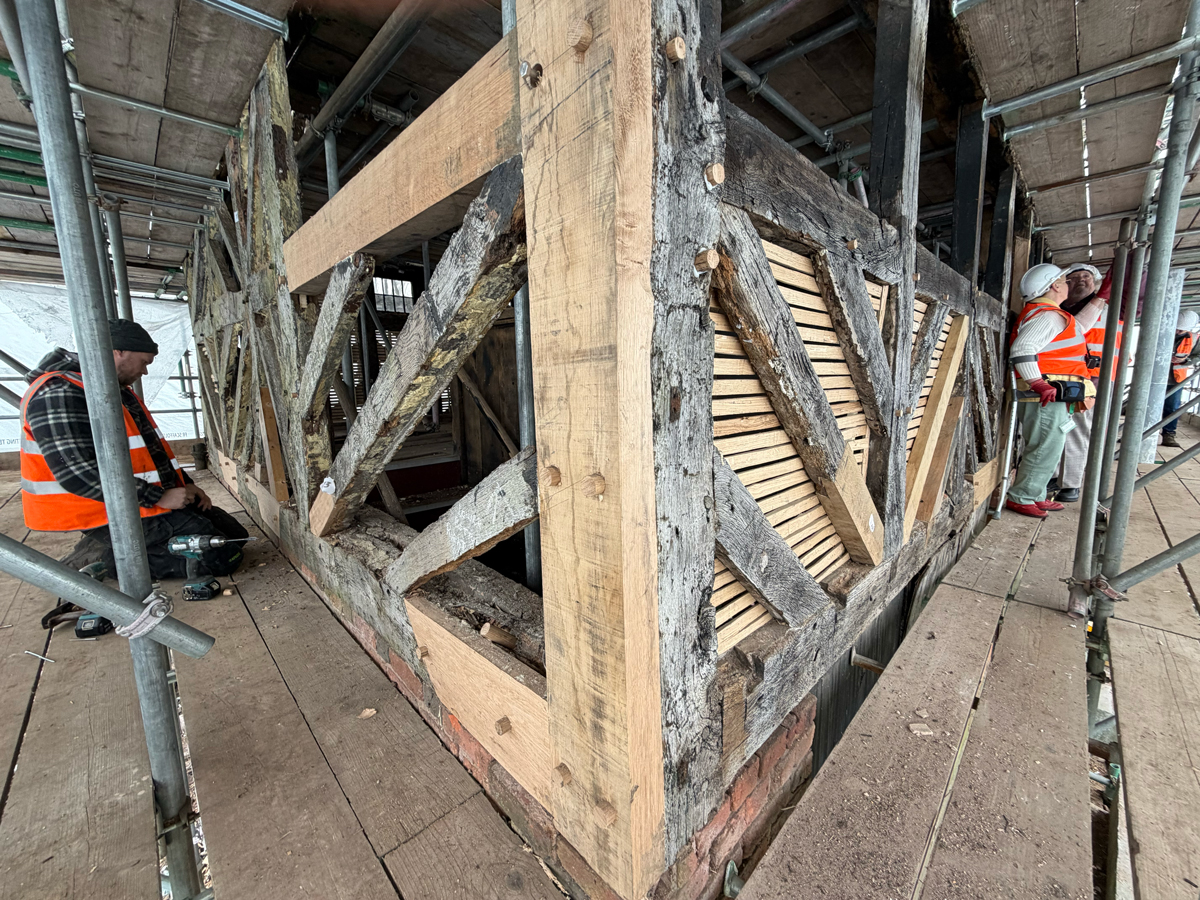
Exposed Structural Frame Wide View Wide shot of the exposed skeletal timber frame of the Golden Lion building.

At long last, the Golden Lion is coming back to life. I first visited the building last year, before restoration began, when Irene from Birmingham Conservation Trust gave us a fascinating behind-the-scenes look at the plans for this Grade II listed gem. Now, with work well underway, I had the chance to return to see the progress taking place.
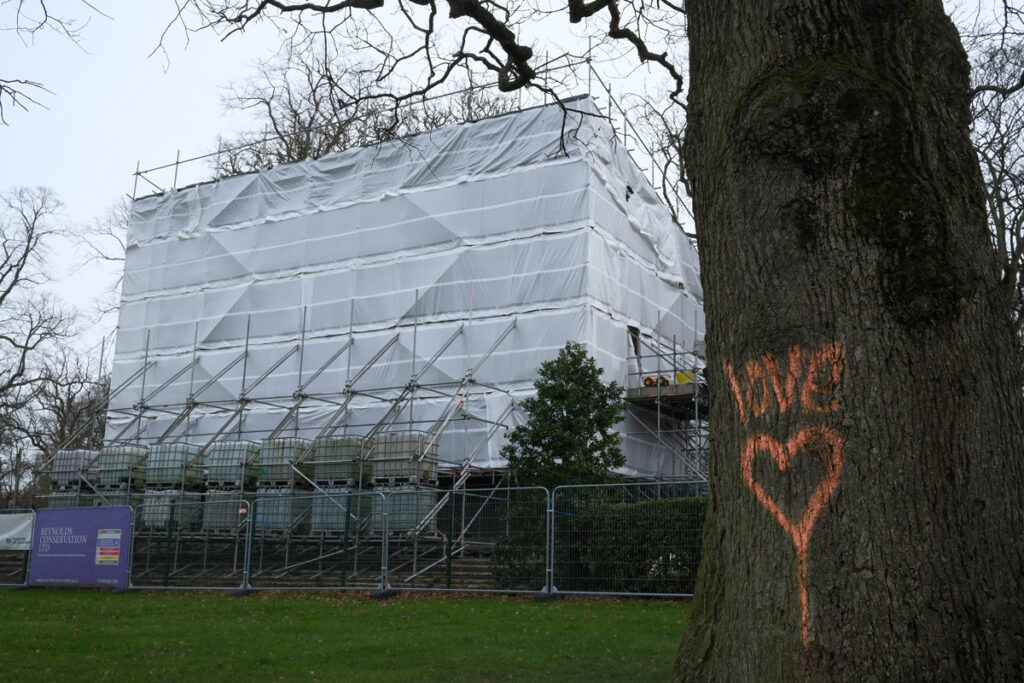
Golden Lion Conservation in Progress
Overall view of the Golden Lion building mid-restoration surrounded by scaffolding.
Golden Lion Conservation in Progress – Overall view of the Golden Lion building mid-restoration surrounded by scaffolding in Cannon Hill Park.

The Golden Lion has quite a story. Built in the early 1600s, it originally stood in Deritend High Street and has lived many different lives over the centuries. In 1911 it was moved to Cannon Hill Park, where it later served as a cricket pavilion and refreshment room. For more than 20 years, however, it has stood empty until support from Historic England  and local funders allowed Birmingham Conservation Trust and the City Council to begin the restoration.
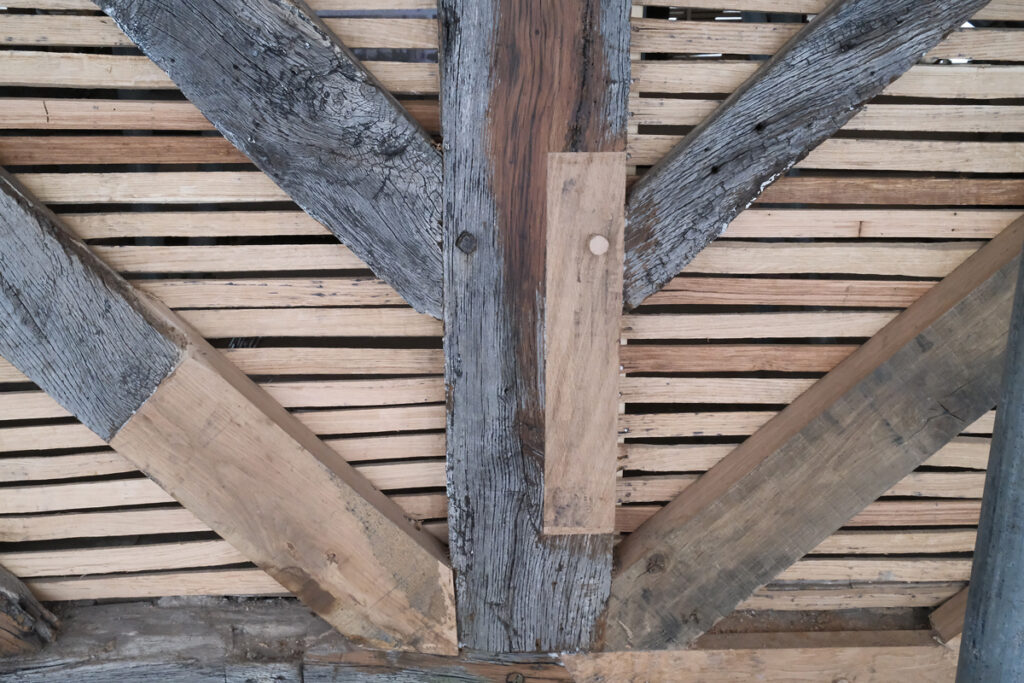
Old and New Timber Joinery
Detail showing new timber carefully joined with original wood during Golden Lion restoration.
Old and New Timber Joinery – Detail showing new timber carefully joined with original wood during Golden Lion restoration.

This latest visit was something special. The hard hat tour was limited to just six people, making it a rare opportunity to see the restoration up close. Irene once again led the visit, starting with an update on progress so far before introducing us to Richard, the site manager from Reynolds Conservation. After the essential health and safety briefing, we were suited up in hard hats and high-vis and then it was time to explore.
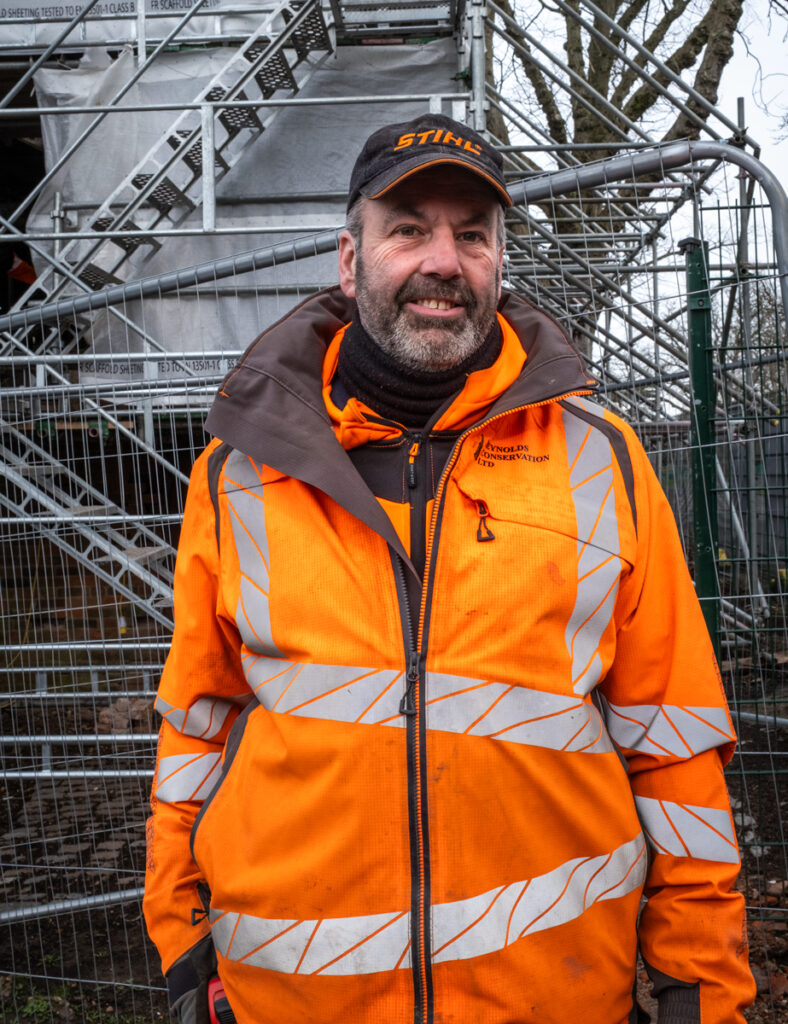
Richard the site manager from Reynolds Conservation site manager - Golden Lion Restoration Project
Richard, the site manager from Reynolds Conservation – Golden Lion Restoration Project

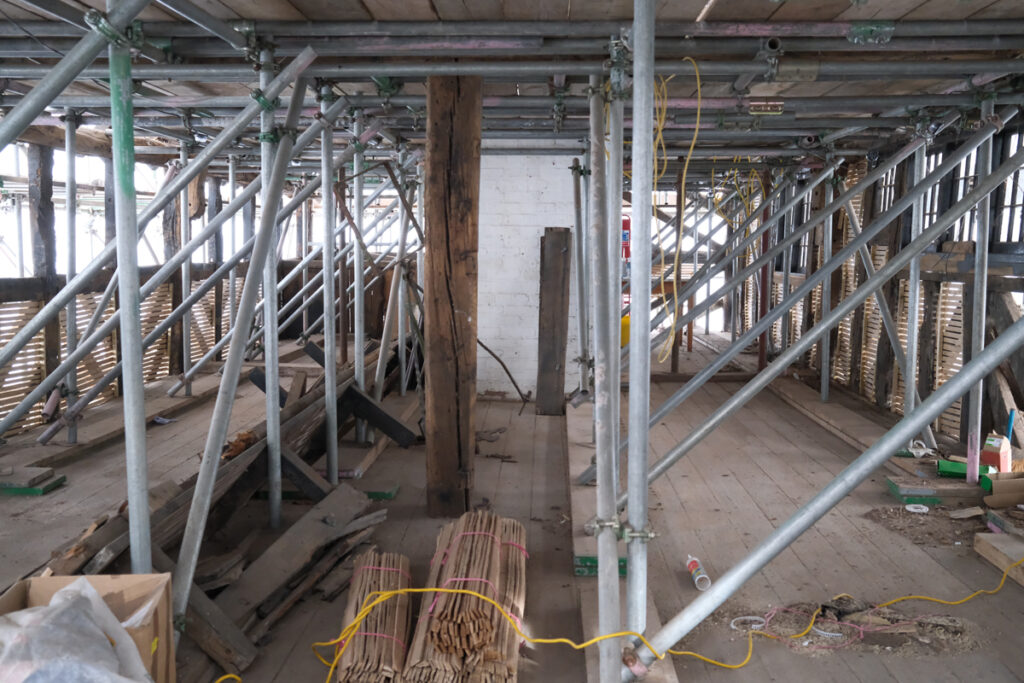
Unlike my previous visit, when we viewed the interior, this time we walked around the outside via scaffolding. It gave a completely different perspective to the house. The focus of the work is currently on the timber frame i.e. the true skeleton of the building. The roof timbers are in surprisingly good condition, but the lower sections have needed careful repair. Everywhere you looked, numbered markings showed where attention was required, and skilled carpenters were meticulously blending new timber with old. The result is a fascinating mix of a centuries old building meeting modern craftsmanship.
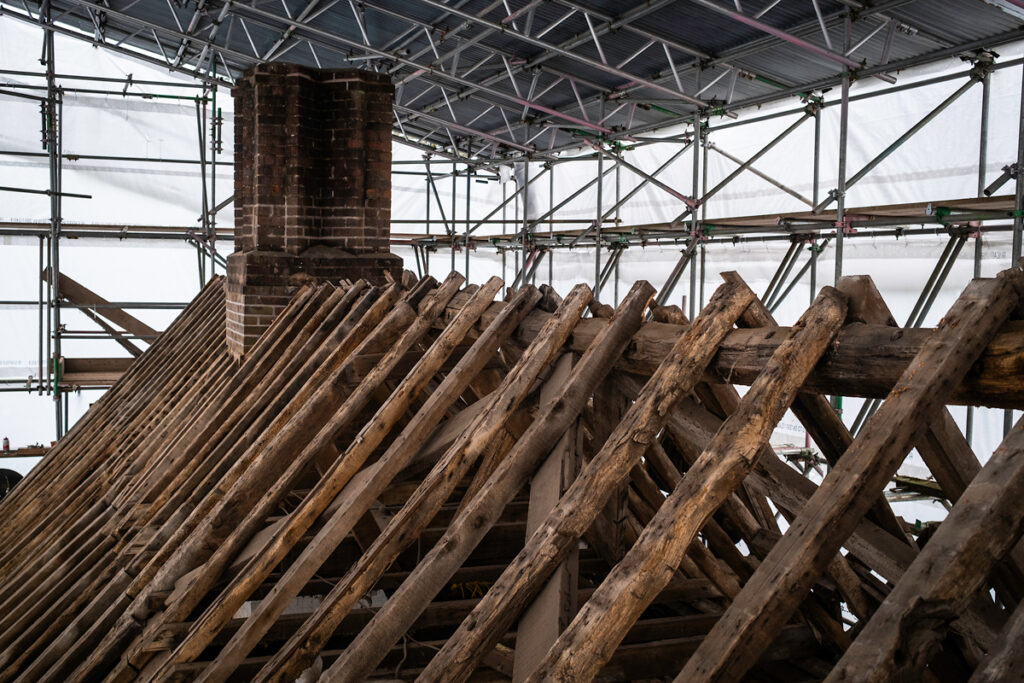
Roof Timbers Interior View
Historic roof timbers inside the Golden Lion building during conservation works.
Roof Timbers View – Historic roof timbers of the Golden Lion building during conservation works.
Golden Lion Upper Structure from Scaffolding
View of the Golden Lion upper structure taken from scaffolding during restoration.
Golden Lion Upper Structure from Scaffolding – View of the Golden Lion upper structure taken from scaffolding during restoration.

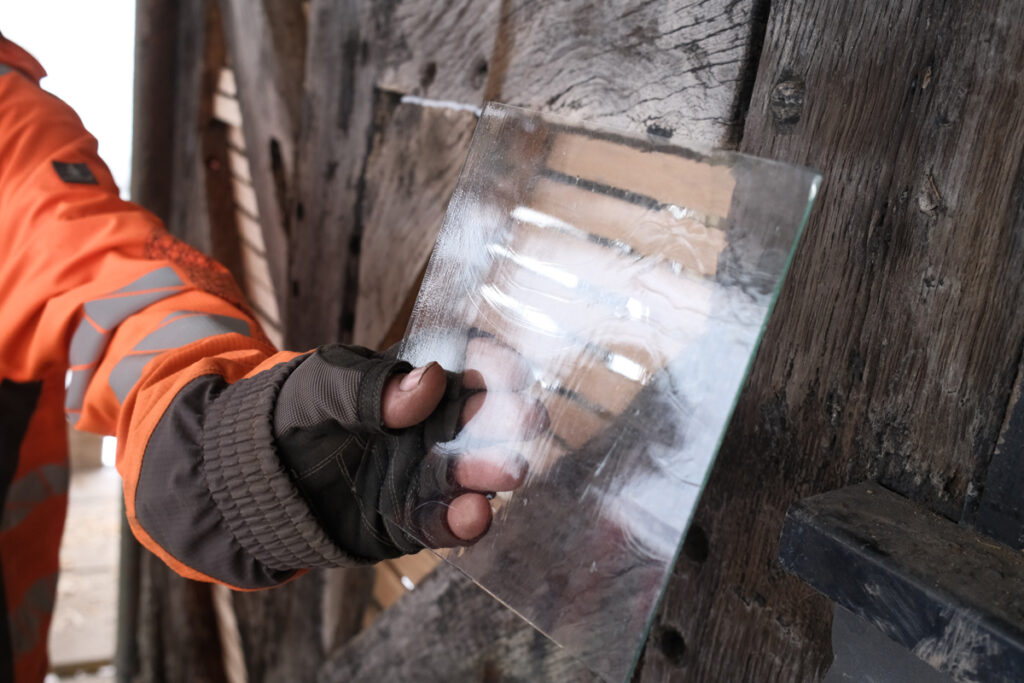
The same careful approach is being taken with the brickwork. Damaged bricks are removed and replaced with historically appropriate materials, following Historic England guidelines. Listening to Irene and Richard discuss the restoration was a highlight. Their passion for getting every detail right was obvious. Even the replacement window glass has been specially researched to ensure it matches the original look and character of the Golden Lion.
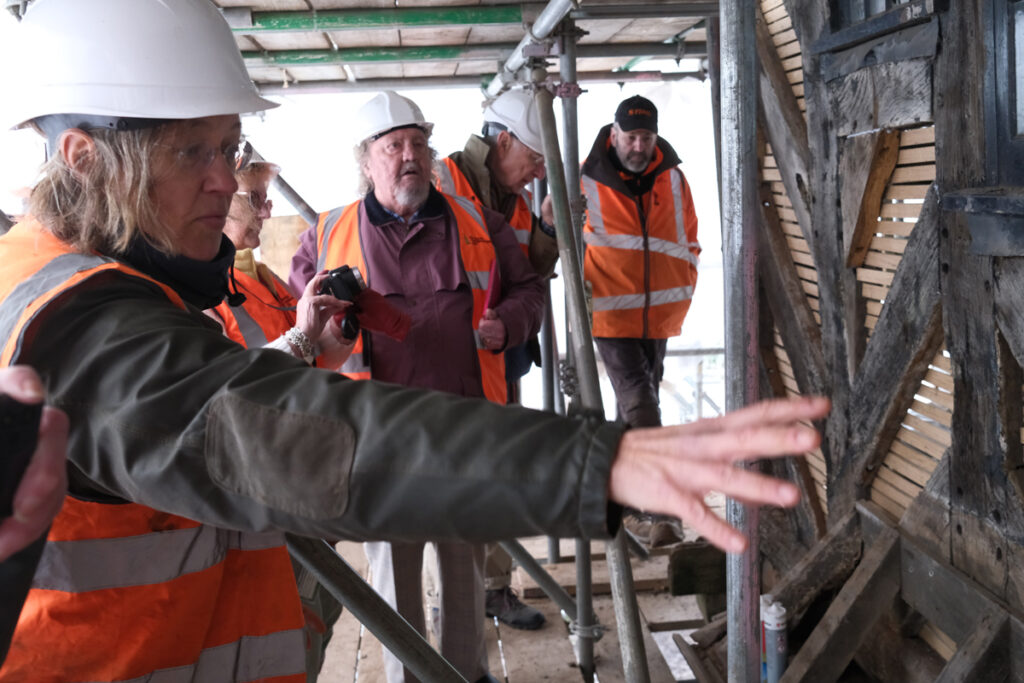
Hard Hat Tour Group
Visitors wearing hard hats and high-visibility jackets during a guided Golden Lion restoration tour.
Hard Hat Tour Group with Irene and Richard – Visitors wearing hard hats and high-visibility jackets during the guided Golden Lion restoration tour.
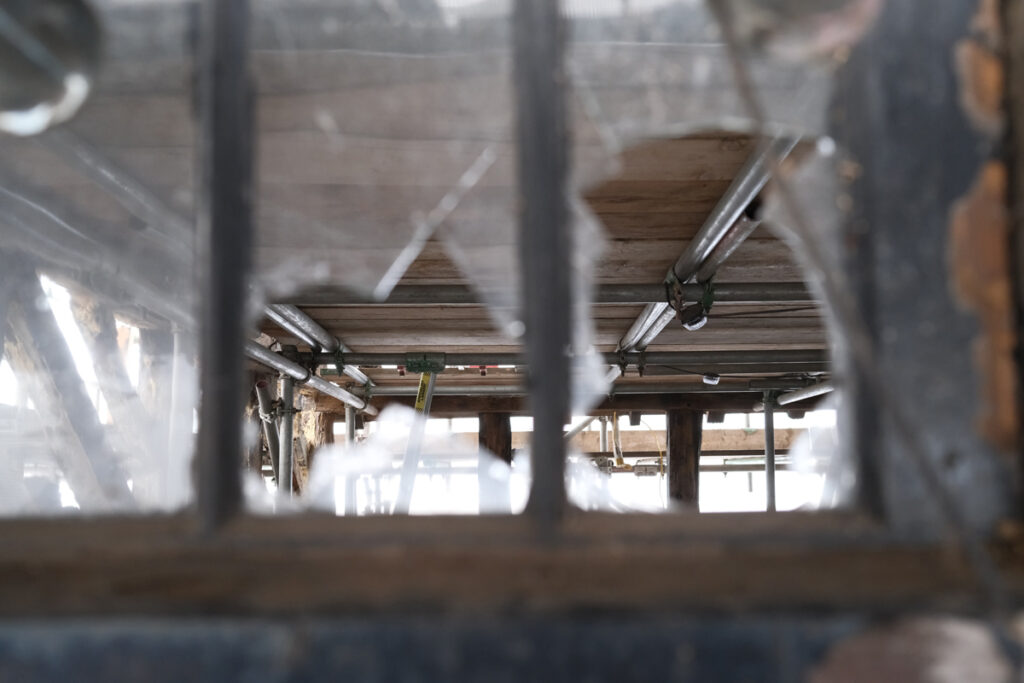
Window Frame Restoration
Window frame and broken glass at the Golden Lion.
Window Frame Restoration – Window frame and broken glass at the Golden Lion.
Window Frame Restoration
Restored window frame and historically matched glass installed at the Golden Lion.
Window Frame Restoration – Restored window frame and historically matched glass installed at the Golden Lion.

From a photography perspective, it was a dream visit. The exposed timber frame was particularly striking. I loved the geometric angles, and the texture of the wood used, new and old. Standing there, you could almost feel the building poised between past and future, ready for its next chapter.
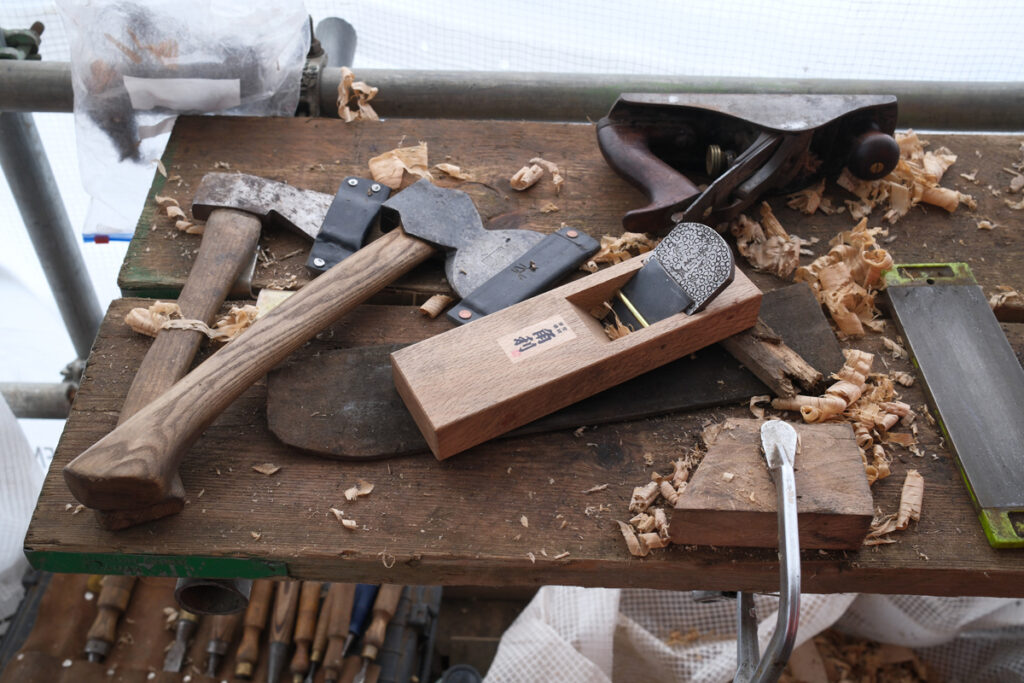
Craftsmanship Detail Shot
Close-up showing traditional craftsmanship techniques used in Golden Lion timber repairs.
Craftsmanship Detail Shot – Close-up showing traditional craftsmanship techniques used in timber repairs.

I felt incredibly lucky to be part of such a small tour, and I can’t wait to see the Golden Lion fully restored. It’s one of those projects that reminds you how much history still survives and in this case fortunate that the right people provide the chance for the building to shine again.
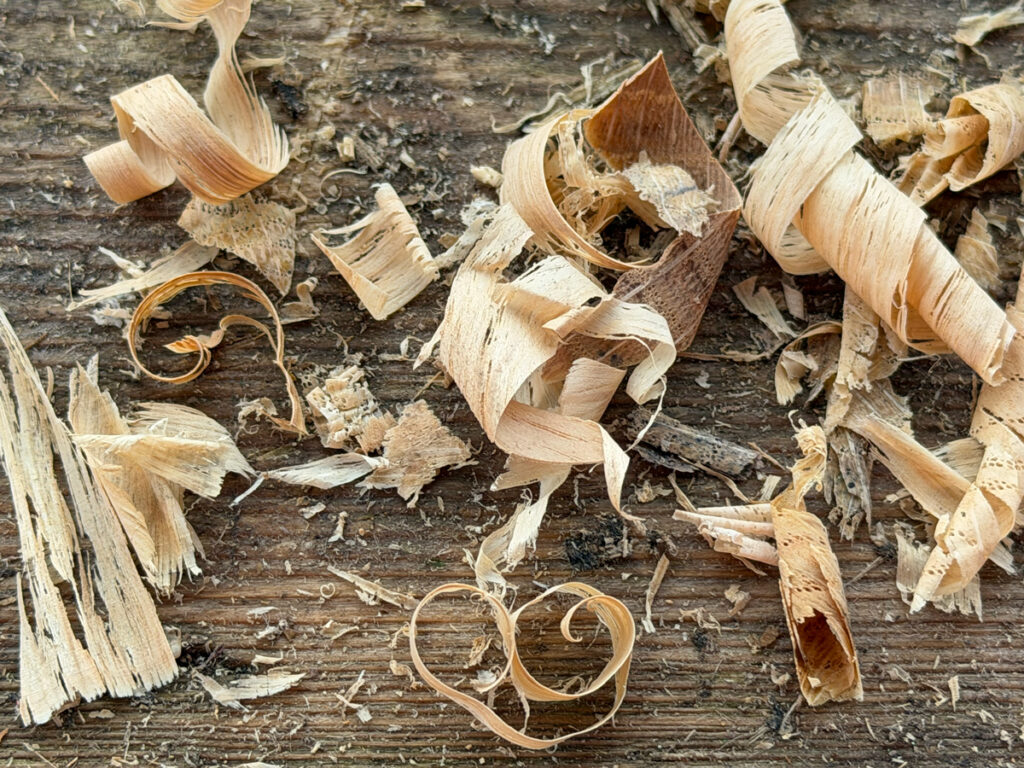
Wood shavings left over from the Golden Lion timber repairs
Wood shavings left over from the timber repairs

A major grant from Historic England has made the restoration of the Golden Lion possible, and without that support it’s unlikely the work would have started so quickly. If you’d like to learn more about the Golden Lion and its history, be sure to check out the links below.

Canon Hill Park, Birmingham, December, 2024

I have been involved with the Stirchley Observation Project over the last few months. I have not featured my experiences of the project on my blog, as I am waiting until the course is complete. We still have a portrait session and the all-important exhibition to look forward to, so these will form part of a later post. However, with the formal teaching now nearly finished, I found myself with a free Saturday morning. The photography group suggested a visit to the MAC (Midlands Arts Centre), followed by a stroll around Cannon Hill Park. Being near to where I used to work at Pebble Mill, I know the park well, particularly the Nature Centre entrance and, of course, the MAC.

Canon Hill Park, Birmingham, December, 2024
The MAC needs a lick of paint.
Canon Hill Park, Birmingham, December, 2024
The MAC

Three of us from the group were free, and we met for coffee early in the morning. Inderjit and Dave were already waiting and both were sporting stylish silver cameras for the photographic walkabout. The park was bustling with runners participating in the Park Run, but the area quieted down once the event finished. As we began our walk around the park, we enjoyed the peaceful atmosphere.

Canon Hill Park, Birmingham, December, 2024
Watching the world go by.

Cannon Hill Park offers several photographic highlights. One iconic spot is where seagulls line up along the railings, seemingly watching the world go by. Another notable feature is the Golden Lion, a historic pub relocated from Digbeth. Sadly, the building is in desperate need of restoration, but Historic England is overseeing efforts to preserve it, with work expected to begin soon.

Canon Hill Park, Birmingham, December, 2024
The scaffolding around the Golden Lion.

A more reflective part of the park is the memorial dedicated to the victims of the 2015 terrorist attack on a Tunisian beach. This quiet area is home to Infinite Wave, a fascinating metal sculpture designed by George King Architects. The structure features 31 tubes, each engraved with the name of one of the UK victims, brought together in a continuous loop. From a photographer’s perspective, the memorial is captivating, offering different viewpoints depending on where you stand.

Canon Hill Park, Birmingham, December, 2024
Detail of the 31 Steel loops with the names of those who lost their lives.
Canon Hill Park, Birmingham, December, 2024
Dave takes pictures inside the memorial.
Canon Hill Park, Birmingham, December, 2024
Whilst Inderjit surveys the outside.

Cannon Hill Park has many other areas of interest, each with its own story to tell. One such place is the Sons of Rest, a building I’ve often passed but never fully appreciated. Though it appears unused now, it was once a meeting spot where people gathered for social activities like board games and conversation. Another highlight is the Victorian bandstand, an ornate octagonal structure that serves as a focal point for park events, including the Park Run held earlier that morning.

Canon Hill Park, Birmingham, December, 2024
The Sons of Rest.
Canon Hill Park, Birmingham, December, 2024
The Victorian Bandstand.

I was also charmed by the Park Train station stop, a whimsical feature of the park.

Canon Hill Park, Birmingham, December, 2024
Train stop.

Our walk took us into the northwest section of the park, where remnants of a tropical garden remain. Unfortunately, the area needs care and attention. The historic greenhouse was dismantled in 2012 after falling into disrepair, and the council’s plan to maintain the space as a subtropical garden has not been entirely successful. The area now looks somewhat neglected, with graffiti-tagged walls adding to the sense of abandonment.

Canon Hill Park, Birmingham, December, 2024
The path that lies before us.
Canon Hill Park, Birmingham, December, 2024
Parts of of the supporting poles remain.
Canon Hill Park, Birmingham, December, 2024
The broken path in the subtropical garden area.
Canon Hill Park, Birmingham, December, 2024
Grafitti on the outside walls of a once tropical Glasshouse.

Further along, we came across a model of the Elan Valley Aqueduct, another interesting and quirky feature of the park. However the park does need some tender loving care and the following set of photographs show how the park is being run down.

Canon Hill Park, Birmingham, December, 2024
Keep together whatever happens.
Canon Hill Park, Birmingham, December, 2024
The rule of three.
Canon Hill Park, Birmingham, December, 2024
Recognition of former times.
Canon Hill Park, Birmingham, December, 2024
Warning sign.
Canon Hill Park, Birmingham, December, 2024
Free Advertising.
Canon Hill Park, Birmingham, December, 2024
More threesomes that need painting.

As we continued to explore, I was struck by the stillness of the park during late November and early December. With the vibrant summer crowds long gone, the park felt as though it were bedding down for the winter, waiting patiently for the warmth and liveliness of the summer months to return.

If you enjoyed this account of Birmingham then you may like to read about a visit to Edgbaston reservoir that was organised by my friends at IgersbirminghamUK.

0
    0
    Your Cart
    Your cart is emptyReturn to Shop