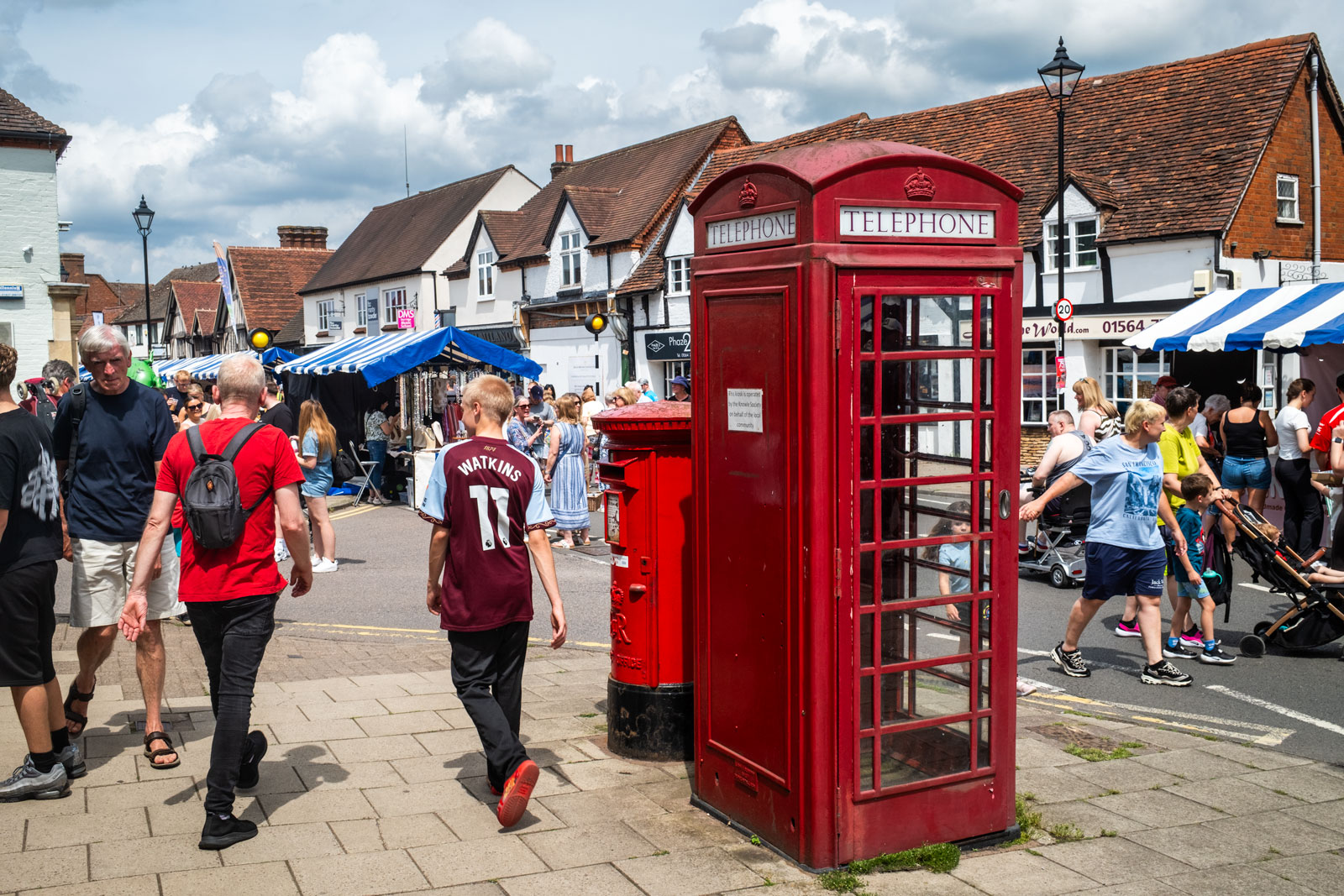
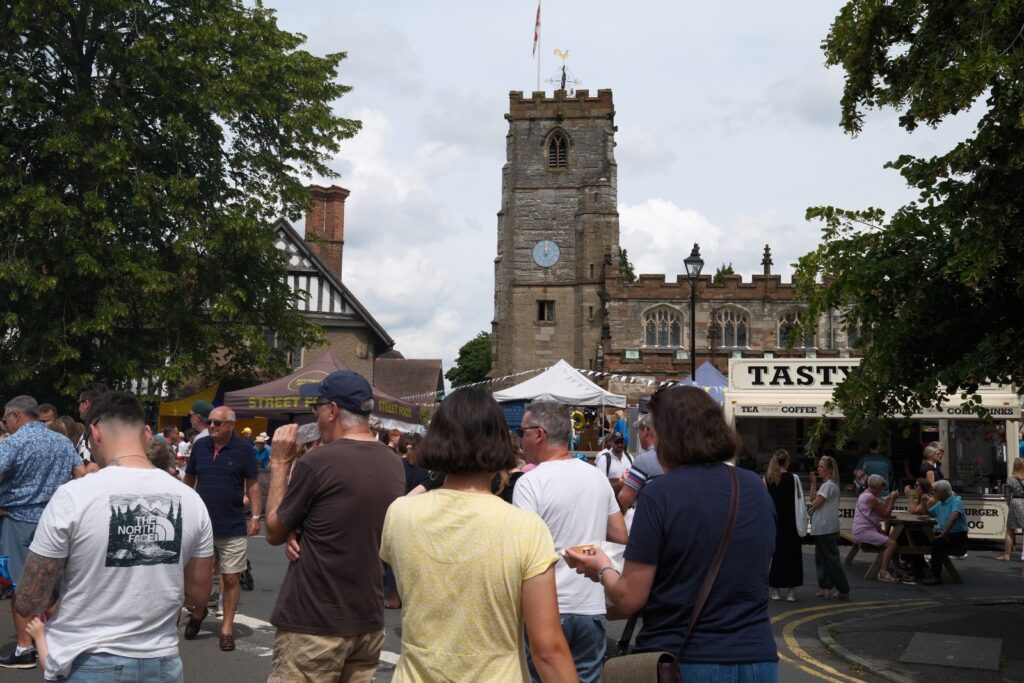
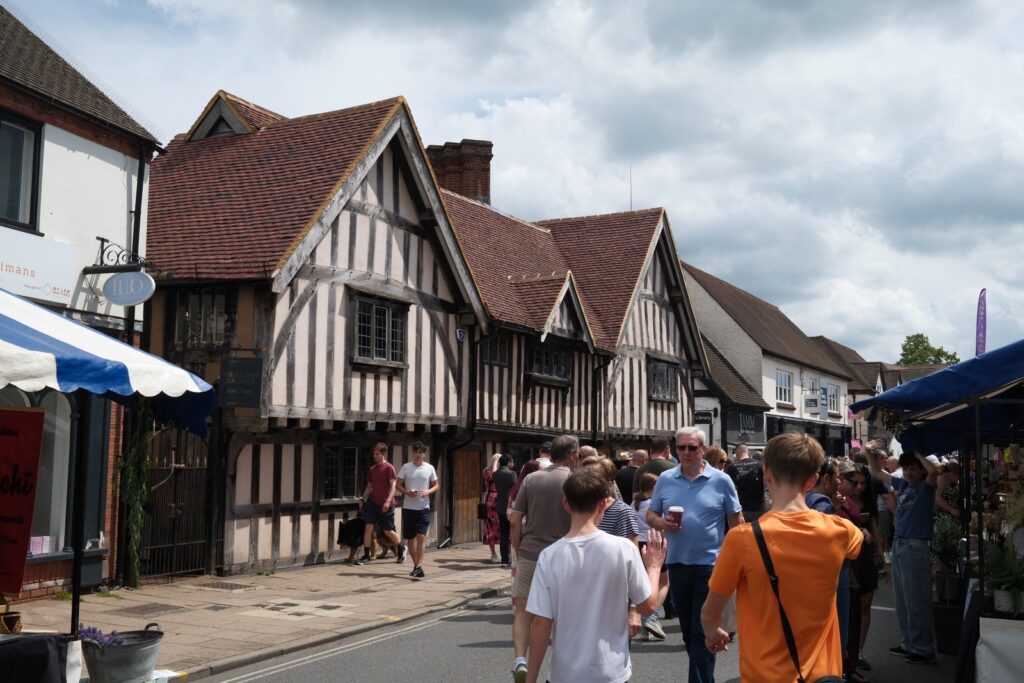
Knowle is 750 years old and what an excellent reason to have a party to celebrate the occasion.
I have lived in Knowle for over 40 years, which means I have been here for approximately 5% of the village’s life. There have been many changes over the years, but it still retains the quiet charm of an English village.
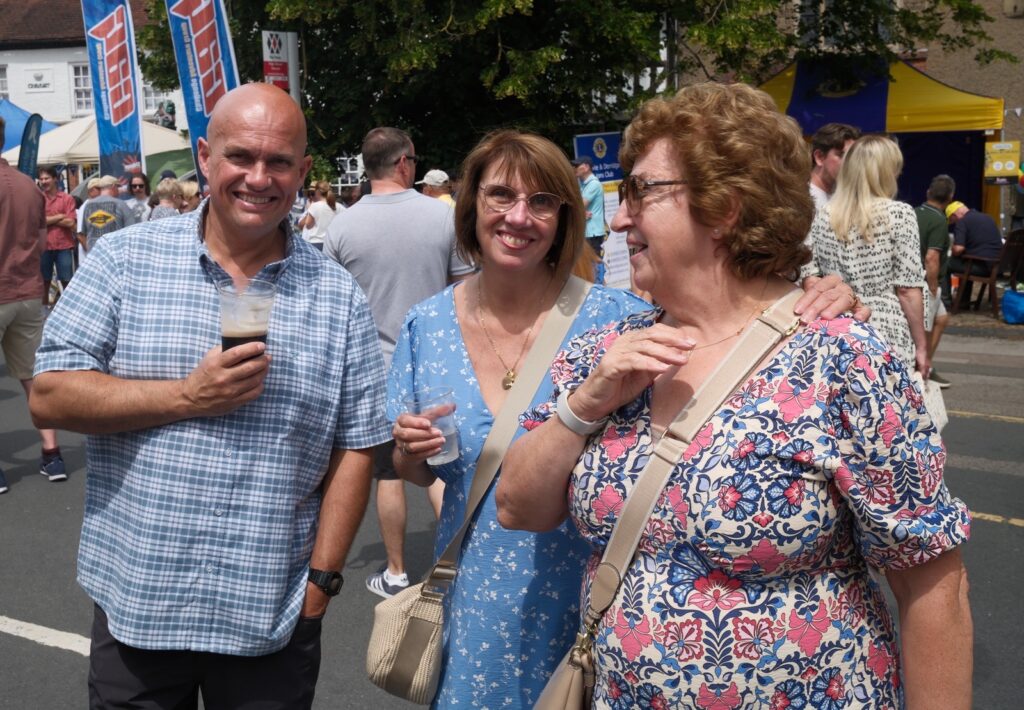
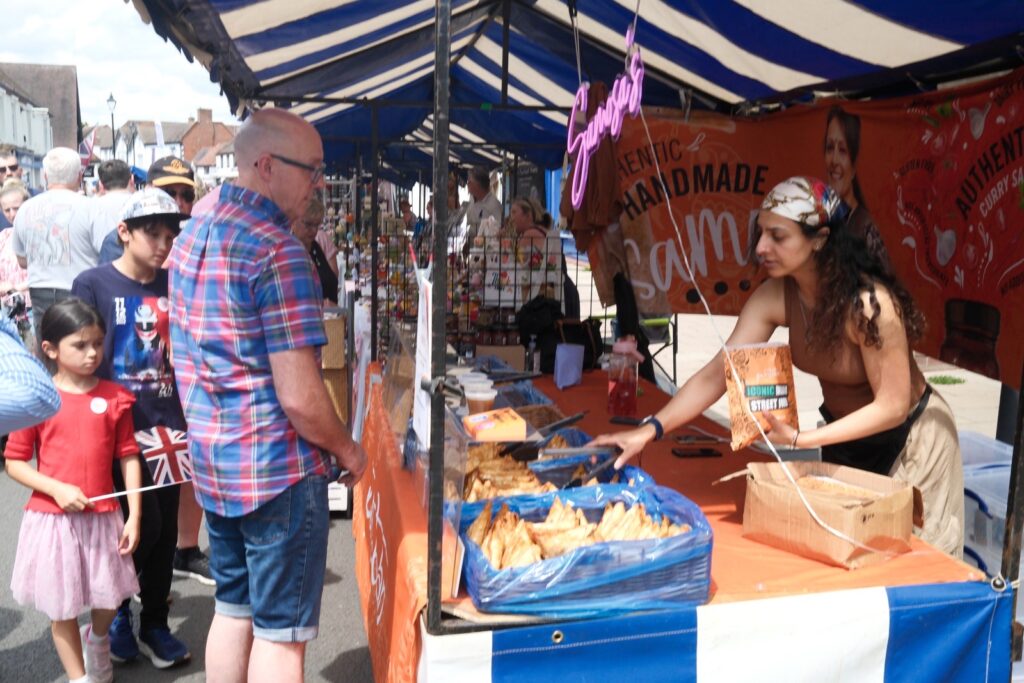
Residents and visitors arriving for the 750th party.Local residents enjoying the sunshine and the party atmosphere.Knowle Library was one of the many buildings open for the celebrations.
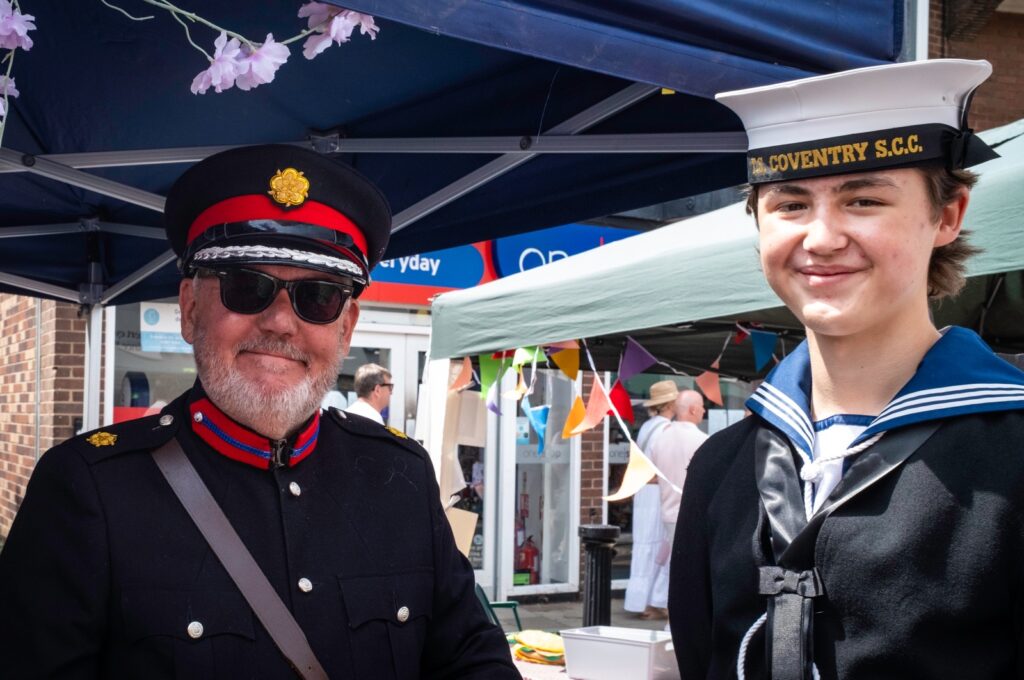
Kim is the face of Visit Knowle and was the lead organiser of the festivities, which took place on a Sunday in June, just before the heatwave. The High Street was closed to traffic, allowing artisan stalls and local interest groups to take over the space. Lyons, the butchers, hosted a BBQ, and dignitaries, including the Lord Mayor and the Deputy Lord-Lieutenant of the West Midlands, were in attendance.
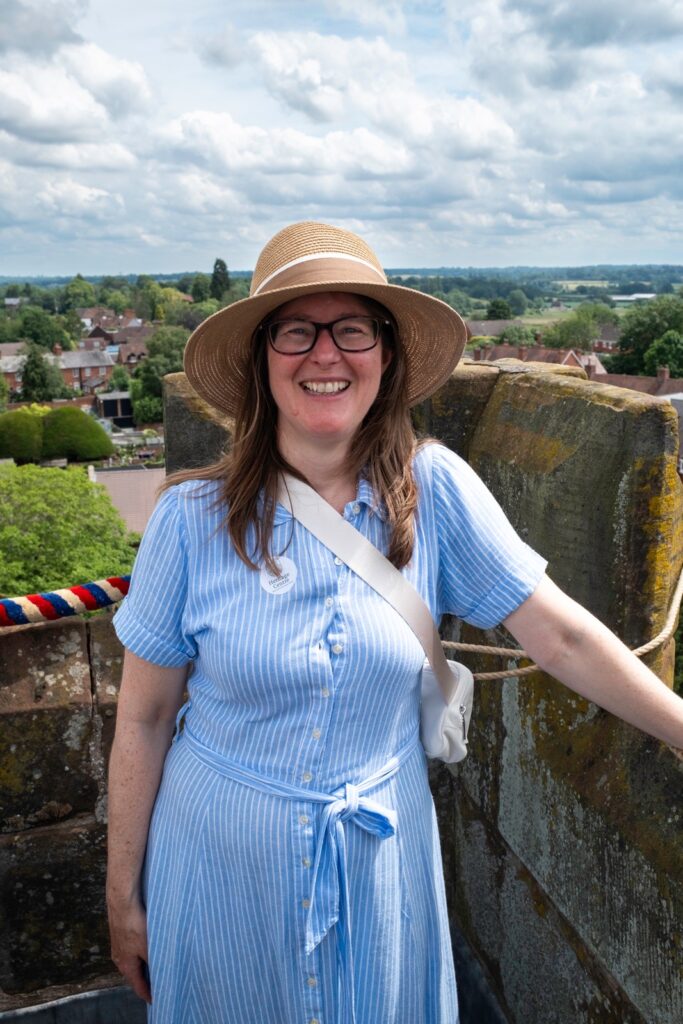
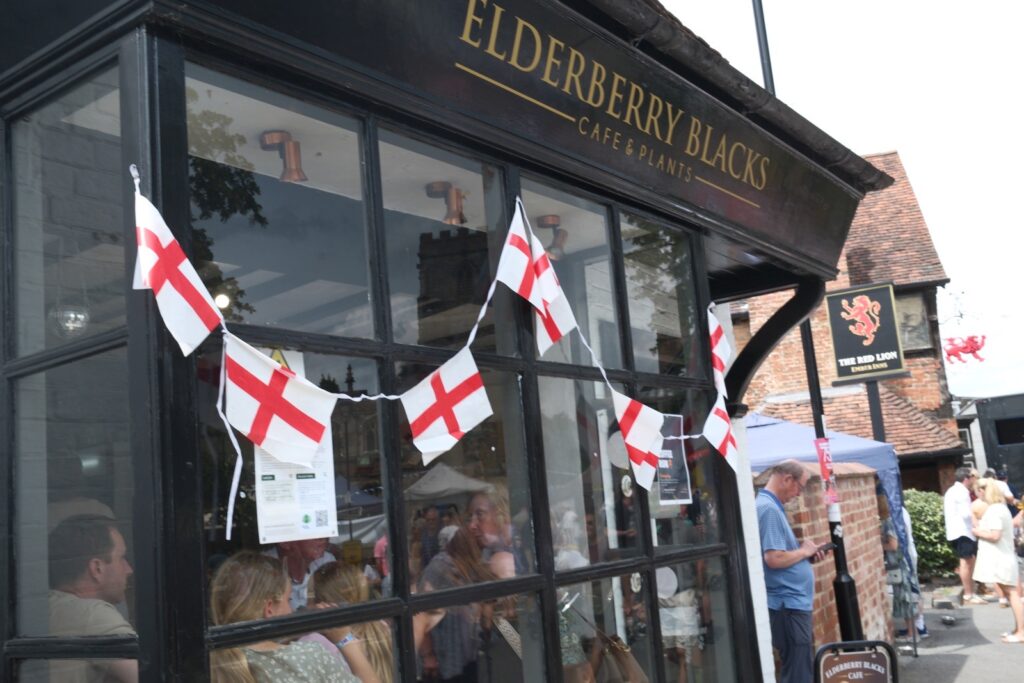
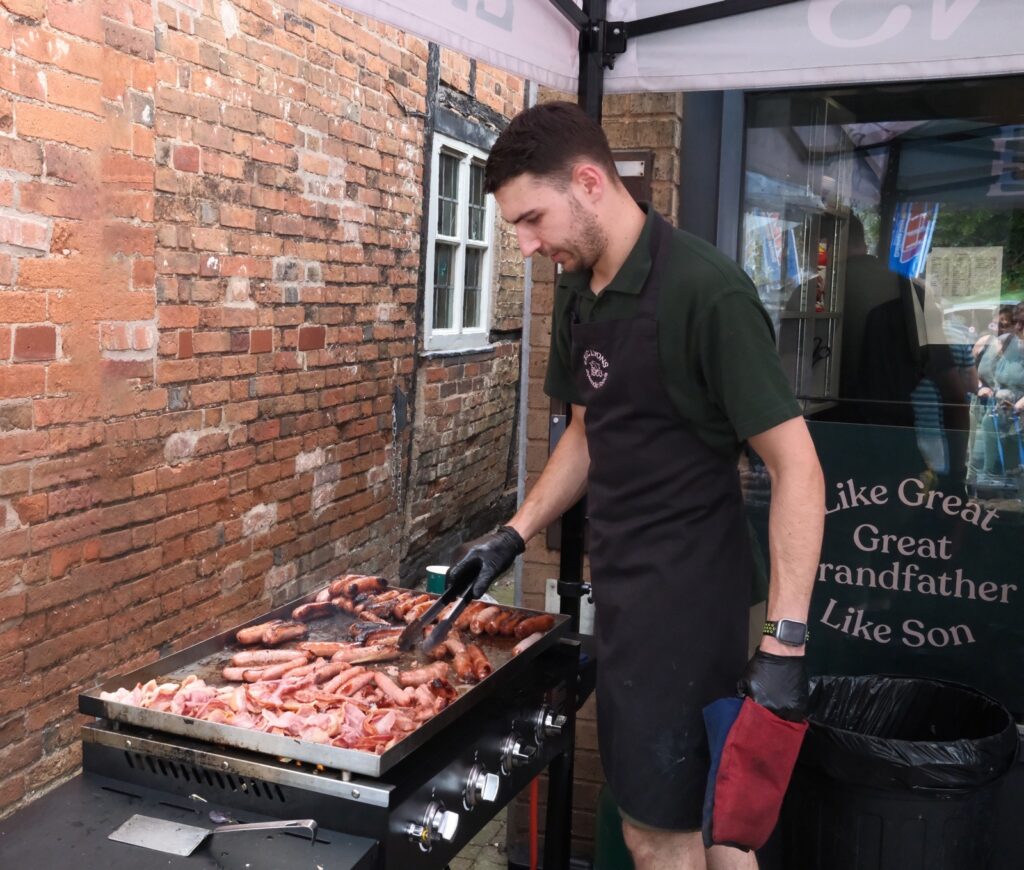
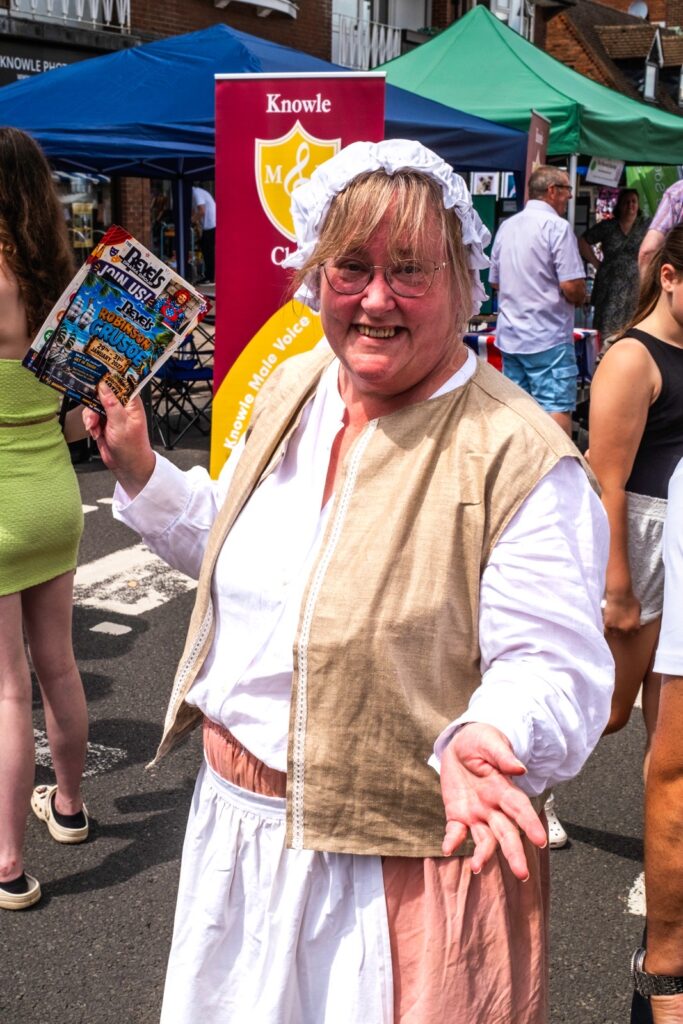
Kim Hulse, Co Founder of Visit Knowle.Elderberry Blacks is decked out in flags.Eric Lyons supplying a constant supply of hot dogs for the party.A member of the Revels drama group in recruiting mode.
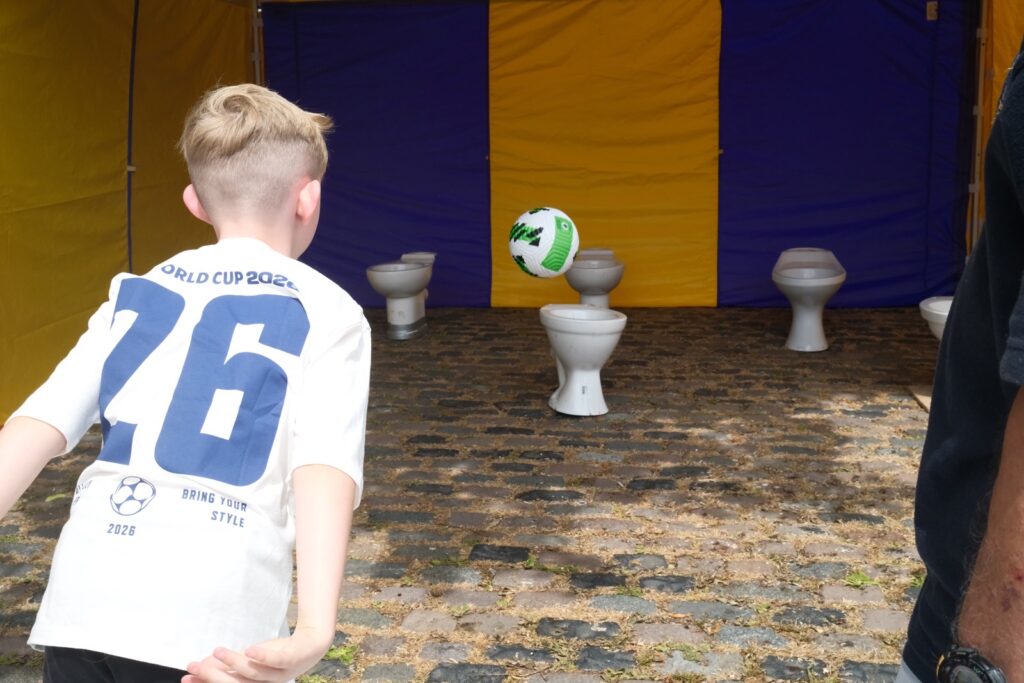
When I arrived, the birthday party was in full swing. My grandson had heard about a game that involved throwing footballs into a toilet. He found the challenge difficult and, after six attempts, had still not managed to land a football in the loo. How do you pick yourself up after that? With a hot dog from the Lyons BBQ, of course.
Throwing the football into the loo.Enjoying the tasty food from Eric Lyons.
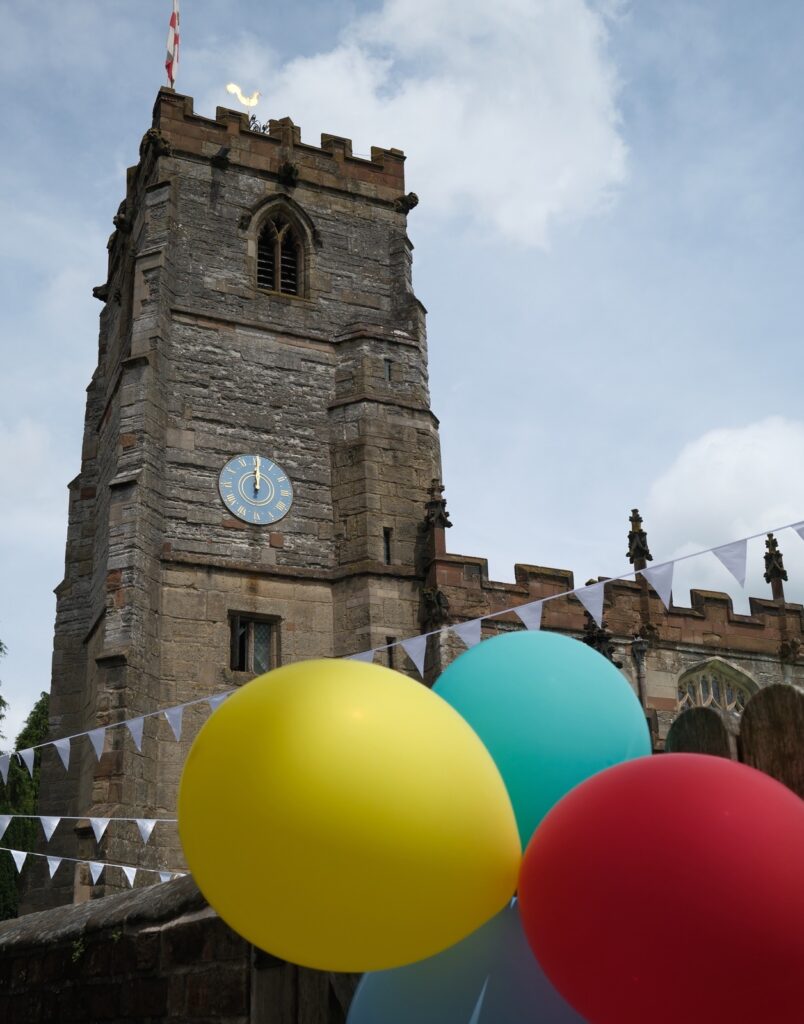
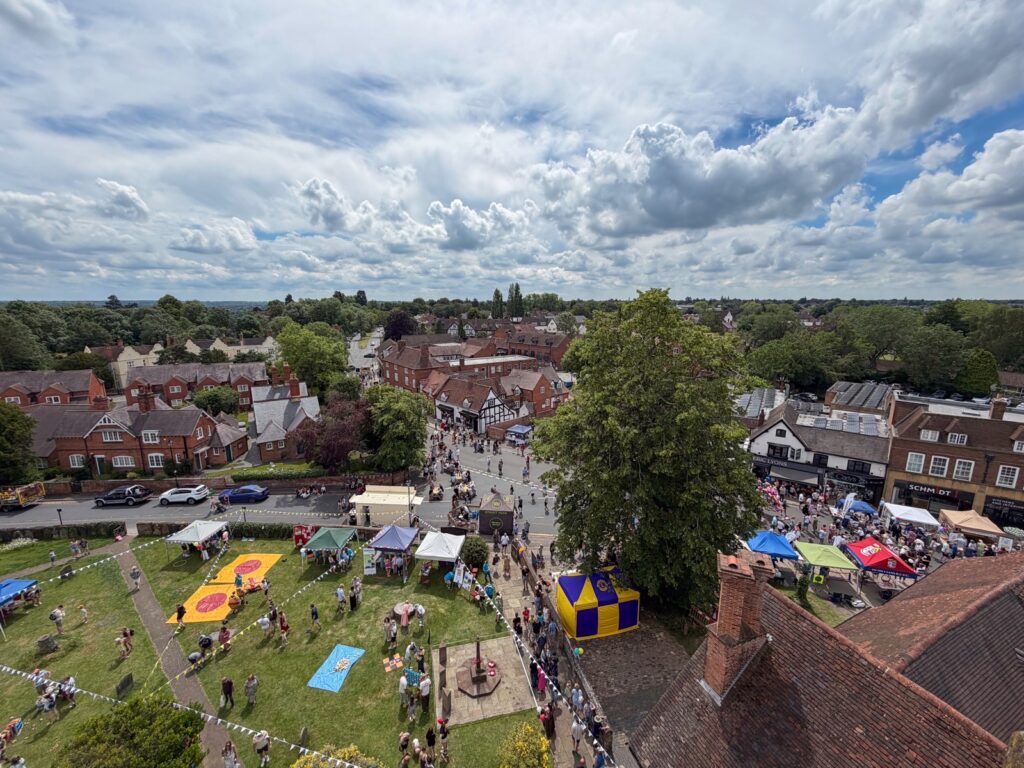
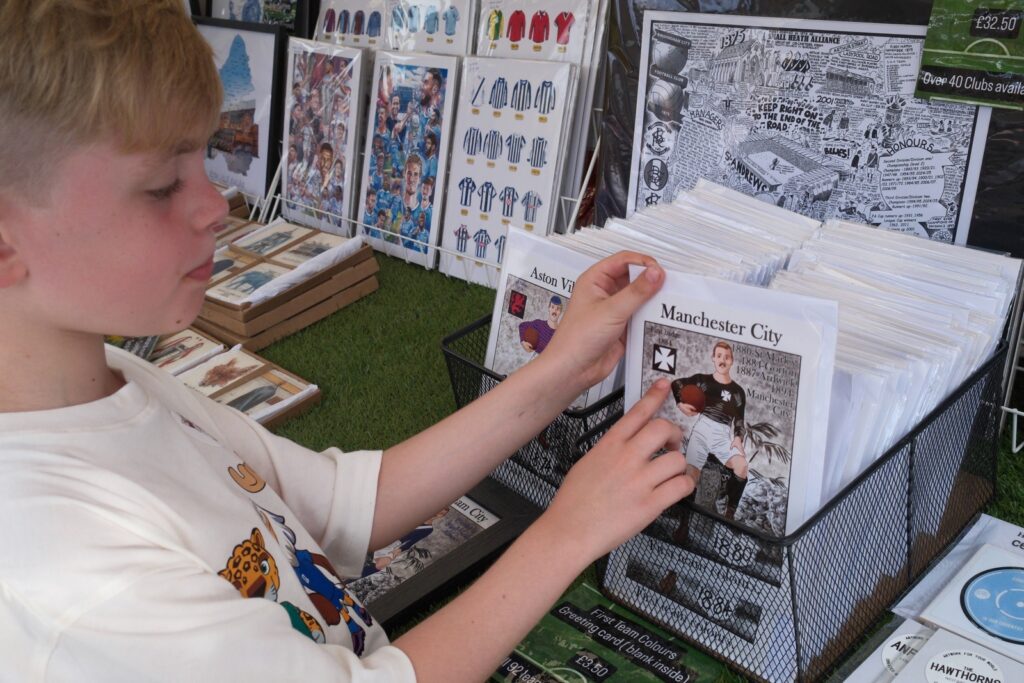
The High Street was full of people, with not a car in sight. My favourite stall was the football prints display, although there were many others worthy of mention. I was particularly keen to climb the tower at Knowle Church. I had previously visited the bell-ringing room but had never made it to the very top. After negotiating the narrow stairs, the magnificent view was a wonderful reward.
Looking up to the top of the Church.View from the top of Knowle church
As I looked out across the Warwickshire landscape, I could almost hear The Who singing, “I Can See for Miles.”Unfortunately, I could not see my own house because of the many trees surrounding the village. By this time, I had lost track of my daughter and grandson, so I wandered down the High Street to see what else was happening.
Chris Loughran, Deputy Lord-Lieutenant of the West Midlands and a representative from the sea scouts.Even more street food on offer on the High Street.Football memorabilia.
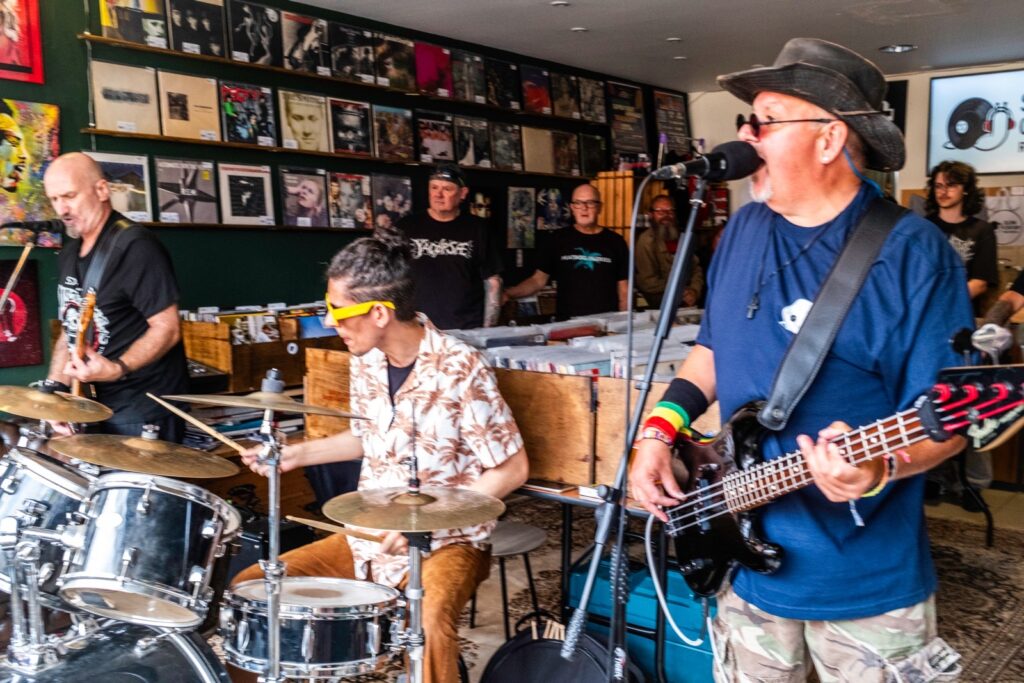
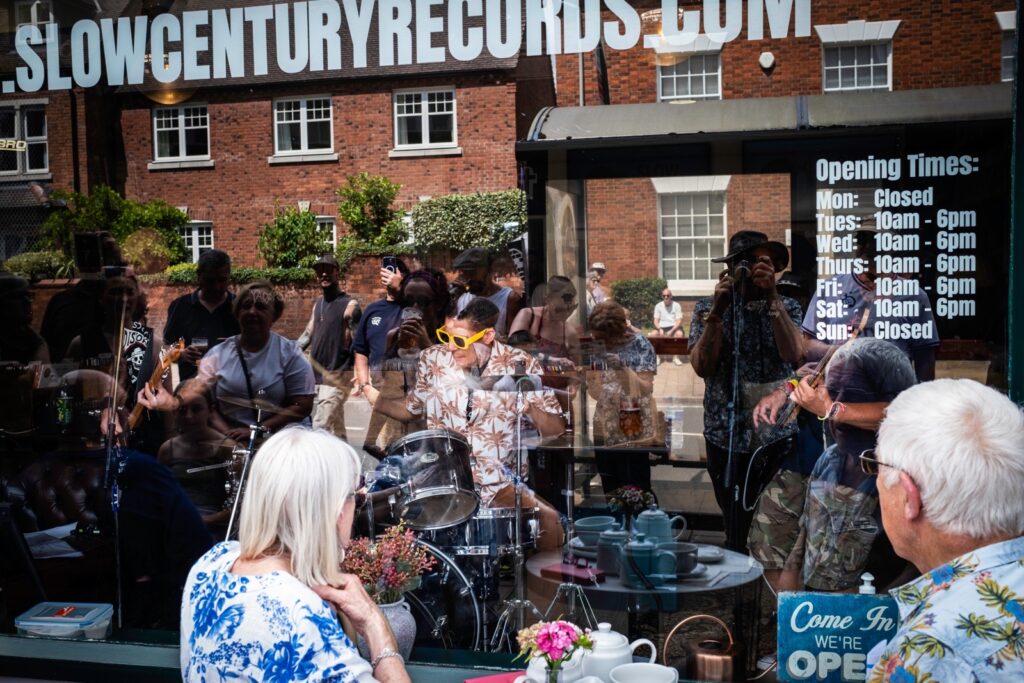
As I approached the Ale Rooms, Viola and Slow Records, I was in for a pleasant surprise. Playing in the window of Slow Records were Chipsum Gravy a lively three-piece high octane punk rock band who were not only rattling the windows but also rocking the High Street.
Chipsum Gravy rocking Slow Records.Rattling windows and Chipsum Gravy
I know there was much more to take part in, and I did not have time to explore the precinct or visit many of the buildings that were open to the public, such as the library and the church. From what I did see, Knowle was enjoying a wonderful birthday celebration, and both residents and visitors were clearly having a great day.
Ducks cooling down in the water.
Well done to everyone who helped organise the event, and I look forward to the 751st birthday party next year!
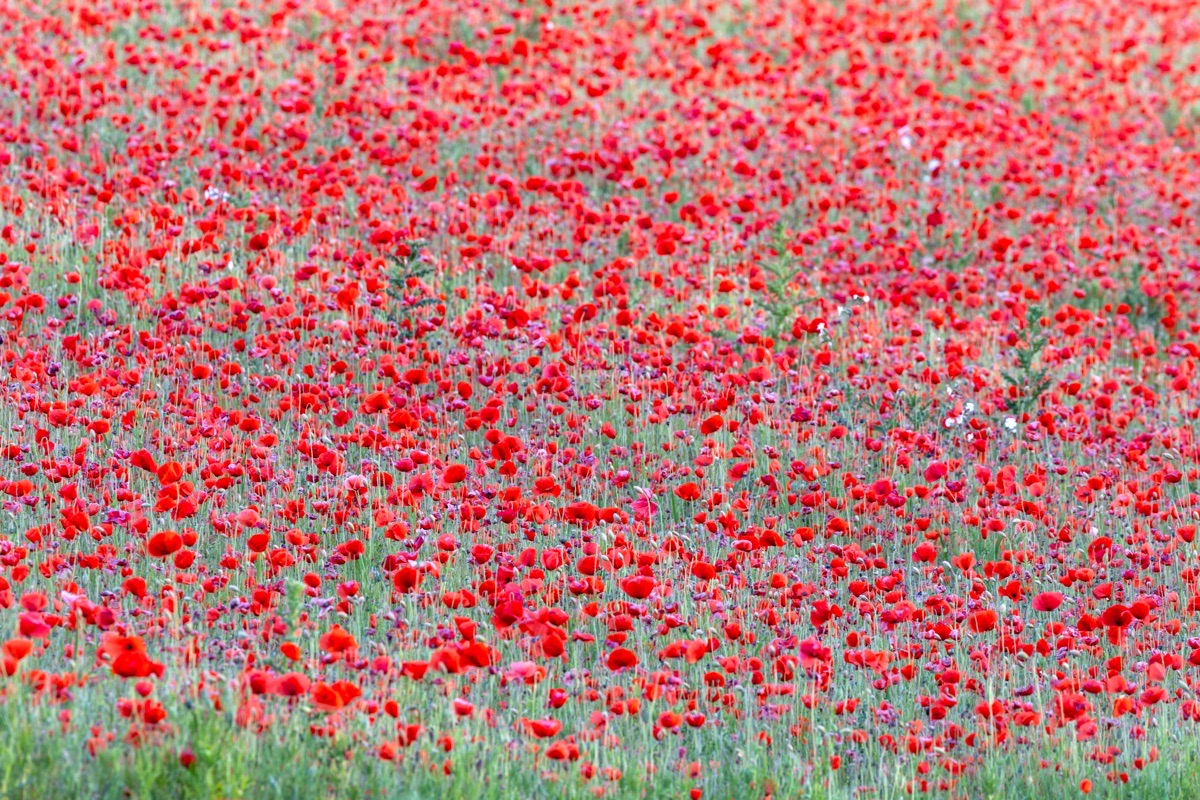
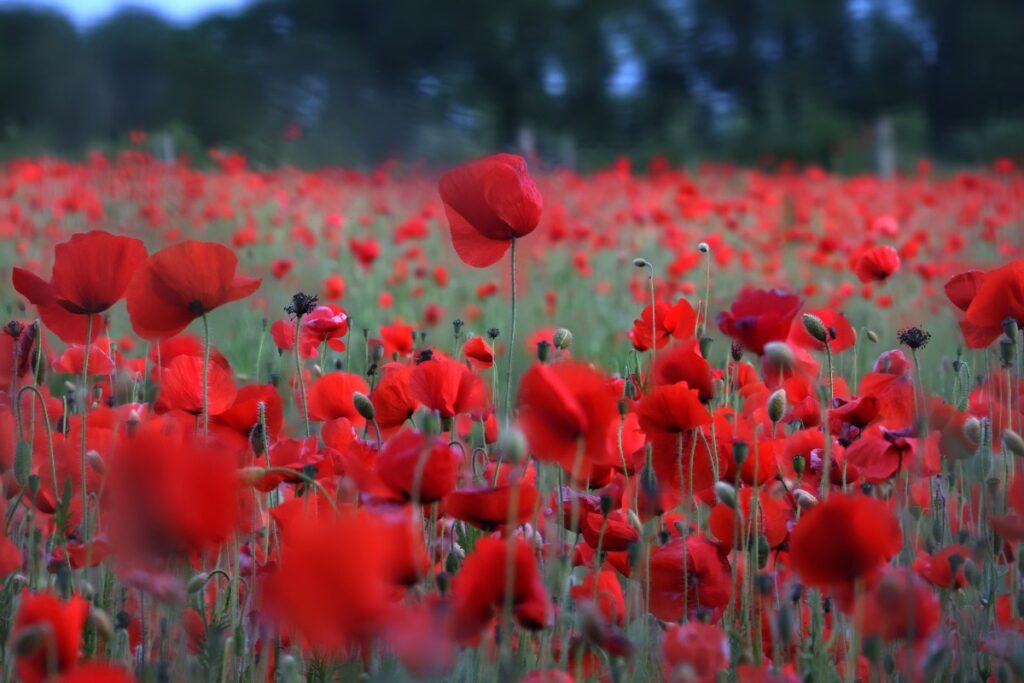
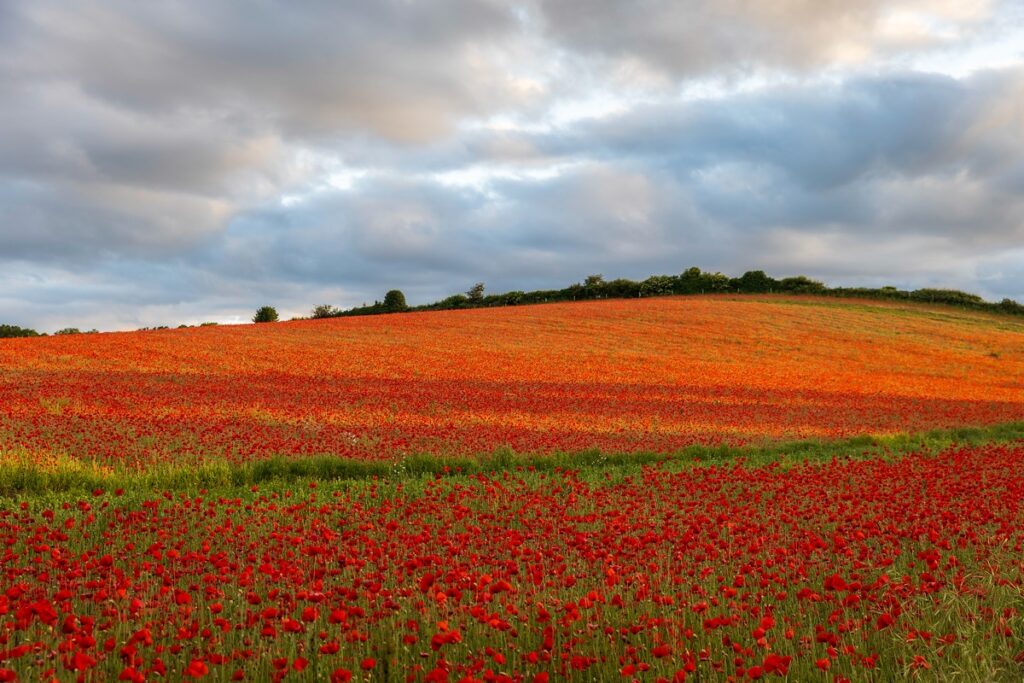
A poppy field in full bloom is a wonderful sight. A field of closely packed flowers creates a sea of red, often stretching as far as the eye can see. Around the end of May and into early June, poppy fields appear almost unannounced, much to the delight of seasoned poppy hunters. The common hotspots are generally found in Wiltshire, Norfolk and Worcestershire, but a poppy field can be found almost anywhere in the country.
The aim of this blog is to provide some tips on photographing a poppy field. Whether you use a smartphone or a dedicated camera, a few simple steps will help ensure you return home with some memorable images that will amaze family and friends and perhaps gain you a few extra likes on social media.
The use of thirds in the picture helps direct the viewer to the red line of poppies.
When photographing poppy fields, there is always an opportunity to practise on other wildflowers that appear earlier in the year. At the end of January there are snowdrops, while from late April into May there are bluebells and wild garlic. The latter flowers also offer advantages for those who enjoy foraging.
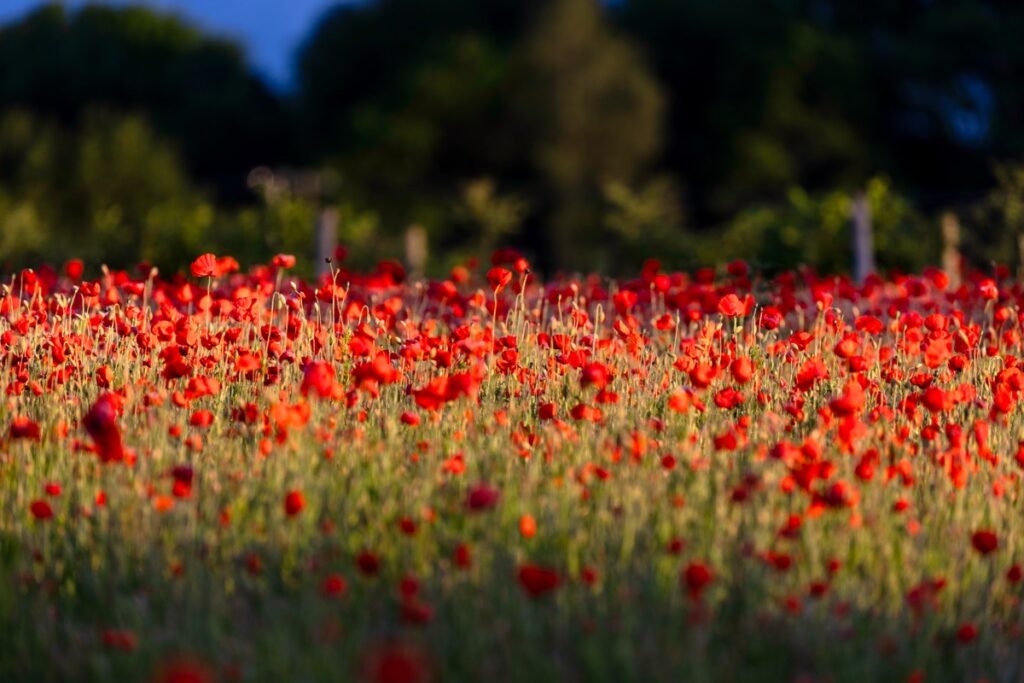
Poppies basking in the sun.
My advice is to keep an eye on social media posts that reveal where wildflower fields are appearing. Facebook searches for poppy fields will often reveal recent sightings. People rarely contain their enthusiasm when posting about these displays. Unless you know the person posting, however, I would refrain from asking for the exact location of the field. Part of the fun is carrying out your own research and discovering where the flowers are growing.
The ideal time to photograph a poppy field is either at sunrise or sunset. The soft light of the golden hour brings out the vibrant colours of the flowers. Planning your photographs is also important. You may read various forms of advice, but personally I like to create a visual story consisting of five to ten images.
This poppy looks as if it is addressing all the other poppies!
The set benefits from an overall photograph of the field, allowing the viewer to appreciate the scene as you first saw it. Often, this is the view that visitors remember most from their visit. Next, I take a series of medium-range images of the field. I think in thirds when composing these photographs and look for contrast. The lower third or two-thirds of the frame will often contain the poppies, while the upper portion will feature the sky or a line of trees. Contrast may come from colours or from different species of flowers growing together. A field will usually contain many other wildflowers and plants.
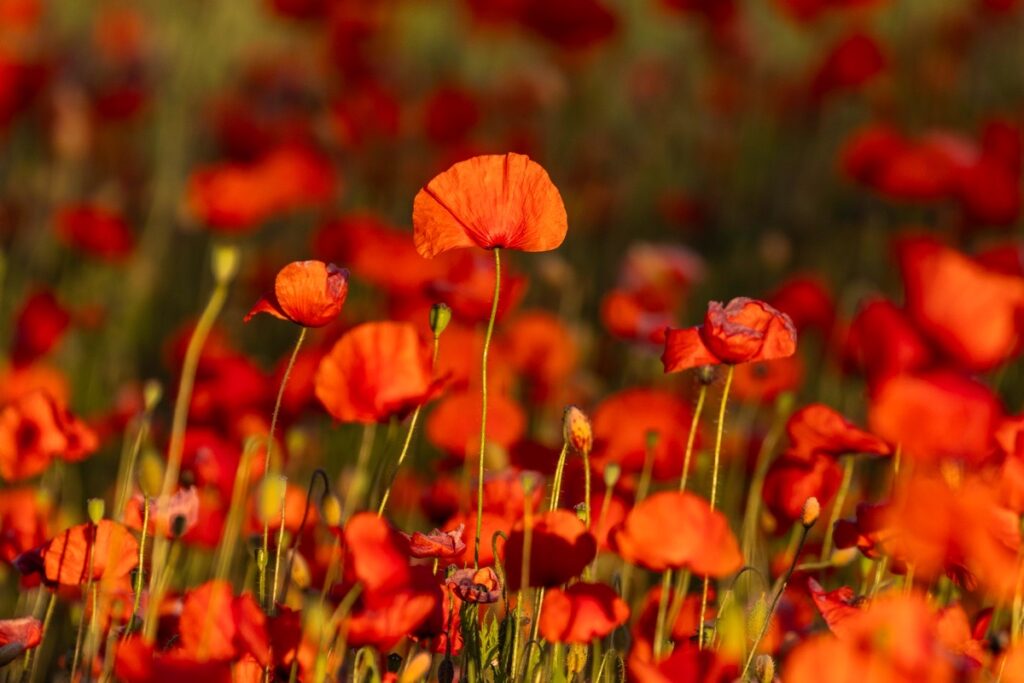
A medium range picture with a focus on one poppy.
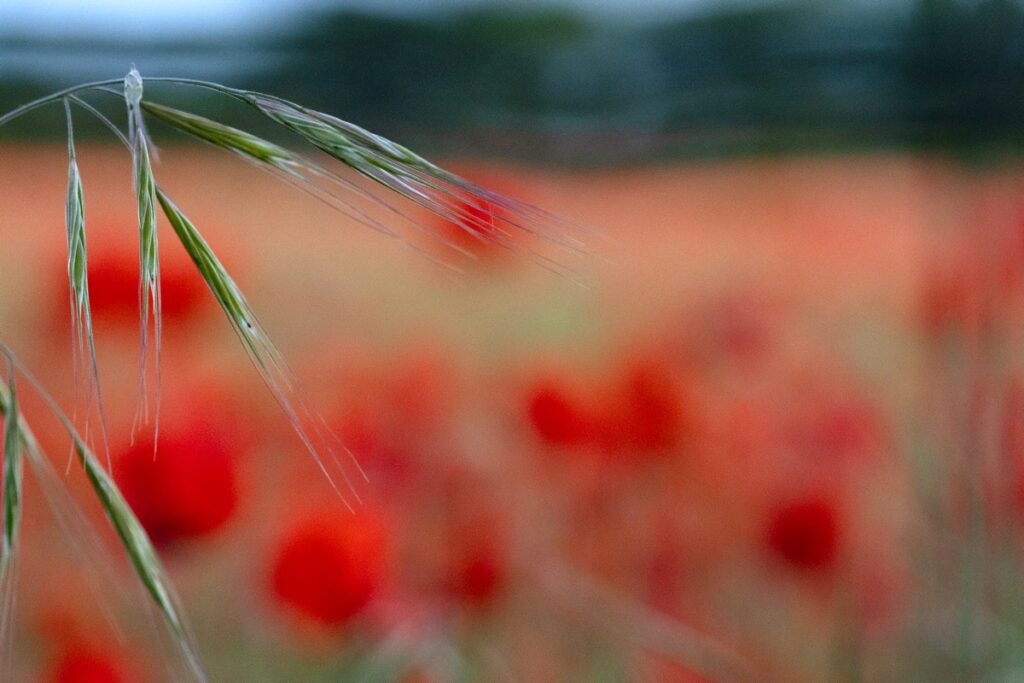
While taking these medium-range photographs, I begin looking for close-up images of individual flowers or petals. If you find other flowers or crops growing among the poppies, try incorporating them into the composition. They contribute to the story, showing why the poppies are there and what else is growing around them.
A fortunate mistake, My lens autofocus picked up the ear of corn throwing the poppies out of focus. The result is a pleasing and different picture.
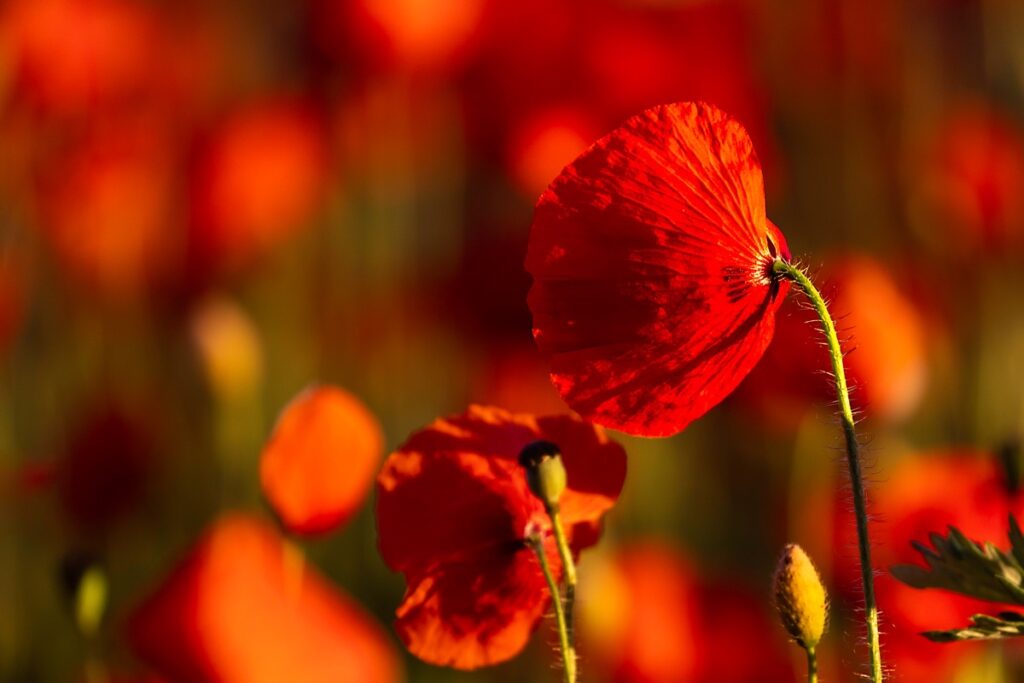
Finally, I start looking for something different that may help my pictures stand out. This is not straightforward and is not an easy task to do well. One technique is to throw the background out of focus using a wide aperture so that the viewer’s gaze is drawn to the flowers that remain sharp. This can be tricky to achieve.
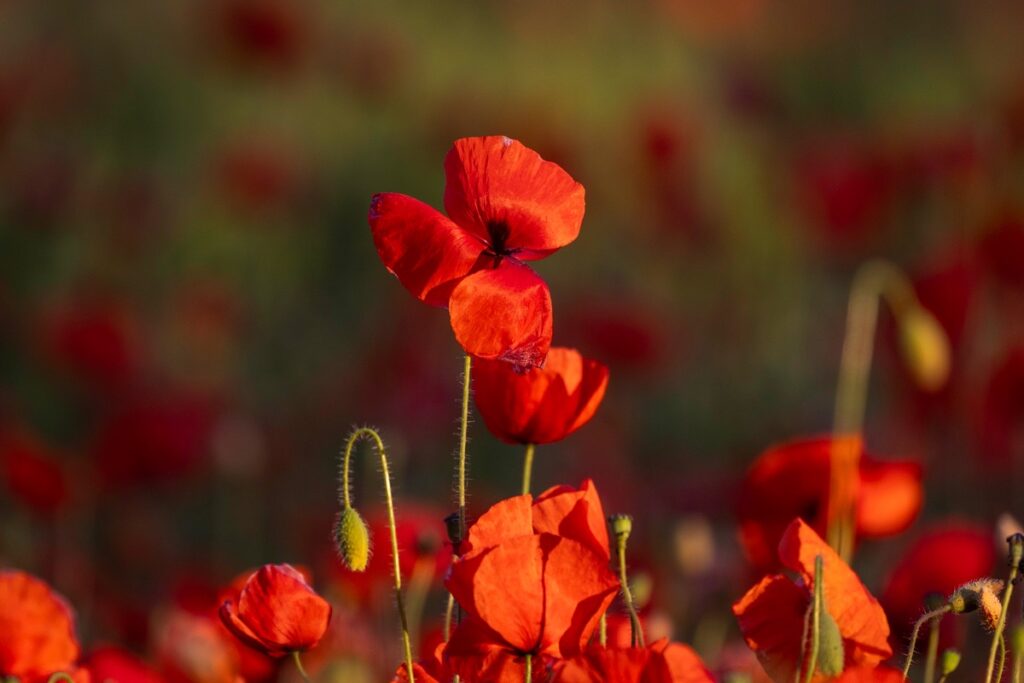
There are always poppies that are taller than the others.
When you move in close to the poppies, you will notice many chaotic patterns. Your skill as a photographer is to make sense of the sea of red before you. Look for patterns and observe how the flowers relate to one another. Are two poppies facing each other? Do they look as though they are talking? Is one poppy standing alone? You may find one that is taller than the others and naturally draws attention. Once you begin thinking in this way, you start to see photographs emerging from the apparent chaos. Isolate these subjects with a tight composition and a carefully chosen field of view.
Although I am always excited to discover a poppy field, I do not move around too much. Once I have selected a position, I tend to stay with it. After capturing a set of photographs, I may move to one or perhaps two other locations. After many years of photographing wildflowers, I do not walk into the flower fields. Doing so rarely leads to a better view and often results only in trampling the work of nature. Be respectful and consider the landowner by not trespassing. Contain your enthusiasm and work around any limitations.
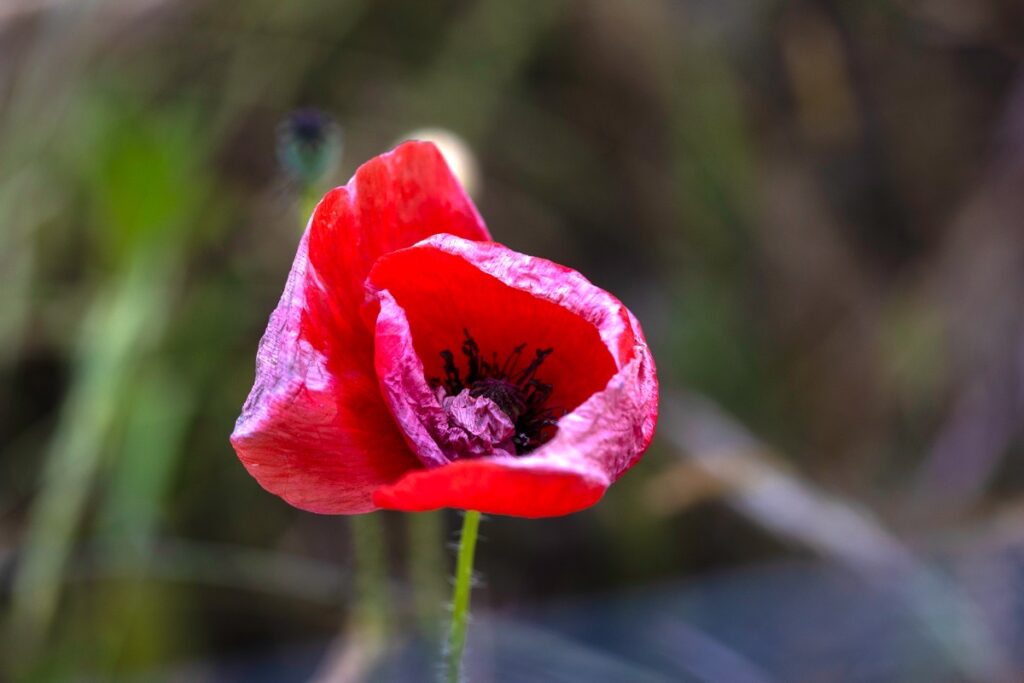
A close up of a poppy.
Which camera should you use? This is one of the most common questions photographers are asked. My answer is how you compose your photograph matters more than the camera you use. However, there are a few useful considerations. A telephoto lens compresses the scene and intensifies the impact of the colours, while a wide-angle lens shows the landscape surrounding the field.
Finally a landscape view of this amazing poppy field in Bewdley.
I also recommend carrying a tripod, regardless of which camera you use. A tripod allows you to experiment with slower shutter speeds, making it possible to create intentional camera movement (ICM) images and other creative effects.
This blog is intended as a starting point for photographing wildflower fields. While I have focused on poppy fields, the same techniques can be applied to many other wildflower displays. If you would like access to a colourful and reliable location in which to practise your photography, I strongly recommend visiting the annual Confetti Fields in Wick, near Pershore.
Here is another link to follow for ideas on photographing a poppy field.
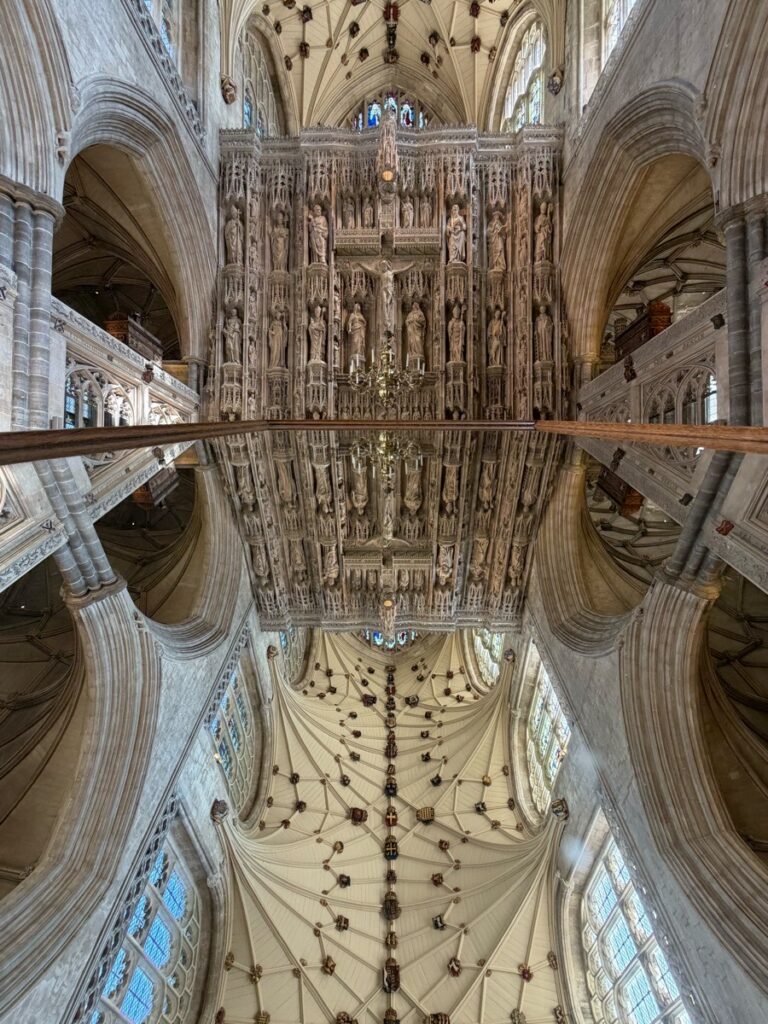
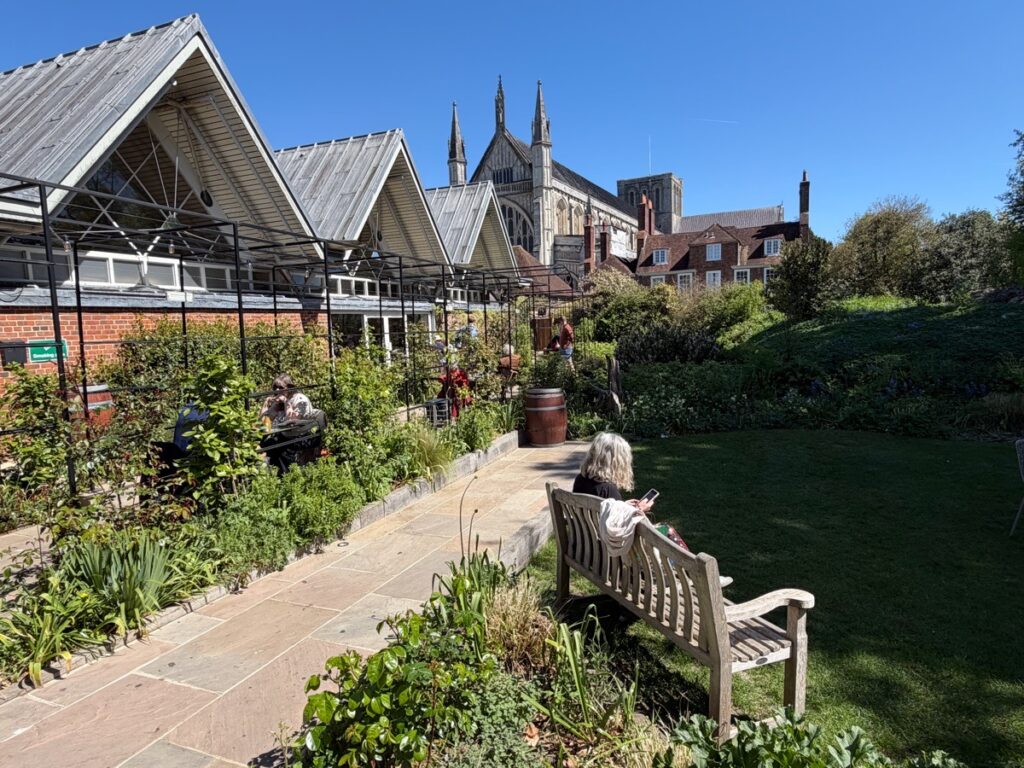
Winchester is a beautiful city, full of photographic opportunities. I was delivering a lecture in the city, but I made sure to leave time to wander and explore the streets, the cathedral, and the early morning quietness.
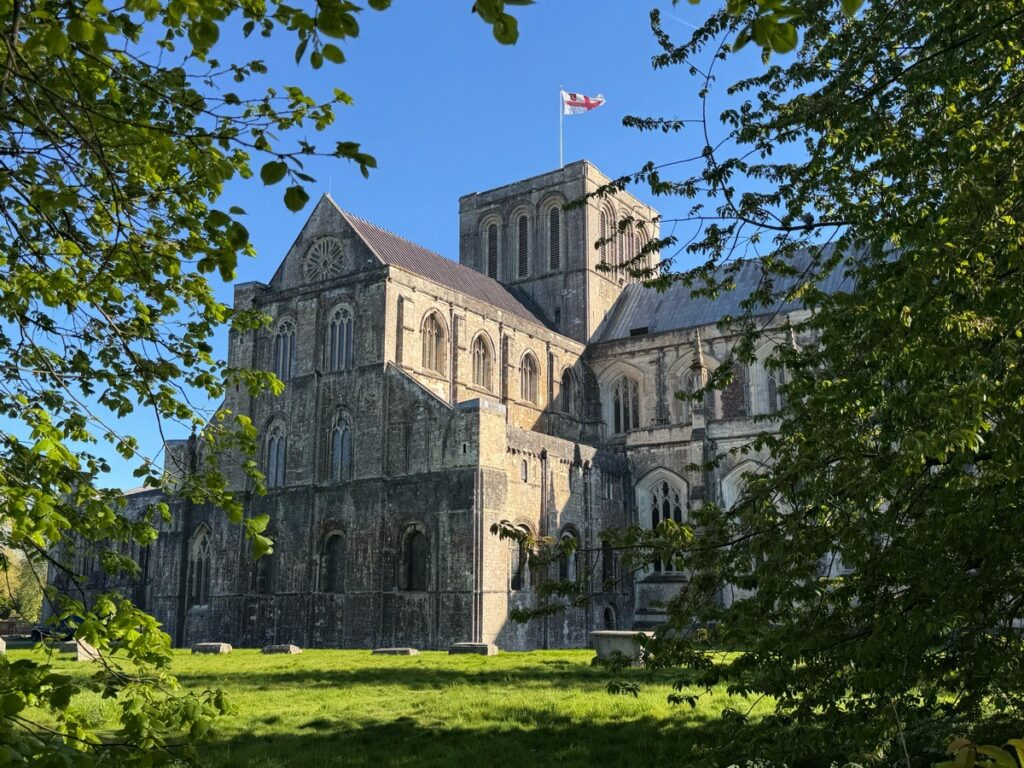
The Cathedral flying the English flag on St George’s day.
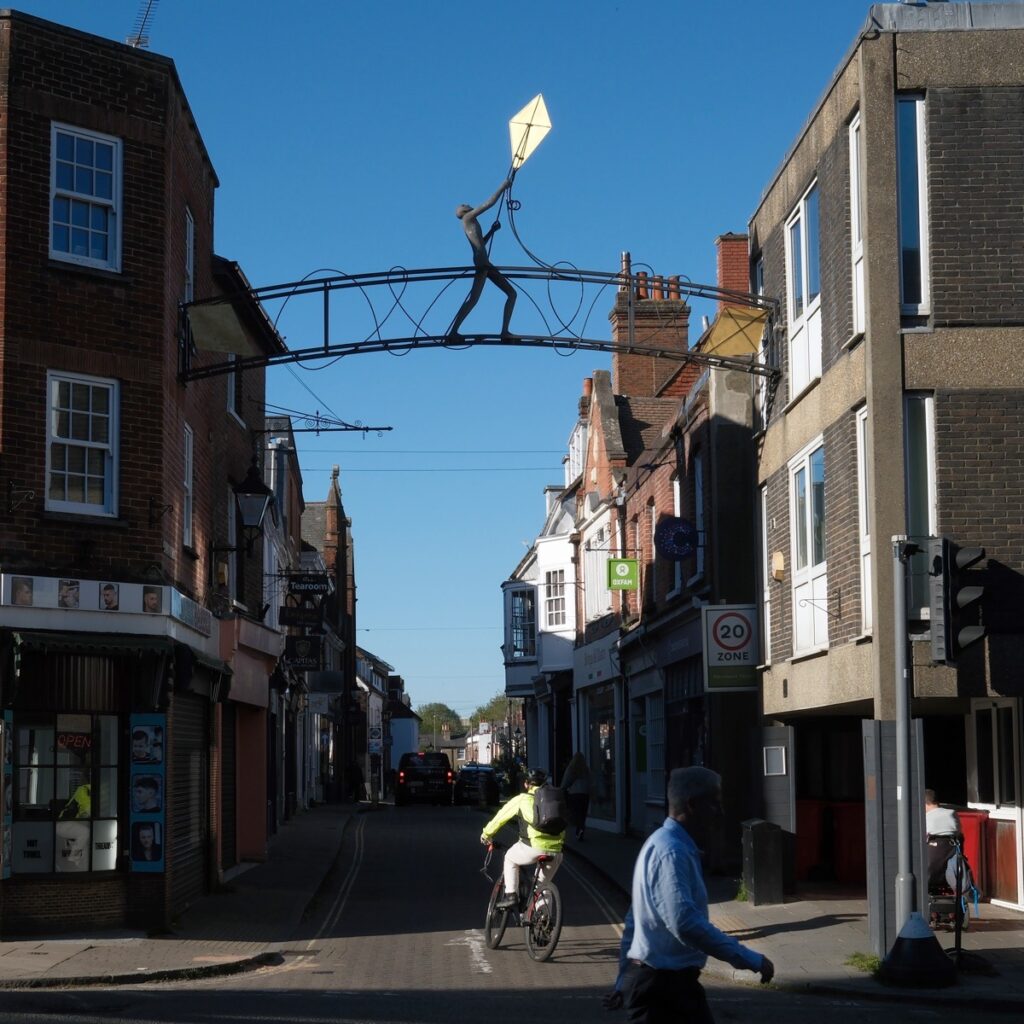
The Streets of Winchester
Arriving at my hotel early, I checked in and then took my Fujifilm X100VI onto the streets of Winchester. The low-lying sun created pockets of light across the streets. The cathedral acts as a magnet for sun worshippers. Lying on the grass in front of it, there was a continental feel, with many people sitting on the green or beneath the trees, enjoying the day’s events.
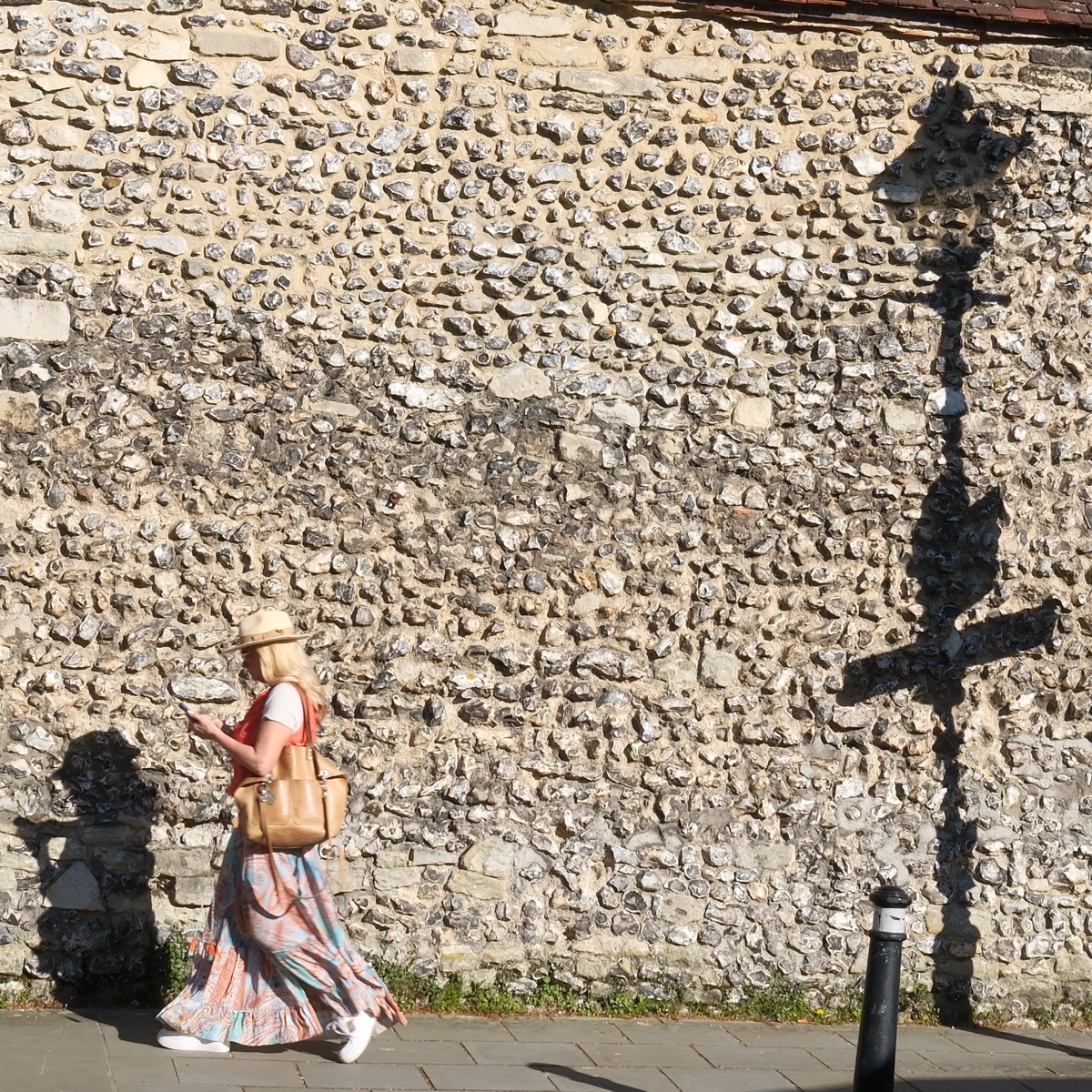
The sun creates lots of light and shadows
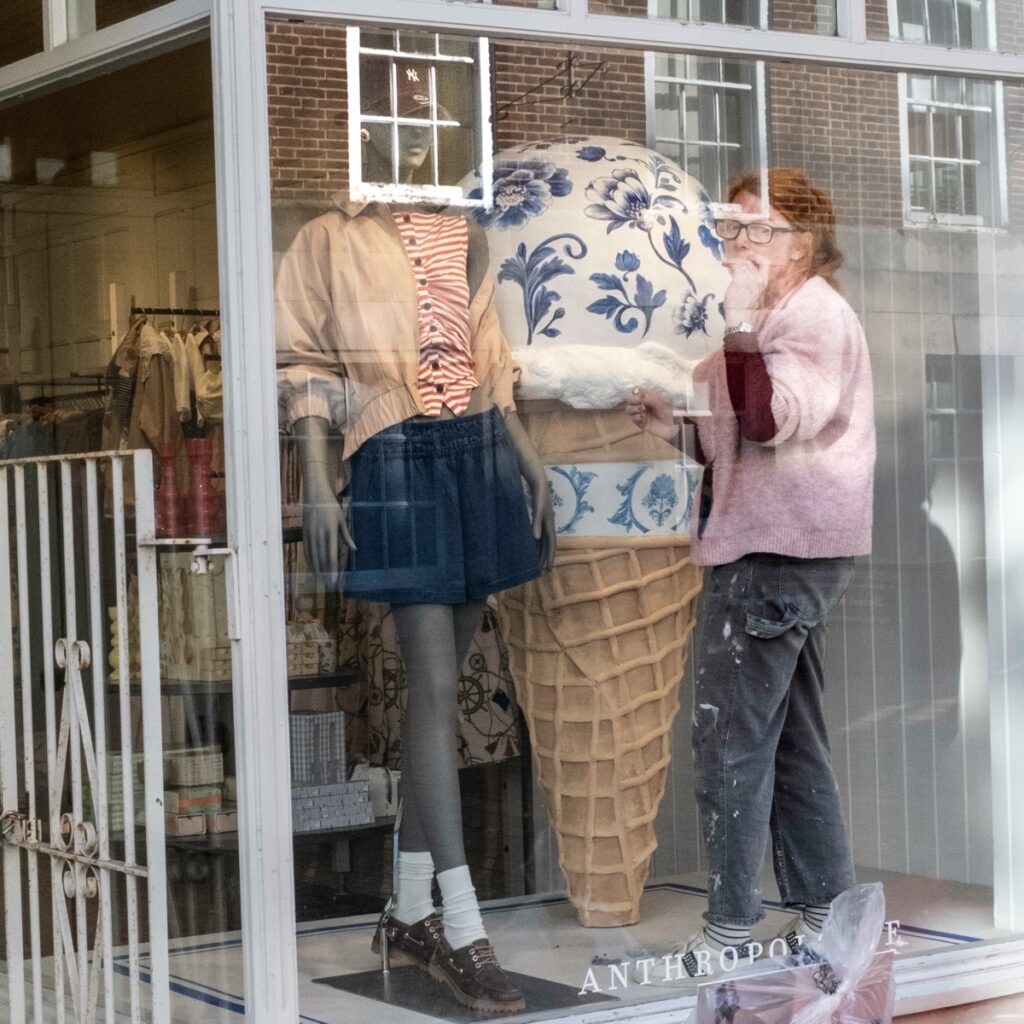
I moved on and walked up the High Street, capturing the activity unfolding around me. Moments must be taken carefully, as people can be suspicious of cameras and spontaneity is easily lost. Shop windows were being prepared, and people were enjoying the sunshine.
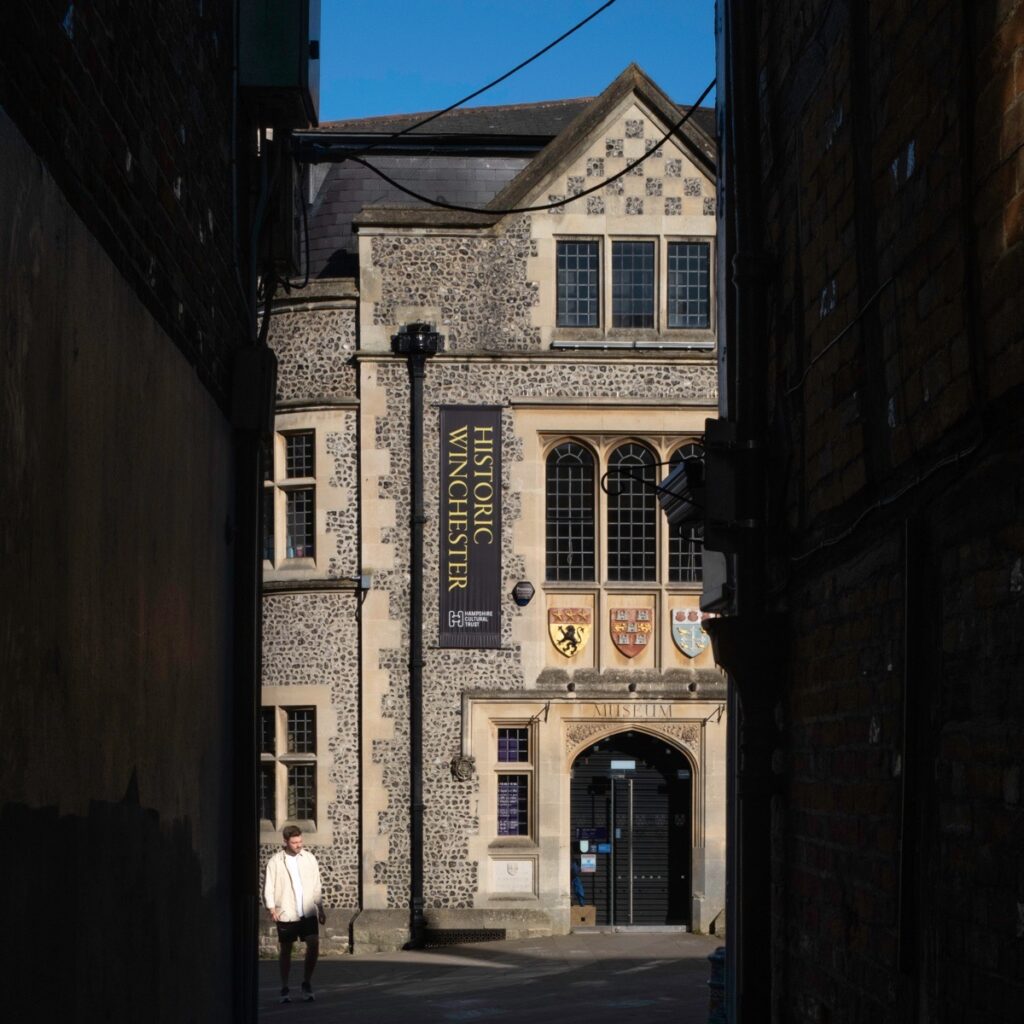
Preparing a shop window.An alleyway provides a focus to the museum building.
A Winchester Sunrise
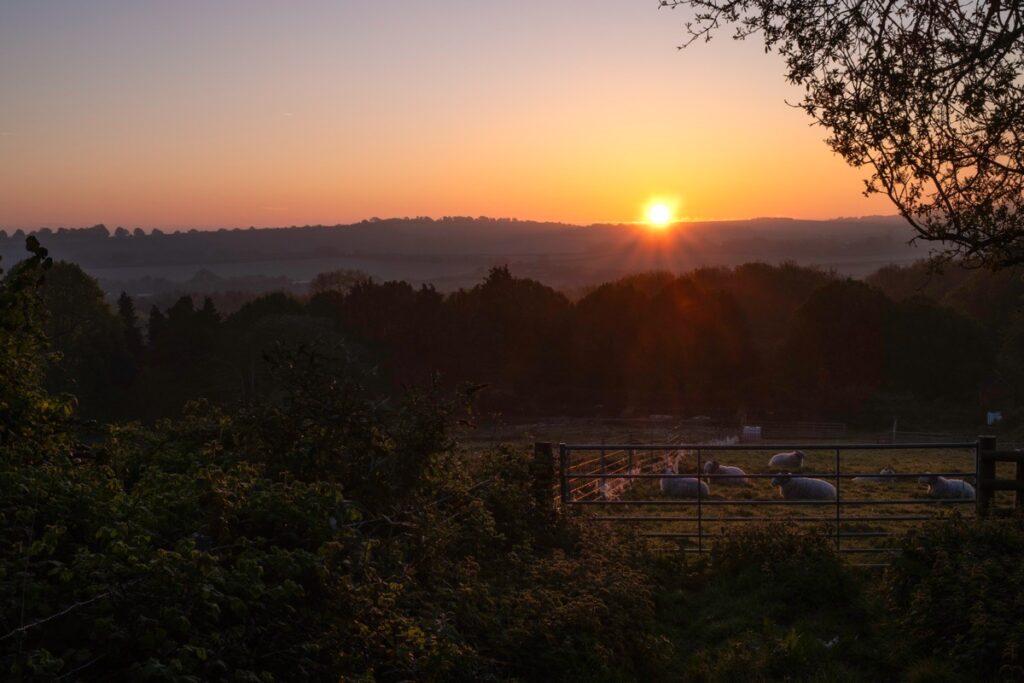
The following morning, I rose early and made my way to St Catherine’s Hill to capture the sunrise. The streets in this part of Winchester were unfamiliar to me, and by the end of the walk I was running to ensure I reached the top in time.
Sunrise towards St Catherine’s Hill.
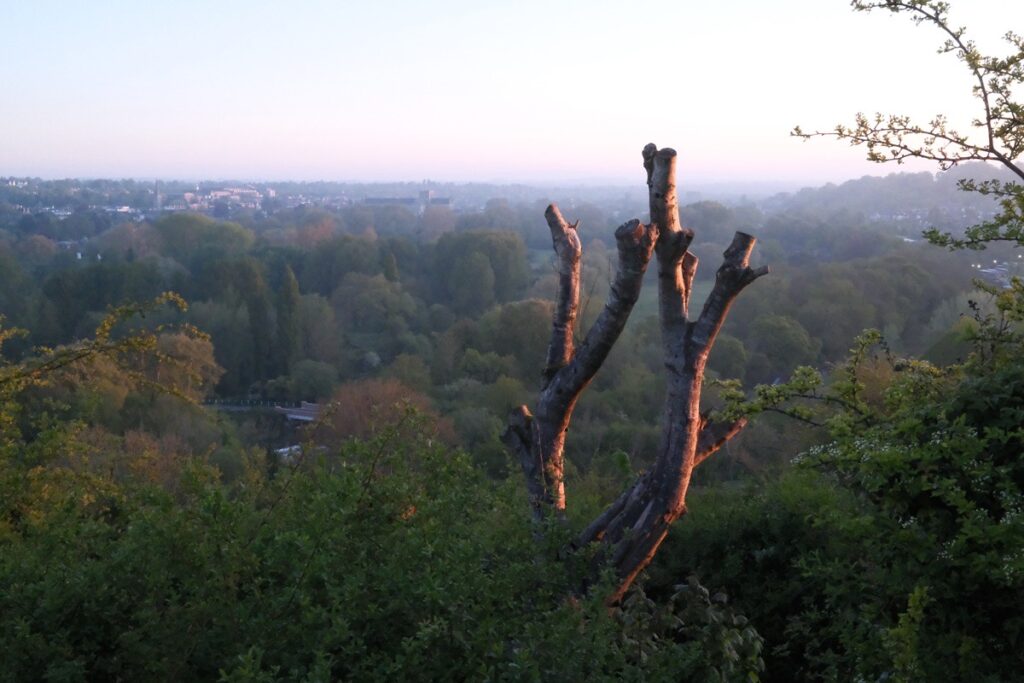
The climb was demanding, but I was rewarded with a beautiful sunrise. Only then did I relax and absorb the moment. The sun moved across the landscape, casting rays along the paths that circle the hill.
Photographing Winchester
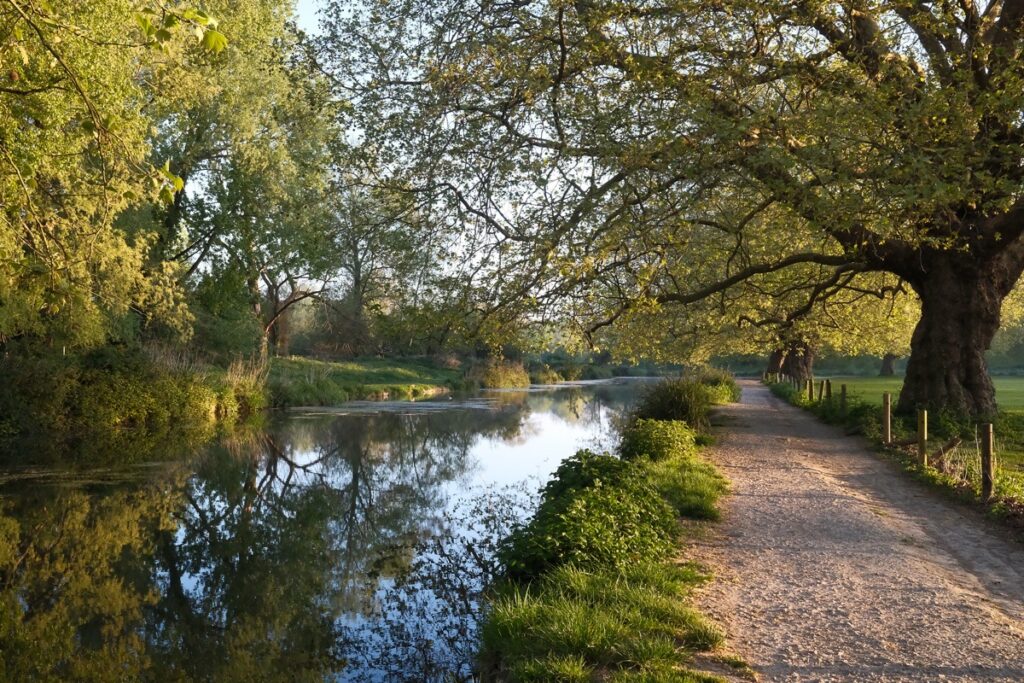
With more time on my side, I descended and soon found the entrance to Winchester College playing fields. Walking along the Pilgrims’ Trail, which follows the Itchen Navigation, was a delight. The early morning light illuminated the trees, while wildlife along the riverbank made its presence known.
An early walk along the river next to Winchester College playing fields.
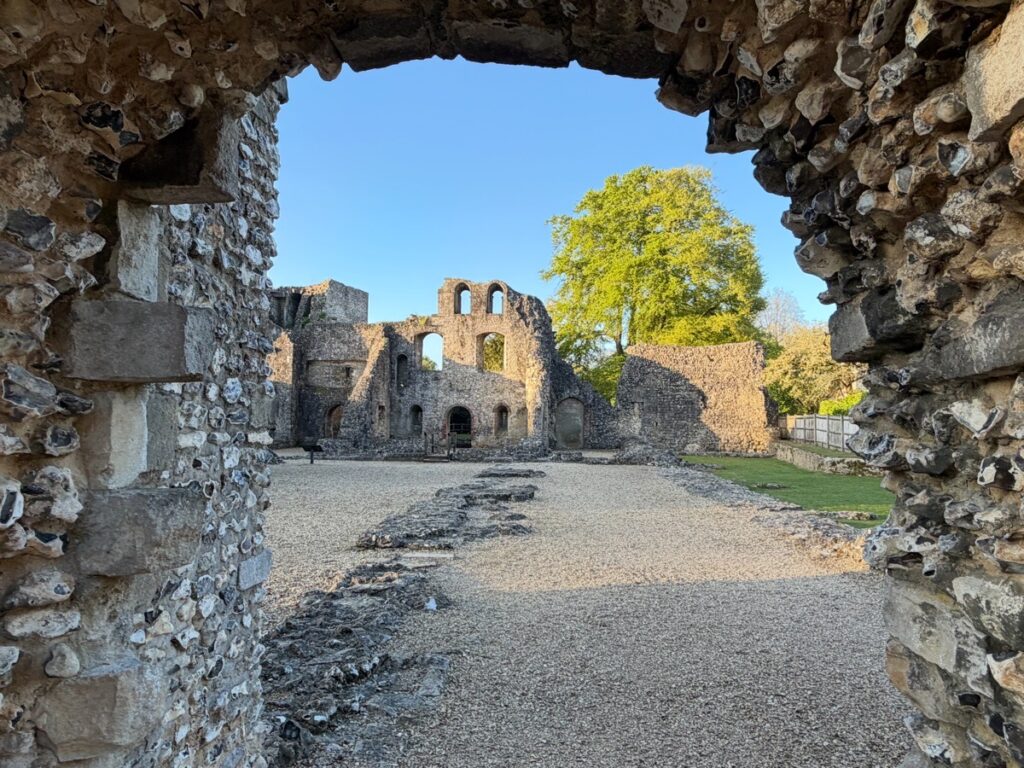
As the streets slowly awakened, I found myself among the ruins of Wolvesey Castle (the Old Bishop’s Palace), located behind the Bishop of Winchester’s official residence. The ruins echoed with a sense of former grandeur, and it felt a privilege to wander through them in the quiet of the morning. On my return, there were further opportunities to photograph the walkways around the cathedral.
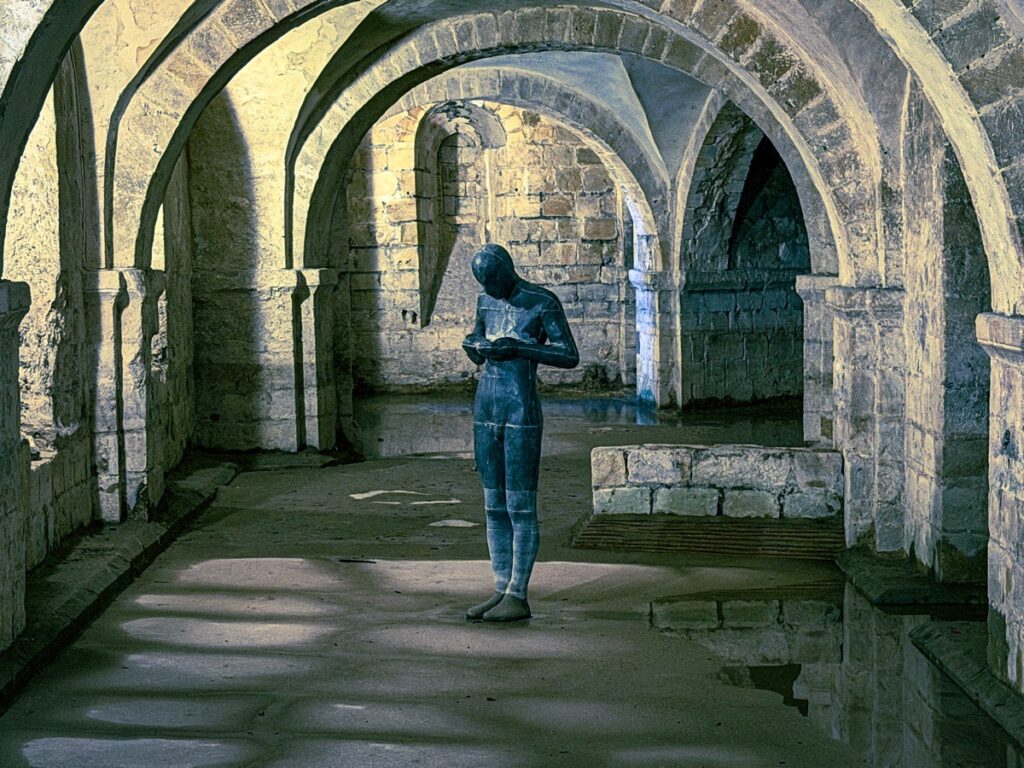
I visited the crypt to see the public artwork by Antony Gormley that is housed there. I have long admired his work and was keen to photograph Sound II. The sculpture did not disappoint, and I spent time exploring different compositions.
Sound II by Antony Gormley in the Cathedral Crypt.
Sound II is designed to stand in a flooded crypt, creating striking reflections in the water. On this occasion, there was no flood, so I adjusted the colour balance to introduce an unreal blueness to the scene, enhancing the cool atmosphere of the crypt.
Work to restore old books in the South Transept.
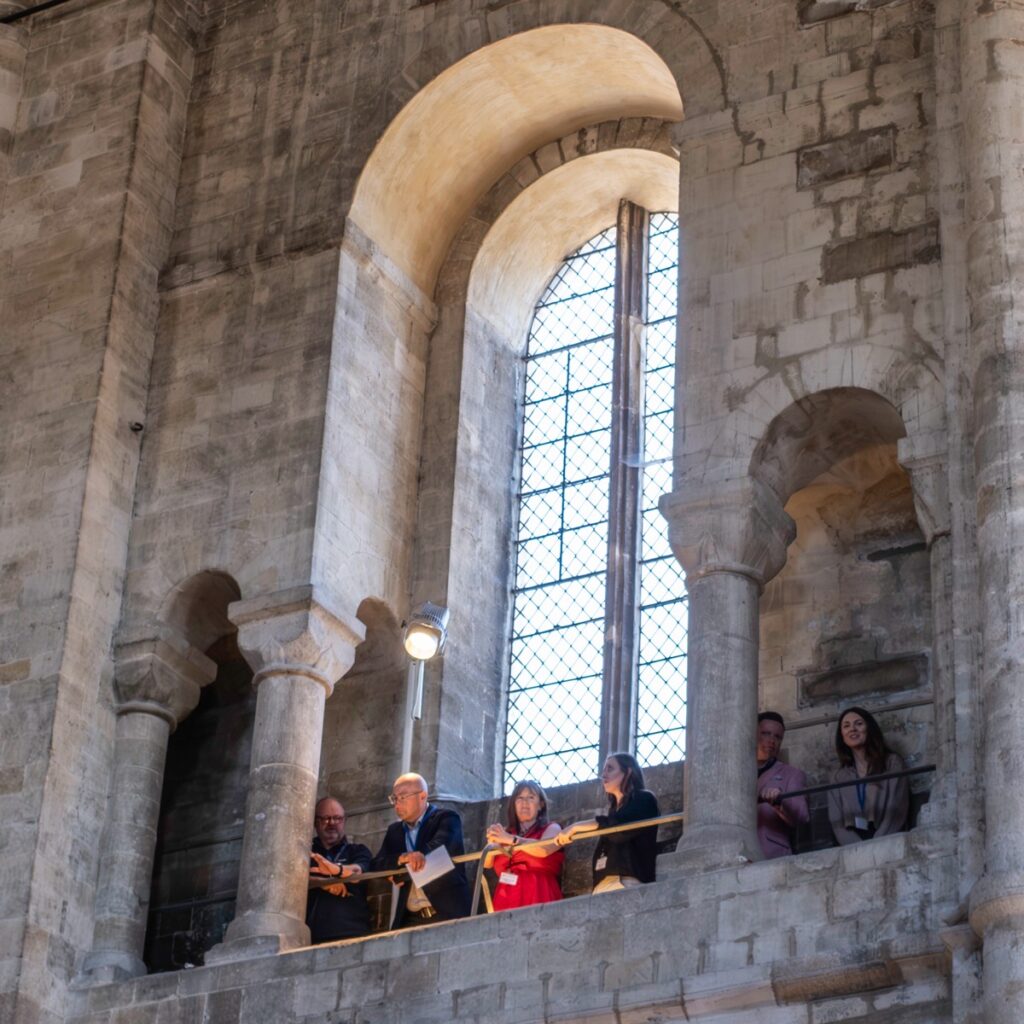
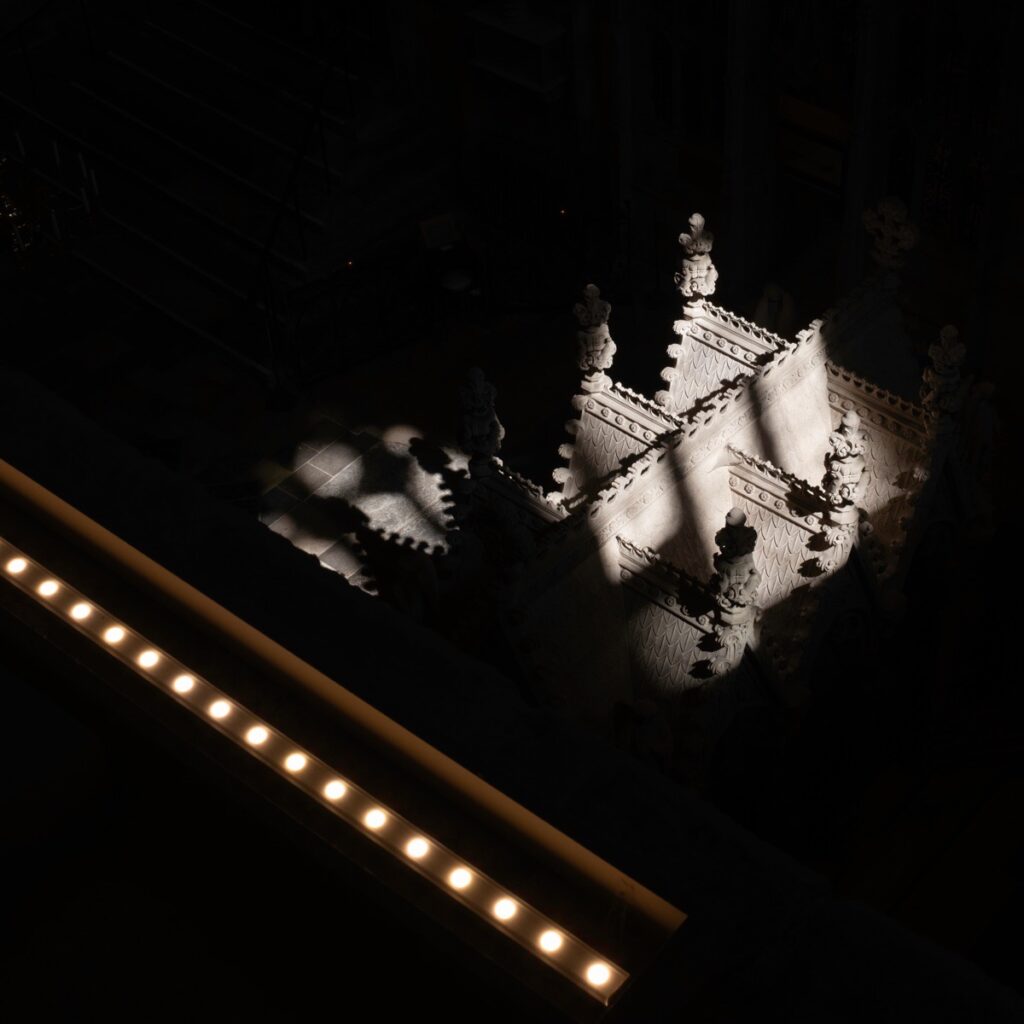
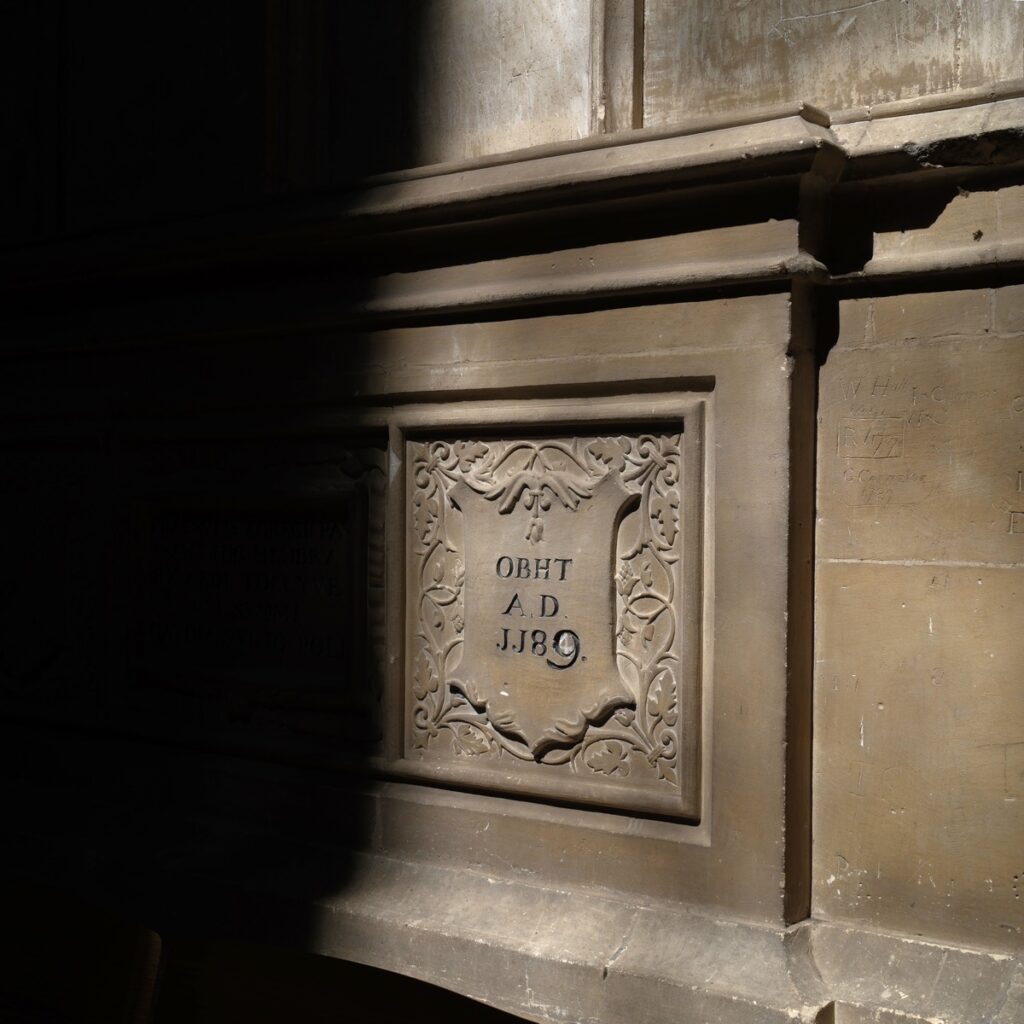
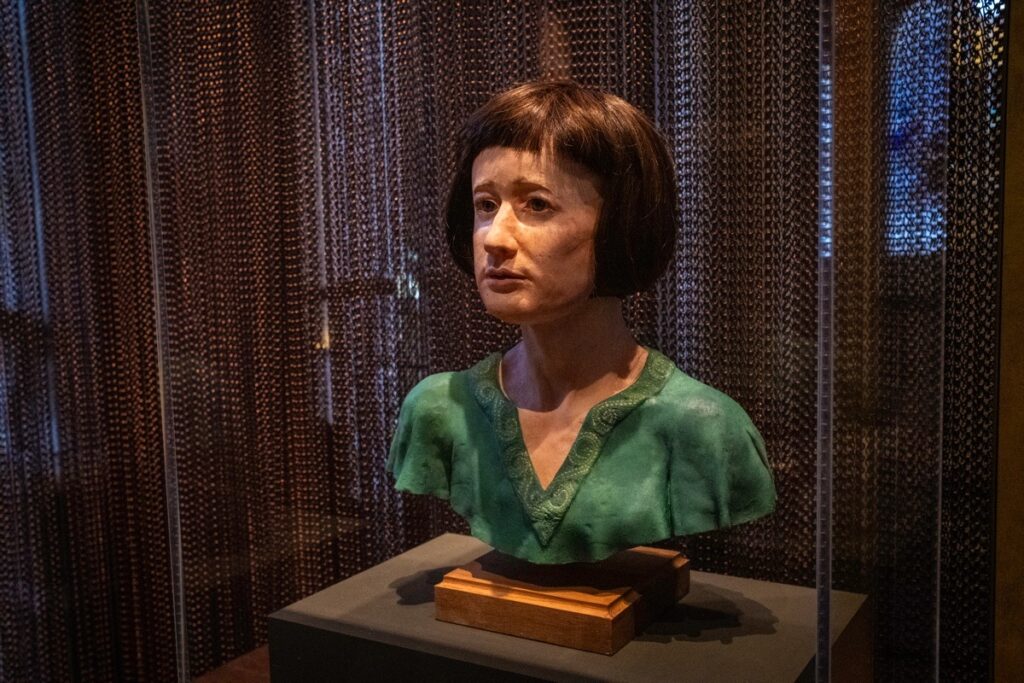
The cathedral has so much history and I enjoyed the exhibition held in the tower. There were several old texts on display and photographs were not permitted. The first floor had people working on the curation and care of the books held by the cathedral. The second floor housed more exhibitions on the history of the cathedral. I particularly enjoyed seeing some of Richard Nieve’s work whom I remember teaching me at Manchester. He had reconstructed a face from the past using skeletons that were found during the excavations of the Cathedral. I also enjoyed the afternoon light streaming into the tower and the view into other parts of the cathedral.
High in the TowerShadows and lightDiscovering within the CathedralA face from the past
This was a fleeting visit linked to a lecture that I gave to the Wessex British Dental Association. The lecture venue was a semi permanent marque on the grounds of the Cathedral. The glorious weather added to the success of the visit.
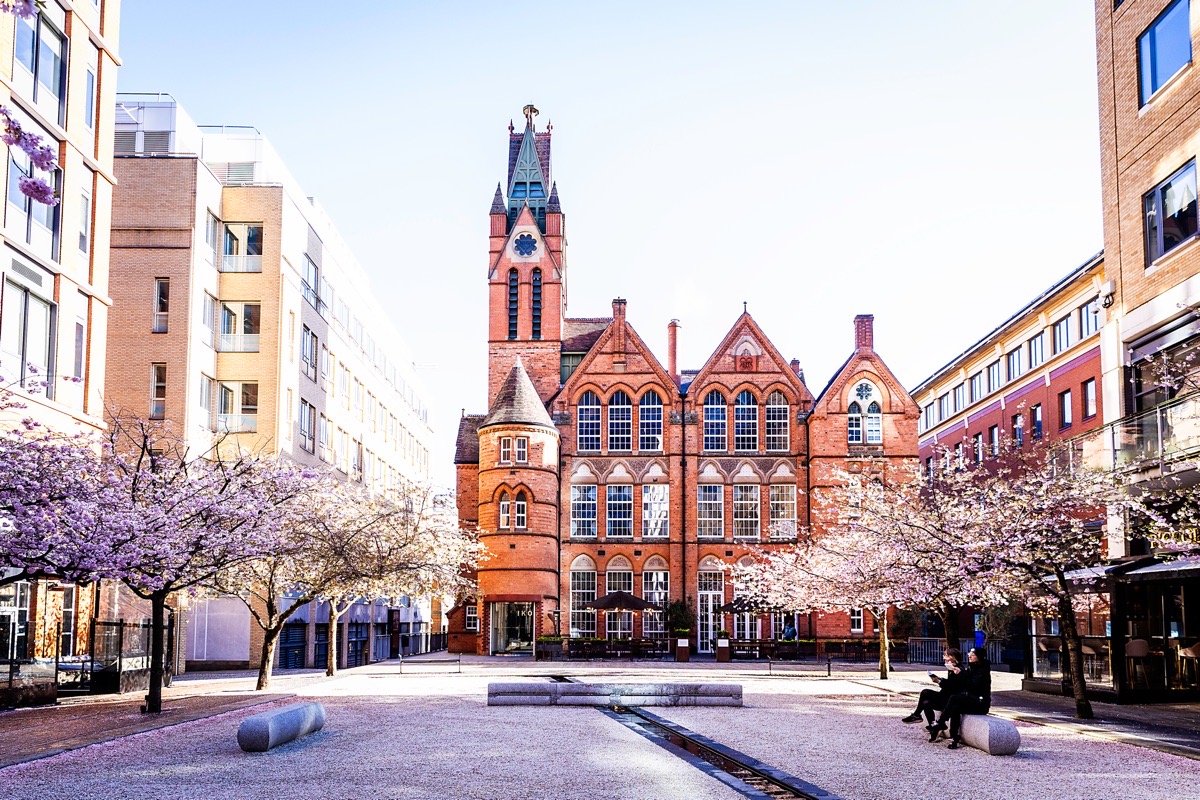
Each spring, Oozells Square in Birmingham is transformed by a brief but beautiful display of cherry blossom. In this reflective piece, I capture the fleeting nature of the season, the atmosphere of the square, and the photographic opportunities created by light, colour, and passing moments.
Birmingham Light Festival is back for its second year, brightening up Valentine’s weekend. The nights are still dark; the weather has been wet for so long that a burst of colour and light is exactly what is required to lift the mood before spring finally arrives.
I signed up for a photo walk organised by IgersbirminghamUK as part of the Birmingham Light festival. Our mission was to cover as many installations as possible on foot. Birmingham is a big city, but the artworks are placed at key spots, each linked by a brisk 5 to 10 minute walk.
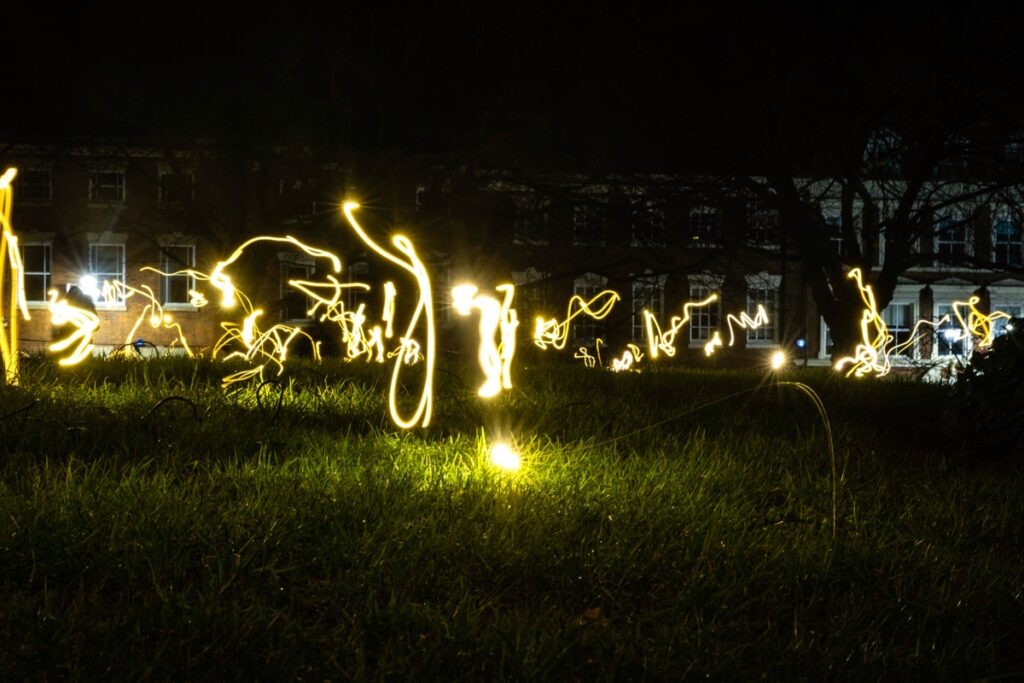
Firefly Field We met at St Paul’s Church, where the lawn shimmered with tiny moving lights. Up close, they revealed themselves as hundreds of glowing points gently “dancing” in the dark. This ‘Firefly Field’ looked magical to the eye, but photographing the movement was a challenge. A tripod and long exposure did the trick, turning the flickers into sweeping trails of light.
Firefly Field Long Exposure – Long-exposure light trails showing the movement of firefly-style lights at Birmingham Light Festival.
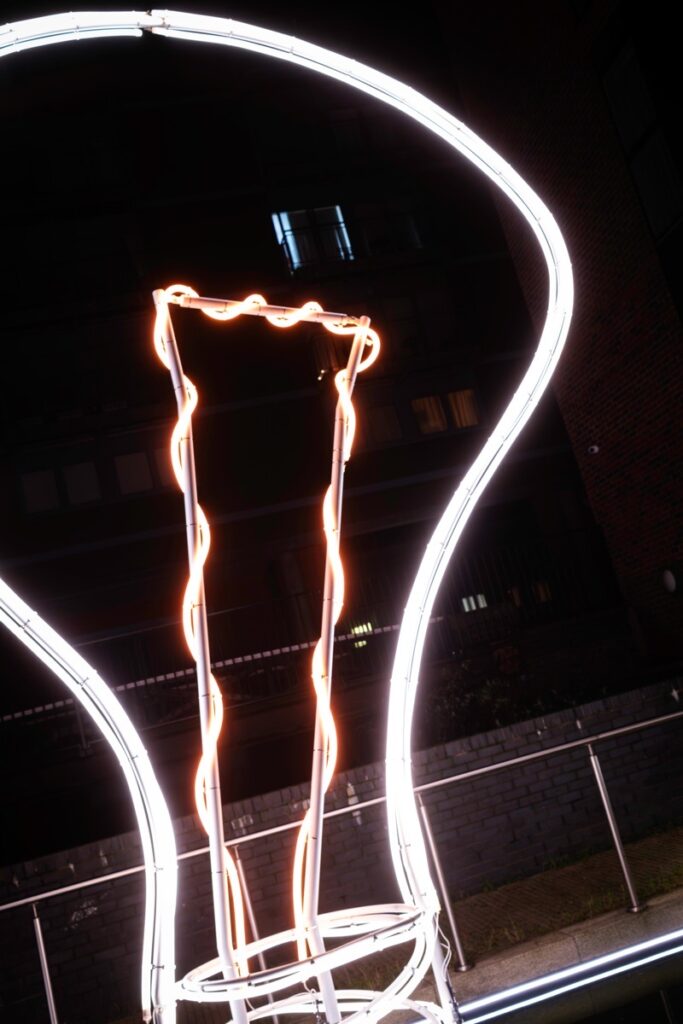
Ideas Happen Here Our next stop was Newhall Square hear to the canal. Here, a giant glowing lightbulb sat beside a reflection pool. The artwork was bold, playful, and perfect for photography. The reflections doubled the impact, offering endless composition options. I had seen this at last year’s Birmingham Light Festival, but it still felt fresh when viewed for a second time.
Ideas Happen Here – Large illuminated lightbulb sculpture at Newhall Square during Birmingham Light Festival.
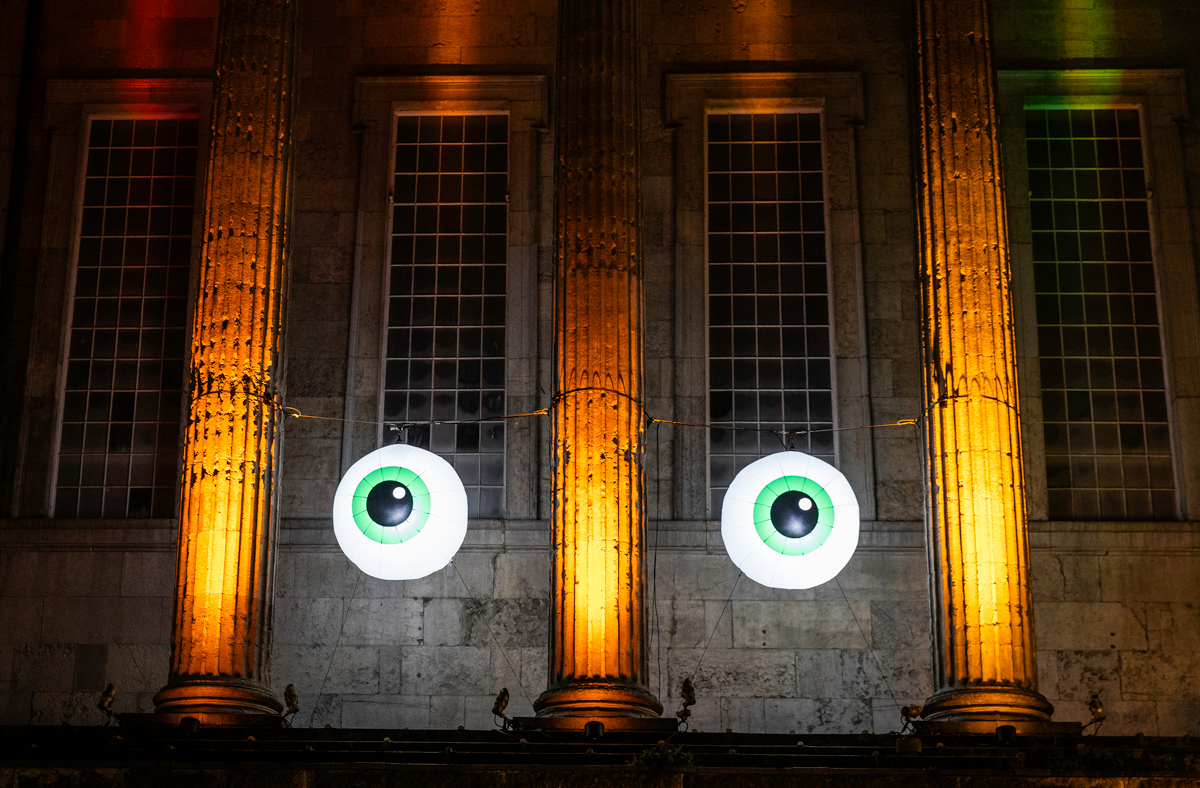
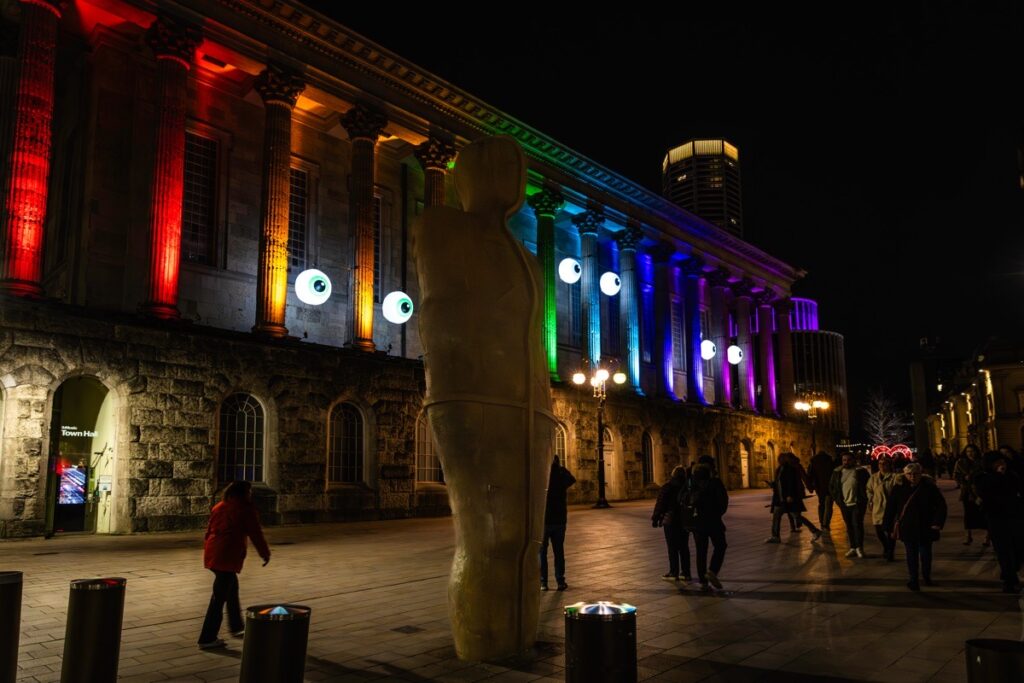
Victoria Square Victoria Square was packed with activity. In nearby Chamberlain Square, a giant Valentine’s heart glowed for the selfie crowd. Meanwhile, Birmingham Town Hall was watched over by huge, illuminated eyes. These were quirky and slightly surreal surrounded by the columns which were lit in shifting colours.
All Eyes on the Town Hall – Giant illuminated eyes on the Birmingham Town Hall look down on Iron:Man.
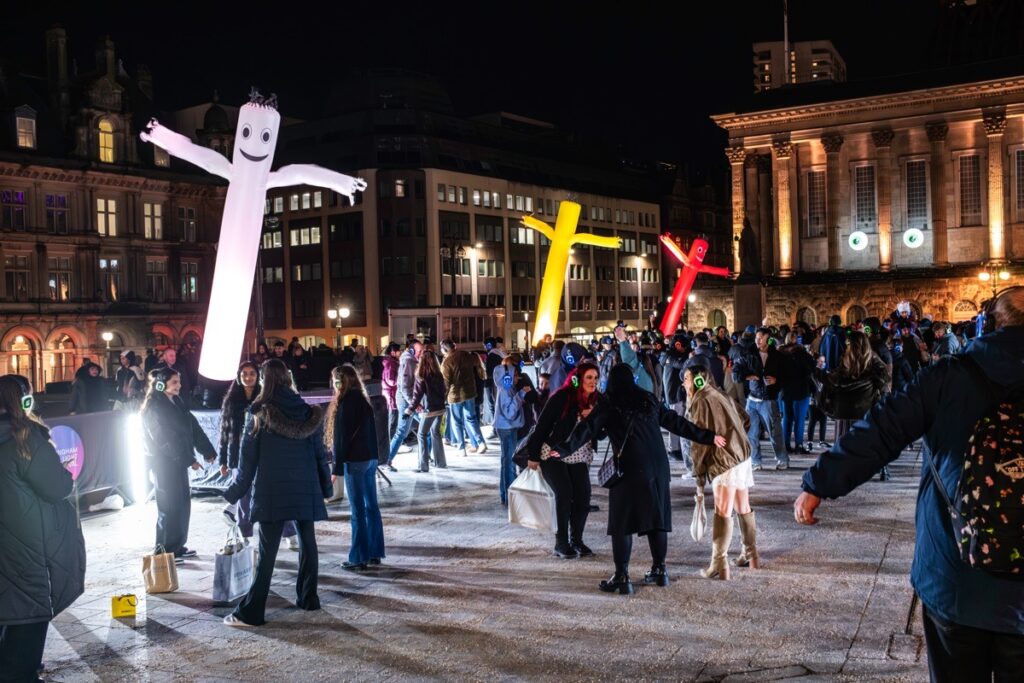
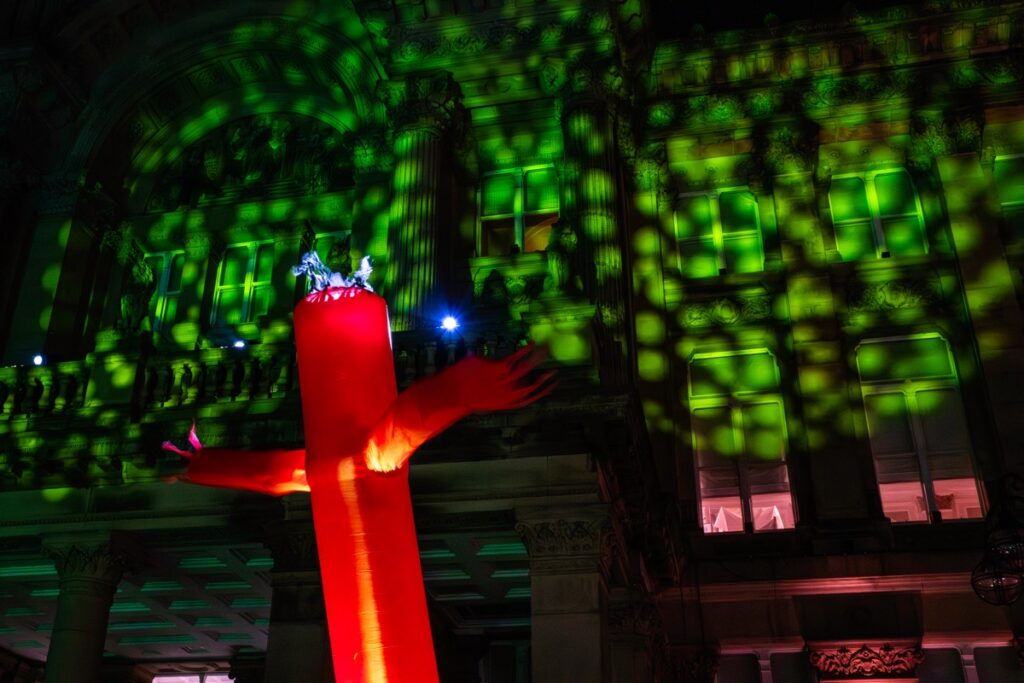
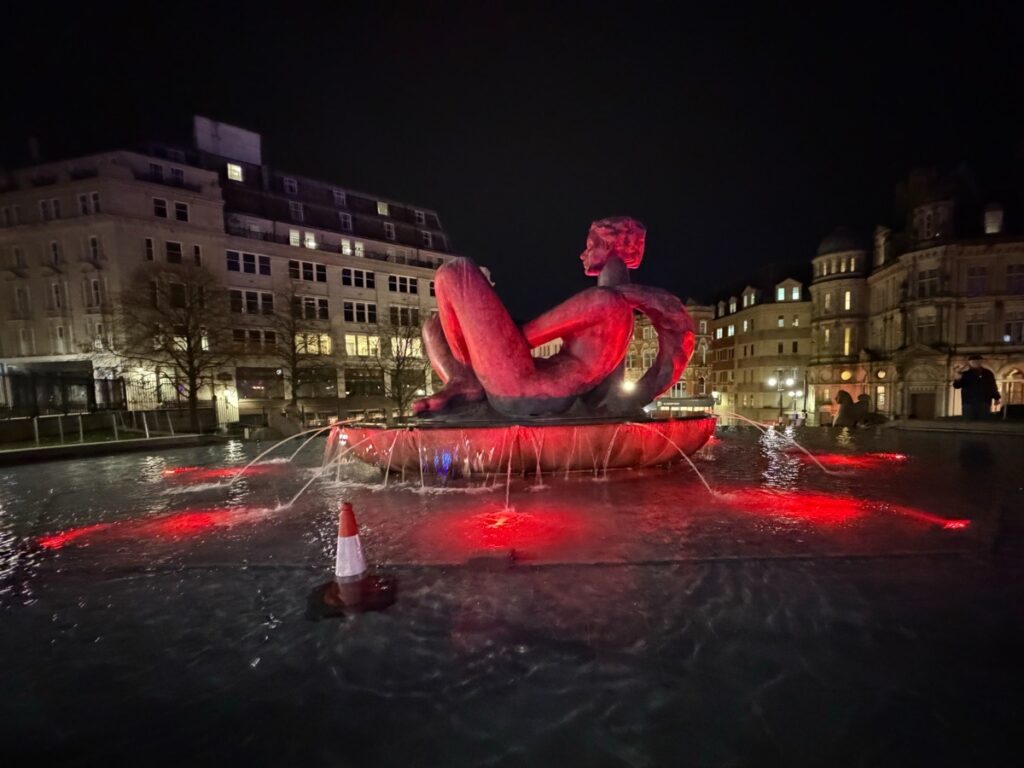
In the square, a silly statues x silent disco was in full swing. Dozens of people danced freely in total silence, headphones glowing. Light projections covered the Council House, inflatable figures waved overhead, and the whole scene felt wonderfully absurd. Even the Floozie in the Jacuzzi looked extra glamorous for the Birmingham Light Festival.
Silent Disco Crowd – People dancing with glowing headphones during a silent disco in Victoria Square at night.Birmingham Light Festival with a balloon man dancing in front of the Council House.Birmingham Light Festival – the Floozie in the Jacuzzi.
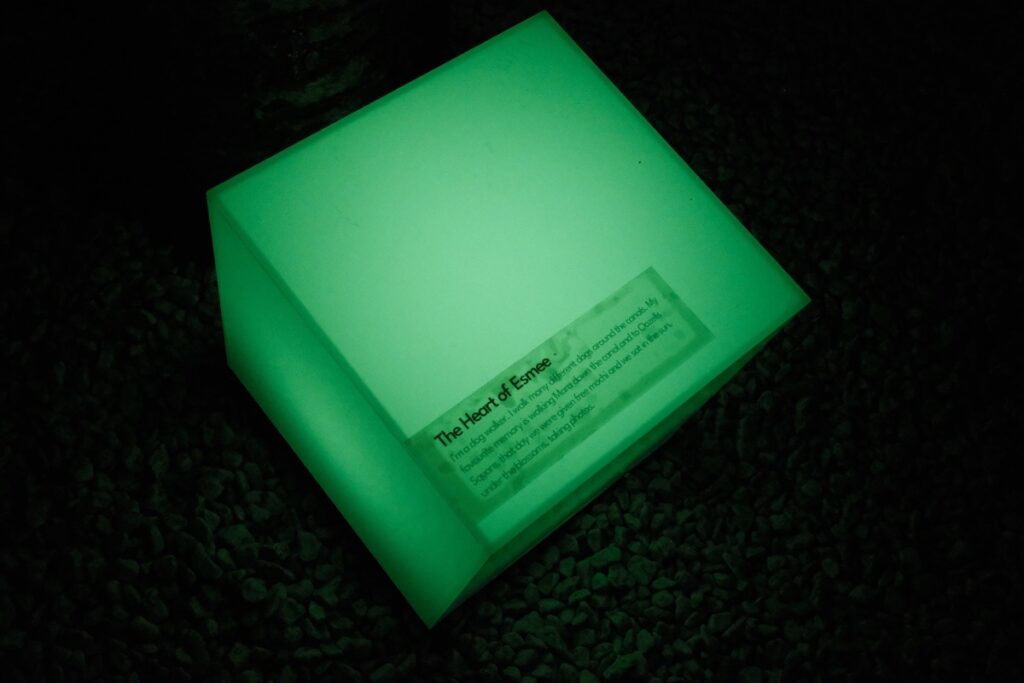
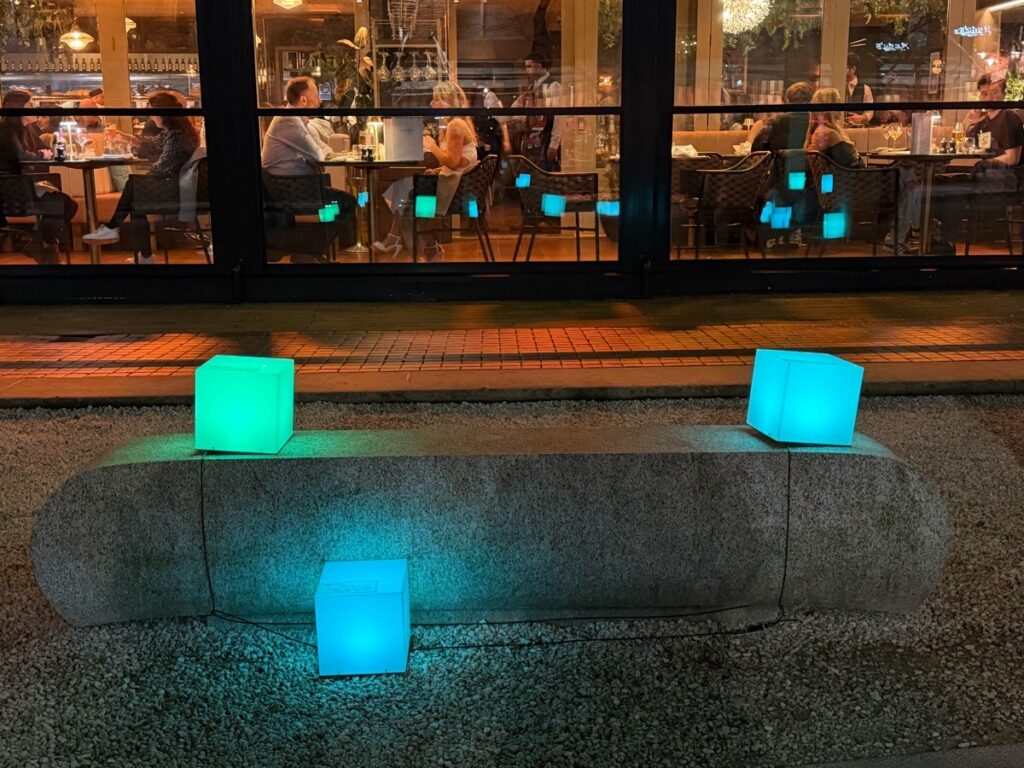
The Heartbeat of Brindleyplace After more walking, we reached Oozells Square, where glowing green boxes pulsed gently with real human heartbeats from across the city. Each box represented a person going about their day creating a strangely intimate and surprisingly moving concept. Capturing their reflections in nearby restaurant windows added another layer of storytelling.
Heartbeat of Brindleyplace – Green glowing boxes pulsing with light in Oozells Square pulsing in time with real human heartbeats.Birmingham Light Festival – beating hearts reflected in a restaurant window.My Beating Heart
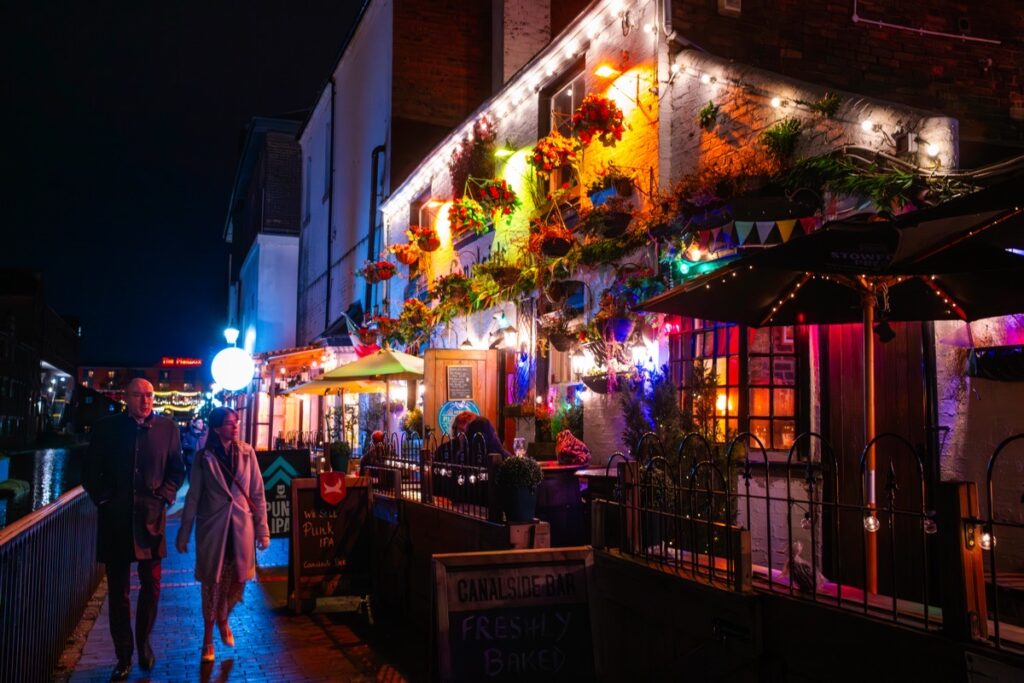
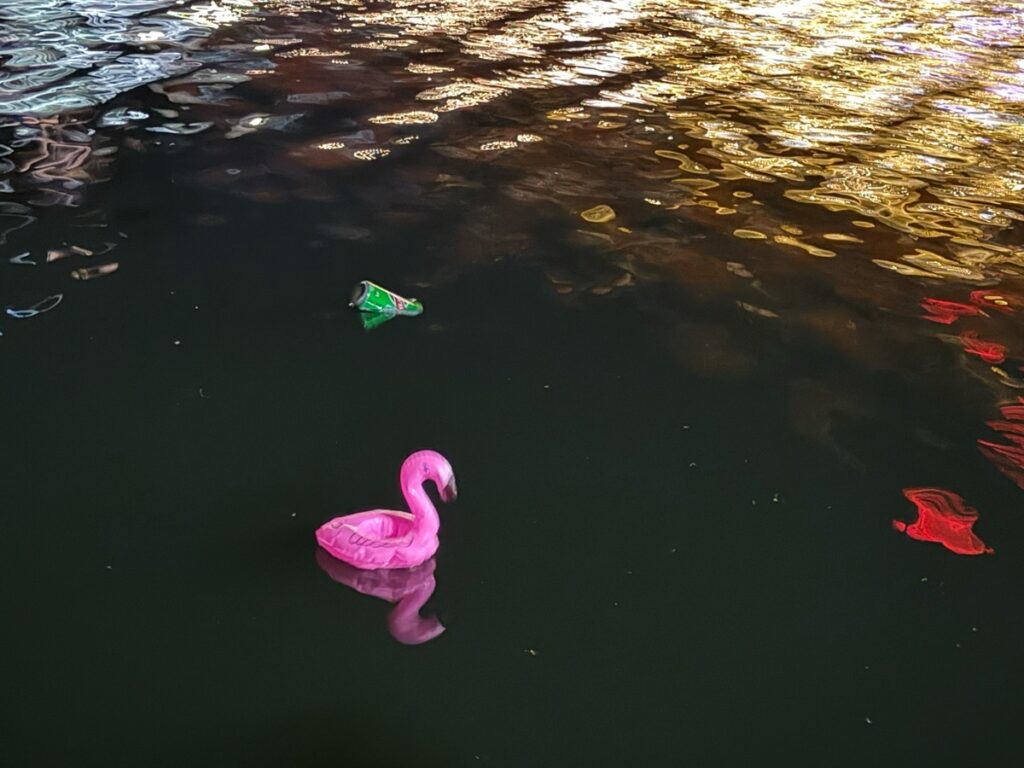
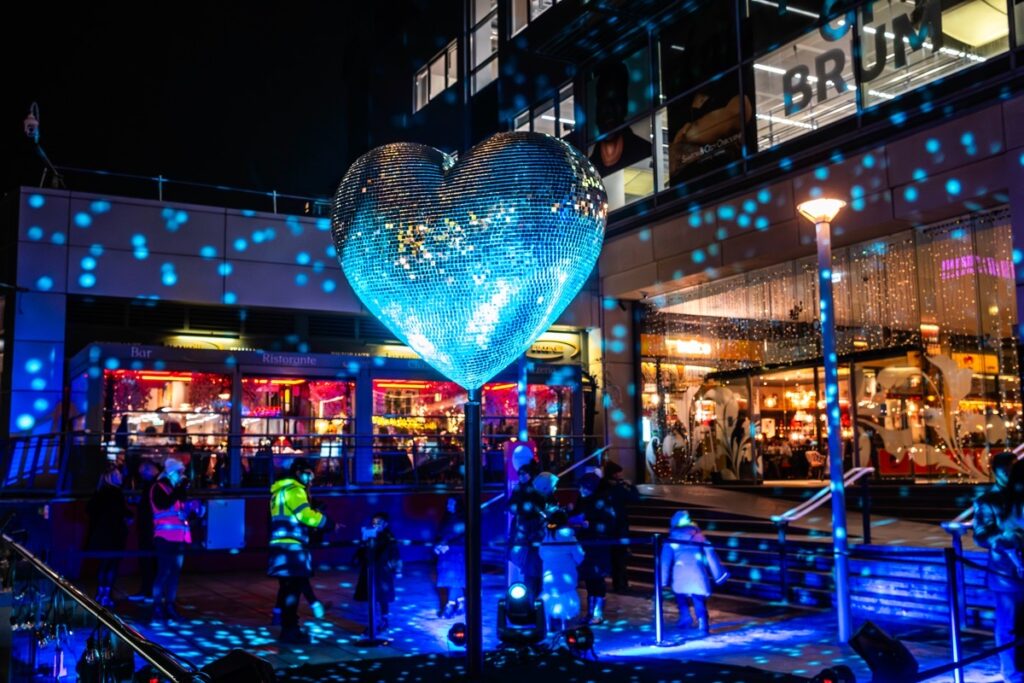
Our Beating Heart The walk between the artworks became part of the experience as we headed off towards the Mailbox. There were canal reflections, glowing restaurant lights, and even a rogue flamingo hat floating in the water. At the Mailbox, we found a giant illuminated heart installation. I preferred the Heart’s past location at Snow Hill where there is more space, but it still made an eye-catching stop for photography.
Brightly lit restaurants along the canal water near the Mailbox in Birmingham.Birmingham Light Festival – whose flamingo hat is this?Our Beating Heart Installation – Large illuminated heart sculpture displayed on the steps at the Mailbox.
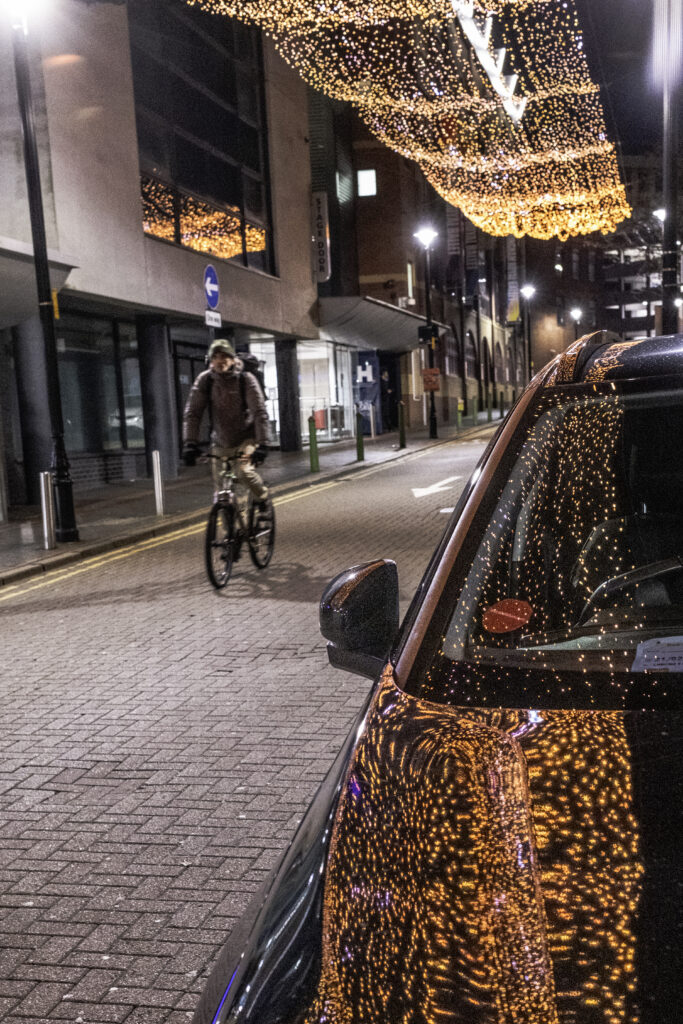
Roof of Stars On Thorp Street outside Birmingham Hippodrome’s stage door, strings of star-like lights stretched overhead They are beautiful to see, but tricky to photograph. Thankfully, some shiny parked cars nearby provided perfect reflective surfaces.
Roof of Stars – Overhead canopy of star-like lights suspended across Thorp Street.
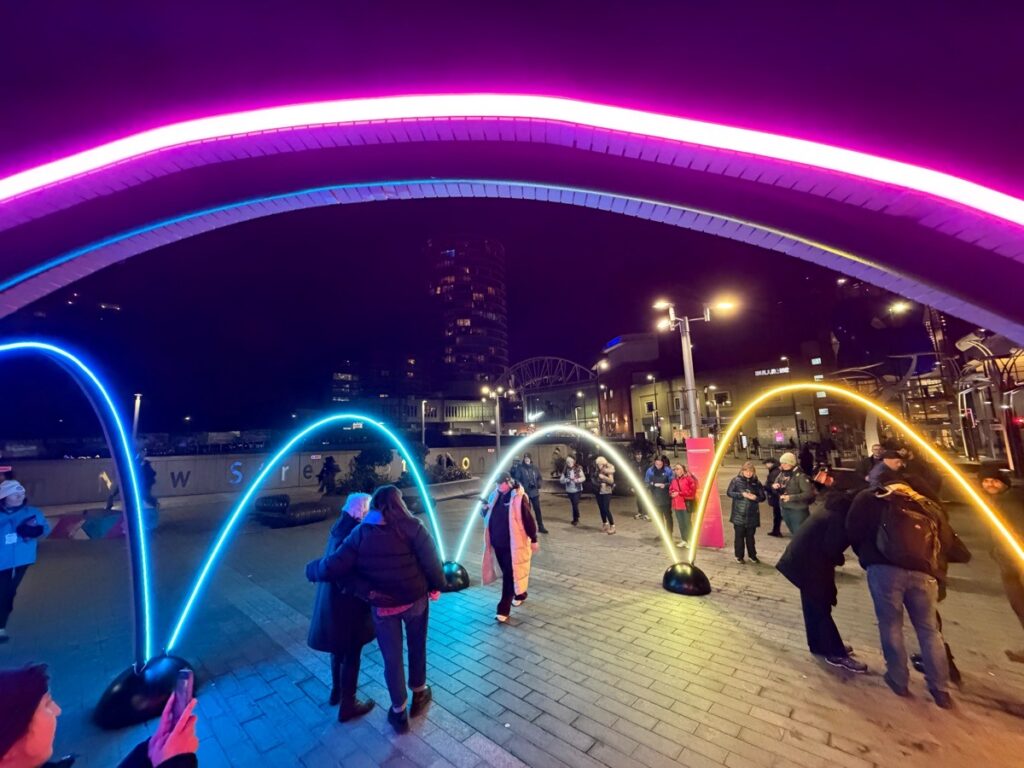
Reunion Back to our walk and the 1,000 trades square had arches of light symbolising connection between people. The colourful arches outside New Street station symbolised reunions and framed the streams of passing travellers. This was a dream place for street photography with light, movement, and real human moments all in one place.
Reunion Light Arches – Glowing archway installation near Birmingham New Street Station with people walking underneath.
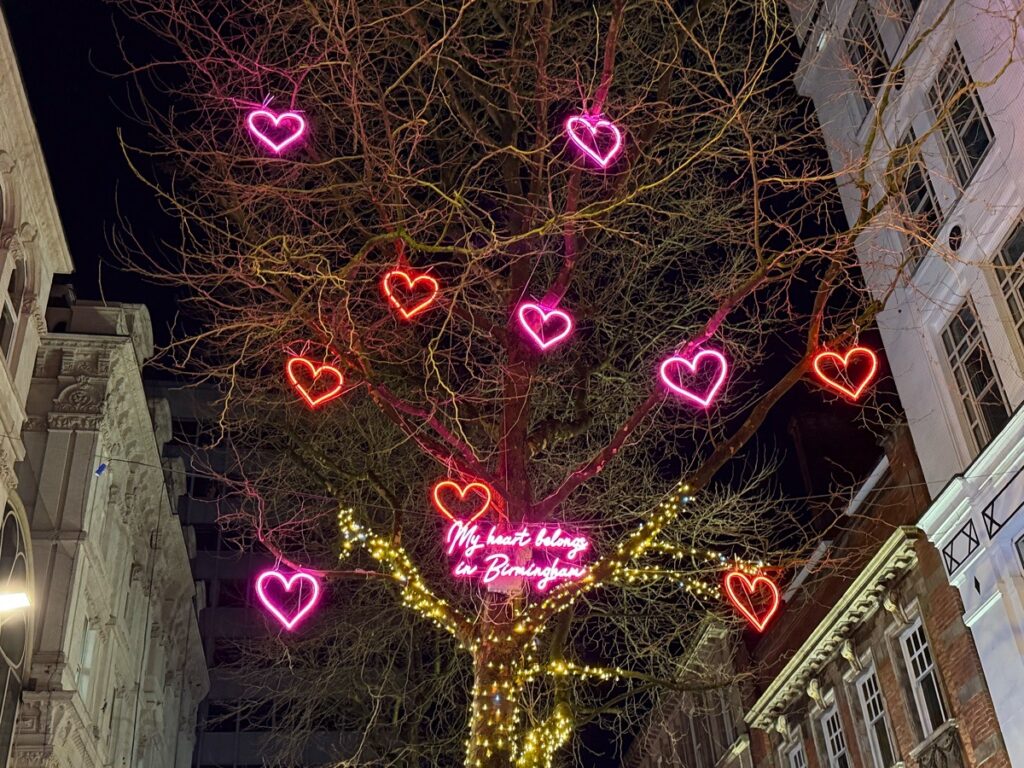
My Heart Belongs in Birmingham By now, my legs were protesting, but there was time for one final stop. Tucked into a tree near the Shakespeare pub were glowing hearts withthe “Instagram-ready” slogan, “My heart belongs in Birmingham. We joined the long line of photographers capturing the same shot but it was worth it.
My Heart Belongs in Birmingham – Illuminated heart shapes hanging in a tree on Lower Temple Street.
Huge thanks to Nadia, Kasim, and Jack from IgersbirminghamUK for leading such an energetic tour of the Birmingham Light Festival. Covering that much ground and that many installations in one evening was seriously impressive.
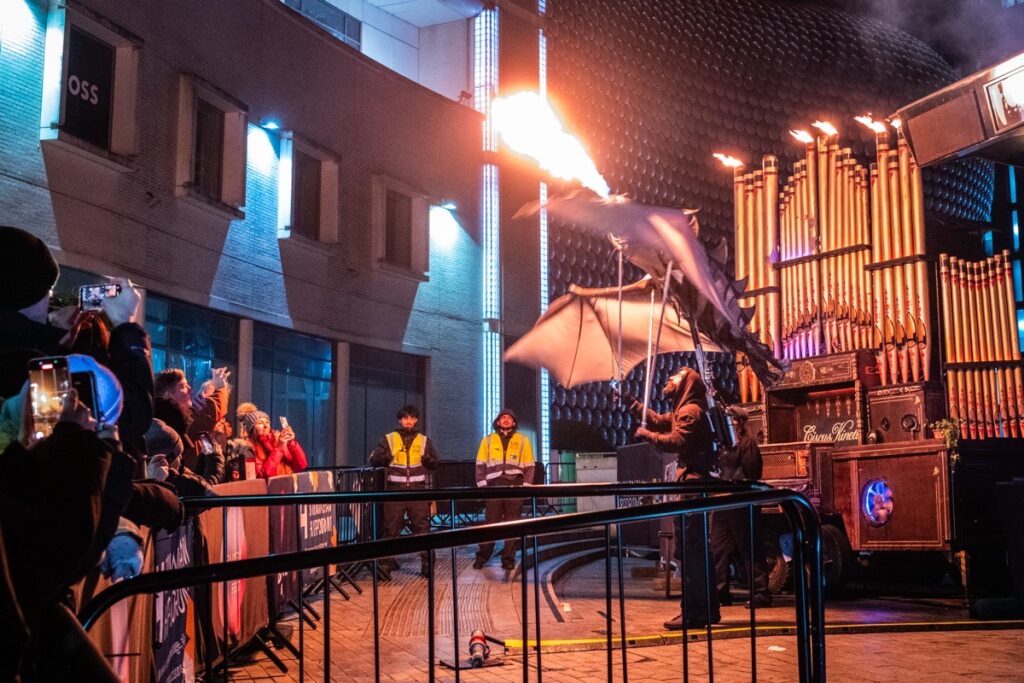
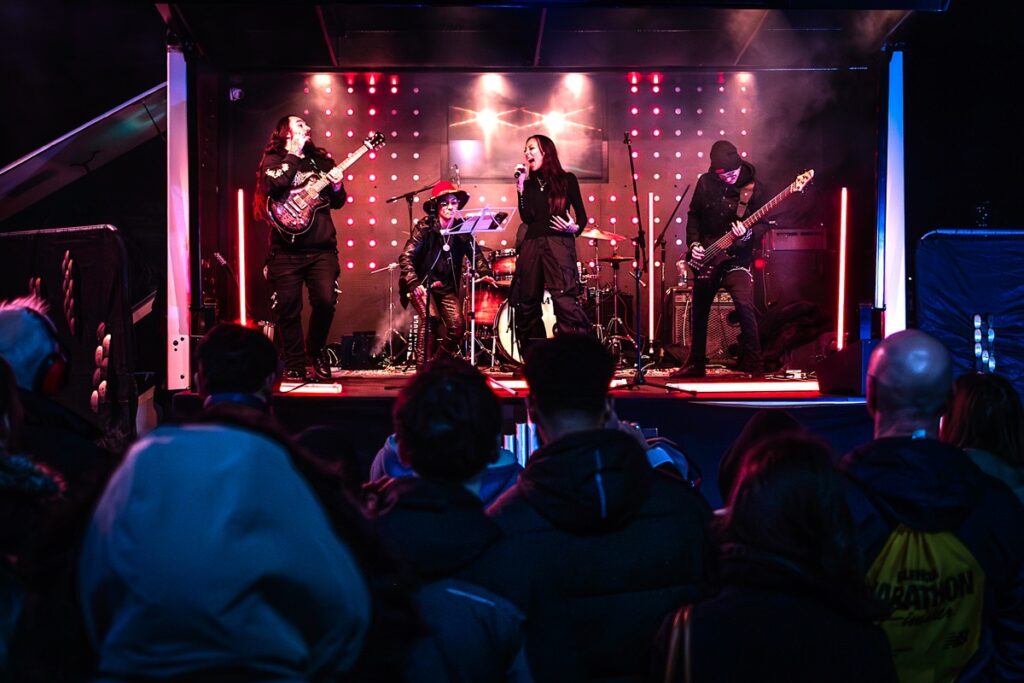
FORGED I returned the following night to catch a fiery animatronic installation featuring pounding industrial music (Insurgent), flame effects, and dramatic mechanical movement. It perfectly captured Birmingham’s industrial heritage brash and noisy, it was spectacular and impossible to ignore.This year’s festival clearly built on the success of the first. If this is the direction that the Birmingham Light Festival is heading, then it will be a highlight of Birmingham’s winter calendar for years to come.
FORGED – Fiery animatronic installation with flames and industrial lighting effects at Birmingham Light Festival.The fire breathing bat at FORGEDInsurgent playing at the FORGED art installation. I would love to hear them again.Insurgent at FORGED
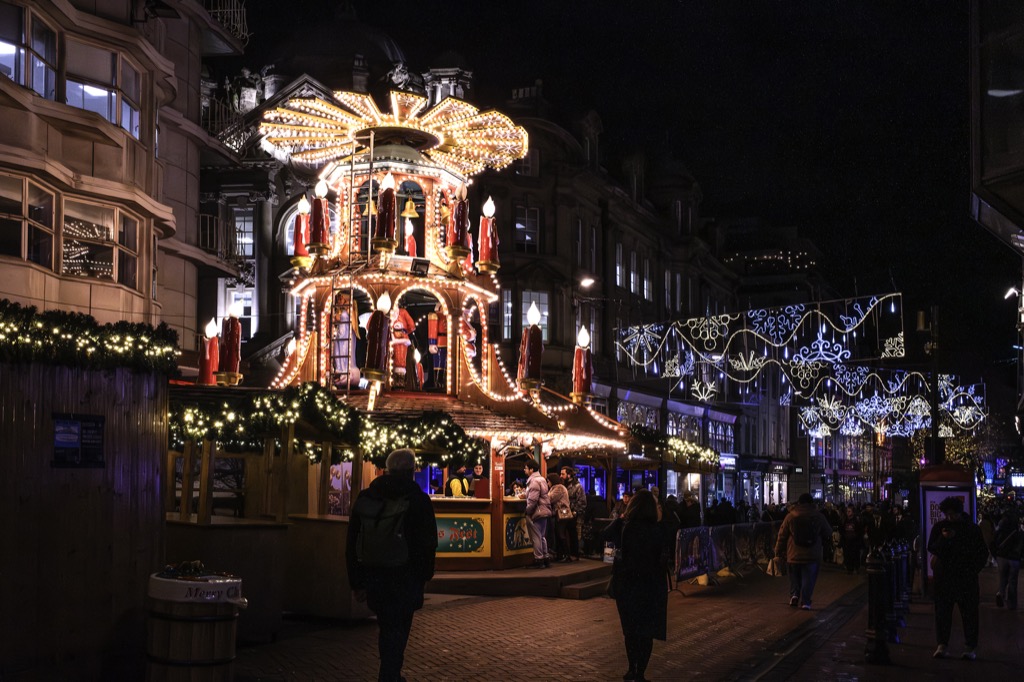
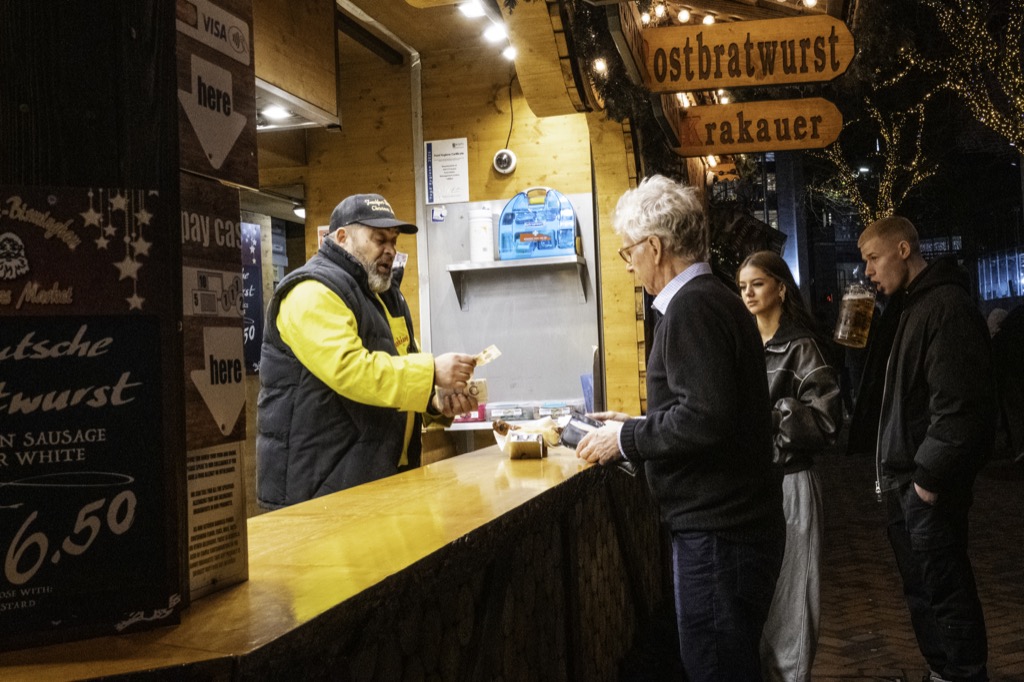
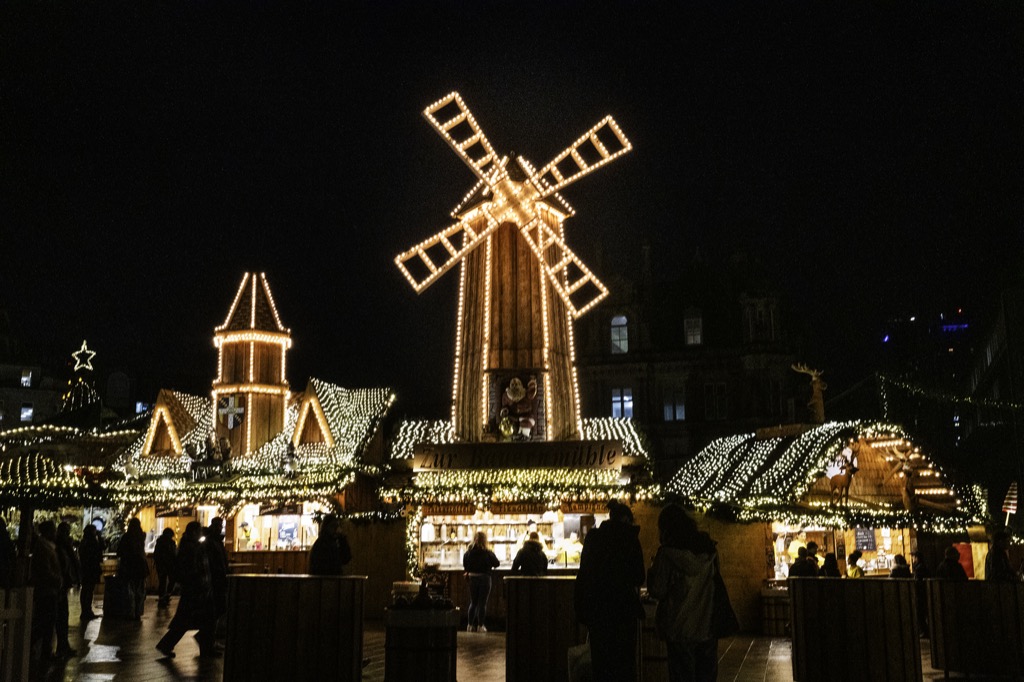
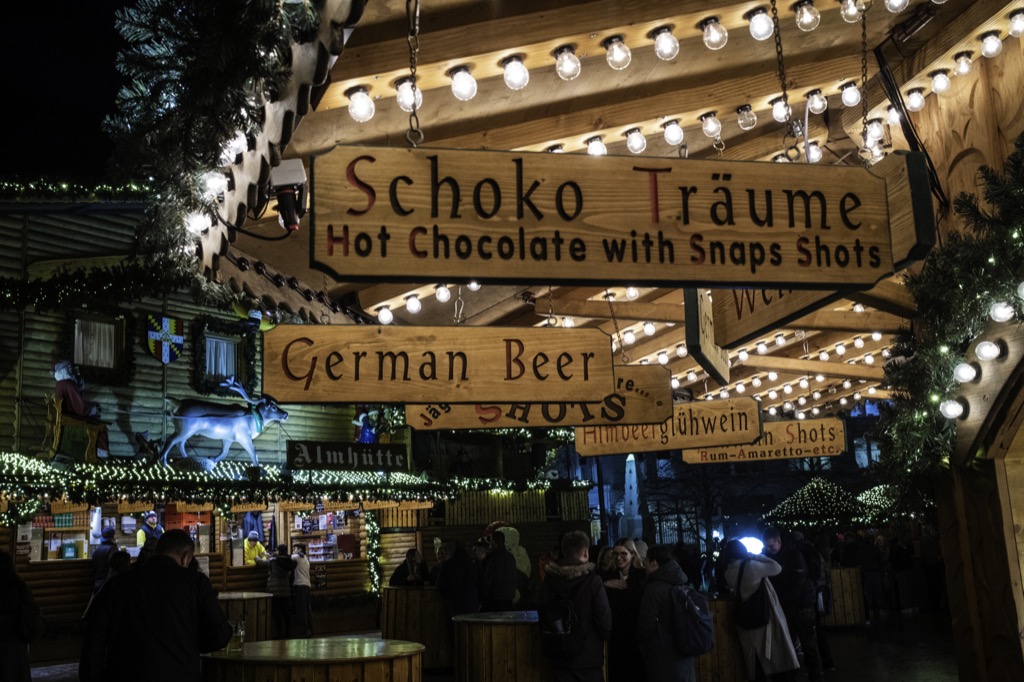
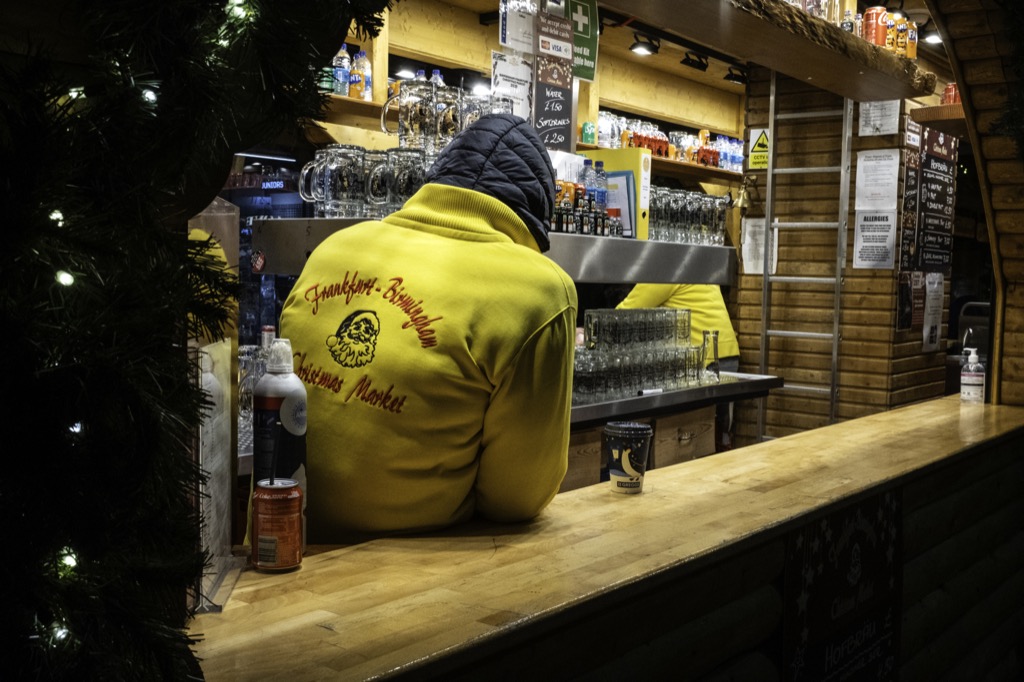
Every year, the Birmingham Christmas markets take over the city centre. Visitors come to enjoy festive food, warming drinks, and the lively atmosphere created by the stalls. While prices can be high, knowing what to expect makes the experience enjoyable, although deep pockets do help.
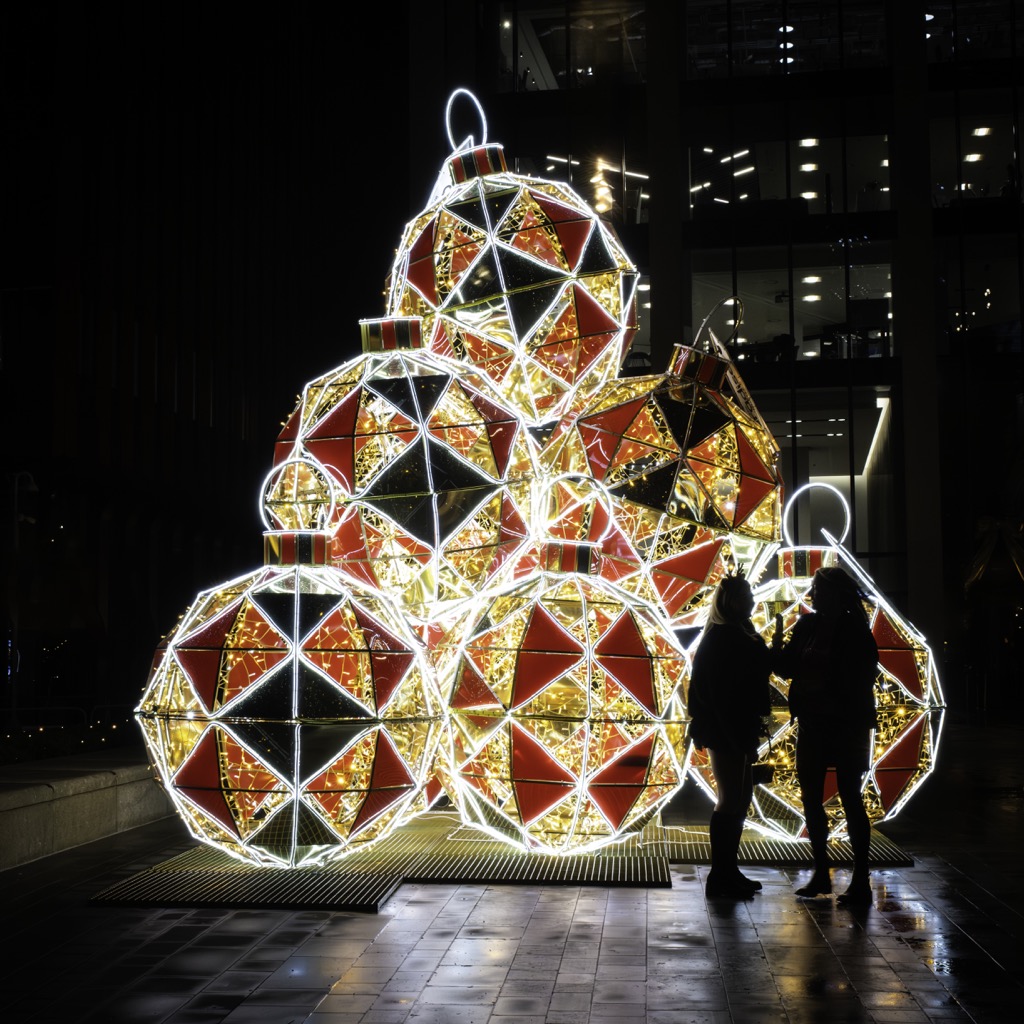
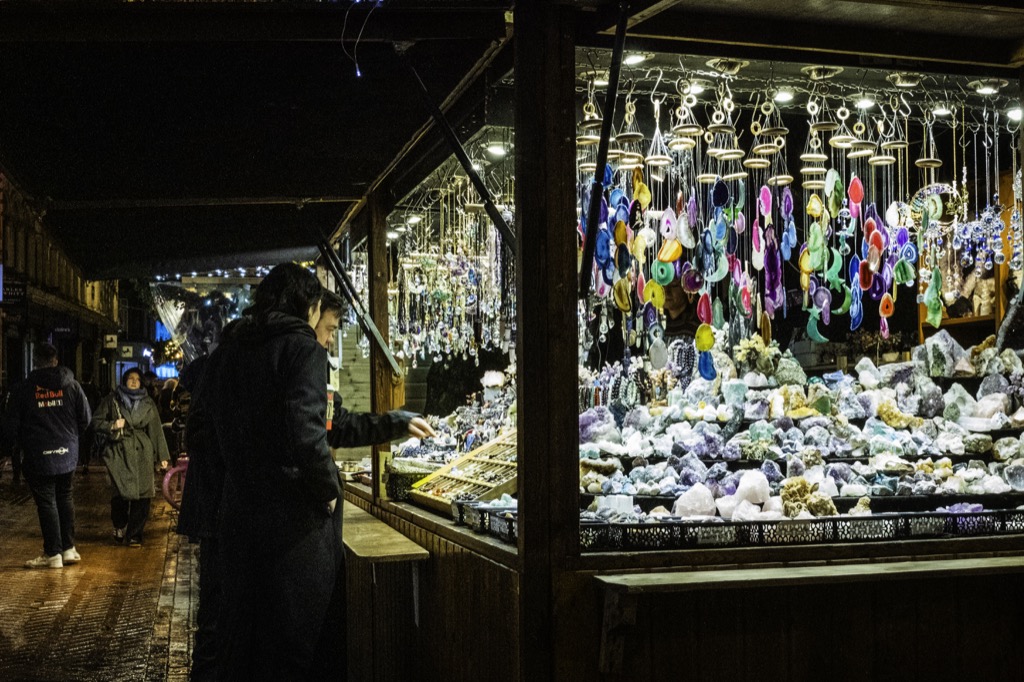
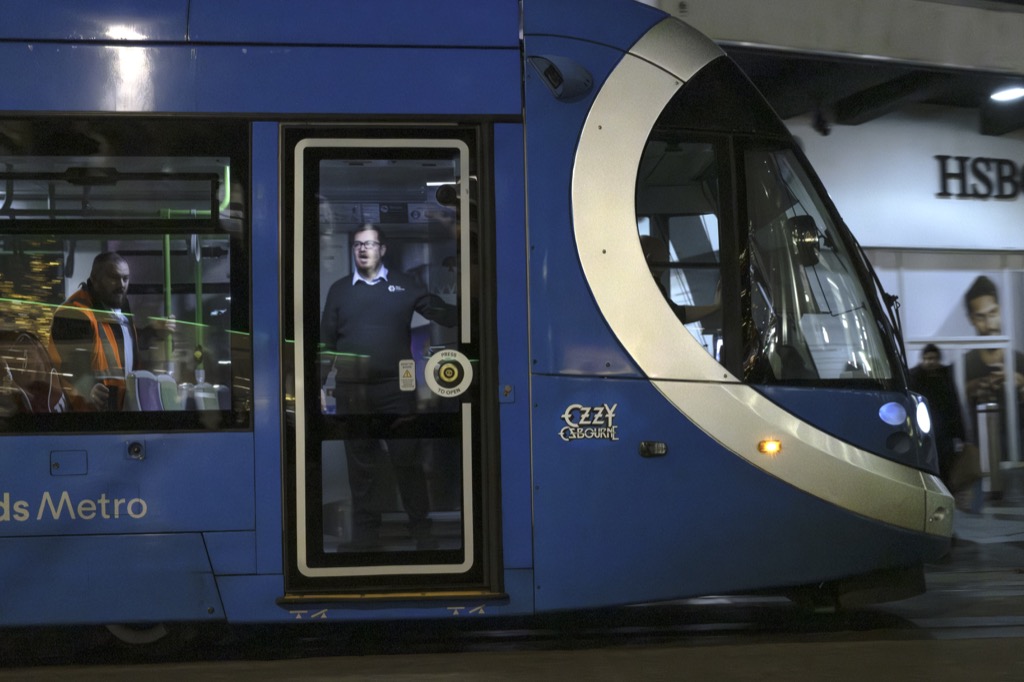
The classic decorations along Birmingham New Street.there are many stalls selling Christmas gifts.Buying that expensive food and drink. Prices on display.Walking along New Street.I captured the conductor on the tram. who seems to be singing a Black Sabbath song for Christmas.
Cathedral Square and Colmore Row
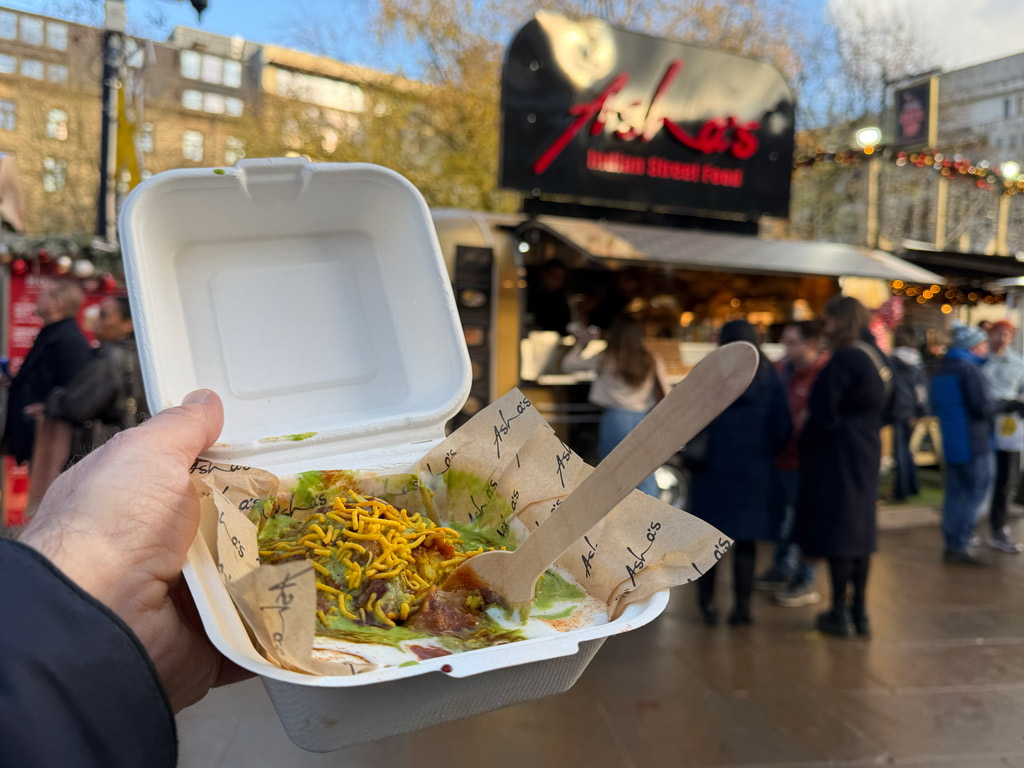
The Cathedral Market is my preferred part of the Birmingham Christmas markets. It is better organised than along New Street and uses the footpaths around St Philip’s Cathedral, which makes it easier to walk around. The food stalls here are linked to the Colmore Row business district, giving this area a calmer and more relaxed feel. This year, Asha’s has a stall in the square, and the food is excellent. Another popular stop is the pop-up pub Pigeon in the Park, which is always busy and adds to the festive spirit.
I visited Cathedral Square during the day and sampled some fine street food.
Lights, Rides, and Winter Attractions
As the nights grow darker, the Christmas lights across the city shine even brighter. They look especially impressive around Victoria Square and Chamberlain Square, where the decorations draw large crowds.
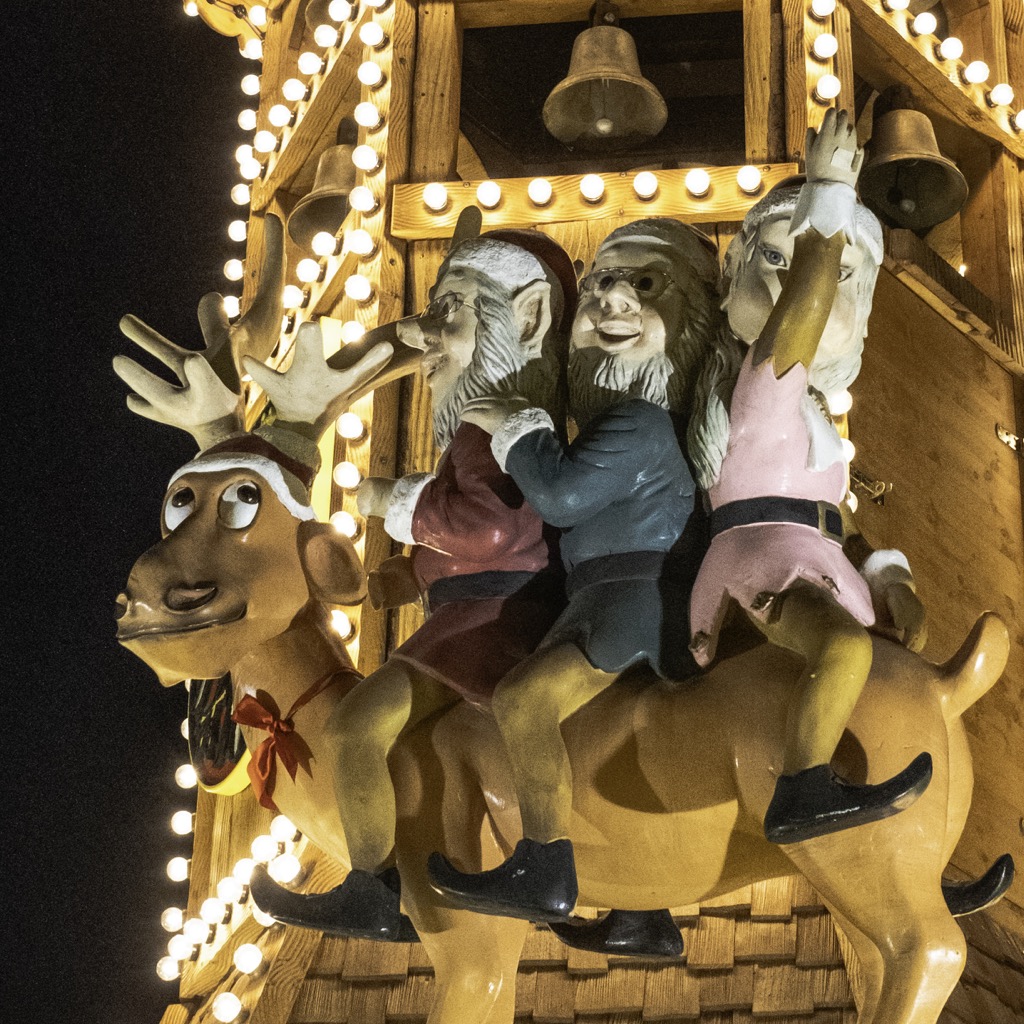
Victoria Square looking festive.Ho, Ho, Ho!Lots of Choice to be had.
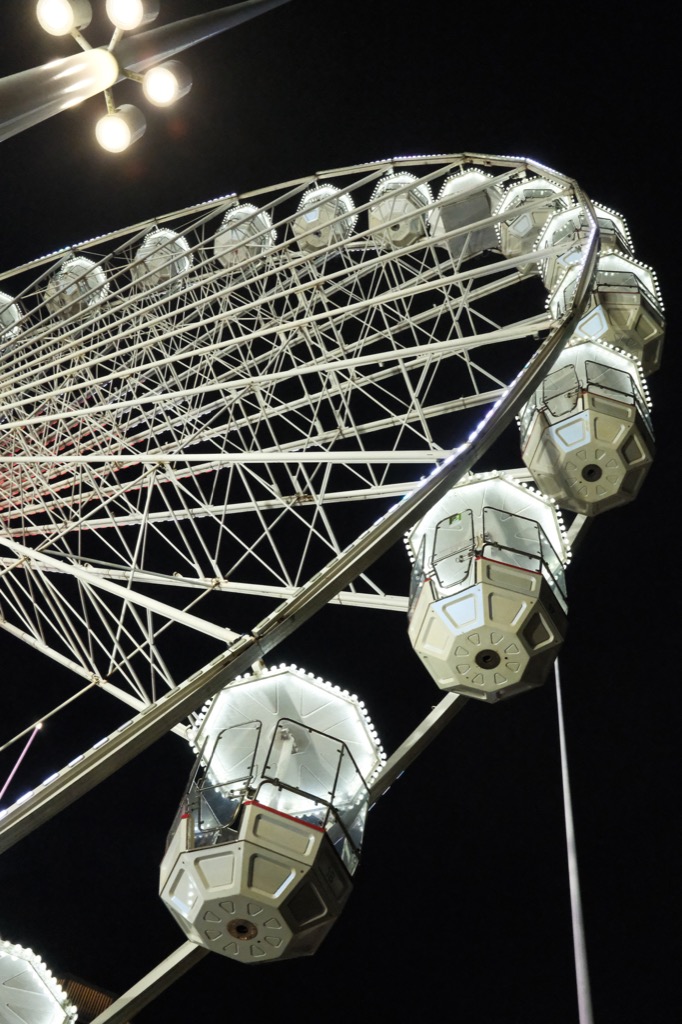
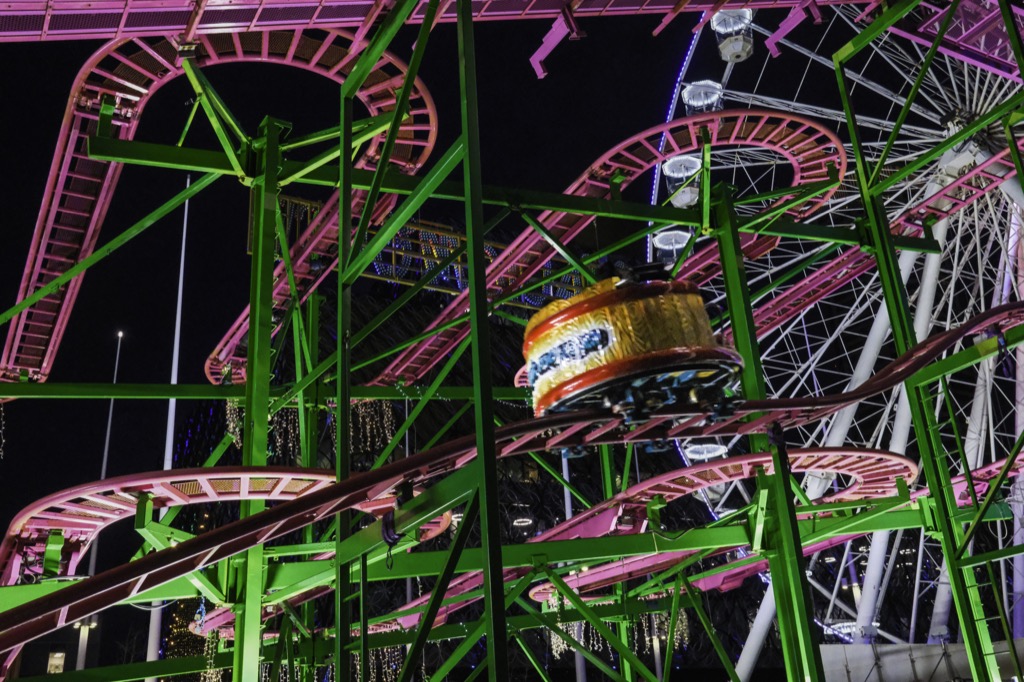
Over in Centenary Square, the big wheel dominates the skyline. Nearby, the Magic Mouse rollercoaster is entertaining to watch, although riding it may not be for everyone. The illuminate ride makes a great subject for photographs. The ice-skating rink is also packed most evenings, proving how popular these winter attractions are.
The big wheel.Mesmorising colours on the Wild Mouse rollercoaster.
Why the Birmingham Christmas Markets Still Work
Every year, I take time to wander around the Birmingham Christmas markets and the city itself, and I never tire of it. Although I often hear critical comments about Christmas in Birmingham, the crowds tell a different story. People clearly enjoy the atmosphere and the chance to celebrate the season together.
Below are a few photos of the markets and decorations. They are very different from the lights of London and show that Birmingham does Christmas in its own distinctive way.
Waiting for the punters.
Links
More Christmas links with London. There is also a blog describing the Birmingham market in 2023.
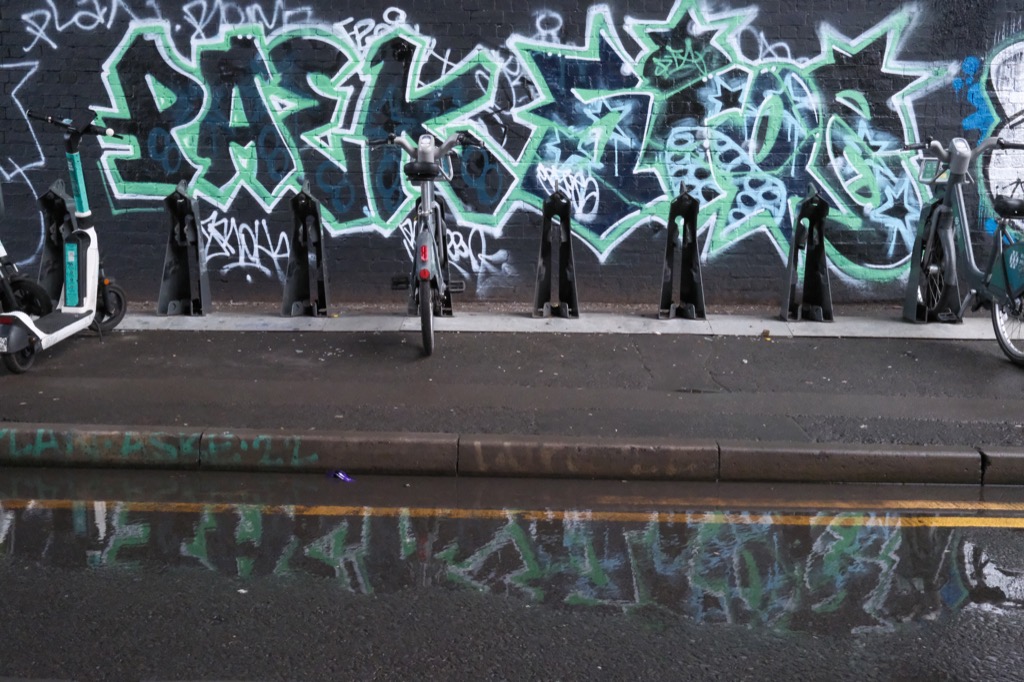
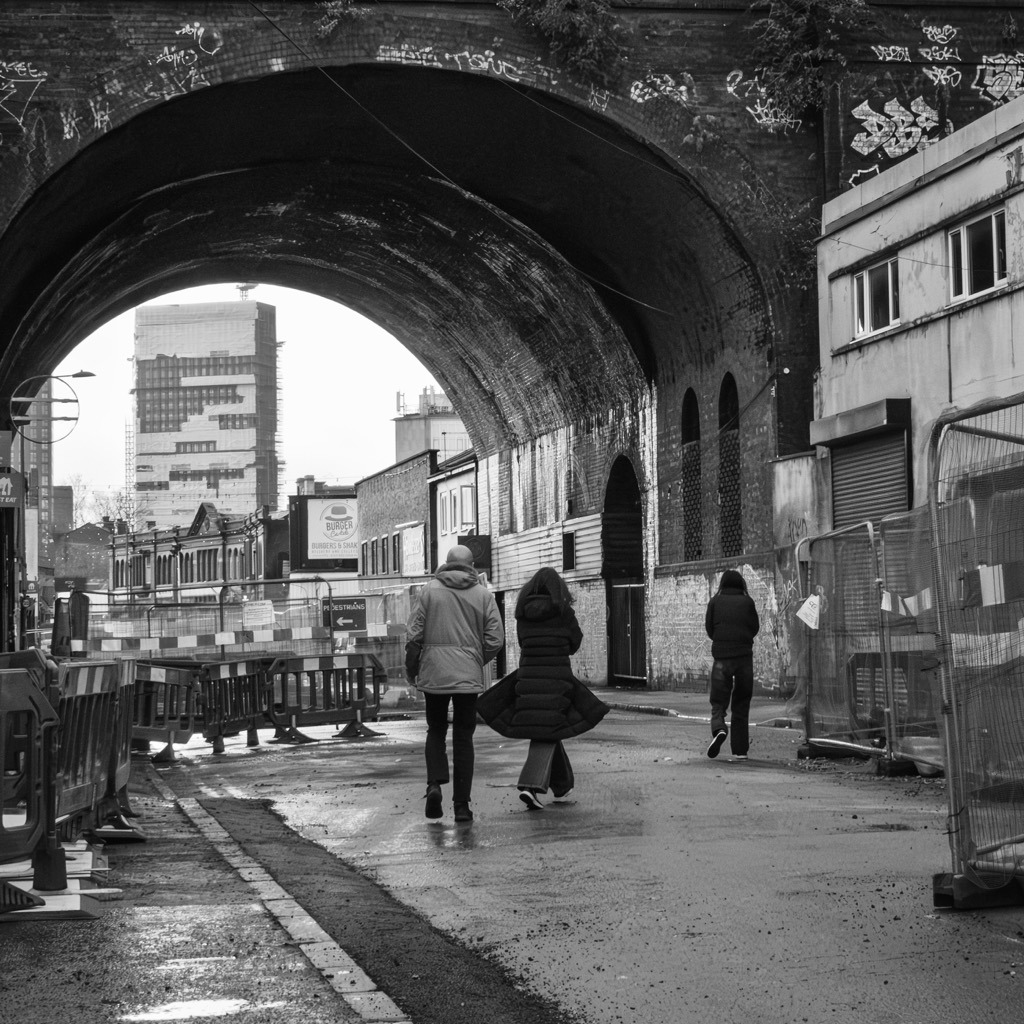
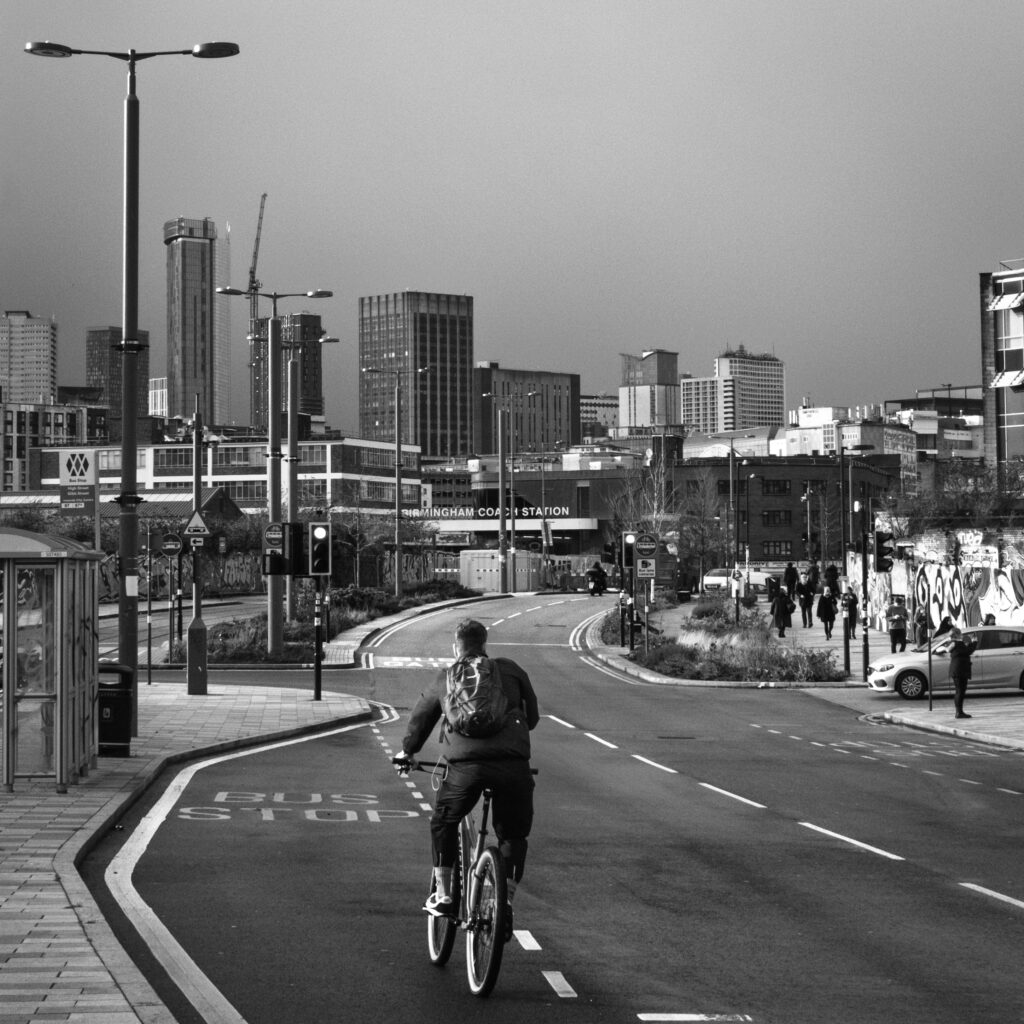
There is one certainty in Birmingham: Digbeth always changes. For anyone interested in Digbeth photography, this makes the area endlessly fascinating. New buildings appear, artwork evolves, and the streets never look the same from one visit to the next.
New Buildings Transforming Digbeth
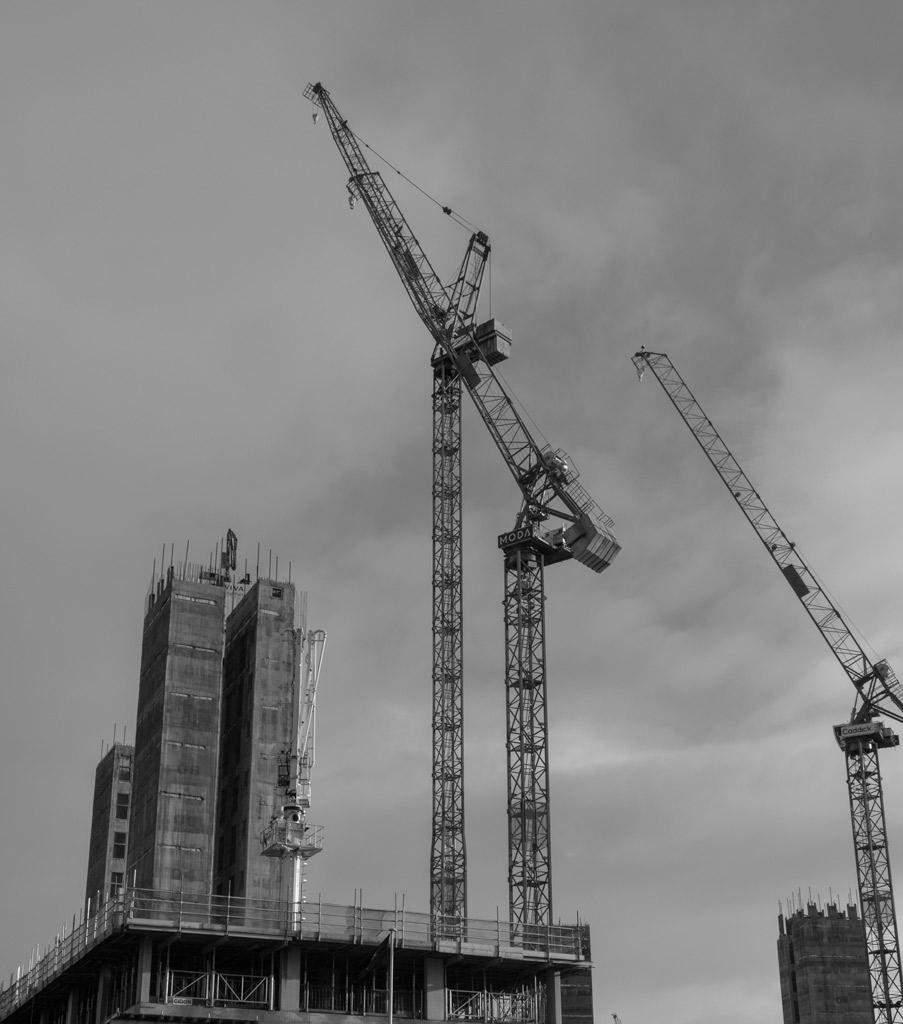
One of the most noticeable recent developments is the new block of flats being built opposite the Custard Factory. The building stands on the former site of the old Peugeot Garage and Irish Centre. From a photography point of view, this construction is already changing sightlines and creating new contrasts between old and new Digbeth. We wait and see if these contrasts are really beneficial to the area.
Cranes overlook Digbeth
As more people live closer to the city centre, Digbeth continues to evolve into a place where work, culture, and residential life sit side by side.
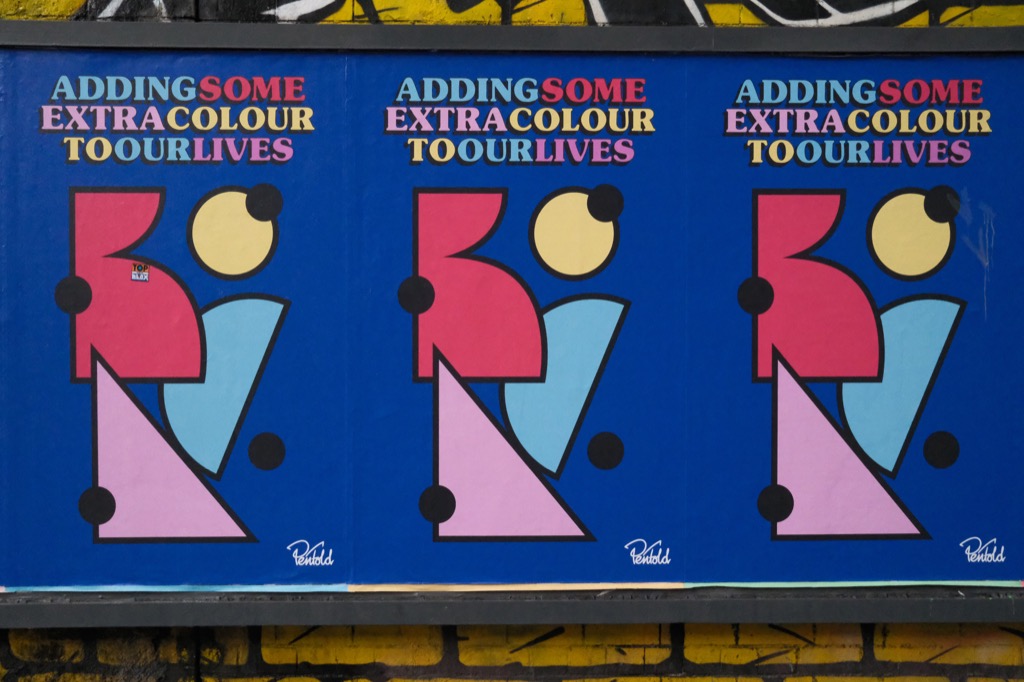
Digbeth adds extra colour to where we live. @MrPenfold
Street Art Through a Photographer’s Lens
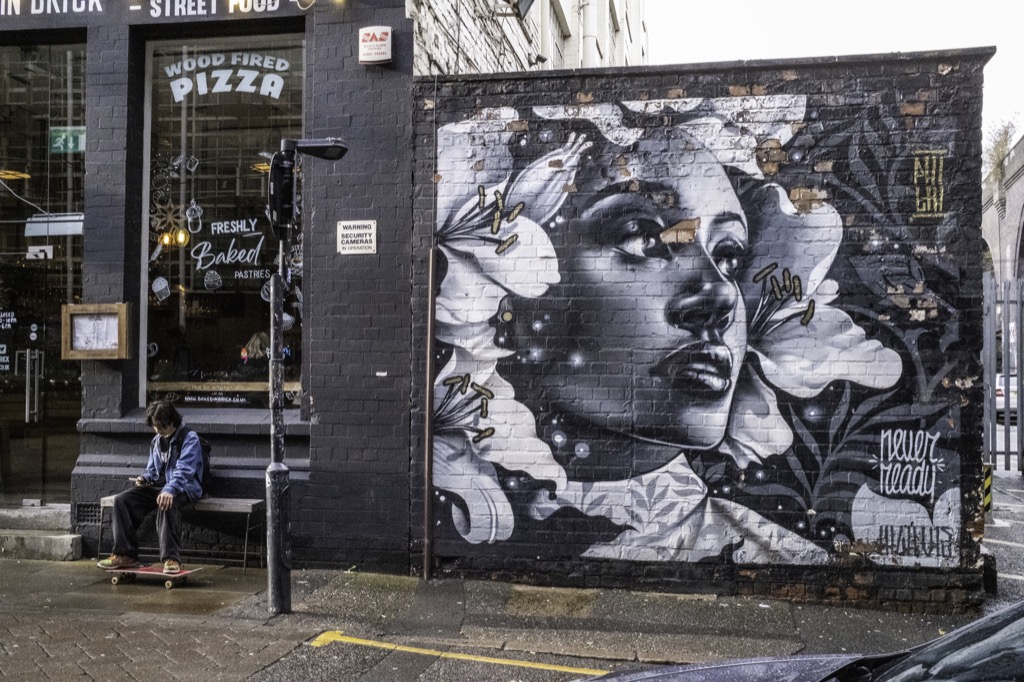
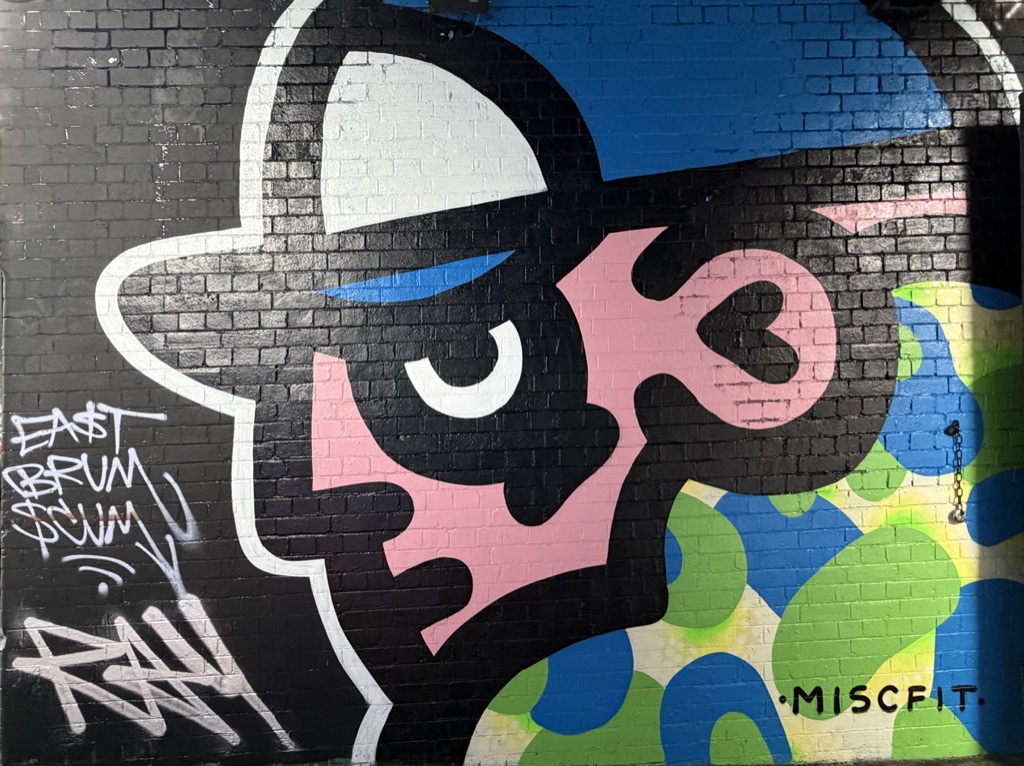
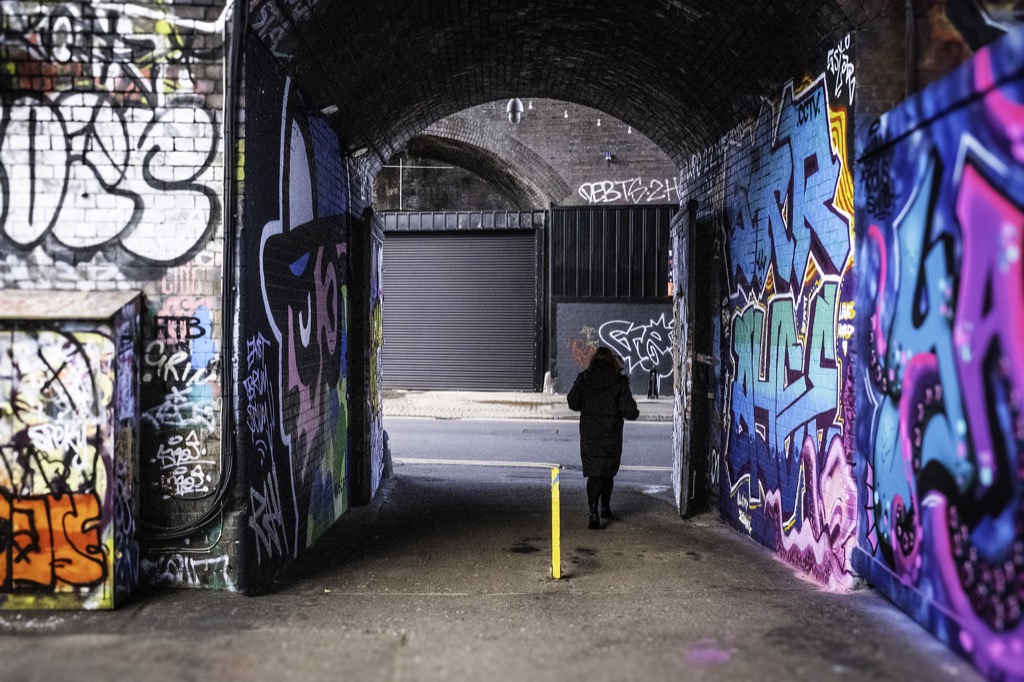
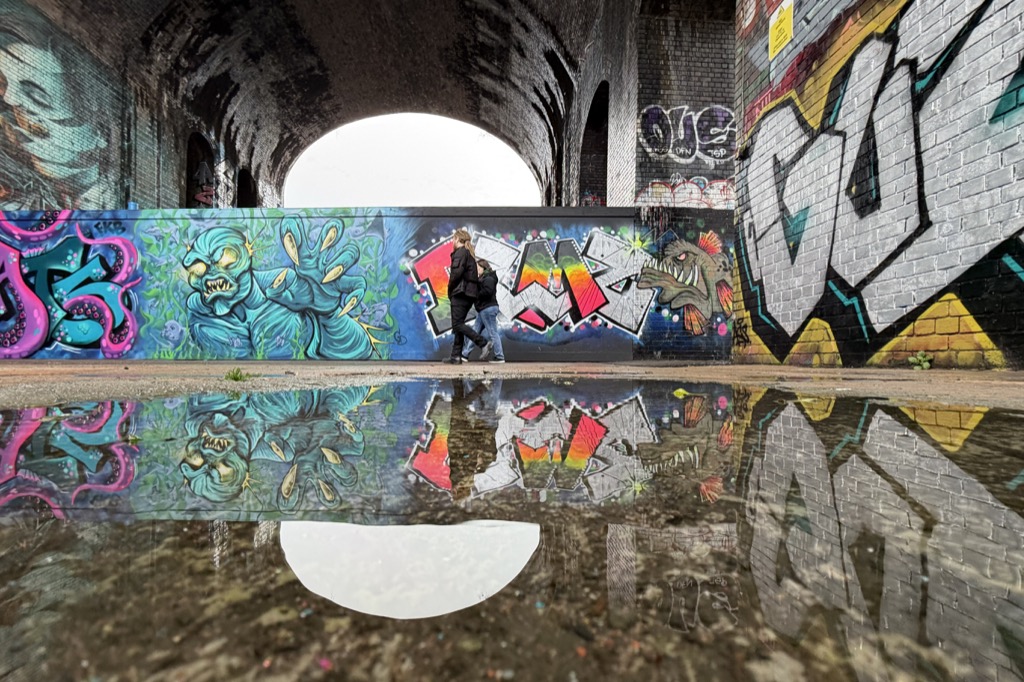
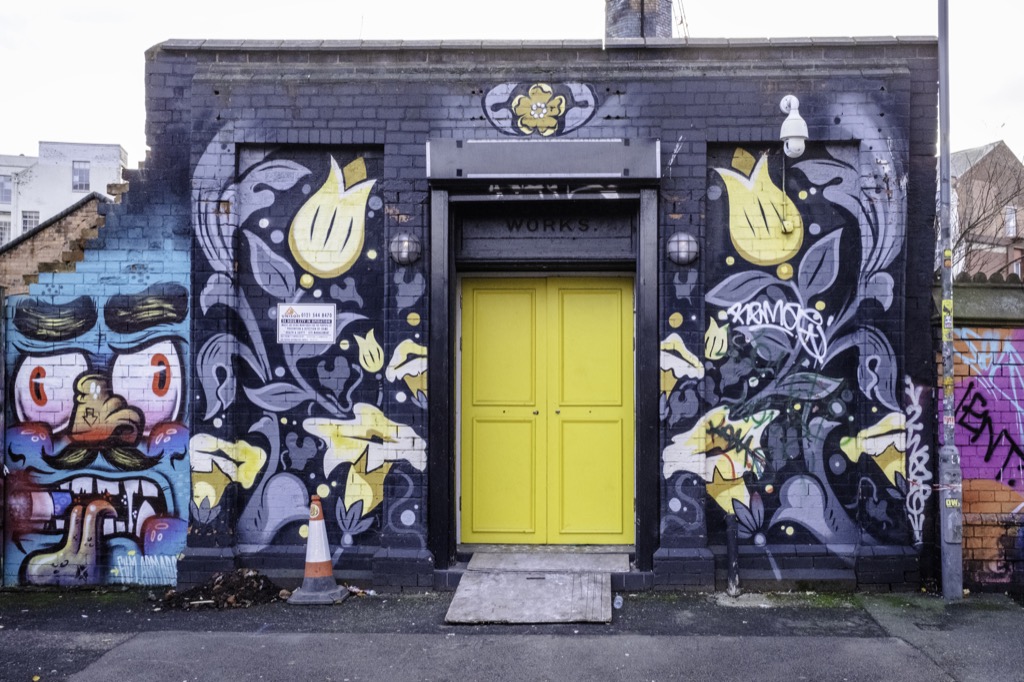
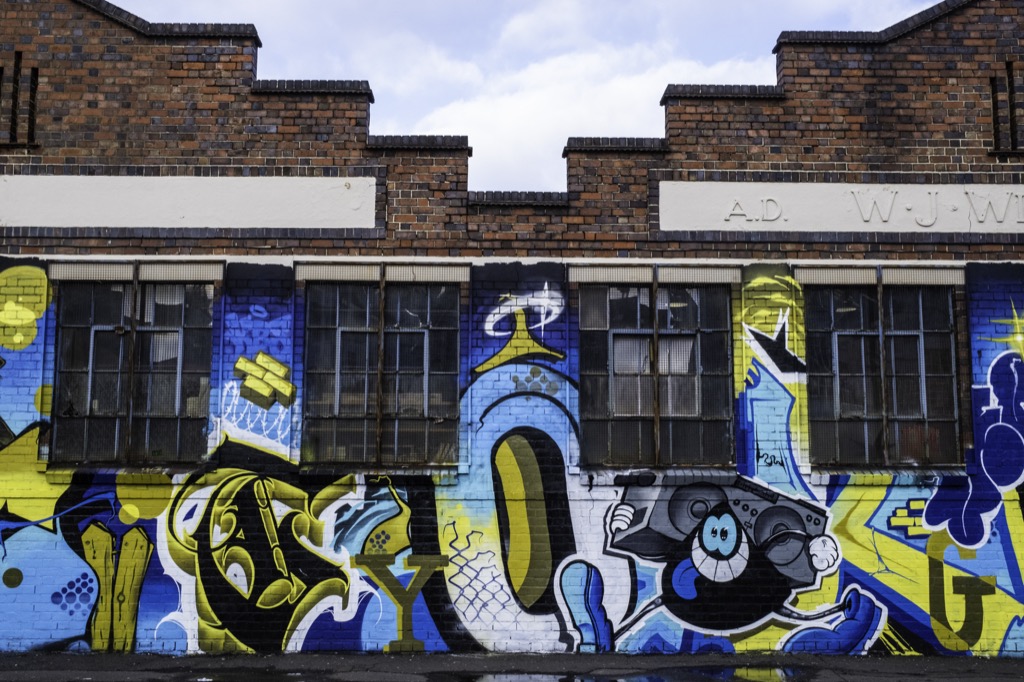
For Digbeth photography, the street art is a major draw. New shops and restaurants continue to open, while the artwork on the walls constantly changes. Because there are only a limited number of spaces, older murals are often painted over to make way for new designs. Some murals stay the same.
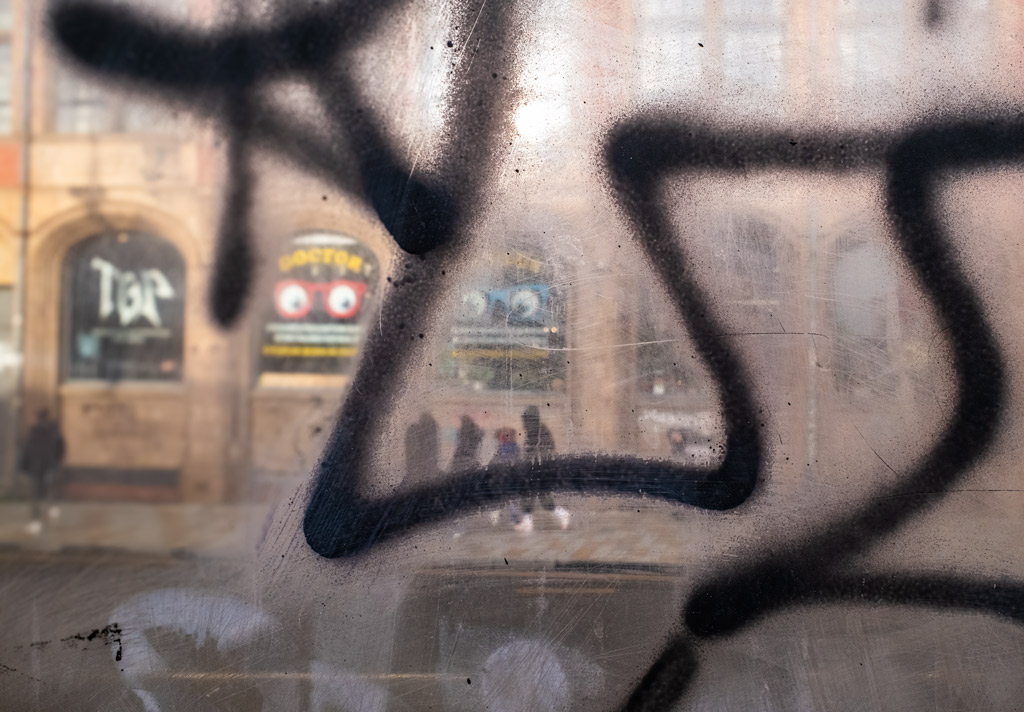
Fresh graffiti now sits alongside long-standing pieces. In some areas, heavy tagging covers earlier murals in a more random style. Even so, bold colours and striking shapes continue to dominate, making Digbeth a living canvas for urban photography.
Love this artwork from @miscfitFigure in the Archway.Arch reflections (artists unknown)
Photographing a Changing District
This post is a roundup of some of the new scenes and artwork I’ve photographed recently. Wherever possible, I’ve credited the artists. If any credits are missing, please leave a comment and I’ll update the post.
The yellow door (artwork @phithblake and @Fum.ArmadaBike lineup (artist unknown)Blue mural on the walls of the Red Brick Market (artist unknown)
I’ll be back in the new year to focus once again on Digbeth photography during the blue hour, which is one of my favourite times to capture the light and shadows in this changing part of Birmingham. One thing remains true — Digbeth always changes.
As readers will know, I regularly post oil and water pictures on my blog. I have completed a couple of sessions and now have a new set of pictures to share. The differences in these photos lie in the various backgrounds I have used. These backgrounds come from several sources, including magazines, children’s books, and abstract colour pictures that I have created in Photoshop.
The use of LED lights in the background has worked in this picture
I am also improving how I use the light source and am working to prevent the reflections that occasionally compromised the quality of previous photos. LED lights were used in some of the pictures. Although they mostly overpowered the images of the oil drops, though there was the occasional success. Switching to another brand of oil may have helped but, again I am unsure whether this is truly critical to the success of the pictures.
A colourful black hole.A background of some lips from a magazine cover was used for this picture.Compartments of colour.An exposed centre.
I use a spirit level app on my iPhone placed on the top to ensure the lens is at 90 degrees to the surface of the water. A large open aperture ensures that the maximum light is hitting the sensor. However, at f/2.8 your depth of field becomes narrow so focussing and positioning of the lens is critical to a sharp picture. Good technique helps reduce ISO noise and allows more information to be retained in the image which again will undergo cropping to get the desired photograph.
A cluster of moons around larger planets.
I hope you enjoy the current crop of pictures (pardon the pun).
Here are a few more oil and water pictures to enjoy.
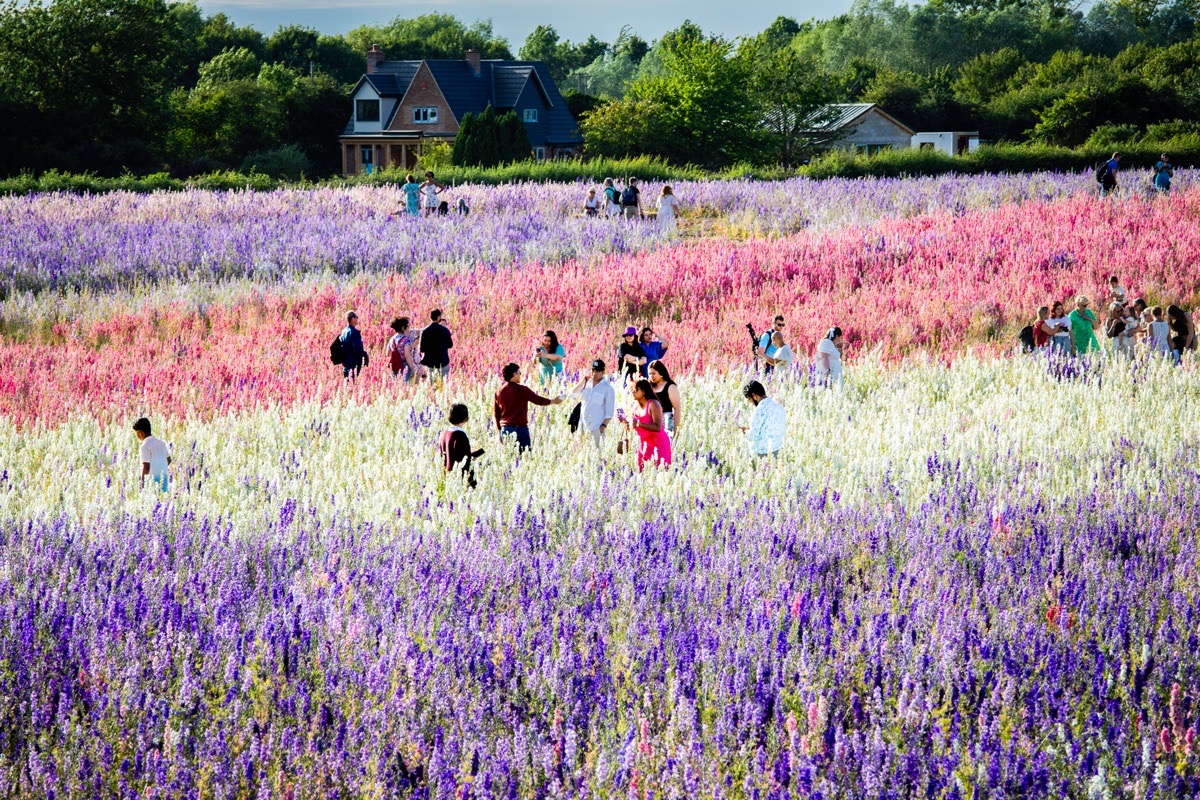
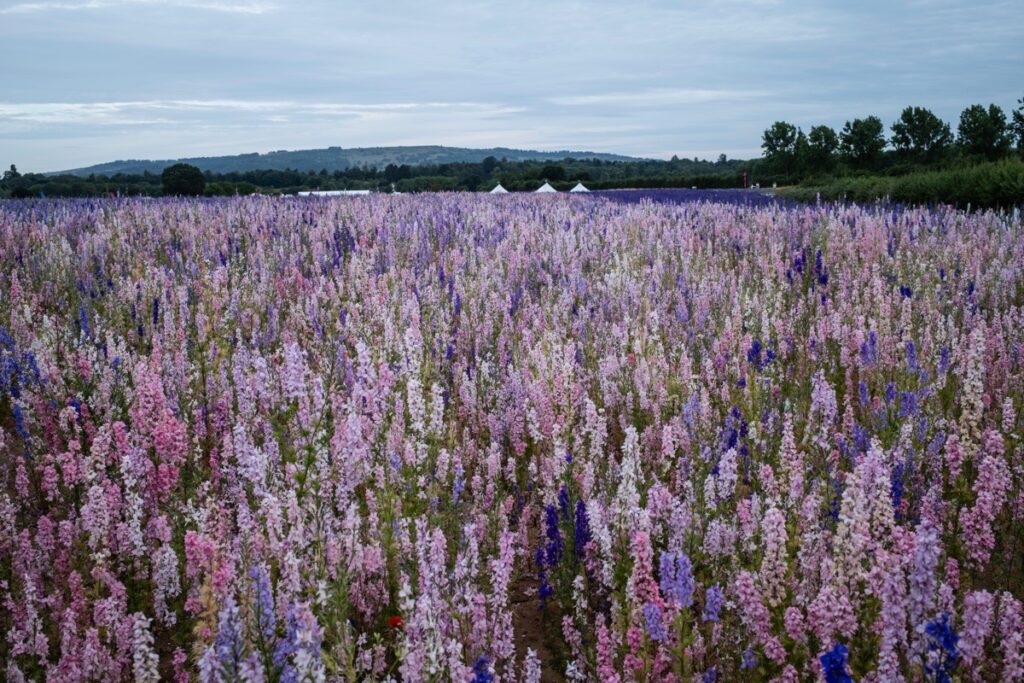
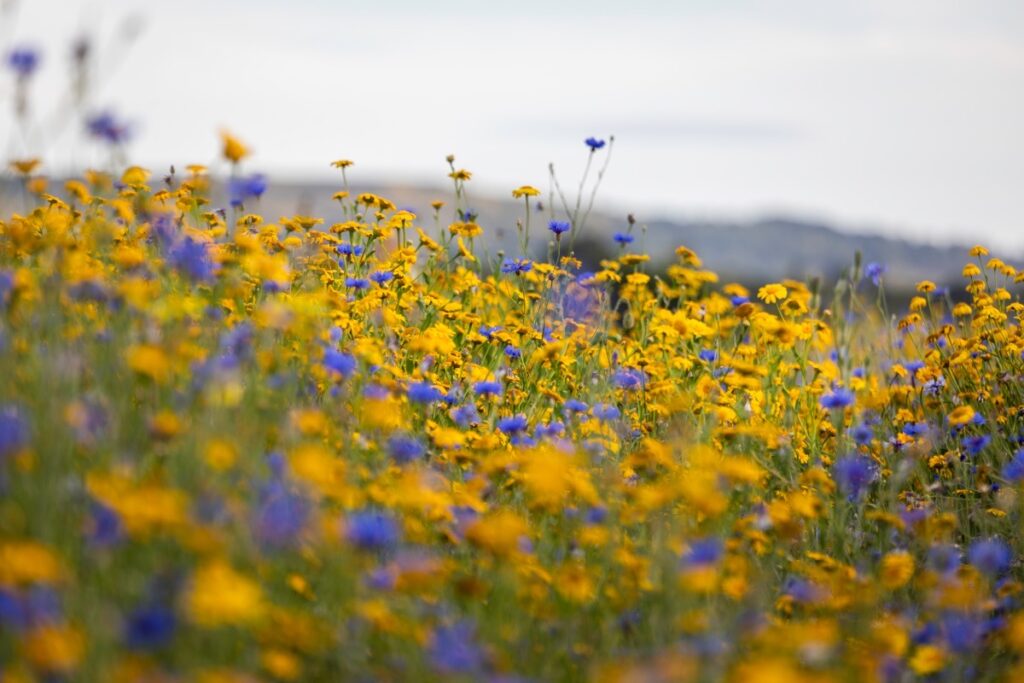
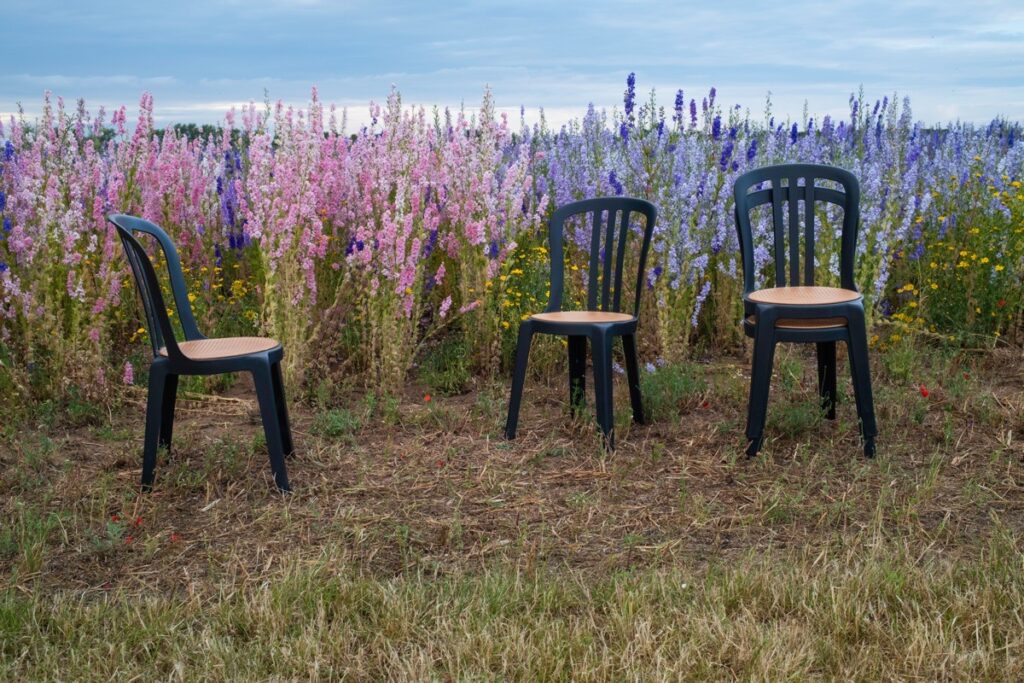
This year, the Real Confetti Company offered evening viewings of the Confetti Fields for the first time, and I signed up immediately. There is always a short window when the Confetti Fields at Wick, near Pershore, open to the public. The weather and the timing of the delphinium blooms have a significant influence on this.
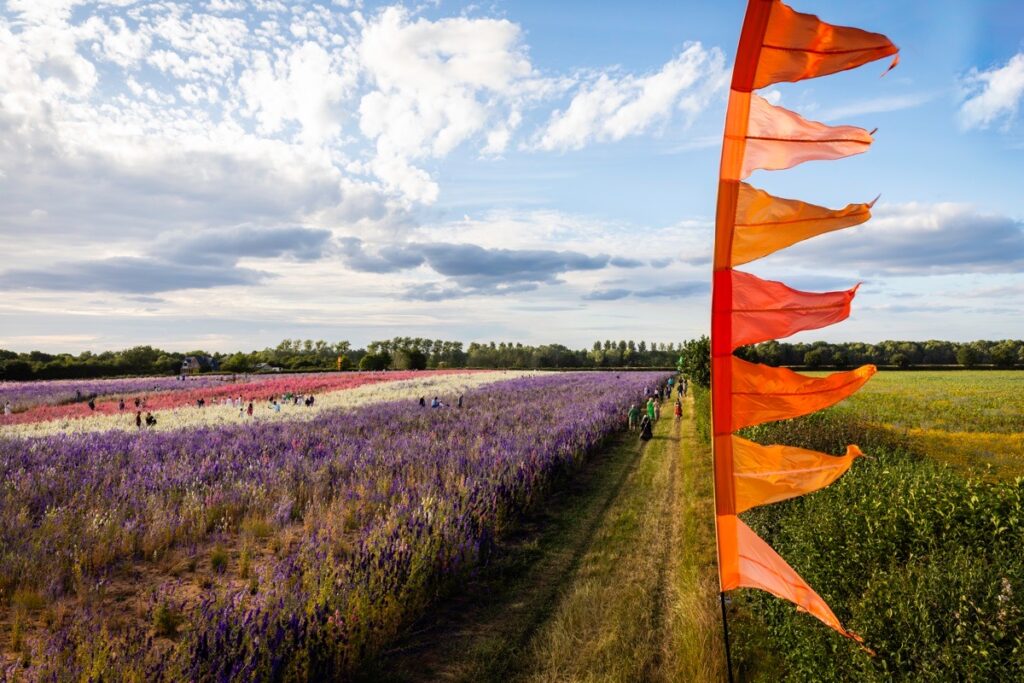
The view from the top of the field looking down towards Bredon Hill.
Although the dates did not suit the family calendar during the day, the evening timing worked for me. On a warm June evening, I arrived at the fields two hours before sunset.
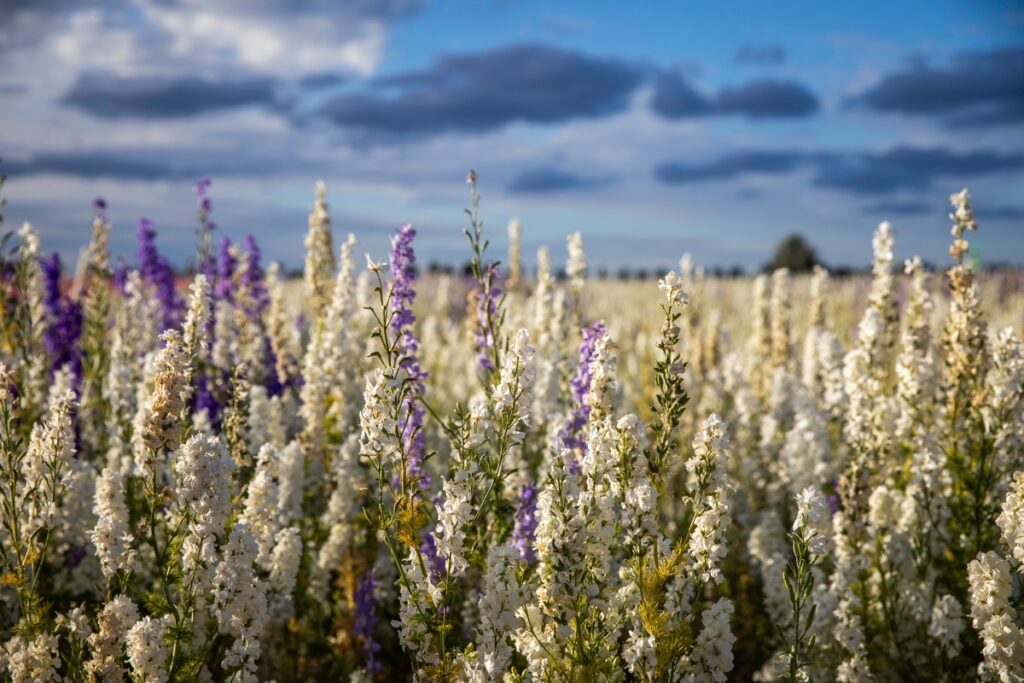
On top of the viewing platform.The Delphinium flowers
As always, the vibrant colours of the flowers, neatly arranged in colour zones, were quite magical. The evening opening meant the field was less busy, allowing time to take pictures without the usual distractions of people walking through the lanes and avenues. When I arrived, the light was excellent and really brought out the colours. I met up with fellow photographer Dave Wells, and we were able to compare notes as we took our pictures.
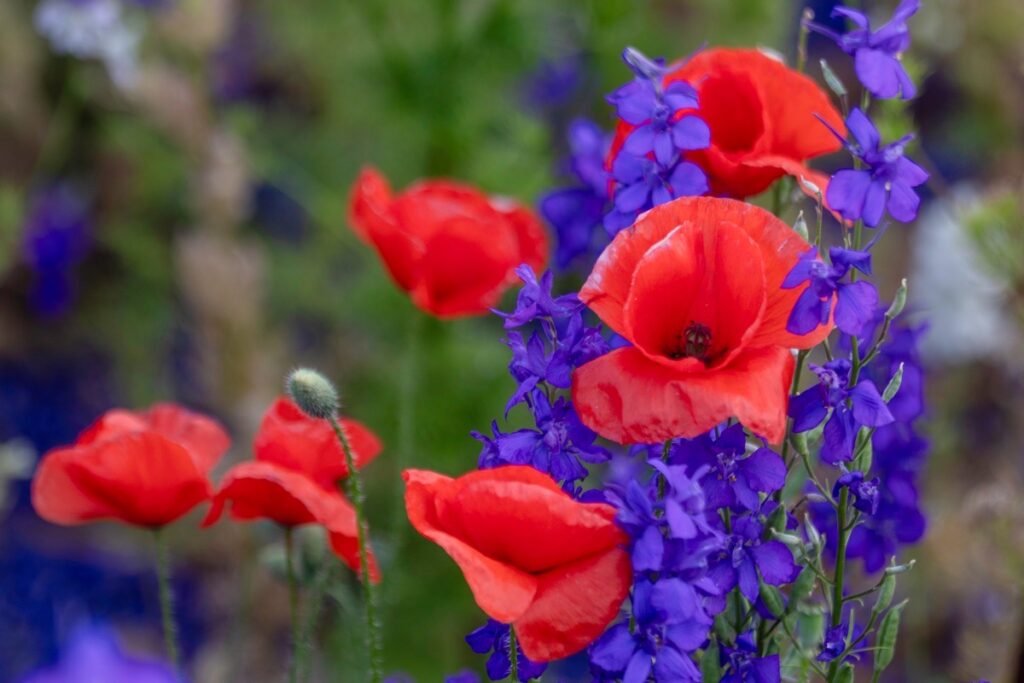
The wildflowers were spectacular.Colour contrasts in the field.
Unfortunately, a sunset never materialised. The sun disappeared behind clouds on the horizon, and rain arrived just as we were leaving. However, this did not dampen my enthusiasm for photographing the flowers. Enjoy the pictures—and I have provided links to previous visits to the Confetti Fields in 2023, 2020, 2019, and 2018.
Halifax, Nova Scotia is a city alive with creativity. During my visit for an ultrasonics symposium, I discovered just how vibrant and artistic the city is especially when it comes to street art. Between conference sessions, I made time to explore. Dr Andrew Mathieson is on the board of UIA and also lives in Dartmouth. Andrew kindly shared recommendations of the city with the conference delegates. When I mentioned my love for street art, he immediately suggested I visit Quinpool Road. This is a student-friendly area just behind the Halifax Citadel.
On the last day of the conference, the sessions wrapped up early, giving me a free afternoon. The sun was shining as I set off on foot, making my way through the lively Dalhousie University campus. Students filled the walkways and the place was buzzing with energy.
Quinpool Road and a tantalising glimpse of a mural.
Arriving at the head of Quinpool Road, I was disappointed. There were one or two artistic pieces here and there, but not the mural-rich environment I had been told about. I passed by Dilly Dally Coffee Shop, still searching. Behind the cafe at the intersection of Quinpool and Vernon, I found beautifully crafted lettering by mural artist Kristen De Palma (@kdpletters | kdpletters.com). Her work stands out in an otherwise hidden spot.
Colourful Typography by by mural artist Kristen De Palma.
I was still looking for more murals and asked a local resident for guidance. They gave me a valuable tip: “Look around — check the alleyways and look behind buildings.”
The first large mural I encountered was on the Recreation Nova Scotia building. This was a striking blue mural of local fishing boats by Dom Laporte. From that moment on I began to notice murals everywhere.
A blue harbour scene mural by Dom Laporte
Across the street stood the old cinema building which is now home to a climbing gym and a brewery. On the wall there was a quote from The Wizard of Oz, commemorating one of the final films screened there in 2017. This nostalgic piece was painted by @alexjfowkes.
Tribute to the Wizard of Oz.
One of my personal favourites was tucked away in a car park just off the main road. Titled Cattails and Pansies, the mural by Montreal-based artist Bosny (@bosny.jpg) pulled me into its intricate details. His artistic approach invites viewers to slow down and look more closely at the style of the artwork.
Cattails and Pansies, by the artist Bosny
As I walked towards the more residential end of Quinpool Road, I came across a dominant mural on the wall of Pro Skates across from Oddfellows Barbershop. Created by Jeks One (@jeks_nc) the mural honours the late John Dunsworth, best known for playing Jim Lahey on the cult Canadian series Trailer Park Boys, which is set in the fictional Sunnyvale Trailer Park in nearby Dartmouth. Although I am not familiar with the show, I appreciated the care and character captured in this tribute.
Trailer Park Boys
On the return walk, I found more murals, including a wonderfully detailed wall painting outside Busan Korean BBQ. Created by local artist Dan Burt, it is a vibrant homage to Quinpool Road’s history. The artwork is full of local references, stories, and even a bus seemingly rising from the pavement.
Seen outside on the wall of the Busan Korean BBQA street scene with a real bus!
Other pieces had no listed artist but were just as memorable. Even the electrical power boxes had been transformed and were painted with bright, creative designs.
@deliveravalon@nessyrt@mollymargaretart
.
Other examples of street art along Quinpool Road.
Love EvolvesColours on the old Cinema.Dog FoodStrike out
. Quinpool Road is a lively area with restaurants and shops. The people who live and work there seem to accept that their everyday lives are part of the artwork, making it an ideal place for street photography. This student road is just one example of street murals in Halifax .
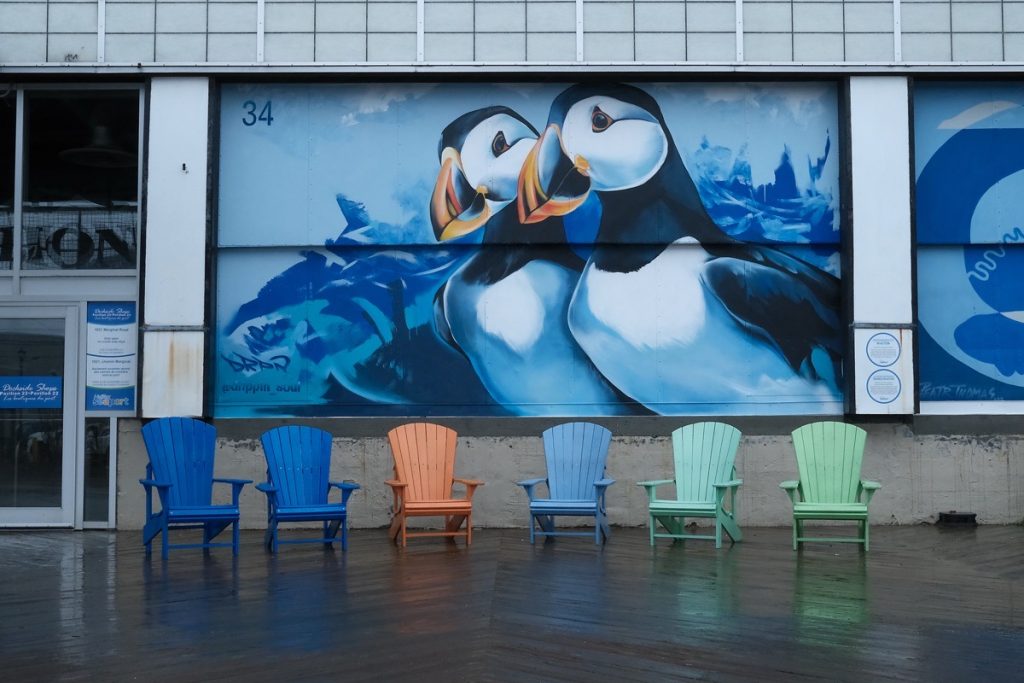
More examples of street art around Halifax – seen outside Pier 22, where the cruise ships arrive.
Reflections in the rainPuffins and Deck ChairsLighthouse on the pier.
Halifax harbour waterfront.
Surfing the WaveAn Eagle mural by WarriorSunrise on the pier
Street Murals on Burlington Street walking Northwards
Colourful wallsPiano playersRainbow shaking handsMural depicting the people of Halifax
From large-scale murals to hidden gems, Halifax is a city full of colour, character, and creativity. If you are an enthusiast for street art and love to photograph such murals then Halifax offers many opportunities. Quinpool Road stands out but there are many other places where colourful art greets you. I did enjoy walking along the streets of Halifax looking out for examples of murals on buildings.
Much of the background information I gathered came from the Discover Halifax website which is an excellent resource for anyone keen to explore the city’s artistic side. I have not been able to list all the artists and for this I apologise. Please let me know and I will add your name to the list.
Further blog reading
I do enjoy taking pictures of street art along with the street photography that goes along with it. Two of my blogs will lead you into more UK based street art. Please feel free to browse through the articles.
We use cookies on our website to give you the most relevant experience by remembering your preferences and repeat visits. By clicking “Accept”, you consent to the use of ALL the cookies.
This website uses cookies to improve your experience while you navigate through the website. Out of these, the cookies that are categorized as necessary are stored on your browser as they are essential for the working of basic functionalities of the website. We also use third-party cookies that help us analyze and understand how you use this website. These cookies will be stored in your browser only with your consent. You also have the option to opt-out of these cookies. But opting out of some of these cookies may affect your browsing experience.
Necessary cookies are absolutely essential for the website to function properly. These cookies ensure basic functionalities and security features of the website, anonymously.
Cookie
Duration
Description
cookielawinfo-checkbox-analytics
11 months
This cookie is set by GDPR Cookie Consent plugin. The cookie is used to store the user consent for the cookies in the category "Analytics".
cookielawinfo-checkbox-functional
11 months
The cookie is set by GDPR cookie consent to record the user consent for the cookies in the category "Functional".
cookielawinfo-checkbox-necessary
11 months
This cookie is set by GDPR Cookie Consent plugin. The cookies is used to store the user consent for the cookies in the category "Necessary".
cookielawinfo-checkbox-others
11 months
This cookie is set by GDPR Cookie Consent plugin. The cookie is used to store the user consent for the cookies in the category "Other.
cookielawinfo-checkbox-performance
11 months
This cookie is set by GDPR Cookie Consent plugin. The cookie is used to store the user consent for the cookies in the category "Performance".
viewed_cookie_policy
11 months
The cookie is set by the GDPR Cookie Consent plugin and is used to store whether or not user has consented to the use of cookies. It does not store any personal data.
Functional cookies help to perform certain functionalities like sharing the content of the website on social media platforms, collect feedbacks, and other third-party features.
Performance cookies are used to understand and analyze the key performance indexes of the website which helps in delivering a better user experience for the visitors.
Analytical cookies are used to understand how visitors interact with the website. These cookies help provide information on metrics the number of visitors, bounce rate, traffic source, etc.
Advertisement cookies are used to provide visitors with relevant ads and marketing campaigns. These cookies track visitors across websites and collect information to provide customized ads.