JW Evans Silver Factory: A Time Capsule in Birmingham’s Jewellery Quarter
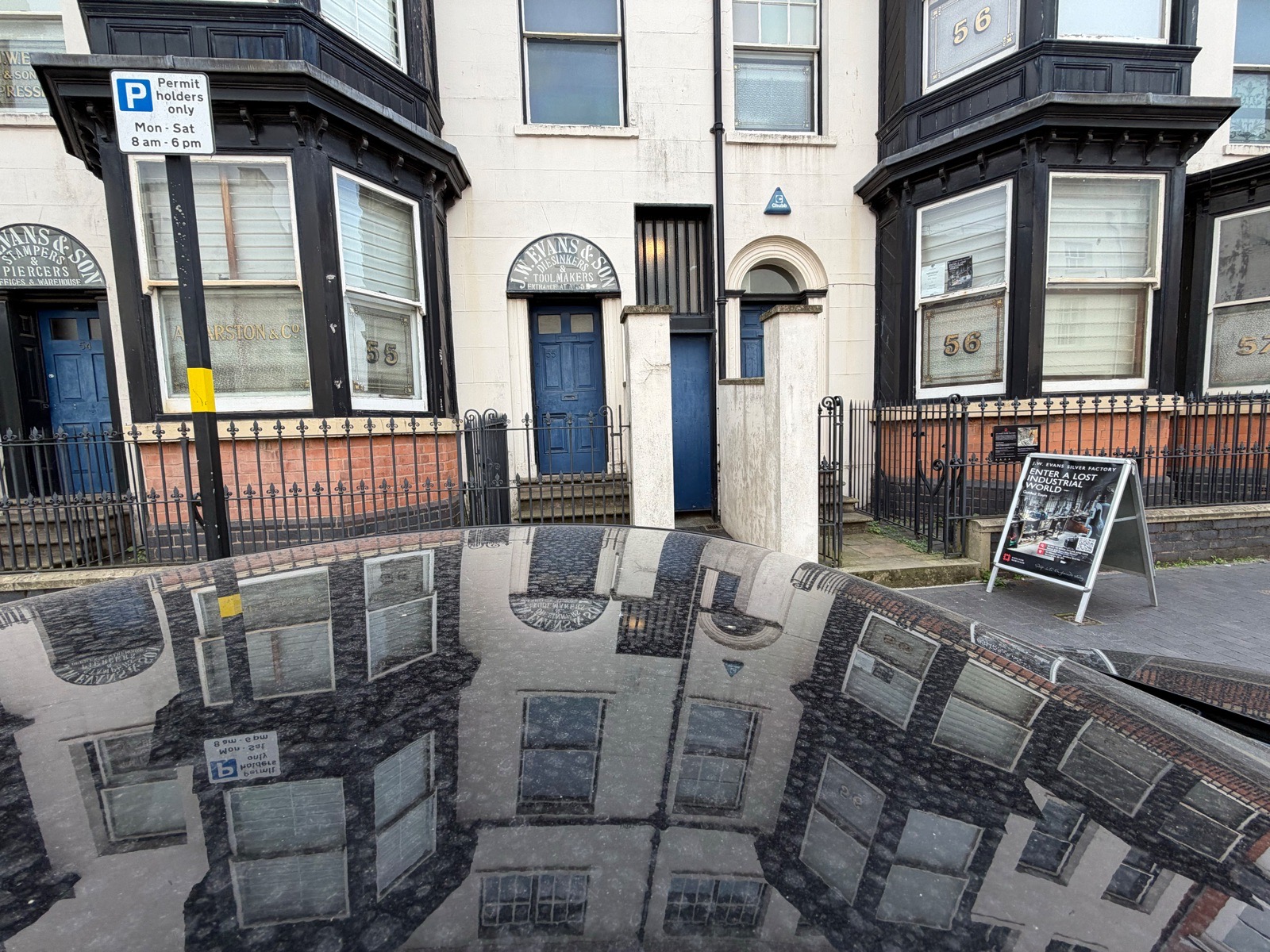
Arriving at the JW Evans Silver Factory, I was immediately given a warm welcome on the steps by Carlton, one of the English Heritage guides at the site. His greeting set the tone for an enjoyable visit to this incredible property.
Arriving at the JW Evans Silver Factory, I was immediately given a warm welcome on the steps by Carlton, one of the English Heritage guides at the site. His greeting set the tone for an enjoyable visit to this incredible property.
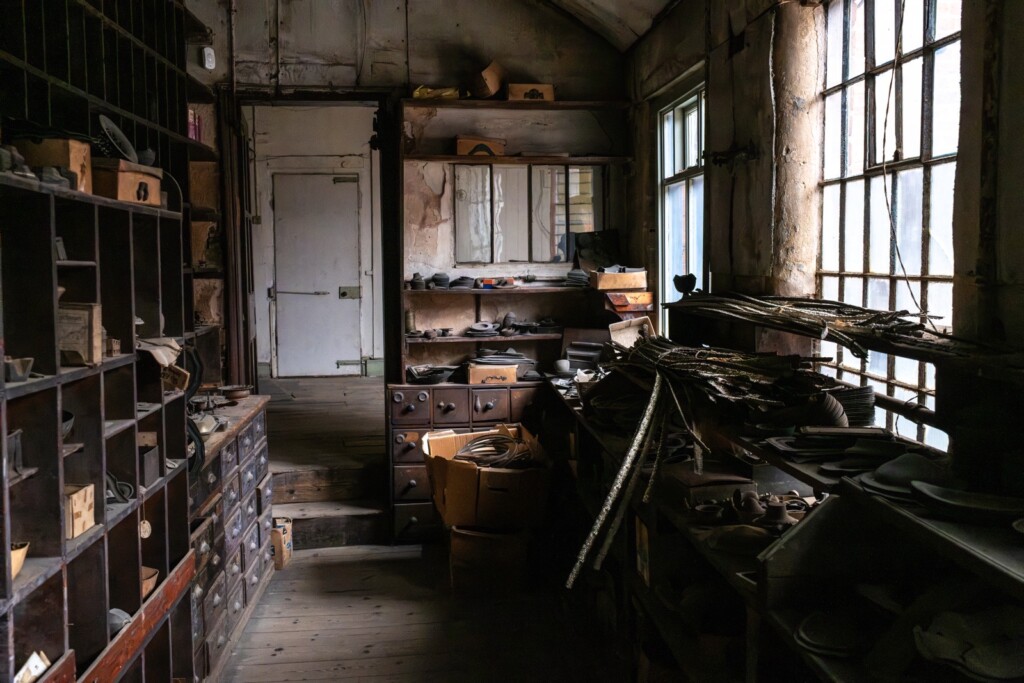
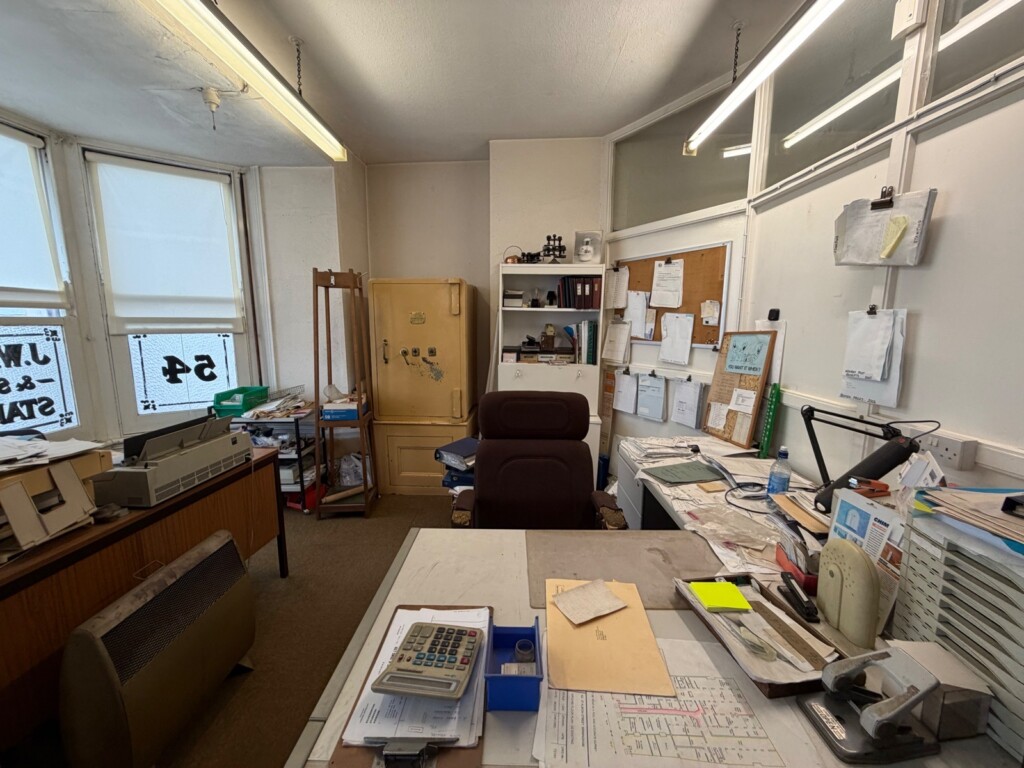
This former silver factory in the Jewellery Quarter is managed by English Heritage. At first glance it appears to be a working factory. Tools are laid down on the benches as if the workers will be returning in the morning, and the office looks as if the boss has just nipped out for lunch. However, this former factory is a time capsule. There are none of the trappings of the modern day: no computers and no automated machines. The English Heritage guides gave a deep insight into the history of the factory, which reflects the industrial heyday of Birmingham and the Jewellery Quarter.
We gathered in the front room, where our guide, Jane, took us through the history of the factory. She began with the large picture hung over the fireplace, taken of the JW Evans workforce at the turn of the century. The factory stood in the centre of the Jewellery Quarter, which was a major focus of industry and employment, and it is an excellent example of how the quarter worked. After the introductory talk we went into a showroom with a display of many of the objects made at the factory, along with more photographs on the walls, many of them taken by JW Evans.
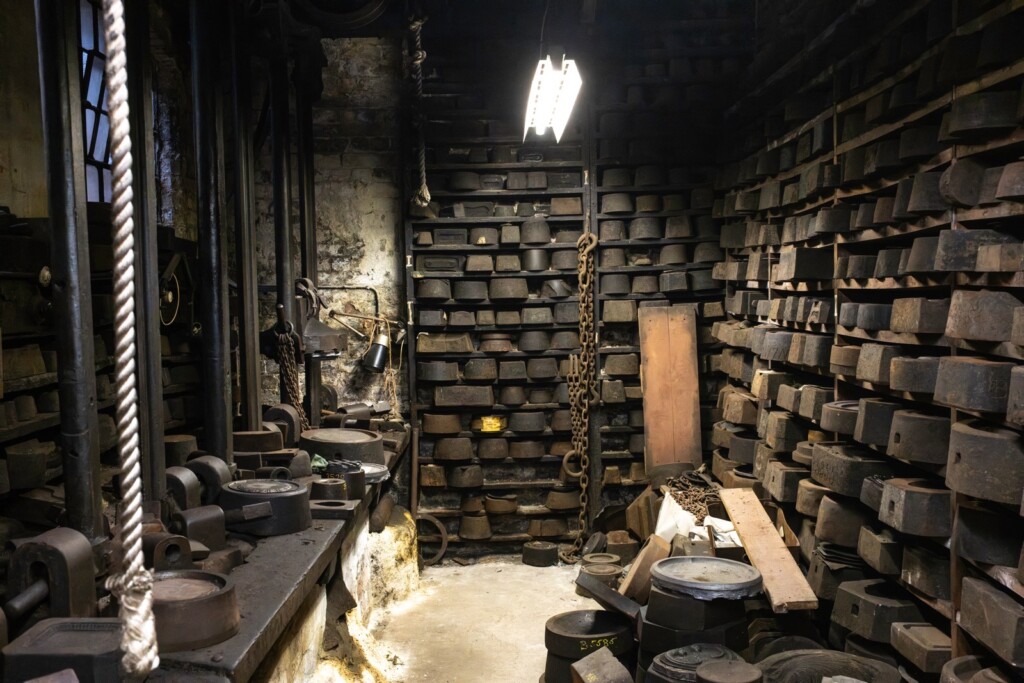
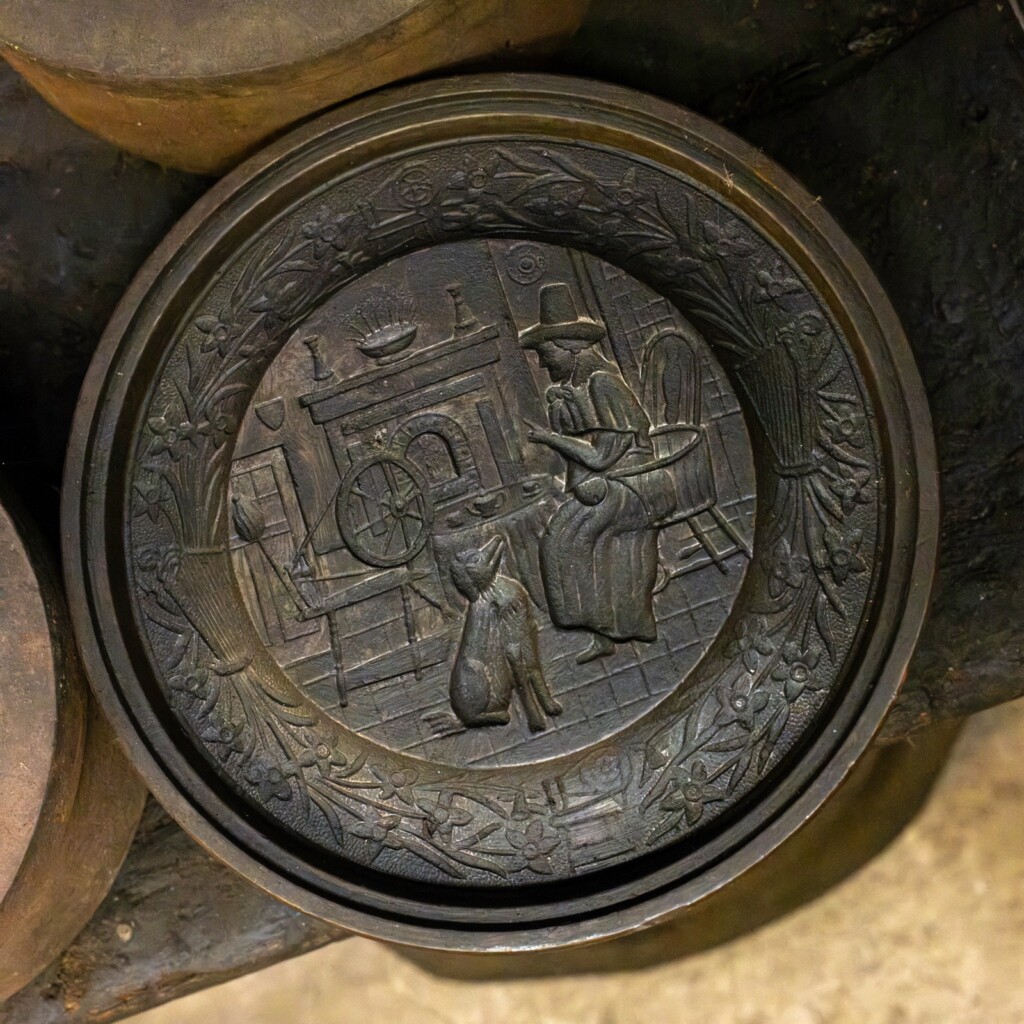
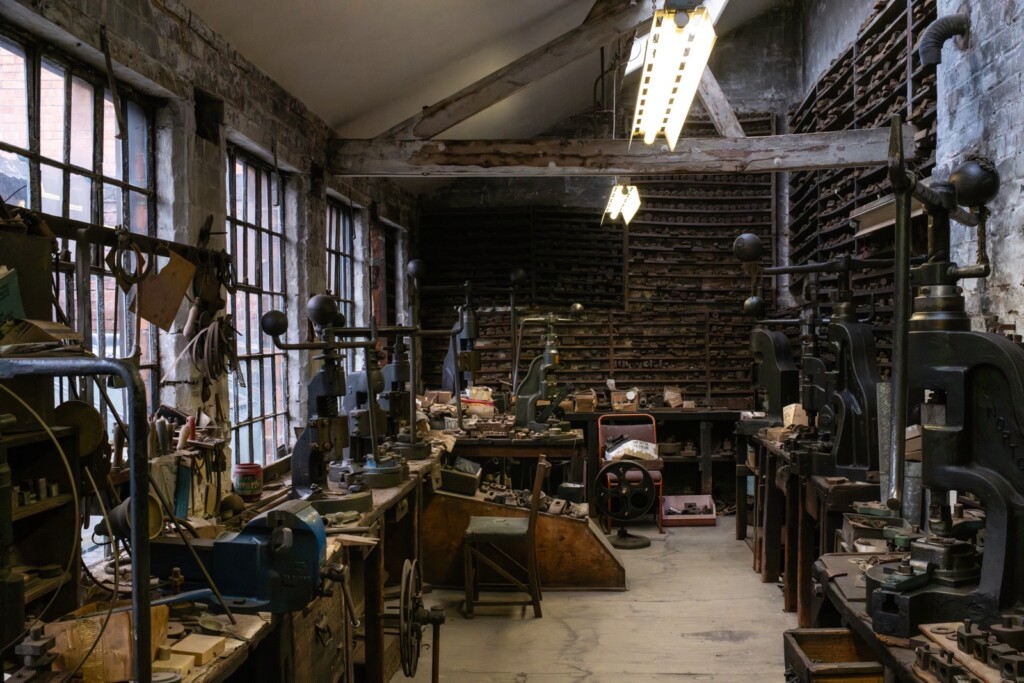
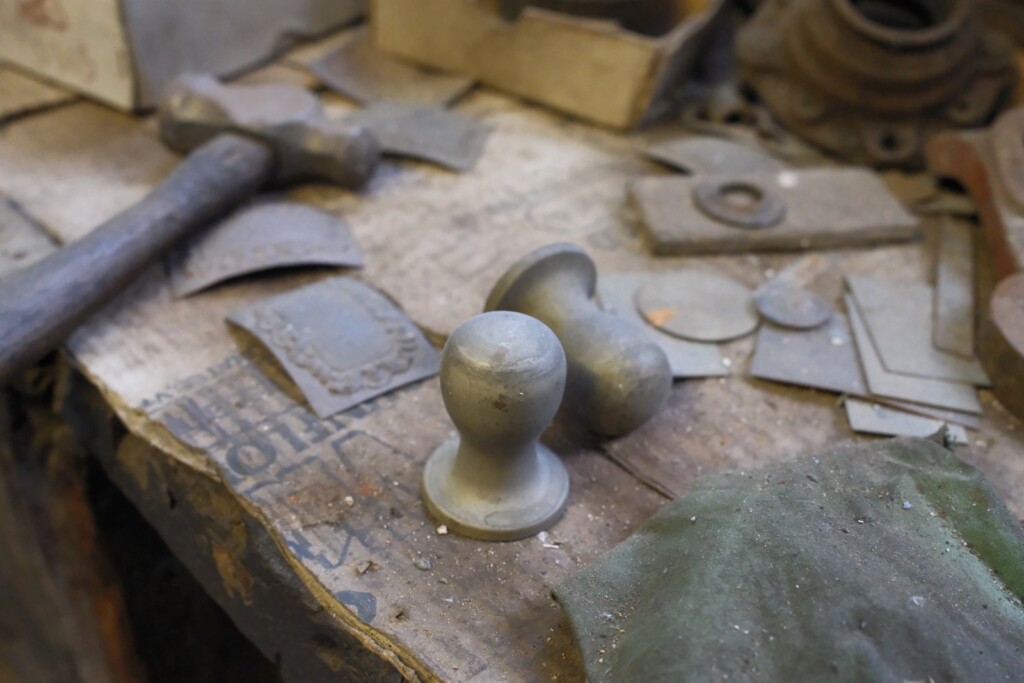
We then started to explore the factory. I pride myself on having a good sense of direction, but I quickly found myself getting lost in the narrow corridors opening onto the rooms where the silver items were made. Our first room was where the silver designs were stamped into the metal. There were large press machines, and the walls were lined with the different dies used to create the designs. Many of the workers here were men, as there was a lot of lifting to do and the press work to manage.
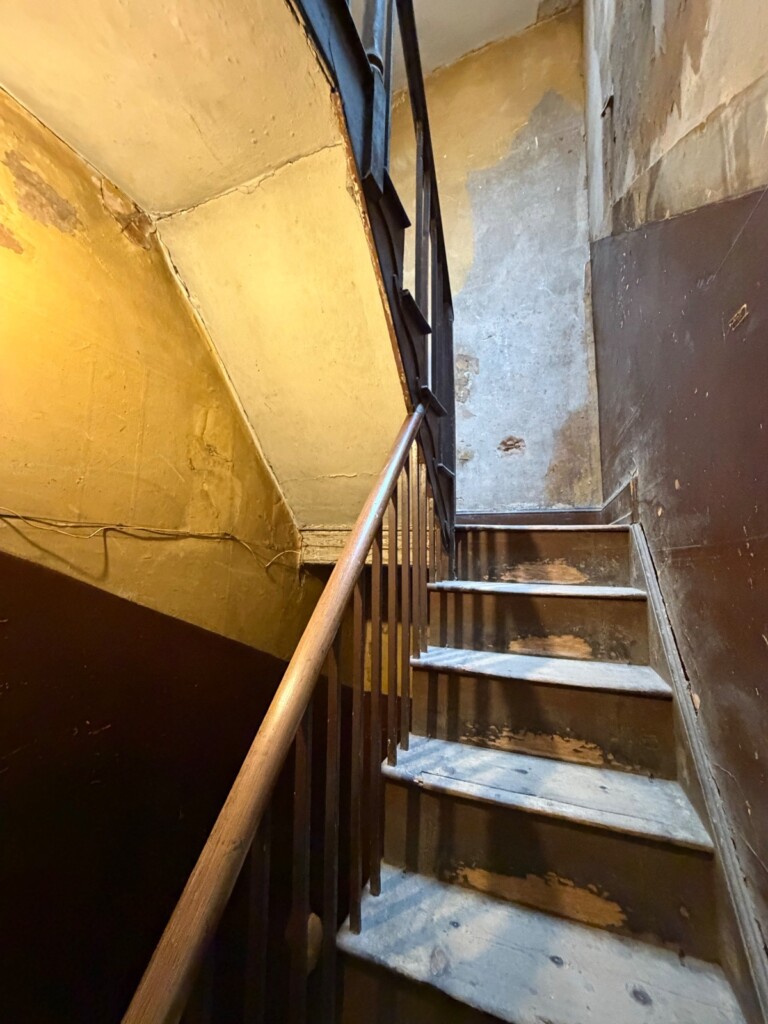
We moved upstairs, where more detailed work was undertaken. This room was the most memorable, maybe because of the window light, or maybe because it was where I felt people were still working. The tools looked more delicate and varied, and the workers in this room were mainly women. This picture shows the upper rooms, where the women did the more skilled jobs compared with the heavy labour below.
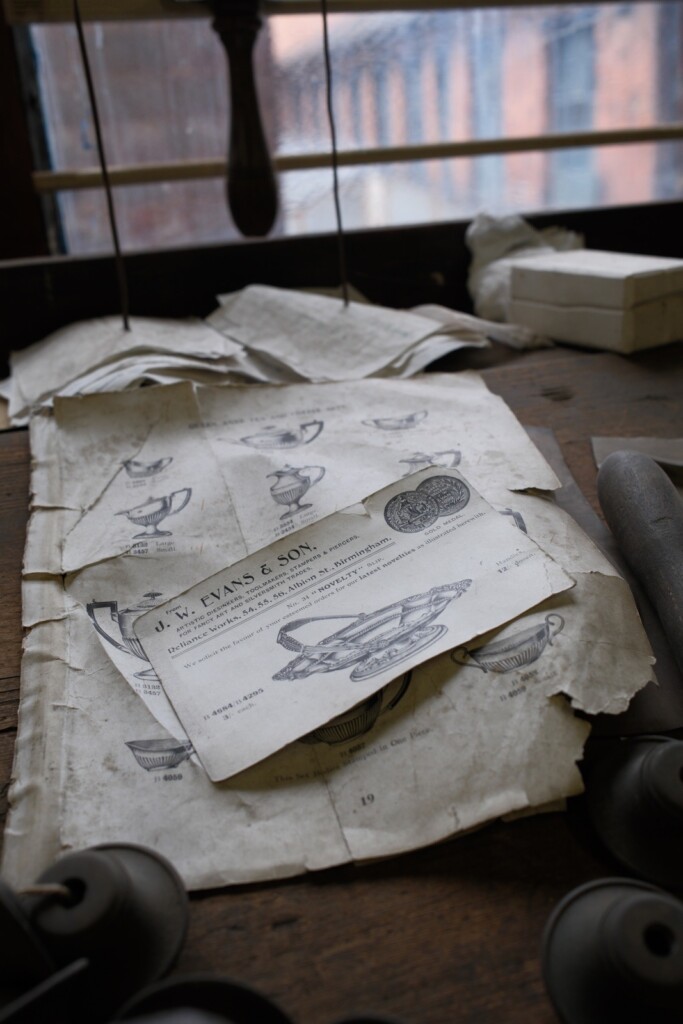
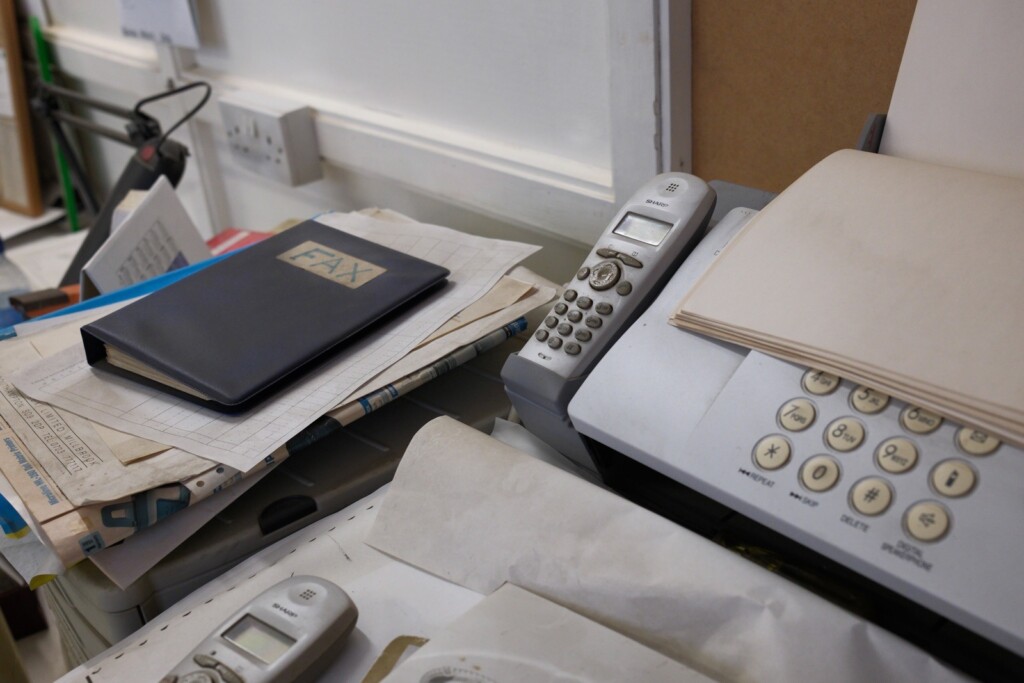
We were then led through what used to be a showroom and into another room with drawings and designs of differing silverware. The design room linked into Tony Evans’s office. Tony was the grandson of JW Evans and the last owner. Tony had an encyclopaedic knowledge of how the place worked. He knew how to operate all the machines and was able to locate all different items if needed for would be buyers. The factory closed its doors in 2008, and his office is another time capsule. There is no computer, just fax machines and old-style phones, and the walls are covered with working reminders and calendar dates. Very different from a modern premises, and fascinating to see.
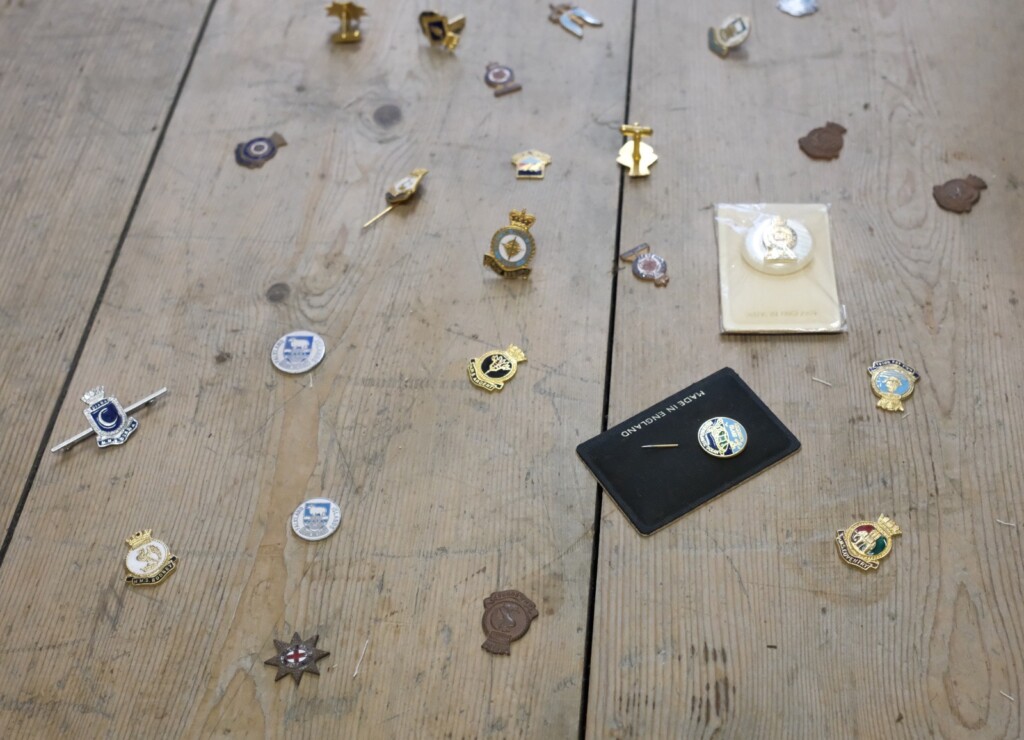
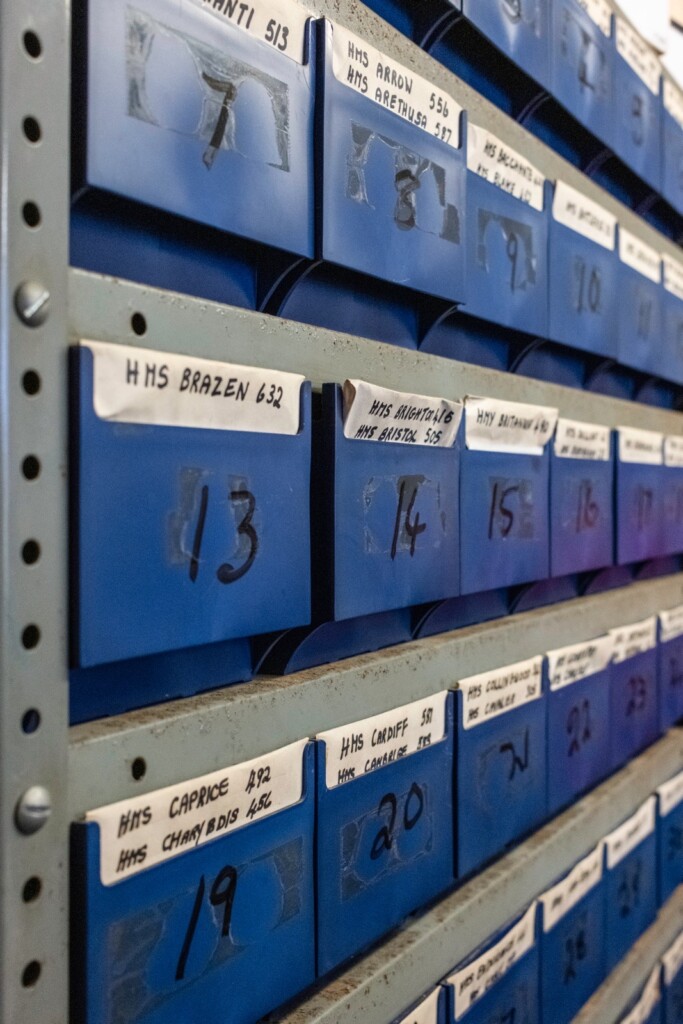
We moved into a room where numerous enamelled badges were laid out on the table. Many of them were linked to naval ships. Turning around, there were rows of blue boxes, each labelled with the name of a Royal Navy ship and containing the individual badge for that ship. There was also a story about the badge for the Royal Yacht Britannia.
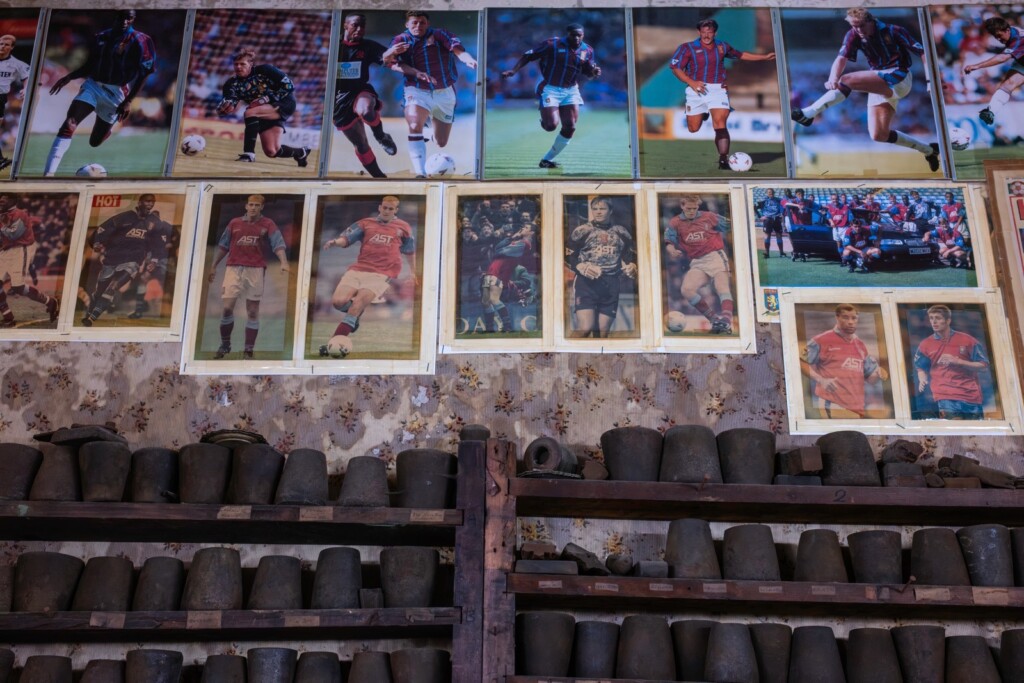
There were more questions prompted by the information our guide gave us, and we could have stayed much longer listening to the stories about the factory. Finally we entered the dispatch office, where items were boxed and ready to send out. The person who headed this area was a mad Aston Villa fan, and pictures of his beloved team were everywhere.
Thank you to the team at English Heritage for making this visit so memorable. As a member of English Heritage, I was pleased to take up this tour, and it is a great advertisement for membership.
JW Evans Silver Factory, Jewellery Quarter, Birmingham, English Heritage, Birmingham history, industrial heritage, silver factory, time capsule, museum visit, Birmingham museums, heritage photography
If you enjoyed this account of my visit to the JW Evans Silver Factory then please read about my visit to the Coffin Works. During the visit you will get to see one of the stamp presses in action.
Browse 15 photographs
1 / 15